Comparative study of different storey buildings for Seismic forces
AIM :
To model and analyse different buildings with varying parameters to study the influence of those parameters on building
characteristics by comparing the models.
PROCEDURE:
Following table shows the building with different parameters.
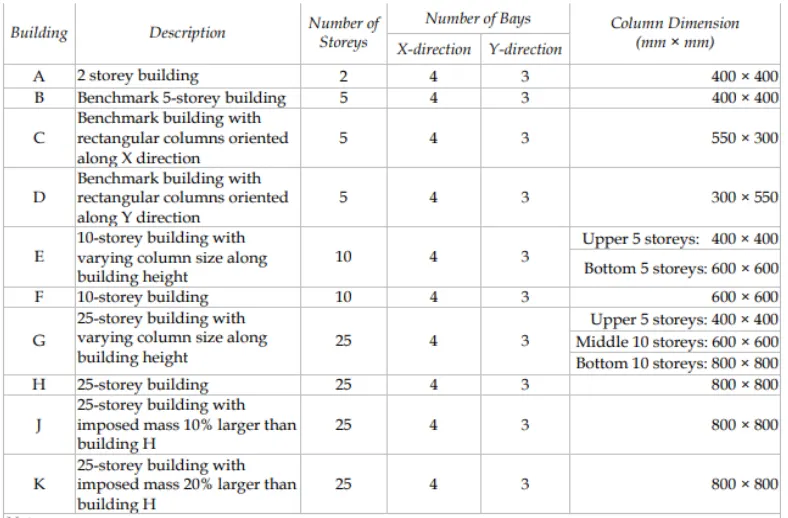
from the analysis of models following comparisions are made.
Effect of stiffness on T: Compare fundamental natural periods of buildings E & F as well as G & H. Why is there a marginal
or significant difference in the fundamental natural periods?
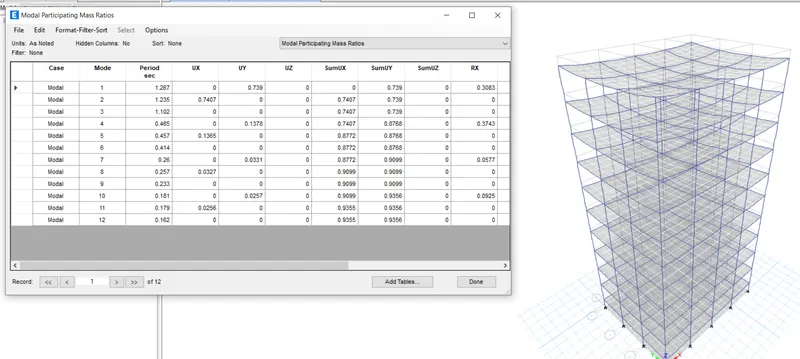
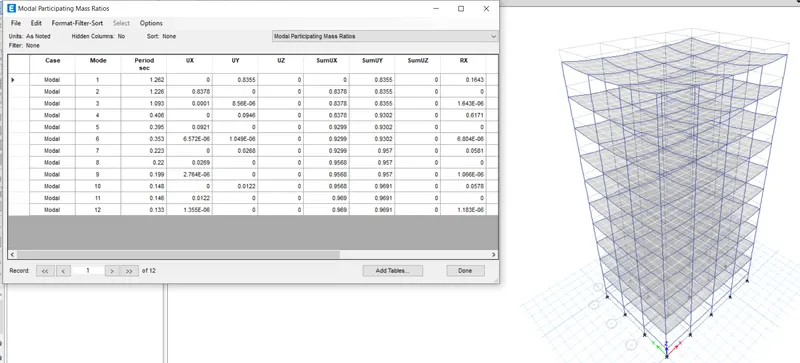
following pictures show the compariosions of E,F,G and H.
MODEL E:
MODEL F:
MODEL G:
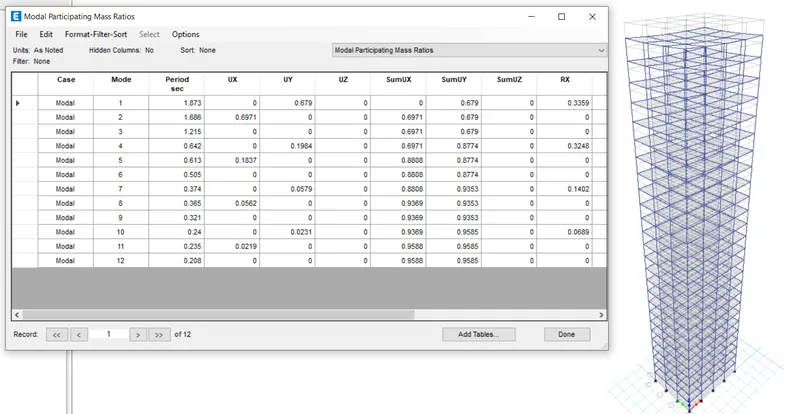
MODEL H:
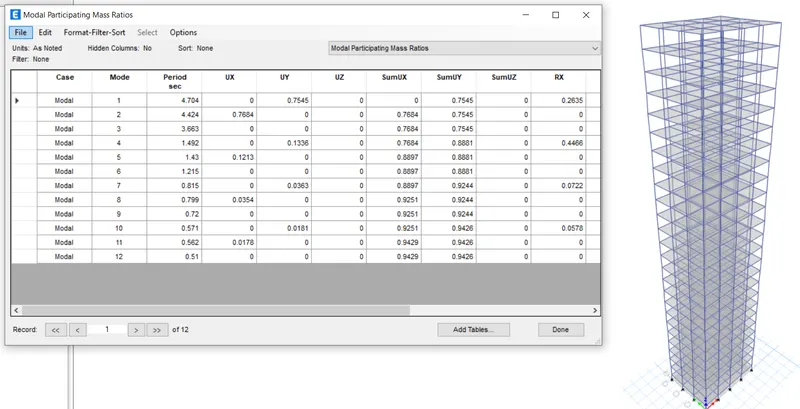
If we compare time period of E and F ,we can see that time period of F is more than because,model F has
uniform sized columns throughout the building, whereas the size of columns is decreasing with height in E
and uniformity of columns contribute to the stiffness of building which in turn increases the time period.
same concept applies for G and H where the time period of H is more.
- Effect of mass on T:
- Compare fundamental natural periods of buildings H, J and K. Have the buildings become more flexible or stiff due to change in mass?
BUILDING H:
BUILDING K:
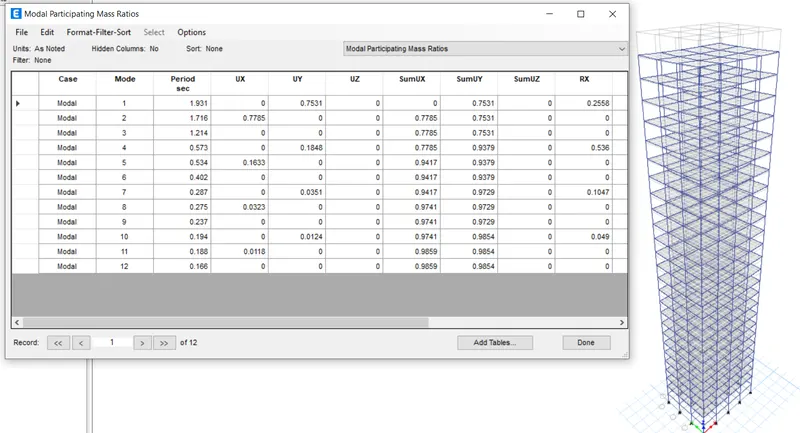
BUILDING J:
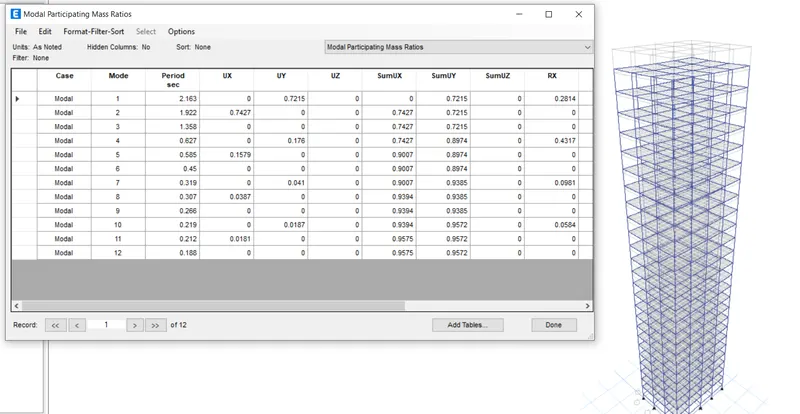
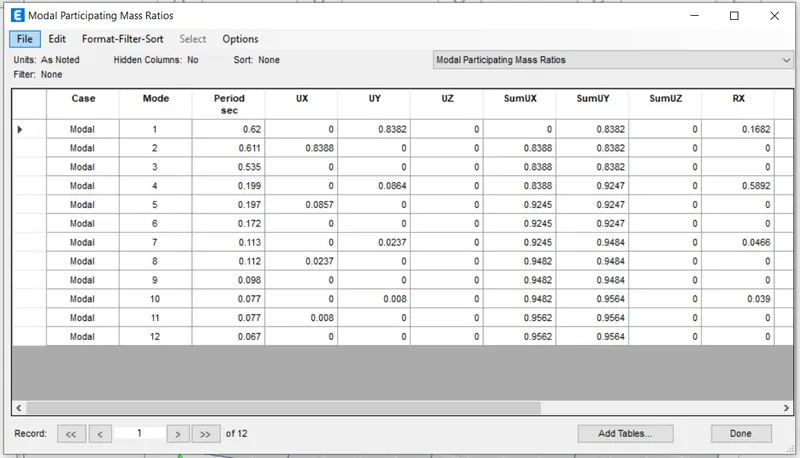
time period of H is higher than j which in turn is higher than k.
it happens due to variations in masses.
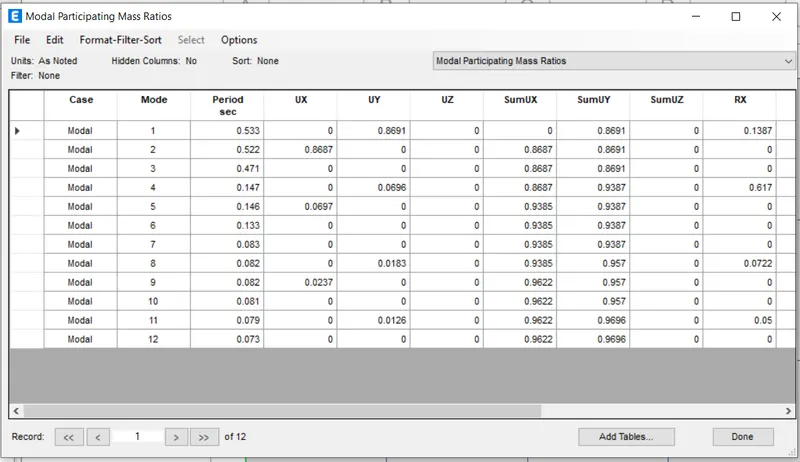
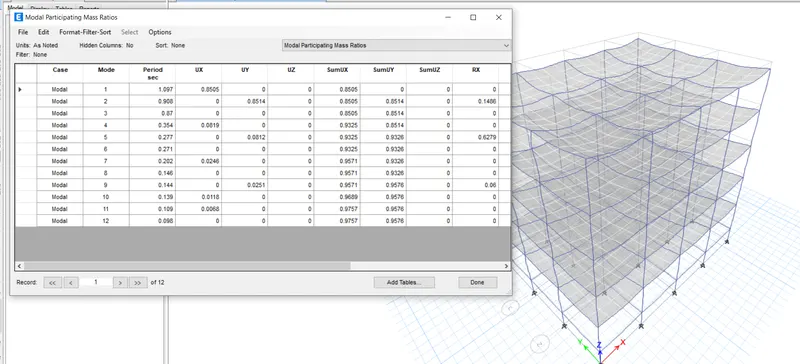
- Effect of Building Height on T: How does the fundamental natural periods of Buildings A, B, F and H
- change with change in building height?
building A:
building B:
building F:
building H:
we can see there is considerable increase in the time period of building due to increase in no. of stories.
hence increase in height increases the stiffness of building.
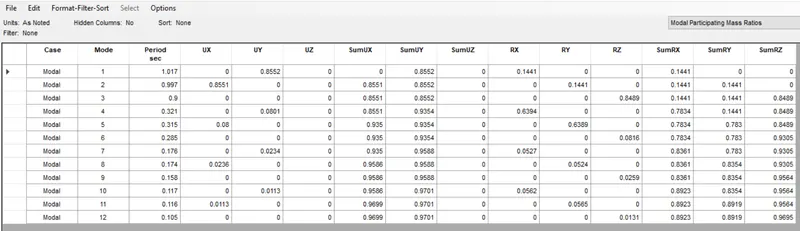
- Effect of Column Orientation on T:
- How does the fundamental natural periods of Buildings B, C and D change with change in column orientation?
building B:
building C:
building D:
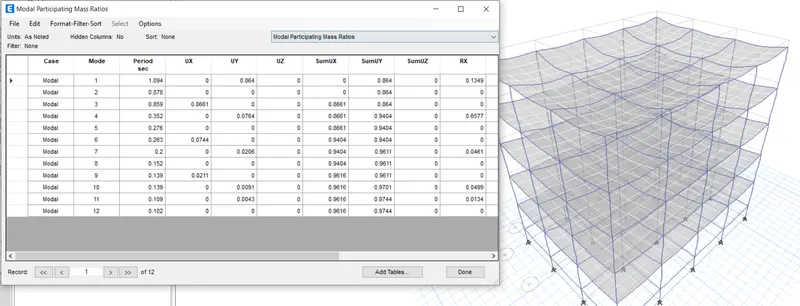
time period of C is more than D which in turn is more than B.
therefore stiffness of building is more if the columns are oriented along their longer length direction.
- Effect of Flexural Stiffness of Structural Elements on mode shapes:
- Compare fundamental mode shape
- of Building B in two situations when flexural stiffness of beams relative to that of adjoining columns is very small versus when it is large.
When flexural stiffness of beams is smaller than adjoining columns:
MODE 1:
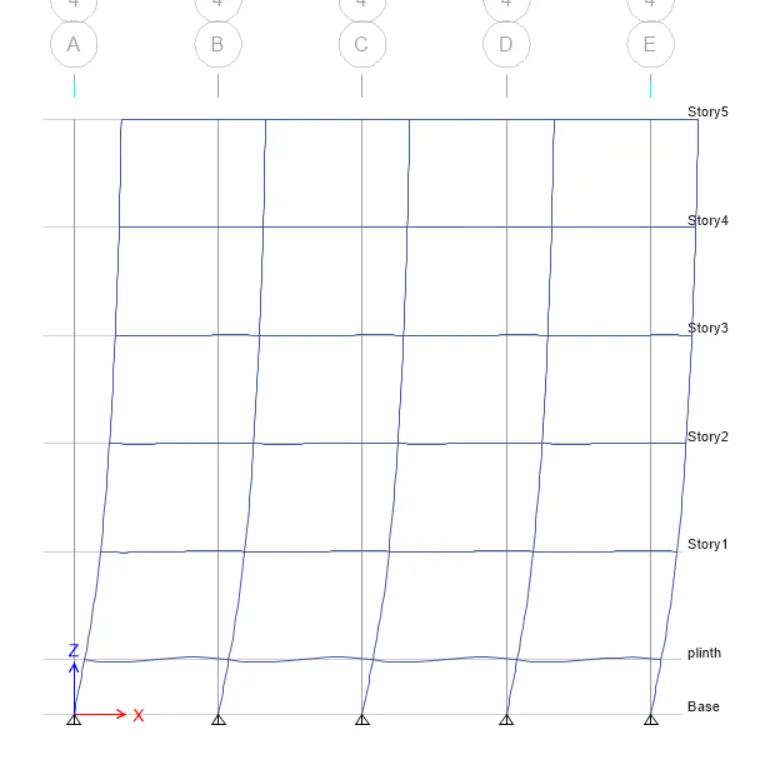
MODE 2:
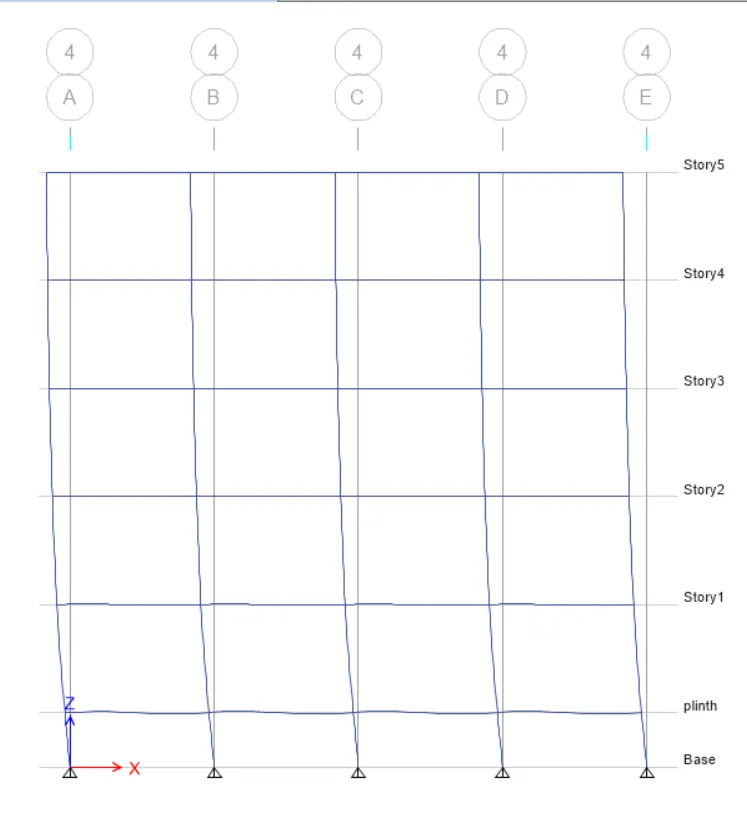
MODE 3:
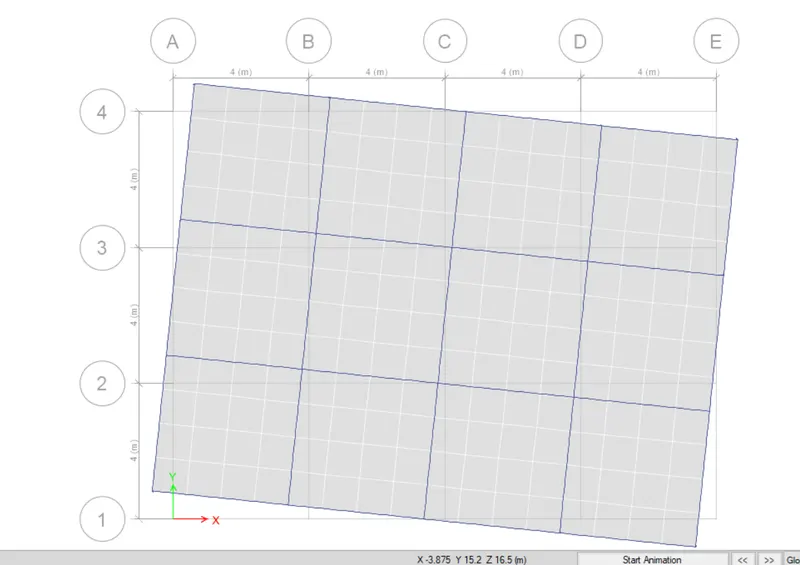
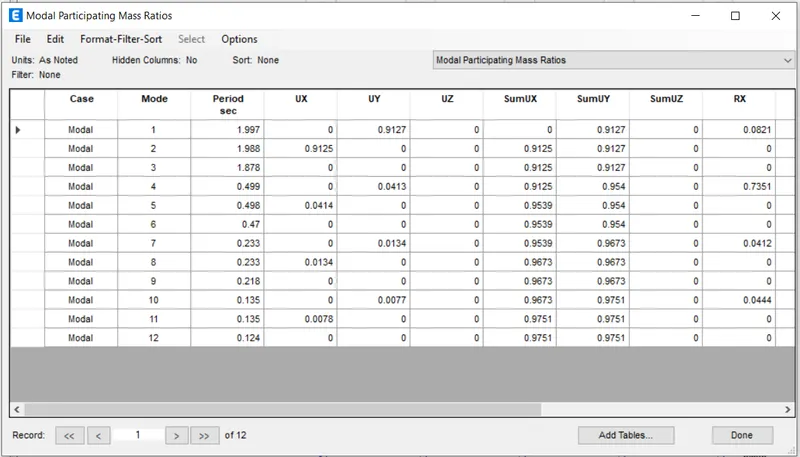
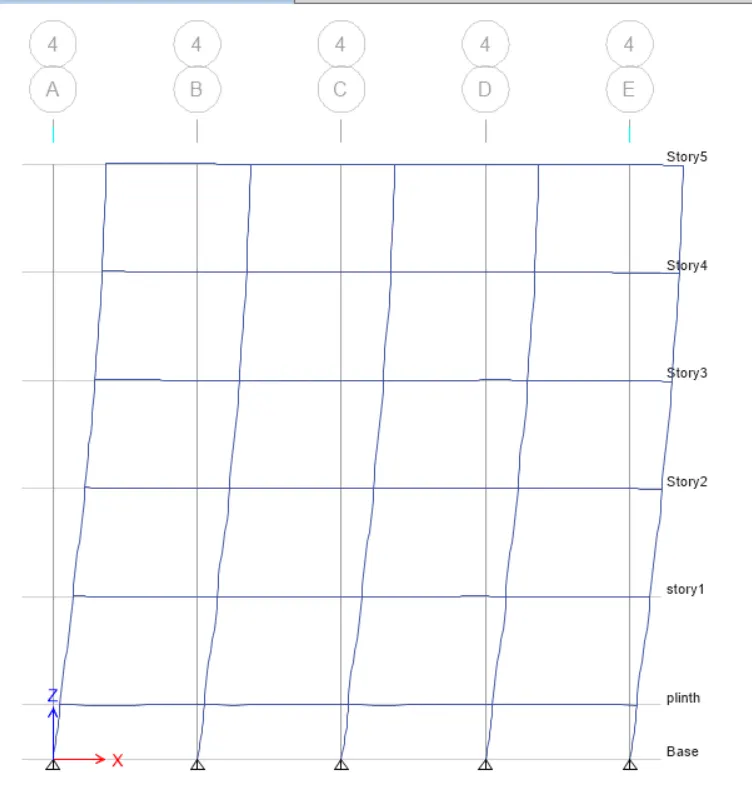
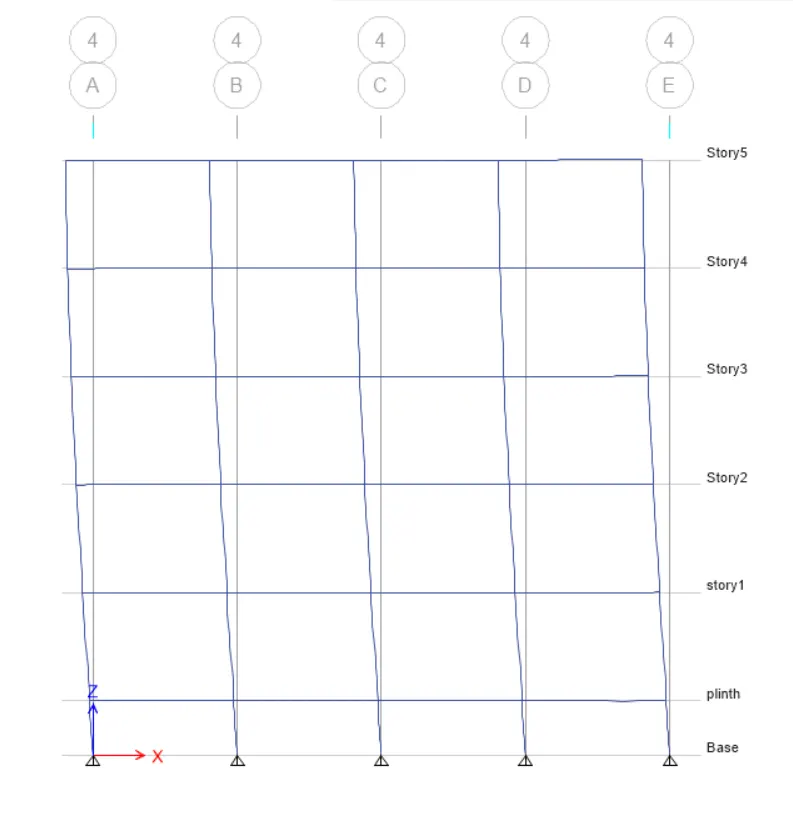
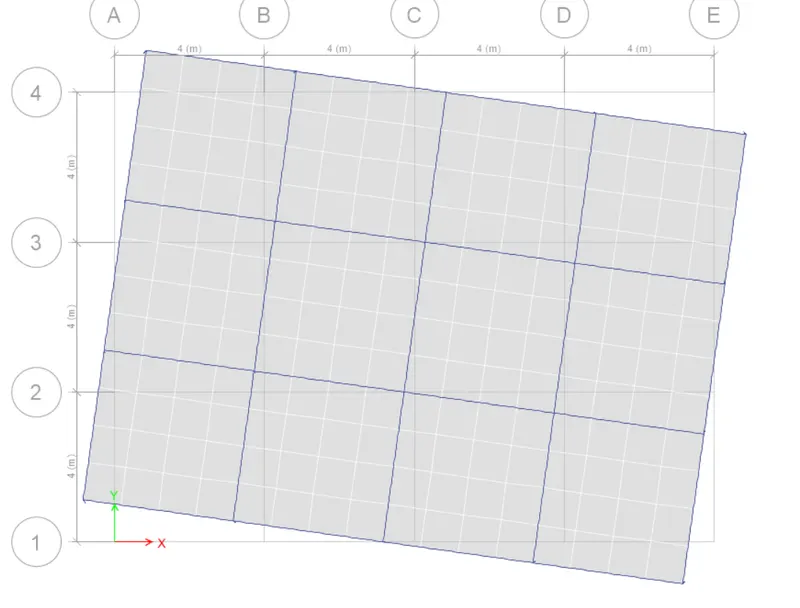
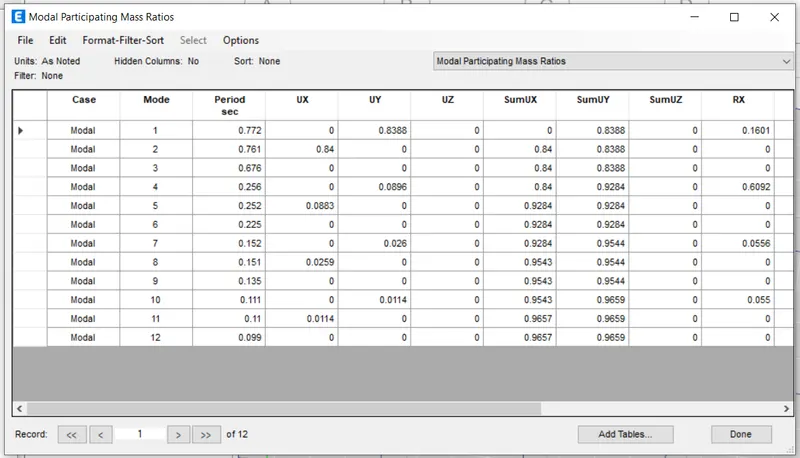
When the flexural stiffness of beams is larger than adjoining columns:
MODE 1:
MODE 2:
MODE 3:
ALL MODES :
- Effect of Axial Stiffness of Vertical Members on mode shapes:
- Compare fundamental mode shape of Building H
- in two situations when axial cross-sectional area of columns is very small versus when it is large.
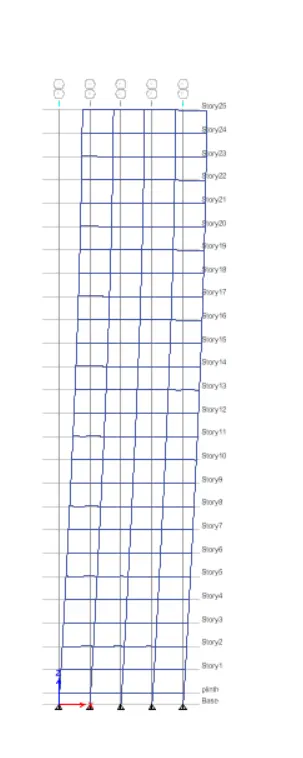
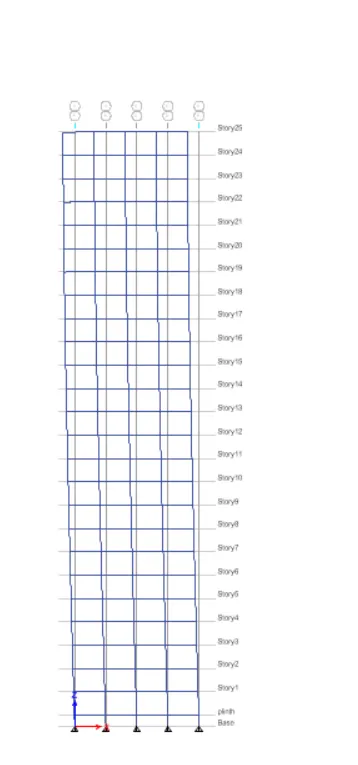
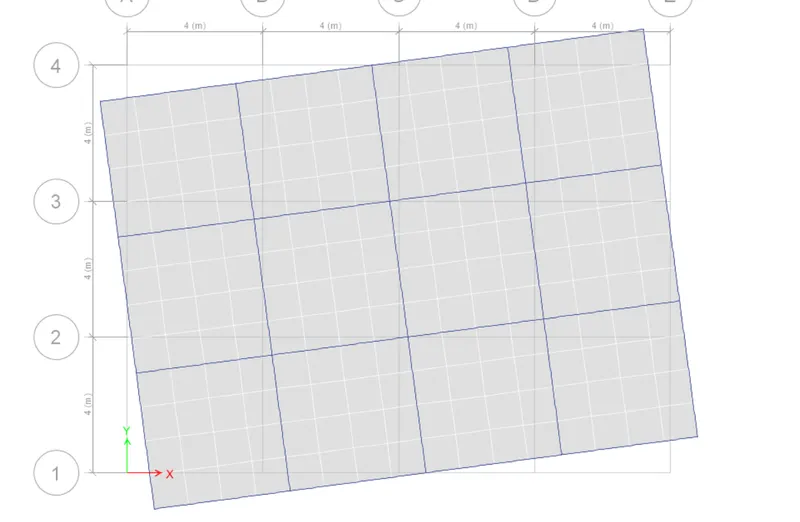
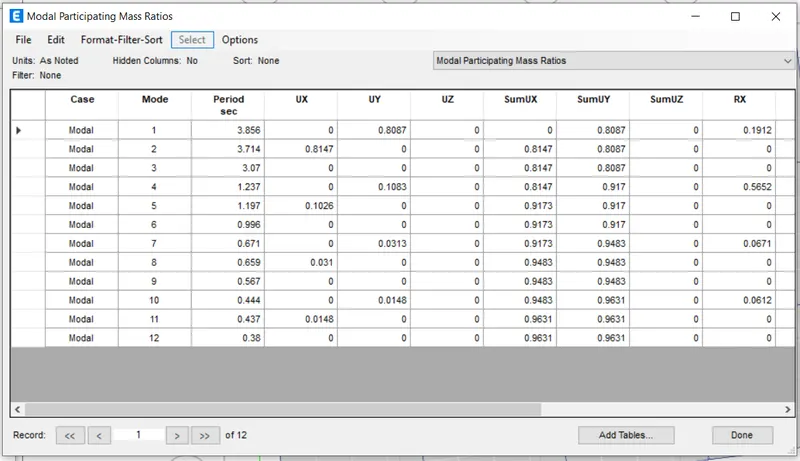
when axial cross sectional area of columns is very large.
MODE 1:
MODE 2:
MODE 3:
ALL MODES :
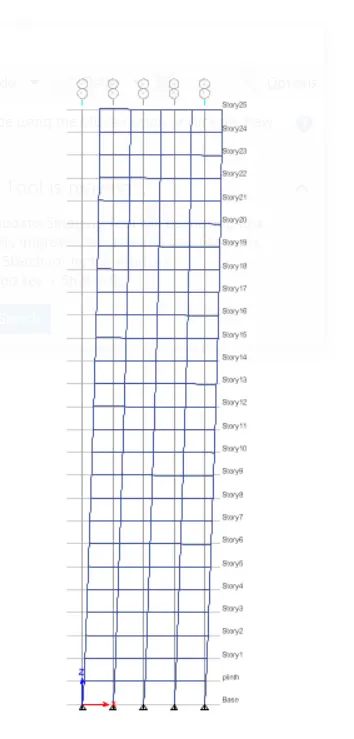
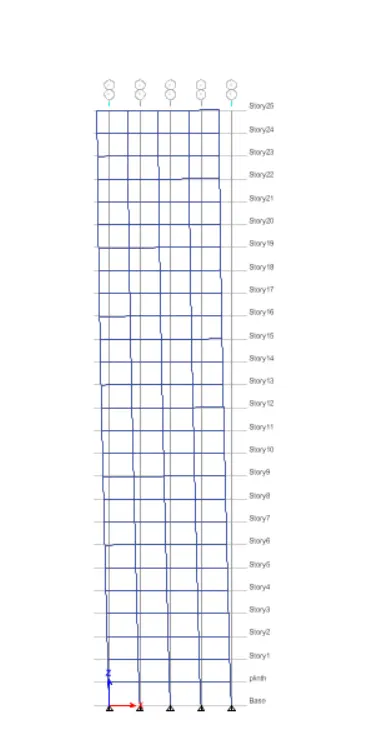
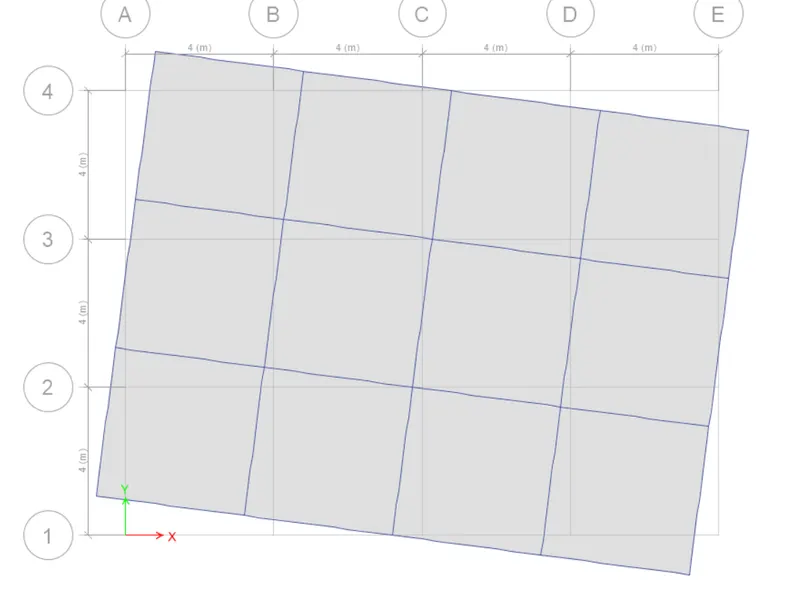
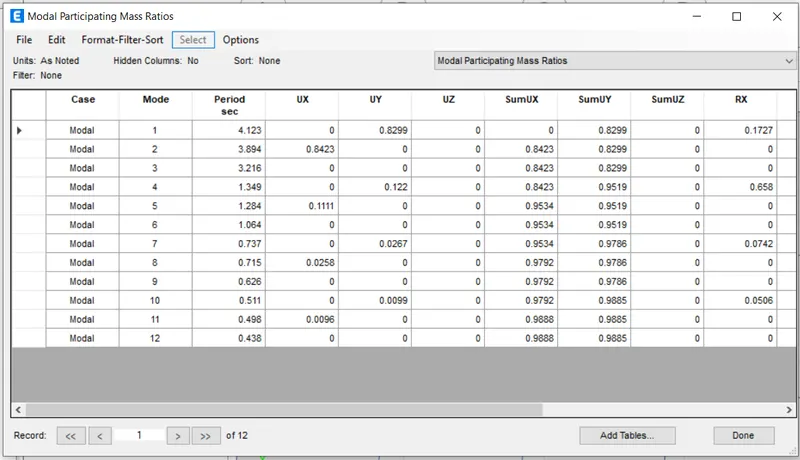
when axial cross section of column is very small.
MODE 1:
MODE 2:
MODE 3:
ALL MODES :
- Effect of Degree of Fixity at column bases on mode shape:
- Compare fundamental mode shape of Building B in two situations when base of columns is pinned versus when it is fixed.
when the supports are pinned.
MODE 1:
MODE 2:
MODE 3:
ALL MODES :
- Effect of Degree of Fixity at column bases on mode shape:
- Compare fundamental mode shape of Building B in two situations when base of columns is pinned versus when it is fixed.
when supports are fixed.
MODE 1:
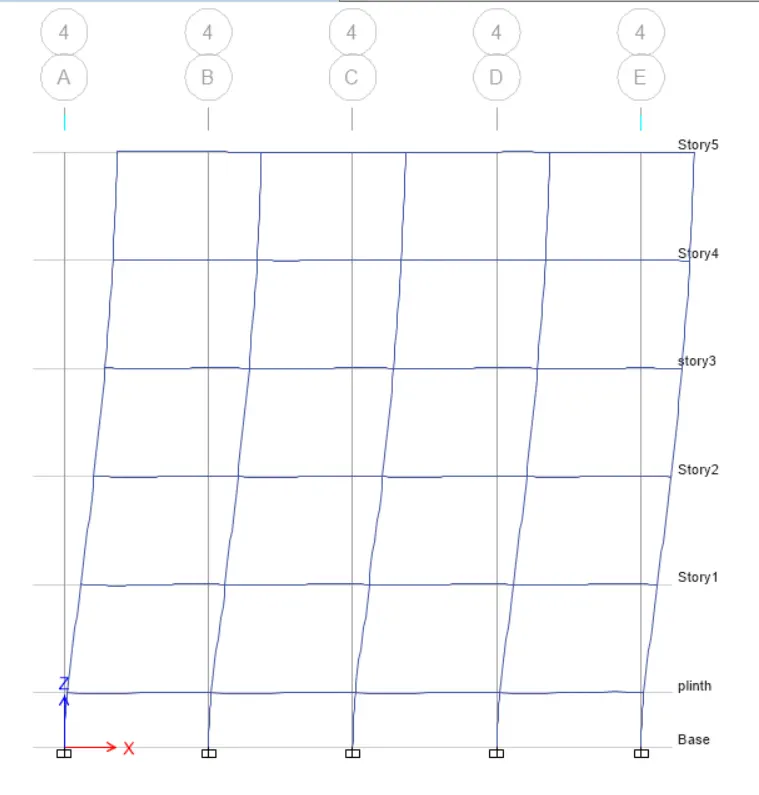
MODE 2:
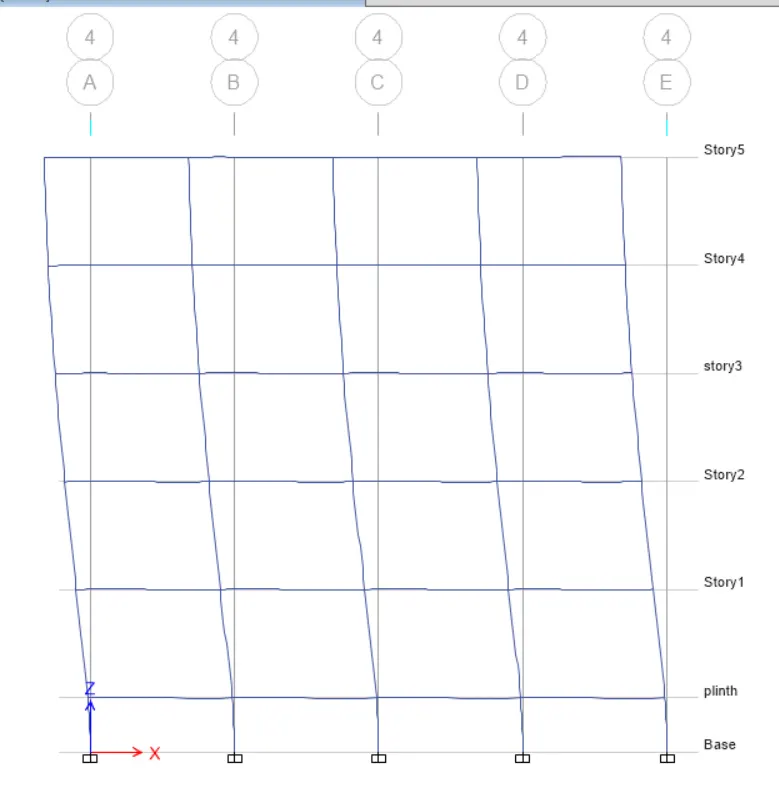
MODE 3:
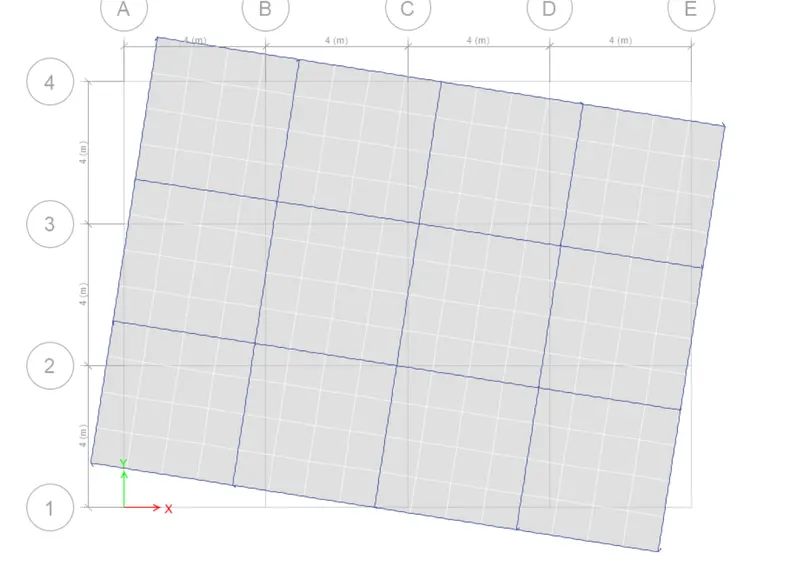
ALL MODES :