Challenge on Combustion
AIM: To perform multiple combustion simulation on a combustor model by introducing water with fuel.
INTRODUCTION: In this simulation, I am using the below mentioned geometry. The simulation will be in 2D.
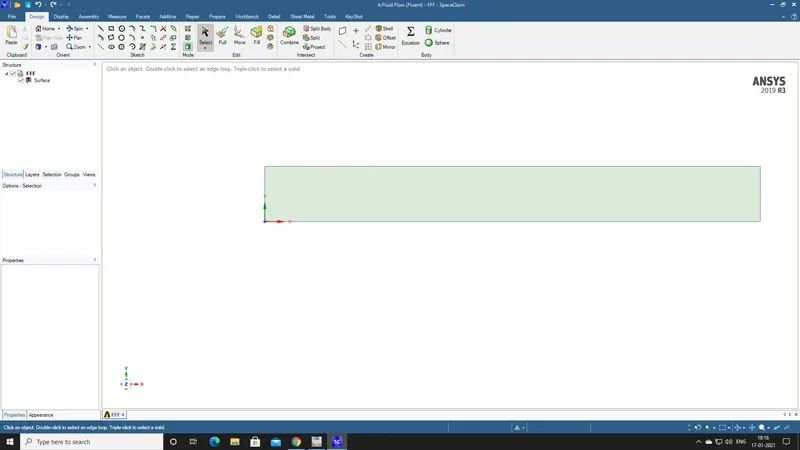
- Fuel Inlet.
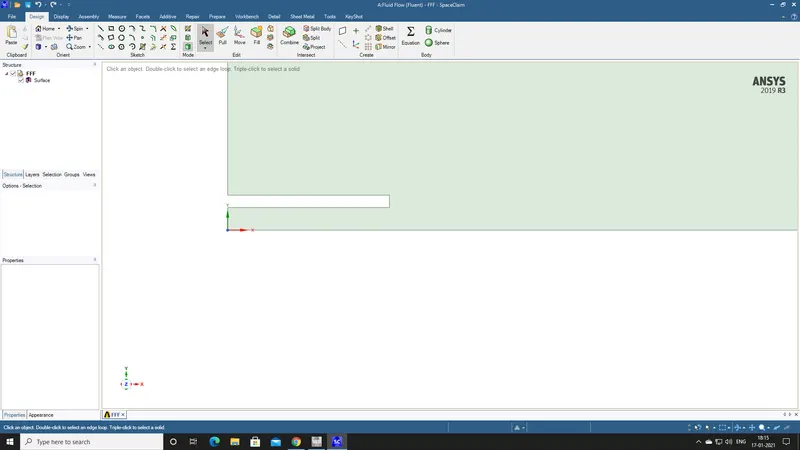
- MESHING:
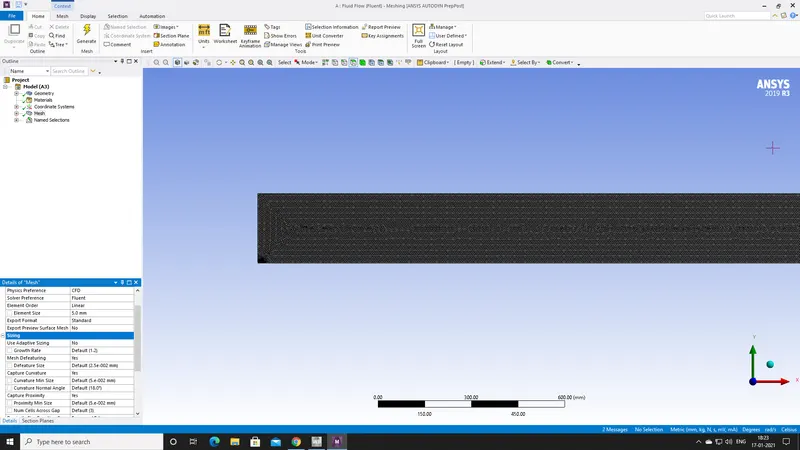
- Mesh size is 5mm.
- The meshing method is triangular.
- Enable the capture proximity.
- FLUENT-SOLVER:
- As this is a 2D simulation, enable axisymmetric.
- Enable the energy equation.
- The viscous model is the K-epsilon turbulence model.
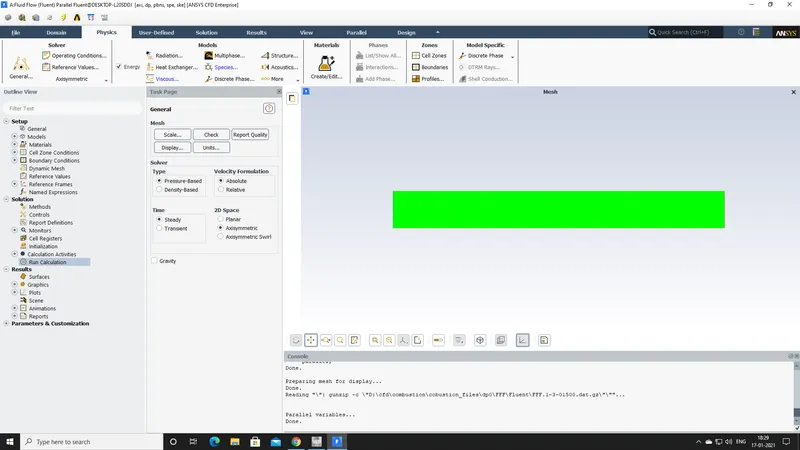
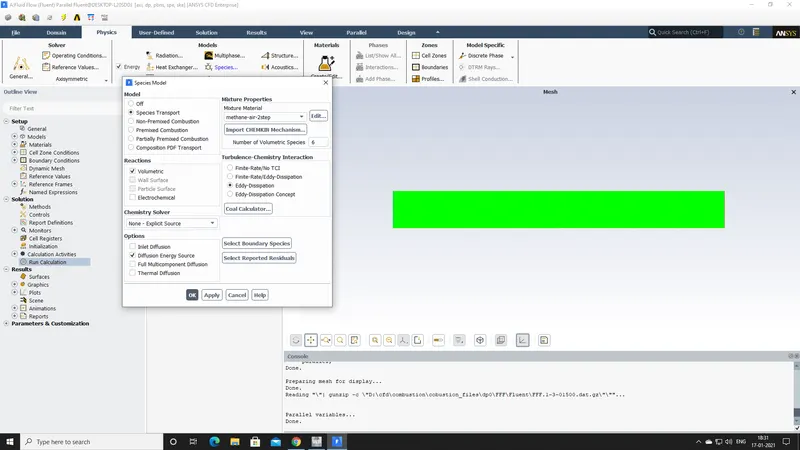
- Enable the species
RESULTS:
The following results are of material contains 1 mole of CH4, 0.23 moles of O2
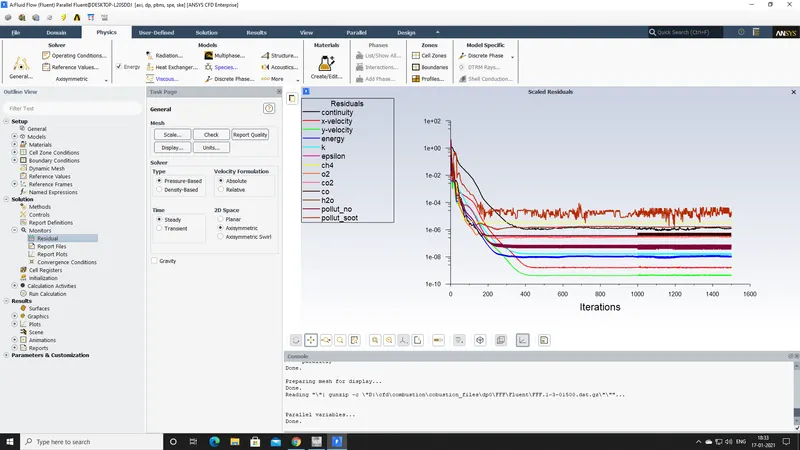
- Residual Plots
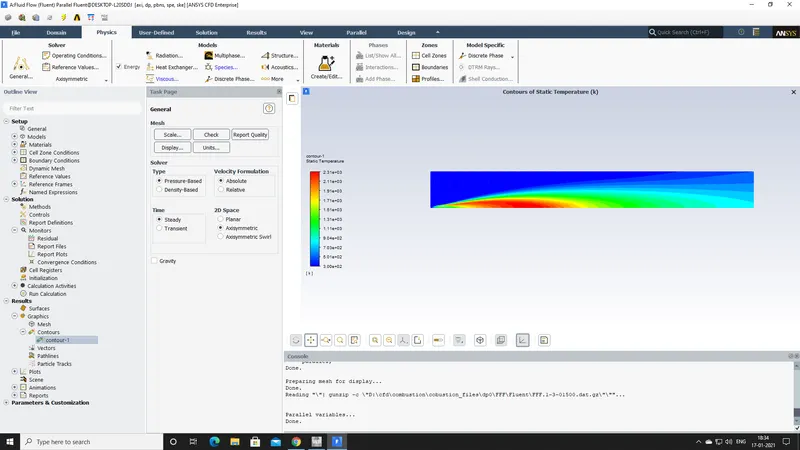
- Contour
- CFD Post-Processing:
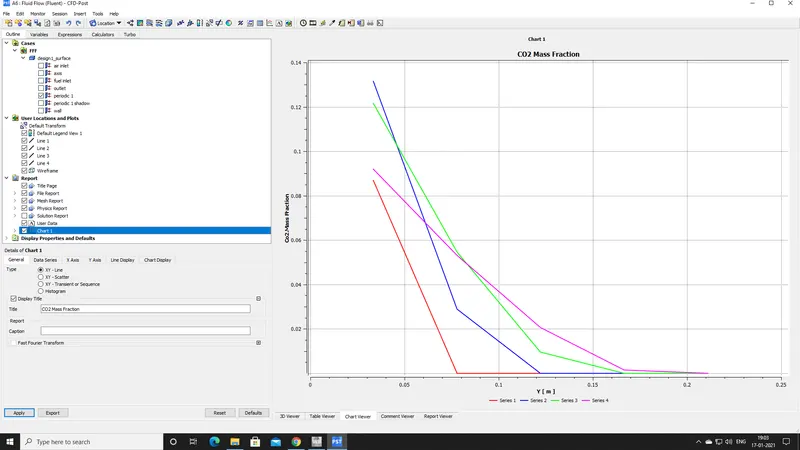
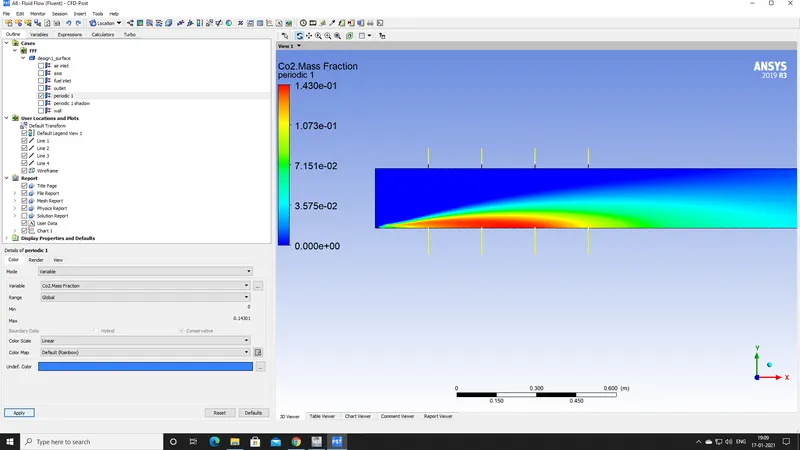
CO2 MASS FRACTION:
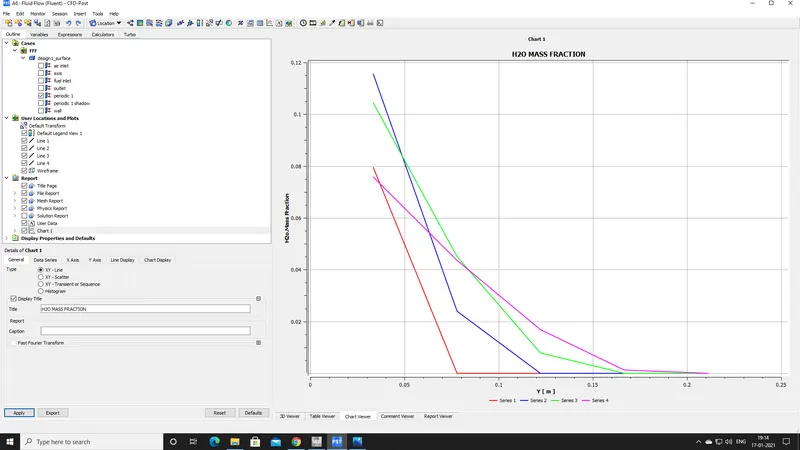
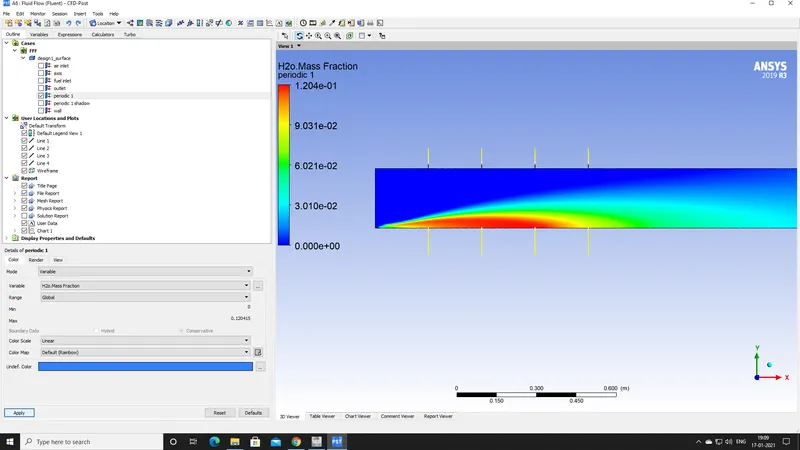
H2O MASS FRACTION:
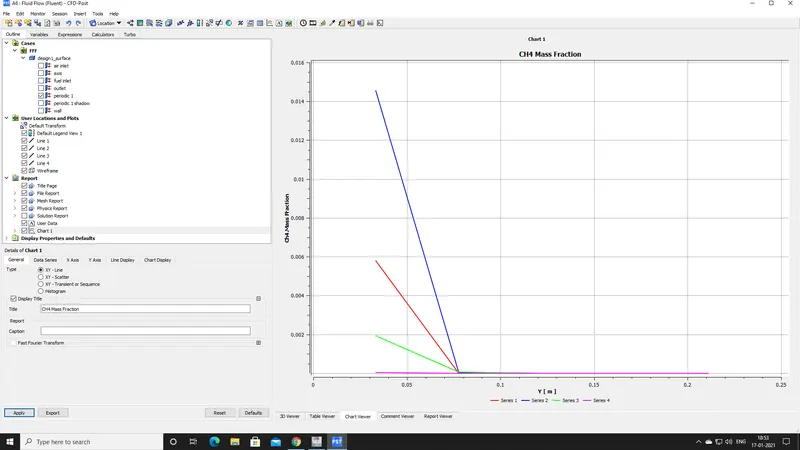
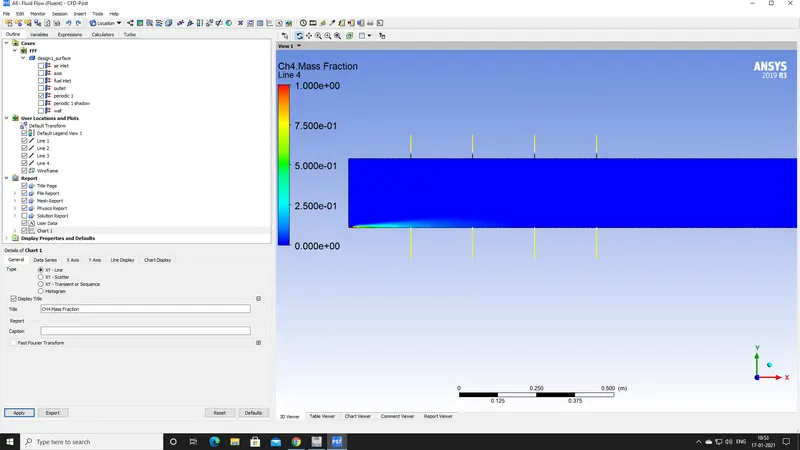
CH4 MASS FRACTION:
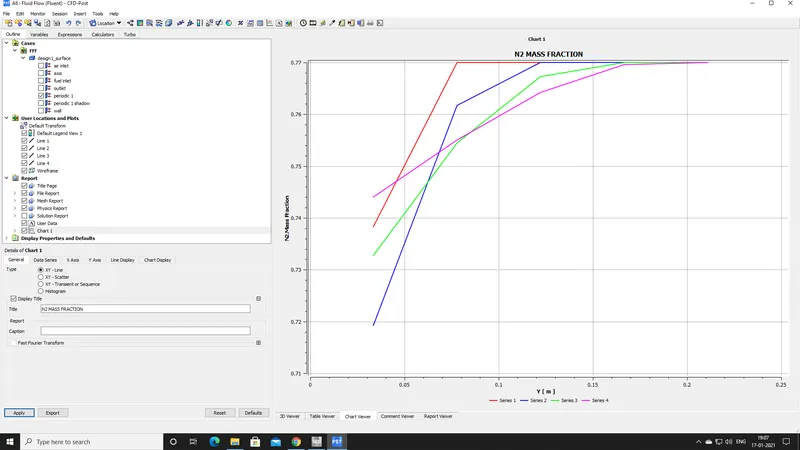
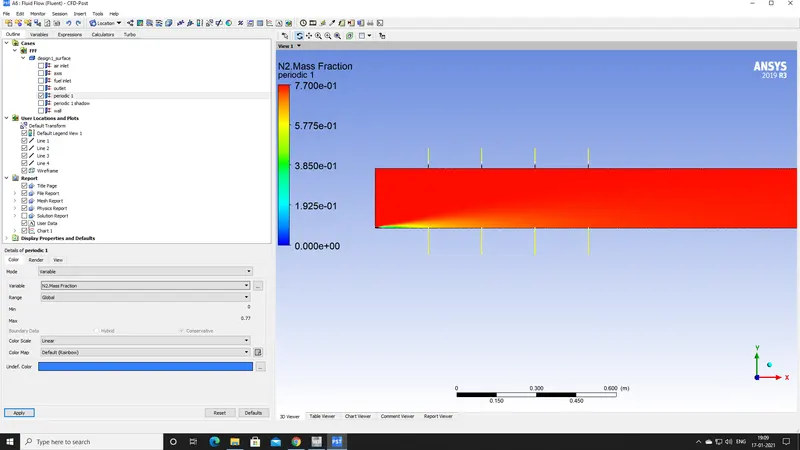
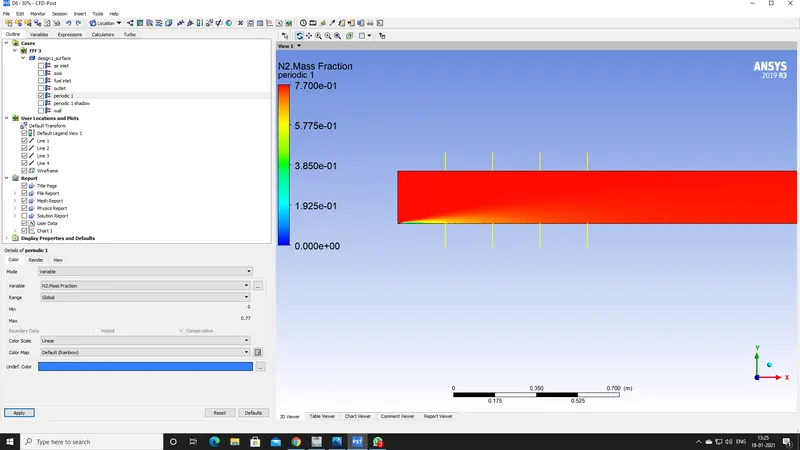
N2 MASS FRACTION:
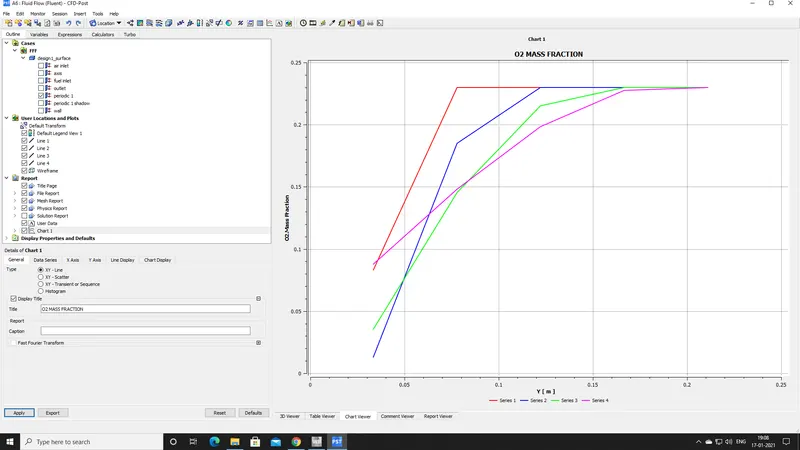
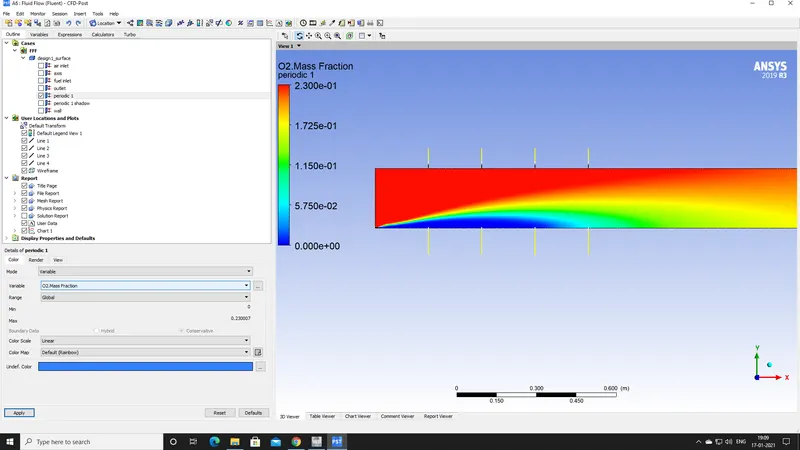
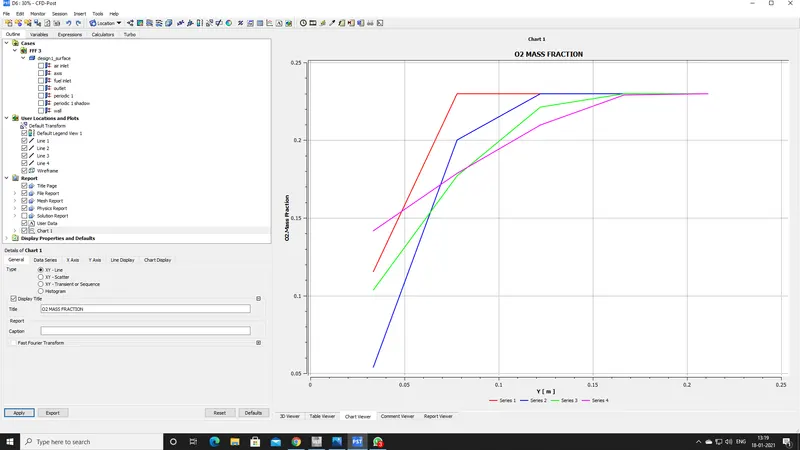
O2 MASS FRACTION:
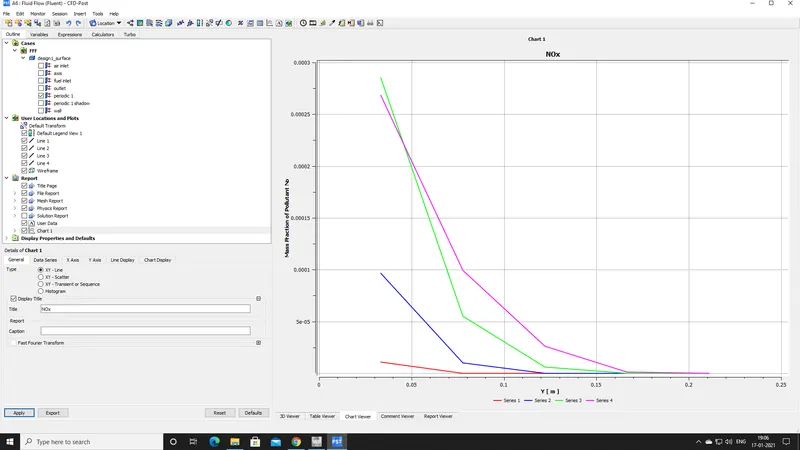
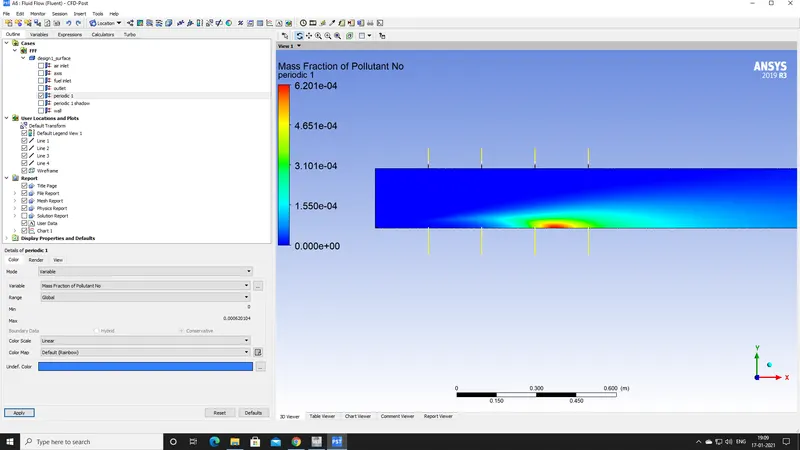
NOx FORMATION
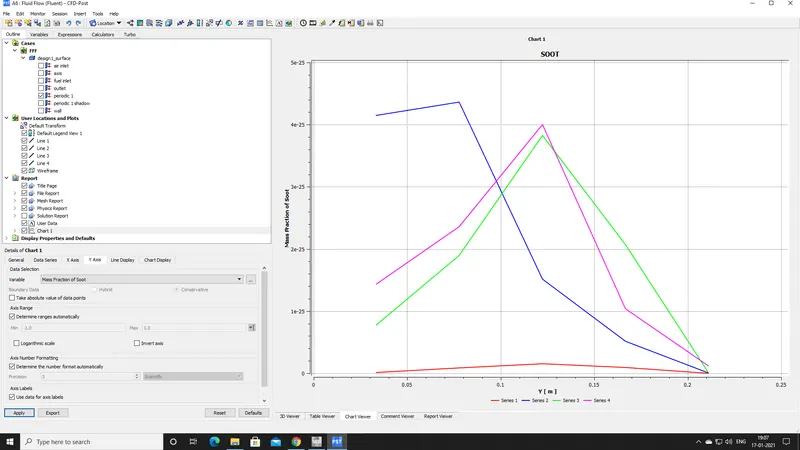
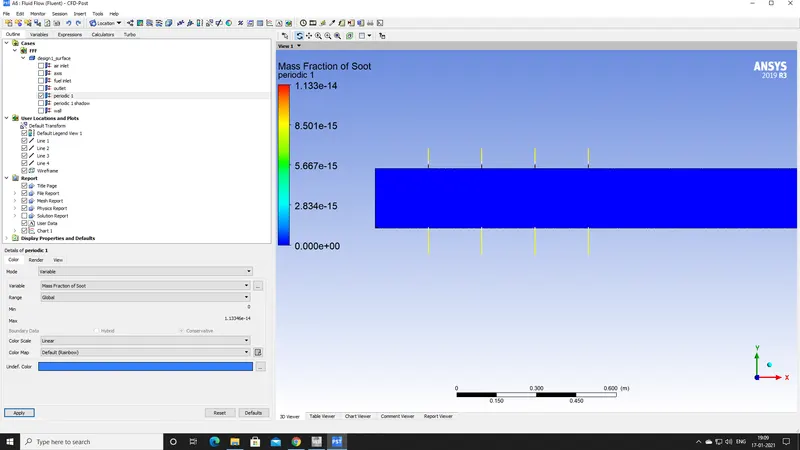
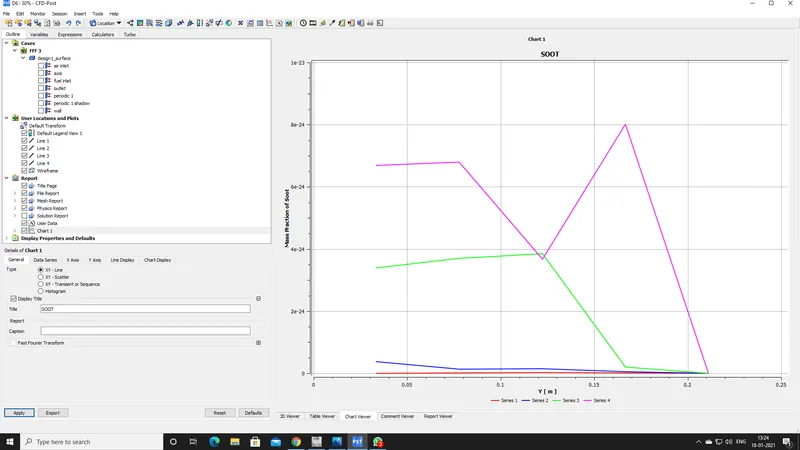
SOOT FORMATION
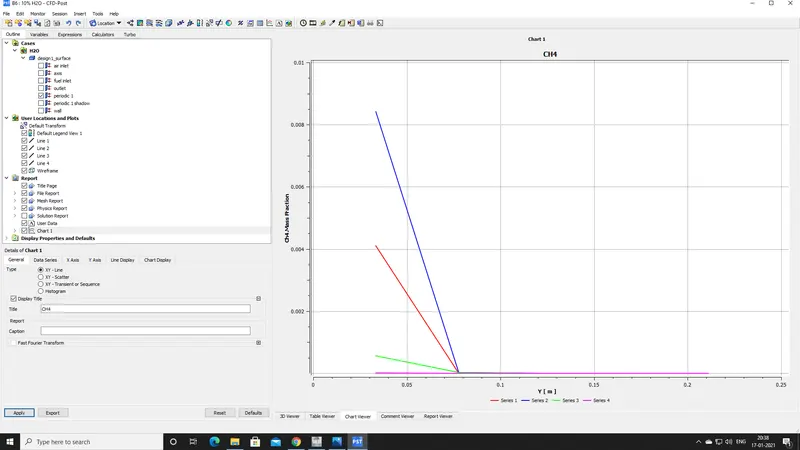
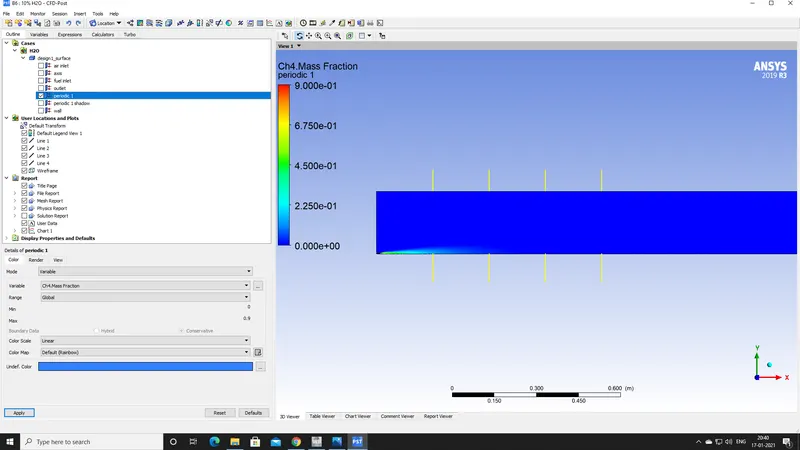
Results of 10%, 20%, & 30% water with CH4 into combustion chamber:
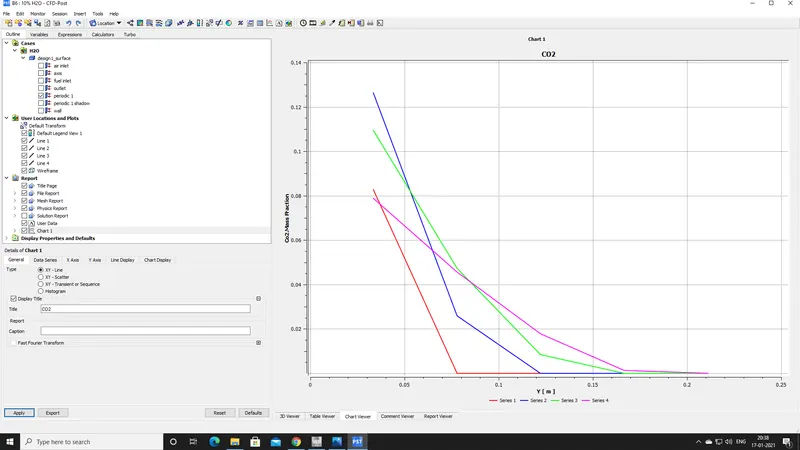
- CH4 MASS FRACTION (10% WATER)
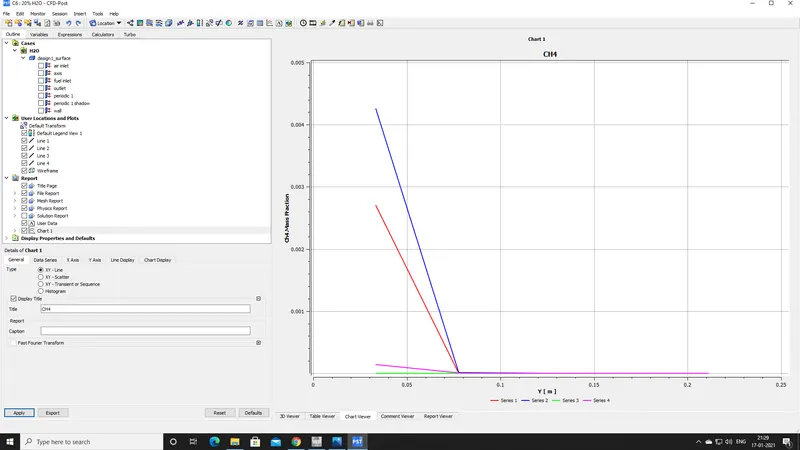
- CH4 MASS FRACTION (20% WATER)
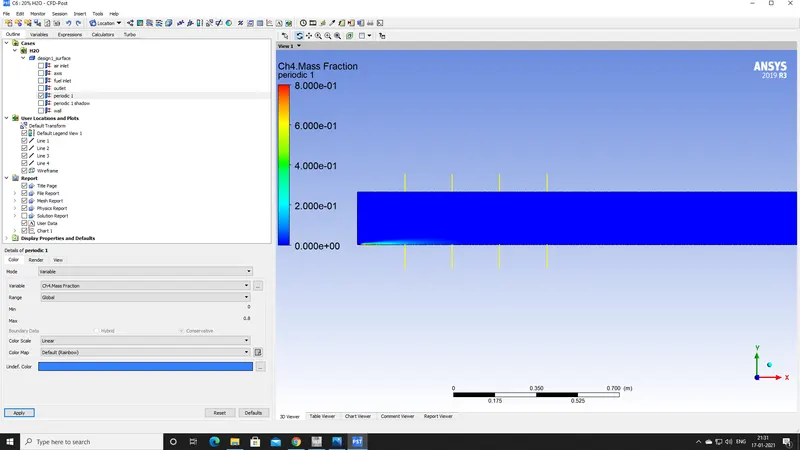
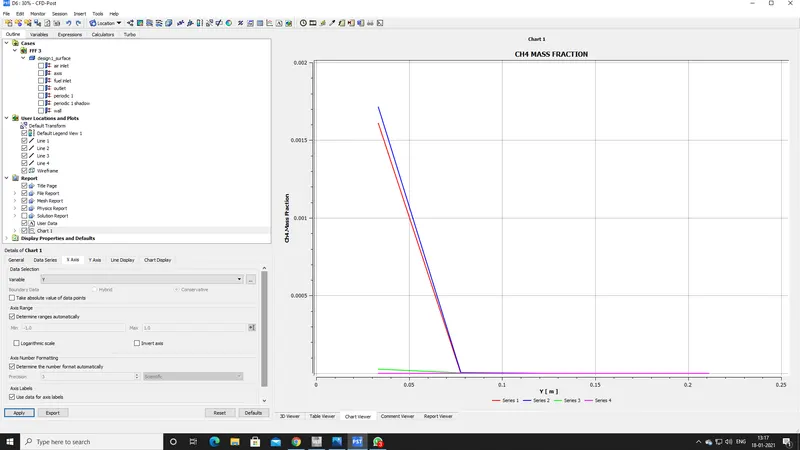
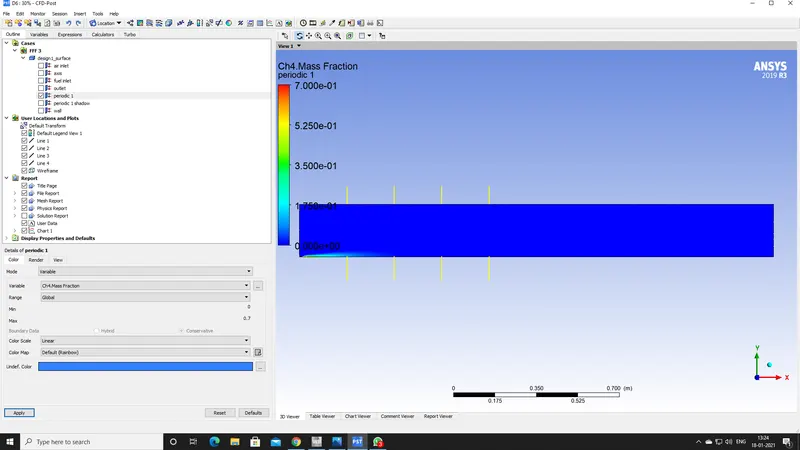
- CH4 MASS FRACTION (30% WATER)
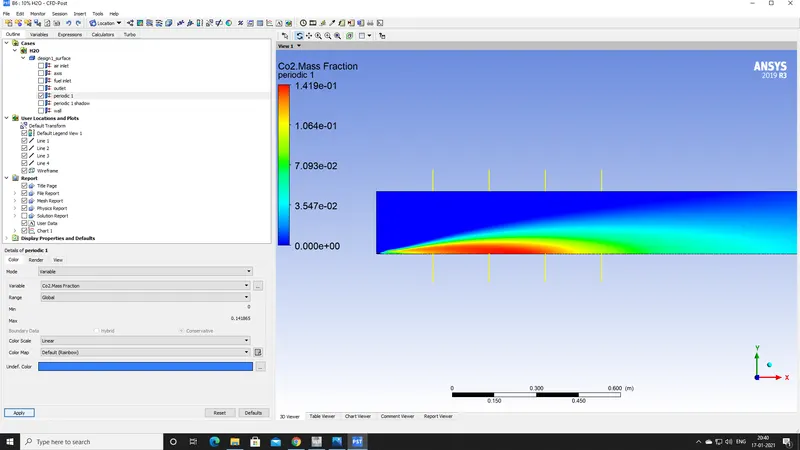
- CO2 MASS FRACTION (10% WATER)
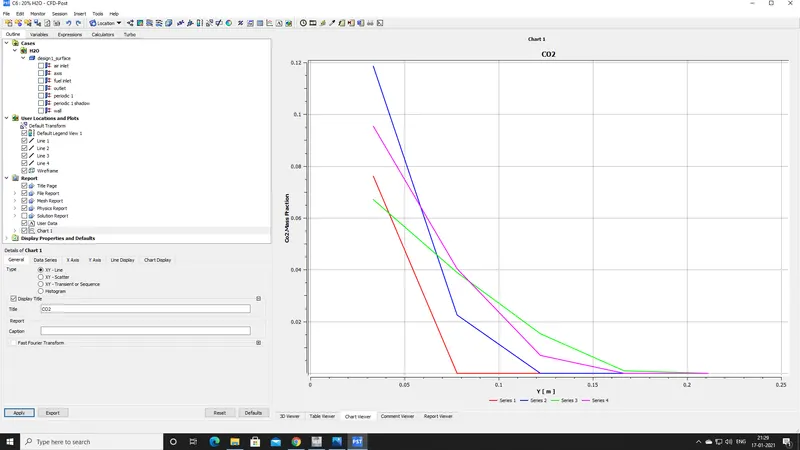
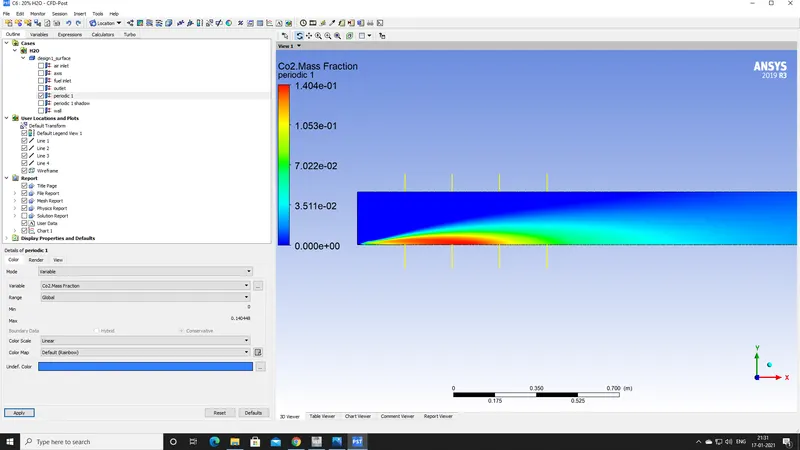
- CO2 MASS FRACTION (20% WATER)
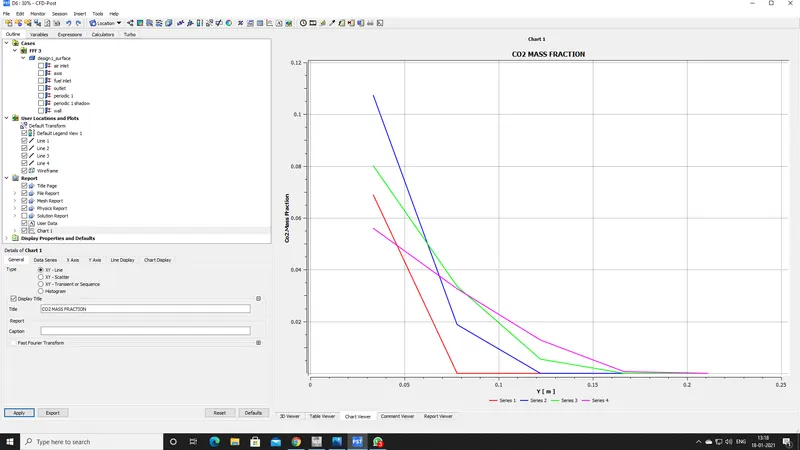
- CO2 MASS FRACTION (30% WATER)
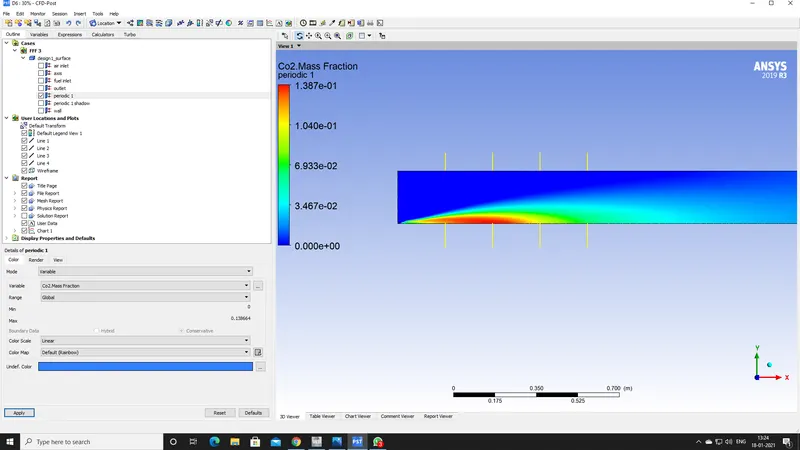
- H2O MASS FRACTION. (10% WATER)
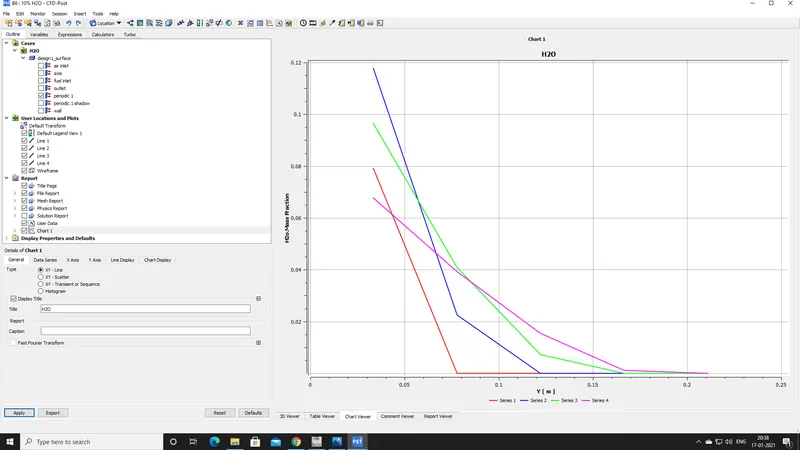
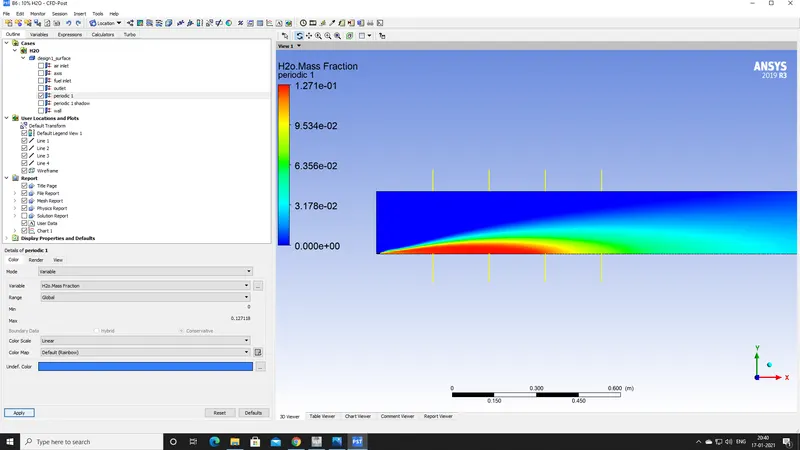
- H2O MASS FRACTION. (20% WATER)
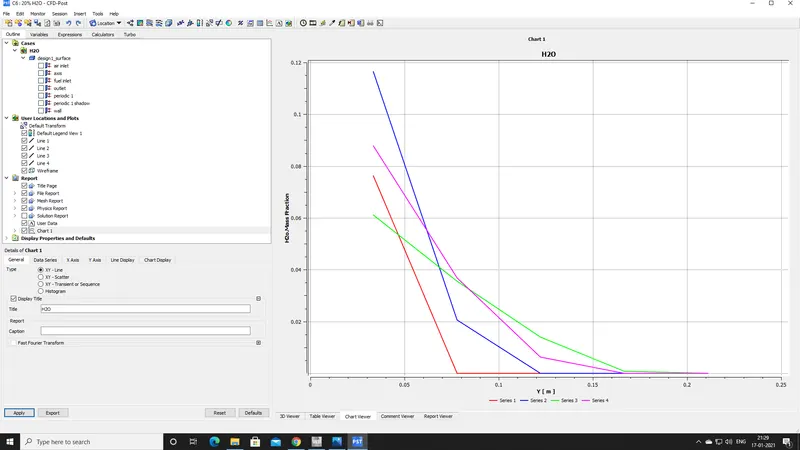
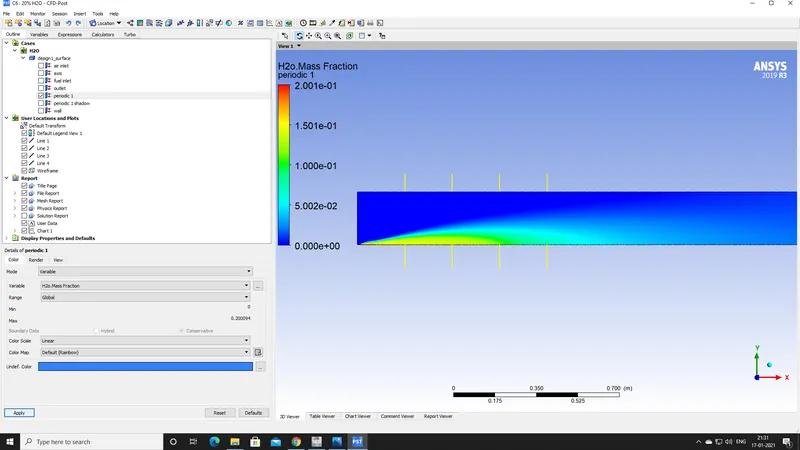
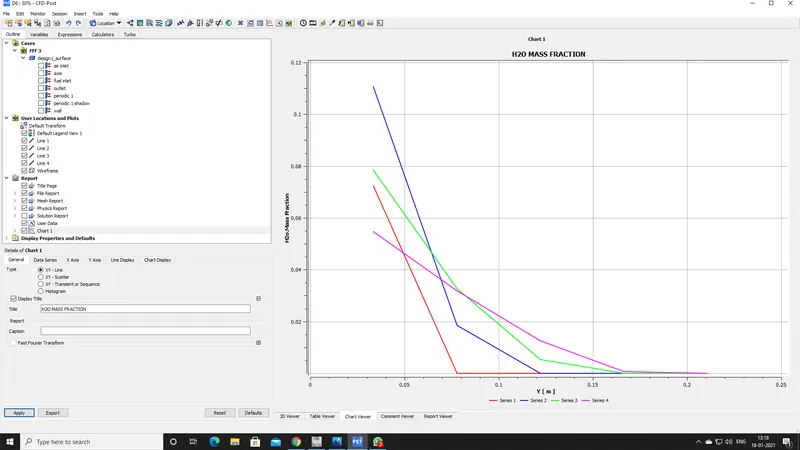
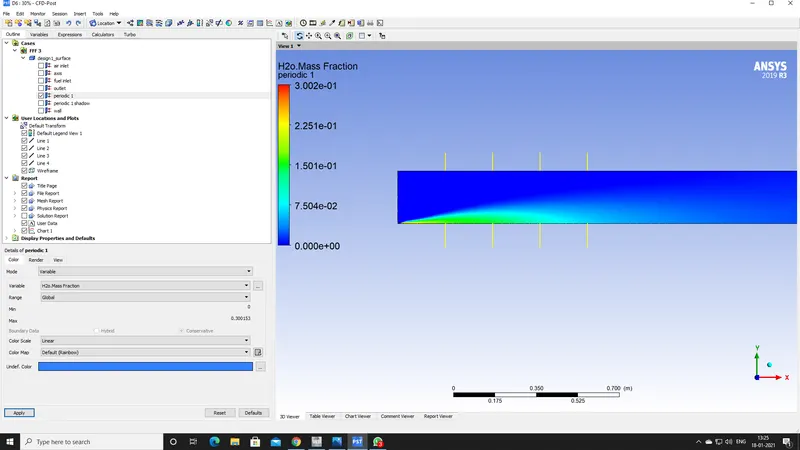
- H2O MASS FRACTION. (30% WATER)
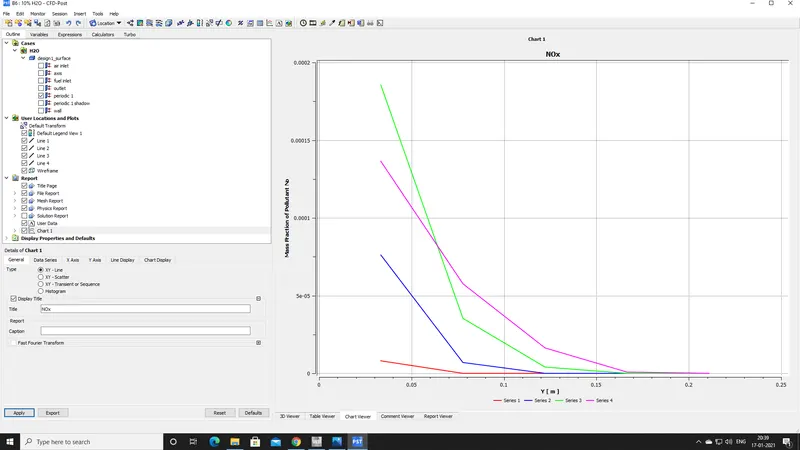
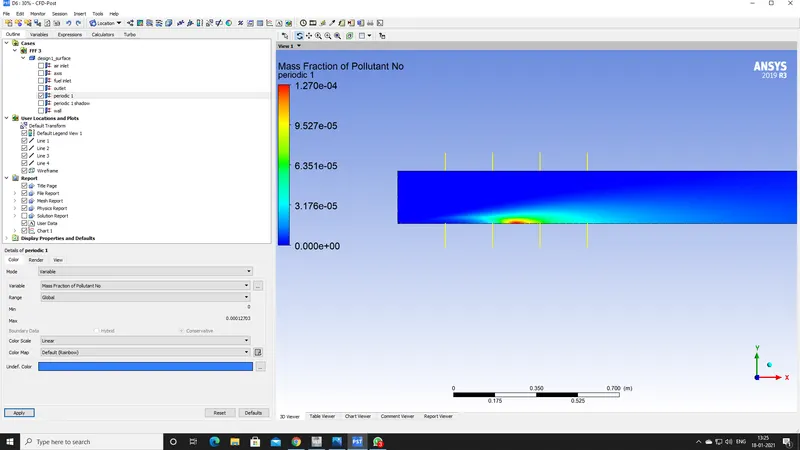
- NOx FORMATION (10% WATER)
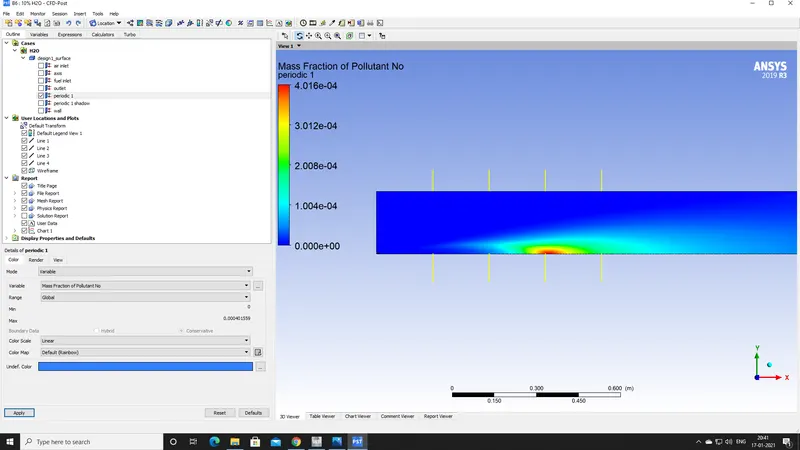
- NOx FORMATION (20% WATER)
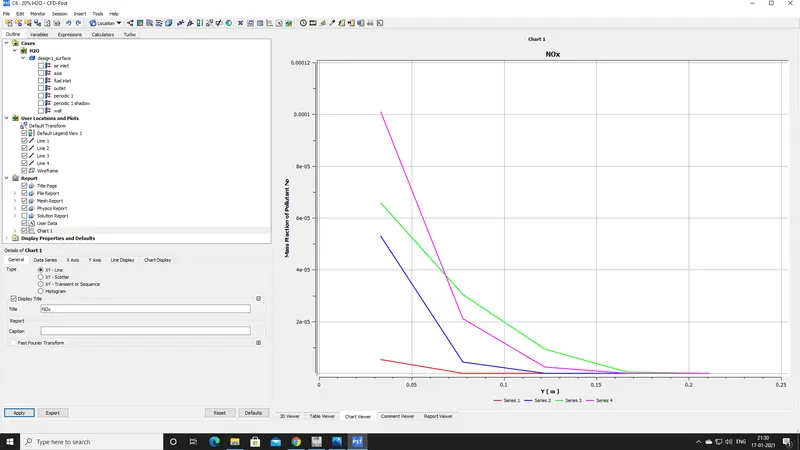
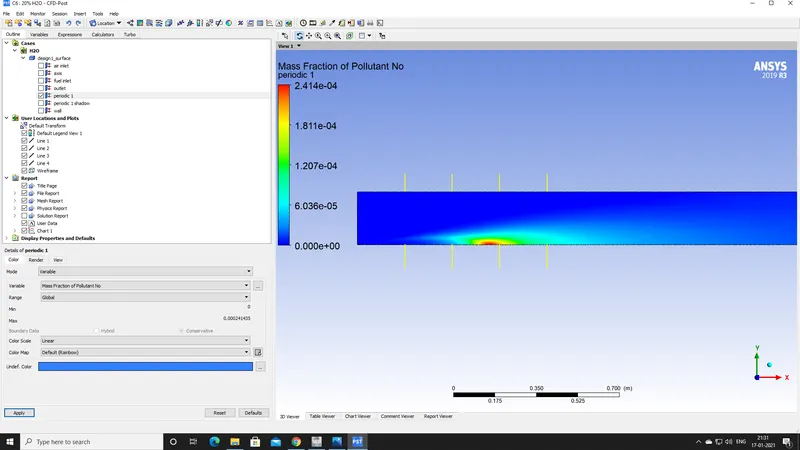
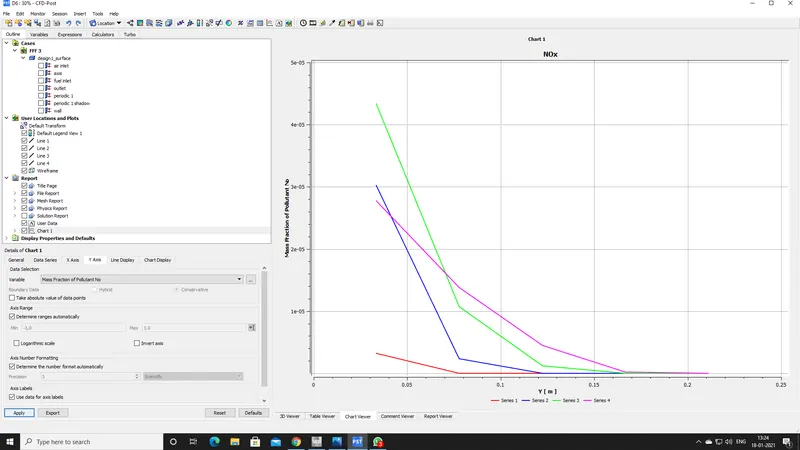
- NOx FORMATION (30% WATER)
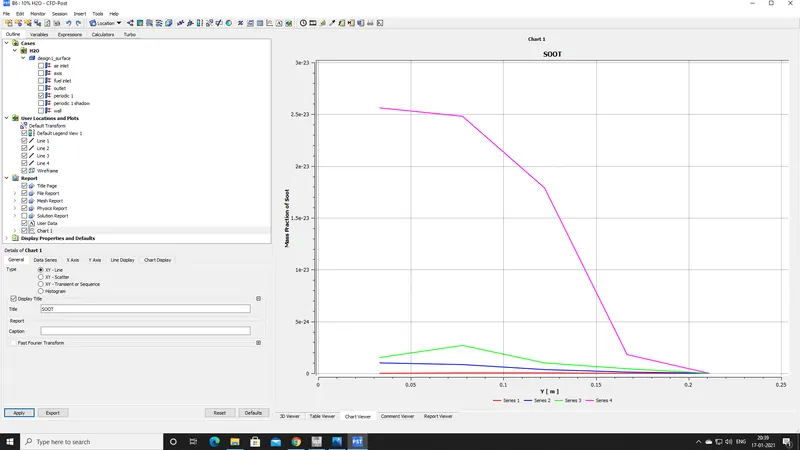
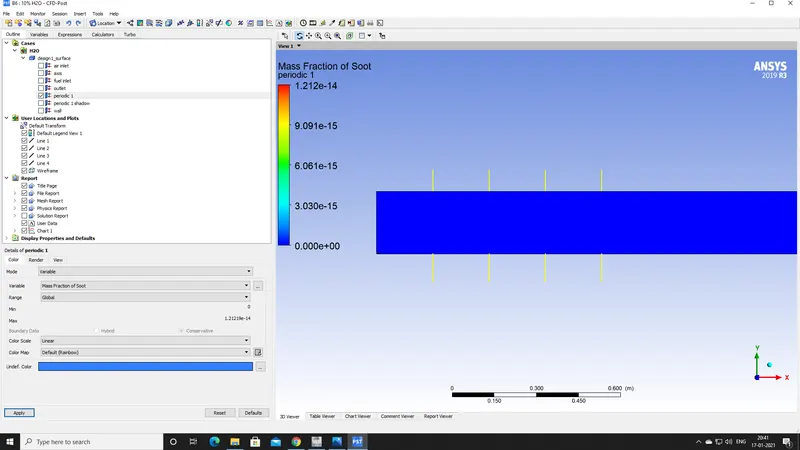
- SOOT FORMATION (10% WATER)
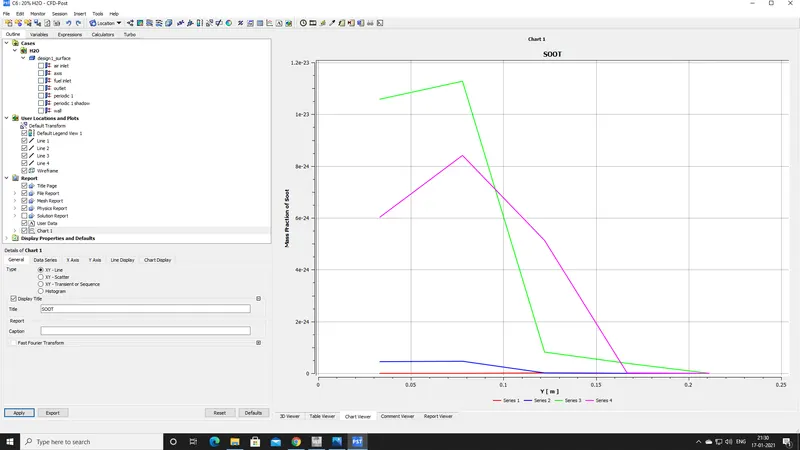
- SOOT FORMATION (20% WATER)
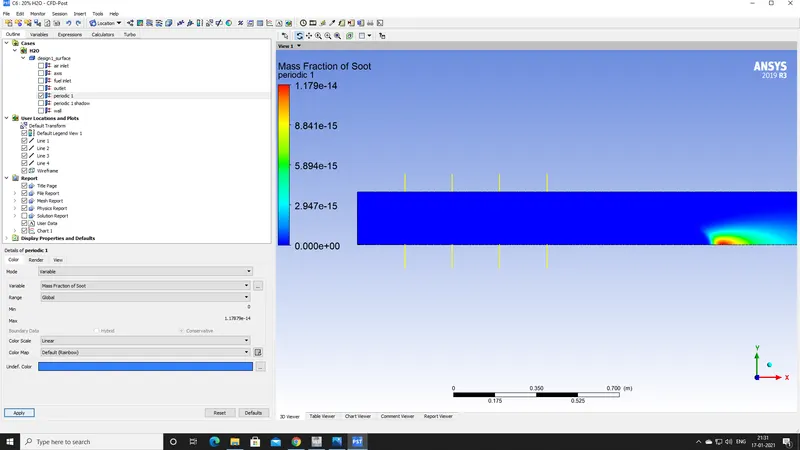
- SOOT FORMATION (30% WATER)
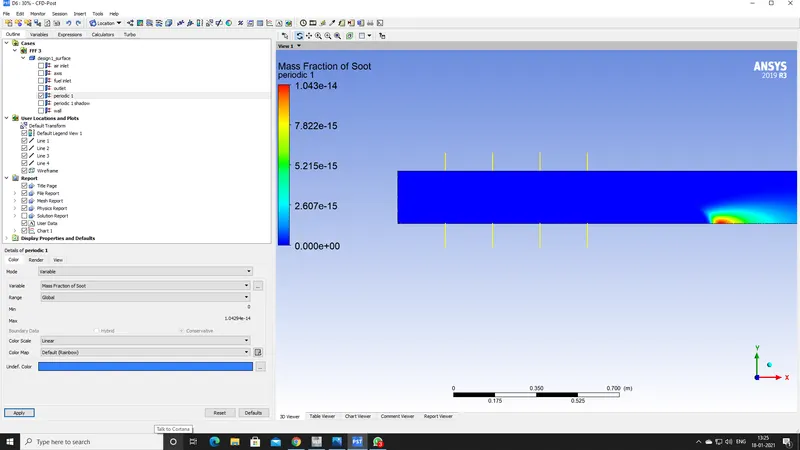
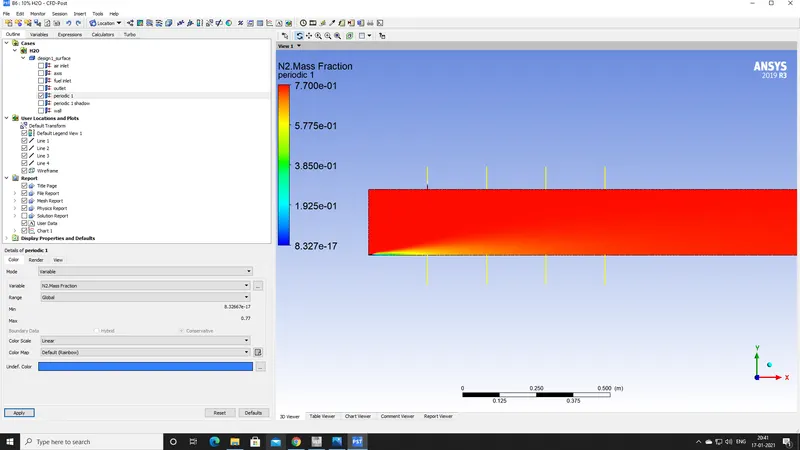
- N2 MASS FRACTION (10% WATER)
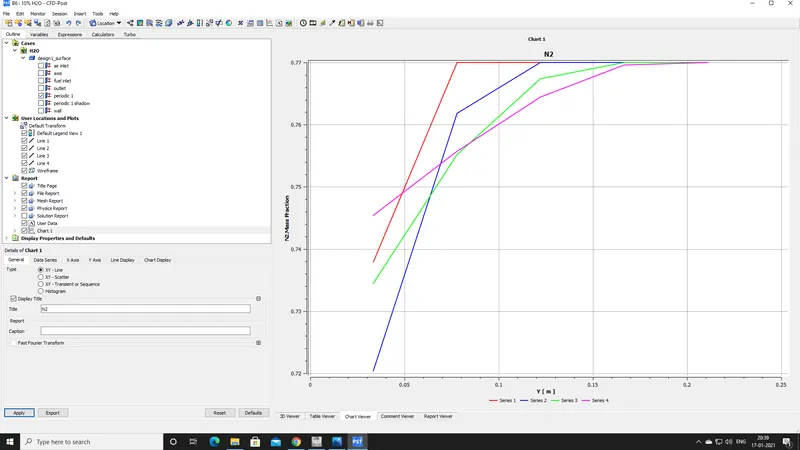
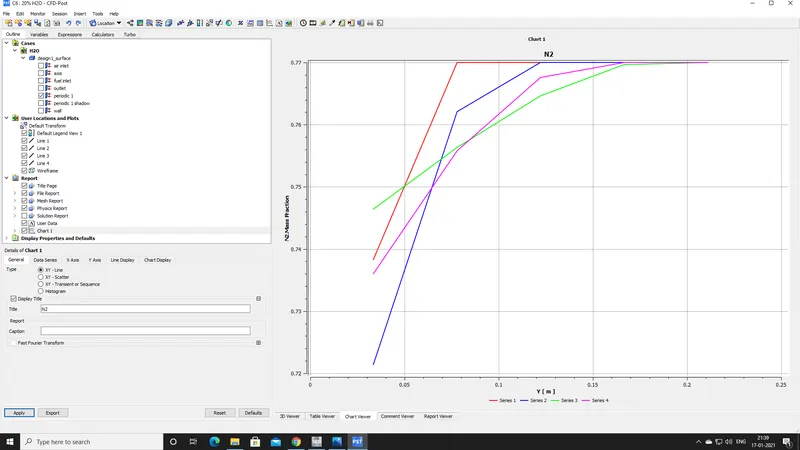
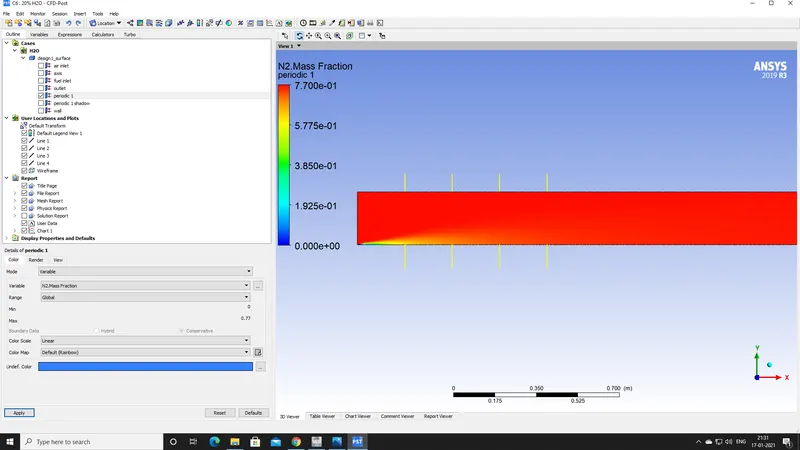
- N2 MASS FRACTION (20% WATER)
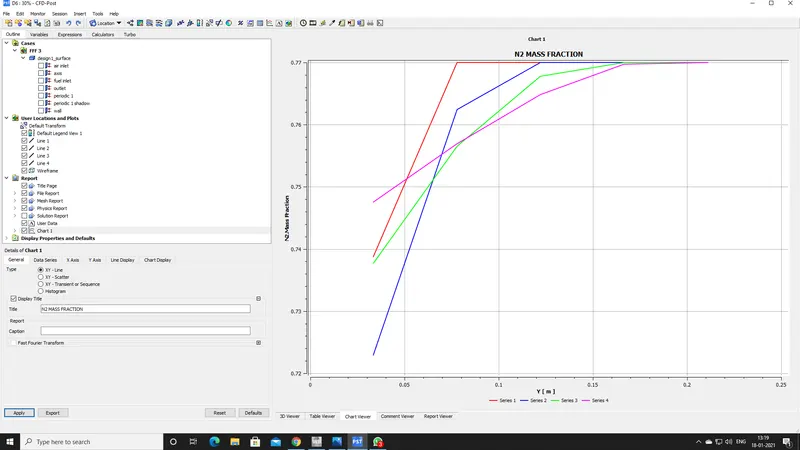
- N2 MASS FRACTION (30% WATER)
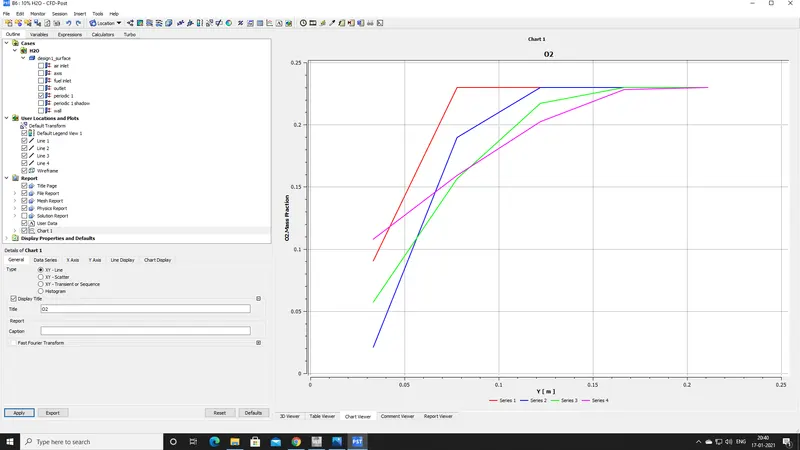
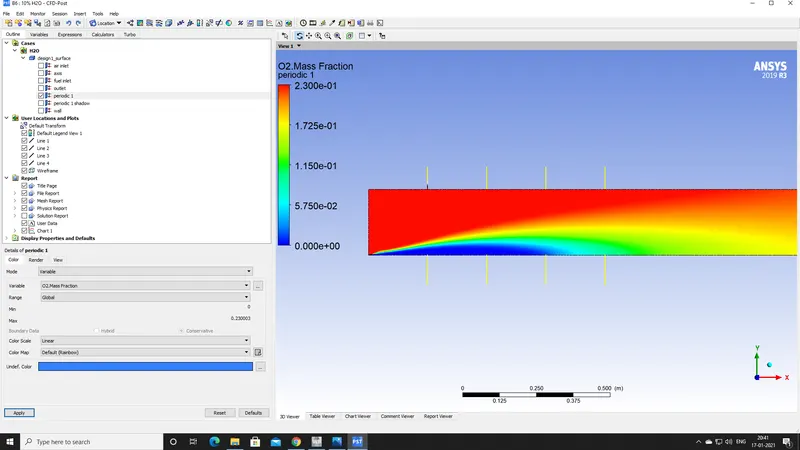
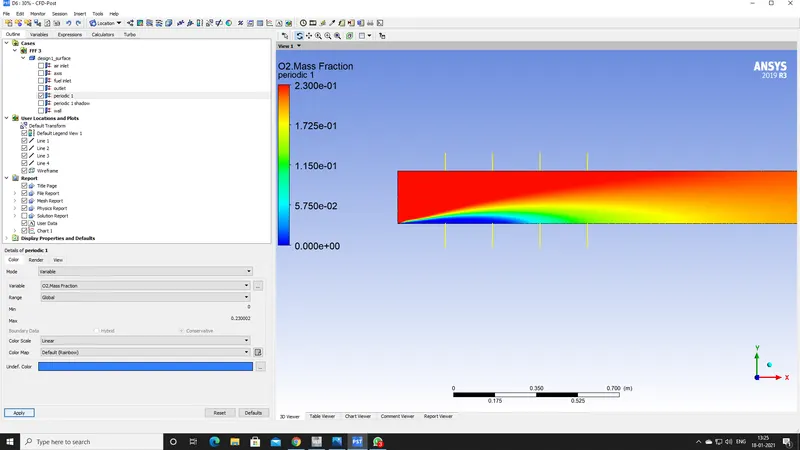
- O2 MASS FRACTION (10% WATER)
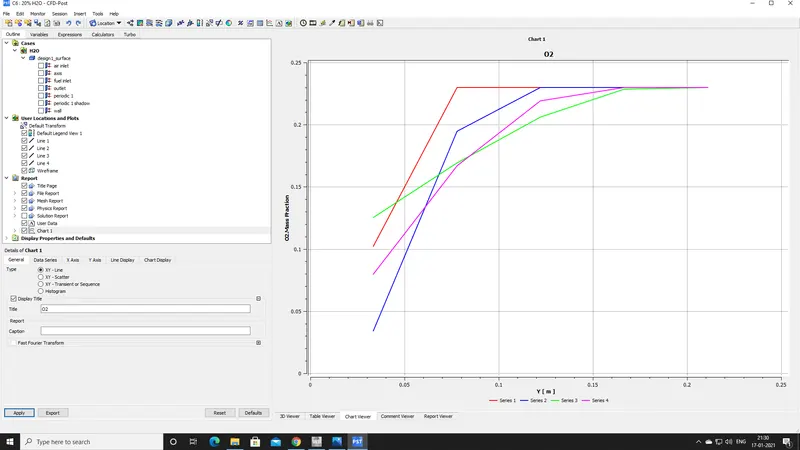
- O2 MASS FRACTION (20% WATER)
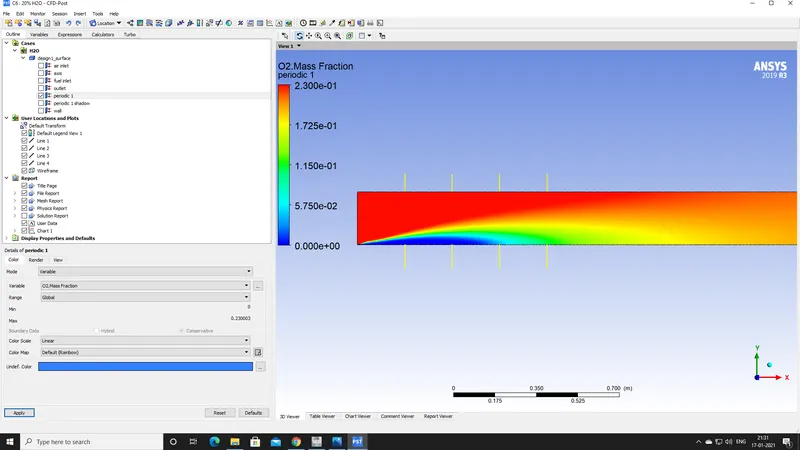
- O2 MASS FRACTION (30% WATER)
THEORY:
- As mentioned at the beginning we are introducing air and methane into the combustion chamber.
- In the atmosphere, air contains 29% oxygen and 71% nitrogen.
So, 79/21=3.79
`CH_4+ar(O_2+3.76N_2) => aCO_2+bH_2O+cN_2`
We have,
1=a, 2ar=2a+b, 4=2b, ar= a+b/2.
Air= 2 moles of Oxygen + 7.52 moles of Nitrogen = 9.52 moles.
Fule = 1 mole of CH4.
Oxygen Mole fraction = 2/9.52 = 0.21.(Mass fraction = 0.23)
Nitrogen Mole Fraction = 7.52/9.52 = 0.77.
CONCLUSION:
- I would like to conclude that I have completed part one and part two challenges. After completing the simulation I have plotted all the graphs mentioned in part one.
- Here, I would like to discuss NOx and SOOT formation. What are they and why do they occur.
- Firstly NOx, as air contains oxygen and nitrogen, which means the reactions from the air-fuel mixture in the combustion chamber, during combustion, these elements combine to form NOx.
- Lastly, SOOT, fuel particle after reaction in the combustion chamber turns to gaseous form. In a few situations, some particles remain unburnt and these particles react in the next cycle of combustion these are called soot.
- We can observe the soot formation in our above simulation as the percentage of water is increasing the soot is formed at a distance of one meter away from the nozzle.
- The combustion simulation is done by using the eddy dissipation model.
- Air and fuel need an external agent to react such as a fire. The eddy dissipation helps in auto-generating the fire.
- The emissions from the methane-air mixture do not seem to be harmful to the environment as the NOx emissions are low.