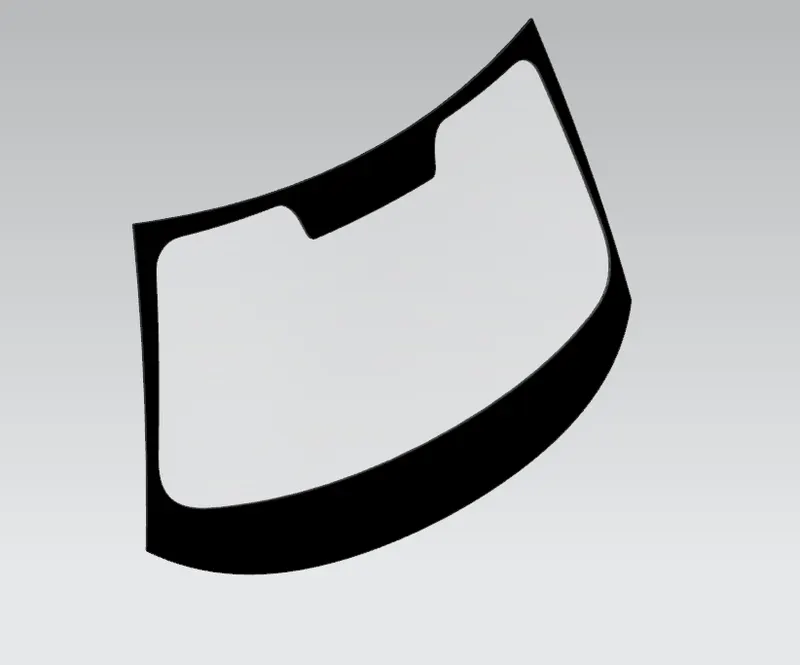
Challenge 4-Windshield Modeling
Aim and Objective:- To design the front windshield from the given styling.
Introduction:- Basically windshield are the glass components present on front and rear side of the vehicle. This component contains 2 parts:-
a. Main glass part
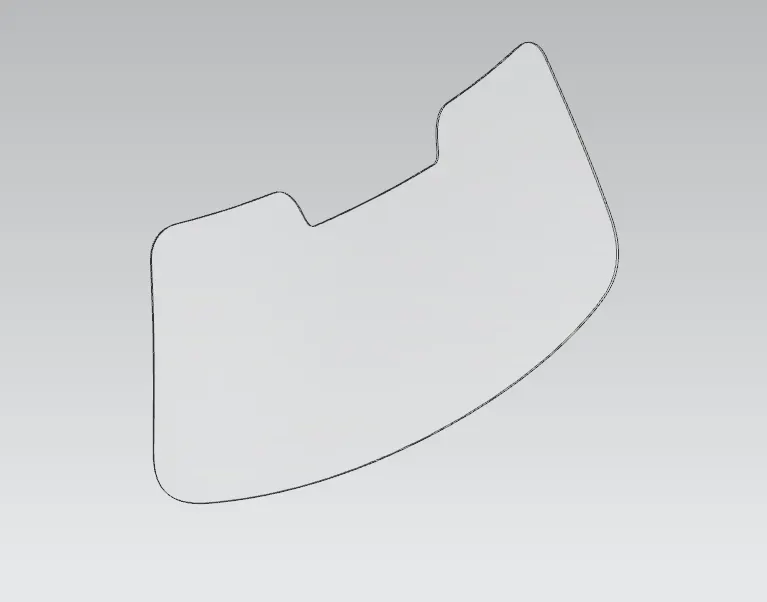
b. Outer circumferential gradient lines
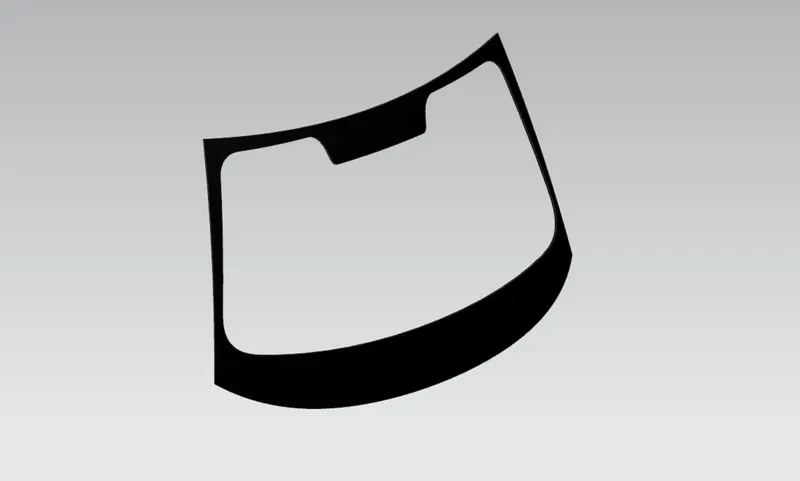
On rear windshield 3 to 4 horizontal black lines are present known as filaments these are used for defogger film. While on front windshield only circumferential gradient lines are present. Scrap rate of windshield is more as compared to metal components. As there are high chances of rejections and closer tolerances, rejection rate of glass industry is around 25% while that of metal component is around 2 to 3%. So care is to be taken while manufacturing of windshield and there must be closer tolerances to be maintained. There are 2 types of windshield glasses as follows:-
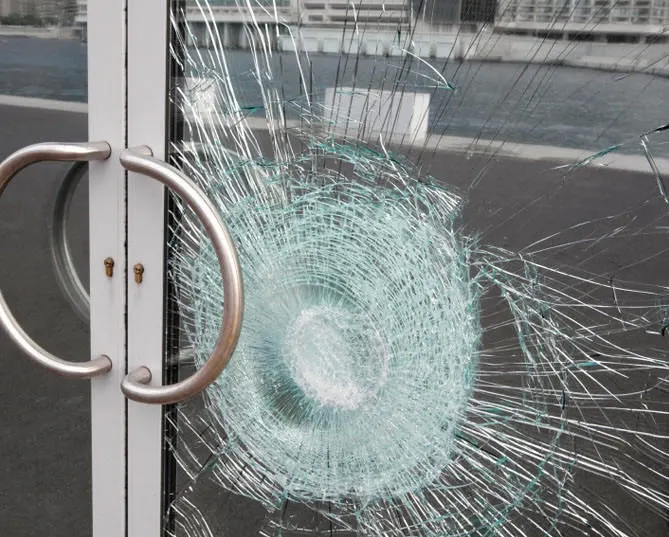
a. Laminated glass:- It contains 2 layers of glasses bonded by tough pliable and invisible layer of polyvinyl butyral film. This film resists the effect of ultraviolet light and temperature changes. So we can get clear vision even after many years. The purpose of this film is also to absorb shock and keep the glass safe from shattering in the event of accident. Laminated glass has properties to struck together during the accident so that big pieces do not get loose and fly in the passenger cabin. The advantages of the laminated glasses is it will remain bounded after the accident so that we can have a little chances of controlling car by seeing through broken the glass. Usually it is in curved shape and use for windshield. Its thickness is around 4.7 mm. It is produced by vacuum pressing method.
Production method:-
- Acquire raw glass that is glass of required transparency
- Marking and cutting
- Edge grinding
- Printing of laminated lines
- Glass bending in bending furnace
- Washing
- Assembly and dreaming of inner film
- Pressing by vacuum method
- Autoclaving that is removal of air bubbles
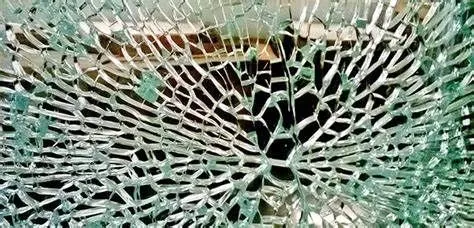
b. Tempered glass:- When tempered glass subjected to accident it will break into smaller pieces unlikely to the laminated glass. Due to this tempered glass will scatter into smaller pieces and prevents serious injury. It is used in side doors, rear doors. It is a single layer glass. It is produced by heating glass 650 to 680 degrees Celsius and then quenching it by a jet of air. This process creates compressive forces in the glass surface that renders it 3 to 5 times stronger than untreated glass and a highly resistant to thermal shock. It's thickness is around 2 to 3 mm. Approx 99% UV blocking tempered glass is used for automotive front door windows. It is produced by gas hearth or press forming method.
Production method
- Acquire rock loss that is loss of required transparency
- Marking and cutting
- Edge grinding and drilling
- Washing
- Printing (three methods available) :- a. Gas hearth forming (Inert gas is used) b. Press forming with light dies c. New gravity method (by vaccum)
- Quenching
- Inspection
- Packaging
- Shipping
Design procedure:- Design of windshield is very simple as compared to other BIW components. Firstly we need to offset given skin data at 0 mm for 2 times. One is for outer circumferential gradient lines and other is for inner glass. Then in circumferential gradient line filming we have to trimmer surface of inner glass which is used for IRVM and other sensors. After thickening both the surfaces we will get whole assembly of windshield.
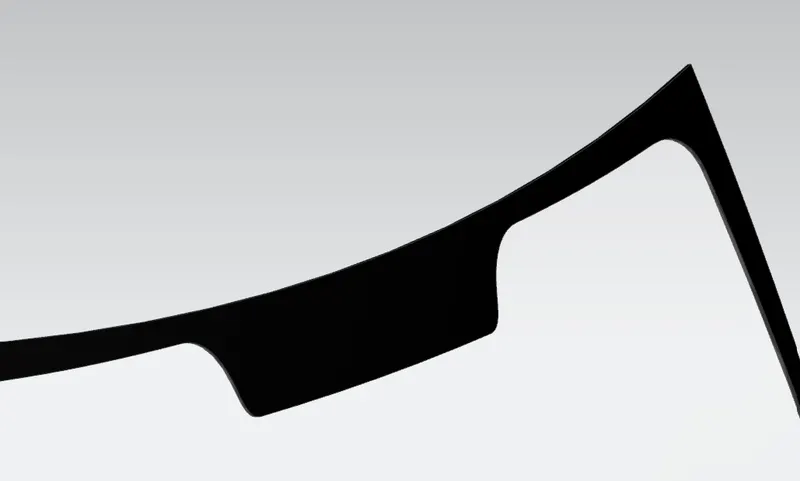
Conclusion:- Thus windshield is designed as per standards with headliners and thickness of 4.5mm.