Benchmarking
Benchmarking:
- Benchmarking is defined as the process of measuring products, services, and processes against those of organizations known to be leaders in one or more aspects of their operations. Benchmarking provides necessary insights to help you understand how your organization compares with similar organizations, even if they are in a different business or have a different group of customers.
- Benchmarking is a process where you measure your company’s success against other similar companies to discover if there is a gap in performance that can be closed by improving your performance. Studying other companies can highlight what it takes to enhance your company’s efficiency and become a bigger player in your industry.
- Benchmarking can also help organizations identify areas, systems, or processes for improvements—either incremental improvements or dramatic improvements.
Steps Of Benchmarking:
It is five-step process:
- Choose a product, service, or internal department to benchmark
- Determine which best-in-class companies you should benchmark against – which organizations you’ll compare your business too
- Gather information on their internal performance, or metrics.
- Compare the data from both organizations to identify gaps in your company’s performance.
- Adopt the processes and policies in place within the best-in-class performers.
In order to benchmark anything, you need to have quantitative data available to study. That means breaking down internal processes to calculate performance metrics. Quantify everything, because only quantifiable information can be accurately compared.
Requirement Of The Customer:
- Mr. D.S. Pughazhyendhii is a married man who lives in Bangalore which is a highly crowded city. His Family comprises five members including his wife, five-year-old boy, his father, and his mother. He visits his native place Madurai which is 500kms away from Bangalore once in a month. Also, he will be using his car to commute to his office. His budget falls between 8 to 10 lakhs on road. Please suggest to him with options so that he will buy a good car for his family.
Note: Pughazhyendhii is fond of big cars.
As per my opinion, customer want vehicle to use daily basis, so i will suggest to purchase diesel vehicle firstly. Ther are 5 member in family so compact SUV is suitable for customer, on that way i suggest 4 cars which fullfil customer requirement. Then finalised from that 4 vehicle, which one vehicle is comfortable for that customer.
Compact SUV:
1) Nissan Magnite :
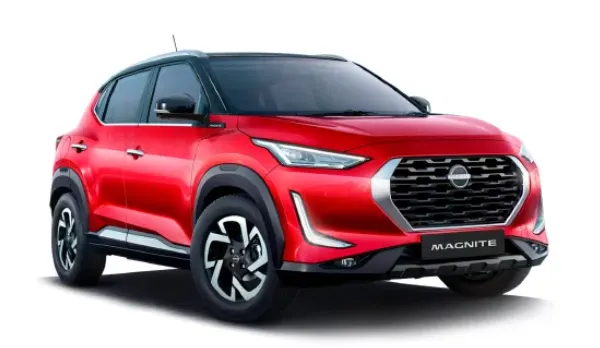
- Pros:
1. Peppy turbo-petrol powertrain.
2. Spacious and feature-loaded cabin.
3. Competitive pricing.
- Cons:
1. High speed ride could’ve been better.
2. Interior quality not on par with the rivals.
3. Nissan sale is not better in country.
Model/Specification:
Miledge: 18.75 kmpl
Fuel Capacity: 40 Liters
Boot Space: 336 Liters
Seating Capacity: 5
Max Power: 71.02bhp@6250rpm
Engine Displacement: 999 cc
Max Torque: 96nm@3500rpm
Transmission: Automatic
Ground Clearance: 205 mm
Wheelbase: 2500 mm
Prize: 5.71-7.05 Lakh
2) Hyundai Venue :
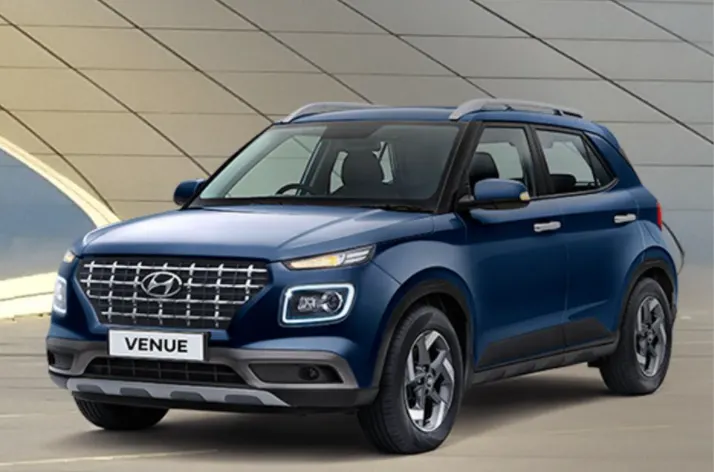
- Pros:
1.First-in-class connectivity features.
2.Quality interiors coupled with long features list.
3.It is the only DCT automatic in the segment.
- Cons:
1. Cabin space isn’t as generous as the competitors.
2. 1.2-litre petrol only available in entry-level trims.
3. Top-spec variants are too expensive.
Model/Specification:
Miledge: 18.75 kmpl
Fuel Capacity: 45 Liters
Boot Space: 350 Liters
Seating Capacity: 5
Max Power: 81.86bhp@6000rpm
Engine Displacement: 998 cc
Max Torque: 113.76nm@4000rpm
Transmission: Automatic
Ground Clearance: 190 mm
Wheelbase: 2500 mm
Prize: 6.99 - 11.85 Lakh
3) Kia Sonet :
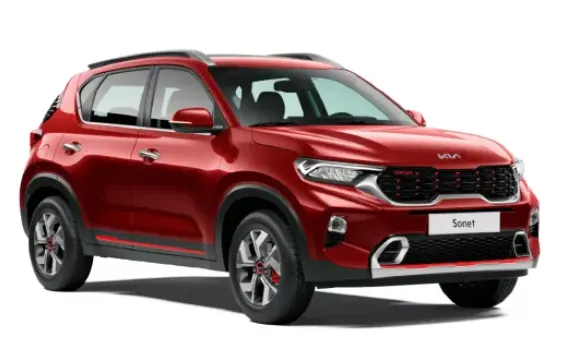
- Pros:
1. Flamboyant styling.
2. Feature loaded cabin.
3. Loads of Powertrain options.
- Cons:
1. Slightly stiffer ride quality.
2. Second row seat isn’t spacious.
3. No diesel-iMT combination.
Model/Specification:
Miledge: 19 kmpl
Fuel Capacity: 45 Liters
Boot Space: 392 Liters
Seating Capacity: 5
Max Power: 81.86bhp@6000rpm
Engine Displacement: 1493 cc
Max Torque: 115nm@4200rpm
Transmission: Automatic
Ground Clearance: 190 mm
Wheelbase: 2500 mm
Prize: 8.85 -9.99 Lakh
4)TATA NEXON:
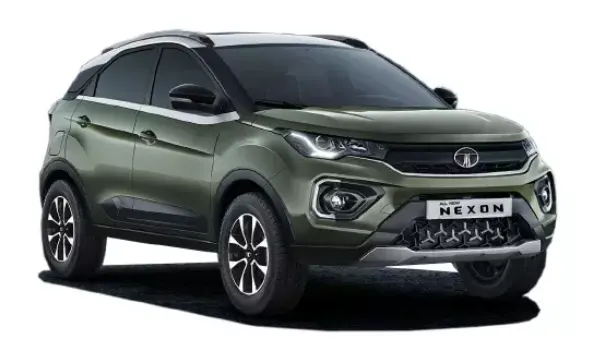
- Pros:
1. New sharper styling makes the new Nexon look upmarket.
2. Five Star G-NCAP safety rating.
3. BS6 compliant powertrain.
- Cons:
1. Interior quality could have been better.
2. Petrol engine lacks low-end grunt.
3. Infotainment screen not as good as rivals.
Model/Specification:
Miledge: 21.5 kmpl
Fuel Capacity: 44 Liters
Boot Space: 350 Liters
Seating Capacity: 5
Max Power: 118.36bhp@5500rpm
Engine Displacement: 1499 cc
Max Torque: 170Nm@1750-4000rpm
Transmission: Automatic
Ground Clearance: 209 mm
Wheelbase: 2498 mm
Prize: 8.58 -9.99 Lakh
Conclusion:
I would suggest TATA NEXON for Mr. D.S. Pughazhyendhii family, nexon is offering which is safest segment. It is also value for money product with amazing features.