Benchmarking
Automotive Sheet Metal Design using Siemens NX CAD - Challenge-1
Benchmarking:
Mr. D.S. Pughazhyendhii is a married man who lives in Bangalore which is a highly crowded city. His Family comprises five members including his wife, a five-year-old boy, his father, and his mother. He visits his native place Madurai which is 500kms away from Bangalore once a month. Also, he will be using his car to commute to his office. His budget falls between 8 to 10 lakhs on road. Please suggest to him options so that he will buy a good car for his family.
Scope:
Here we have to recommand right choice to make Mr.D.S.Pughazhyendhi him self for buying a Car for his family,
He have few expectations as below,
- Pughazhyendhi is fond of big cars
Here we are going to recommand with using Automotive Bench marking method to short list his perfect fit cars inorder to fullfill his expectations too.
Benchmarking is a process of measuring the performance of a company's products, services, or processes against those of another business considered to be the best in the industry. The point of benchmarking is to identify internal opportunities for improvement.
What is Benchmarking method?
Benchmarking is the practice of comparing business processes and performance metrics to industry bests and best practices from other companies.Dimensions typically measured are quality, time and cost.
In the process of best practice benchmarking, management identifies the best firms in their industry, or in another industry where similar processes exist, and compares the results and processes of those studied (the "targets") to one's own results and processes. In this way, they learn how well the targets perform and, more importantly, the business processes that explain why these firms are successful.
In Mr. D.S. Pughazhyendhii case, we are going to compare the 5 cars which we have short listed based on his budget.
His Budget is 8 to 10 Lakh on road.
The objective of benchmarking is to use the data gathered in your benchmarking process to identify areas where improvements can be made by:
- Determining how and where other companies are achieving higher performance levels than your company has been able to achieve.
- Comparing the competition’s processes and strategies against your own.
- Using the information, you gather from your analyses and comparisons to implement changes that will improve your company’s performance, products, and services.
Common areas that you may want to target for benchmarking analysis include cost per unit, time to produce each unit, quality of each unit, and customer satisfaction. The performance metrics you get from these targets can be compared against others to help you determine best practices for improving your operations.
Steps in the benchmarking process
- Select a subject to benchmark.
- Decide which organizations or companies you want to benchmark.
- Document your current processes.
- Collect and analyze data.
- Measure your performance against the data you've collected.
- Create a plan.
- Implement the changes.
- Repeat the process.
Types of Benchmarking
Benchmarking can be internal (comparing performance between different groups or teams within an organization) or external (comparing performance with companies in a specific industry or across industries). Within these broader categories, there are three specific types of benchmarking:
1) Process benchmarking,
2) Performance benchmarking and
3) Strategic benchmarking.
The three main types of costs in benchmarking are:
- Visit Costs - This includes hotel rooms, travel costs, meals, a token gift, and lost labor time.
- Time Costs - Members of the benchmarking team will be investing time in researching problems, finding exceptional companies to study, visits, and implementation. This will take them away from their regular tasks for part of each day so additional staff might be required.
- Benchmarking Database Costs - Organizations that institutionalize benchmarking into their daily procedures find it is useful to create and maintain a database of best practices and the companies associated with each best practice now.
Advantages of Benchmarking:
- Improve processes and procedures.
- Gauge the effectiveness of past performance.
- Give you a better idea of how the competition operates, which will help you to identify best practices to increase performance.
- Increase efficiency and lower costs, making your business more profitable.
- Improve quality and customer satisfaction. VEHICLE DEVELOPMENT PROCESS:
BENCHMARKING:-
Benchmarking involves a structured comparison between similar products, services or processes on some dimensions of performance. For example it can be used to compare the availability and delivery of features in a product and in this form often provides the basis of consumer tests and reviews. These look at products and services and provide recommendations based on which is best or some form of ranking amongst competitors. It is particularly useful when comparing not only performance but also practice – in other words what do the different organizations do to enable that performance to be delivered? And applied in this way it is a powerful tool in process innovation sin e studying how the ‘best’ achieve their performance can
provide powerful clues for changing the way processes operate. Process benchmarking of this kind can operate at several levels :
• Between similar processes in the same factory or service branch
• Between different factories or service branches
• Between different competing organizations
• Between different sectors using the same processthere are two types of benchmarking which we are going to focus more i.e.,
BENCHMARKING II:-
Which involves part level comparison and analysis of vehicle saftey comfort ,engine efficiency and its performance.
BENCMARKING I:-
Which involves product level/Vehicle level comparison and analysis of vehicle saftey comfort ,engine efficiency and its performance.
Now lets filter out what are his needs
His Family comprises five members including his wife, five-year-old boy, his father, and his mother.which seems he need a 6 to 8 seater vehicle
- Comfort
- Reliability
- Fuel Efficiency( To keep the expenses in check and acoiding refueling again and again)
- High speed performance and handling of your car.
He will be using his car to commute to his office.Considering this cars with automatic transmissions are becoming increasingly popular in the country. Automatic transmission cars are great if you drive yourself around, have a long commute and often get stuck in traffic jams. However, automatic transmission variants cost more and give a lower mileage.so lets consider all other requirements for now and get back to conclusion in the end.
Budget falls between 8 to 10 lakhs on road
Pughazhyendhii is fond of big cars
noting down all the above points there are few vehicles in the market that meets the requirement.they are listed down below
Types of Body Type:
here below body types are available in the market,
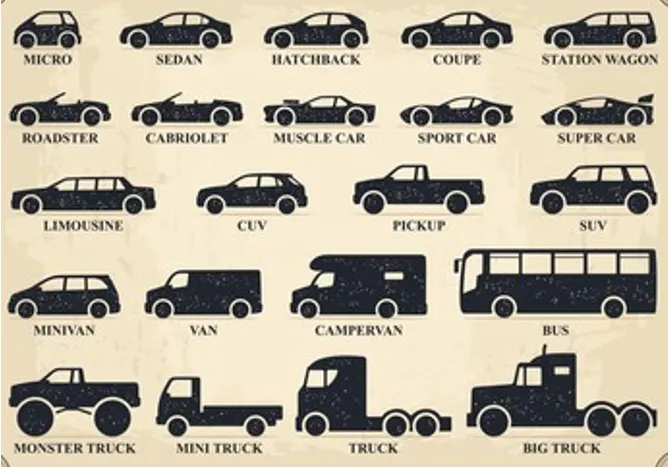 “The key difference is an SUV is a body-on-frame built on a truck chassis, while a crossover or CUV, is a unibody frame constructed on a car chassis.”
A crossover, crossover SUV, or crossover utility vehicle (CUV) is a type of automobile with an increased ride height that is built on unibody chassis construction shared with passenger cars, as opposed to traditional sport utility vehicles (SUV) which are built on a body-on-frame chassis construction similar to pickup A crossover, as its name implies, refers to a cross between a car and an SUV. Nowadays, in the car world where most automakers have adopted the "we combine everything" strategy on their automobiles, crossovers swim upstream, incorporating the high seating of an SUV with the comfort of a passenger car.What is a CUV in vehicles?Definition. This term refers to a vehicle that incorporates a unibody construction similar to most cars, as opposed to the body-on-frame construction of a typical SUV.
“The key difference is an SUV is a body-on-frame built on a truck chassis, while a crossover or CUV, is a unibody frame constructed on a car chassis.”
A crossover, crossover SUV, or crossover utility vehicle (CUV) is a type of automobile with an increased ride height that is built on unibody chassis construction shared with passenger cars, as opposed to traditional sport utility vehicles (SUV) which are built on a body-on-frame chassis construction similar to pickup A crossover, as its name implies, refers to a cross between a car and an SUV. Nowadays, in the car world where most automakers have adopted the "we combine everything" strategy on their automobiles, crossovers swim upstream, incorporating the high seating of an SUV with the comfort of a passenger car.What is a CUV in vehicles?Definition. This term refers to a vehicle that incorporates a unibody construction similar to most cars, as opposed to the body-on-frame construction of a typical SUV.I decided to recommand under the body types of SUV, Crossover SUV.
I have short listed below cars for comparrisons, under his budget with consideration of his expectaion that he likes big size cars so i decided to move on with below car varients/Segments/Car body types,
1) Maruti Brezza LXi - Corssover SUV,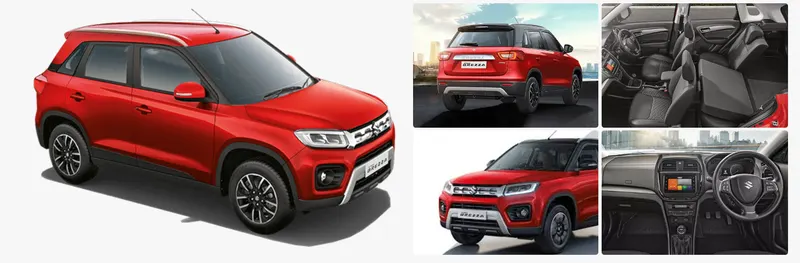
2) Tata Nexon XE,Advantages
Disadvantages
- Gets segment-levelling features
- Cabin space
- Tall seating, ease of driving
- Engine lacks mid-range punch
- Top-end variants are expensive
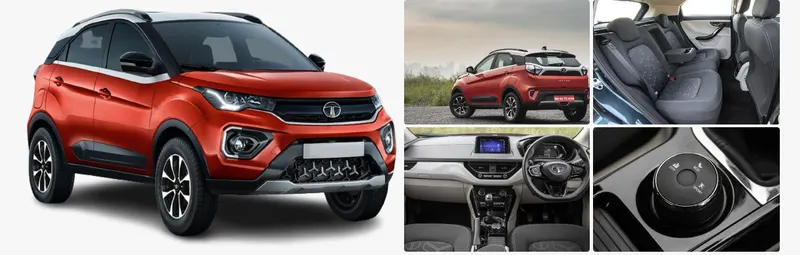
3) Maruti Fronx Delta,Advantages
Disadvantages
- Upmarket looks, five-star G-NCAP safety
- Spacious cabin compared to rivals
- Easy to drive and live with
- Interior quality
- Low-end grunt from motors
- Infotainment screen not as good as rivals
Fronx 1.2 L Delta MT Specifications
Mileage 22.89 kmpl Engine 998 to 1997 cc Fronx 1.2 L Delta MT Key Specifications
Fuel Type Petrol Max Power (bhp @ rpm) 89 bhp @ 6000 rpm Transmission Type Manual Fuel Tank Capacity 37 Litres Engine Displacement 1997 cc Max Torque (nm@rpm) 113 Nm @ 4400 rpm Boot Space (Litres) 308 Litres Fronx 1.2 L Delta MT Key Features
Front Suspension MacPherson Strut Rear Suspension Torsion Beam Tyre Size 195/60 R16 Adjustable Headrests Yes Adjustable Steering Column Yes Keyless Entry Yes Power Steering Yes Power Windows Yes Seat Height Adjustment 5 Start Stop Button Yes Maruti Fronx 1.2 L Delta MT Overview
The 1.2 L Delta MT of Maruti Suzuki Fronx is priced at Rs 832500. It has a Petrol engine with a maximum power of 89 bhp @ 6000 rpm and peak torque of 113 Nm @ 4400 rpm. This competes with cars such as MG Comet EV and Maruti Brezza.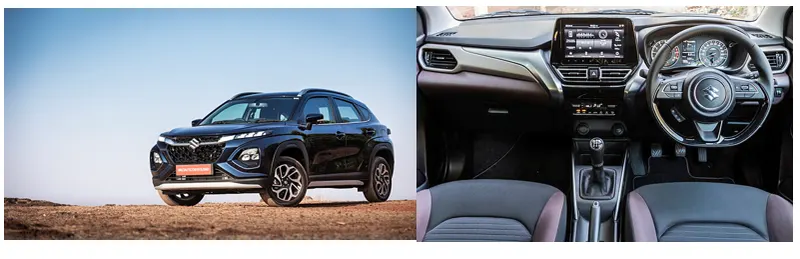 4)Mahindra XUV300, The XUV300 is Mahindra’s sophisticated sub-four-metre compact SUV. It’s a shortened and re-engineered version of Mahindra subsidiary SsangYong’s Tivoli and is far removed from body-on-frame models like the TUV300. The Mahindra XUV300 debuts many class-first features but it is also among the pricier compact SUVs. It is available with petrol and diesel engine options with standard-fit 6-speed manual transmissions. The diesel engine is additionally available with the option of an AMT auto. The Mahindra XUV300 holds the distinction of being the safest car to be crash tested by Global NCAP being rated 5 stars on adult occupant protection and 4 stars on child occupant protection. The Mahindra XUV300 is smart and well turned out, and it also seems larger than its contemporaries. On the inside, you’ll find a fairly conventional dashboard but the cabin does have a premium air about it. Seat comfort and cabin space are good but not great, but the XUV300’s width does make it a better five-seater than most rivals. Sadly, boot space is strictly limited.
The Mahindra XUV300’s 117hp, 1.5-litre, four-cylinder diesel engine is very likeable. It’s not the quietest of engines but it is smooth and it delivers power in a friendly manner. The auto gearbox is also quite nice as AMTs go. As for the petrol engine, the 110hp, 1.2-litre turbocharged unit is quiet and refined but power delivery at low speeds isn’t the smoothest. The three-cylinder engine gets into its rhythm as you build the revs and offers a pleasant performance then on.
Unique to the Mahindra XUV300 in this segment is the option to adjust steering weight. The SUV is not pin-sharp but it is nice to steer nonetheless. Also, an absorbent suspension means you can drive it with vigour on poorly paved surfaces, but there’s no escaping the firmness. Do note, it is the heavier diesel that feels more surefooted. Of the two engine options on offer, we’d pick the XUV300 diesel, as it has a broader range of abilities. And given that it is more efficient too, the diesel XUV is worth the premium over the petrol. The AMT is an option for urban buyers too. The diesel-manual and petrol XUV300s are available in four trims each. The base W4 is fairly well-equipped and is a good value pick. The W6 gets more frills but you’d do well to extend your budget to the W8 trim version that gets ESC, projector headlamps, auto headlights and wipers, keyless go, cruise control, dual-zone climate control and a touchscreen infotainment system with Android Auto and Apple CarPlay. Range-topping W8(O) versions of the Mahindra XUV300 are identifiable by their diamond-cut alloy wheels and also get premium kit like front parking sensors, heated outside mirrors, a sunroof, leatherette upholstery, auto-dimming inside mirror and a tyre pressure warning system. However, these versions are expensive by class standards.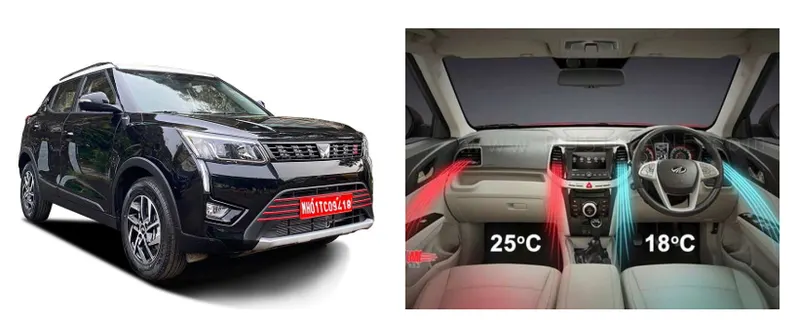 5)Kia Sonet HTE 1.2.
Sonet HTE 1.2 Key Specifications
-
₹ 7.79 Lakh
PRICE
-
Petrol
FUEL TYPE
-
5 People
SEATING CAPACITY
-
1197 cc
ENGINE SIZE
-
Manual
TRANSMISSION
All Specs Of Sonet HTE 1.2 - Sonet Base Model
ENGINE & PERFORMANCE
Fuel TypePetrolTransmissionManual - 5 GearsEngine1197 cc, 4 Cylinders Inline, 4 Valves/Cylinder, DOHCEngine TypeSmartstream G 1.2Peak Power (bhp@rpm)82 bhp @ 6000 rpmPeak Torque (Nm@rpm)115 Nm @ 4200 rpmDrivetrainFWD(front wheel Drive)OthersIdle Start/StopEmission StandardBS6 Phase 2STEERING, TYRES, & SUSPNSIONS
Steering TypePower assisted (Electric)Minimum Turning Radius5.1Suspension - FrontMcPherson Strut with Coil SpringSuspension - RearCoupled Torsion Beam Axle with Coil SpringWheels TypeSteel RimsTyres Size - Front195 / 65 R15Tyres Size - Rear195 / 65 R15Spare WheelSteelSIZE, WEIGHT, & DIMENSIONS
Bootspace / Dicky Capacity (L)392Fuel Tank Capacity (L)45Passenger Capacity5Length (mm)3995Width (mm)1790Height (mm)1610Wheelbase (mm)2500No of Seating Rows2No of Doors5SAFETY
Airbags4 Airbags (Driver, Front Passenger, Driver Side, Front Passenger Side)Seat Belt WarningChild LockAnchor Points for Child SeatOverspeed Warning1 beep over 80kmph, Continuous beeps over 120kmphSpeed Sensing Door LockAnti theft Engine immobilizerMiddle rear three-point seatbeltCentral LockingWith KeySENSORS, WARNINGS, & INDICATORS
Type of Instrument Cluster / Dashboard DisplayAnalogue - DigitalMileage or Average Fuel ConsumptionReal Time MileageDistance to EmptyTrip MeterElectronic 2 TripsLow Fuel WarningDoor Not Closed WarningTyre Pressure Monitoring (TPMS)Gear Shift IndicatorDynamicParking SensorsRearClockDigitalHeadlights On ReminderTachometerAnalogueMUSIC AND INFOTAINMENT
Android / Apple ConnectivityAndroid Auto (No), Apple Car Play (No)COMFORT & CONVENIENCE
Steering AdjustmentTiltAir ConditionerYes (Manual)HeaterFront ACSingle Zone, Common Fan Speed ControlRear ACBlower, Vents Behind Front ArmrestAnti-glare Rear View MirrorsManual - Internal Only12V Power OutletsBoot Access from the Last Row SeatsBRAKING & TRACTION
Brake Type - FrontDiscBreak Type - RearDrumABS - Anti Lock Braking SystemEBD - Electronic Brake-force DistributionSEATS
Seat UpholsteryFabric + LeatheretteAdjustment Options - Driver Seat6 way manually adjustable (seat forward / back, backrest tilt forward / back, headrest up / down)Adjustment Options - Front Passanger Seat6 way manually adjustable (seat forward / back, backrest tilt forward / back, headrest up / down)Adjustment Options - Rear Row Seat2 way manually adjustable (headrest up / down)Driver ArmrestHeadrestsFront & RearRear Passenger Seats TypeBenchFolding Rear SeatFullDOORS, WINDOWS MIRRORS & WIPERS
Power WindowsFront OnlyExterior Door HandlesBody ColouredInterior Door HandlesSilverDoot Sill PlatesPlasticOutside Rear View Mirrors (ORVMs)Body ColouredAdjustable ORVMElectrically AdjustableBoot / Dikki OpenerElectric Tailgate ReleaseHEAD & TAIL LIGHTS
HeadlightsHalogenHeadlight Height AdjusterTail LightHalogenINTERIORS, LIGHTS & STORAGE INSIDE CABIN
InteriorsSingle ToneInterior Colour(s)BlackLights inside CabinFront and RearCup HoldersFront OnlyStorage in Driver ArmrestPockets inside DoorFront & RearEXTERIOR
Roof Mounted AntennaBody Coloured BumpersBody KitCladding - Black/GreyMANUFACTURER WARRANTY
Warranty (Years)3Warranty (Max Kilometres)UnlimitedBattery Warranty (Max Kilometres)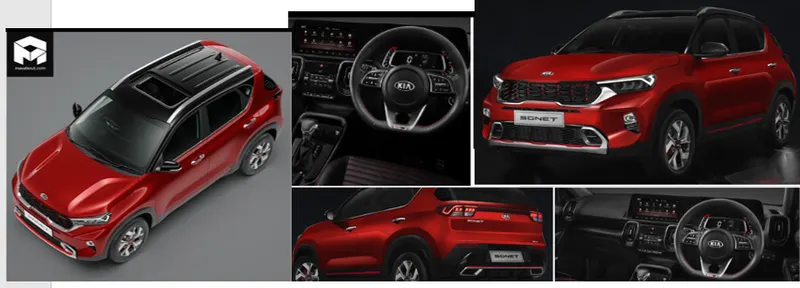
Here I have made comparrison under major specifivcation which considering few critaria as below,
- He have 5 member in his family so I considered minmum 5 seats should be available on the car
- Bangalore is a crowded city & He will visit his native once in a month along with his family, it does mean our consideration of the car should be give good millage, with parking assistance, Good safety rating, good Child Safety, more boot space for carry much luggage and Easy service availability.
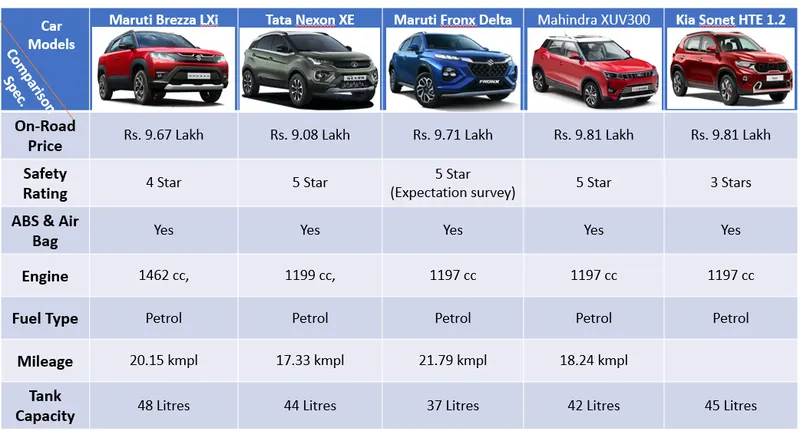
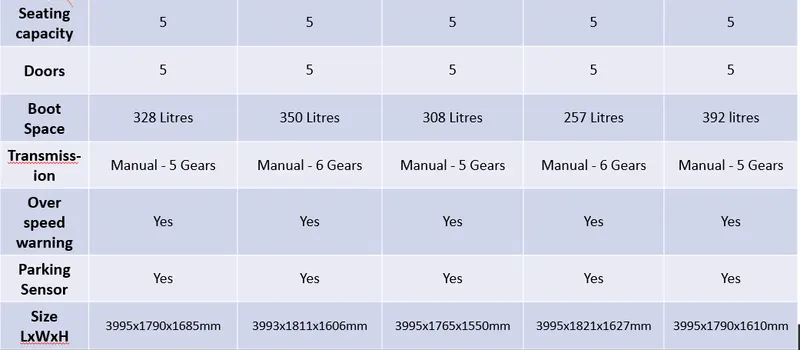
The above PPT have missed the sonnet millage is 18.4kmpl.
I would like to recommand to buy Tata Nexon XE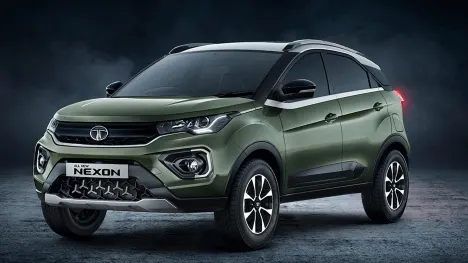
He can buy as his desire color than above picture.
I recommand to buy at his native place at madurai because there is few tax relaxtion so on road price comes less then bangalore city show room prices.
- This car have 5 Star safety Rating.(5-star rating by the Global NCAP(New Car Assessment Programs (NCAP) Safety Features and Devices. Used Car Safety Ratings.)the Nexon is considered a safe car for adult and child occupants).
- This car on road price comes near Rs.9.08 Lakh.
- It have 44 Litre fuel tank so he need to fill once enough to reach to his native madurai which has 500km distance
- Milleage is average but not poor.
- size looks big as his disire.
- Generally safety features are the primary things to consider while buying a new car. Nothing is more important than the protection of you and your family.
- Essential features to consider are crash avoidance capabilities like ABS and airbags, child safety features, driving comfort features like seat adjustment etc.
With consideration of above points I would strongly recommand to Tata Nexon XE.