Aim-Aerodynamic Analysis of a Cyclist using MATLAB
Objectives-
- To calculate drag force using the drag force equation.
- Plotting a graph between velocity of cyclist and drag force.
- Plotting a graph between drag coefficient at different rider positions and drag force
Introduction-
Aerodynamics is the branch in which pressure interaction of the body with the surrounding air is analysed. Aerodynamic force on a body is divided into two components namely drag force and lift force.
| `D=1/2 ρc_d av^2` |
| `L=1/2 ρc_l av^2` |
Where,
- `ρ="Air Density in free stream"`
- `c_d="Drag Coeffcient"`
- `c_l="Lift coefficient"`
- `v^2="Velocity of body"`
- `a="Reference area"`
Aerodynamics of a cyclist-
As far as aerodynamics is considered, the bicycle and rider are considered to be “bluff bodies”. So for bluff body aerodynamic resistance is mainly due to pressure drag. In aerodynamics drag is defined as the projection of aerodynamic force along the relative velocity of wind.
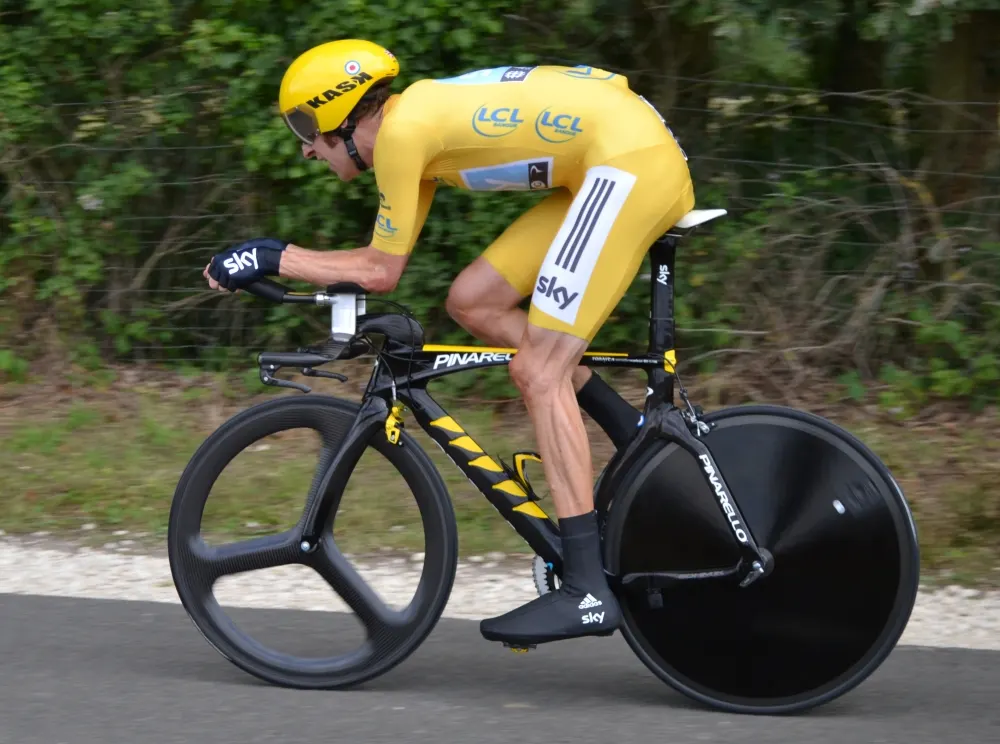
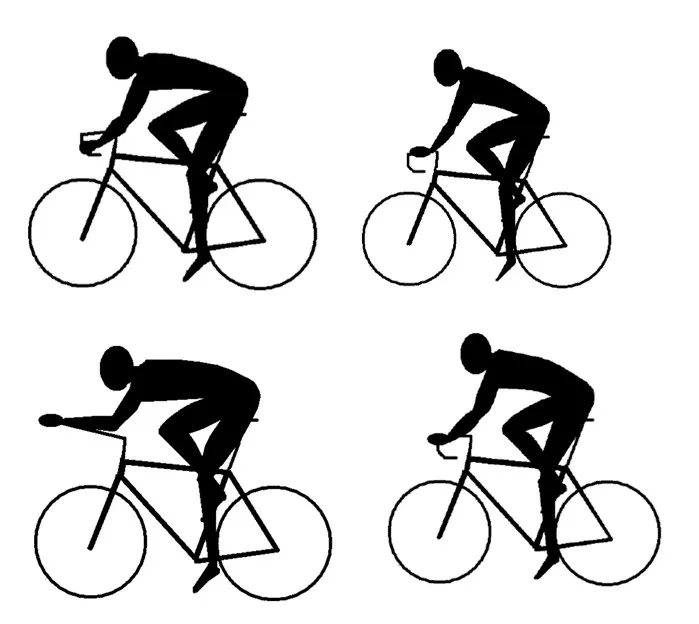
To reduce the aerodynamic resistance on the cyclist, projected fontal area is reduced essentially by keeping the rider’s body more aligned with the direction of wind. Also several attempts have been made to reduce drag by making the tubular frame of bicycle more streamlined and same has been done the wheels too.
Code Explanation-
- Inputs were initialised for calculation of drag force. Drag coefficient was assumed to be 0.700, frontal area assumed to be `0.300 m^2`, density was assumed to be 1.2 kg/`m^3` and velocity of cyclist was taken from 1 to 50 m/s.
- Drag equation was written in code as per its mathematical formula and output is assigned to a variable “df”.
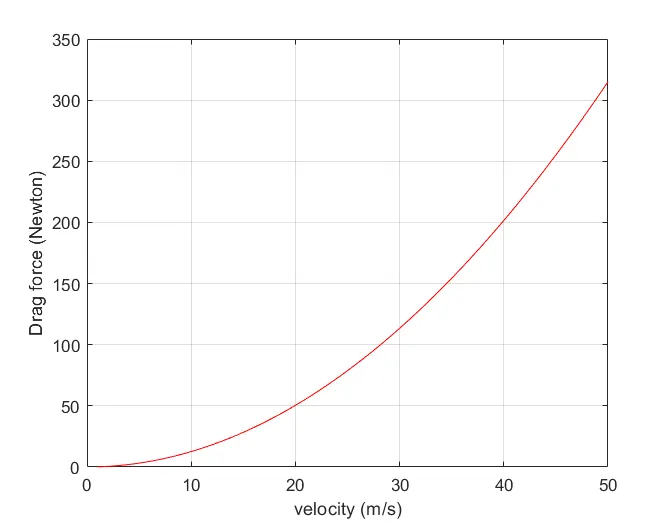
- A figure window is created using figure function and its name and number title was dropped off using relevant arguments. Graph was plotted between velocity vector defined earlier and calculated drag force also labels for the axes were defined and grid was enabled for better understanding of graph.
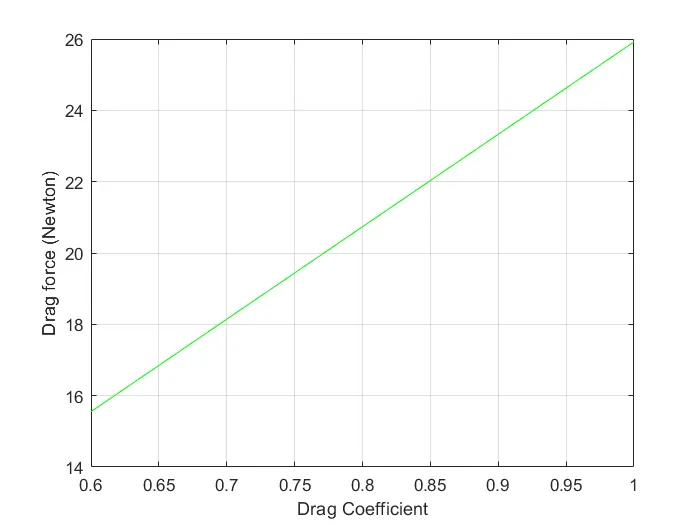
- Similarly, a new figure window for the graph between drag force and drag coefficient was created. An array of drag coefficient for different riding positions was created using linspace “coeff_drag”. Velocity of cyclist is assumed to be constant v_=12m/s, drag force was calculated for these inputs and plot was generated.
Main script-
%Program to calculate drag force against a cyclist and plot graphs between
%(Velocity vs Drag force) & (Drag coefficient vs Drag force)

clear all
close all
clc

%---------------------------INPUTS---------------------------------
cd=0.700;        %Drag Coeffecient (dimensionless)
a=0.300;         %Frontal area of cyclist(in m^2)
rho=1.2;         %density (in kg/m^3)
v=[1:50];        %velocity of cyclist(in m/s)
%------------------------------------------------------------------

df=0.5*rho*a*v.^2*cd;      %Drag Equation

%------------------------------------------------------------------
figure('Name','DRAG FORCE VS VELOCITY','Numbertitle','off')
plot(v,df,'color','r')
xlabel("velocity (m/s)")
ylabel("Drag force (Newton)")
grid on
%------------------------------------------------------------------

figure('Name','DRAG FORCE VS DRAG COEFFICIENT','Numbertitle','off')
coeff_drag=linspace(0.600,1.000,100);
v_=12;
df=0.5*rho*a*v_.^2.*coeff_drag;
plot(coeff_drag,df,'color','g')
xlabel("Drag Coefficient")
ylabel("Drag force (Newton)")
grid on
%------------------------------------------------------------------
Matlab Script Github
Results-
The obtained graph tells us that Drag force over cyclist varies in a parabolic fashion with velocity and it essentially indicates that drag force becomes predominant over faster speeds. Hence, drag is the real player when the speeds are high.
This graph tells us the variation of drag force and drag coefficient is linear indicating that drag force reduces when drag coefficient reduces.
Conclusion-
Bicycle being a great alternative for reducing the carbon footprint, as many countries are now trying to reduce carbon emissions and it proves to be a good alternative but he major culprit is Aerodynamic drag, though racing bicyles have evolved much in order to reduce the drag by making more streamlined wheels, frames and riding positions. As more and more people now are using bicycle for daily commuting the effects of drag will be profound to normal people as well. We have ample room of improvement in this domain, its even more achievable now with the help of findings from elite cycling sports and computational methods.
References-