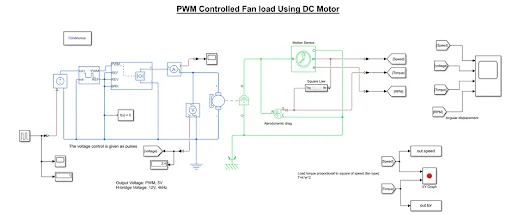
Design and Develop a PWM Controlled Fan Load with DC Motor
In this project, the learners should design and develop a fan load with DC Motor in Simulink and control it using the Pulse-Width Modulation Technique. They should also study the r…
Black FridayUpgrade your career this Black Friday. Get up to ₹60,000 Scholarship on IIT programsUp to ₹60K Black Friday Scholarship52 seats leftOffer ends Fri, 27 Nov, 11:59 pm IST.
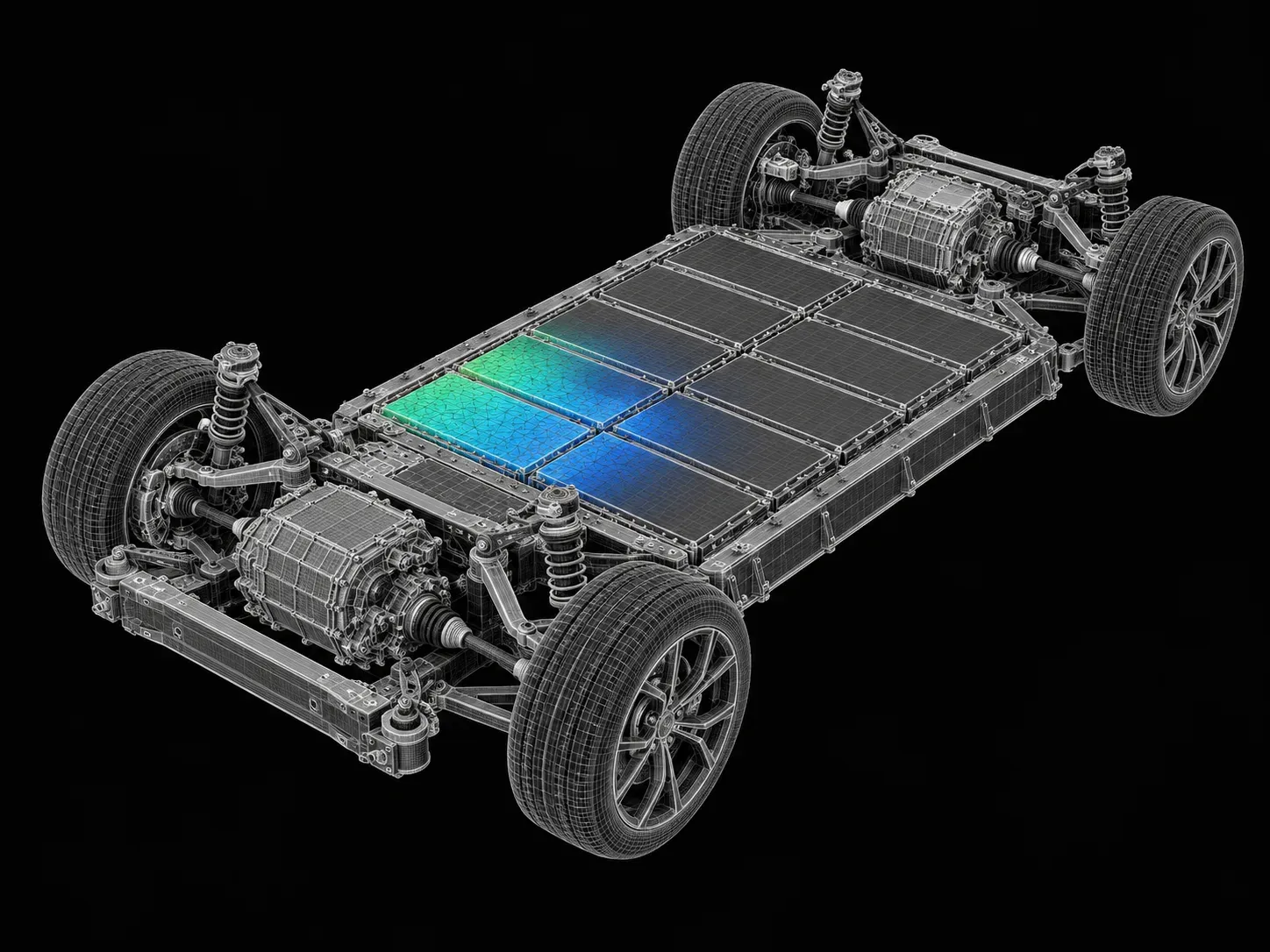
EV Fundamentals is an online course from Skill-Lync: 5 weeks, 13 hours of content and 5 industry projects.
1 h 37 min of this course's own recorded sessions, with transcripts, on Grow by Skill-Lync:
Our projects are designed by experts in the industry to reflect industry standards. By working through our projects, Learners will gain a practical understanding of what they will take on at a larger-scale in the industry. In total, there are 5 Projects that are available in this program.
In this project, the learners should design and develop a fan load with DC Motor in Simulink and control it using the Pulse-Width Modulation Technique. They should also study the r…
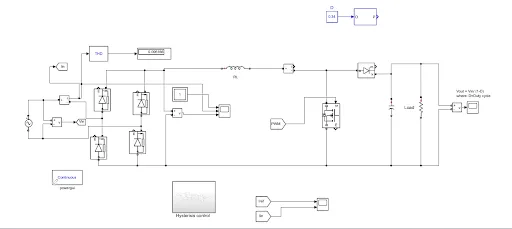
In this project, the learners are asked to design and develop Simulink models to understand the Energy Analysis of EVs on different drive cycles. They should perform modelling for …
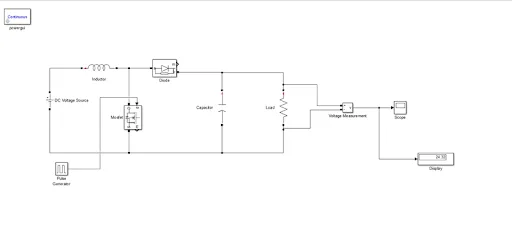
In this project, the students are asked to design and simulate buck converters for the auxiliary load in EV. For the given input conditions, they have to calculate the energy losse…
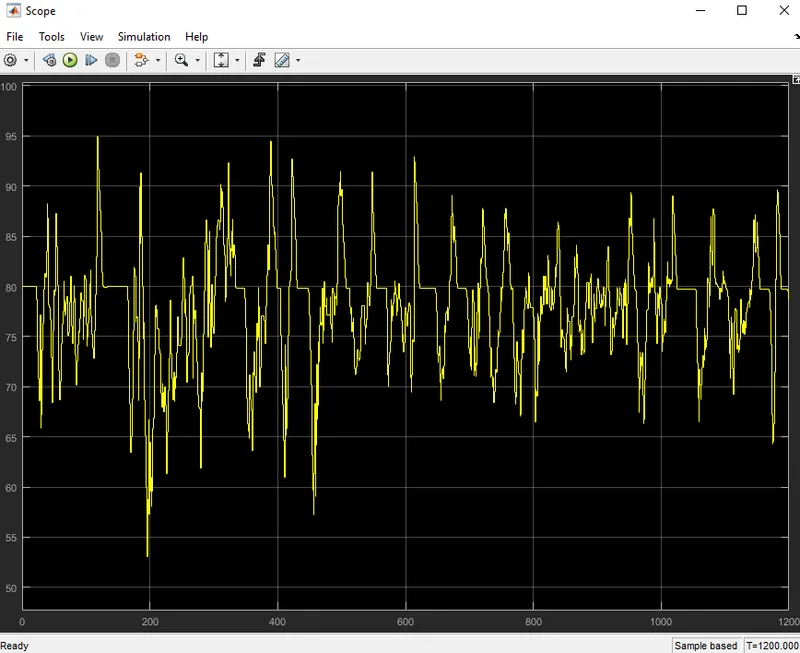
In this project, the students are asked to design and develop a Simulink Model that estimates the capacity of the Lithium-ion battery pack based on the vehicle range.
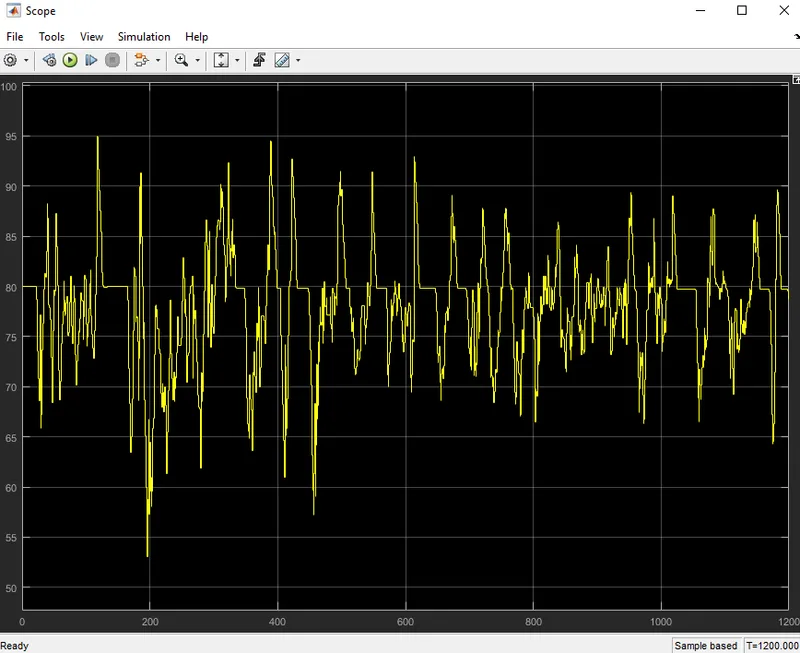
In this project, the learners are asked to develop a battery pack model with the given specifications and simulate it. They will also have to analyse the charging and discharging c…
Video stories from learners of related electrical programs, from Skill-Lync's YouTube channel.
by the Skill-Lync team
The battery stores energy as direct current (DC). An inverter turns it into the three-phase alternating current (AC) the traction motor needs, at the frequency that gives the speed the driver asks for. The motor turns the wheels through a fixed reduction gear and a differential. When you lift off or brake, the motor works as a generator and sends energy back to the battery. That is regenerative braking.
Think of the inverter as a very fast tap. It opens and shuts the flow from the battery thousands of times a second, and the pattern of openings shapes a smooth AC wave for the motor.
Week 2 also covers hybrids, which add an engine:
The powertrain is everything that makes and delivers the drive: battery, inverter, motor and gears. The drivetrain is only the part after the motor: gears, shafts, differential and wheels.
The motor has to beat four forces: rolling resistance from the tyres, air drag, the slope, and the force needed to speed up. Week 2 has a lesson on this total, the tractive effort:
where , , and .
Take a compact car with these assumed values: mass = 1,500 kg with the driver, rolling coefficient = 0.010, drag coefficient = 0.33, frontal area = 2.3 m², air density = 1.2 kg/m³. At a steady 80 km/h (22.2 m/s) on a flat road:
Now climb a 5% grade (5 m up for every 100 m along) at the same speed. The slope adds 1,500 × 9.81 × sin(2.86°) = 735 N. The total becomes 1,107 N and the power 24.6 kW, three times as much. Drag grows with the square of speed, so it dominates on highways, while mass dominates on hills and in stop-start traffic. Try other slopes and gears with the gradeability calculator.
Energy per kilometre is just force times distance. The 372 N from the example above, over 1 km, is 372 kJ, or 103 Wh/km at the wheels. The battery has to supply more, because the inverter, motor and gears lose some energy. With an assumed 85% efficiency from battery to wheels, that is 103 ÷ 0.85 = 122 Wh/km. A pack with 30 kWh of usable energy would then last about 247 km at a steady 80 km/h.
At a steady 50 km/h, drag falls to 88 N and the same car needs only 77 Wh/km. That would mean about 391 km of range. Real driving is never this steady, though. The car stops, accelerates, idles with the air conditioning on, and gets back only part of its braking energy through regeneration.
That is why range is measured on a standard drive cycle, a fixed speed-versus-time trace driven on a rolling road:
The same car gets a different Wh/km on each cycle. Project 2 of the course does this calculation in Simulink: the energy spent while accelerating and braking, and the kWh/km over a chosen drive cycle.
Today's electric cars use brushless motors. Many use a permanent-magnet synchronous motor (PMSM), and some use induction motors, which need no magnets. Week 3 compares four types:
Choosing a motor means weighing efficiency over the drive cycle, peak torque, cost, cooling and supply risk. That is the "selection criteria" lesson in week 3. To design one yourself, see Electric Motor Design using MATLAB and ANSYS Maxwell.
Power electronics converts electrical energy from one form to another by switching transistors on and off very fast. The inverter feeds the motor, the onboard charger fills the battery from AC mains, and a DC-DC converter supplies the 12 V system that runs the lights, wipers and controllers.
The simplest DC-DC converter is the buck converter, which steps a voltage down. Project 3 designs one for an auxiliary load. In the ideal case the duty cycle , the fraction of each cycle the switch is on, sets the output:
and the inductor current ripples by
Example: 48 V down to 12 V gives = 0.25. With = 47 µH and a switching frequency = 100 kHz, the ripple is (48 − 12) × 0.25 ÷ (47 × 10⁻⁶ × 100,000) = 1.91 A, about 19% of a 10 A (120 W) load. A bigger inductor or a higher frequency reduces the ripple. Check your own values with the buck converter calculator.
One honest note: a real car steps its 300-400 V pack down to 12 V with an isolated converter, which has a transformer inside so the high voltage can never reach the 12 V side. The buck is the simplest way to learn the same switching ideas.
Week 4 also covers four-quadrant operation. A motor can drive forward (quadrant 1), brake while moving forward (2), drive in reverse (3) and brake while reversing (4). In quadrants 2 and 4 the motor works as a generator, which is where regenerative braking comes from.
Cells connected in series add their voltage. Cells connected in parallel add their capacity (amp-hours). The pack is described as "xsyp": x cells in series, each position made of y cells in parallel.
Take an assumed lithium-ion cylindrical cell rated 3.6 V nominal and 5 Ah, which is 18 Wh per cell. For a pack near 350 V and 30 kWh:
Project 4 works the other way: it starts from the range the vehicle needs and estimates the capacity. The course also has short practical videos on assembling a 7s1p pack and a 6s2p pack with a BMS.
A series string is only as good as its weakest cell. If one cell is full while the others are not, charging has to stop. The battery management system (BMS) watches every cell's voltage and temperature and balances them. Passive balancing burns a little charge from the fullest cells as heat. Active balancing moves charge between cells. The BMS also estimates the state of charge (SOC), the fuel gauge. Counting the current in and out (coulomb counting) drifts over time, so it is corrected with voltage-based cell models.
Charging is covered at the end. IEC 61851-1 defines four charging modes: 1, a direct plug into an ordinary socket; 2, an ordinary socket with a protection box in the cable; 3, a dedicated AC charger that talks to the car; 4, a DC fast charger, where the AC-to-DC conversion happens inside the charger instead of the car.
The recording is 55 video lessons, about 12.8 hours. Seven of them teach MATLAB, Simulink, Simscape and Stateflow first, and three of those are free on Grow by Skill-Lync. Then 41 sessions cover the EV itself: background, powertrain, motors, power electronics, control systems (PID and DC motor speed control) and the battery, BMS, charging and thermal management. Seven practical videos look at the parts of an e-cycle and an e-rickshaw, a first EV prototype, pack assembly, and a charge-discharge test. All 5 projects are Simulink models. The page lists the course as 5 weeks; in the lessons, control systems has its own week, so the battery block is labelled week 6.
This is a starting course. On its own it is too short to get you an EV job. Our own records show where EV jobs come from: as of 19 Nov 2026, Skill-Lync's placement records (n = 3,905) have 182 learners whose job title names EV, battery, BMS, powertrain or motor control. The median salary is ₹3.5 LPA (n = 178 who disclosed it). Tata Elxsi hired the most (60). Almost all of them came from the longer programs: 126 from the PG Program in Electric Vehicle Design & Development and 55 from the PG Program in Hybrid Electric Vehicle Design and Analysis. None of the records name this short course. 141 of the 182 were placed in 2022, so ask for recent placements before you decide. The records are self-reported starting offers.
See the EV engineer salary data, all electric vehicle courses with fees, and how they compare with other providers on best EV courses in India. For the theory in book form, read Electric Vehicles.
| Course | Length | Projects | Tools | Fee |
|---|---|---|---|---|
| EV Fundamentals (this page)The whole EV in 5 weeks, 5 Simulink projects | 5 weeks, 13 h | 5 | MATLAB, Simulink | ₹40,000 |
| Introduction to Hybrid Electric Vehicle using MATLAB and SimulinkHybrid architectures and modelling in Simulink | 4 weeks, 23 h | 2 | MATLAB, Simulink | ₹40,000 |
| Introduction to Battery Technology for Electric VehicleCells, modelling, packs, BMS, charging, thermal | 12 weeks, 22 h | 3 | MATLAB, Simulink | ₹40,000 |
| Electric Motor Design using MATLAB and ANSYS MaxwellDesign a motor in MATLAB and ANSYS Maxwell | 12 weeks, 10 h | 2 | MATLAB, Simulink, ANSYS Maxwell | ₹40,000 |
| Introduction to Control of Electric VehicleControl theory for converters, DC motors and vehicles | 12 weeks, 16 h | 2 | MATLAB, Simulink | ₹40,000 |
| PG Program in Electric Vehicle Design & DevelopmentPG program: EV design and development, 48 weeks | 48 weeks, 513 h | 59 | MATLAB, Simulink, SocketCAN, LINUX, C++, ANSYS Maxwell, Altium Designer, LTspice, C Programming, STM32CubeIDE, AVR ATmega328, SimulIDE, Microchip Studio, Embedded Linux, Mbed Simulator, Arm Cortex M4 - STM32, CAN Protocol, LRDA Tool Suite, CATIA V5 | ₹2,75,000 |
Lengths, projects and fees are taken from each course page on 19 Nov 2026; fees are the Premium plan in INR, including all charges.
Become job ready with our comprehensive industry focused curriculum for freshers & early career professionals
Students and graduates of electrical, electronics, mechanical and automotive engineering who are new to electric vehicles and want to understand the whole vehicle before picking a specialisation such as batteries, motors or controls.
No. The course opens with 7 lessons on MATLAB, Simulink, Simscape and Stateflow before the EV content begins. Three of them are free to watch at Grow by Skill-Lync.
MATLAB and Simulink. All 5 projects are Simulink models, and the introductory lessons also cover Simscape and Stateflow.
It is listed as a 5-week course. The recording is 55 video lessons, about 12.8 hours. The 5 projects are a PWM-controlled fan load with a DC motor, the energy use of an EV over different drive cycles, a buck converter for an auxiliary load, a battery pack capacity estimate from a target range, and a battery pack simulation of charging, discharging and ageing.
A counsellor will walk you through the syllabus, projects and fee options — and tell you honestly if another course suits you better.