Beam to Beam Shear Connection
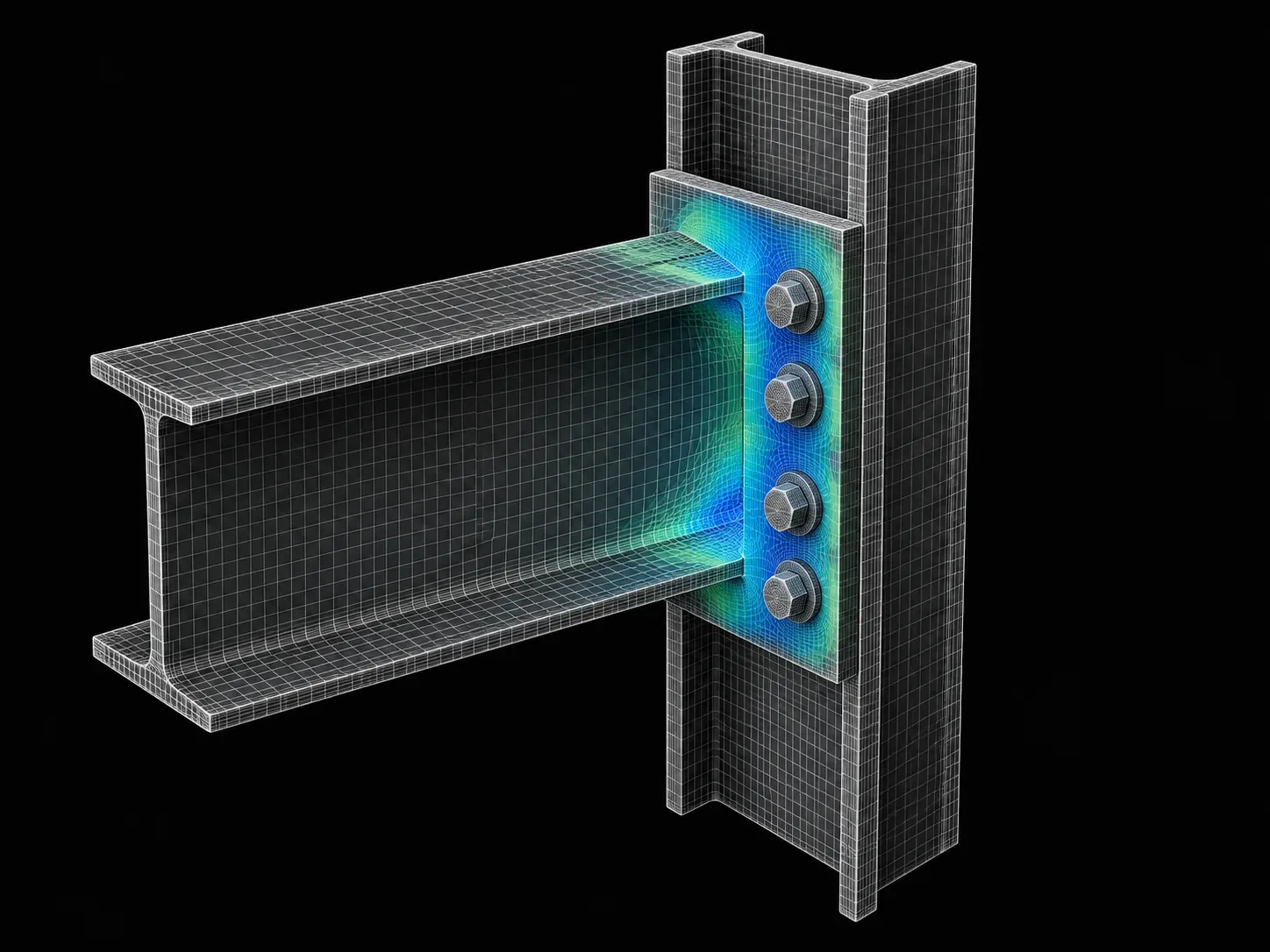
During this project work, the students will design a Beam to Beam Shear Connection with a double-angle cleat. This will help students to understand the concepts in depth with which…
Black FridayUpgrade your career this Black Friday. Get up to ₹60,000 Scholarship on IIT programsUp to ₹60K Black Friday Scholarship52 seats leftOffer ends Fri, 27 Nov, 11:59 pm IST.
A comprehensive course on the design of structural steel connections in the industry.
Structural Steel Connection Design is an online course from Skill-Lync: 11 weeks, 21 hours of content and 2 industry projects.
1 h 22 min of this course's own recorded sessions, with transcripts, on Grow by Skill-Lync:
Our projects are designed by experts in the industry to reflect industry standards. By working through our projects, Learners will gain a practical understanding of what they will take on at a larger-scale in the industry. In total, there are 2 Projects that are available in this program.
During this project work, the students will design a Beam to Beam Shear Connection with a double-angle cleat. This will help students to understand the concepts in depth with which…
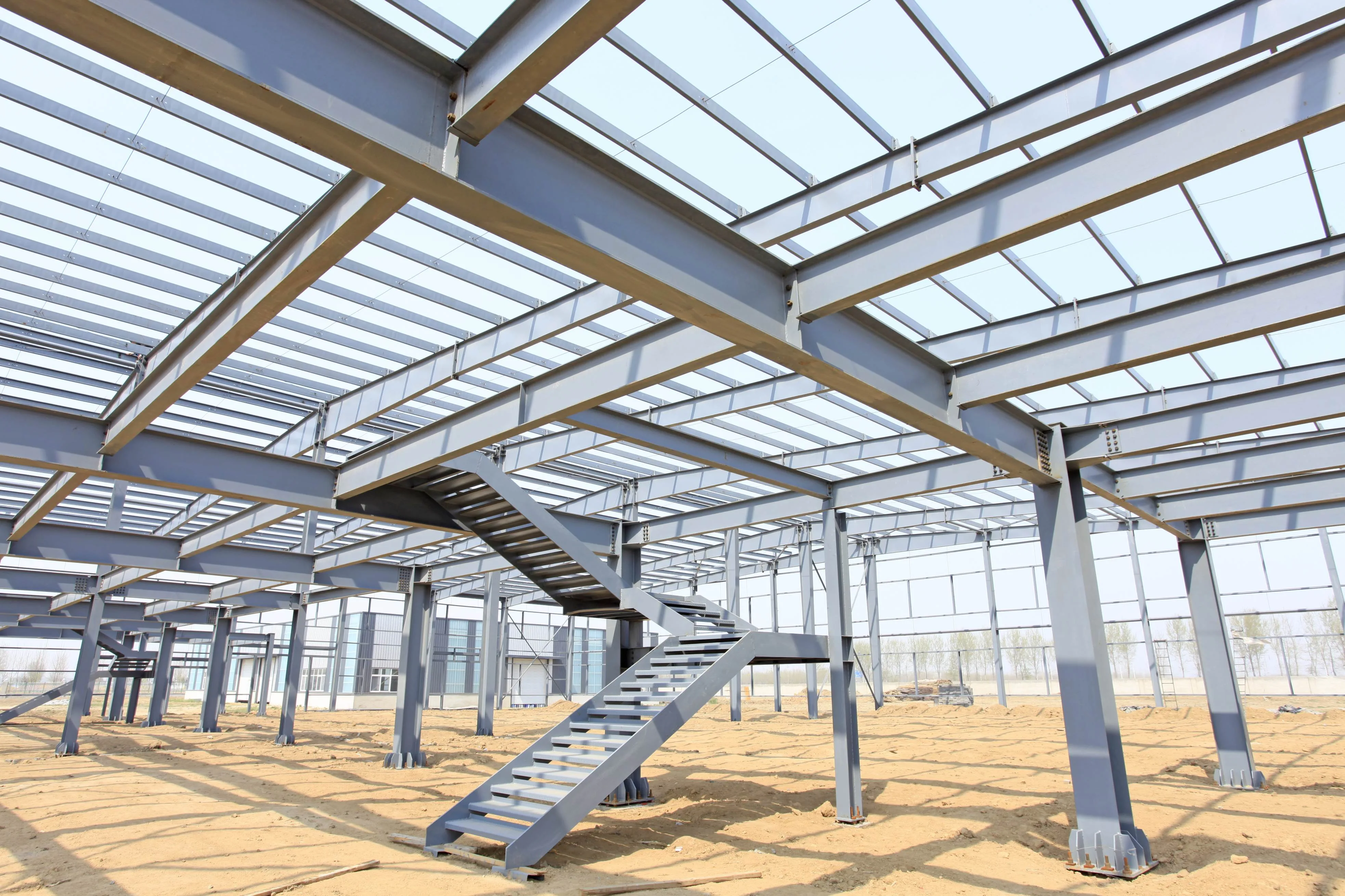
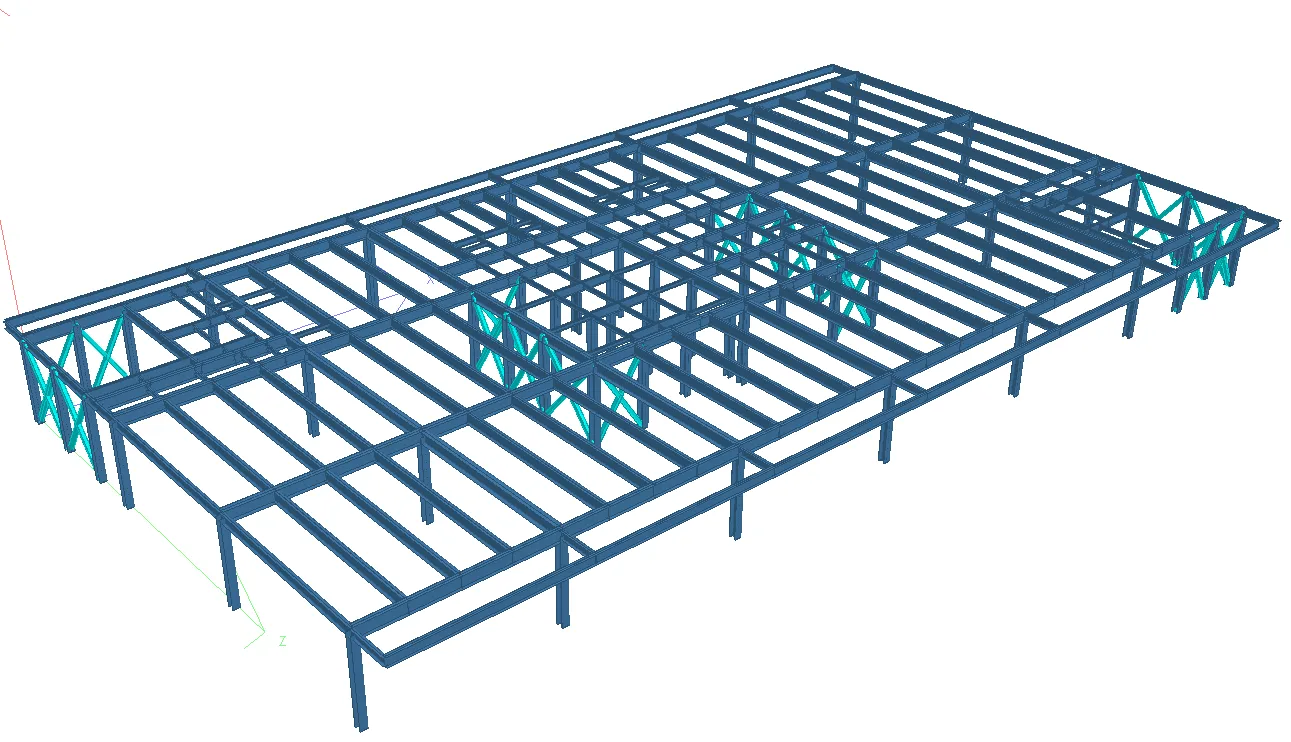
This project will give complete insight on how to design the following for a factory building Secondary beam to primary beam connection – Fin plate shear connection Primary b…
Video stories from learners of related civil programs, from Skill-Lync's YouTube channel.
by the Skill-Lync team
It teaches you to design the joints that hold a steel frame together. You start with how bolts and welds carry load and how they fail. Then you design shear connections, moment connections, base plates, column splices, gusset plates and tubular joints. There are 45 recorded sessions, about 21 hours of video, and two design projects.
A connection is the joint where one member hands its force to the next: beam to beam, beam to column, column to foundation. The free first lesson compares it to the joints in your body. A strong arm is no use if the shoulder gives way. It also makes a sharper point: a steel member bends visibly before it fails, but a connection tends to fail in a brittle way, with little warning.
The syllabus, in order:
Project 1 is a beam-to-beam shear connection with a double angle cleat, the kind used in a mezzanine floor. Project 2 covers the connections of a factory building: a fin plate from secondary to primary beam, an extended end plate from primary beam to column, and a pinned column base plate. The answers below work through one check from each. The course is part of the PG Program in Steel Structures, and the first three sessions are free on Grow.
It comes down to how much the joint resists rotation. A simple (pinned) connection lets the beam end rotate and carries shear only, like a door hinge. A rigid connection keeps the angle between beam and column unchanged, so it carries moment too. A semi-rigid one sits in between. IS 800:2007 defines all three in clause 4.2.1.
The code's words: in rigid construction the joints "hold the original angles between the members connected at a joint unchanged under loading" (4.2.1.1). In simple construction they "will not resist any appreciable moment and shall be assumed to be hinged" (4.2.1.3). Semi-rigid joints give "a dependable and known degree of flexural restraint" (4.2.1.2), set by a rational method or tests (Annex F).
Clause 10.6.1 gives examples, and they line up with the course projects:
Why it matters: the joint must behave the way the analysis assumed (4.2.2). Model a beam as pinned, then detail a stiff end plate, and the beam end attracts moment nobody designed for. The free lesson puts it simply: a shear connection acts like a pin, a moment connection like a fixed joint.
Minimum design forces. Clause 10.7 sets a floor even when the analysis gives less. A beam connection in simple construction must carry at least 0.15 times the beam's design shear capacity or 40 kN, whichever is less. For a beam with a design shear capacity of 200 kN, 0.15 × 200 = 30 kN, which is below 40 kN, so the joint is designed for at least 30 kN. A connection in rigid construction must carry at least 0.5 times the member's design moment capacity.
Multiply the weld's throat area by its design strength. Clause 10.5.7.1.1 gives . With = 410 MPa that is 189.4 MPa for a shop weld and 157.8 MPa for a site weld. A 6 mm fillet then carries 0.795 kN per mm of length in the shop and 0.663 kN/mm on site.
A fillet weld is the triangular bead laid in the corner where two plates meet. Its size is the leg length. Its throat is the shortest distance from the corner to the weld face, the narrowest part it can tear through. For faces at 60° to 90°, the throat is 0.70 times the size (Table 22), so 0.7 × 6 = 4.2 mm.
410/(√3 × 1.25) = 189.4 MPa. Times the 4.2 mm throat, that is 795 N, or 0.795 kN, per mm of weld.
The fin plate. In the factory project the secondary beam hangs off the primary beam on a fin plate: a single plate welded to the primary beam's web, with the secondary beam bolted to it. These values are assumed for illustration: factored reaction = 120 kN, a 10 mm fin plate, an 8 mm primary beam web, a 6 mm fillet on each face of the plate with 230 mm effective length, and the bolt line 60 mm from the weld.
√(97.2² + 3 × 62.1²) = 145.0 MPa against 189.4 MPa, a ratio of 0.77, so it passes. Weld the plate on site instead and the limit falls to 157.8 MPa, so the ratio rises to 0.92. Same weld, a sixth less capacity, because 1.25/1.50 = 0.83.
The drawing shows each run as 230 + 2 × 6 = 242 mm long, because clause 10.5.4.1 adds twice the weld size for the weak start and end of a run. The bolts, the plate and the beam web get their own checks in the shear connection part of the course.
Block shear is a chunk of steel tearing out around a group of bolts: shear along the bolt line and tension across the end. IS 800:2007 clause 6.4.1 takes the smaller of two combinations. For a 3-bolt line in an 8 mm cleat it gives 215.9 kN per angle. A coped 7.5 mm beam web gives only 202.4 kN, so the beam, not the cleat, is the weak link.
Think of tearing a sheet of stamps along the perforations. The bolt holes are the perforations. One face of the block tears in shear along the bolt line, and the other pulls apart in tension. The code pairs yielding on one face with rupture on the other, both ways round:
and are the gross and net areas of the shear face, and and those of the tension face. For E250 steel under 20 mm thick, = 250 MPa and = 410 MPa (Table 1). = 1.10 and = 1.25 (Table 5).
Project 1 setting, assumed values. A secondary beam frames into a main beam through two angle cleats, one on each side of its web, with a factored reaction of 120 kN. Three M20 bolts in 22 mm holes run down each cleat at 60 mm pitch, 40 mm from the top edge and 40 mm from the side edge. It is the same bolt layout as the bolt shear and bearing example on the steel structures program page, so the bolt checks are not repeated here.
The web uses 120/202.4 = 0.59 of its block shear capacity. That passes, but notice why the web governs: two cleats share the load, while the web stands alone. Clause 6.4 sits in the tension member section, but it covers "an end connection of plates and angles". The bolted shear connection report reviewed in the free RAM Connections lessons lists block tearing under clause 6.4.1 as its own check.
Make the plate big enough that the concrete is not overstressed, then thick enough that it does not bend. IS 800:2007 limits the bearing pressure to 0.6 (clause 7.4.1) and gives the slab base thickness in clause 7.4.3.1. For a 1,500 kN column on M25 concrete, a 400 × 300 mm plate needs 17.8 mm, so 18 mm.
A base plate is the steel slab at the foot of a column. It spreads the column's load over the concrete pedestal below, the way a snowshoe spreads your weight over snow. A pinned base, as in the factory project, passes axial force and shear but is not designed to carry moment.
Assumed values: factored axial load 1,500 kN; an I-section column 300 mm deep with a 250 mm wide flange, 12 mm thick; pedestal and grout of M25 concrete. In IS 456, M25 means a 150 mm cube strength of 25 N/mm² at 28 days.
= 2,500 − 187.5 = 2,312.5 mm². With = 250 MPa, √(2.5 × 12.5 × 2,312.5 × 1.10/250) = 17.8 mm. The code also wants greater than the 12 mm column flange. An 18 mm plate works.
One catch: Table 1 drops the yield stress of E250 plate from 250 to 240 MPa at 20 mm and over. Choose a 20 mm plate and the requirement becomes 18.2 mm, which still passes. On a heavier column, that drop can push a plate into the next size up.
The pinned base still has to carry shear. Clause 7.4.1 lets you count friction between the steel base and the grout with a coefficient of 0.45, and asks for anchor bolts and shear keys where needed. Fixed bases, which carry moment as well, come in the same part of the course.
Mostly by where the joint is made and what it has to resist. Welds are strong and stiff but need skilled welders and inspection. Bolts are quick to fit on site and can be undone. IS 800:2007 says two kinds of fastener should not share one force, and names the joints that must not slip.
The free lessons add the practical side. Steel members are fabricated in a yard and assembled on site, like flat-pack furniture, so a joint should be simple to make. Black bolts need only unskilled labour and simple tools. Welding needs a skilled welder, and the weld must be checked for cracks and gas bubbles. Bolted members can also be taken apart and reused. Rivets, once common in bridges, are no longer used.
Yes, but mostly through detailing, and our own data on connection design itself is thin. As of 21 Nov 2026, 73 of Skill-Lync's 3,905 placement records have connection, detailing, Tekla or steel in the job title. All 73 disclose pay, with a median of ₹2.4 LPA. Only 2 say "connection".
The records run from 2021 to 2025, with 67 of the 73 from 2023. They are a self-reported learner sample, mostly 2021 to 2023 starting offers. The steel structures program page shows another cut, structural engineer titles in the civil domain. For a wider view, see civil engineer salaries.
| Course | Length | Projects | Tools | Fee |
|---|---|---|---|---|
| Structural Steel Connection Design (this page)Bolt, weld, shear, moment and base plate design | 11 weeks, 21 h | 2 | - | ₹40,000 |
| Structural steel connections using RAM ConnectionsThe same joints designed in RAM Connection and STAAD | 12 weeks, 17 h | 2 | STAAD.Pro, RAM Connections | ₹40,000 |
| PG Program in Steel StructuresPG program: members, connections, sheds, RCC, ETABS | 48 weeks, 152 h | 15 | ETABS, ComFlor, STAAD.Pro, RAM Connections | ₹2,75,000 |
| Design of Sheds with GantryCrane sheds: gantry girders, trusses, base plates | 12 weeks, 22 h | 2 | STAAD.Pro | ₹40,000 |
| Analysis and Design of Industrial Structures using STAAD.ProSteel members by hand, then STAAD.Pro frames and PEBs | 12 weeks, 28 h | 2 | STAAD.Pro | ₹40,000 |
| Analysis and Design of RCC & Steel Structures using Tekla Structural DesignerSteel and RCC buildings in Tekla Structural Designer | 12 weeks, 19 h | 2 | Tekla Structural Designer | ₹40,000 |
Lengths, projects and fees are taken from each course page on 21 Nov 2026; fees are the Premium plan in INR, including all charges.
Become job ready with our comprehensive industry focused curriculum for freshers & early career professionals
Students and graduates of civil, architecture and related engineering streams can take the Structural Steel Connection Design course.
Yes, the Structural Steel Connection Design course is 100% online.
This course is 11 weeks long. It covers bolted and welded connection theory, then shear, moment and axial force connections, base plates, column splices, gusset plates and tubular connections.
Skill-Lync's own placement records (n = 3,905, as of 21 Nov 2026) hold 73 offers with connection, detailing, Tekla or steel in the job title, with a median of ₹2.4 LPA. Most are 2023 trainee detailer offers; the 2 connection design titles were ₹4.0 and ₹7.2 LPA for experienced hires. This is a self-reported learner sample, mostly 2021 to 2023 starting offers. Pay varies with experience and skills.
Yes, you shall be given a course completion certificate after completing the Structural Steel Connection Design course. The top 5% of the scorers will receive a merit certificate alongside the course completion certificate.
Yes, you can clear your doubts during coursework from our technical support team through email and forum support.
Skill-Lync is among India’s leading EdTech platforms dedicated to transforming engineering education. We equip young engineers with the latest skill sets and cutting-edge tools in new-age technologies.
The brainchild of two engineers from Chennai, Skill-Lync, is on a mission to bridge the skill gap between aspiring professionals and the industry’s demands through job-oriented courses.
A counsellor will walk you through the syllabus, projects and fee options — and tell you honestly if another course suits you better.