Wiring harness design in CATIA V5 - 3D modeling Week 4 Challenge
Harness Layout Routing in Electrical Workbench
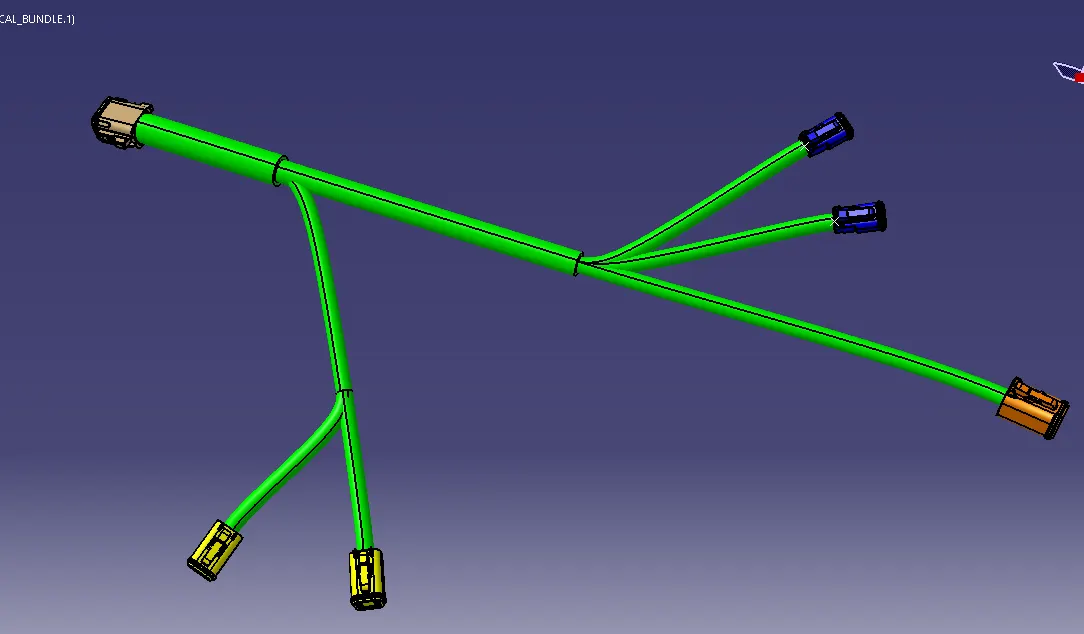
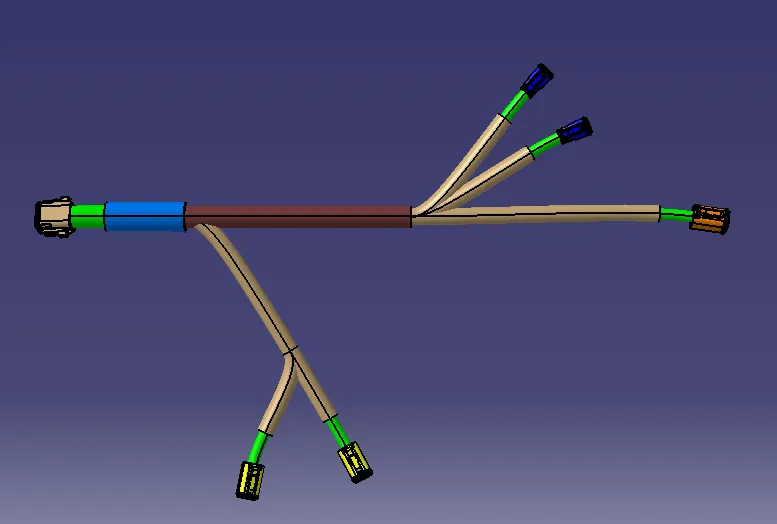
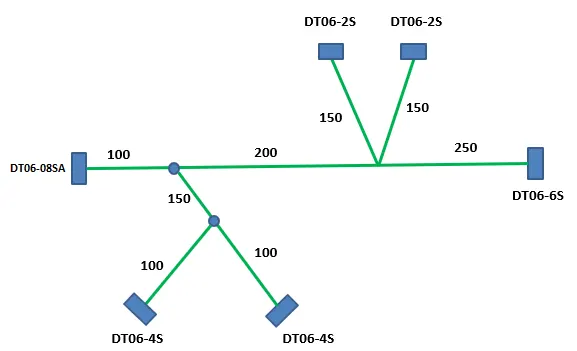
Q1. Route the following harness layout in Electrical workbench. Make assumption for harness bundle diameters. Use Following connectors as shown in layout diagram.
Add protective covering on all branches connected to DT06-2S & DT06-4S connectors. Keep end extremity at 30mm (from connectors end)
Download connector 3D data from www.te.com
· DT06-4S
· DT06-6S
· DT06-2S
· DT06-08SA
What is a Wiring Harness?
A wiring harness, also called a cable harness or wiring assembly, is an organized bundle of electrical wires or cables enclosed within protective insulation. Its main function is to transmit power or electrical signals efficiently. Instead of running wires individually, they are grouped together using ties, tapes, sleeves, conduits, or straps, which makes handling and installation easier. By combining multiple wires into a single unit, the harness allows for faster “plug-and-play” installation in complex systems.
Difference between Wiring Harness and Cable Assembly
Although both terms are often used interchangeably, there is a clear distinction between them:
l A cable assembly generally consists of a single cable with only two termination points (two ends).
l A wiring harness may have several breakouts, leading wires in multiple directions with many different terminations.
Because of this, wiring harnesses are widely used in vehicles (cars, buses, trucks, aircraft), construction machinery, consumer appliances, and industrial machines where multiple connections are required.
Advantages of Wiring Harness
l Reduced installation effort: Modern vehicles require kilometers of wiring. By pre-assembling wires into a harness, installation becomes quicker since the harness can be directly fitted instead of routing each wire individually.
l Improved safety & reliability: Grouped wires are less prone to vibration damage, moisture, or abrasion. The bundled design also saves space, reduces electrical short circuits, and lowers the risk of fire when flame-retardant sleeves are used.
What are the Connectors Used ?
Connectors are electromechanical devices that join sections of a wiring harness to a power source, circuit, or another harness. They typically have male (plugs) and female (jacks) components that fit together to maintain signal or power continuity. In this assignment, DT series connectors are used:
l DT06-2S → 2 positions, female housing, pitch 5.46 mm
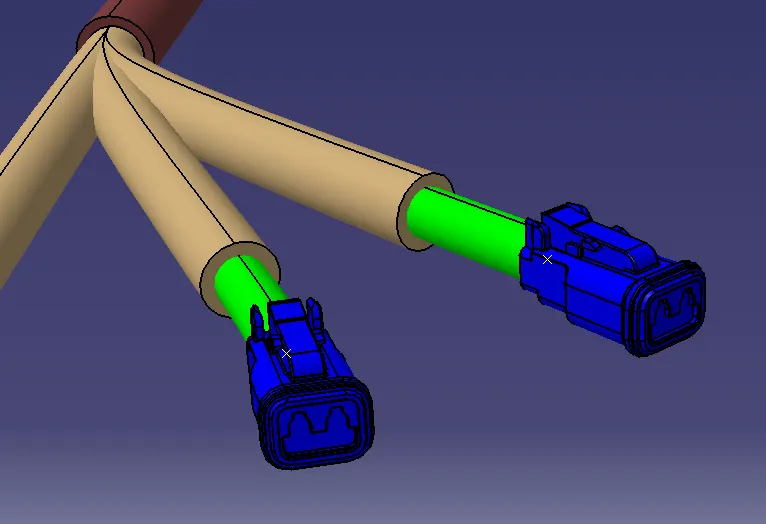
l DT06-4S → 4 positions, female housing, pitch 4.45 mm
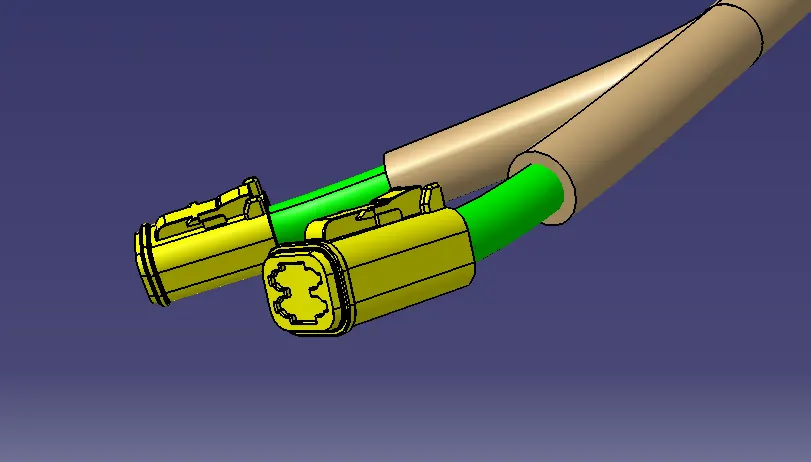
l DT06-6S → 6 positions, female housing, pitch 9.12 mm
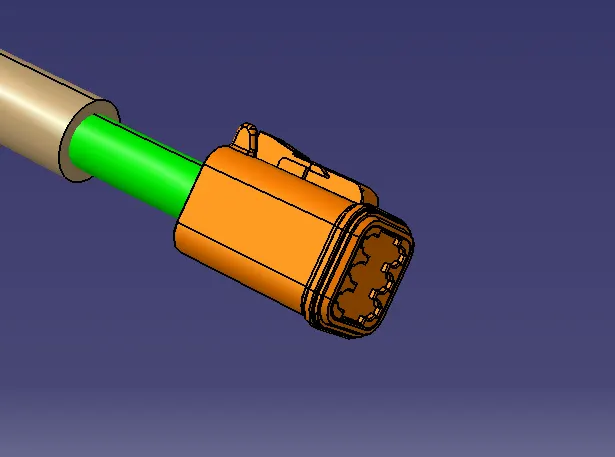
l DT06-08SA → 8 positions, female housing, pitch 9.12 mm
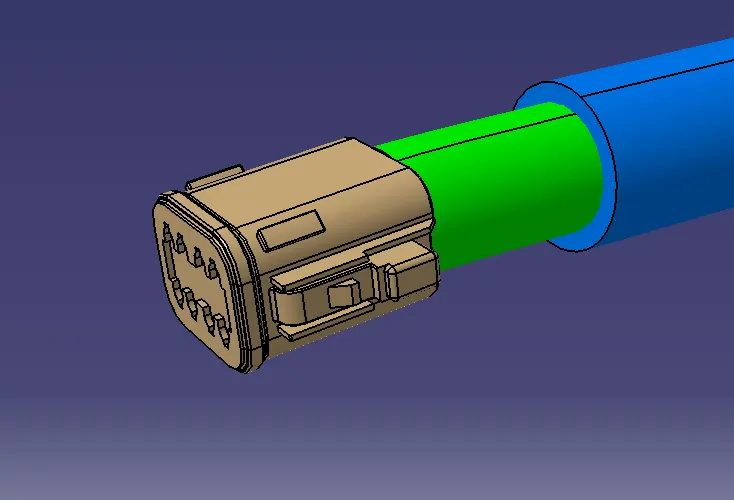
What is Protective Covering?
Protective coverings are used to shield harnesses from environmental and mechanical damage. Common options include:
l Heat shrink tubing: tightly fits around the wire bundle, offering insulation and mechanical strength.
l Adhesive-lined tubing: seals against moisture, chemicals, and corrosion.
l Sleeves, tapes, and conduits: provide abrasion resistance and keep the bundle organized.