Week 9- Unsteady moving zones Approach
Aim: To simulate the motion of blades in a generic turbomachinery component using Steady & Unsteady approach.
Simulation setup:
- Initially we have three zone mesh files, so first we will read one file and then append the other two file in fluent.
- File >> read the mesh file >> mesh model will be displayed.
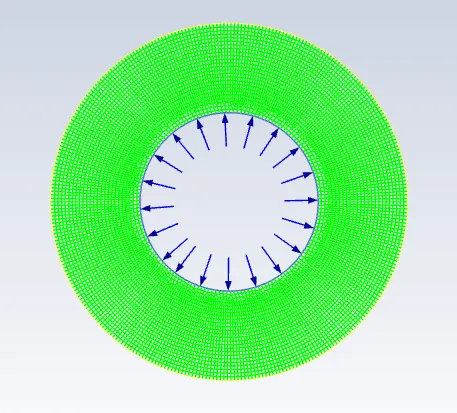
- Domain >> Zones >> Append >> Case file select the mesh file >> Ok. Similarly select the other file as well.
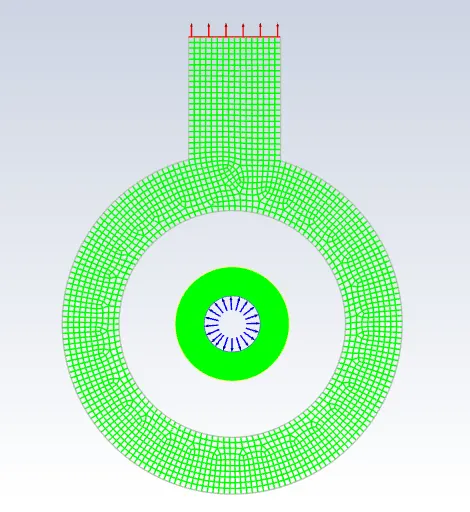
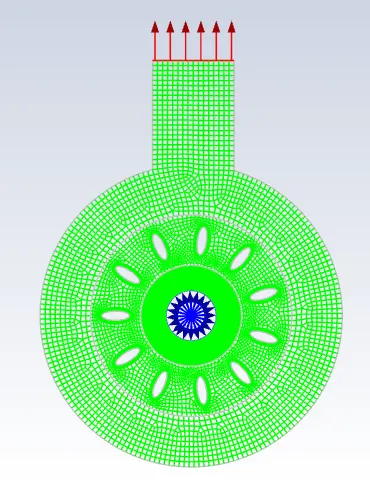
- From display check the different boundaries, surfaces and their names mentioned in display tab. Which would be very useful in later part while assigning the boundary conditions.
Moving Reference Frame Method:
- Physics >> General setting >> Pressure based >> 2D >> steady state simulation.
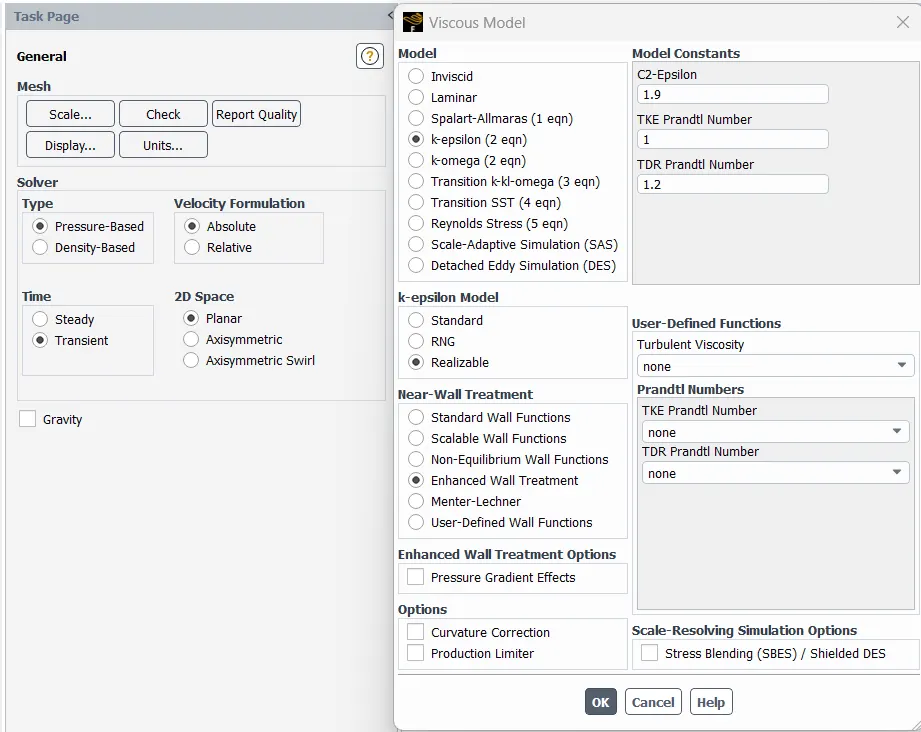
- Moving reference frame method is used for steady state simulation only.
- Viscous Model >> K Epsilon, Realizable, Enhanced wall treatment.
- Material: Air.
- Zone:
- Fixed Farme: Fluid Type
- Rotating Frame: Fluid Type >> Edit >> Frame motion >> speed: 300rpm
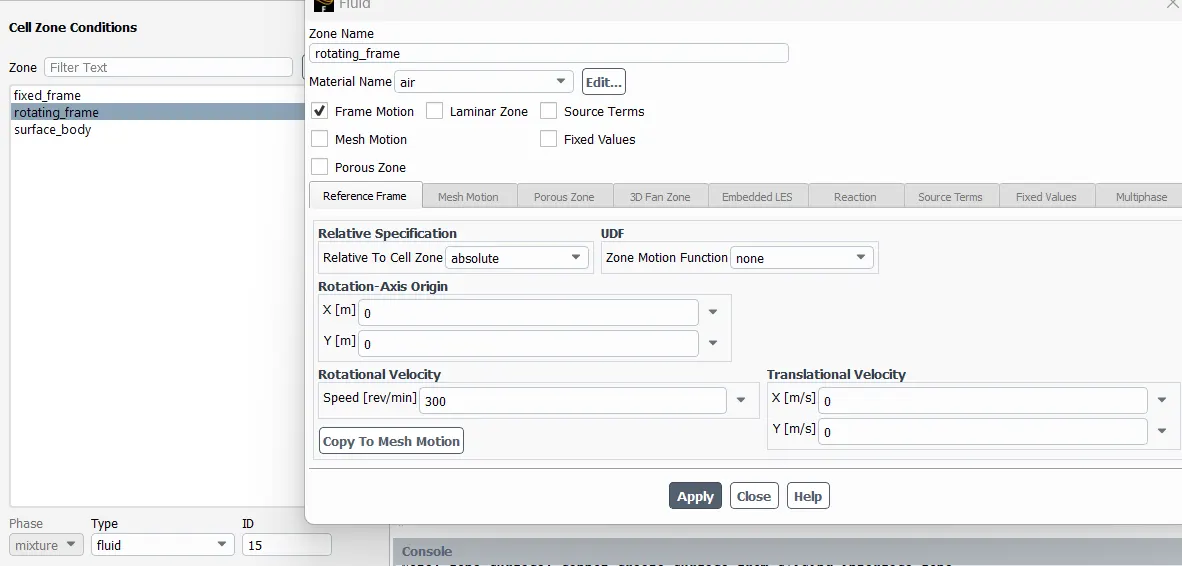
- Surface Body: Fluid Type
- Boundaries:
- Wall Boundary:
- Airfoil: Edit >> Moving Wall >> Motion Relative to cell Zone >> Rotation.
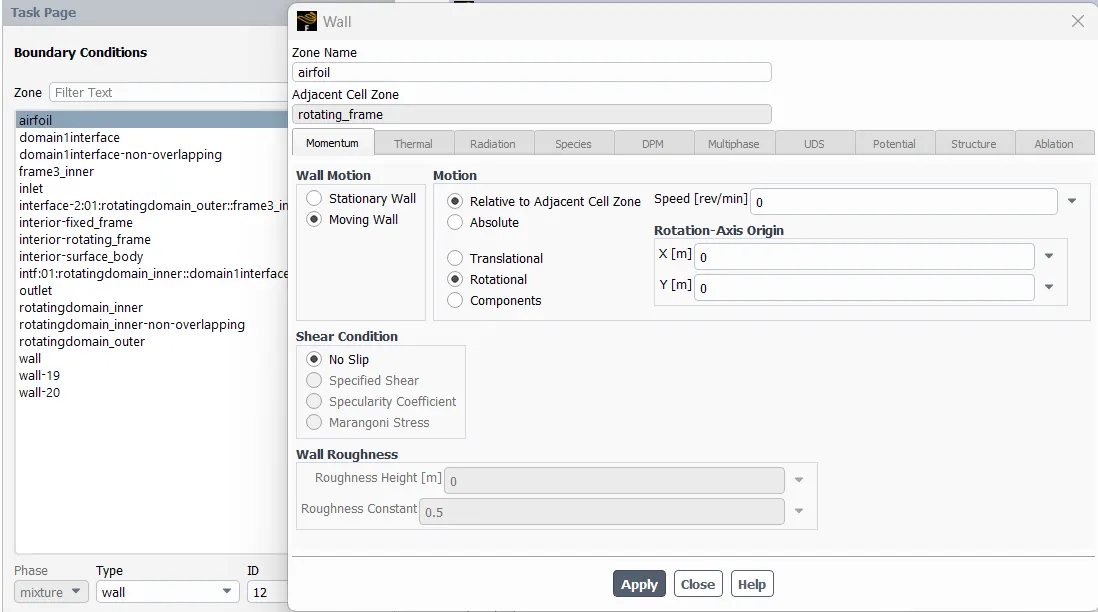
- Wall: Stationary Wall
- Interface Boundary:
- Domain 1 interface
- Frame 3 inner
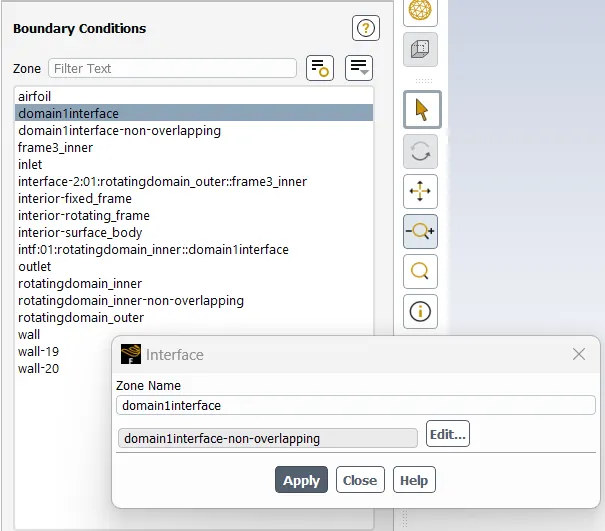
- Rotating domain inner
- Rotating domain outer
- Interior Boundary:
- Fixed Frame
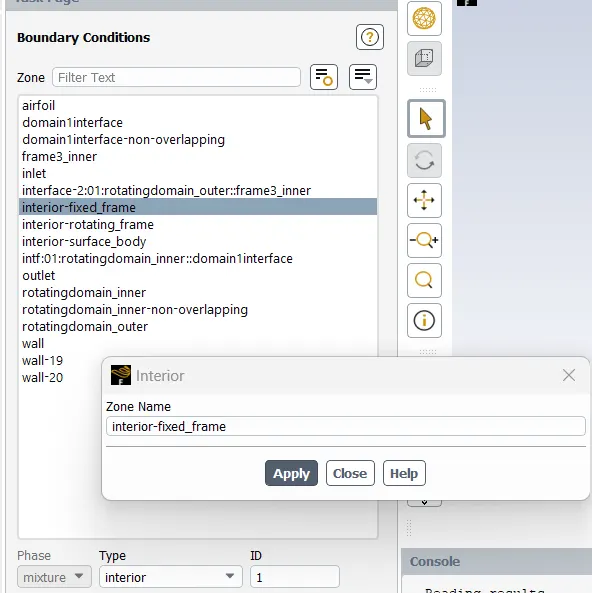
- Rotating Frame
- Surface Body
- Inlet >> Pressure Inlet >> Gauge Pressure: 0Pa
- Wall Boundary:
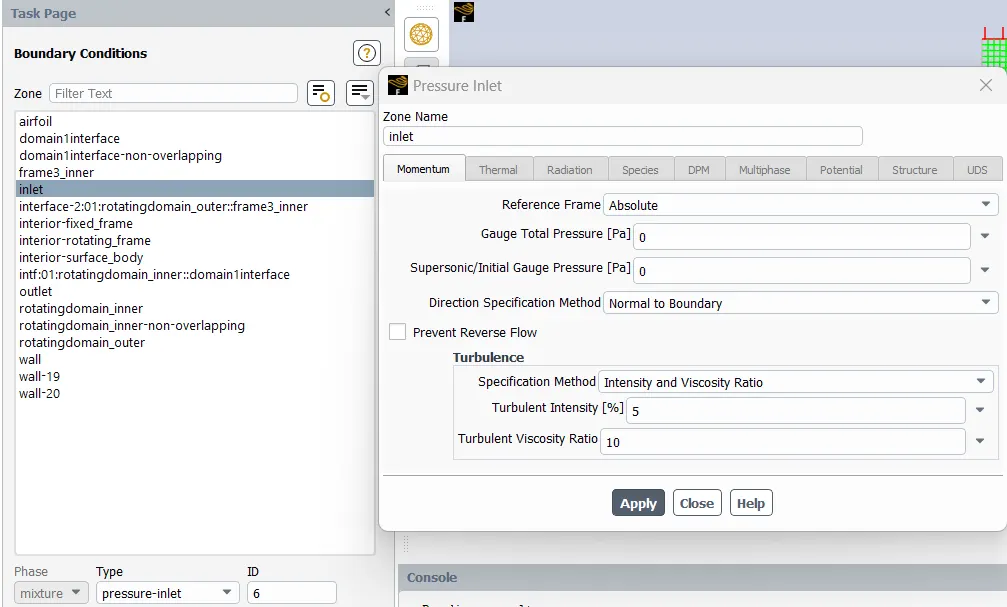
- Outlet >> Pressure Outlet >> Gauge Pressure: 0Pa
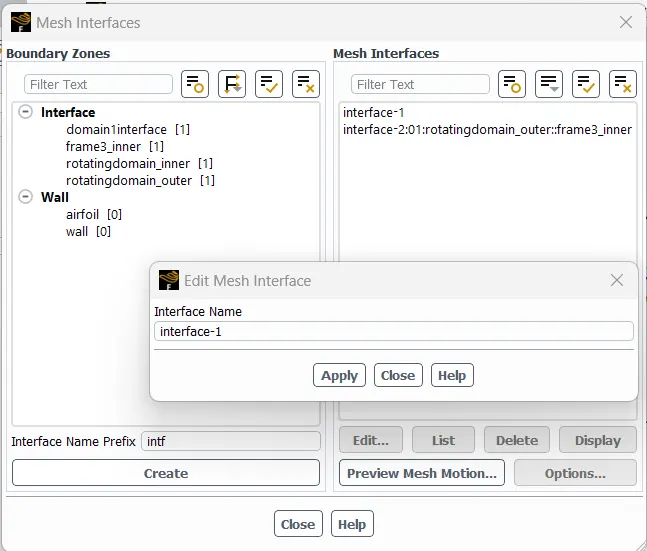
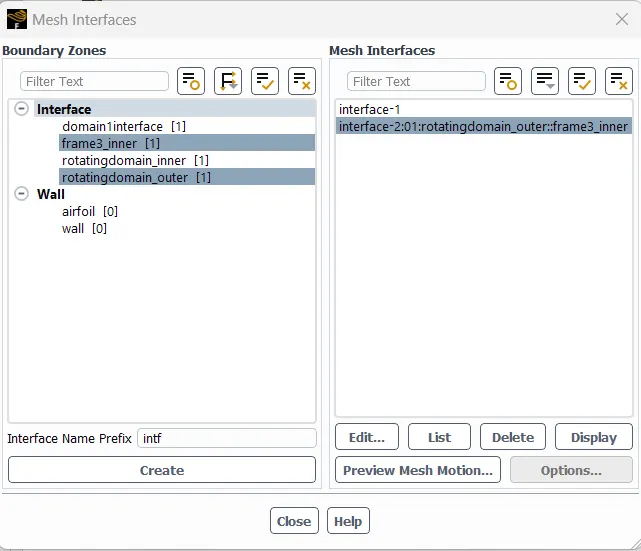
- Interface: (Select the interface which is overlapping)
- Interface 1: Create >> Select Domain 1 interface & Rotating domain inner
- Interface 2: Create >> Select frame 3 inner & Rotating domain outer
- Method >> Coupled Scheme >> Spatial Discretization >> Second order Upwind
- Control >> Flow courant number: 10
- Reference Compute from Inlet, Hybrid Initialization.
- Report Definition >> New >> Surface Report >> Mass Flow rate >> Outlet
- Uncheck the residual convergence criteria, Run calculation
Moving Mesh Motion Method:
- All other setting other than those mentioned below remain the same as of moving reference frame method.
- Physics >> General setting >> Pressure based >> 2D >> Transient state simulation.
- Zone:
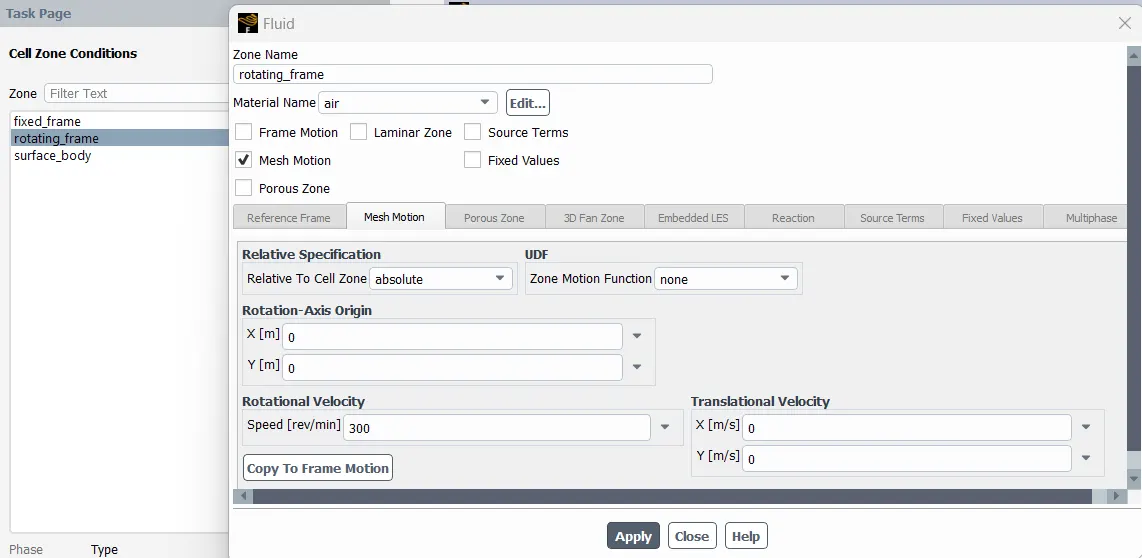
- Rotating Frame: Fluid Type >> Edit >> Mesh motion >> speed: 300rpm
Time step calculation:
Rotational velocity= 300rpm
Time Period = 60/N = `60/300=0.2sec`
we want to simulate the flow for one revolution of impeller. We want to acheive this time period in 1000 iteration so time step size will be,
Time step size `Deltat=0.2/1000=0.0002sec`
for accurate result the value of time step size should be less then 0.0002s
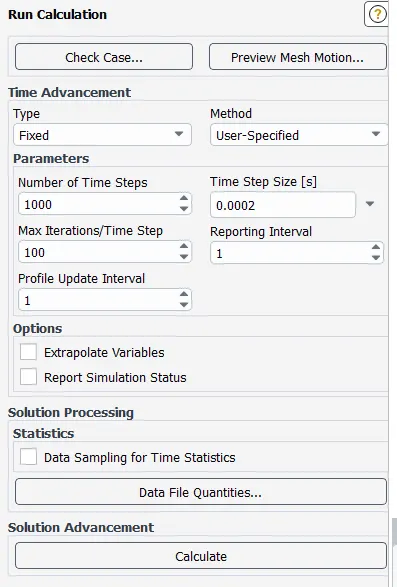
- Reference Compute from Inlet, Hybrid Initialization.
- Report Definition >> New >> Surface Report >> Mass Flow rate >> Outlet
- Uncheck the residual convergence criteria, and also enable mass flow rate as the convergence criteria
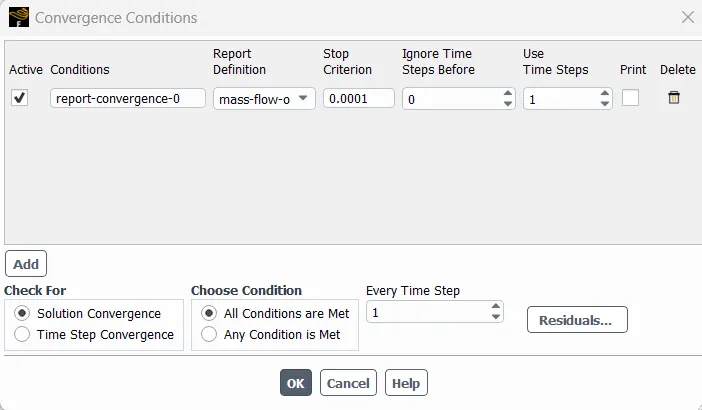
- Run calculation.
Result:
| Parameters | Moving Reference Frame method | Moving Mesh Motion Method |
| Residual | 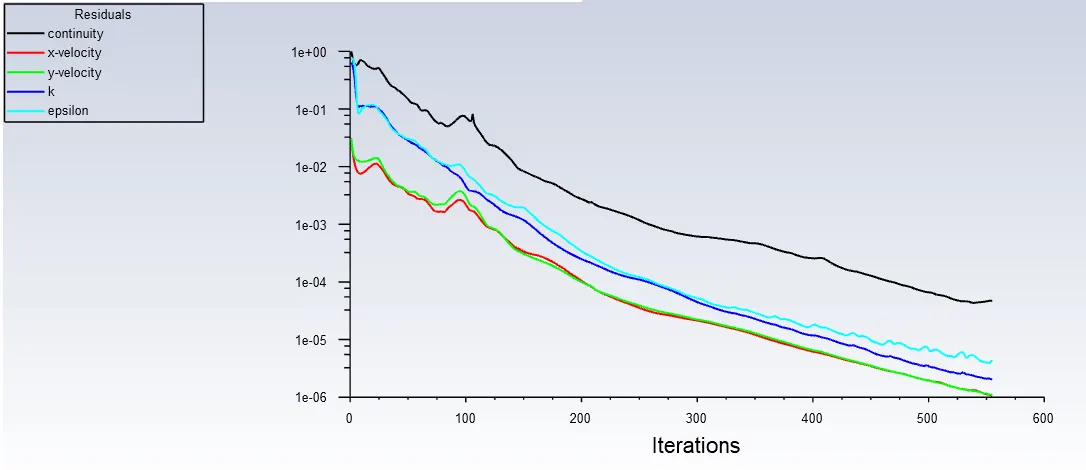 |
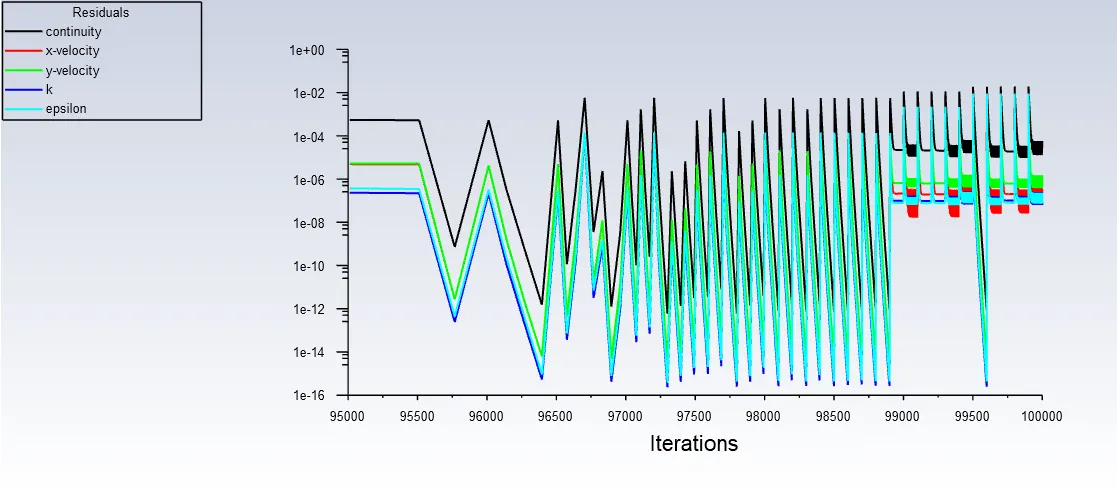 |
| Velocity contour | 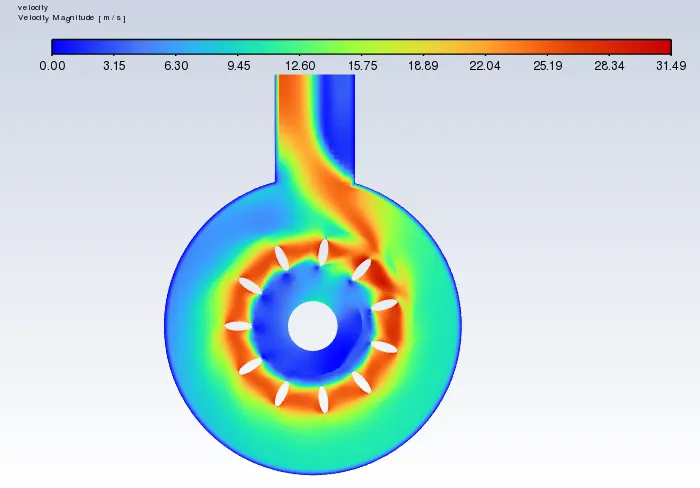 |
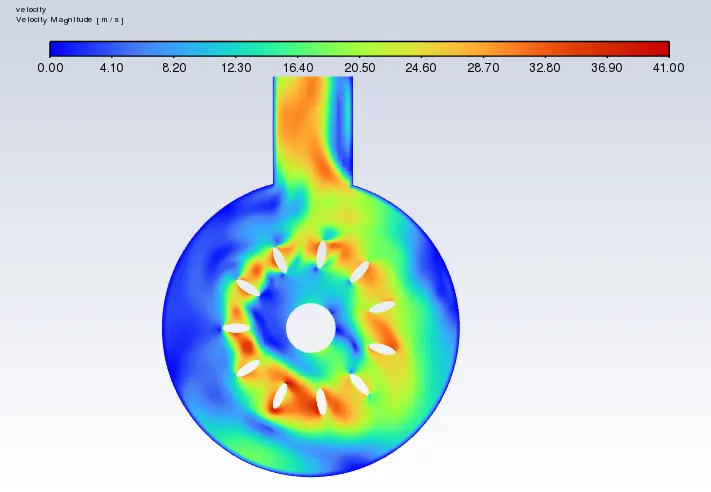 |
| Static Pressure | 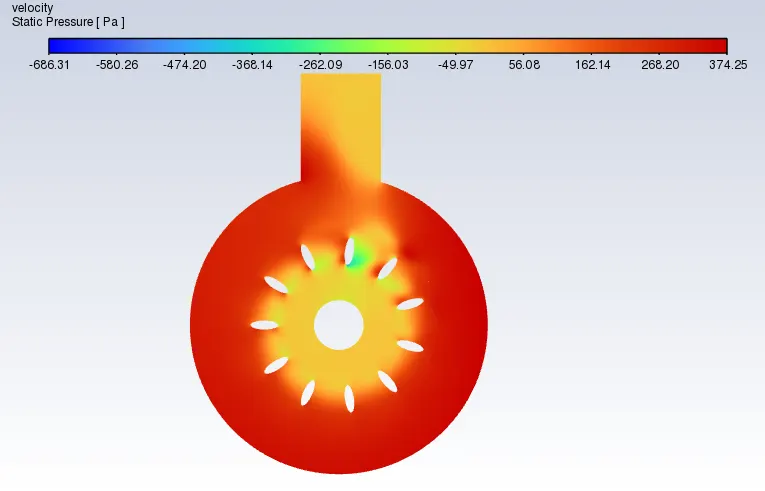 |
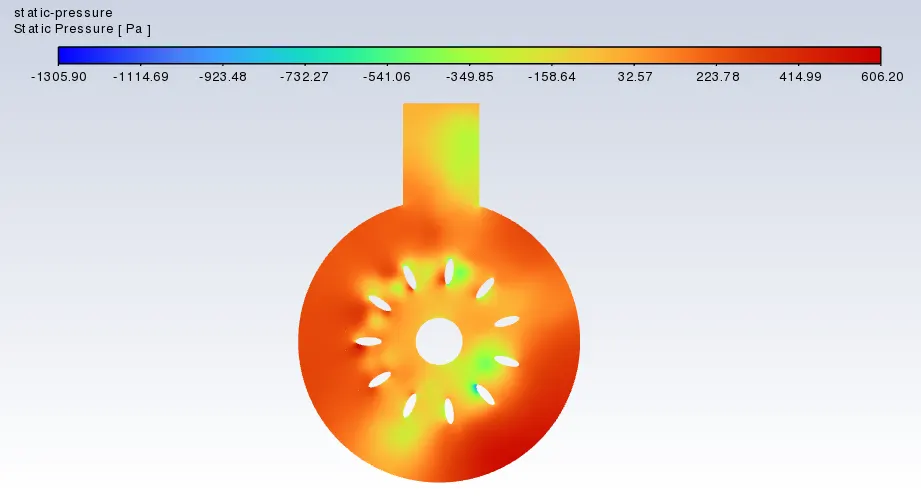 |
| Total Pressure | 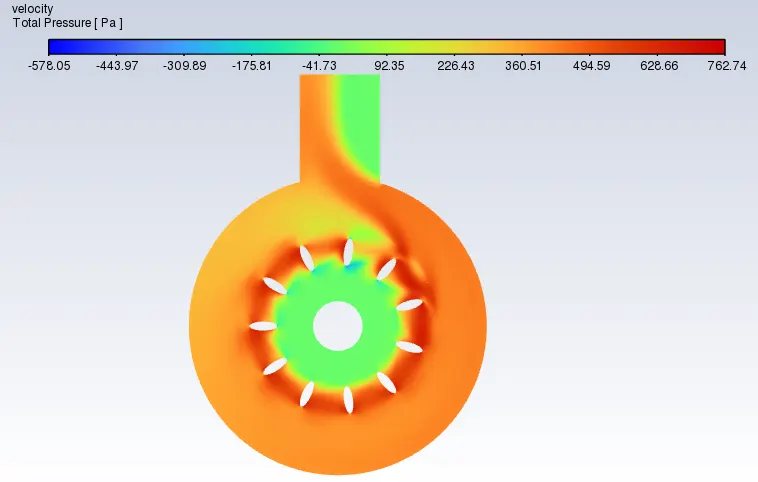 |
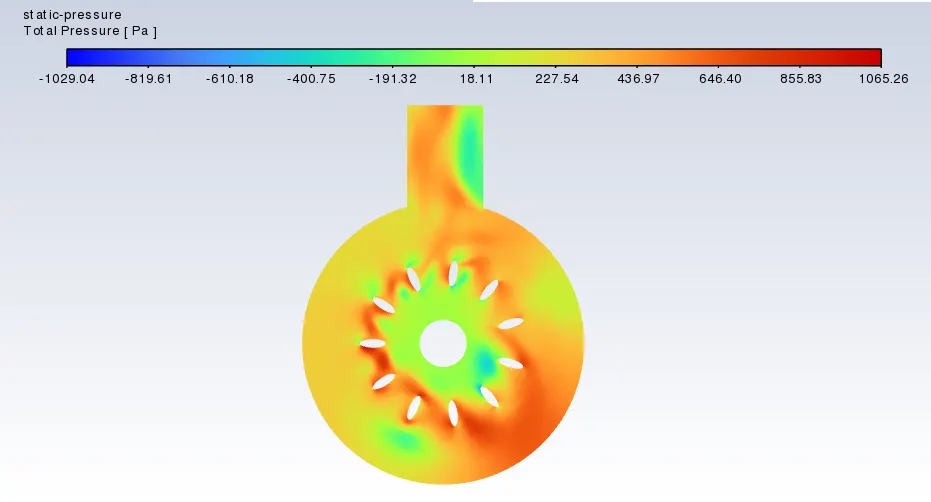 |
| Mass Flow Rate at Outlet | 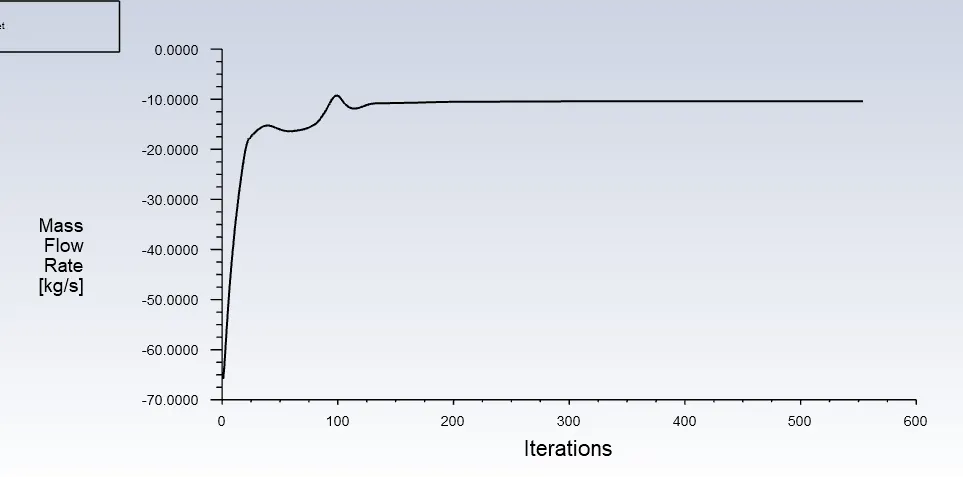 |
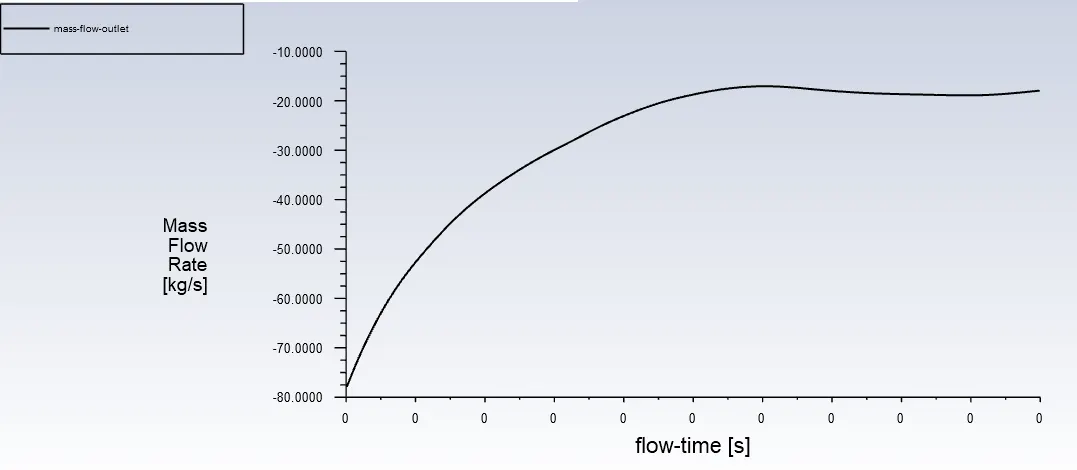 |
| Mass Flow Rate |  |
 |
| Velocity Plot | 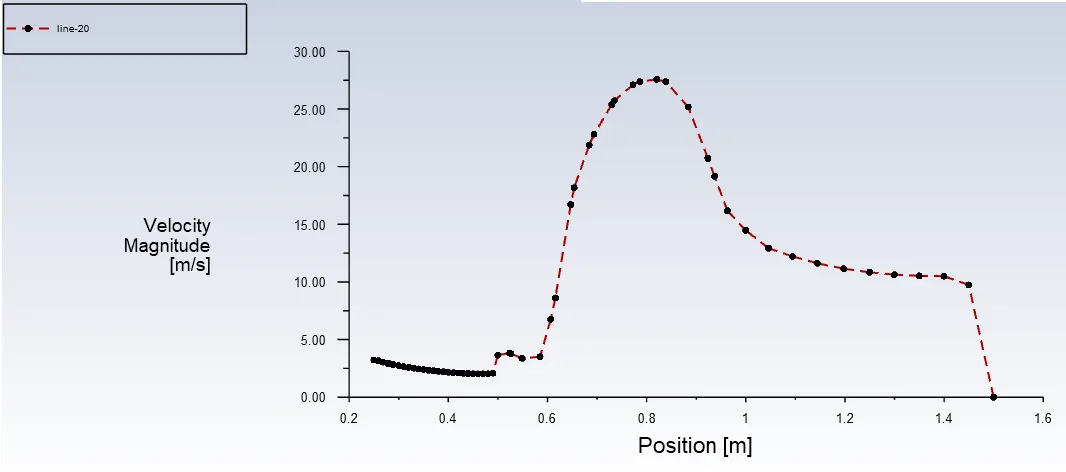 |
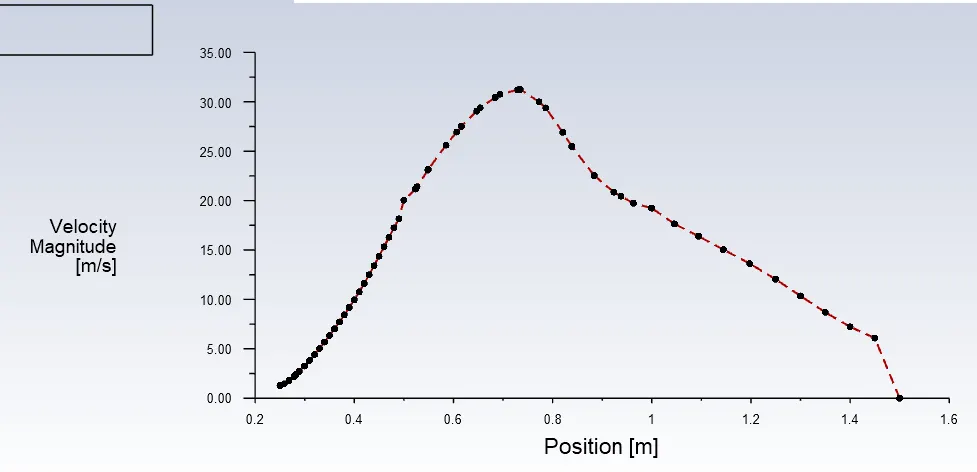 |
| Static Pressure Plot | 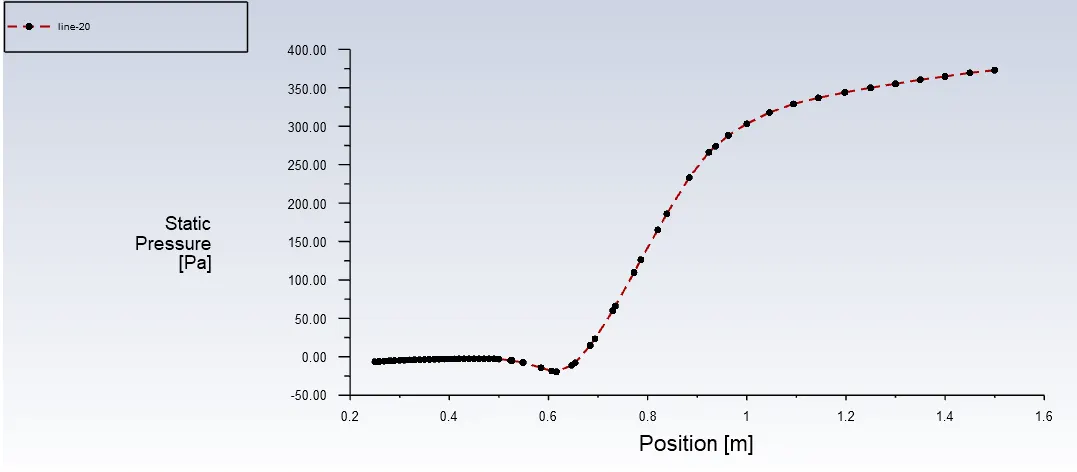 |
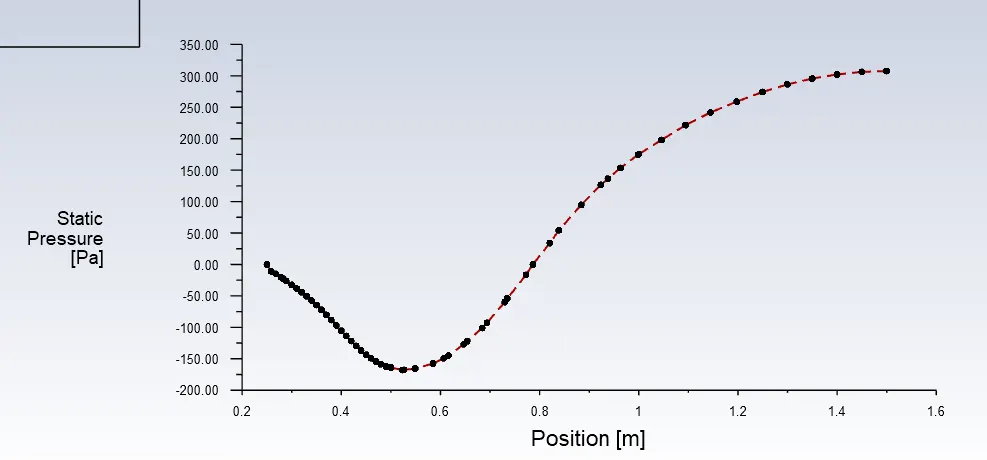 |
| Total Pressure Plot | 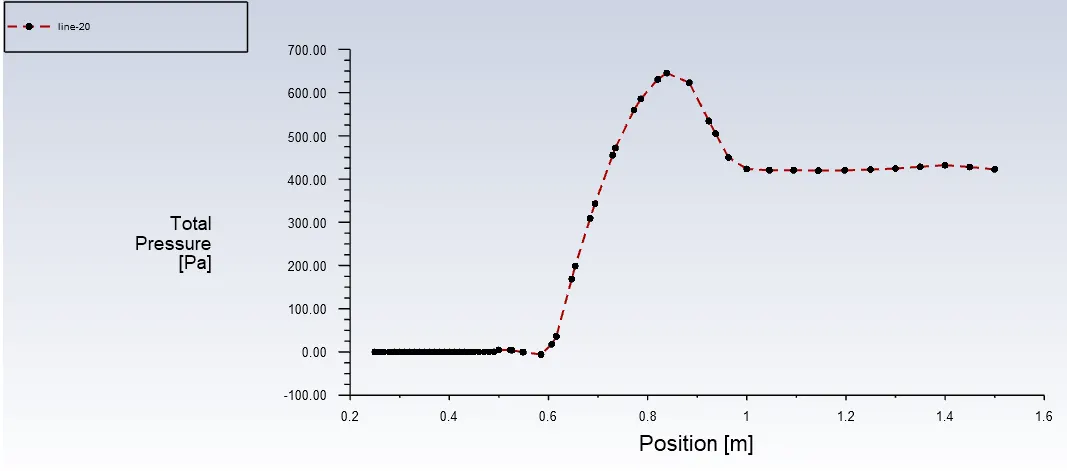 |
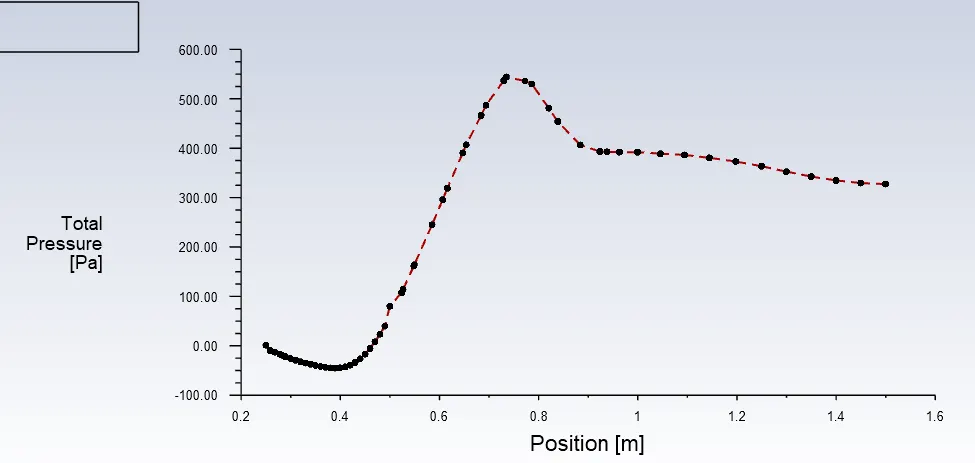 |
Transisent Flow Animation:
https://drive.google.com/file/d/1eB69jmVOUvTWppqqE7QU-VWJbmhecy2o/view?usp=drive_link
Conclusion:
- From analysising both the methods it is found that the transisent simulation after few time flow will result in steady state.
- Currently, we have simulated the transient simulation for 0.2s i.e for one revolution of impeller. For industrial problems it is usually simulated for 5-6 revolutions, but due to resource constraint we have limited our study.
|
Sr. no. |
Simulation State |
Parameter |
Minimum |
Maximum |
|
1 |
Transient State Simulation |
Velocity (m/s) |
0 |
41.00 |
|
2 |
Static Pressure (Pa) |
-1305.898 |
606.2029 |
|
|
3 |
Total Pressure (Pa) |
-1029.045 |
1065.257 |
|
|
4 |
Mass Flow Rate (Kg/s) |
-17.9624 |
||
|
5 |
Steady State Simulation |
Velocity (m/s) |
0 |
31.49 |
|
6 |
Static Pressure (Pa) |
-586.31 |
374.25 |
|
|
7 |
Total Pressure (Pa) |
-578.09 |
782.74 |
|
|
8 |
Mass Flow Rate (Kg/s) |
-10.3979 |
||