Week 9- Unsteady moving zones Approach
Introduction: The unsteady state case is one which time plays an important factor, as the flow unfoalds in time and there is obvious moving parts (rotating airfoil). In this study an attempt is made to simulate the turbomachine using a moving zone approach.
The setup is as follows:
A transient simulation with a time step of 0.0002 with 1500 timesteps (Total simulation time: 0.3 seconds i.e `1 1/2` rotation)
Viscous model: K-epsillon (Relizable) with Enhanced wall function.
SIMPLE scheme (Second order)
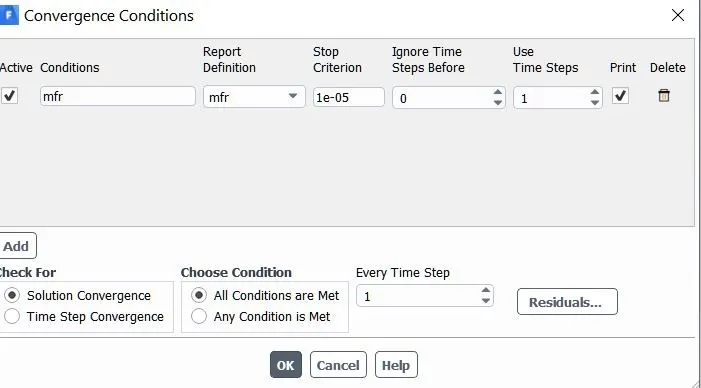
Convergence: Mass Flow Rate with a step cirterion of 1e-5
The rotating reference frame is rotating at 300 RPM
Note: The convergence cirteria for mass flow rate is set so that we can see the proper contours when the mass flow rate at the output stabalises.
 |
|
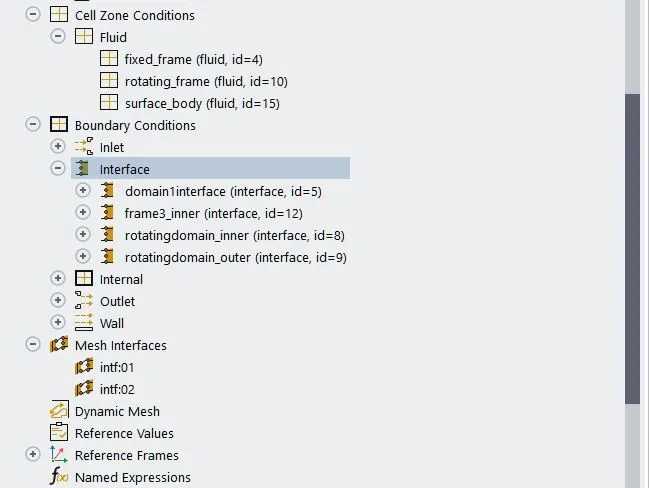
Setup tree:
|
Results:
|
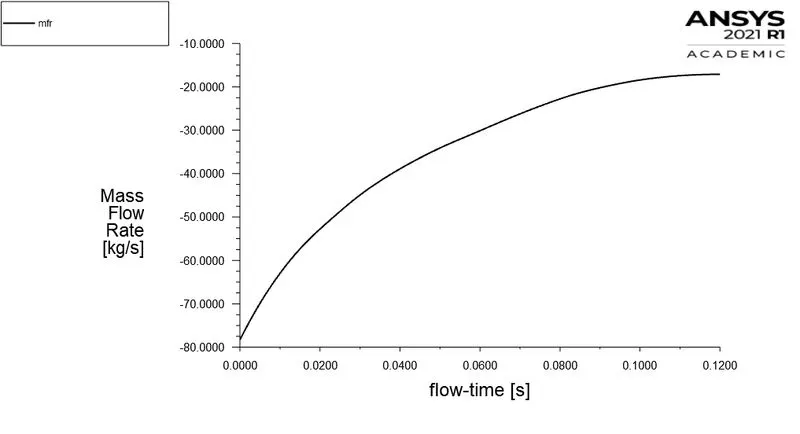
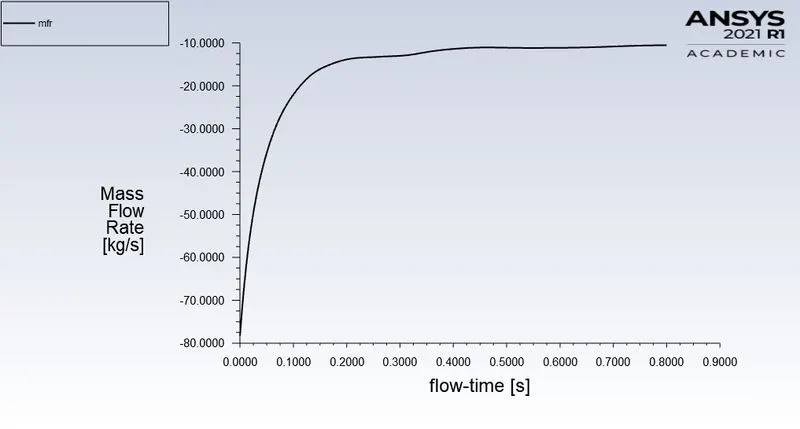
Mass flow rate for the unsteady state
|
|
Residual plot for Mass Flow Rate
|
|
Pressure Plot
|
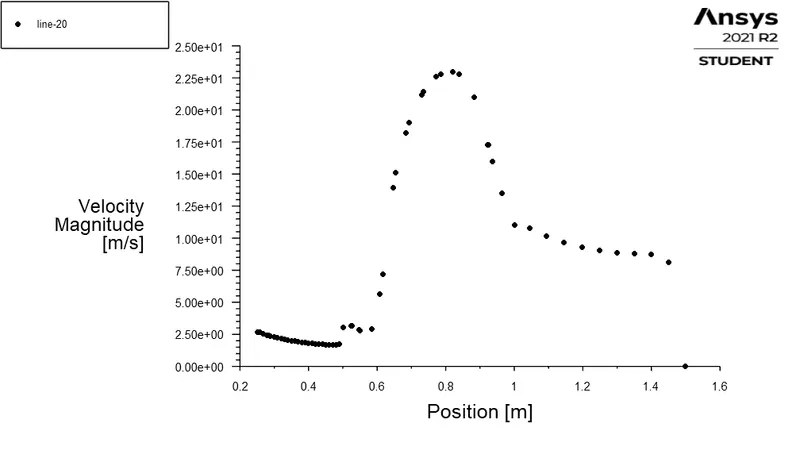
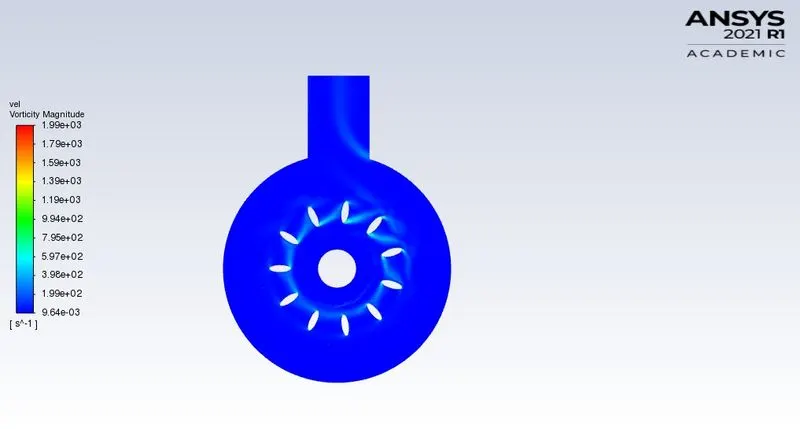
Contours:
| Total Pressure with unsteady state | 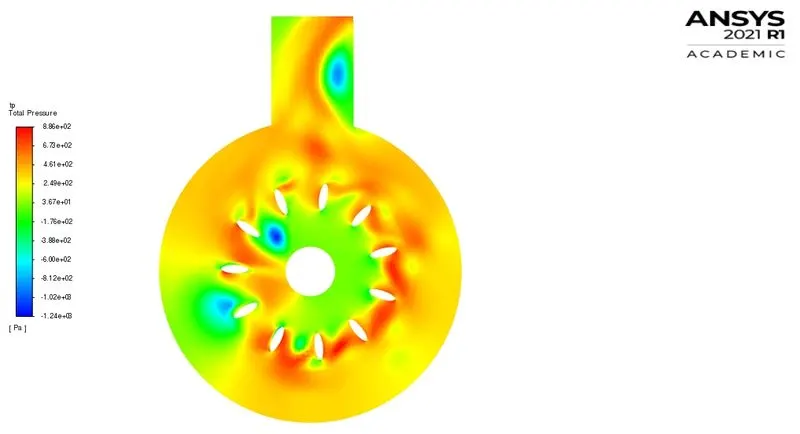 |
| Velocity Magnitude with unsteady state | 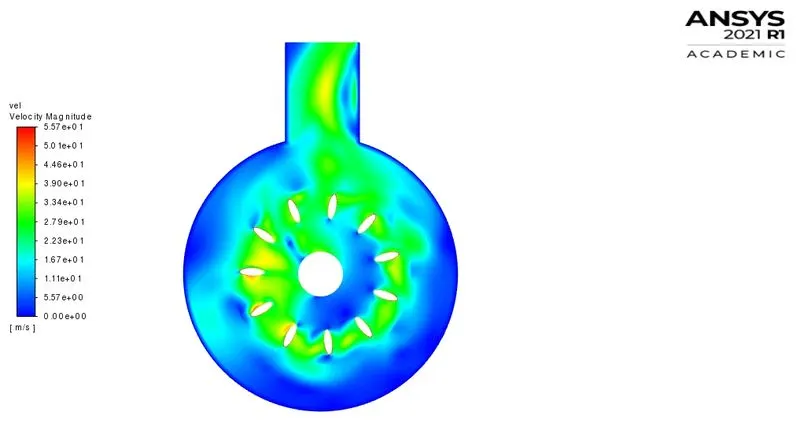 |
| Total Pressure |
|
| Velocity | 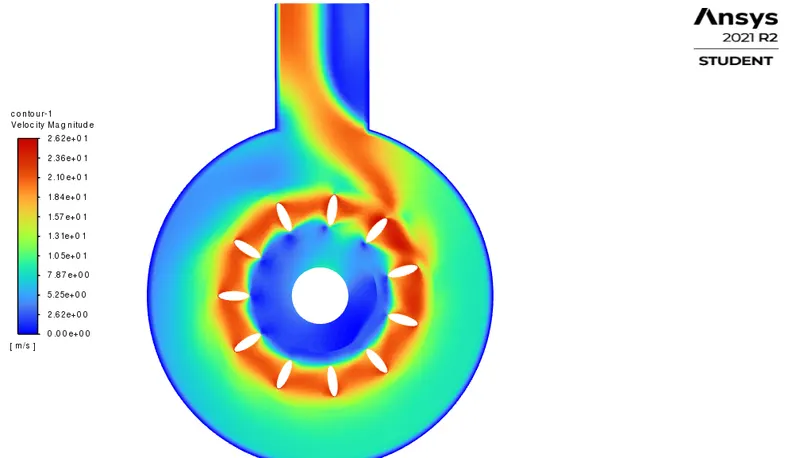 |
| Static Pressure | 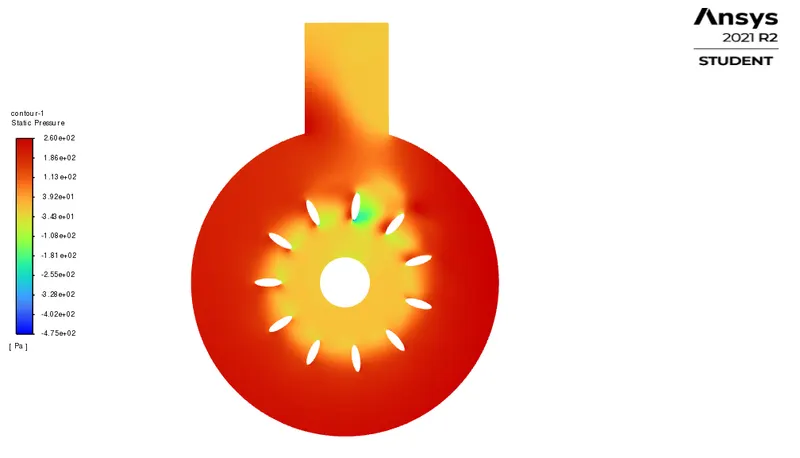 |
|
Vorticity Magnitude |
 |
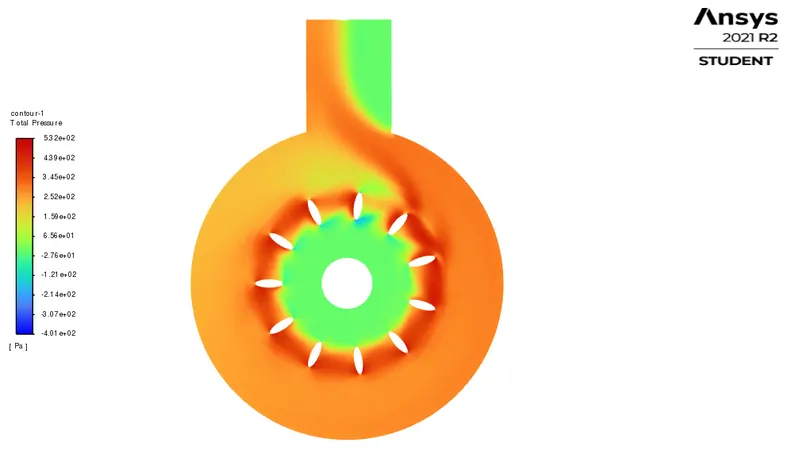
The Animation for the simulation is: Link
Conclusion: The simulation conducted for 0.3 seconds runs till the mass flow rate has been stabilized and the animations shows the working of the turbomachine. Here, we can conclude with certainty that since the solution is converged the simulation is successful and we have good understanding of the moving mesh zones with unsteady (Transient) study.