Week 9 Tension and Torsion test challenge
Aim- To determine the transient structural analysis for the given Slider Crank Mechanism.
Objectives
- To perform an explicit dynamics simulation to find out the Equivalent Stress, Total Deformation.
- One will be with a cutting velocity of 20000mm/s and the other will be with a cutting velocity of 15000mm/s.
- Plot the results for both cases.
Introduction
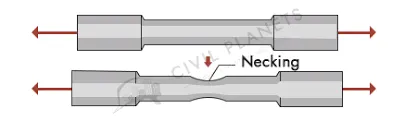
TENSION TEST
Generally, a tensile test is designed to be run until the sample fails or breaks under the load. The values that may be measured from this type of test can range from but are not limited to tensile strength, ultimate strength, elongation, modulus of elasticity, yield strength, Poisson’s ratio, and strain hardening. The measurements taken during the test reveal the characteristics of a material while it is under a tensile load.
One of the most fundamental mechanical tests that can be performed on a material is the tensile test. A test sample is loaded in tension when it experiences opposing forces acting upon opposite faces both located on the same axis that attempt to pull the specimen apart. These tests are simple to set up and complete and reveal many characteristics of the material that is tested. Tensile tests are considered to be essentially the opposite of a compression test.
A tensile test is performed by loading the material to a positive force and then reducing the load to zero and repeating this process until the sample fails with the number of cycles till failure as the desired value to be measured. Tensile creep is similar to this except that the load is not altered but rather steadily applied until the sample fails.
TORSION TEST
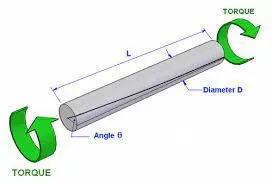
Torsion testing is a type of mechanical testing that evaluates the properties of materials or devices while under stress from angular displacement.
In the field of solid mechanics, torsion is the twisting of an object due to an applied torque. Torsion is expressed in either the pascal (Pa), an SI unit for newtons per square meter, or in pounds per square inch (psi) while torque is expressed in newton meters (N·m) or foot-pound force (ft·lbf).
Abstract. If material is subjected to twisting by the application of a couple of shear stress will be induced within the material. If a couple is applied to a cylindrical rod in such a way that the axis of the couple is coincident with the axis of the rod, then the rod is said to be subject to pure torsion.
If we apply a torque to a circular bar with one end fixed, the torque causes the free end to deform or rotate through an angle this angle is called the Angle of twist. Formula Used.
φ=TLJG.
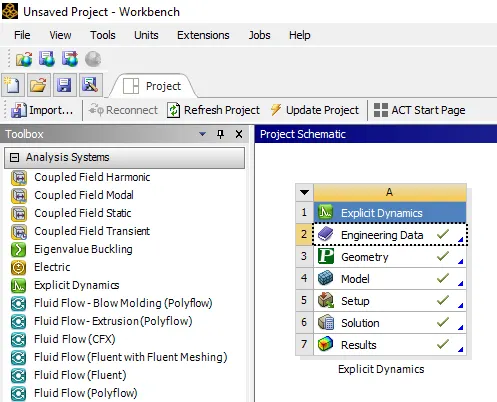
Procedure- To start the simulation by opening with the Ansys workbench.
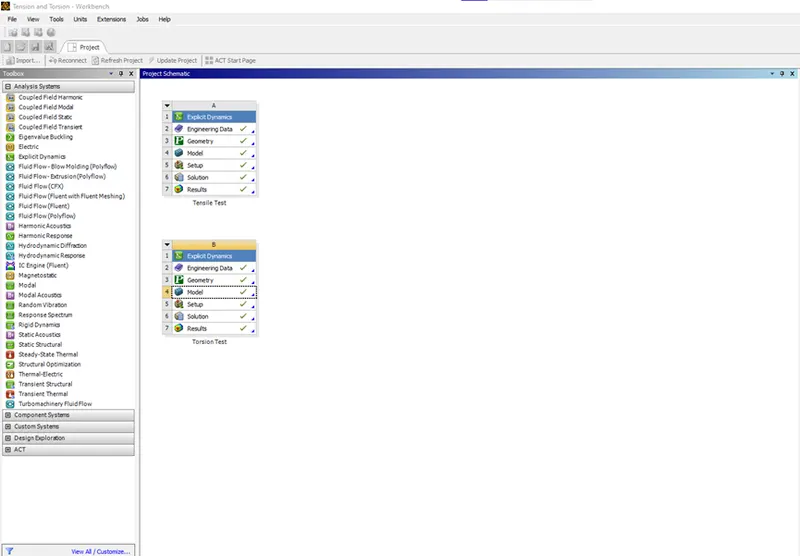
Select the Explicit Dynamics from the toolbox as shown below shown.
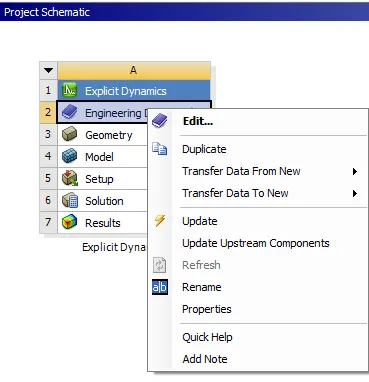
Select the material as steel 1006 material and assign it in engineering data as shown below.
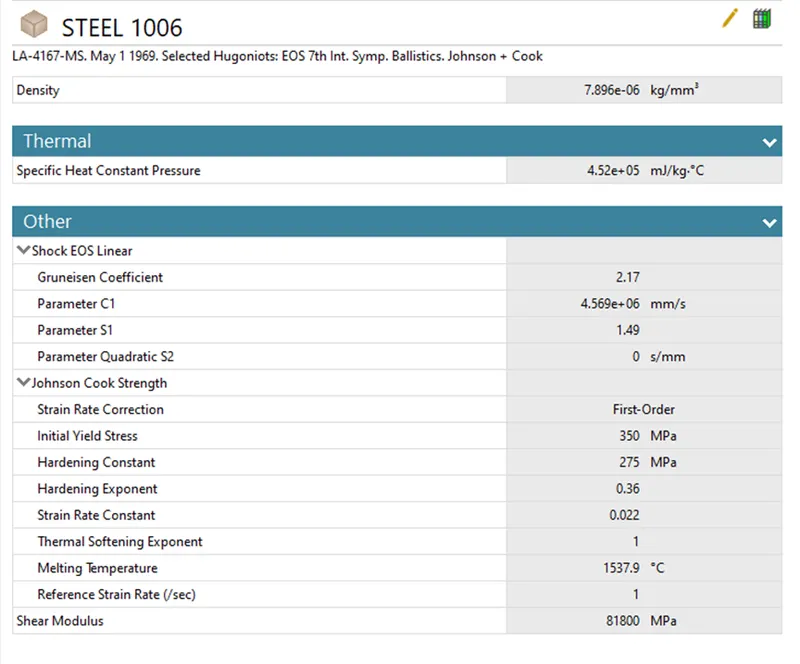
Update the engineering data as shown below.
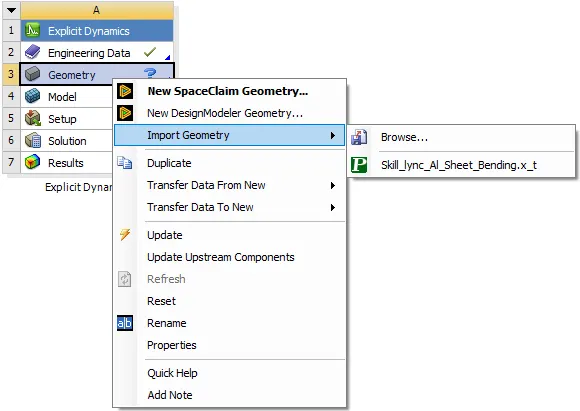
Also import the geometry from the browse with the updated geometry.
Select the duplicate for the test 1 tension and test 2 for torsion as shown below.
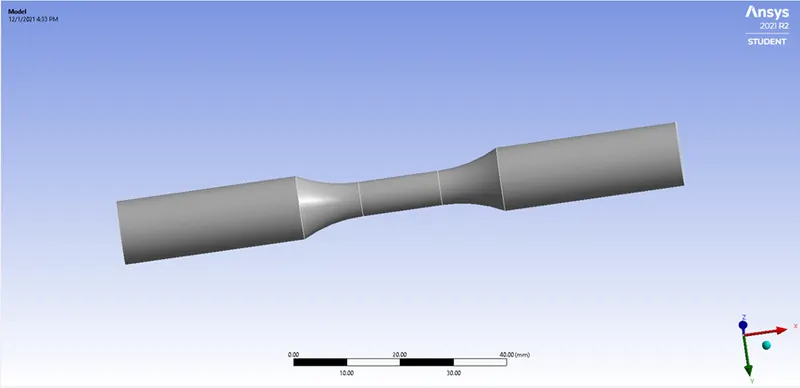
While importing the model the specimen as shown in below.
Select the material as the steel 1006 as shown below.
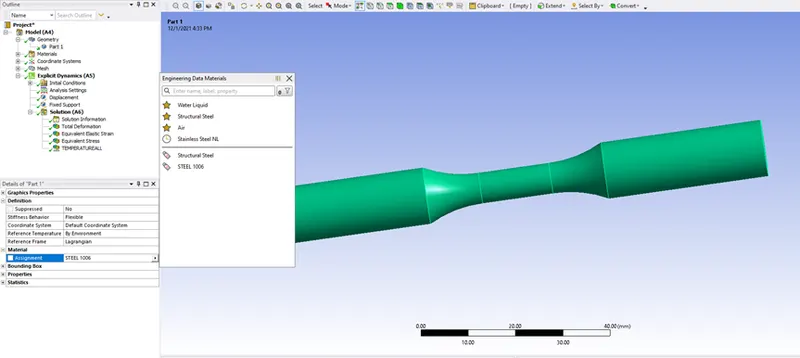
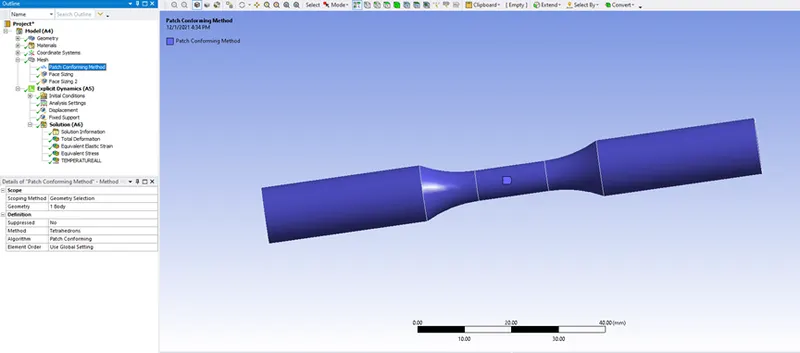
Set for mesh by selecting the patch confirming method, face sizing, and face sizing for the selected faces.
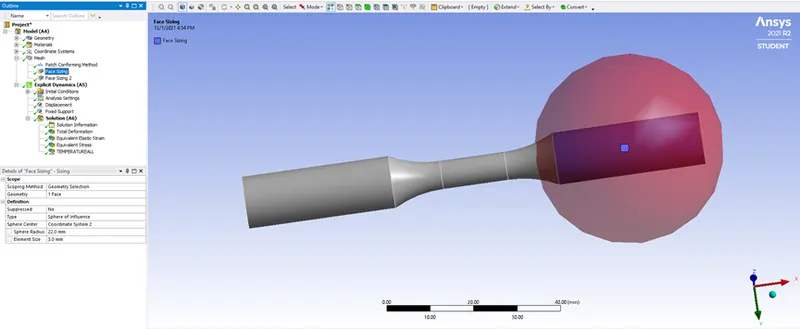
Face sizing for the one end is shown below.
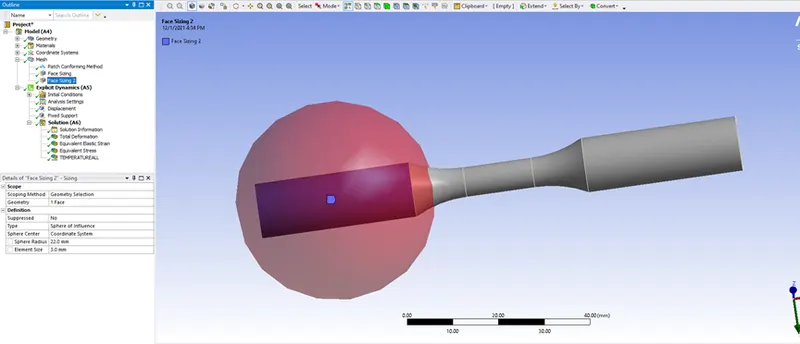
For another end also the face sizing will be set as shown below.
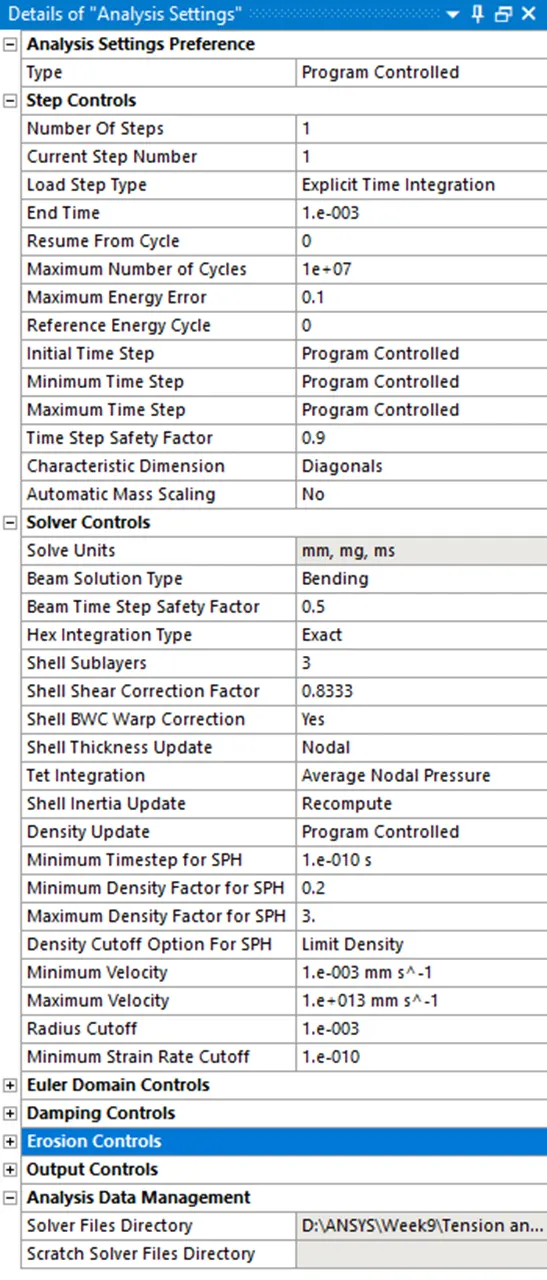
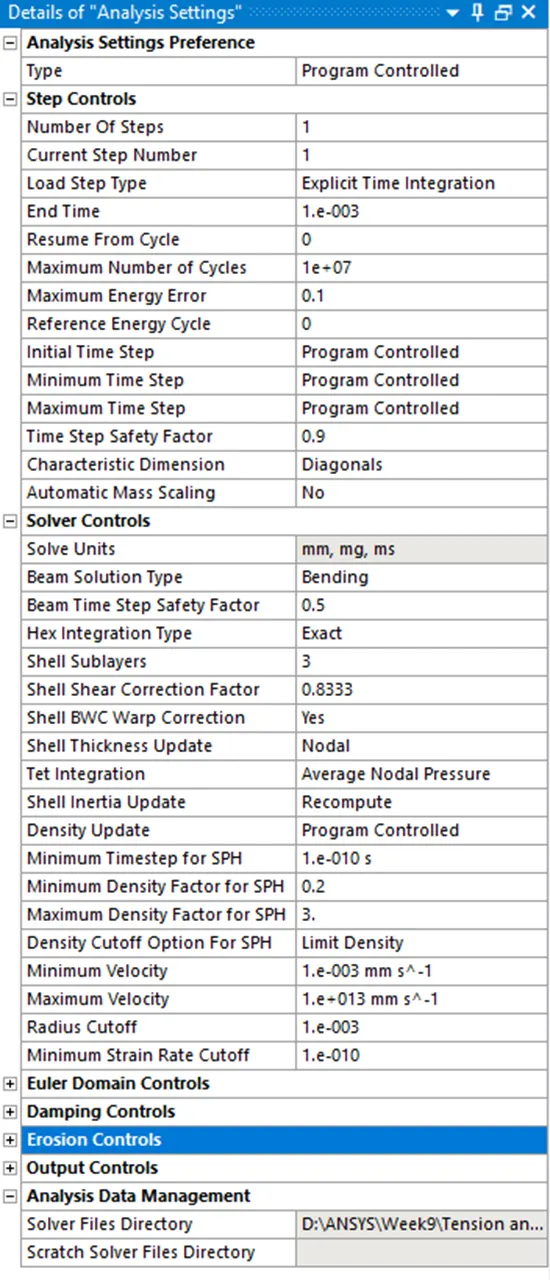
Do the proper analysis settings for the given component as shown below.
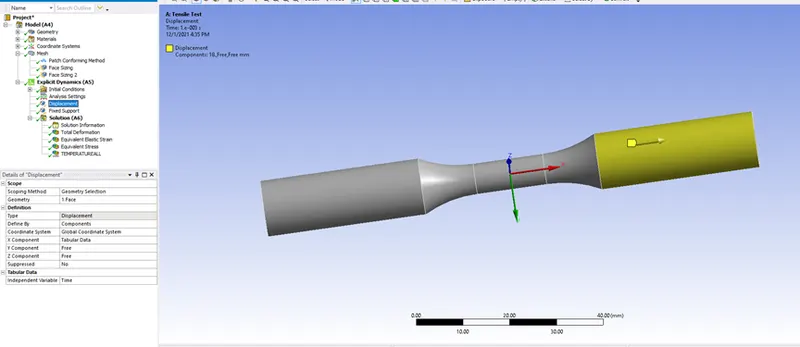
Set the one end will be the displacement as shown below.
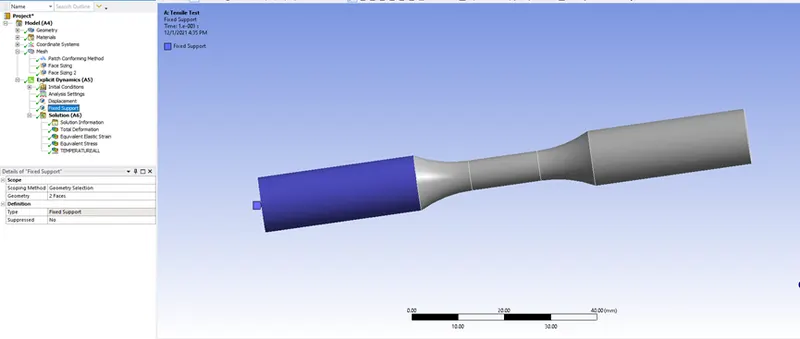
Set the one end will be the fixed support for the specimen as shown below.
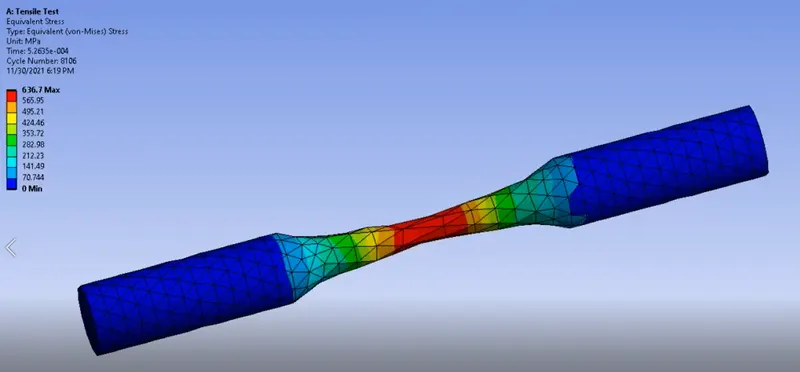
By solving the analysis the component looks like this as shown below.
The equivalent stress is found to be max. 636.7MPa as shown below.
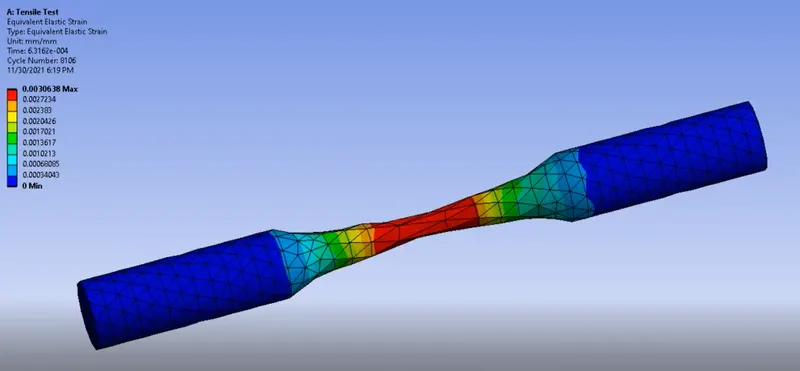
The elastic strain will be recorded as the max. of 0.00306mm as shown below.
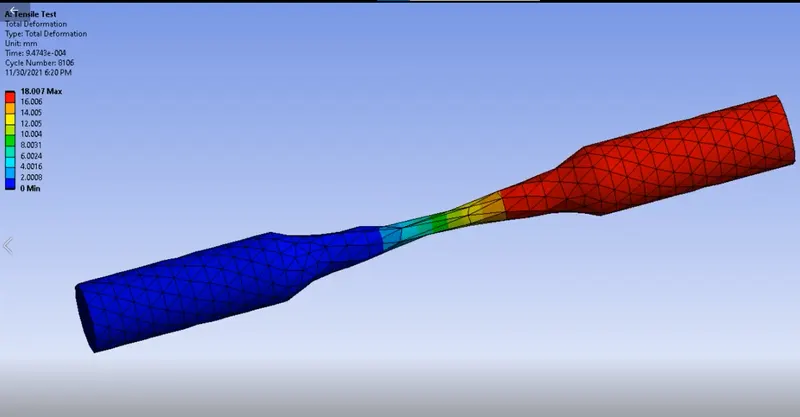
The total deformation will be max. recorded as the 18.007mm as shown below.
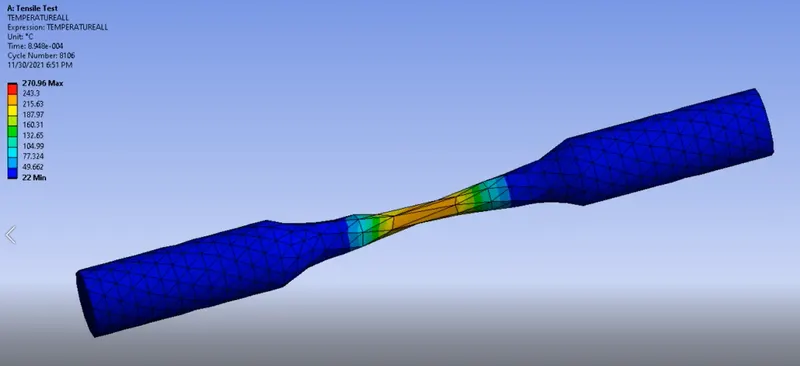
The temperature has been recorded has to be max. 270.96°C as shown below.
Results
The results the been tabulated as shown in the table.
| Total deformation | Elastic strain | Stress | Temperature | |
| Tension | 18.007mm | 0.00306mm | 636.7MPa | 270.96°C |
Conclusion
- The total deformation is recorded as 18.007mm as per the simulation.
- The elastic strain is found to be 0.00306mm recorded as shown in the table.
- The equivalent stress has been recorded as the 636.7MPa as shown below.
- The temperature has been recorded as 270.96°C from the table.
TORSION
The settings are similar for the torsion test as shown below.
Fix the displacement as shown below.
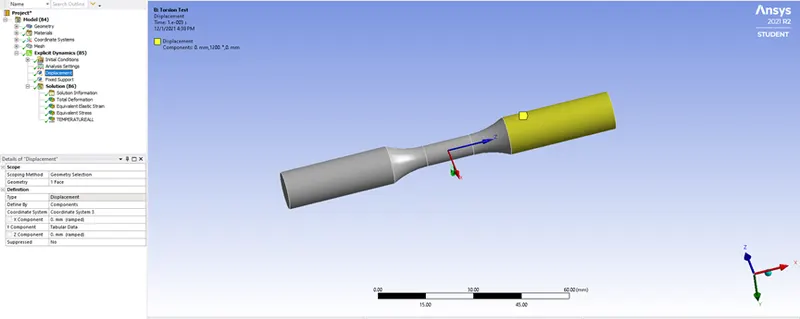
For one end fixed support has to be done with the one end as shown below.
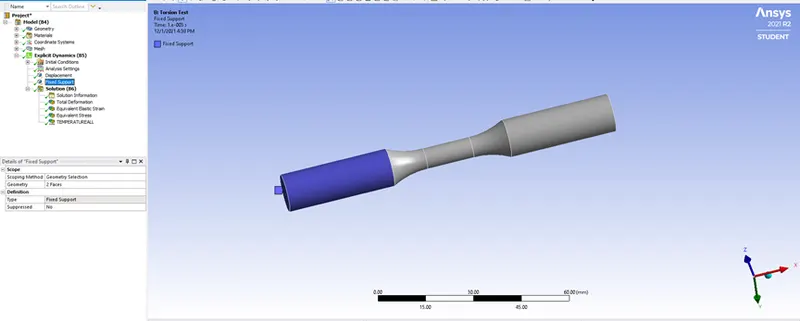
Do the necessary settings as shown below.
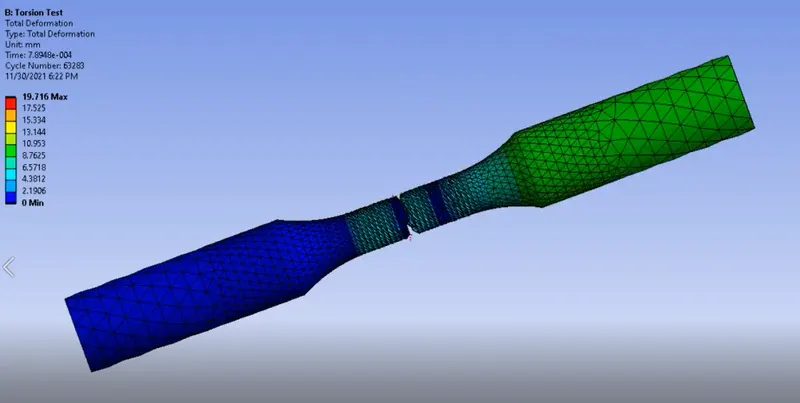
After simulation results are to be as shown below.
The total deformation will be max. at 19.716mm as shown below.
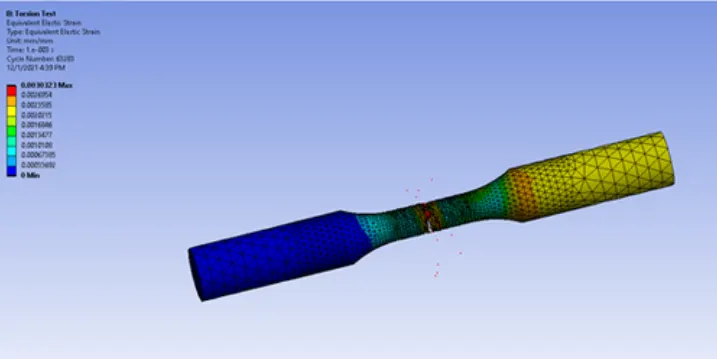
The elastic strain is to be found to be 0.003932mm as shown below.
The equivalent stress has to be found 637.6MPa as shown below.
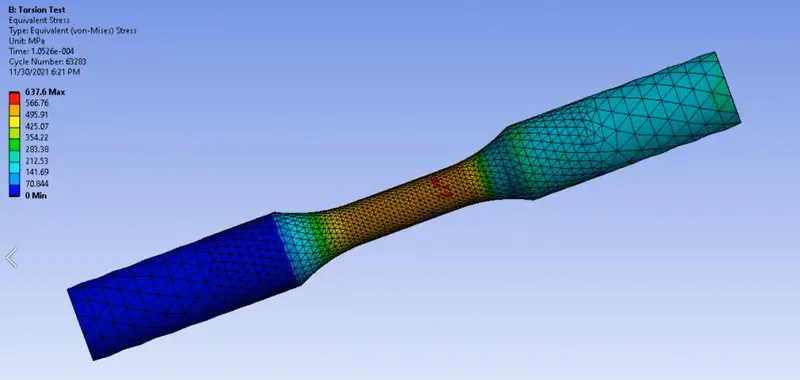
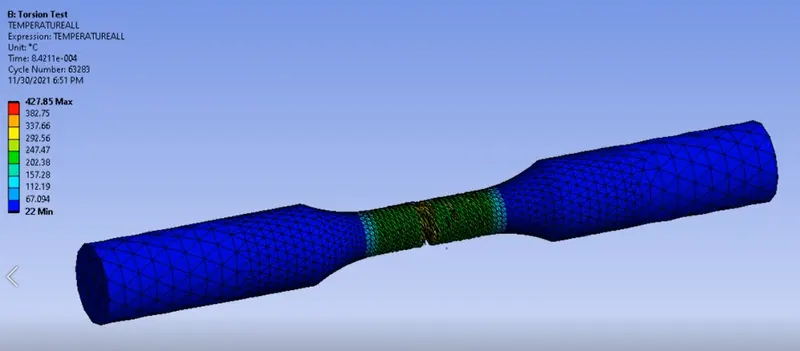
The temperature has to be found this torsion will be 421.85°C
Results
The results the been tabulated as shown in the table.
| Total deformation | Elastic strain | Stress | Temperature | |
| Tension | 19.716mm | 0.003932mm | 637.6MPa | 421.85°C |
Conclusion
- The total deformation is recorded as 19.716mm as per the simulation.
- The elastic strain is found to be 0.003932mm recorded as shown in the table.
- The equivalent stress has been recorded as the 637.6MPa as shown below.
- The temperature has been recorded as 421.85°C from the table.