Week 9 Tension and Torsion test challenge
Objective: In this challenge, we are going to perform the Tension Test and Torsion Test. Our aim in this challenge is to observe the failure mode of the specimen under tension and torsion conditions and find the Stress, Strain, and temperature at the failure point
Tension Test:
It is the most fundamental mechanical testing method, which is carried out in order to analyze the mode of failure of material and to find out the stresses generated in it.
It is also known as Tensile Test as the force applied to the specimen is Tensile in nature.
Torsion Test:
This test is used to determine the stresses generated in the specimen when the component is subjected to the Torque.
It is helpful to find the Shear Stresses in the specimen.
Explicit Dynamic Analysis:
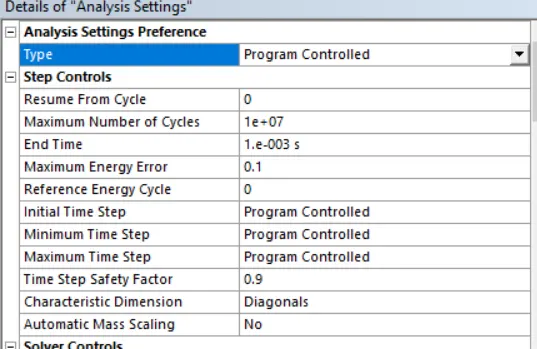
We are using an Explicit Dynamic Analysis deck for this simulation as this enables us to capture the physics of the short-duration non-linear analysis.
Geometry:
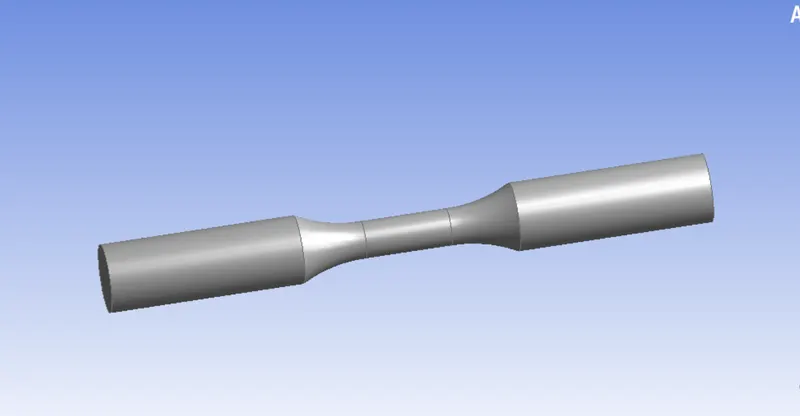
As it is a single component there is no need for contacts or joints.
Materials:
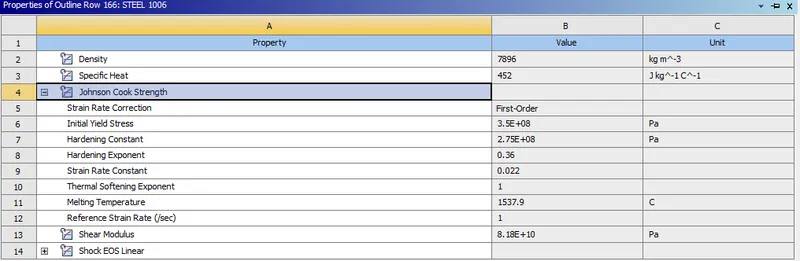
We will use Steel 1006 material for this analysis. Properties of material are given below.
Coordinate Systems:
We will create two cartesian coordinate systems and one cylindrical coordinate system other than the global coordinate system.
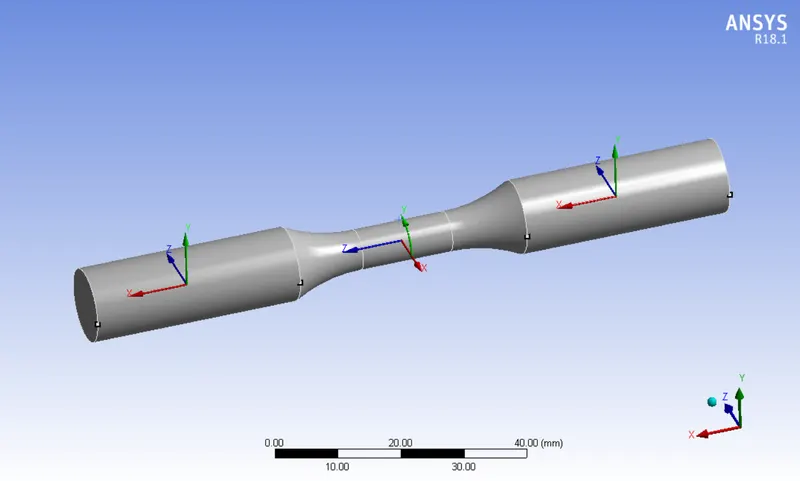
Cartesian Coordinate system helps us in meshing the specific area using "Sphere of influence" method and Cylindrical Coordinate system is used for giving the rotation in Torsion test.
Mesh:
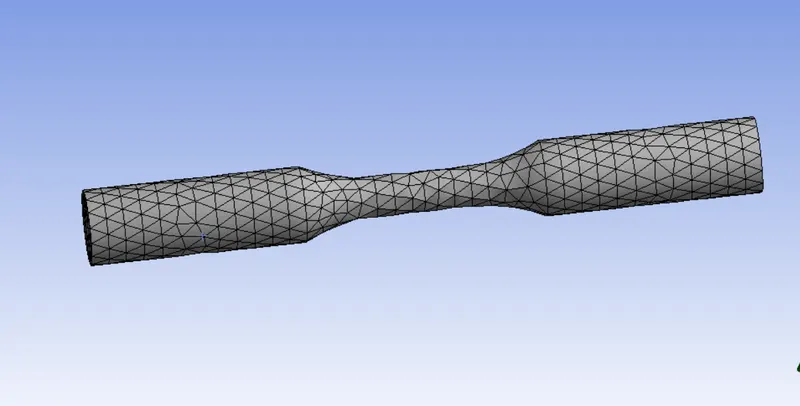
For the tension test, we have deployed the face meshing using a sphere of influence method where the element size is 3mm.
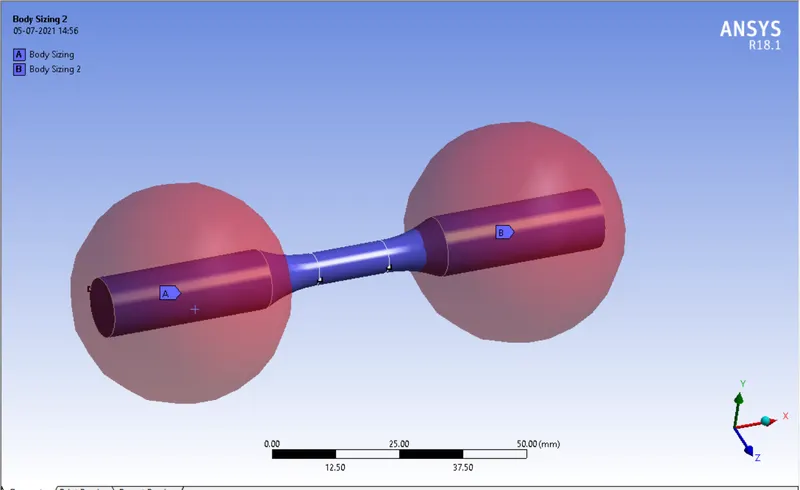
Fig. Face Sizing for Tension Test.
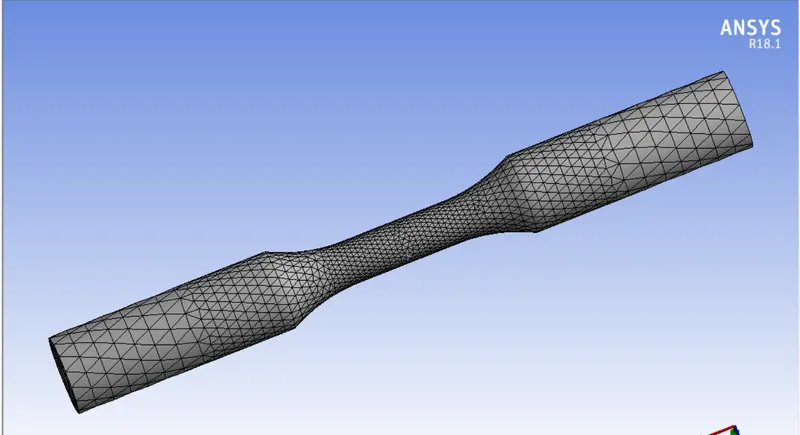
For the Torsion test, we have deployed the Tetra mesh with more refinement using the Sizing method and sphere of influence method and element size as 2mm.
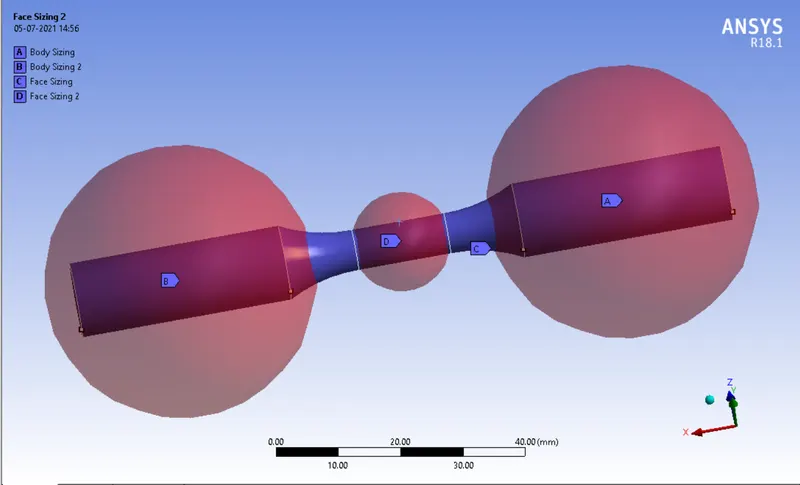
Fig. Sizing for Torsion test meshing.
Analysis Settings:
Boundary Conditions:
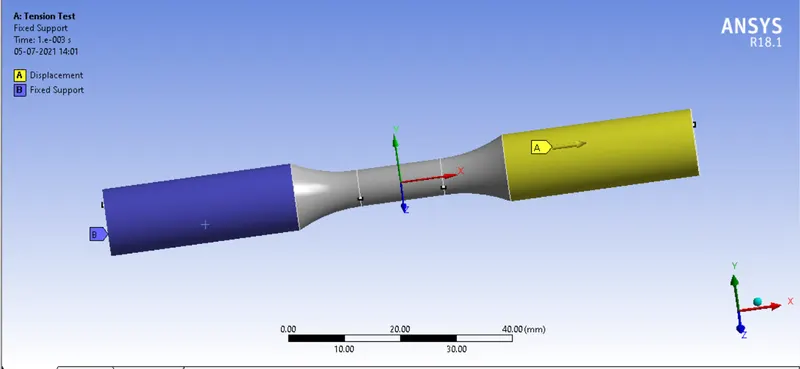
1) Tension Test B.C.:
We have fixed one end of the specimen and given the displacement of 18mm at another end.

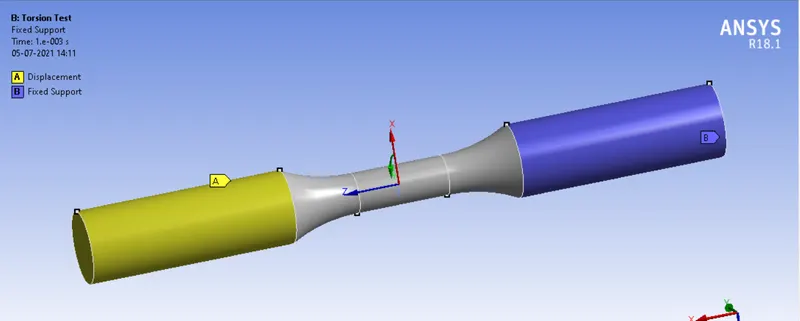
2) Torsion Test:
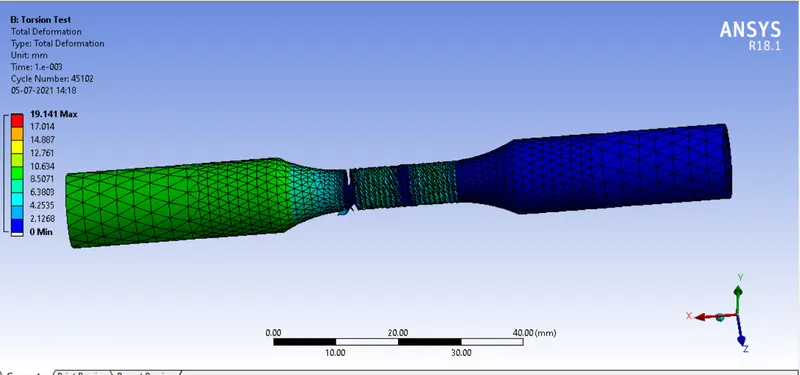
We have fixed one end of the specimen and rotate the other end by 1200 degrees.

Results:
1) Tension Test:
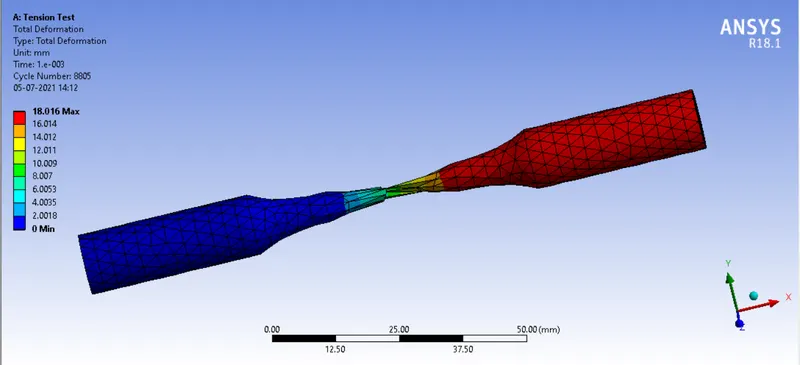
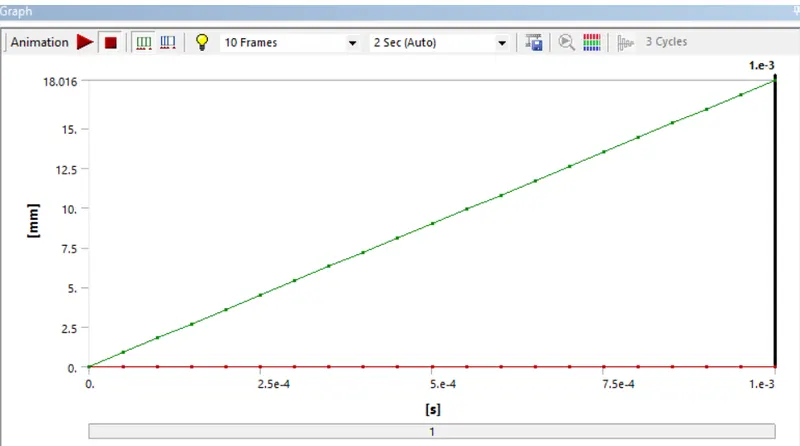
1) Total Deformation
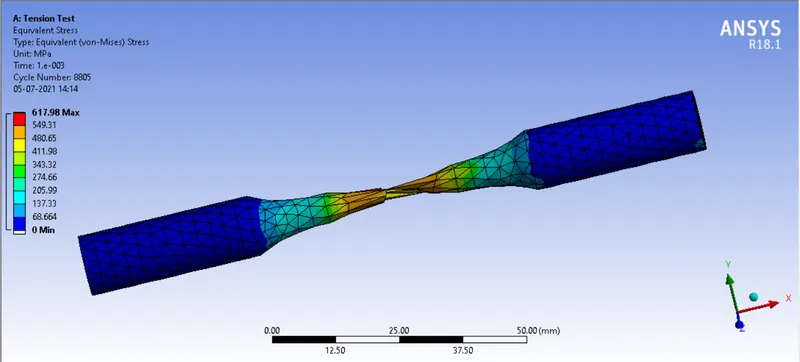
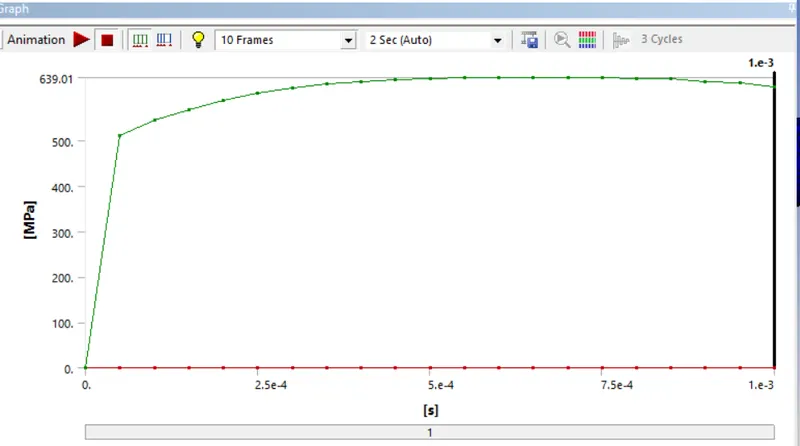
2) Equivalent Stress:
3) Equivalent Strain:
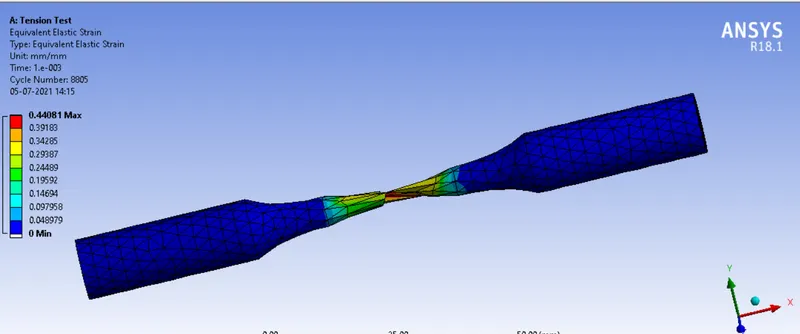
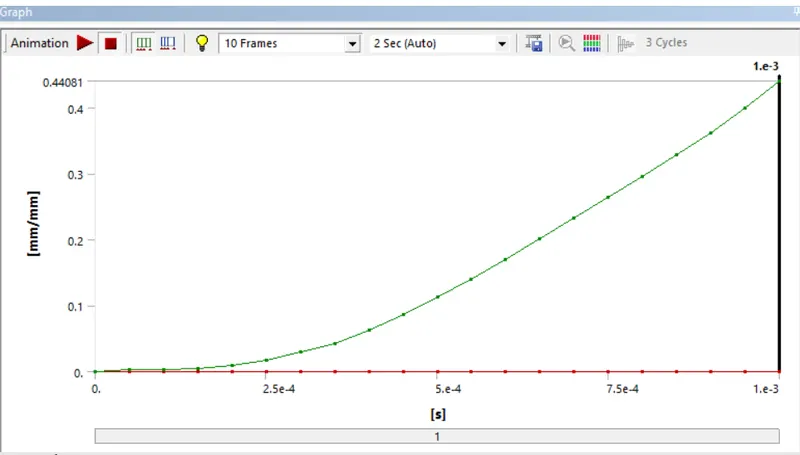
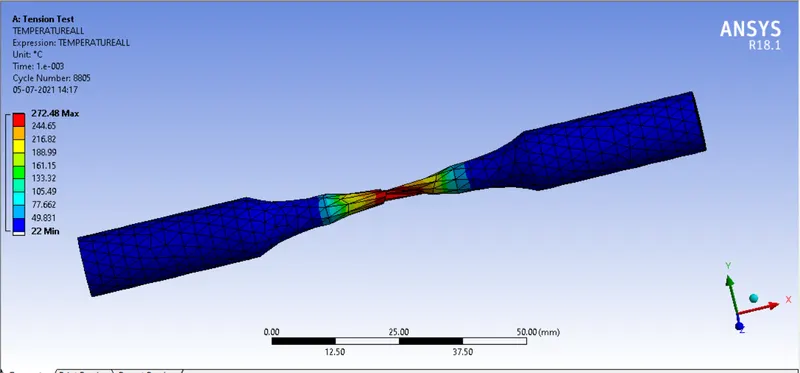
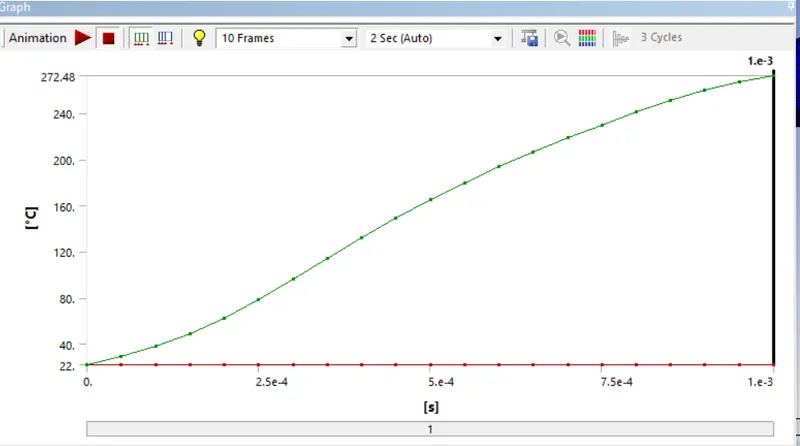
4) Temperature:
To evaluate the temperature we use "User Defined Results"
2) Torsion Test:
1) Tension Test:
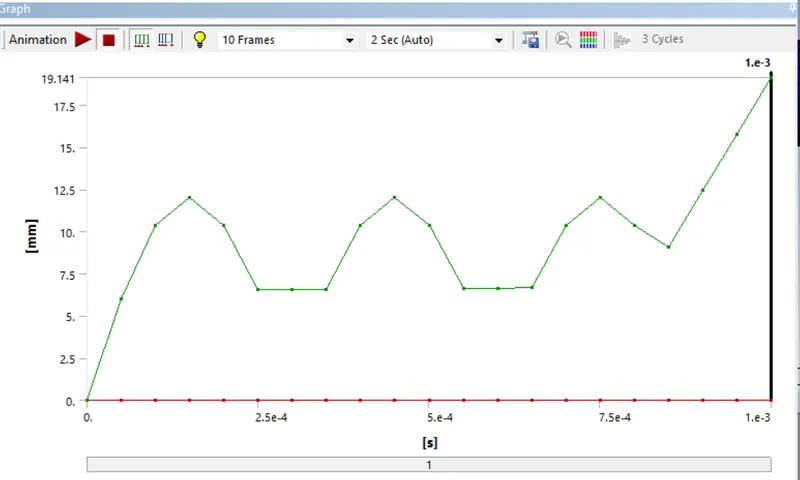
1) Total Deformation
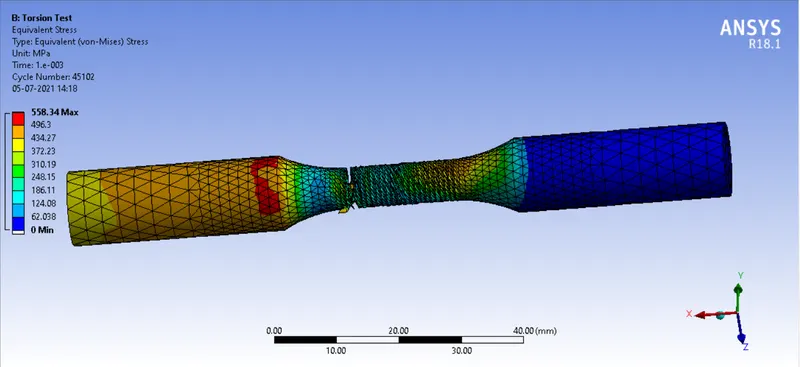
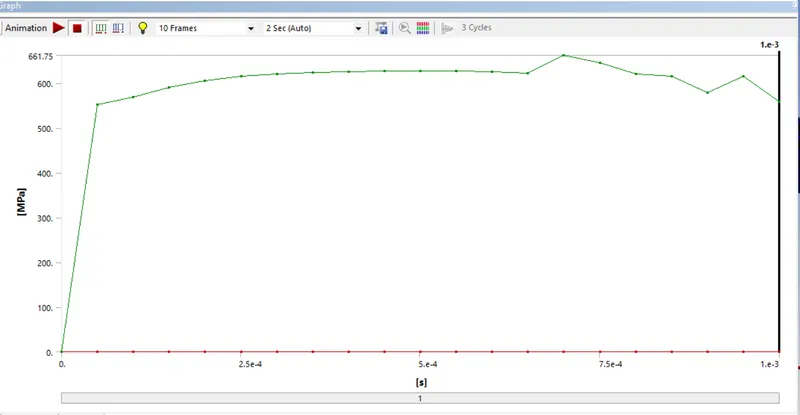
2) Equivalent Stress:
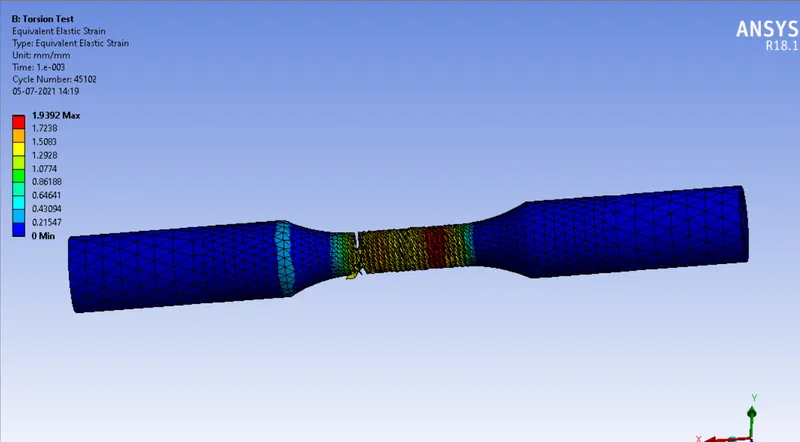
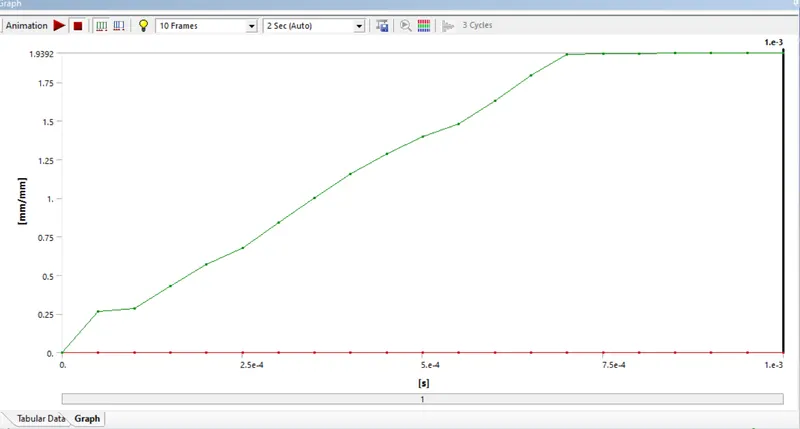
3) Equivalent Strain:
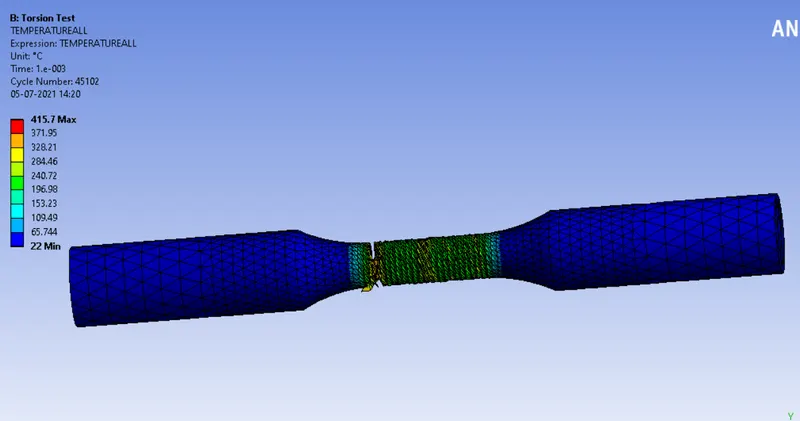
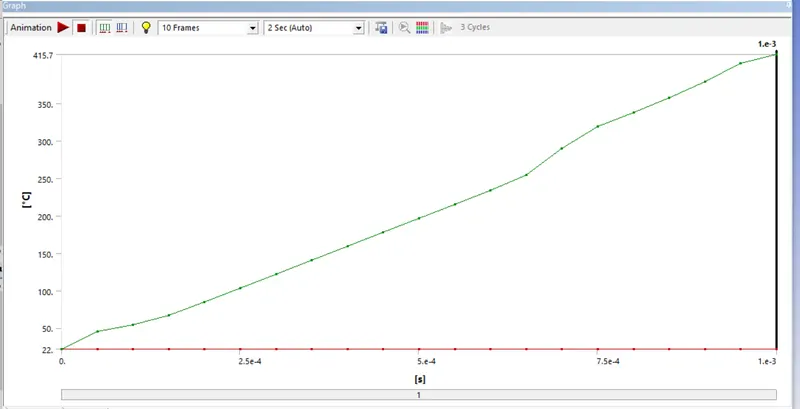
4) Temperature:
To evaluate the temperature we use "User Defined Results"
|
Total Deformation (in mm) |
Max.Equivalent Stress (in MPa) |
Max. Equivalent Strain (in mm/mm) |
Max.Temperature (in degree Celcius) | |
| Tension Test | 18.016 | 617.98 | 0.440 | 272.48 |
| Torsion Test | 19.414 | 552.30 | 0.266 | 415.7 |
Conclusion:
We have performed the Tesion test and Torsion Test successfully on Steel 1006 Specimen, and the stress, strain, and Temperature values are listed in the table.
In the Tension test, we have observed the Necking so we can conclude that the specimen is made up of ductile material