Week 9 Tension and Torsion test challenge
Aim: To perform tension and Torsion tests on the specimen and obtain the results
Case 1:For the tension test, displace one end of the specimen to 18mm while keeping the other fixed. You will need to find out the total deformation, equivalent stress, and temperature of the specimen and attach appropriate images to show your results.
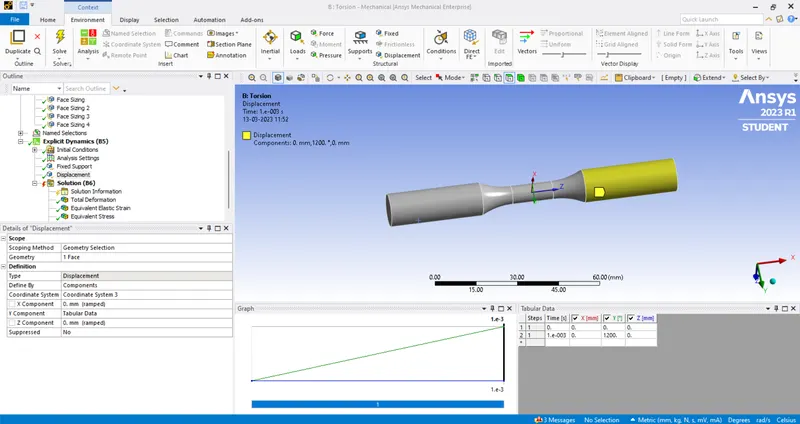
Case 2:For the torsion test, you will need to displace one end of the specimen to an angle of 1200 degrees. Find out the total deformation, equivalent stress, and temperature of the specimen and attach images to show your results.
Principle:
Tension test
Tensile testing, also known as tension testing, is a fundamental material Science and engineering test in which a sample is subjected to controlled tension until failure. Properties that are directly measured via a tensile test are ultimate tensile strength, breaking strength, maximum elongation, and reduction in area. From these measurements, the following properties can also be determined: Young's modulus, Posisson's ratio, yield strength, and strain-hardening characteristics. Uniaxial tensile testing is the most commonly used for obtaining the mechanical characteristics of isotropic materials. Some materials use biaxial tensile strength The main difference between these testing machines is how the load is applied to the material
Torsion Test
Torsion testing is a type of mechanical testing that evaluates the properties of materials or devices while under stress from angular displacement. Torsion testing can be split into two distinct categories: testing raw materials like metal wires or plastic tubing to determine properties such as shear strength and modulus, or functional testing of finished products subjected to torsions, such as screws, pharmaceutical bottles, and sheathed cables. The most common mechanical properties measured by torsion testing are modulus of elasticity in shear, yield shear strength, ultimate shear strength, modulus of rupture in shear, and ductility.
Procedure:
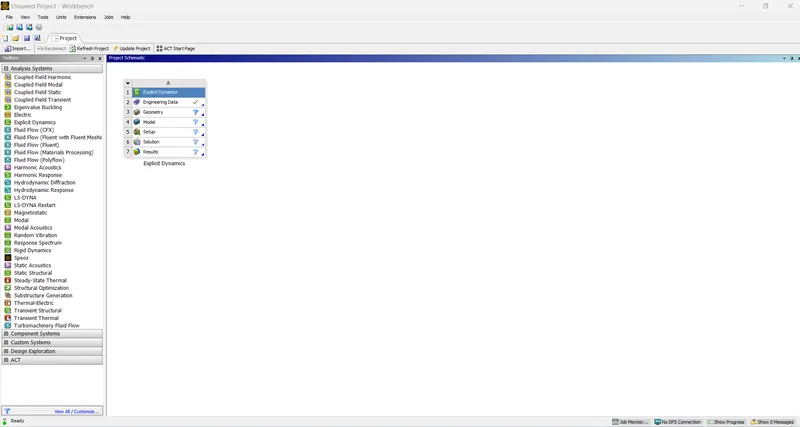
The analysis we are doing is an Explicit Dynamic Analysis, Select Explicit Dynamic from the ANSYS workbench
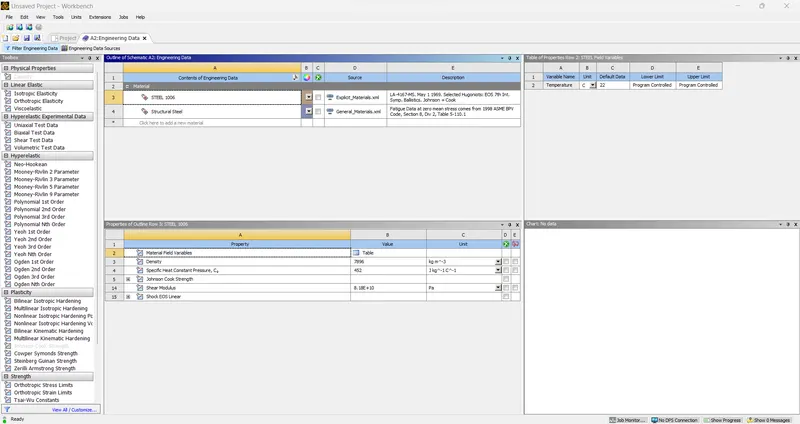
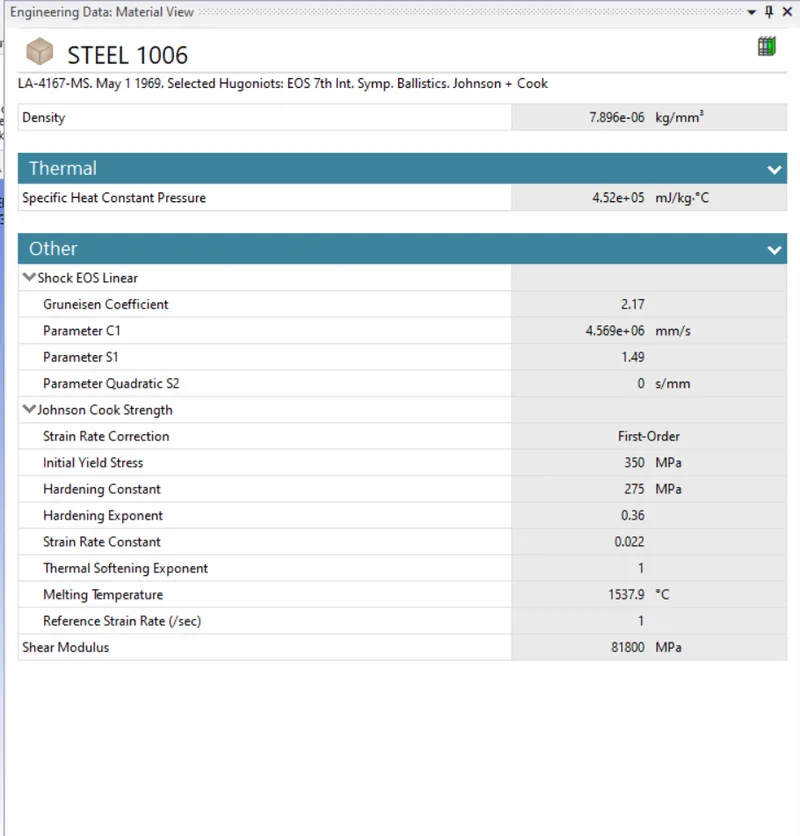
Open Engineering Data and from the Engineering services, open explicit materials select Steel 1006 as this will be the material we use for analysis
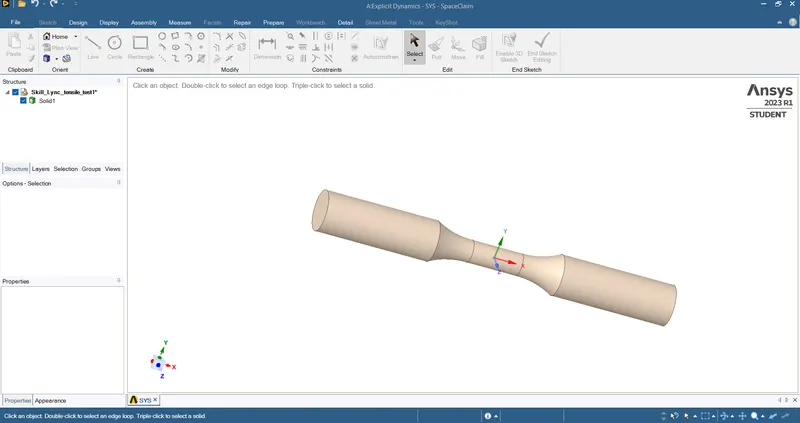
Since the model is already provided we import the model in the geometry SpaceClaim, The model provided is shown below
Once the Geometry is updated select the model option and click Edit
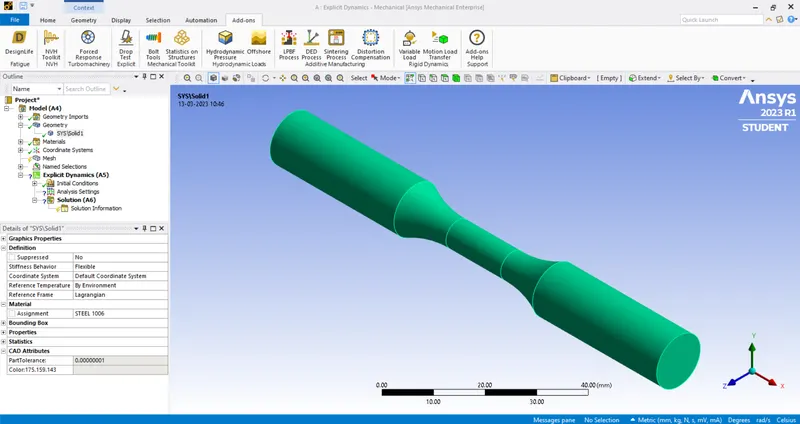
Assing Steel 1006 as the material in the material properties
For Case1:
For the tension test, displace one end of the specimen to 18mm while keeping the other fixed. You will need to find out the total deformation, equivalent stress, and temperature of the specimen and attach appropriate images to show your results.
A separate Coordinate system has been created for the fixed end and displacement end so that we can use a finer mesh
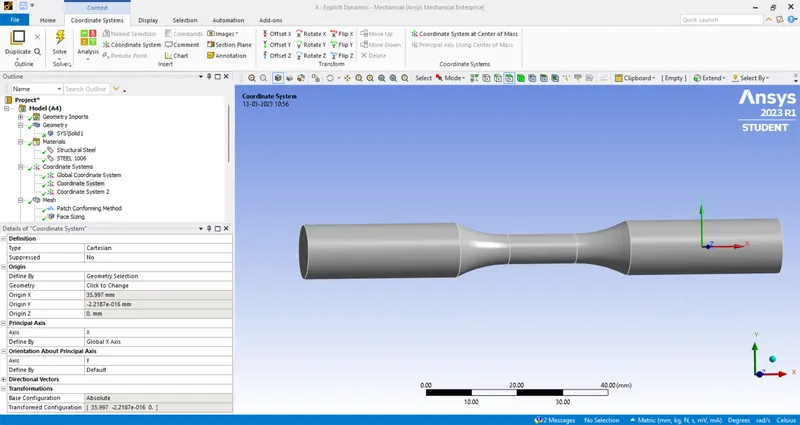
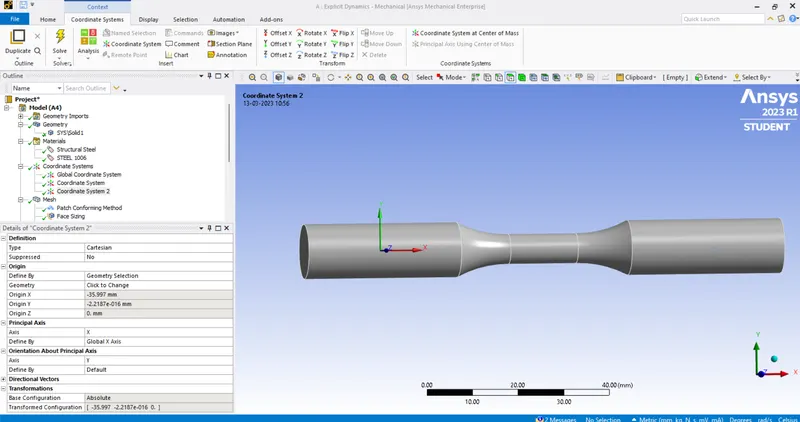
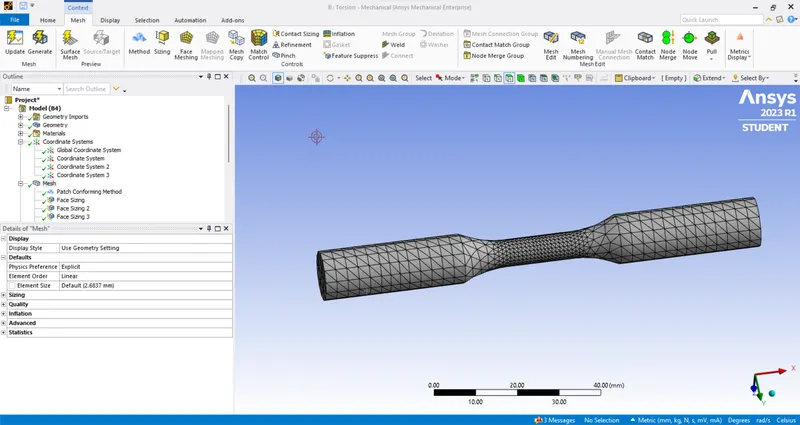
For meshing the Model Tetrahedron is selected as the element and for the fixed end fixed and displacement end, the Sphere of influence is selected, and the mesh size of 3 is selected
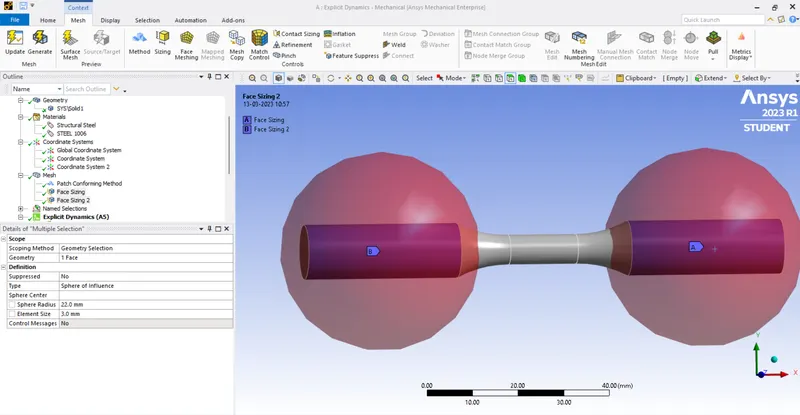
Final Mesh Component
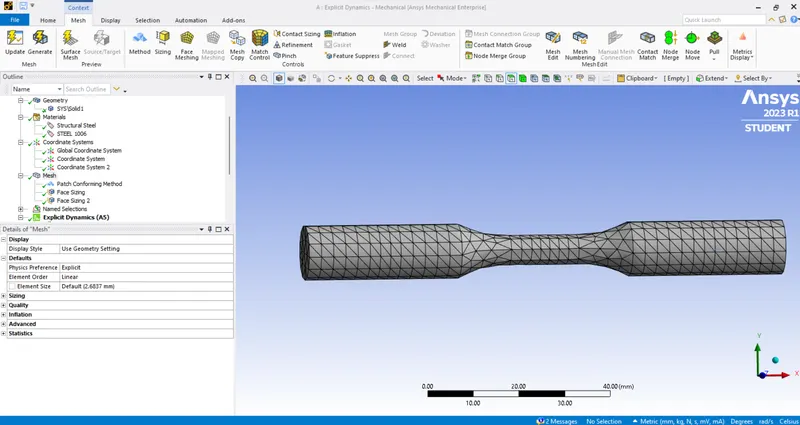
Analysis Settings
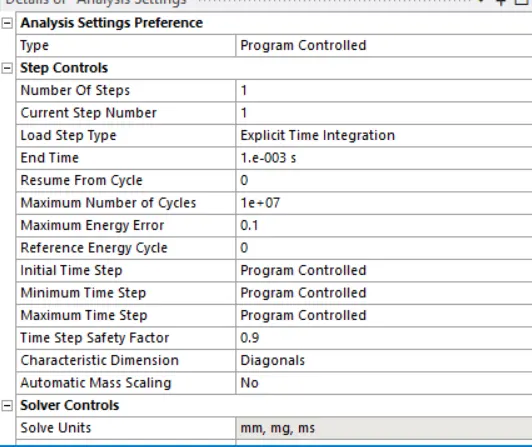
One side is fixed
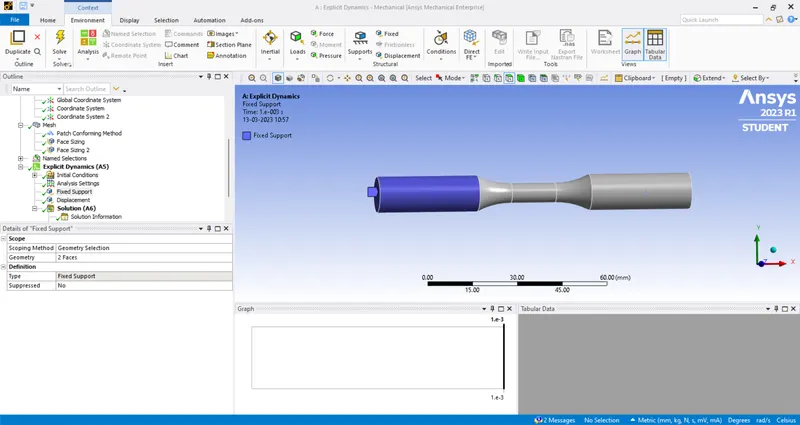
One side displacement is Selected
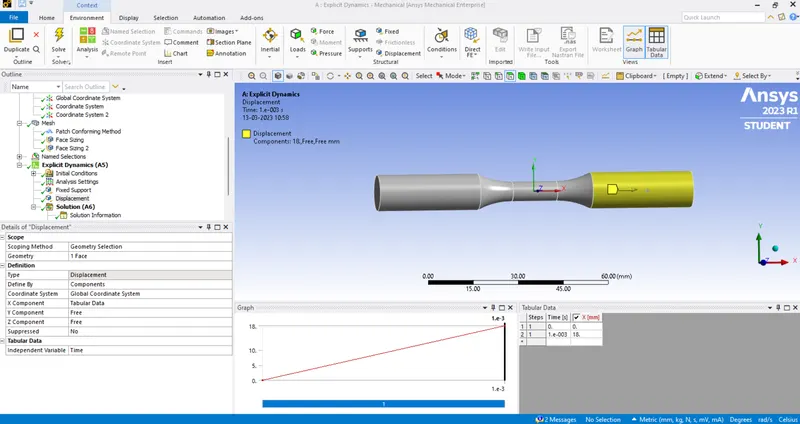
For Case2:For the torsion test, you will need to displace one end of the specimen to an angle of 1200 degrees. Find out the total deformation, equivalent stress, and temperature of the specimen and attach images to show your results.
Cylindrical Coordinate System is Selected as this is a torsional test
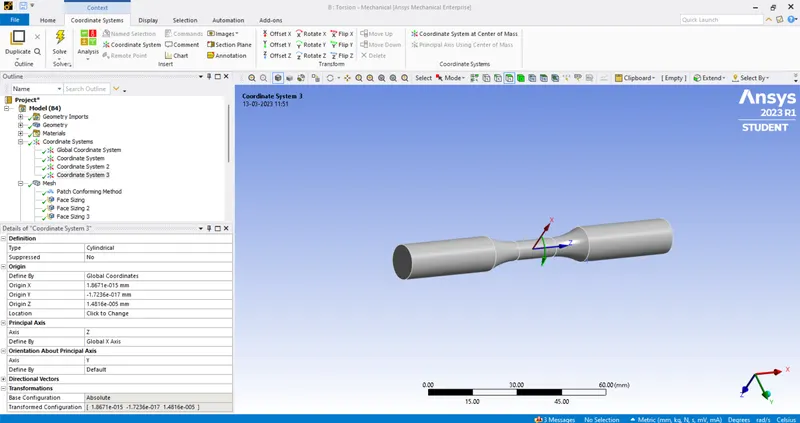
Element size of 1mm is selected for cone shape and center as the torsional will act on the center part
A rotation of 1200 is applied on the Component
Results
Case1:
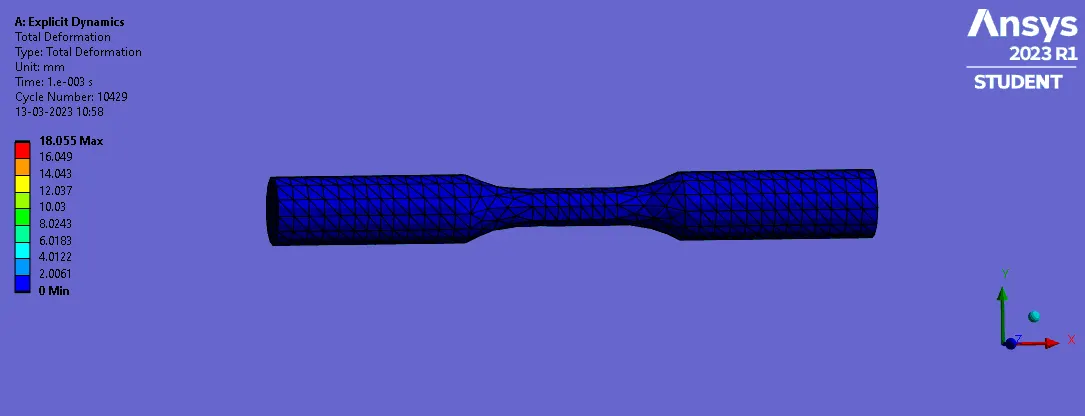
Total Deformation
Maximum Deformation:18.055MM
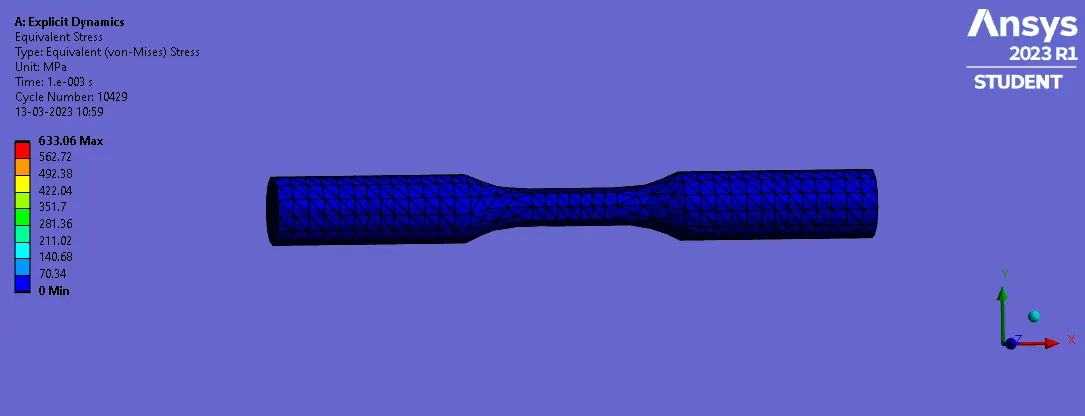
Equivalent stress
Maximum Stress:633.06Mpa
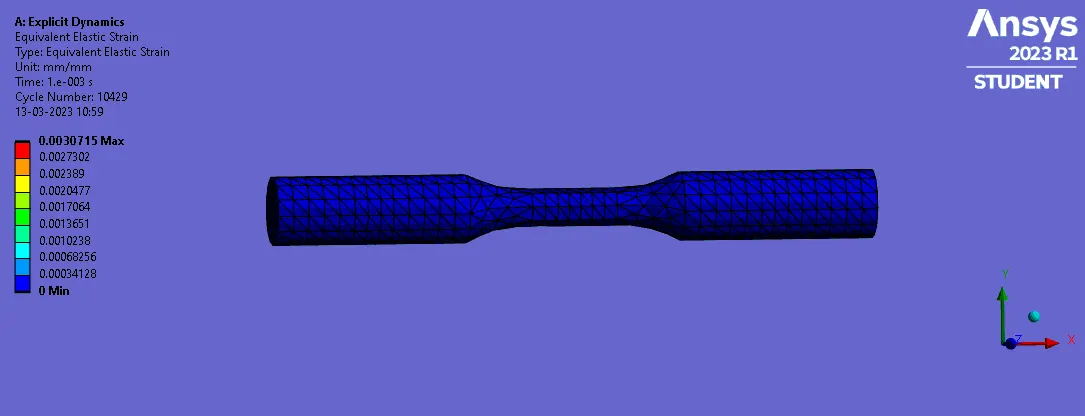
Equivalent Strain
Maximum strain:0.0030715
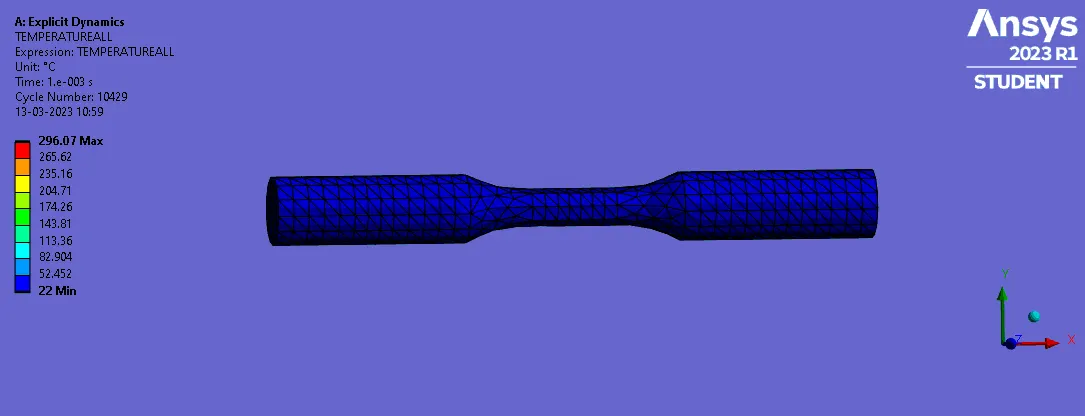
Temperature
Maximum temperature:296.07 C
For case2
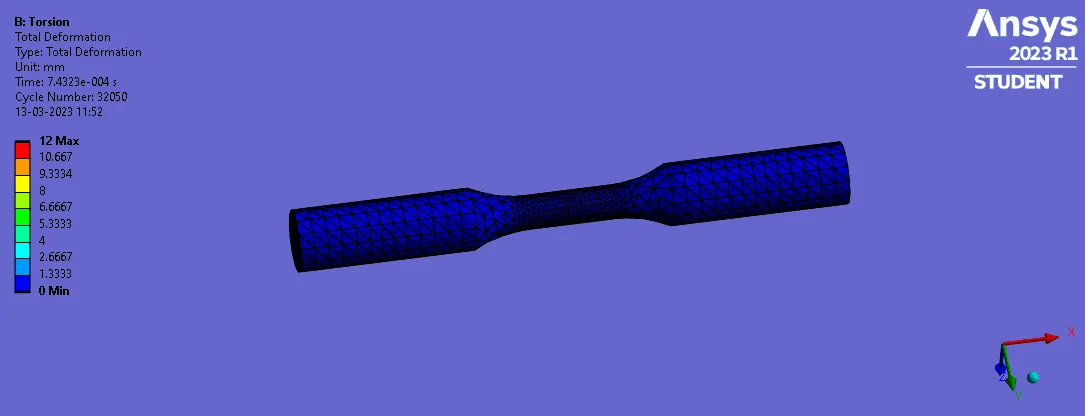
Total Deformation
Maximum Deformation:12MM
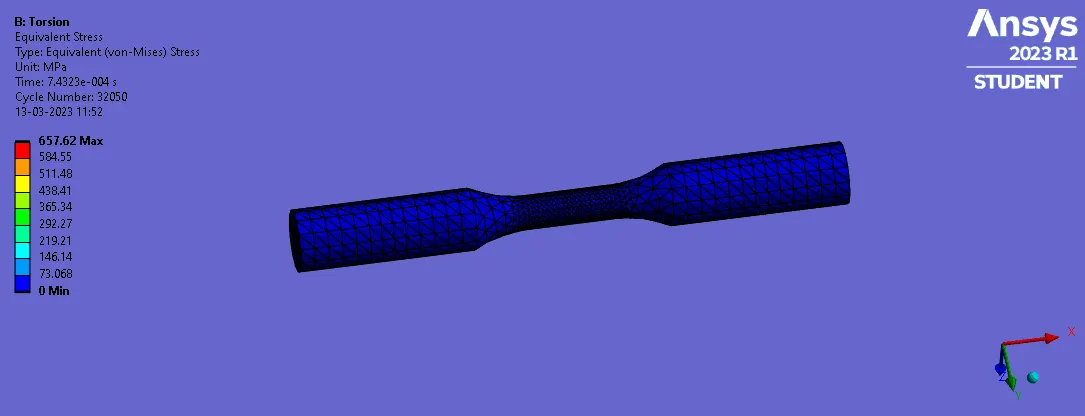
Equivalent Stress
Maximum Stress:657.62Mpa
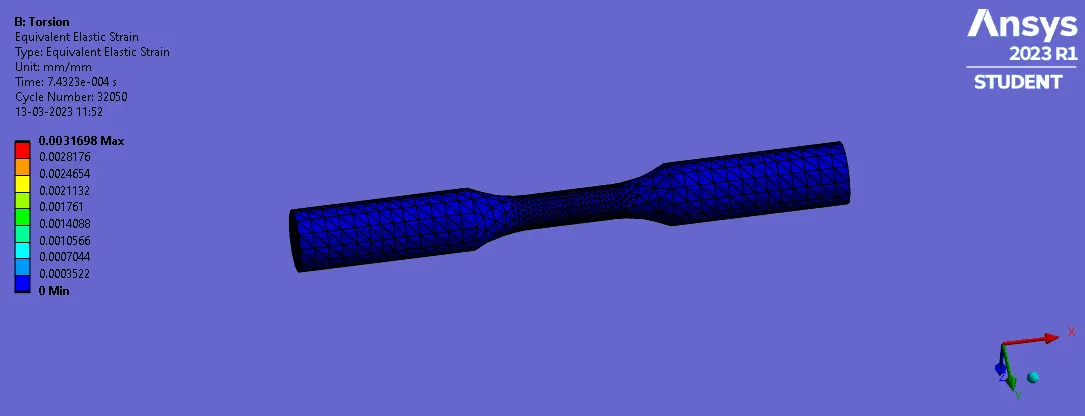
Equivalent Strain
Maximum Strain:0.0031698
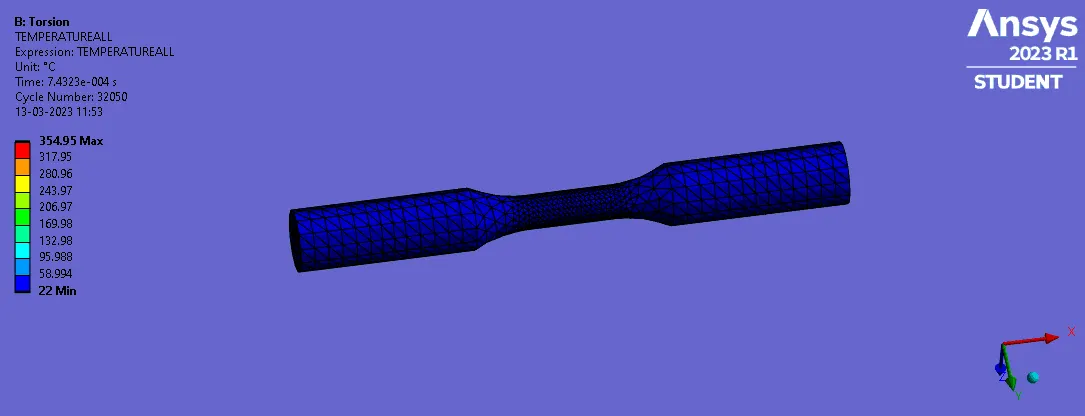
Temperature
Maximum Temperature:354.95 C