Week 9 - Project 1 - Door Trim Lower with Engineering Features
Project 1 - Door Trim Lower with Engineering Features
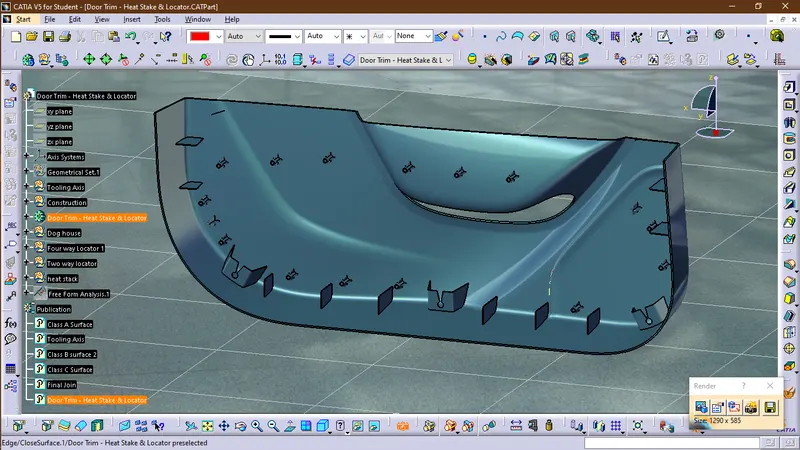
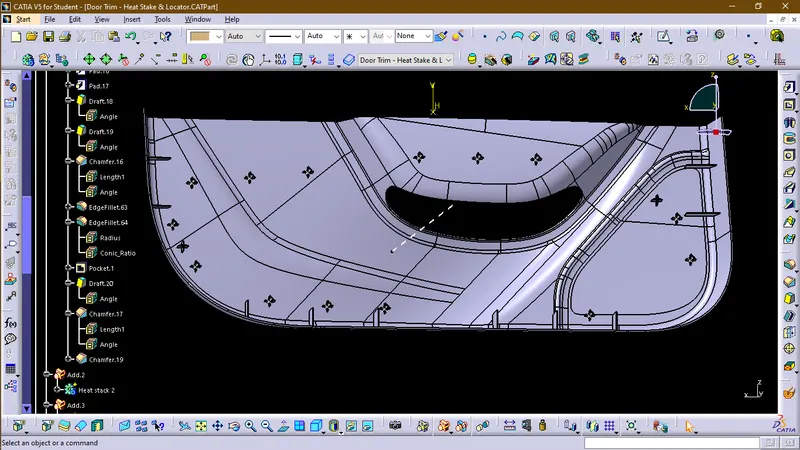
As the part file is a class A surface, therefore, we first have to create a solid part with the help of Class A. We are assuming the thickness of the part is 2.5 mm.
First, we create a tooling axis using the intersection method.
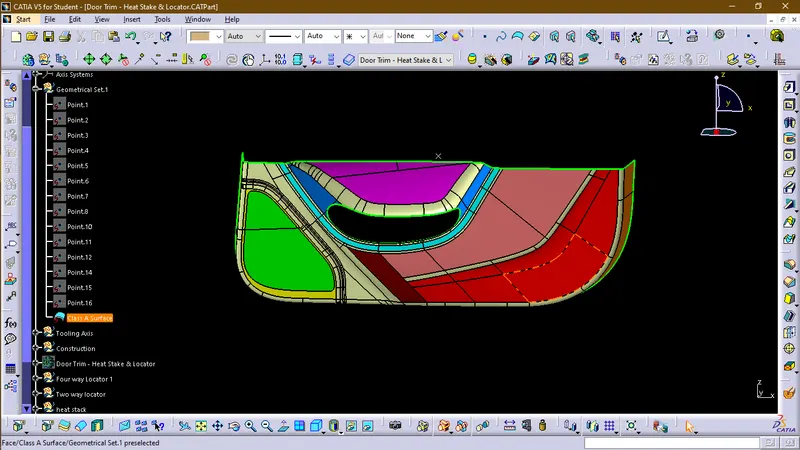
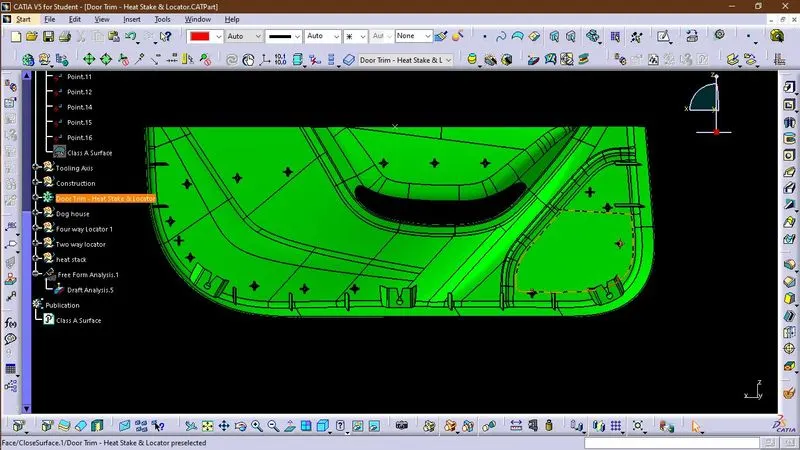
Then we run a draft analysis on the class A surface.
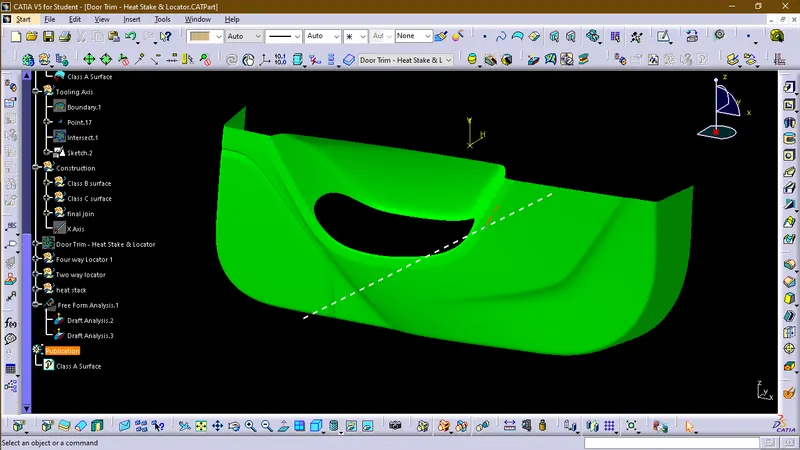
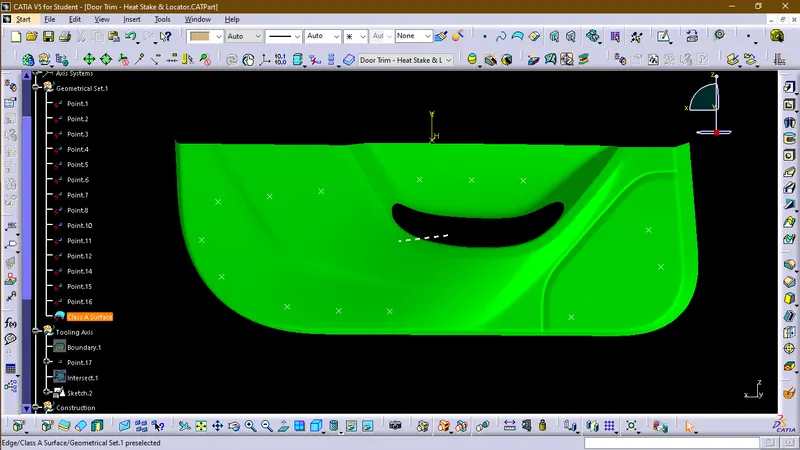
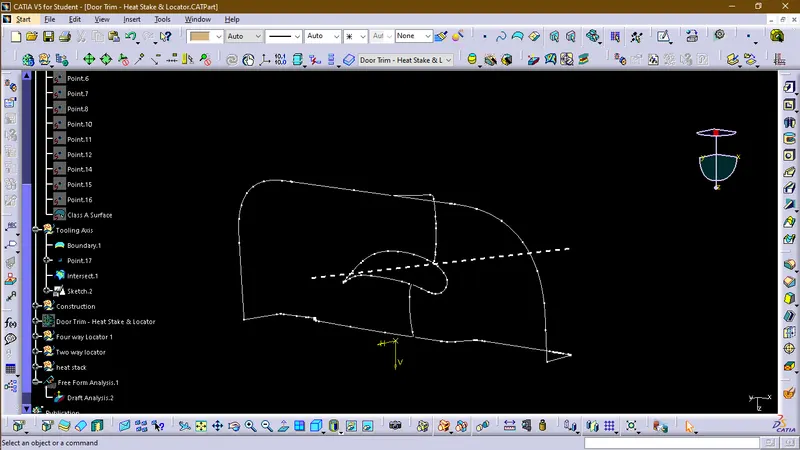
Now we created a Class B surface by using the following tools:-
1. Extract
2. Disassemble
3. Untrim
4. Extrapolate
5. Trim
6. Split
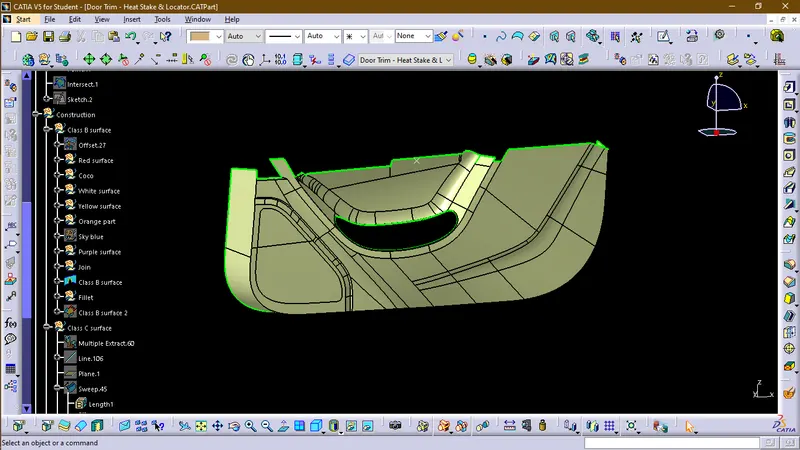
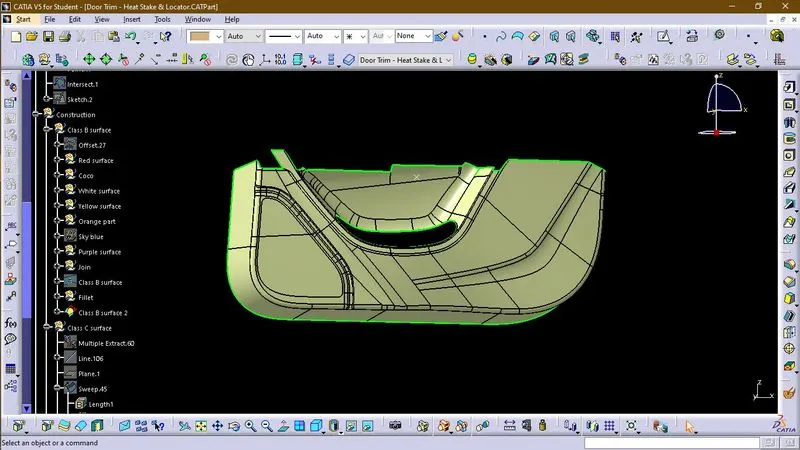
Then we created a Class C surface by using the sweep tool
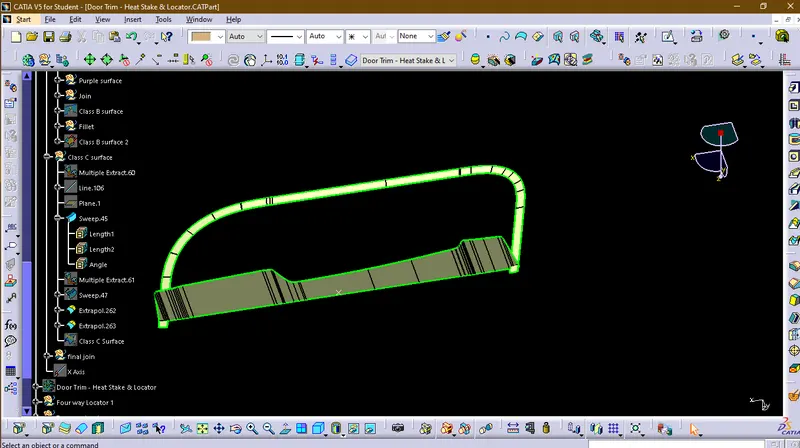
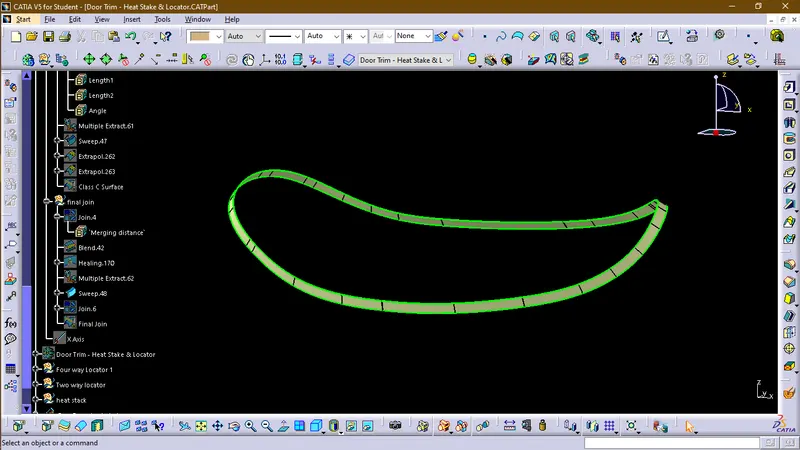
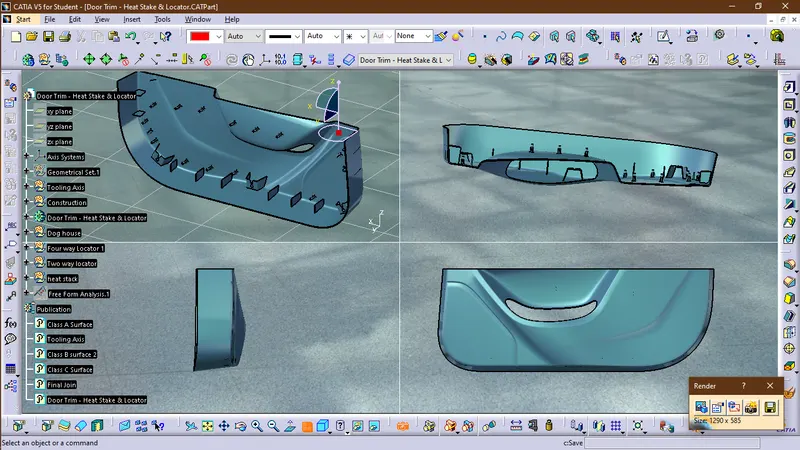
Then we joined Class A, Class B, and Class C surfaces
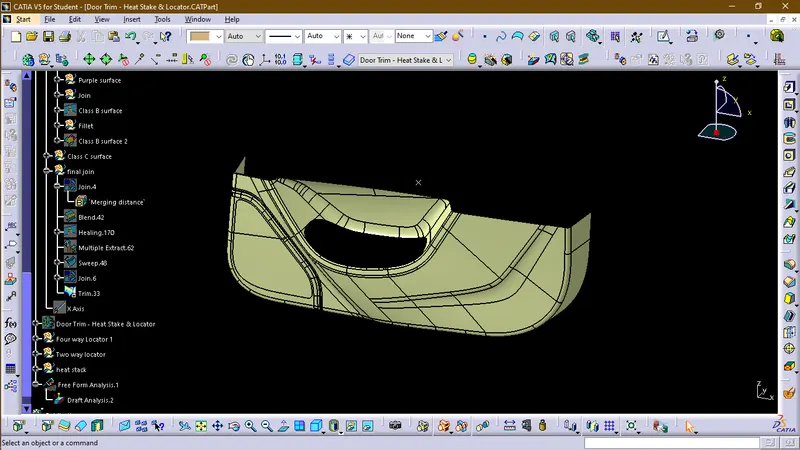
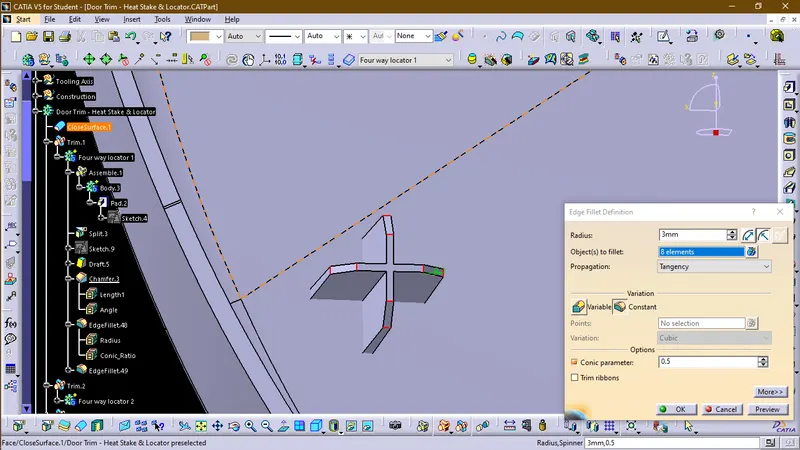
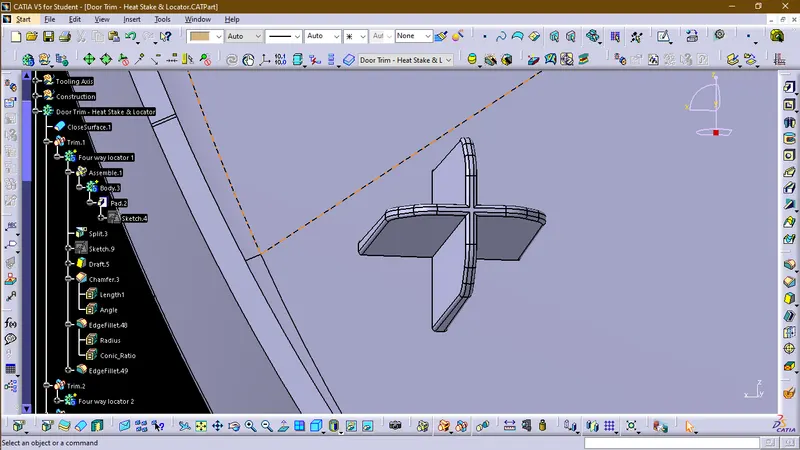
Four-way locator
A round locating pin located concentrically in a hole is a common application of a 4-way pin, and helps to further secure the piece.
4-way mean you prevent movement at 2 axes (+X, -X, +Y and -Y) on the plane. Generally, you have a cylindrical pin on the fixture and a circular hole at the workpiece part.
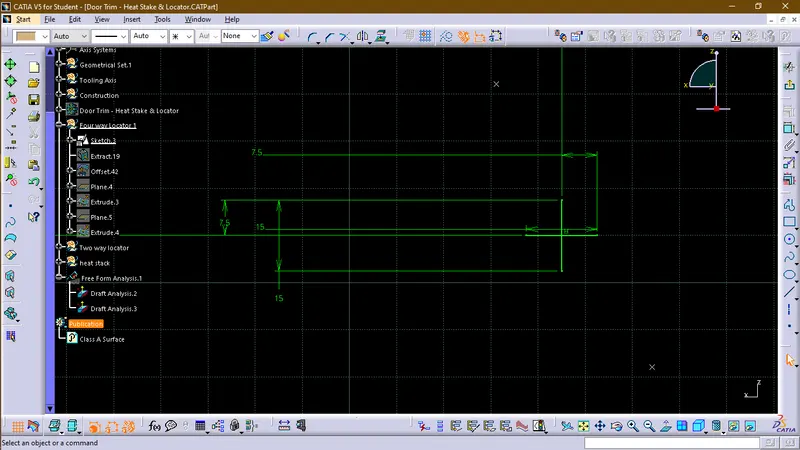
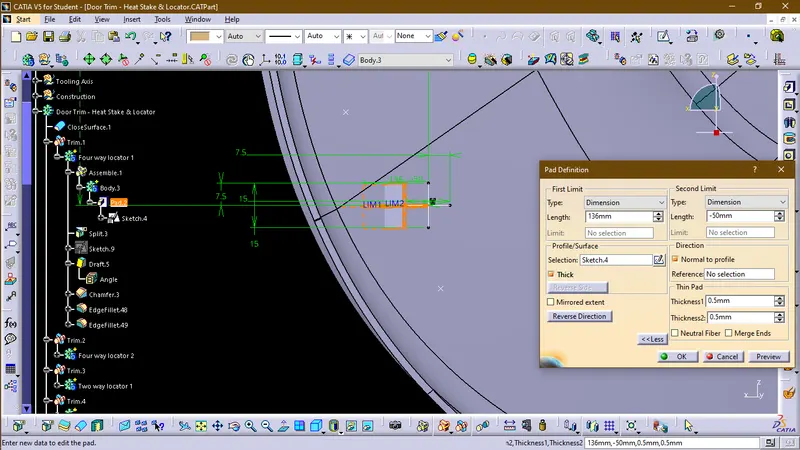
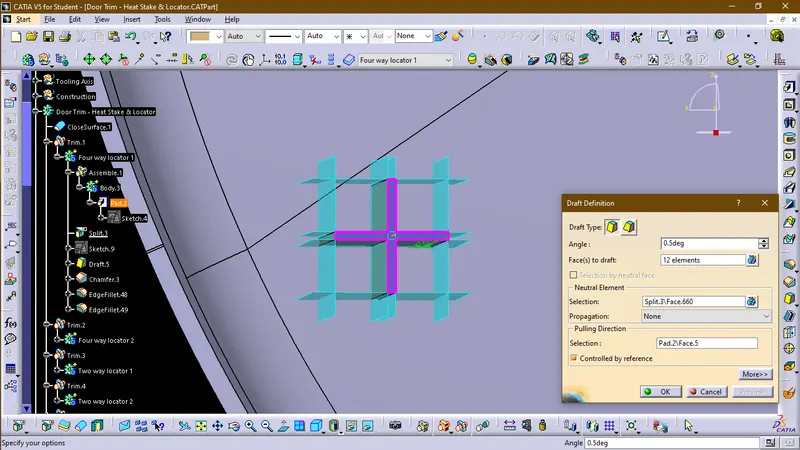
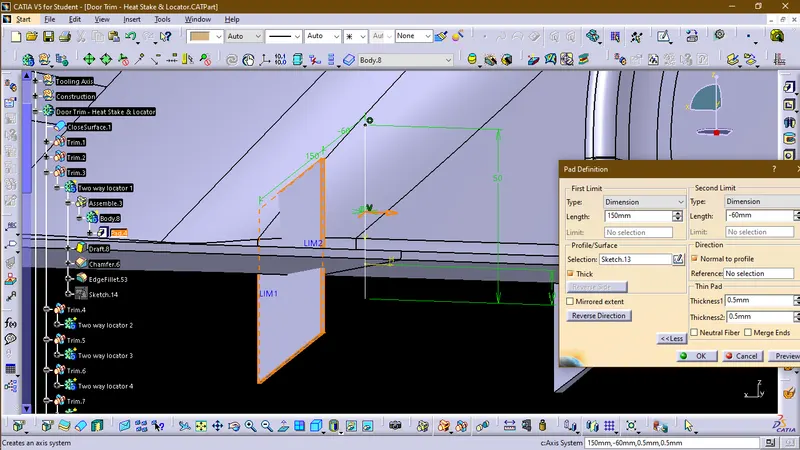
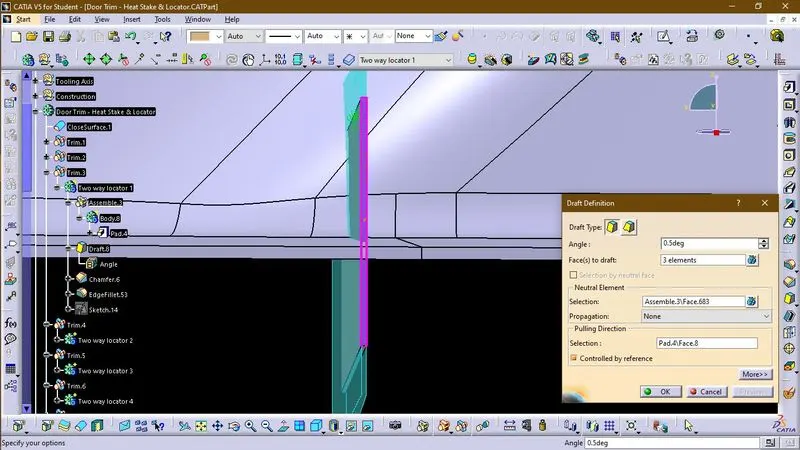
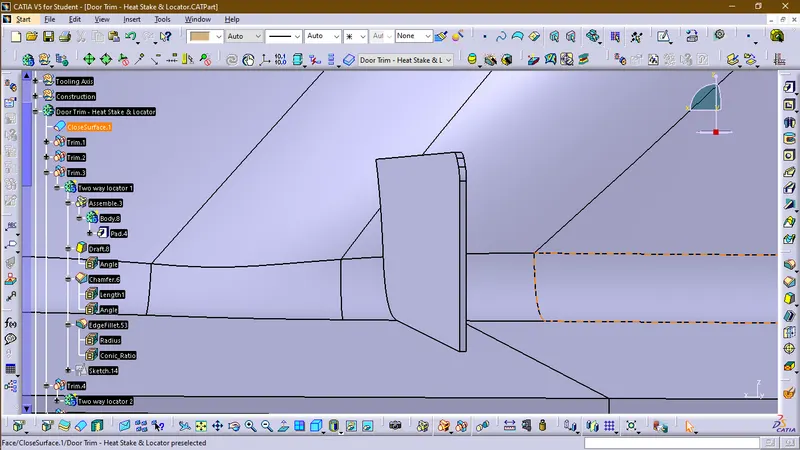
Two-Way Locator
A 2-way locating pin restricts motion along 1 axis (or 2 degrees of Freedom), like a round pin in a slot. Likewise, a 4-way pin restricts 4 degrees of freedom along 2 axes. A round locating pin located concentrically in a hole is a common application of a 4-way pin and helps to further secure the piece.
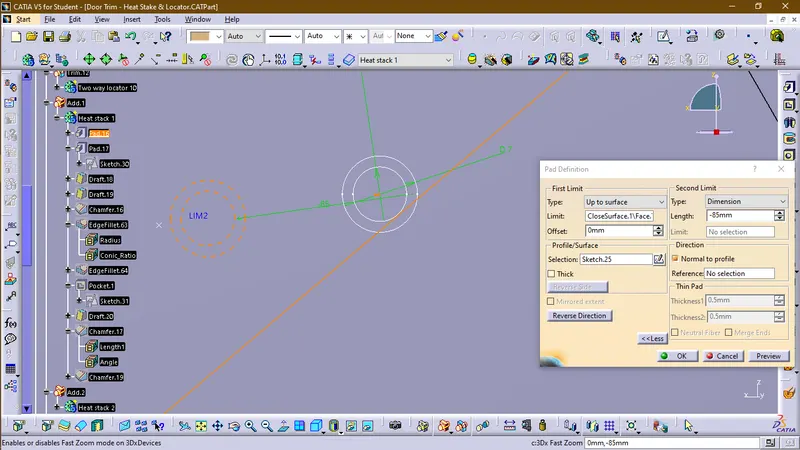
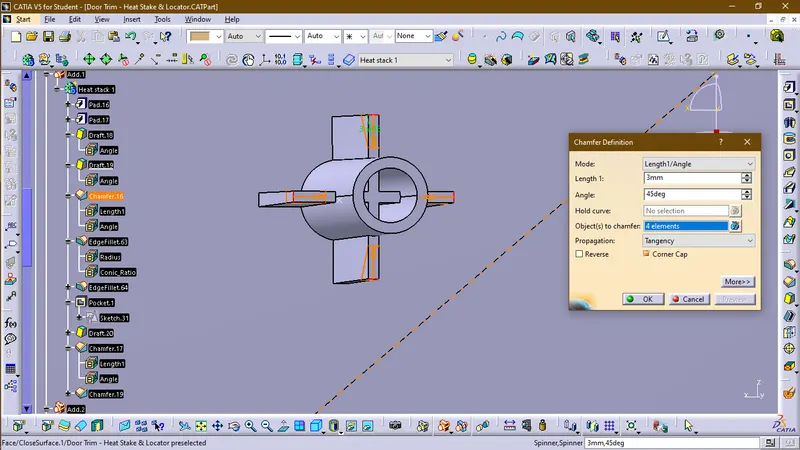
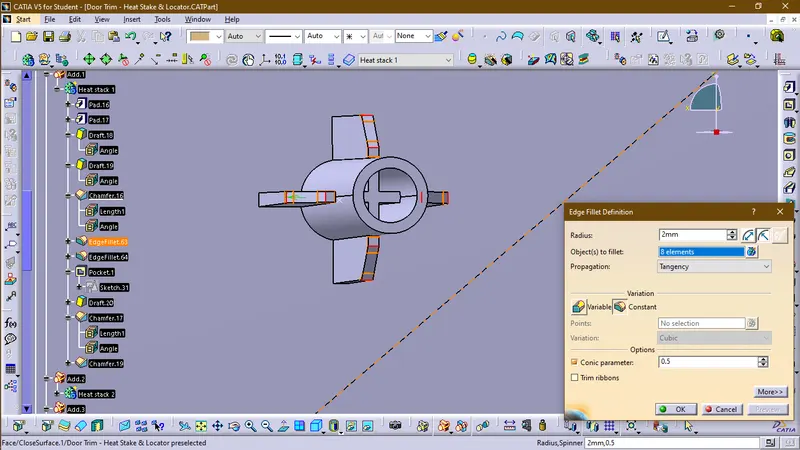
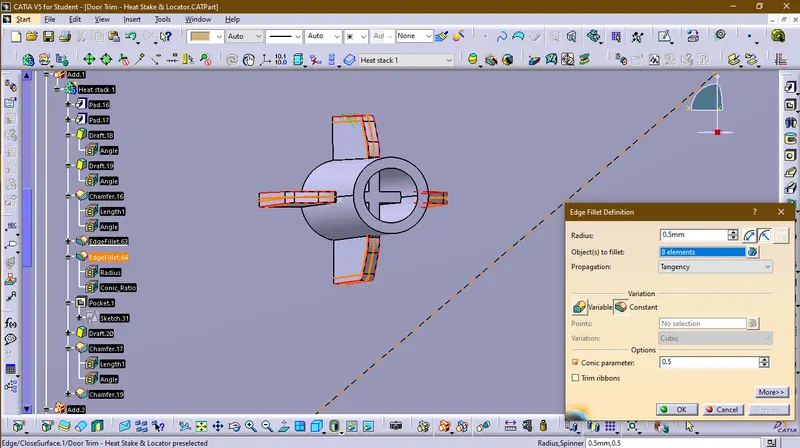
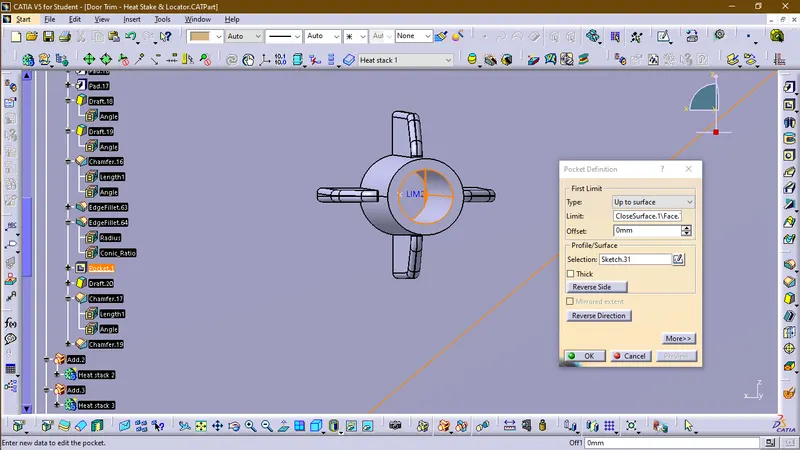
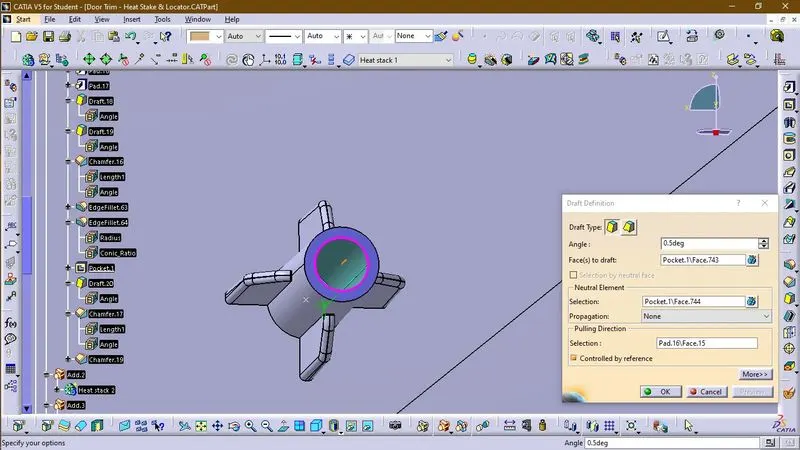
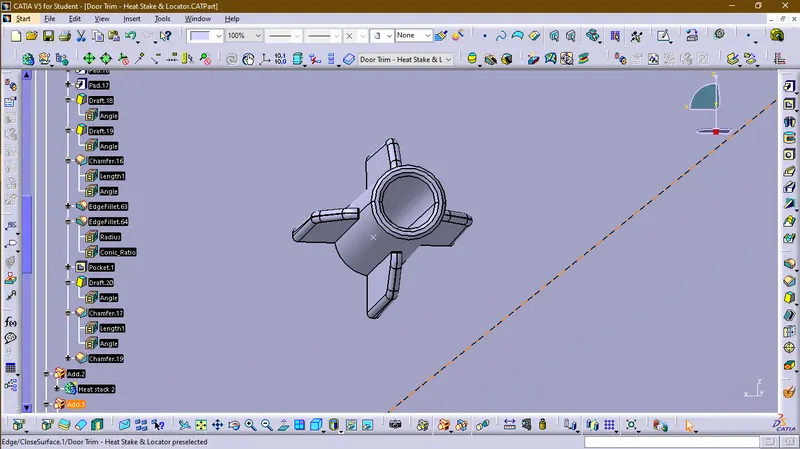
Heat Stack
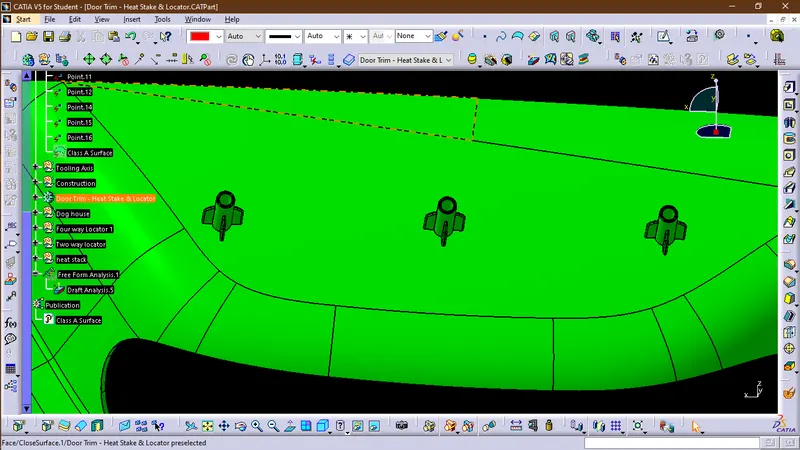
Heat staking also known as thermoplastic staking is the process of joining two dissimilar materials together. In heat staking, we use local heating and cooling to raise the temperature of plastic components and allow plastic reforming to be carried out.
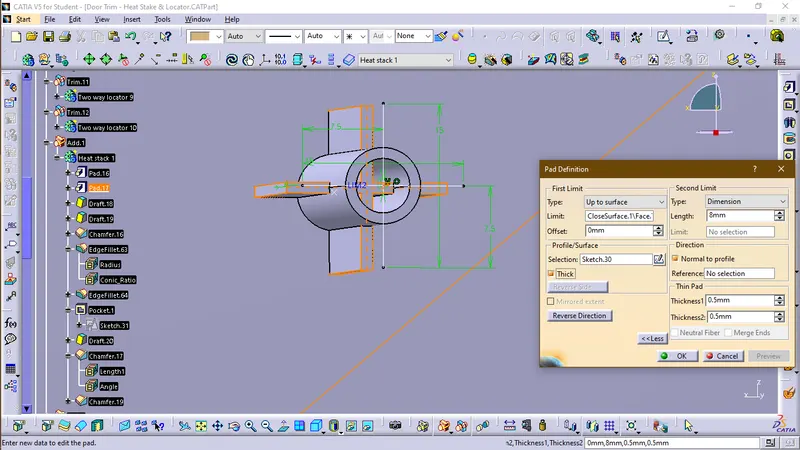
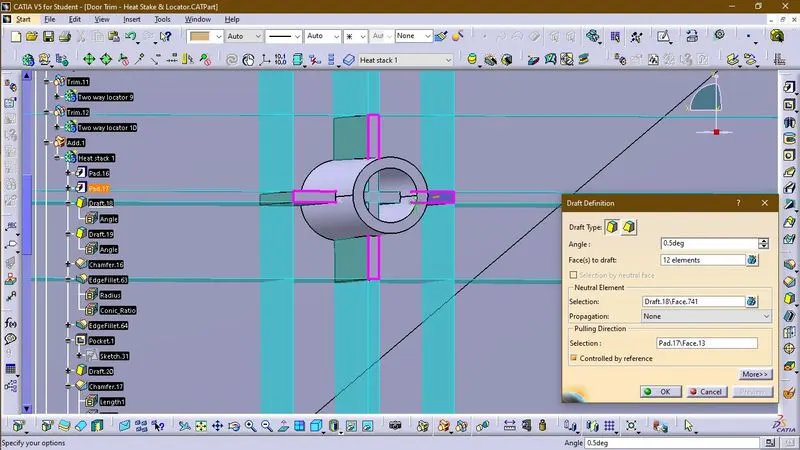
Dog House With Key Hole
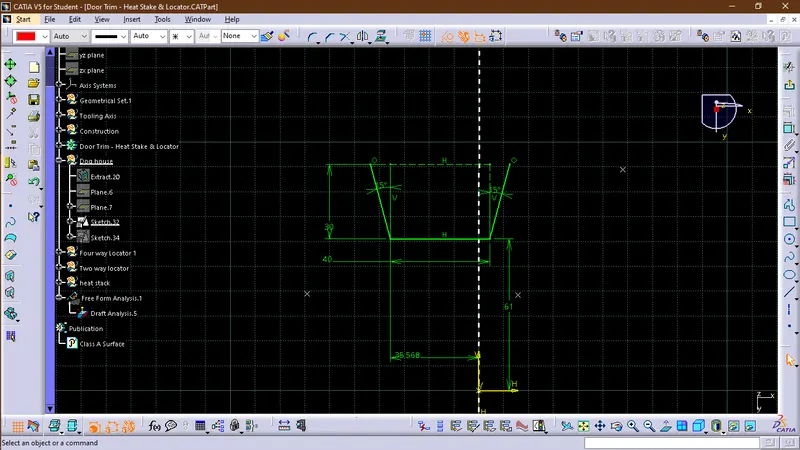
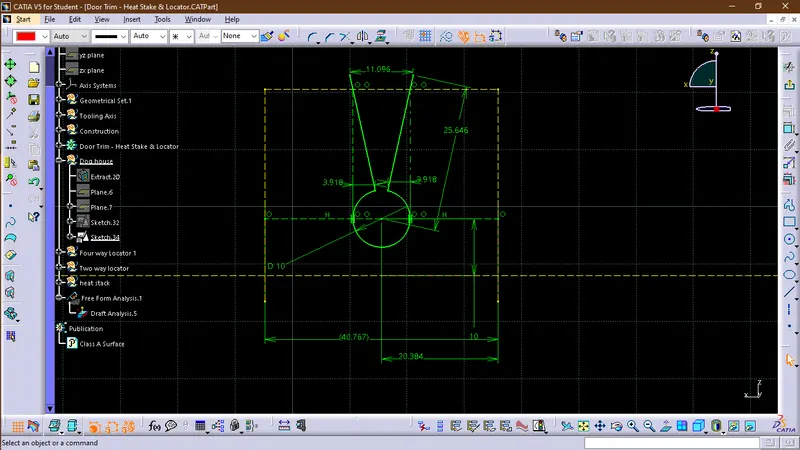
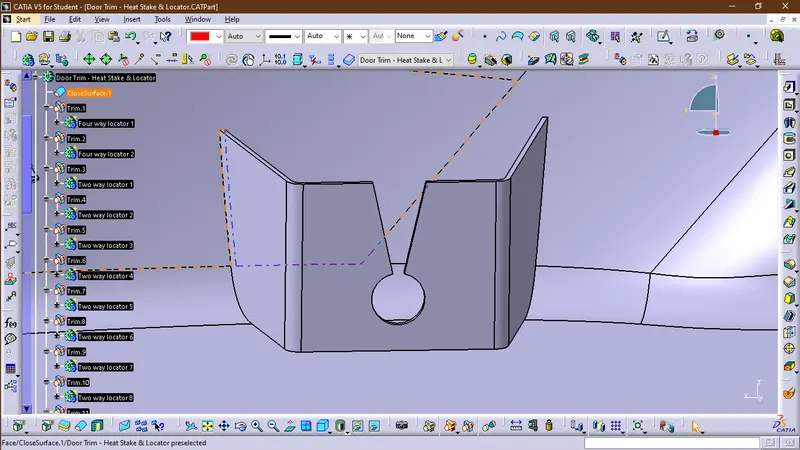
The dog house is an engineering feature used in the plastic trim design. Dog houses are used as supporting features. Sometimes other engineering features like snaps; locators, etc. are mounded on them to increase their strength. Dog houses are subjected to draft analysis to prevent breakage of the component during ejection from the mold cavity. Dog house and other engineering components are built on B-surface.
Draft Analysis