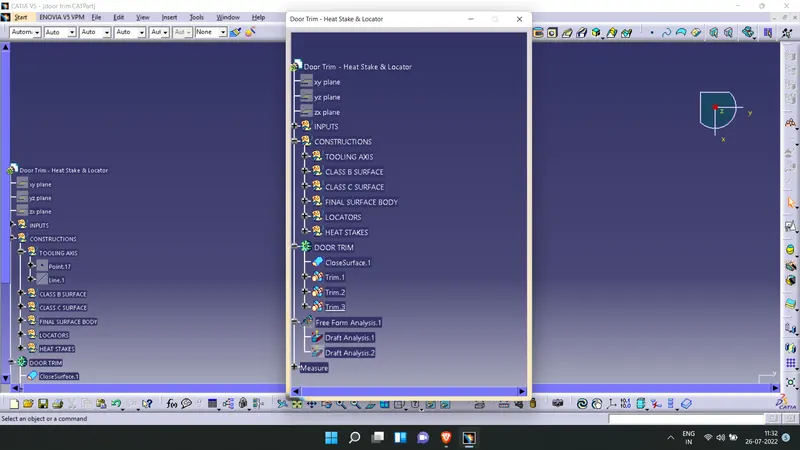
MODELING OF DOOR LOWER SUBSTRATE TRIM WITH ATTACHMENT FEATURES FROM CLASS A SURFACE USING CATIA
REPORT
DOOR TRIM
Aim: To create a plastic door trim from the given Class A surface
Methodology: The steps followed are as mentioned below
- Tooling axis is created
- Draft analysis is performed
- Class-B surface is generated
- Class-C surface is generated
- A closed solid model is created from the serfaces.
Tooling axis
- The first step is to ensure that the given surface is a closed surface. This can be fixed by using the join option. For verification use the join tool or the boundary tool.
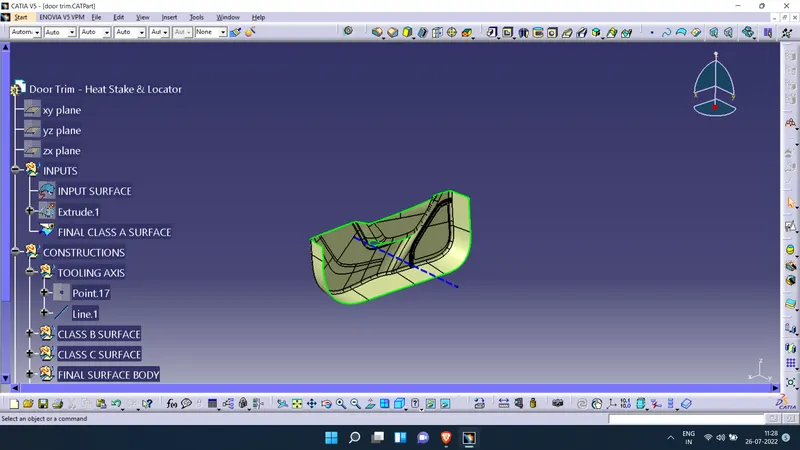
- An axis for the tooling direction is decided through visual inspection.
- The tooling direction in this model will be created paralell to the Y direction. For this a point is inserted at the centre of gravity and a line is created parallel to the X direction through the point.
- This line will be the tooling axis.
Draft analysis
- The surface to the analysed is selected and the material options is turned on in the customize option.
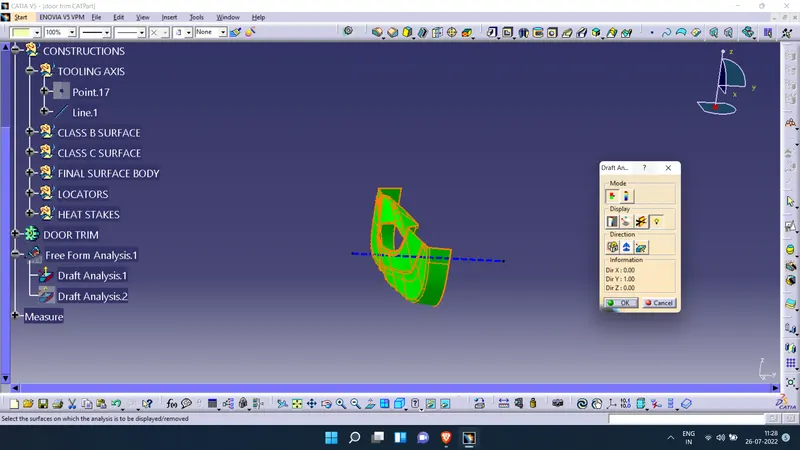
- The feature draft analysis tool is opened.
- The compass is aligned with the tooling direction.
- It is made sure that the pulling direction is correct. Otherwise it is flipped from the open toolbar.
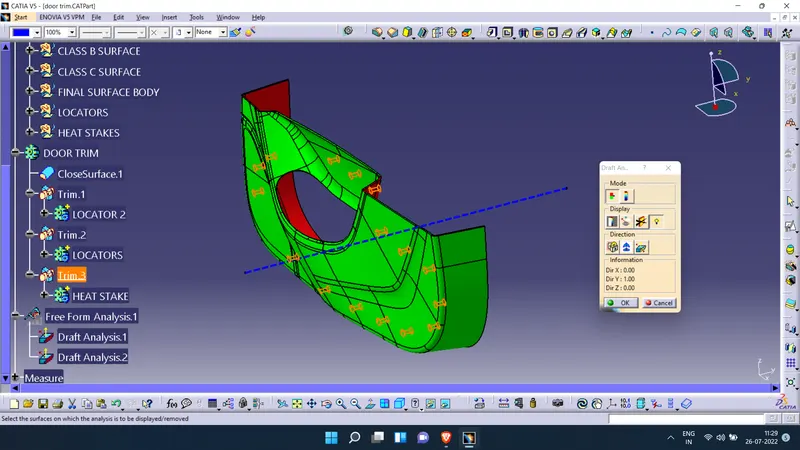
- The surface is selected to make sure that the draft values are in permissible limits on all faces.
Draft analysis of class A surface
Draft analysis of final surface
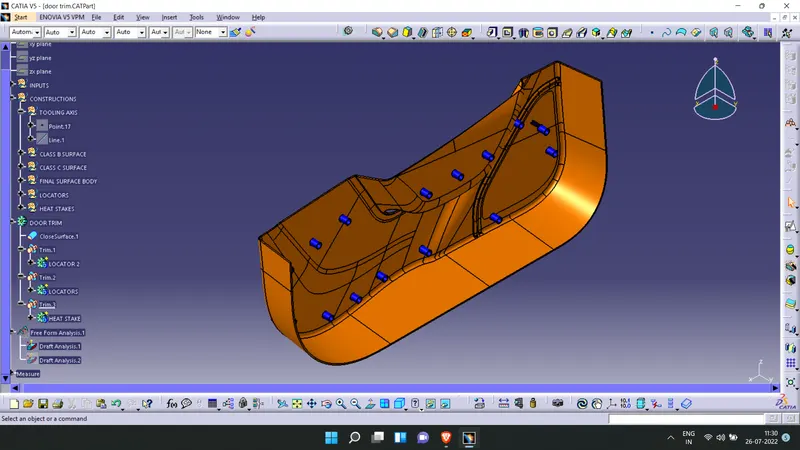
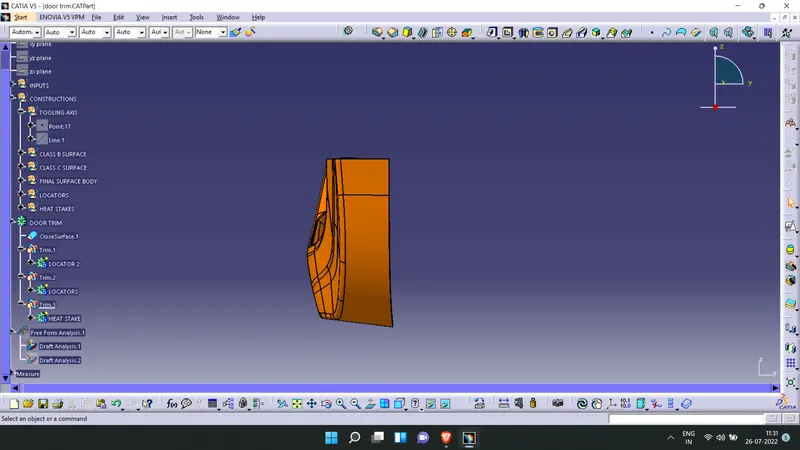
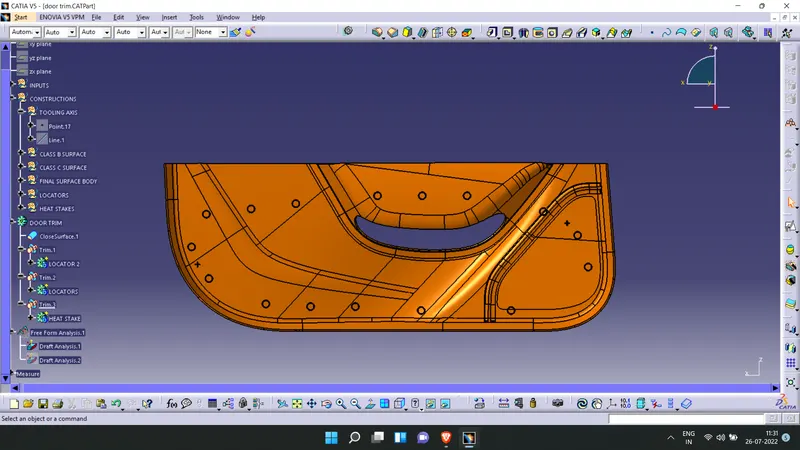
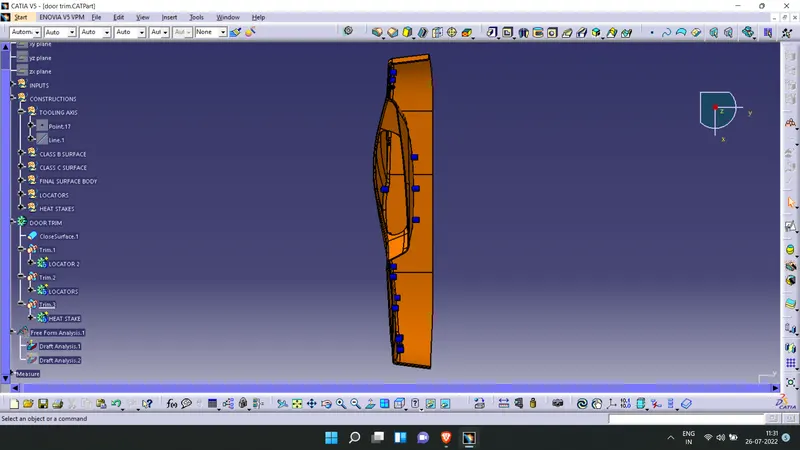
Views from different orientations
Feature tree