Week 9 - Project 1 - Door Trim Lower with Engineering Features
DOOR TRIM LOWER
Aim: To Create the Door trim lower component through the given Class-A surface, with Engineering features by given Mastersection or Points.
Objectives:
• Creation of Tooling axis with appropriate draft angle.
• Creation of other surfaces (eg, B and C surfaces) for creating a solid component.
• Perform Draft analysis on Class A surface and Solid model hence created.
Draft
The draft is the amount of taper for moulded or cast parts perpendicular to the parting line. Draft angles are a design consideration that makes it much easier for a part to release cleanly from a mould. A draft angle is calculated as a degree measurement (or, less often, an inch or millimetre measurement) from the vertical axis of a mould, and it helps account for thermoplastic shrinkage, a practical reality of the injection moulding process for most materials.
Draft angles are generally a requirement of injection moulding design (though there are a select few soft materials, like nylon, that can get away with draft angles of zero). The draft should be a part of the design for manufacture, and all stakeholders and contributors should be aware of its need at the outset of the design process. This includes product designers, design engineers etc and this allows considerations for design requirements to be taken into account. Any draft is always better than no draft.
Importance of Draft:
By accounting for thermoplastic shrinkage during the cooling process, draft angles significantly reduce friction between the finished, cooled part and the side of the mould, Not only does this create a much easier release process, but it also offers several other benefits, depending on the design of the part which is as follows:
• Reduces the chance of damage to the part due to friction during the release.
• Reduces wear and tear and chances of damage to the mould.
• Ensures a uniform, smooth, unscratched finish when required. • Ensures the integrity and uniformity of other surface finishes and textures.
• Reduces overall cooling time by lessening or eliminating the need for unconventional ejection setups.
• Most, if not all, of these benefits, offer either direct or indirect overall production cost reductions.
Explanation of creation:
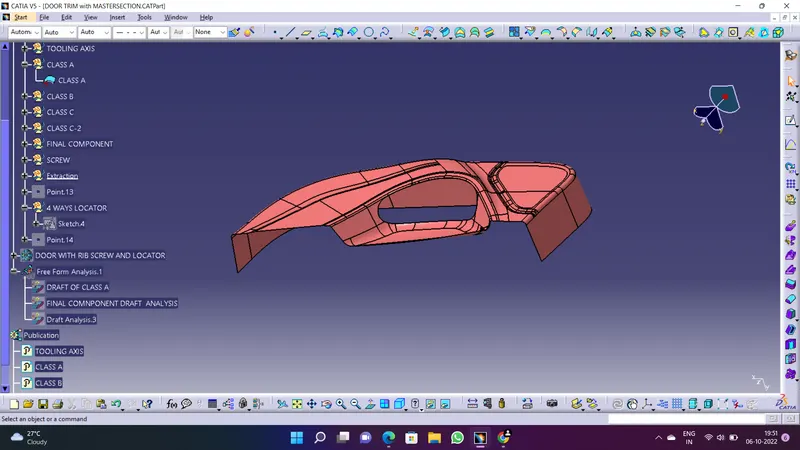
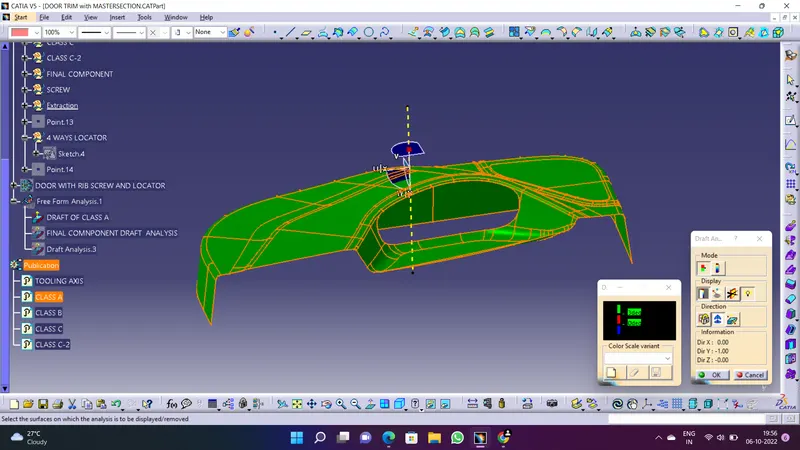
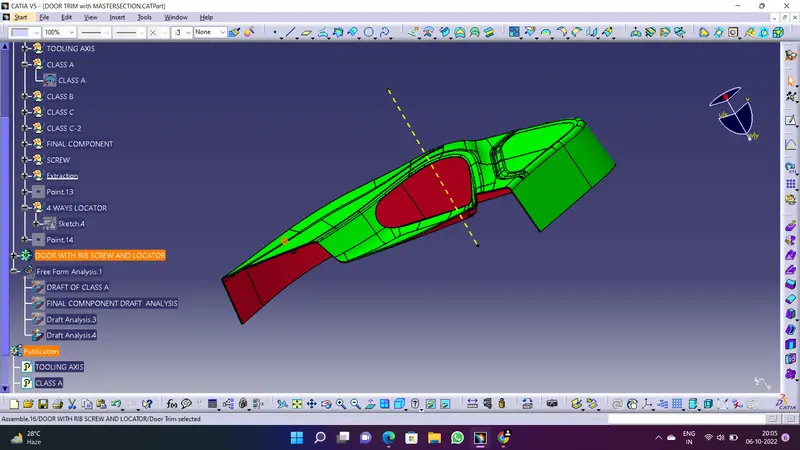
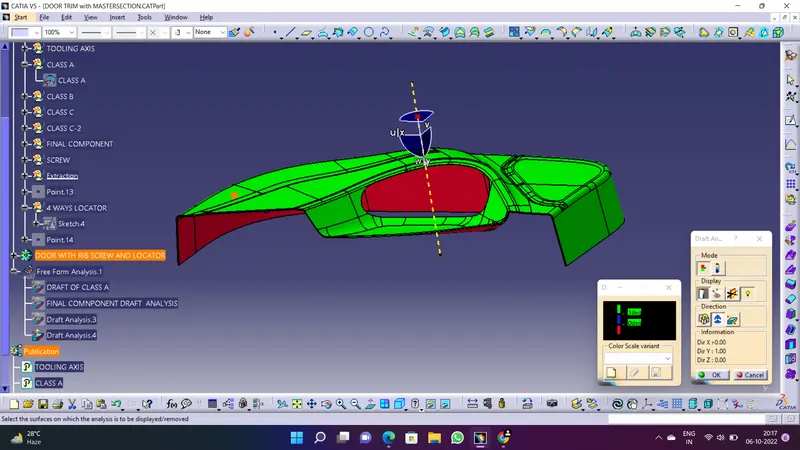
Firstly I have created a tooling axis and checked whether given class A surface is with proper draft of 3 degree angle or not. So as we can see that class A srface is coming in Green color as I have set color format green for surface having 3 degree draft angle.
Then I have created class B surface by applying offset command.
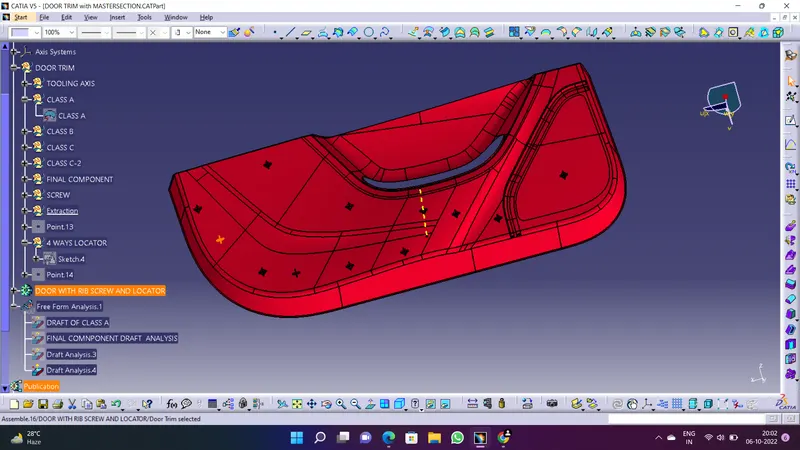
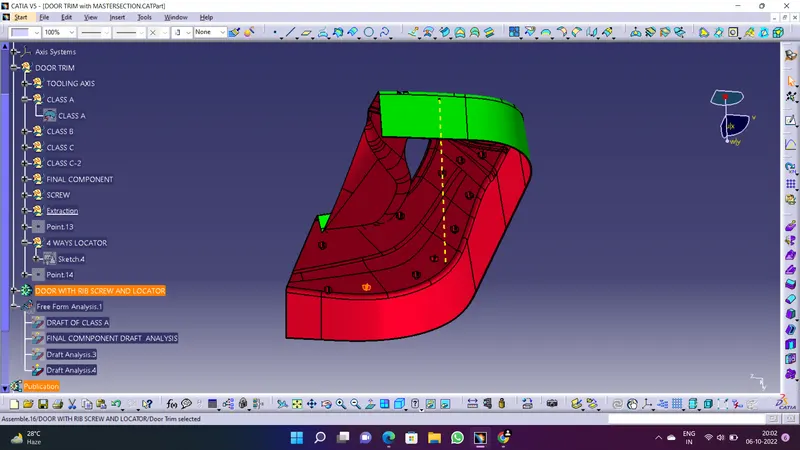
After that I created class C surface by sweep command and joined class A and class C surface.
and Finally added all surface by using Trim command.
and then I convered it into closed part body.
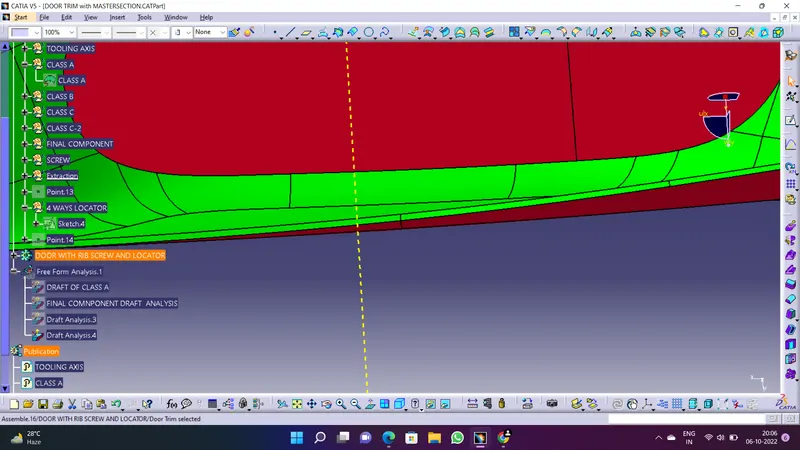
Then I converted this close surface structure into Close body part by using Closed surface command.
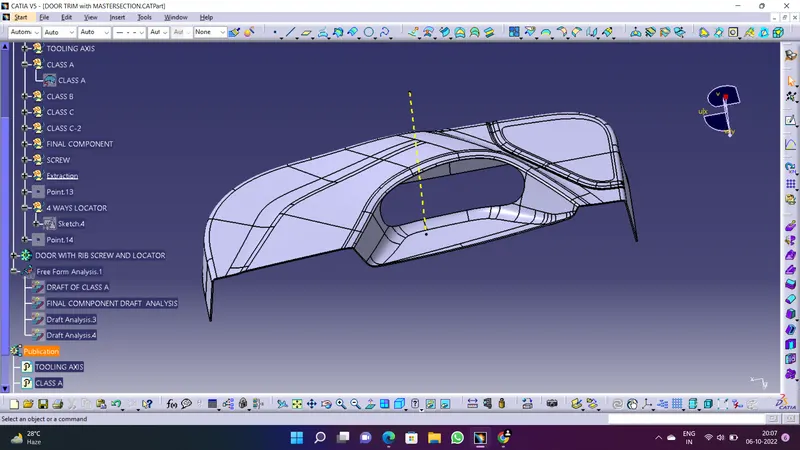
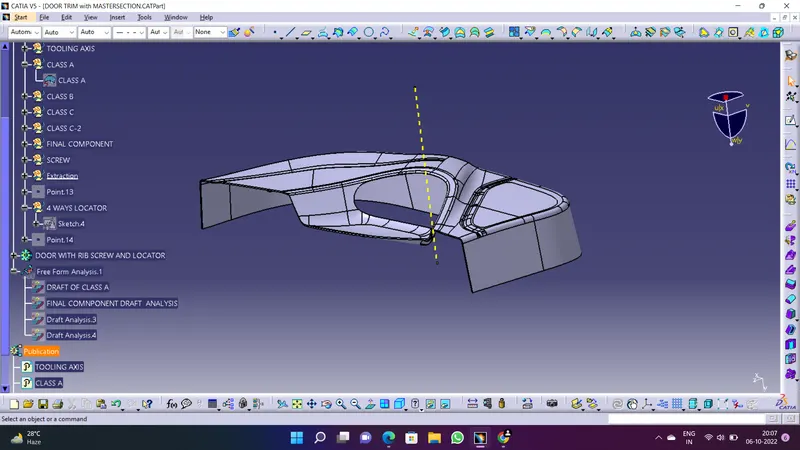
And then at last I did Draft analysis for final closed part body, as we can see that class A surface is green in color and class B surface is red in color, as well class C surface is blue in color, according to color format set into draft analysis.
Creation of the Heat Stakes and the Locators:
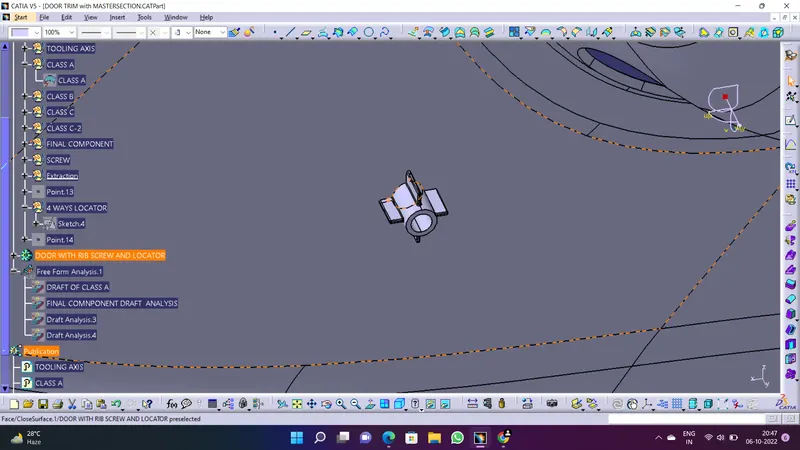
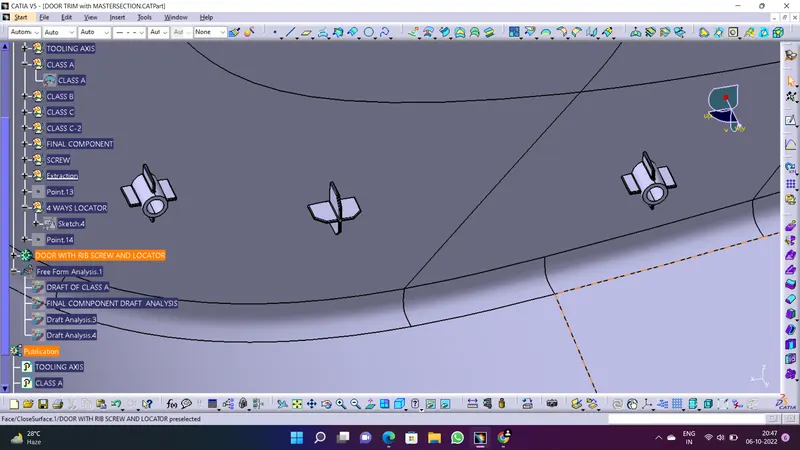
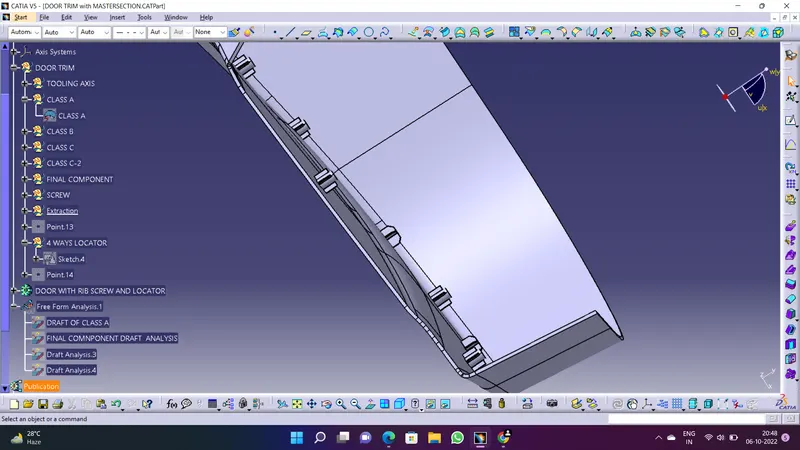
HEAT STAKES:- Heat stakes are use to rivet the plastic componnet to the environment that is the reference surface provided,It is riveted by melting the heat stakes such that the extra part of the heat stakes will be melted and acts as rivet.
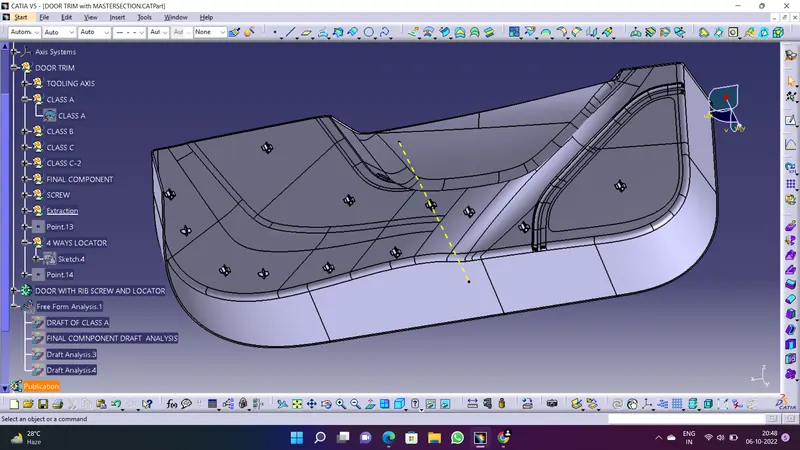
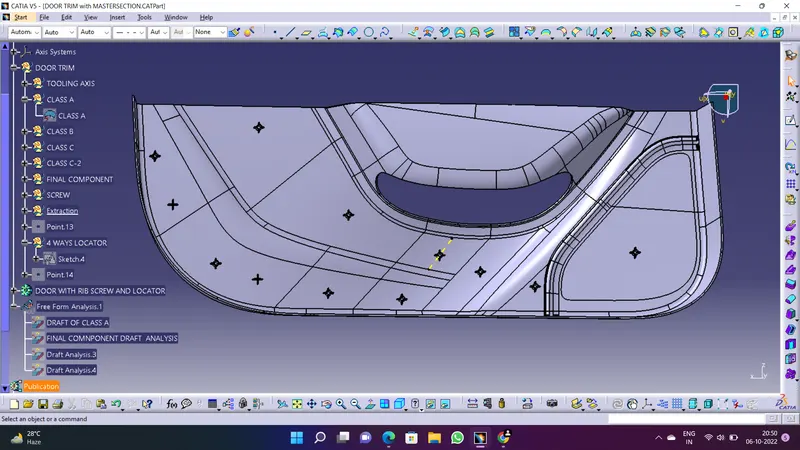
A single heat stake will be created by padding the sketch along with tooling axis and other heat stakes will be created using copy and paste special option along the points created.
LOCATORS:- Locators are used to arrest the Degrees of freedom of a component, there are many ways of creating locators based on the model, here for this model , I have created four way n two locators at corner position. The Locators sketch is padded along Tooling axis sirection with thickness to obtain the locators.
CONCLUSION:
- Thus the Door Trim Lower with Engineering Features is developed by using given Class A surface .
- Heat stakes and Locators has been designed in order to fix the position of the Door trim lower with the mating door panel.