Week 9 - Project 1 - Door Trim Lower with Engineering Features
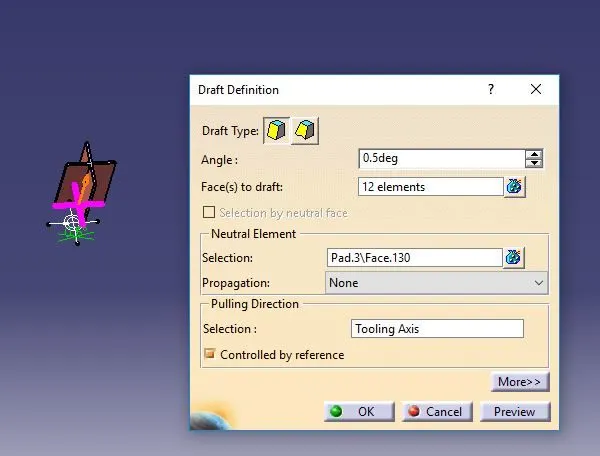
Aim: Create the Door Trim Lower Plastic component through the given Class-A surface. To begin with, the tooling axis for the given Class-A Surface should be created meeting the requirements of the draft angle and at the end perform the Draft analysis on the model.
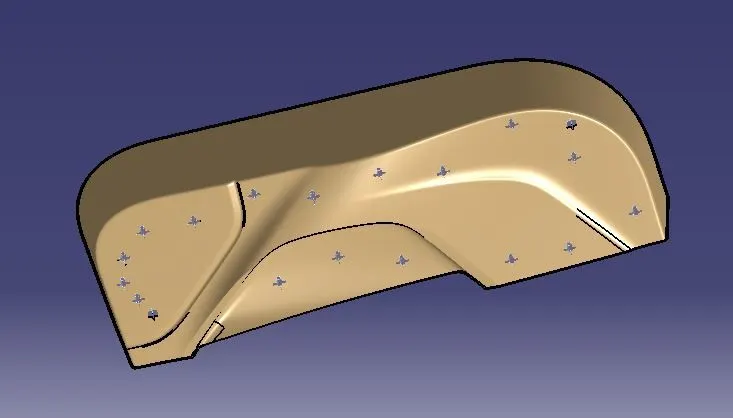
Create the Heat Stakes and the locators considering the design rules mentioned in the video for the door applique.
Design Approach:
- Creating the B and C surface
- Creating the tooling axis
- Provide Heat Stack & Locator
- Performing the draft analysis on both A surface and final plastic components.
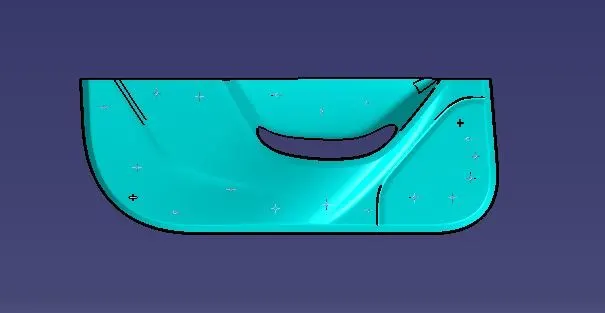
Class A SURFACE IS
- Visible surface and aesthetic look
- Surface with textures
- Surfaces provided by Customer (OEM)
- Don’t have any features like (rib, snap, bosses, etc) on class A surface.
- Class A surface is made from scanned data with different software like alias etc.
- Surfaces which are having CURVATURE CONTINUITY IS CALLED class-A.
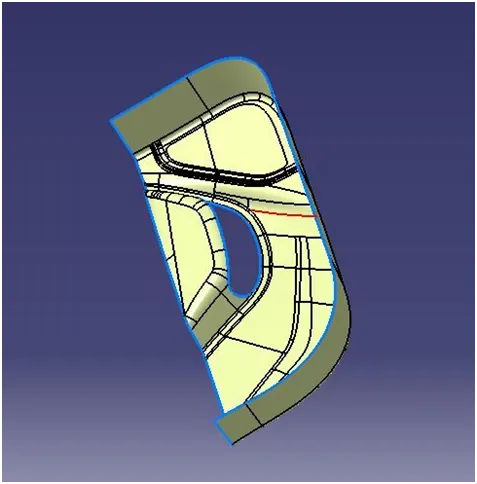
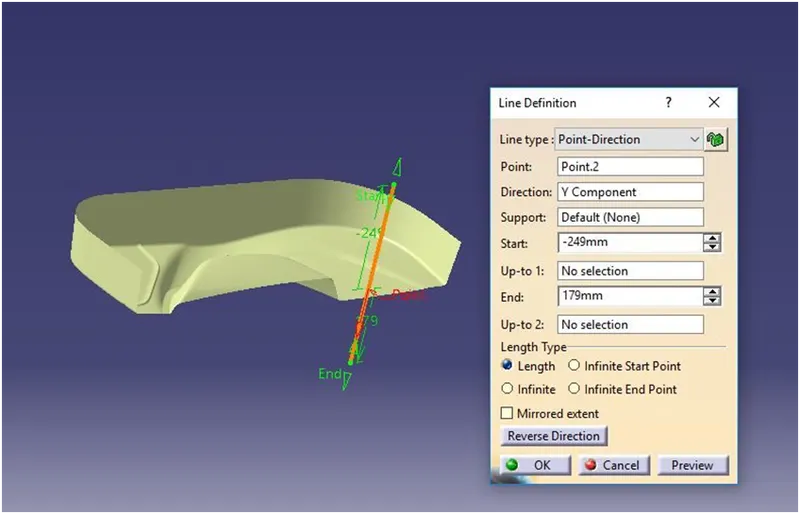
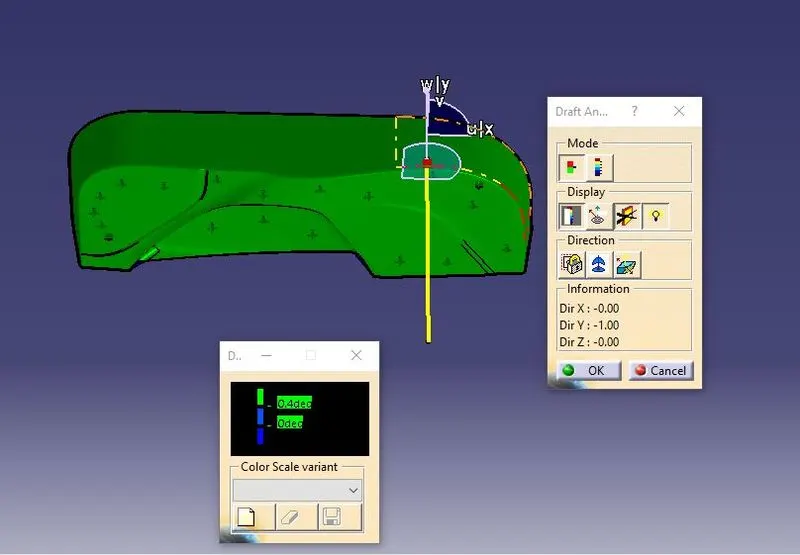
CREATING TOOLING AXIS:
- Intersected the plane on class A
- connected two out points by line.
- Excruded the line by taking the point on the surface
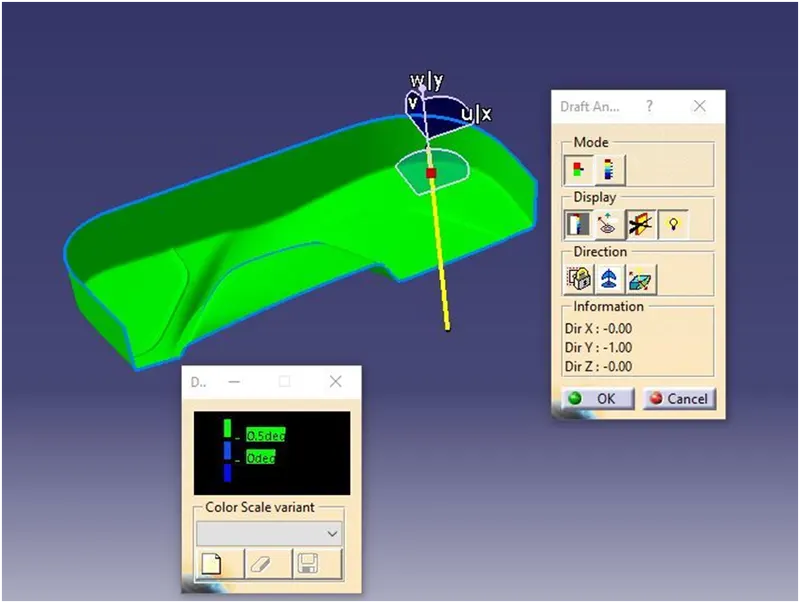
CLASS A DRAFT ANALYSIS:
CLASS B SURFACE IS:
- Invisible Surfaces.
- Surface mostly don't have textures
- Surface needs to be created according to the class-A surface.
- Having all features in B-side surface only.
- Surfaces which is having TANGENT CONTINUITY IS CALLED class-B
Just Offseted the Class A for 2.5mm & performed some modifications as per requirement.
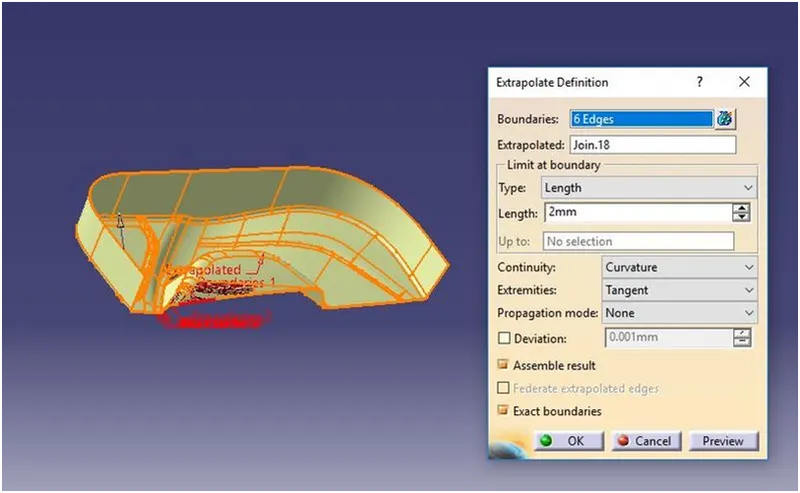
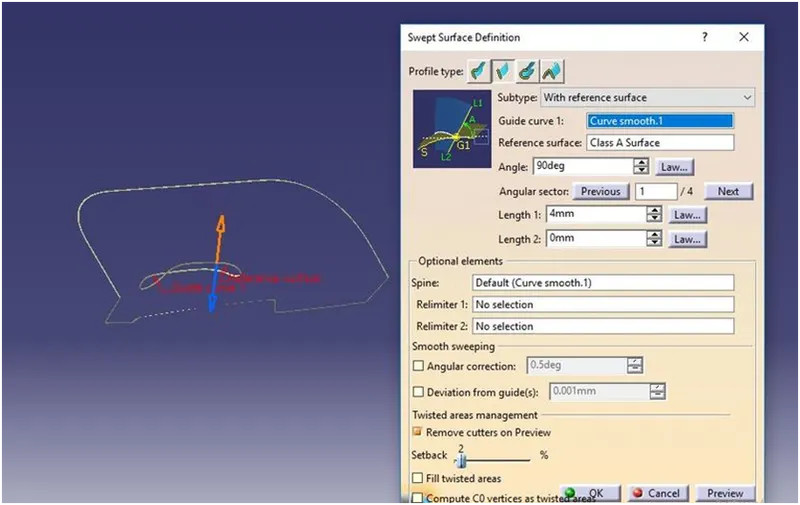
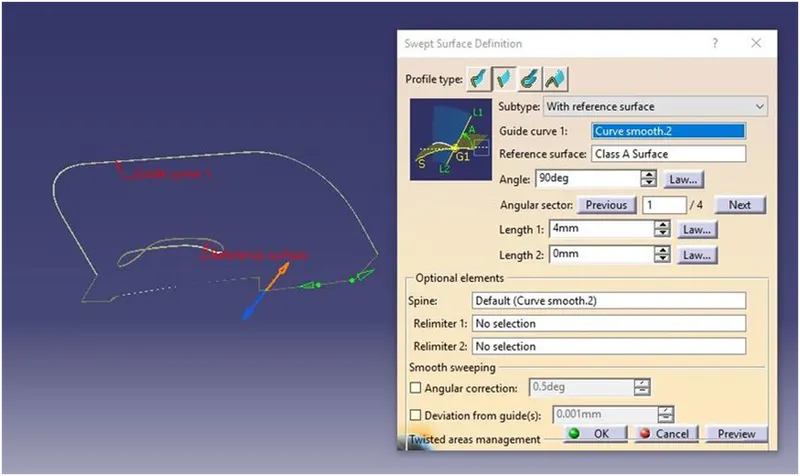
CLASS C SURFACE:
Took a boundry for class A
Sweept using boundry & Reference surface.
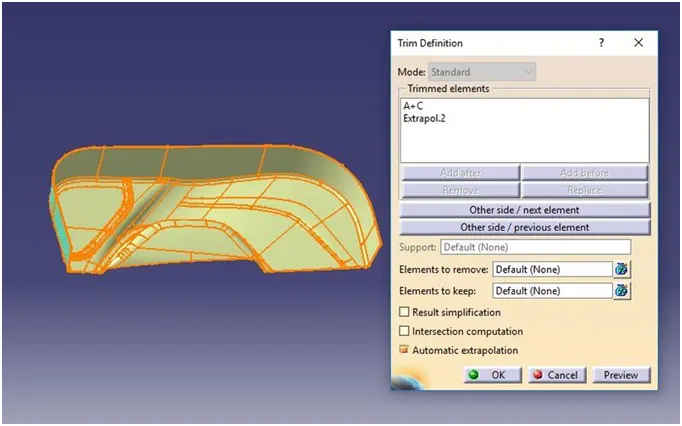
Final Trim surface:
Trimed Class A,Class C with Class B.
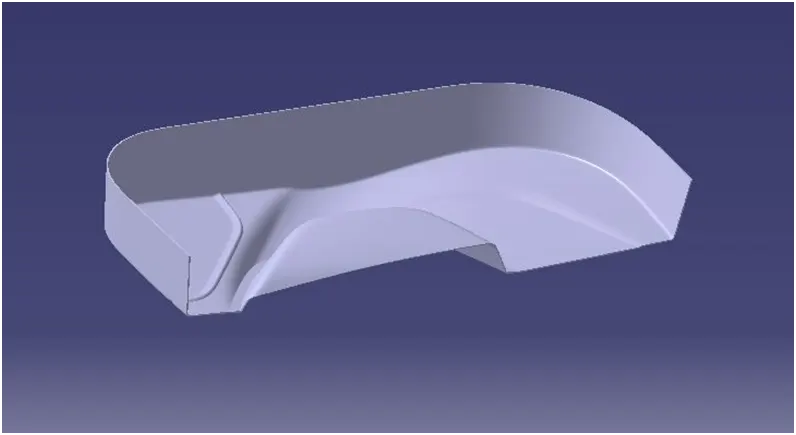
Closed Surface:
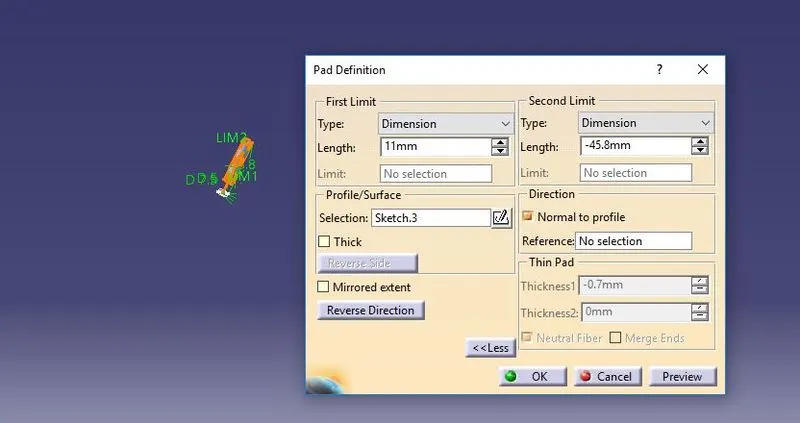
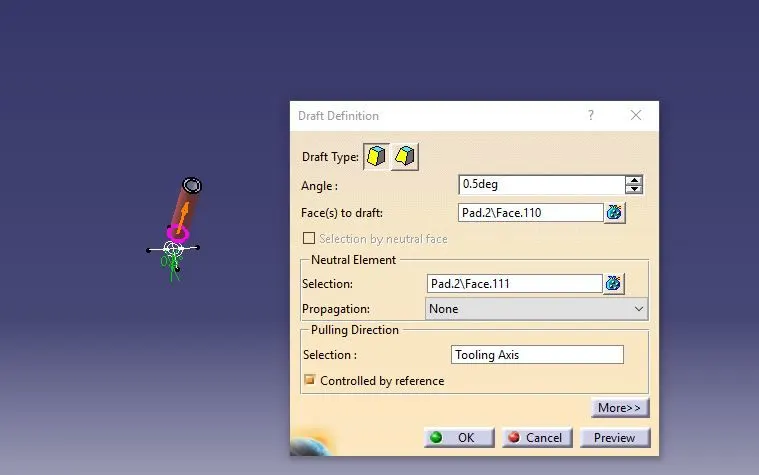
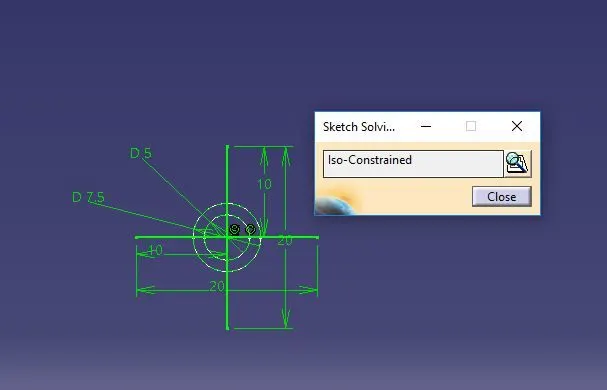
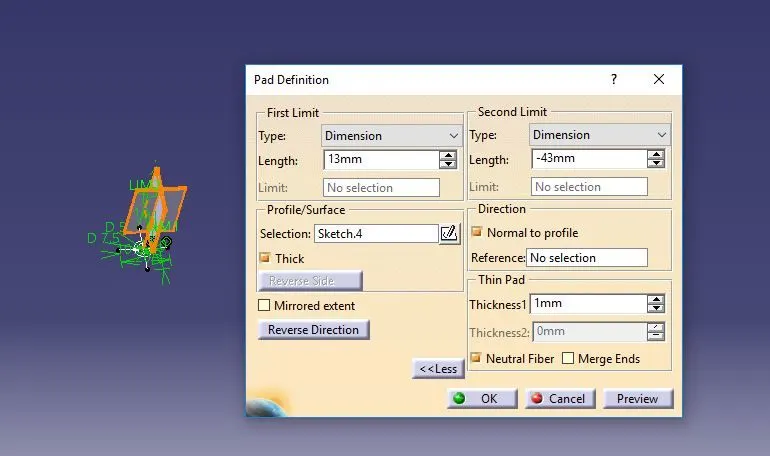
4 Way Locators:
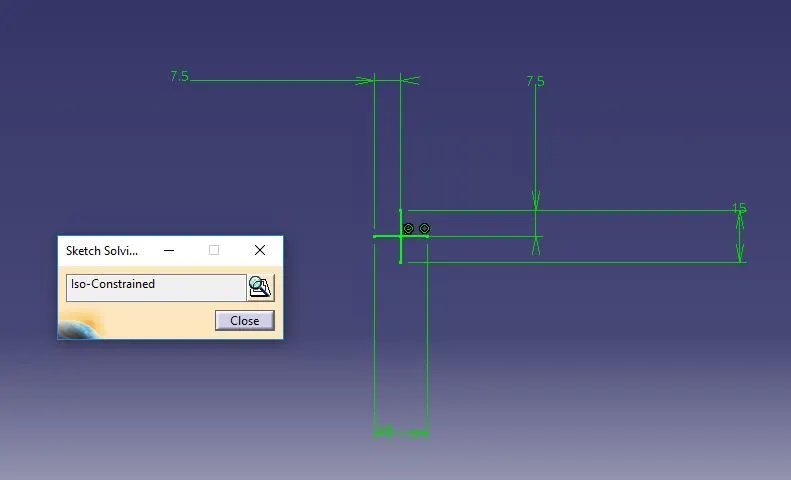
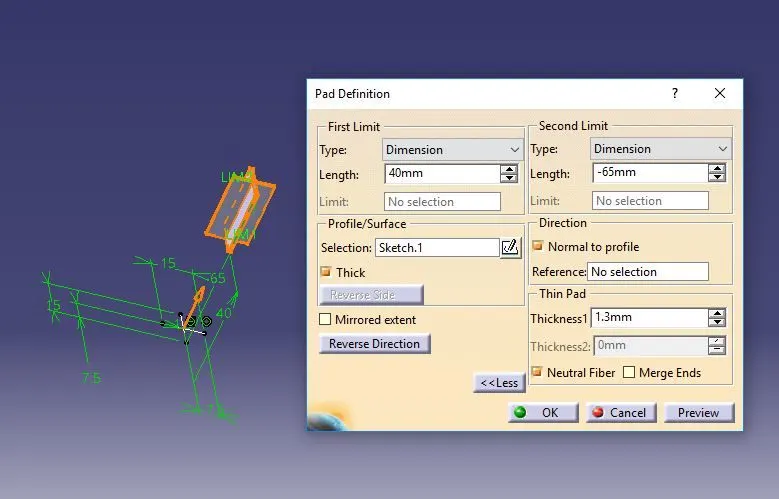
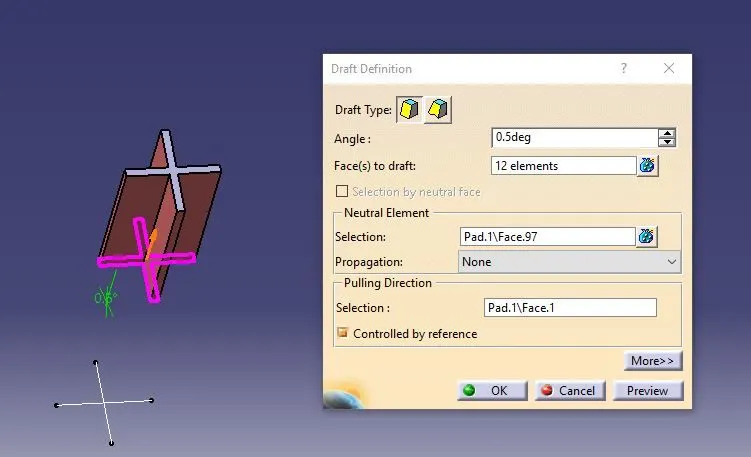
Heat Stack:
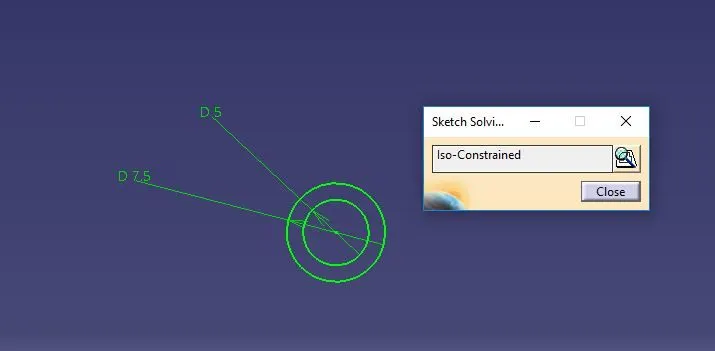
Door trim with Heat Stack & Locators:
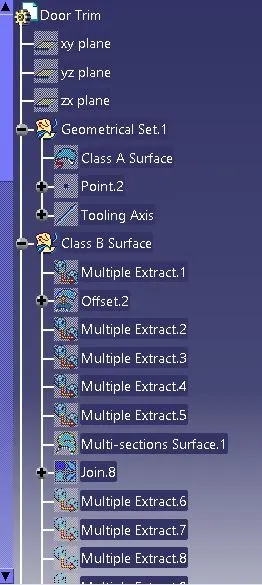
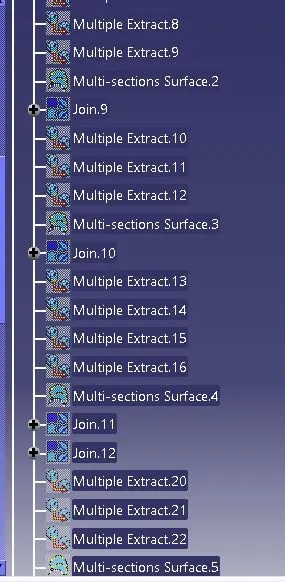
Feature Tree:
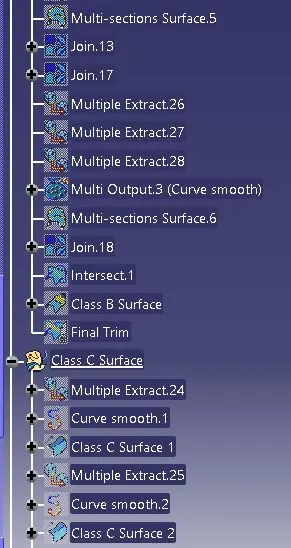
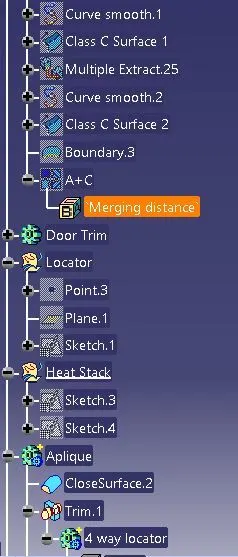
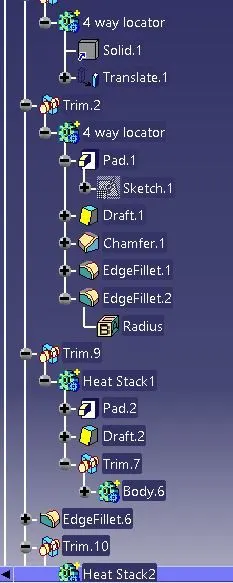
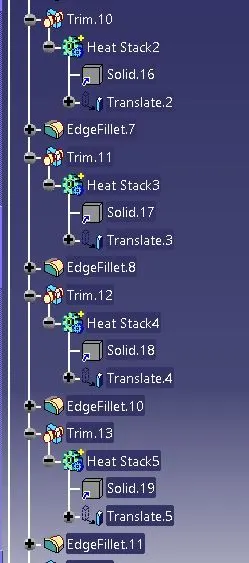
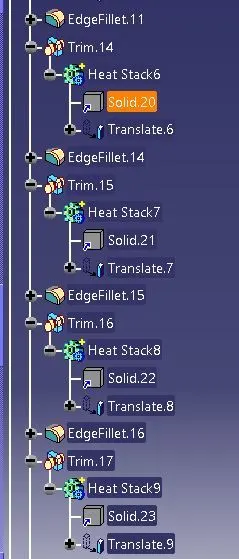
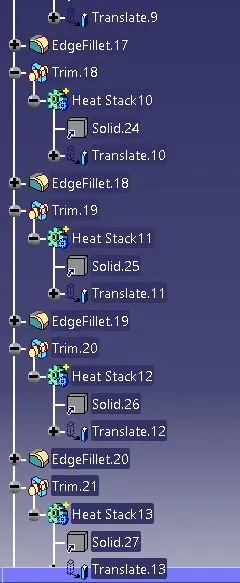
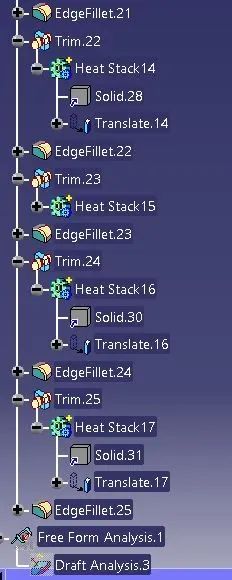
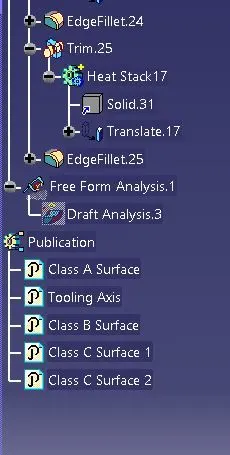
Draft Analysis of Closed Surface:
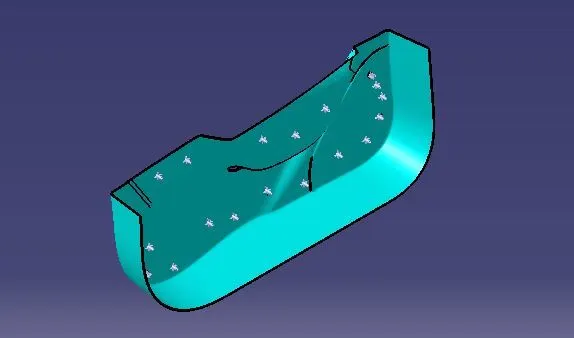
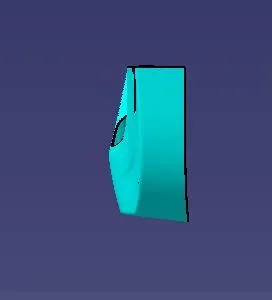
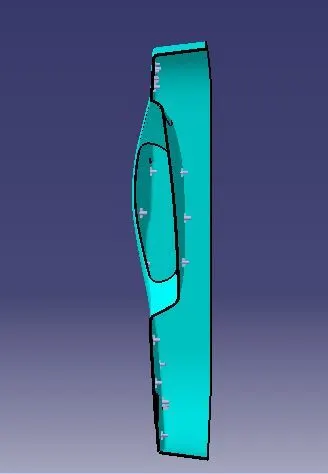
Different Views:
1) Isometric View:
2) Front View:
3) Top View:
4) Right side view:
Conclusion: thus i have created the heat stack & Locator