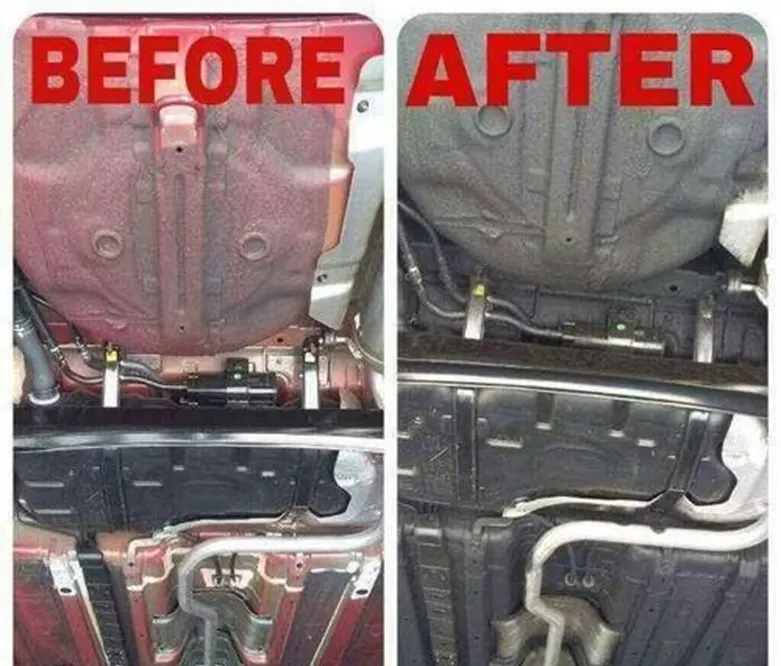
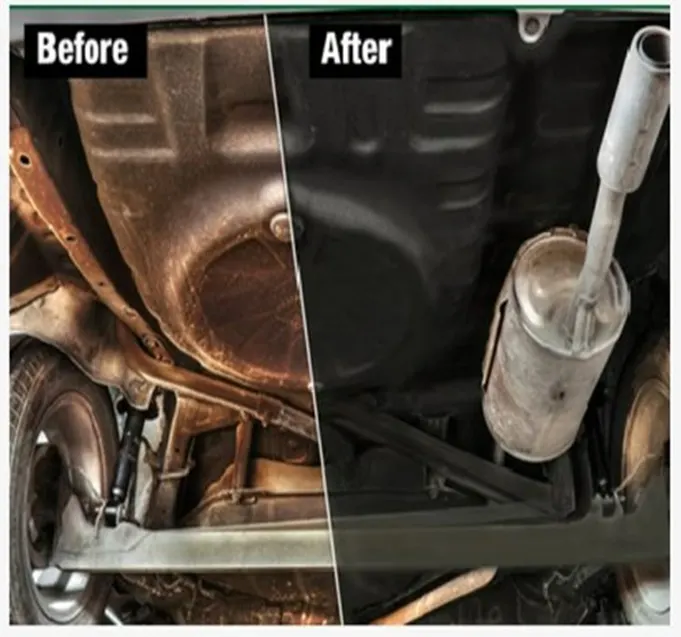
Underbody Coating
Underbody Coating
Underbody Coating: In Indian road conditions, a cars underbody is most prone to corrosion. Underbody coating provides long term protection from corrosion to car’s underbody. It also protects parts like internal body panels, frame rails and other inner cavities that are not physically accessible but are prone to corrosion.
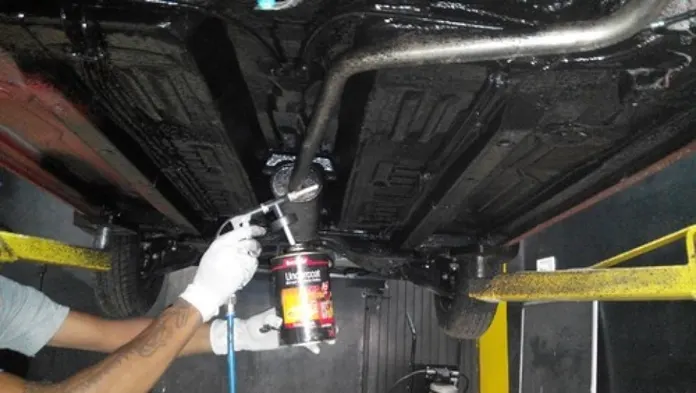
Purpose: The main purpose of undercoating is to check rust especially in the body components like frame rails along with other exposed metal parts. Underbody coating can also reduce wear and tear.
Significance
- Undercoating helps to provide an additional layer of insulation and protection to the undercarriage of your vehicle.
- Manufacturers may apply car undercoating at the factory.
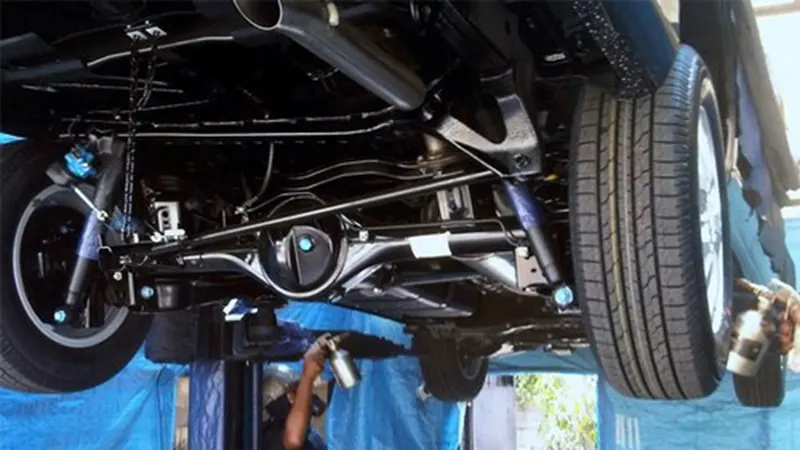
- The undercoating covers most of the car’s underside, including floorboards, frames, gas tanks, pans, wheel wells and mufflers, suspension parts, and exhaust pipes. This effect can be likened to black coating a parking lot or a road.
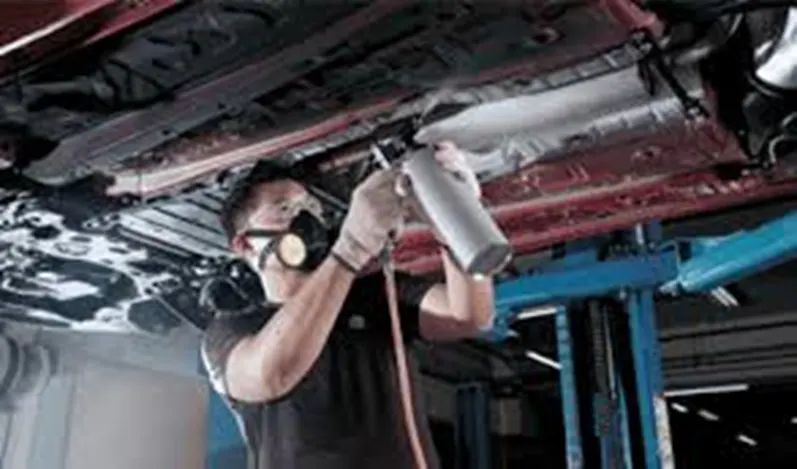
- Undercoating materials adhere to metal, even if it is painted. Most of them come in pressurized cans for easy spray-on application, while an even spread may be tough to achieve without professional applicators.
- Ingredients used in the manufacturing of undercoating include fiberglass, ceramics, rubber, asphalt, and silicone. Each has different properties in terms of heat resistance and retention, but all give protection against the elements and damage.
- Auto undercoating protects the undercarriage, a vehicle’s most vulnerable area. Unlike the visible portions of your vehicle, the undercarriage doesn’t get washed frequently but it absorbs most of the moisture, grime, salt, and other substances when you come in contact with them, as you drive.
- In addition to protecting your vehicle from elemental damage, good undercoating can also reduce engine noise, leaving you quieter than ever before.
- Even if you buy a new car with undercoating from the dealer, remember that undercoating wears off typically within a short period of 1 year. Worn, patchy car undercoating can get damaged when water and other elements then get trapped under the coat, further eroding metal.
Types of Undercoating:
1. Rubberized Underbody Coating
2. Wax Based Underbody Coating
3. Asphalt Based Automotive Undercoating
4. Polyurethane Underbody Coating
- Rubberized Underbody Coating: This is generally thought of as the best underbody coating for your car. It preserves the underbody well, protecting it from scratches. Applying this to the undercarriage is not much of a hassle either.
- -Good abrasion, impact, and road salt resistance.
- -Good adhesion performance.
- -No running or dripping.
- -Over paintable.
- -Various textures are achievable.
- -Free of heavy metal.
- -Remains flexible when dry.
- -Very Good low-temperature behavior.
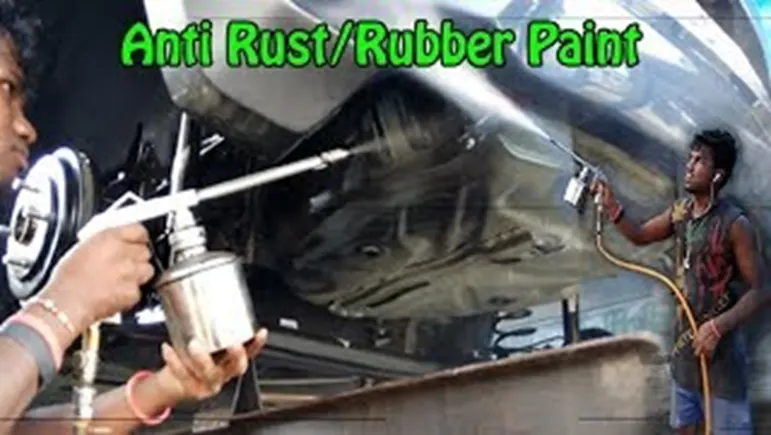
- Wax Based Underbody Coating: This more or less ephemeral undercoating will wear away in a few months’ time. On the upside, wax-based undercoating puts up a big fight against moisture. It is also the most affordable option out there.
- Asphalt Based Automotive Undercoating: Best suited for Lorries, trucks and large vehicles this provides a greater degree of protection compared to rubber-based coatings. However, asphalt-based coatings contain little amounts of rubber for sound-insulation purposes. The process of applying this coating is a bit time-consuming though.
- Polyurethane Underbody Coating: This coating closes up splits and fractures on the underbody of the vehicle. It offers up good protection against corrosion and also bonds with the metal. Unlike in the case of asphalt-based coating, you can paint over the polyurethane coating.
Advantages of Undercoating:
There are many advantage of underbody coating out of which some main advantages are below
Rust Prevention:
It plays an important role in keeping corrosion at bay. Underbody coating can come in handy especially if you live near the sea, where there is too much humidity, and rusting is just one of those everyday things. You should also seriously consider undercoating if you reside in a place where it snows in winter.
Minimizes Sound:
It minimizes the sound from underneath the car resulting a noiseless, smooth driving experience
Heat Insulation:
It insulates the interior of the car from extreme temperatures from beneath the vehicle providing a comfortable cabin experience
Anti-chipping property:
If any stone hits the coating it does not get chipped away hence protects the underbody from exposure to water.
Reinforcement
If your car comes with stock underbody coating, using another coating on top of it is not going to hurt. It will offer additional reinforcement, protecting the underbody from water, road debris, gravel and small pebbles. There would also be a lesser chance for the factory coat to flake away.
Protects Vital Components:
Underneath a car is somewhere a lot of indispensable parts of a car are left exposed like the Engine, silencer, etc. One simply can’t afford to let these parts go bad due to rusting and hence in order to save yourself from a hefty repair bill, a considerably less expensive Anti-Rust Coating is a must.
Prolong Car’s Life
Good undercoating not only defends the underbody from corrosion but also protects the engine and transmission as well! Less rusting coupled with slower wear and tear can surely add years to the lifespan of your vehicle. There would be fewer dents, dings and scratches on the undercarriage for you to fret about.

Disadvantages of Undercoating:
Nothing comes for free in this world. The same goes for undercoating. The undercoating or rustproofing spray is heavy in pockets. However, it is nothing when you compare it with the cost of replacing a vehicle after corrosion.
Why your car needs an underbody coating?
· A must-have if you live in coastal areas
Vehicles in the coastal areas are much more prone to corrosion than in any other region. The content of salt in the water floating around during the monsoon season is way too high. Adding to this is the humidity in such areas and these elements further speed up the process of corrosion. Hence getting your car done right with a nice underbody coat job is of utmost importance for people living that beach life.
· Or if you live near un-paved/muddy roads
If you live in areas having large sections of unpaved roads, then the monsoon is just going to make things worse. The sand is going to mix with the water and all that muck will get stuck to your car’s belly while you tread over such a course. This makes your car’s underbody more vulnerable to damage and a nice and thick coating will surely help.
· It also affects your car resale value
All that damage due to corrosion, if left unattended could lead to some permanent damage, which will cost you in terms of rapid depreciation in your car’s resale value. This will make it almost impossible for your car to pass a strict inspection when you put it up for sale. Hence, regular checks of your car’s underbody condition are the key to maintaining its value.
How to Undercoat the Car
We have a few options to select from while considering an undercoating for our vehicle. Obviously, if we are getting it done through an authorized dealer, then we would have no choice as they have their own preferences.
1. Spray
The spray is the most common method used by dealers. The spray consists of a tar-like substance that is applied to the undercarriage. It functions as a barrier for salt, moisture, and oxygen, which causes corrosion. We can also purchase it as a DIY product, but the whole magic lies behind the method of application, so it’s better to do the job with a dealer, especially if we have a new vehicle.
2. Electronic
Removing the electrical current capacity of items underneath the vehicles is another method for applying to undercoat. A weak electric current circulates through the material, reducing the chances of rusting. For using this method, a DIY solution wouldn’t work; we would need an expert.
3. Drip Oil Spray
If you want to do it yourself, then drip oil spray is the best option. This can be messy but incredibly effective at protecting the undercarriage. It covers every nook and corner of the chassis, forming a robust layer of protection. Time is the factor where you have to show patience in this method. It takes a long time to dry. In some cases, it drips around 48 hours to a week.
4. Dripless Oil Spray
Coming to the last option, the dripless oil spray. This waxy substance is applied to the body and undercarriage, forming a strong protective layer. It doesn’t take much time to dry; however,