Week 9 - Project 1 - Door Trim Lower with Engineering Features
Aim :- To design the Door Trim lower with engineering features through the given Class-A surface.
Objective :-
- To create a proper tooling direction.
- To perform draft analysis of the plastic component.
- To design the door trim lower plastic component by creating the B-Surface and C-Surface using the given Class-A surface.
- To create the heat stakes and the locators considering the design rules.
Tooling Direction :-
- In Molding machine arrangement is given to open the mold along a direction which is known as Tooling Direction.
- In other words. The mold is built from two separate halves (Core and Cavity) and tooling direction basically define the direction of mold pulls apart.
- Tooling direction is known as primary direction.
- The ejection of the part from mold depends on the draft. A zero draft can result in difficult or no ejection due to shrinkage. It is recommended to add a minimum of 0.5 to 1 degree of the draft for non-textured surface & 3 to 5 degree of draft for textured surfaces.
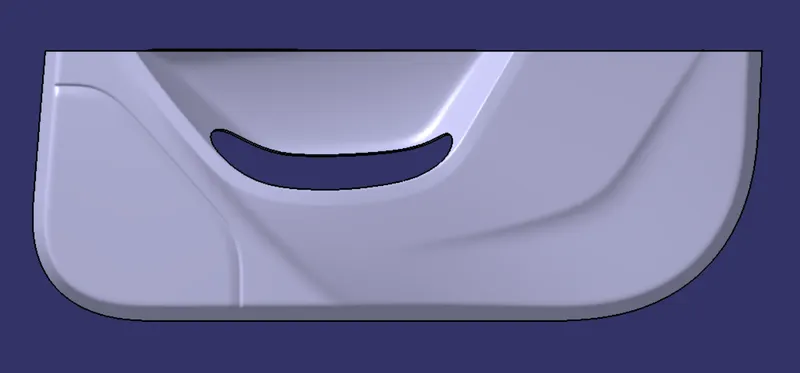
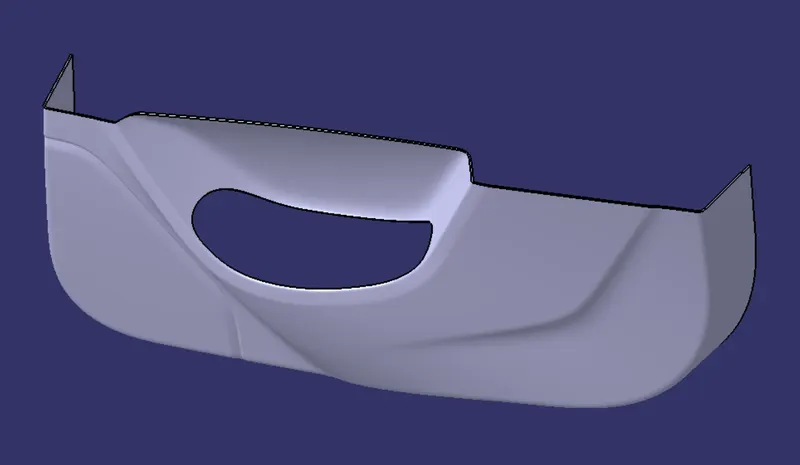
Following Class-A surface has been provided to design the door trim lower plastic component.
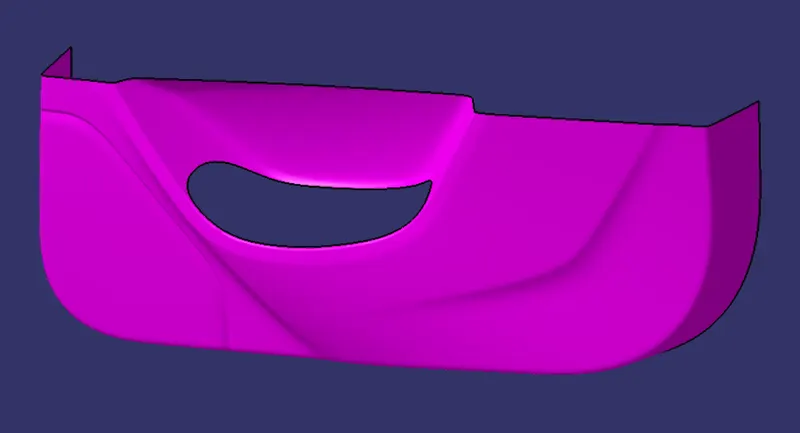
- First of all point is created at the center of the surface
- Intersecting curves are created of Class-A surfaces.
- Line is created in the verticle direction from the center. This line act as a Tooling direction for this component.
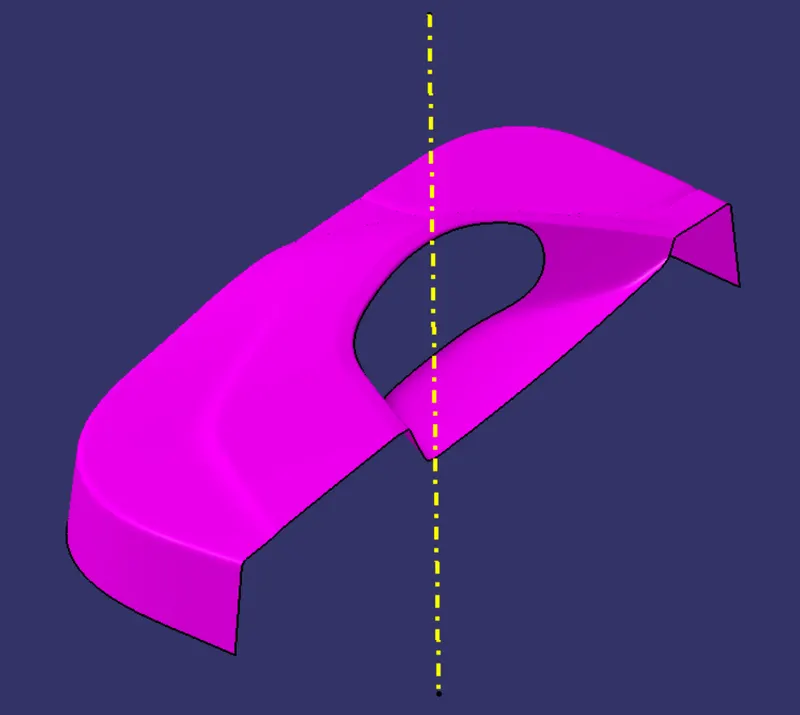
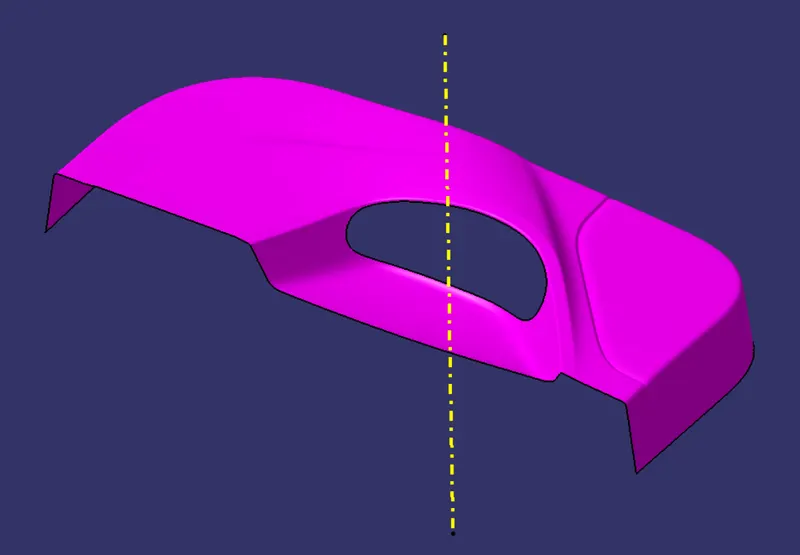
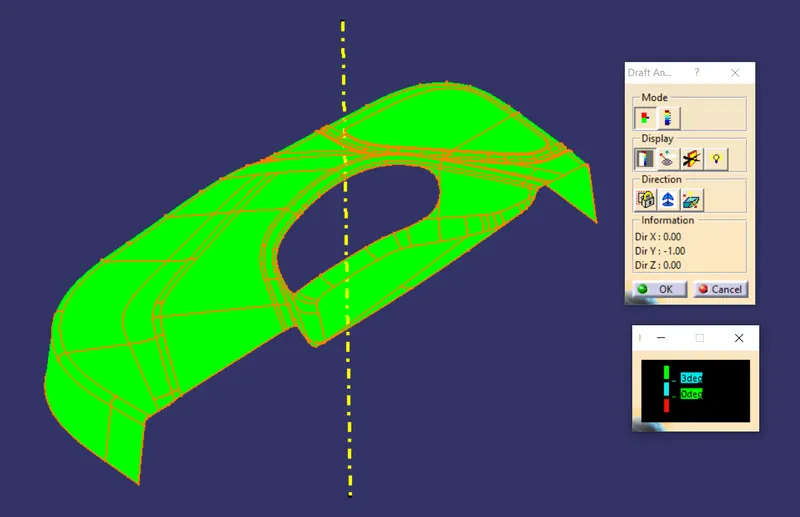
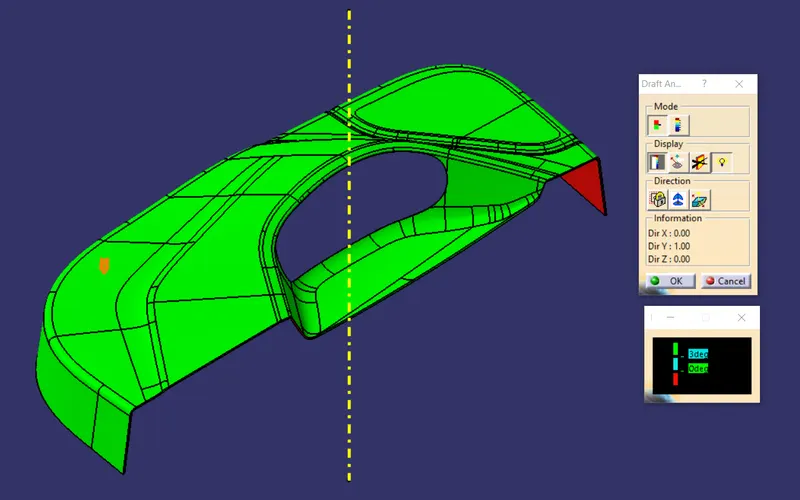
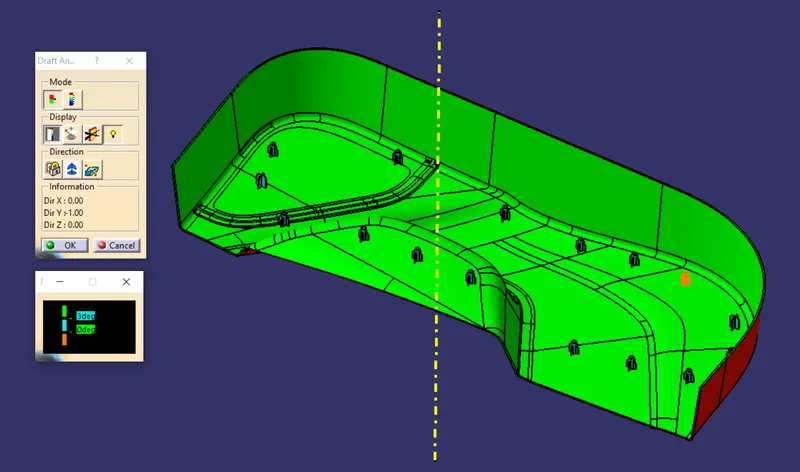
Draft Analysis of Class-A Surface :-
B-Surface :-
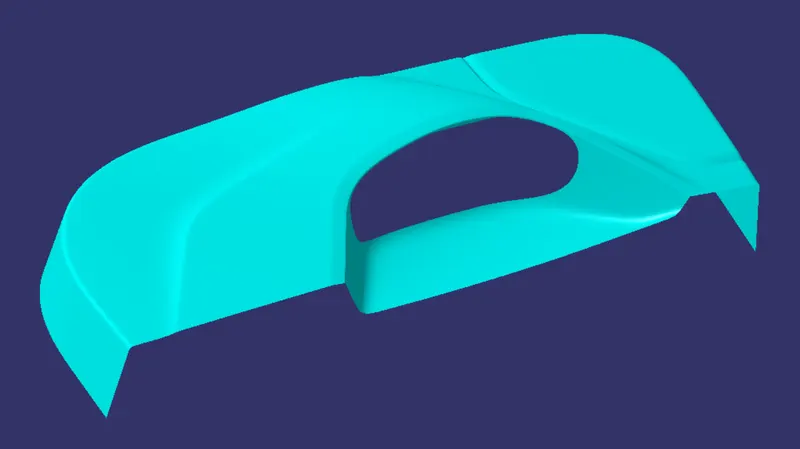
Class B-Surface is extracted from the A-surface and it is offsetted by 2.5mm in downward direction.
C-Surface :-
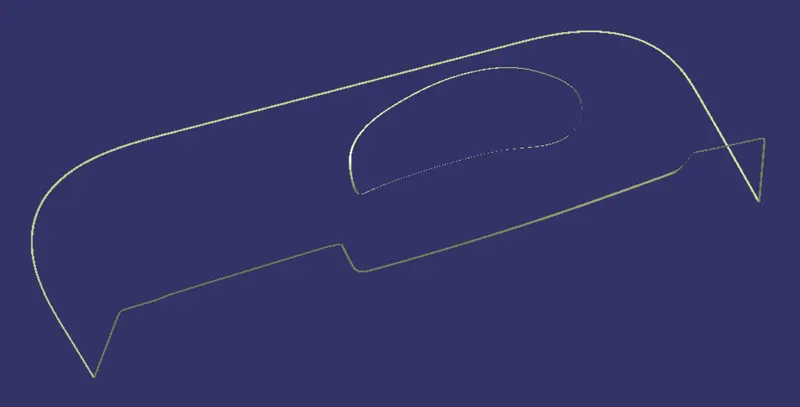
C-Surface connects the class A-Surface and B-Surface. It is created using Sweep command. Boundry of the class A-Surface is swept along the tooling direction.
Trim Surface :-
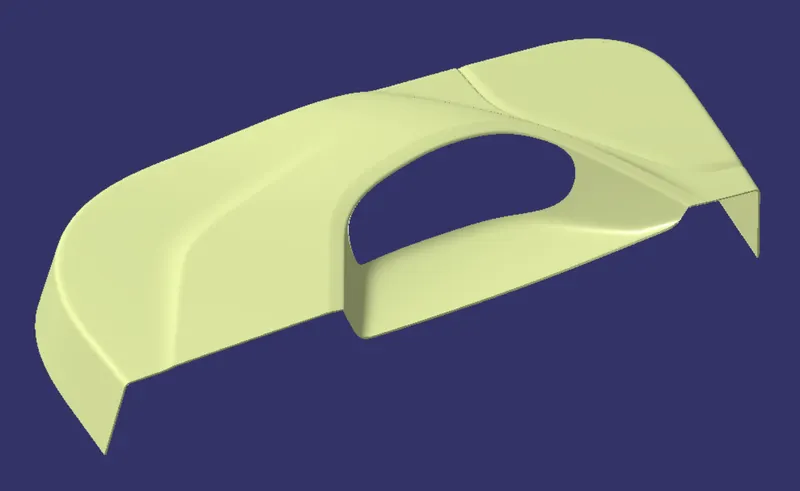
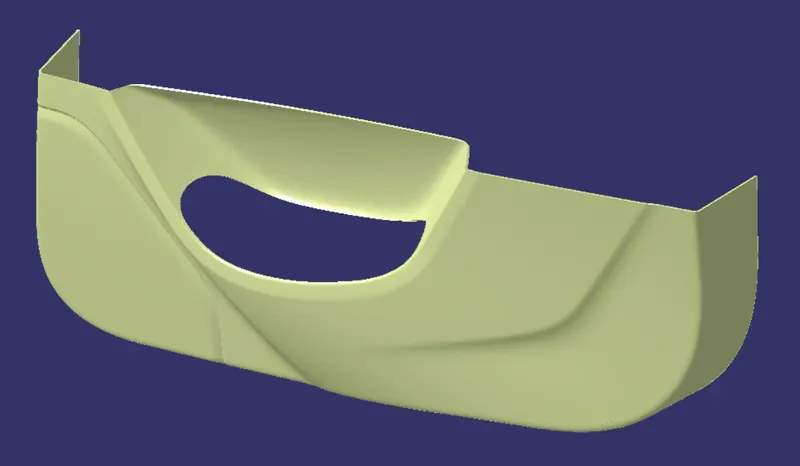
C-Surface is trimmed along the B-Surface then it is joined to the A-Surface.
Final Solid Body :-
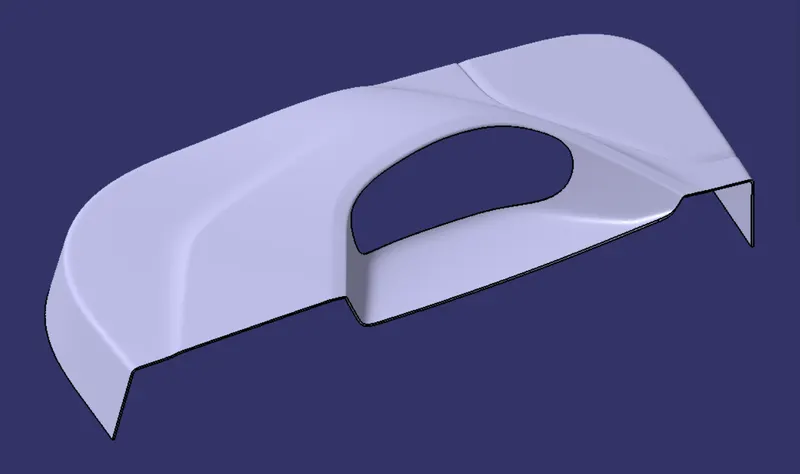
Heat Stakes and Locators Design :-
There are 12 degree of freedom of a work piece i.e., movement about negative and positive axis and clockwise and anti-clockwise rotation about the three axis.
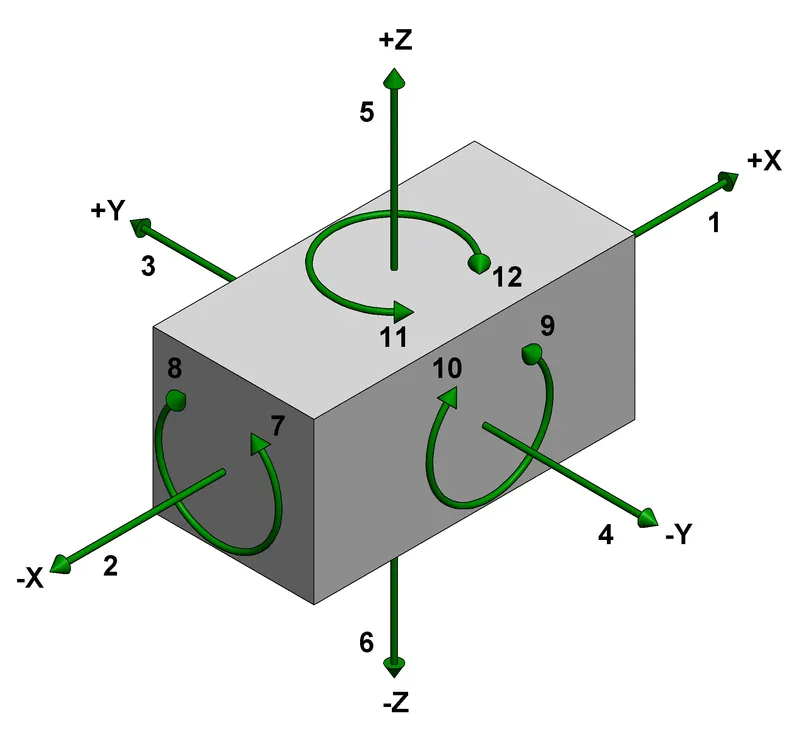
The 3-2-1 principle of location (six point location principle) is used to constrain the movement of workpiece along the three axes XX, YY, and ZZ.
Locators :-
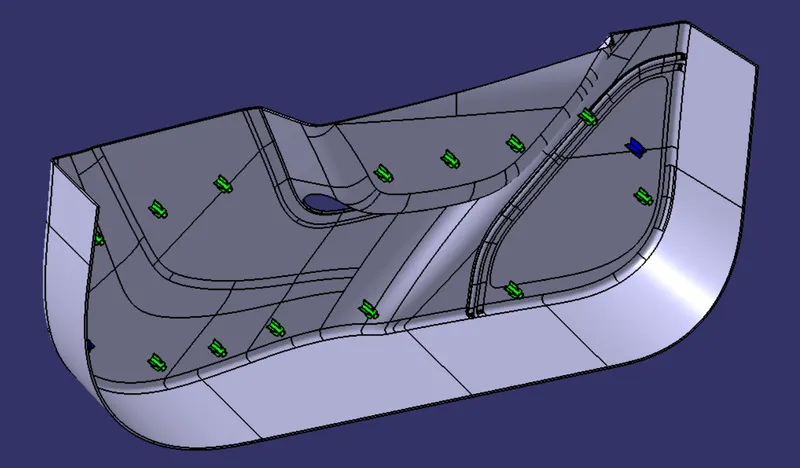
Locators are used to establish and maintain the position of a component with respect to other part.
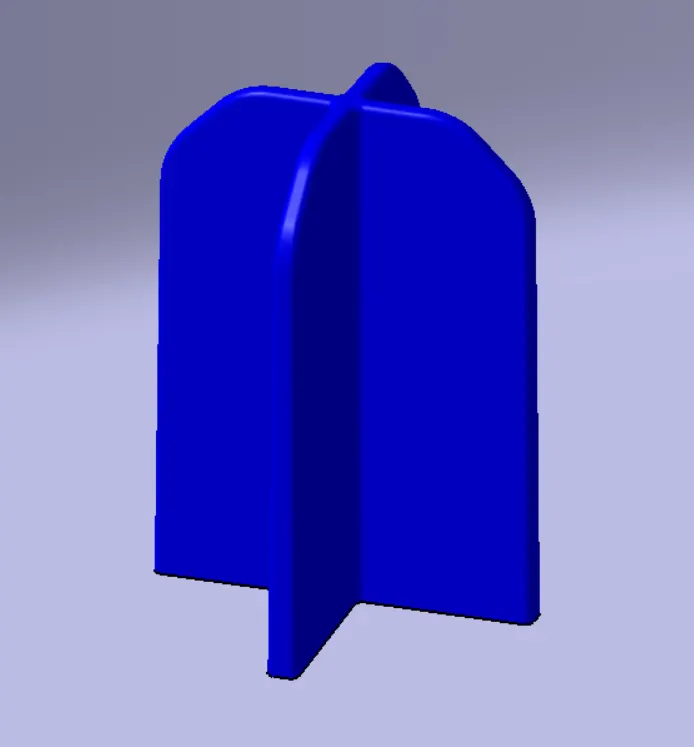
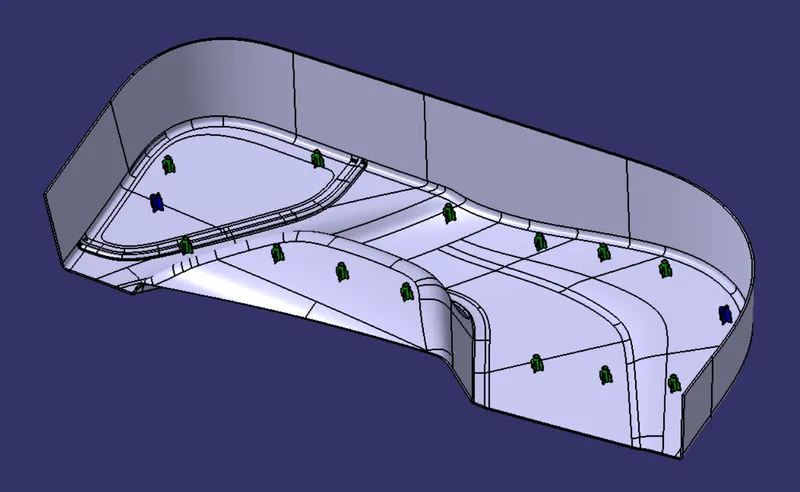
Heat stakes :-
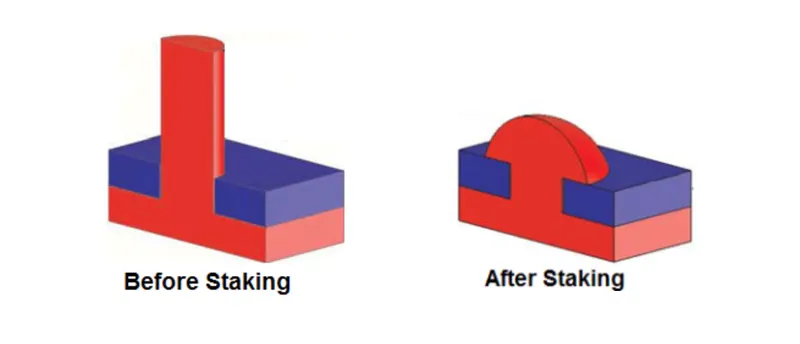
Heat staking also known as thermoplastic staking is the process of joining two dissimilar materials together. In heat staking we use local heating and cooling to raise the temperature of plastic components and allow plastic reforming to be carried out.
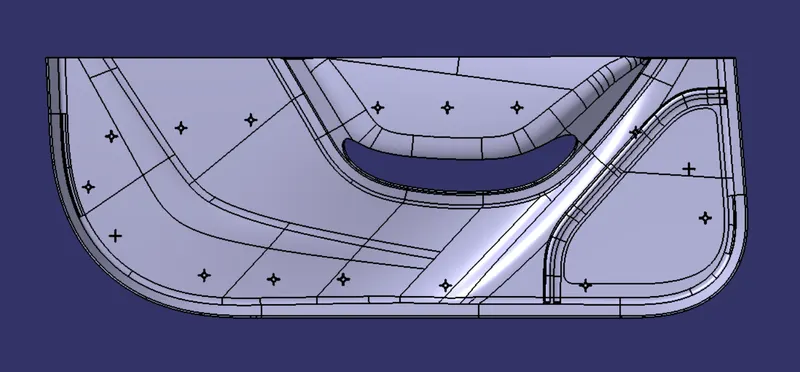
Draft Analysis :-
- Draft angles are tapers on part faces that help them eject from the mold properly. They are calculated as a degree measurement from the vertical axis of a mold, and they help account for the fact that injection molded parts shrink as they cool.
- Without a draft angle, parts are more likely to stick to the mold and warp or break when they’re removed. Draft angles help reduce friction between the finished part and the side of the mold.
- Draft analysis is performed based on colour ranges identifying zones on the analyzed element where the deviation from the draft direction at any point, corresponds to specified values. Minimum draft angle is considered as 3 degree.
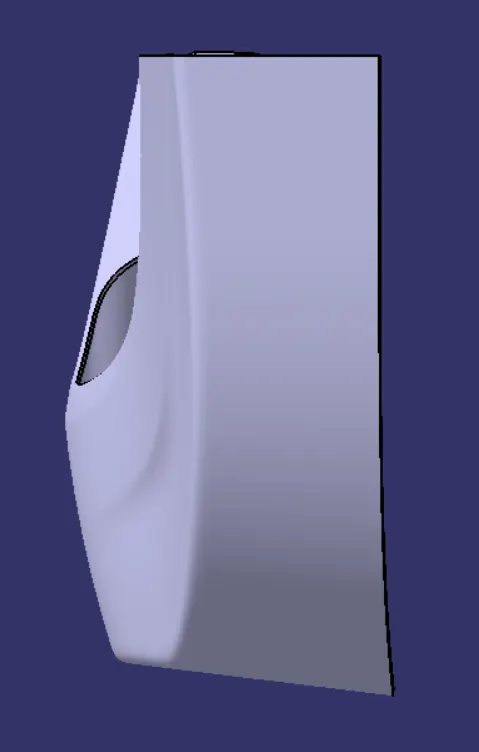
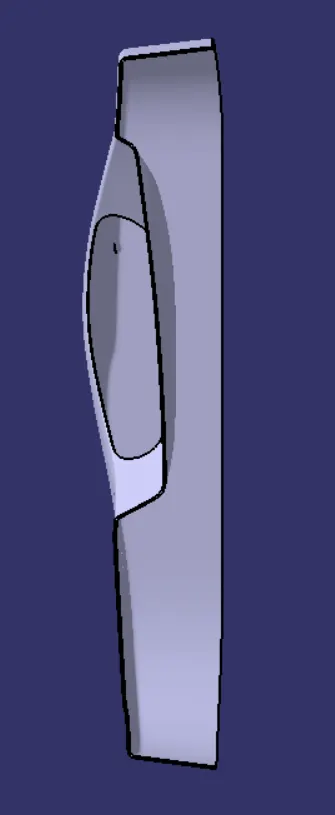
Views of Model
Front View :-
Top View :-
Left Side View :-
Isometric View :-
Conclusion :-
Thus the Door Trim lower with engineering features has been designed using the given class-A surface.