Week 9 - Project 1 - Door Trim Lower with Engineering Features
DOOR TRIM LOWER WITH ENGINEERING FEATURES
AIM; DESIGN A DOOR TRIM LOWER WITH ENGINEERING FEATURES
OBJECTIVE
The main objective of the project is to design a door trim lower from the given class A surface and gives engineering features like heat stakes and locators and finally performs draft analysis on it.
TOOLING AXIS CREATION
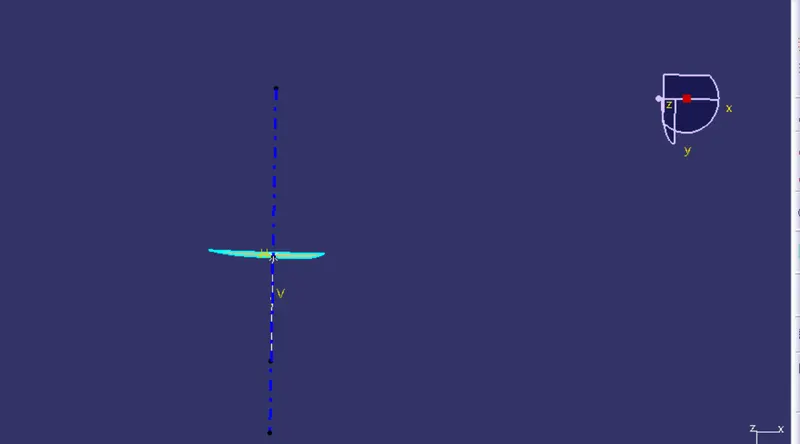
- Tooling axis is the direction in which the mold opens , creation of tooling axis is one of basic step we have to done before starting design.
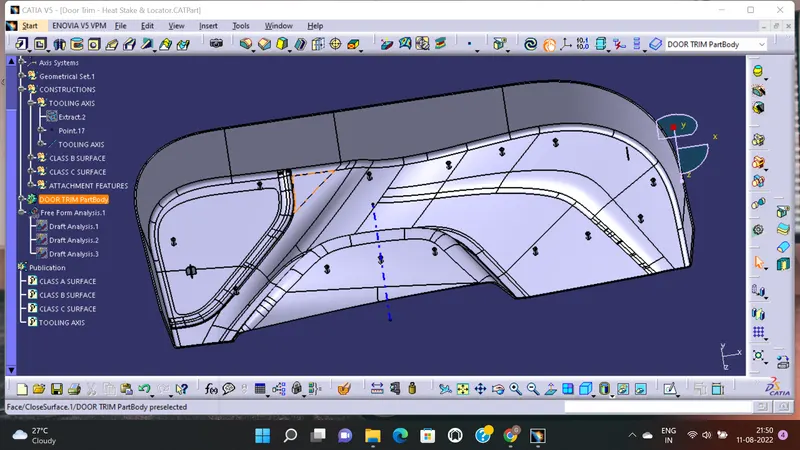
- For the creation of tooling axis, first extracted a flat surface from the given class A surface, then created a point on it.
- The by using that point tooling axis is created by surface method.
- After that tooling axis is published and start draft analysis using that tooling axis on class A surface.
DRAFT ANALYSIS
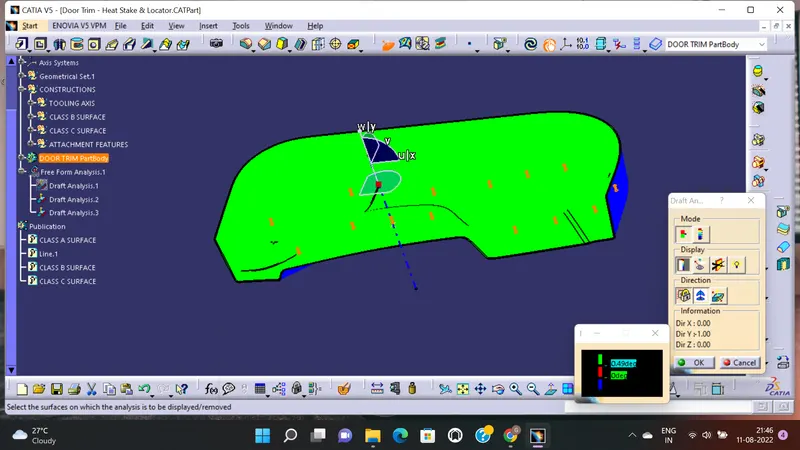
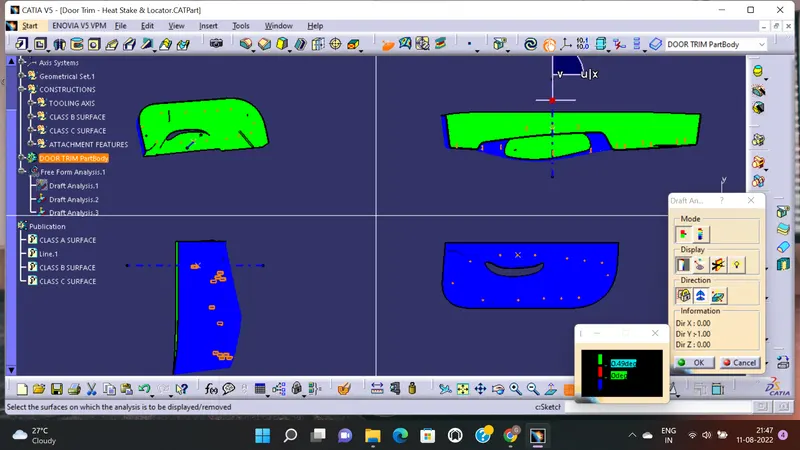
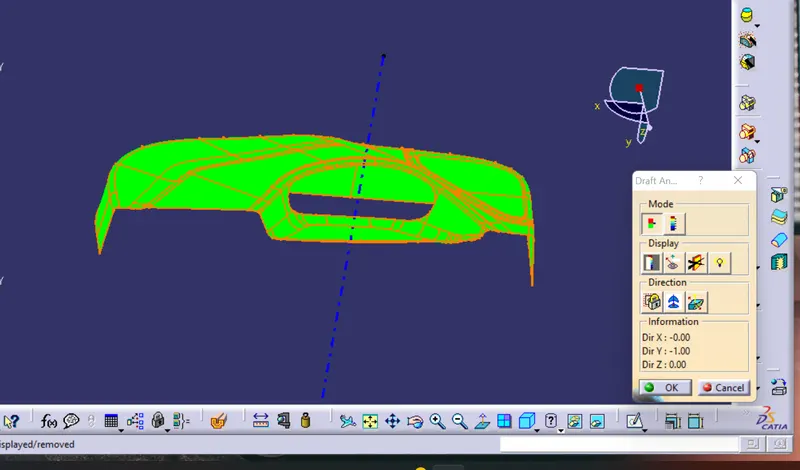
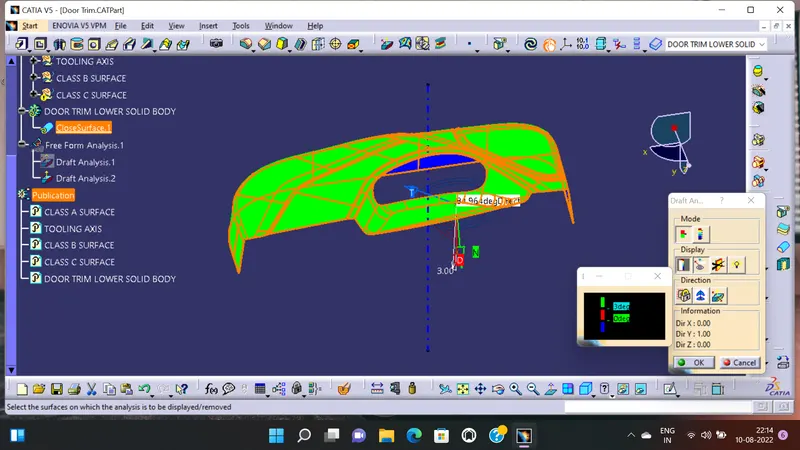
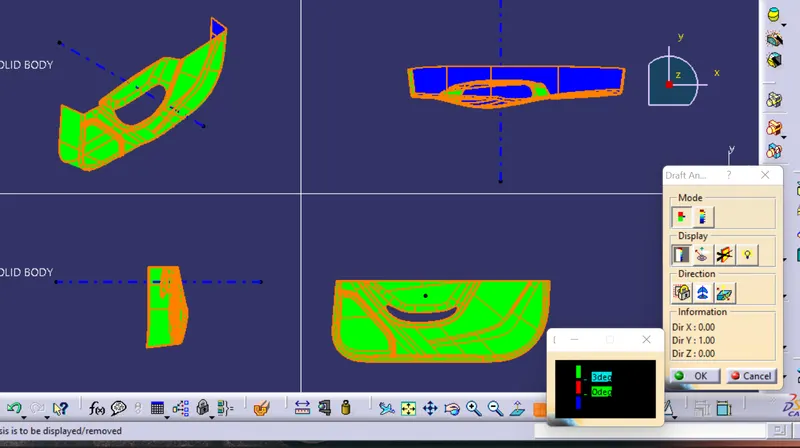
- Draft analysis is doing to a surface is to check whether the surface is designed correct or it satisfies the industrial standards. As per the industrial standards the nominal draft angle is 3 deg , but in some cases a min of .5 deg and max of 7 deg are also used , in this project we used .5 deg for the heat stakes and the locators.
- The first analysis is done before the design starts here the class A surface is analysed, after that the next analysis is done after the creation of first part body in this project a third analysis is done after giving all the engineering features.
- Some portions are not satisfied the min draft angle when checked after the creation of the main base body , that is because the class A surface is not proper.
- Steps involved in draft analysis are at the first view mode is changed to the customised material mode, then the compass in the draft analysis tool is placed along with the toooling axis and select the body which want to analys , from there we can measure the draft angle at different surface through colour ranges, here green , blue , red are used.
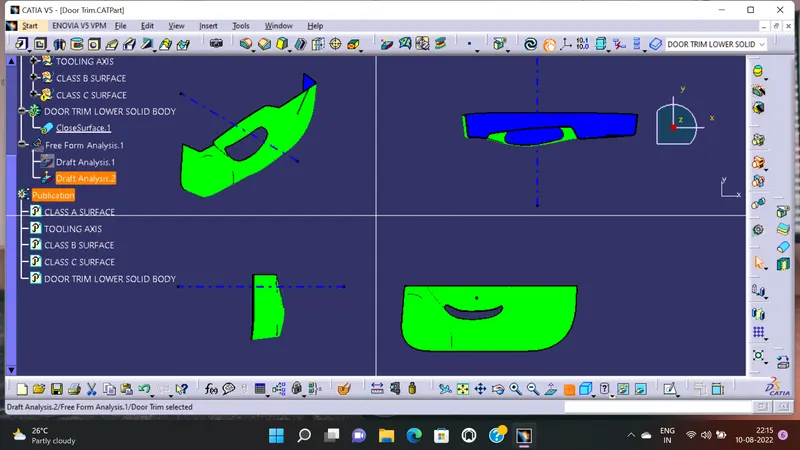
DRAFT ANALYSIS AFTER GIVING ATTACHMENT FEATURES