Week 9 - Project 1 - Door Applique Design with Engineering Features
AIM:
Create the Door Applique Plastic component through the given Class-A surface. To begin with, the tooling axis for the given Class-A Surface should be created meeting the requirements of the draft angle and at the end perform the Draft analysis on the model.Create the Heat Stakes and the locators considering the design rules mentioned in the video for the door applique.
The thickness of the component is 2.5 mm
Creation of Tool Direction
Tooling axis defines the mold or core and cavity direction,we should create the tooling axis in such a way so that it should cover most of features,holes and geometry.we will check the suitable direction of the tooling axis through the visual inspection along x,y,z axis.
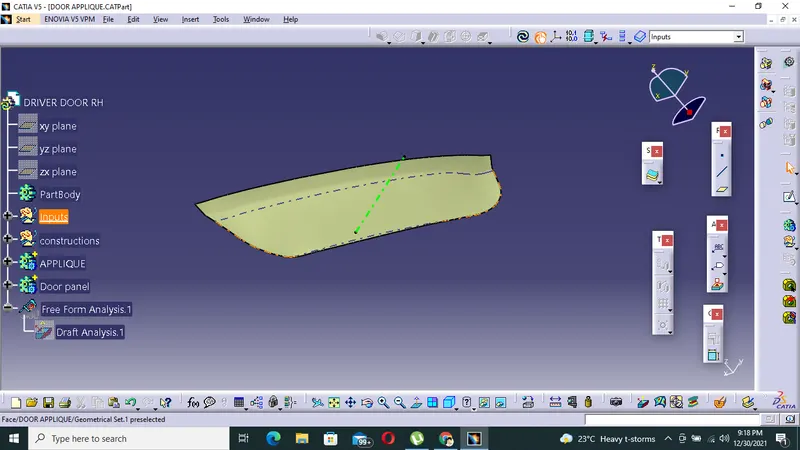
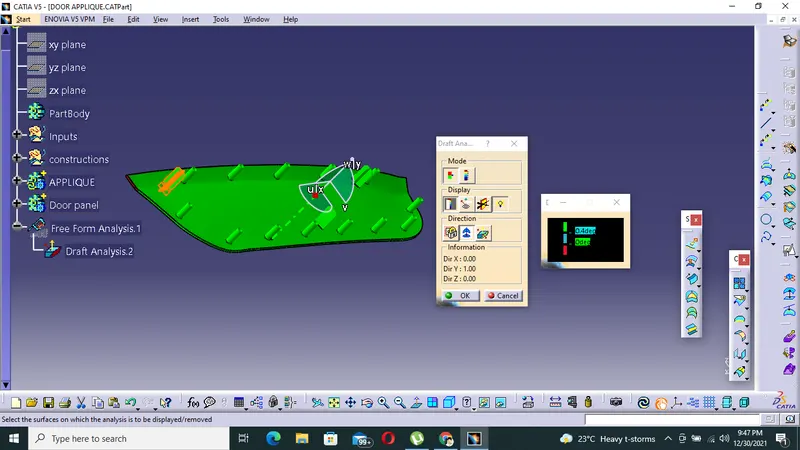
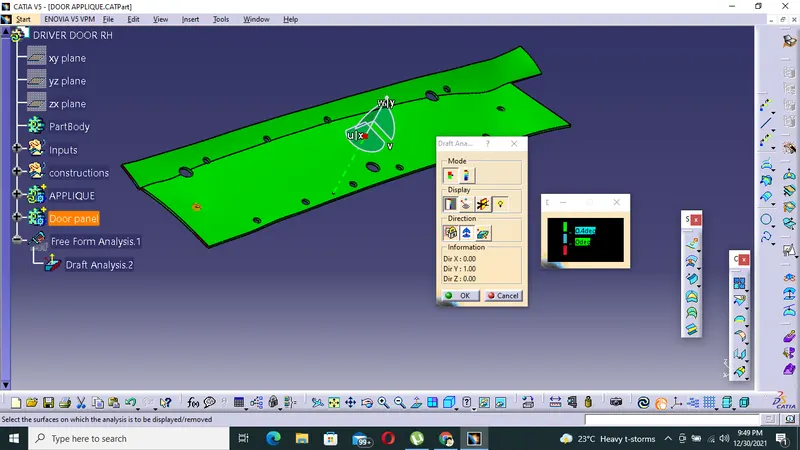
Procedure for Draft analysis
- By changing the view mode to custom view parameters-material mode then feature draft analysis is enabled
- Then the compass was activated and placed with the tooling axis by dragging the red pointer and then locking it
- The nominal value will be 3 degree draft angle and checked for component's draft angle
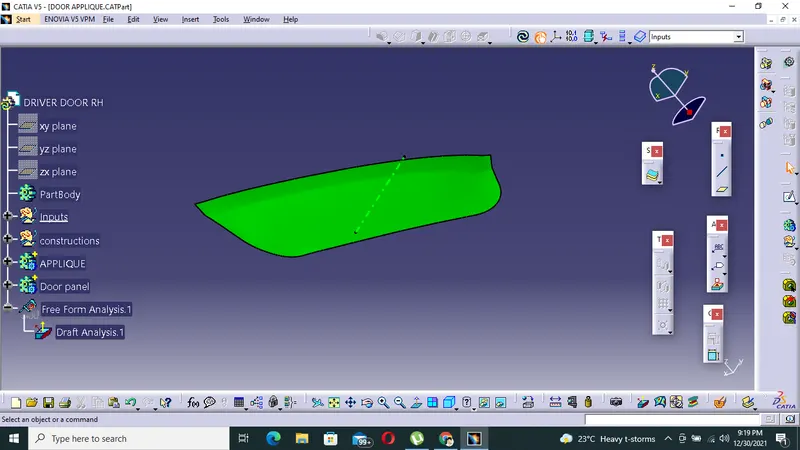
- The green colour area show it statisfies the 3 degree draft angle.
The driver door parts are converted into solid component by using thick surface command
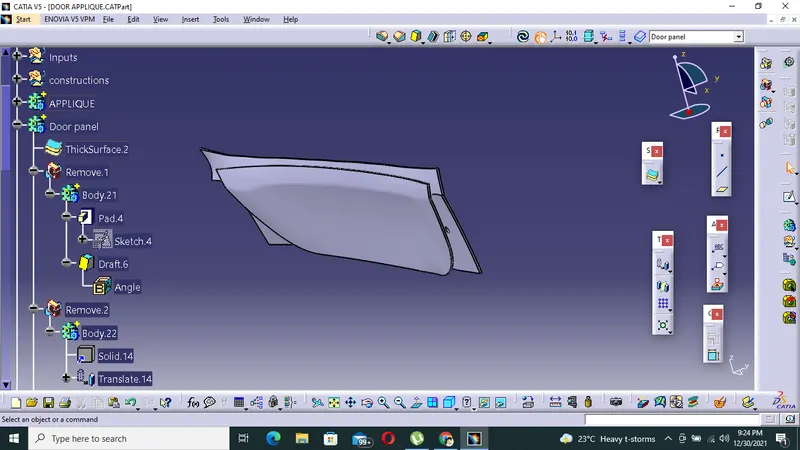
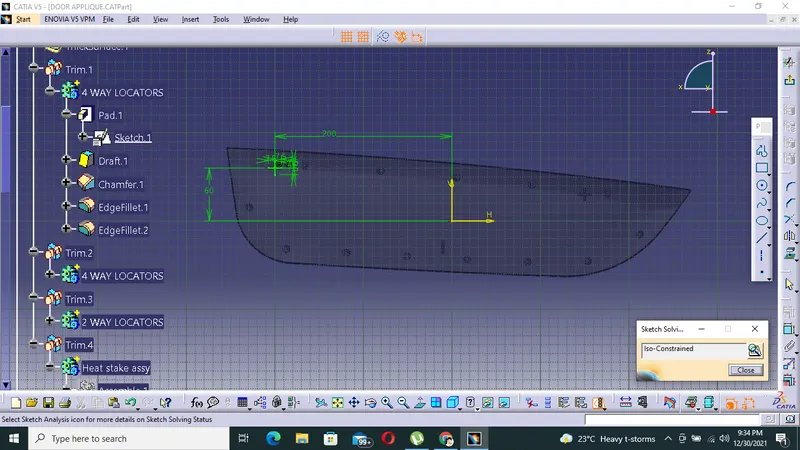
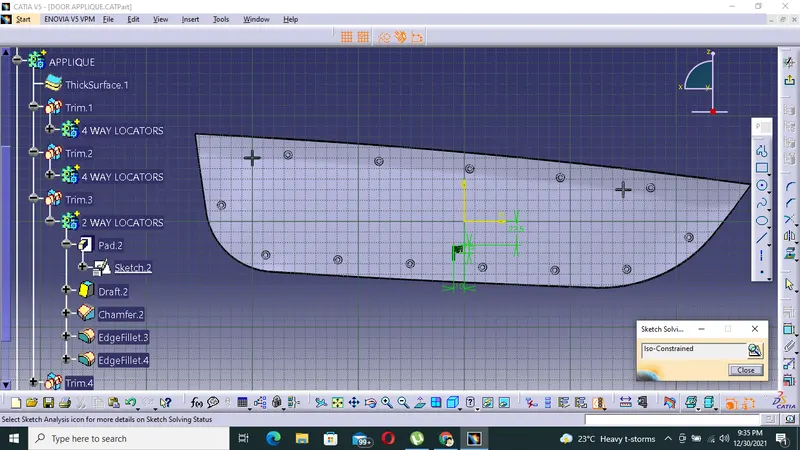
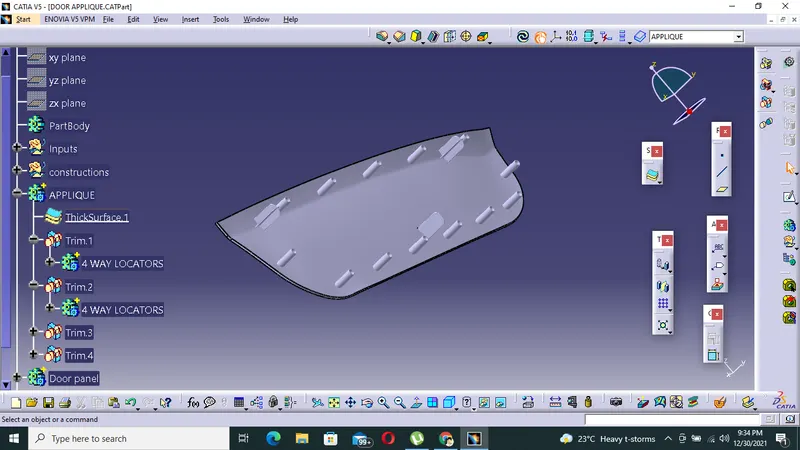
Adding the heat stakes and locators in door applique:
3-2-1 Principle:
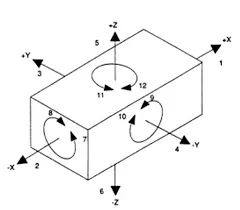
4 way and 2 way locators:
- 4 way means prevent movement at 2 axis on the plane
- 2 way means prevent movement only at 1 axis on the plane
HEAT STAKING
Heat staking also known as thermoplastic staking is the process of joining two dissimilar materials together. In heat staking we use local heating and cooling to raise the temperature of plastic components and allow plastic reforming to be carried out. This reforming can be used in a wide variety of applications.
PROCEDURE:
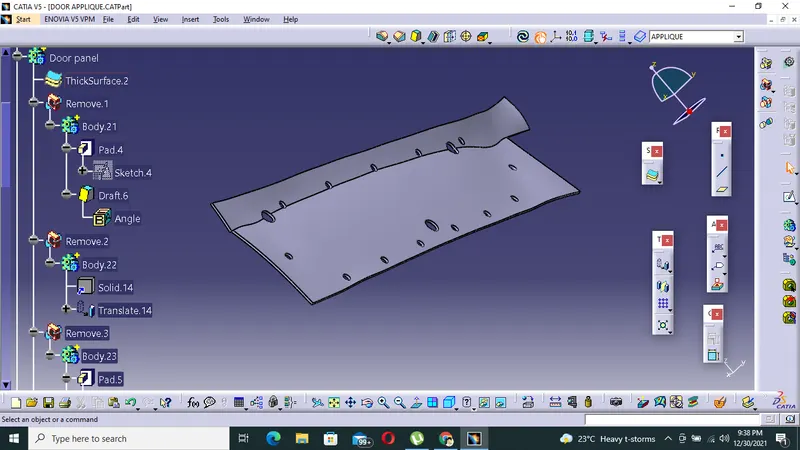
HEAT STAKES COUNTER CLEARANCE:
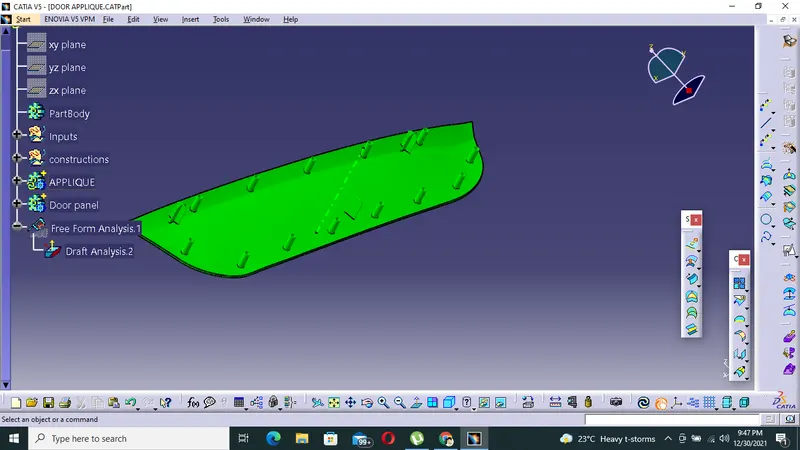
FINAL COMPONENT:
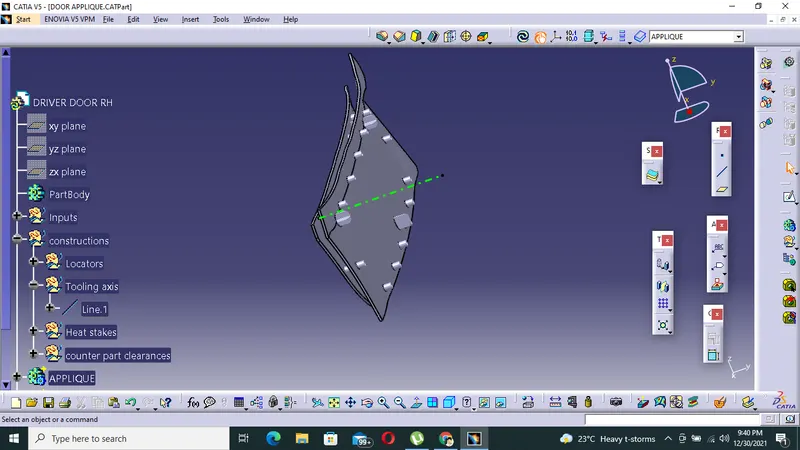
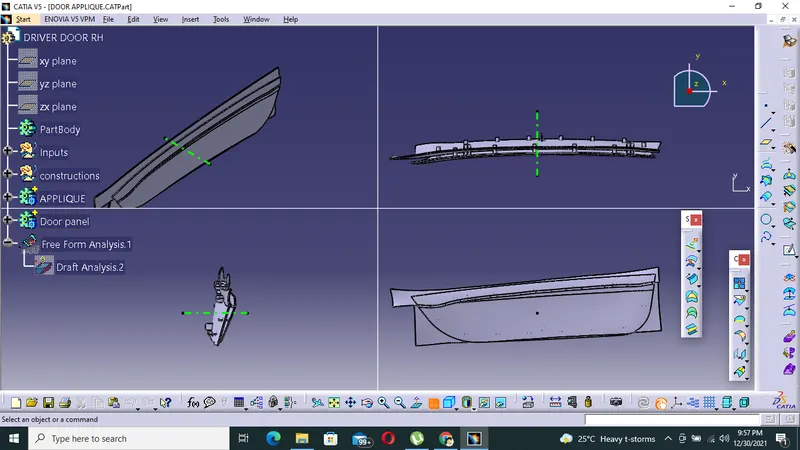
DRAFT ANALYSIS OF THE FINAL COMPONENT: