Week 9 - Project 1 - Door Applique Design with Engineering Features
AIM:-
- To create the door applique with engineering features through the given Class-A surface.
- Create the heat stake and locator by considering the design rule for the door applique.
OBJECTIVE:-
Create the door applique plastic component through the given Class-A surface. To begin with, the tooling axis for the given Class-A surface should be created meeting the requirement of the draft angle and at the end perform the draft analysis on the model. Create the heat stake and the locator considering the design rule for the door applique.
Engineering features:-
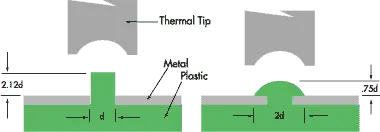
Heat stake:- In manufacturing the plastic components, it is necessary to join a thermoplastic ta a part of different material, whether it can be metal or other material
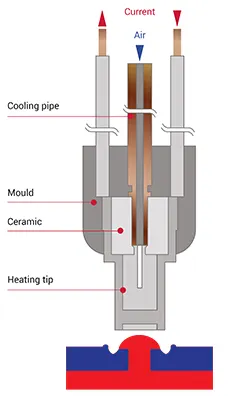
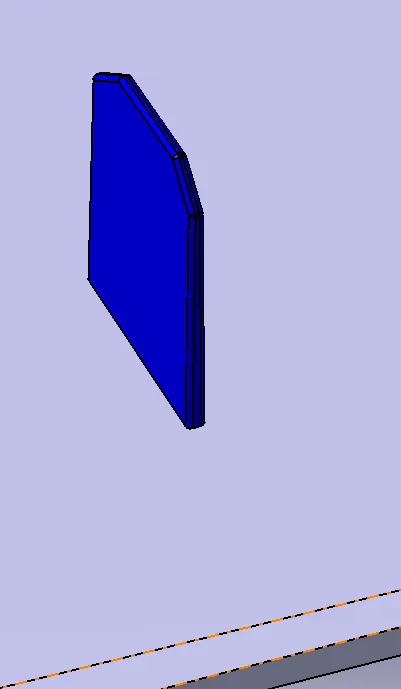
Two-way and four-way locater:-
Two-way locator pin restricts motion along one direction (2 degrees of freedom)
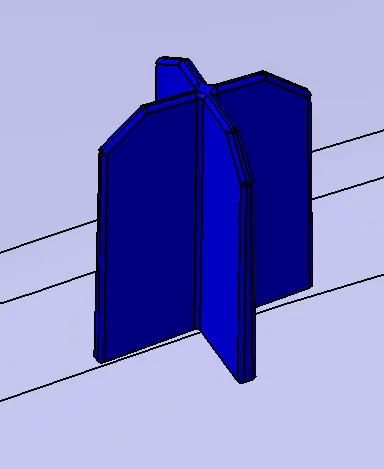
Four-way locator pin restricts motion along 2 directions (4 degrees of freedom)
CONSTRUCTION:-
Tooling axis -
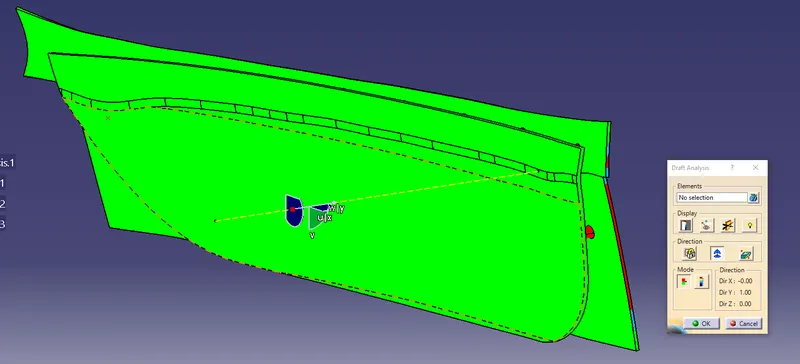
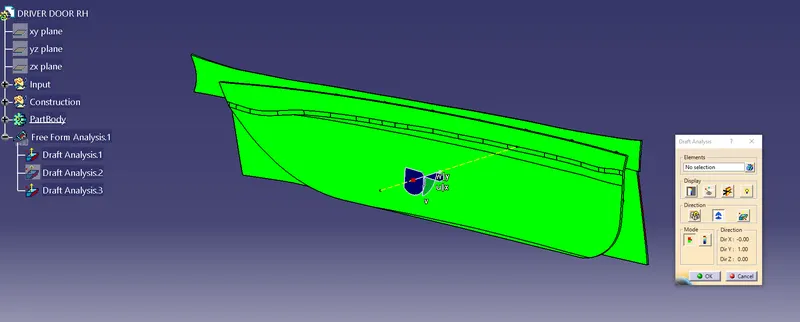
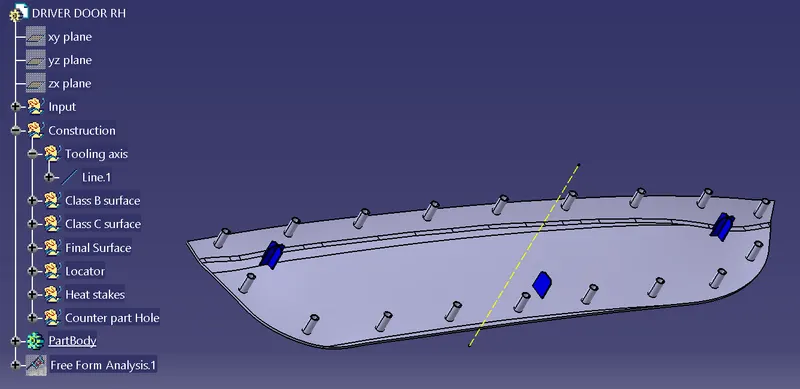
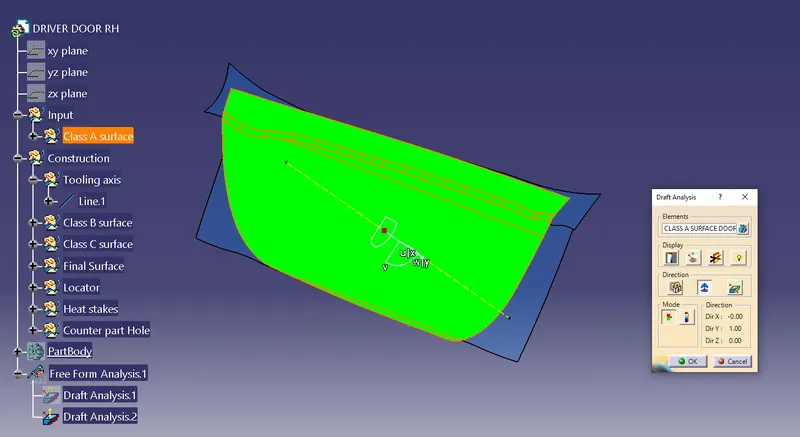
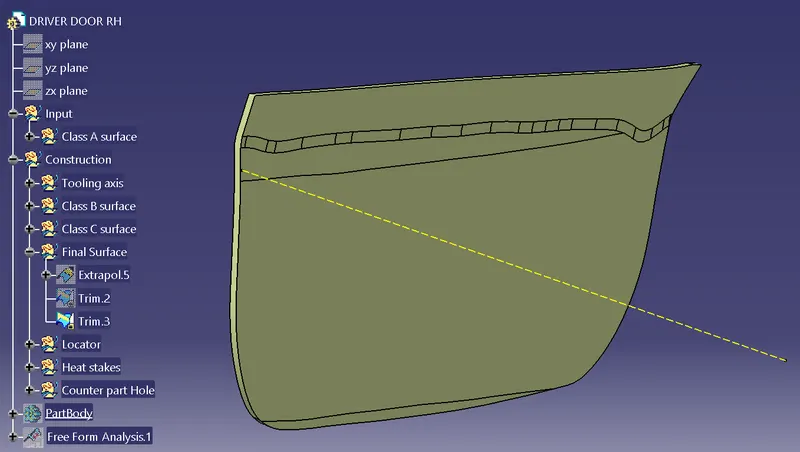
Create the tooling axis by taking the center of the door applique and the create a line the is perpendicular to the surface. This line is the tooling axis of the door applique. The tooling axis is used to check the draft analysis of the surface.
Class B surface -
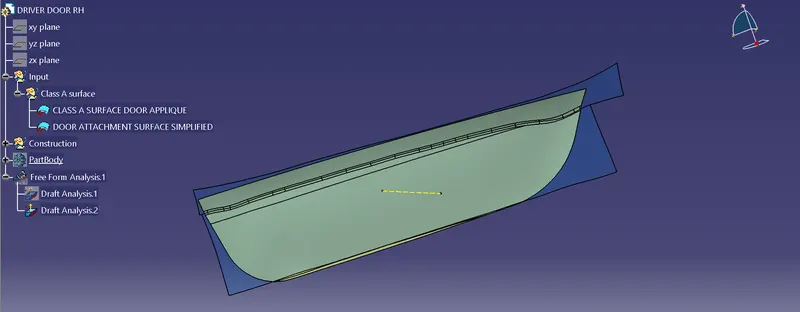
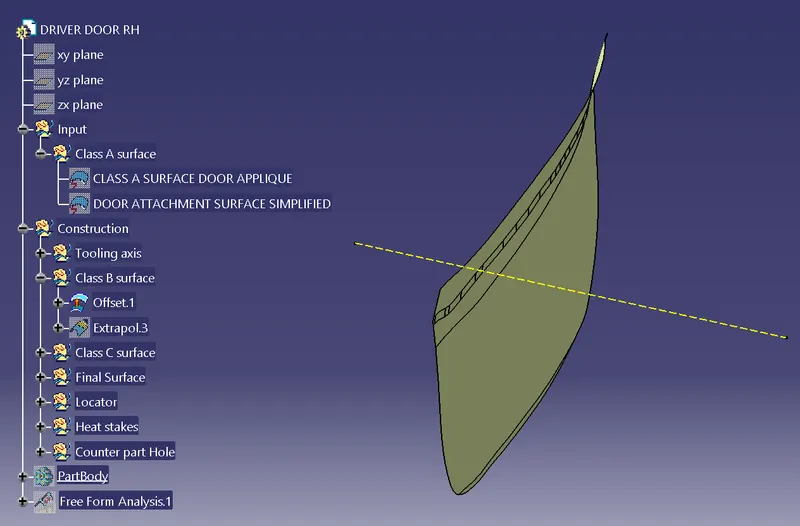
Class B surface is created by offsetting the Class A surface maximum of 3 mm. Depending on the customer the value of offset can be changed.
Class C surface -
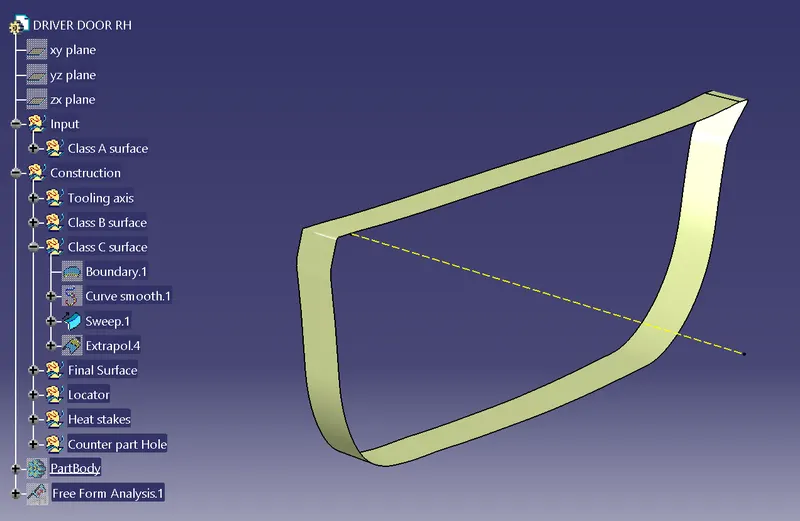
Create the sweep in the class A surface. The sweep value should be 3 degrees depending on the tooling axis.
Below is the image of all 3 surfaces Class-A, Class-B, and Class C surface.
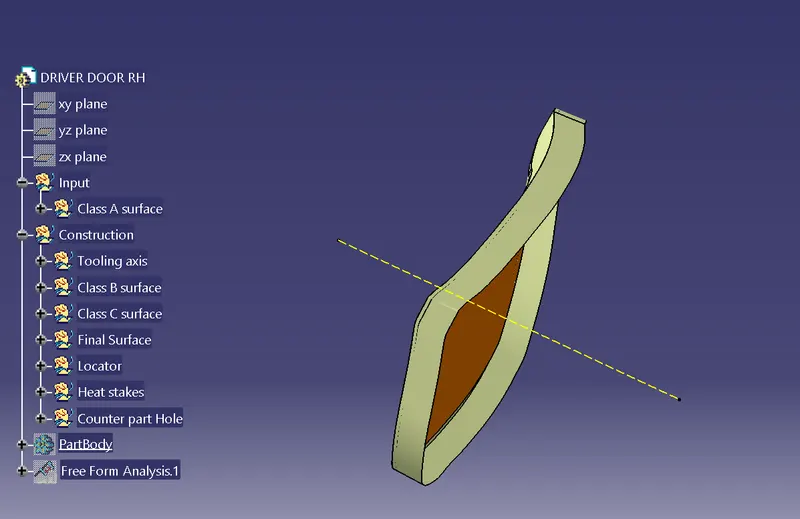
Finally trim all the Class A, Class B, and Class C surfaces together.
Construction of Heat stake and locator pin:-
Heat stake -
Heat stake is used to fix 2 different materials together. These are the two types of heat stakes.
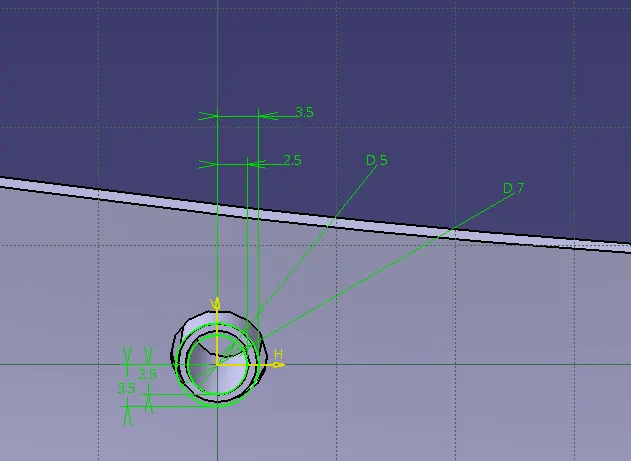
Sketch of Heat stake
Then pad the sketch with the pad tool and give a 0.5-degree draft value concerning the tooling axis.
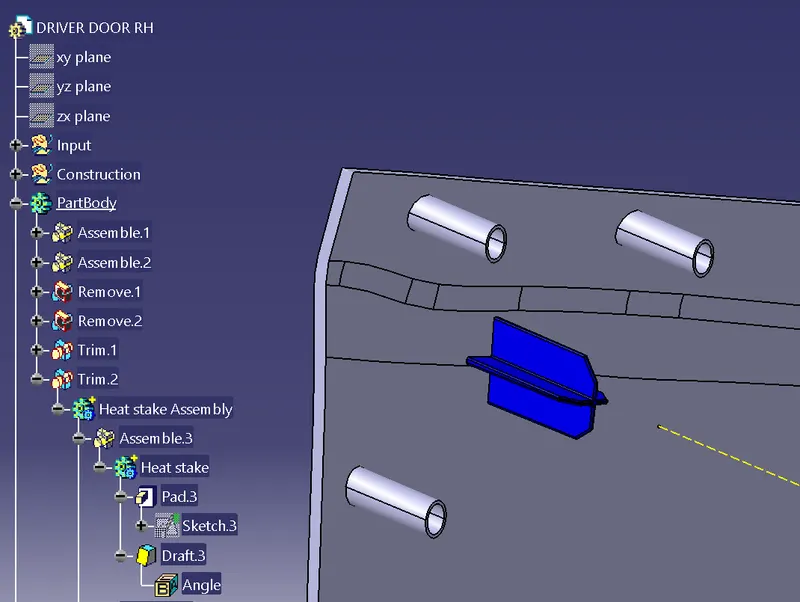
Then translate the white state with help of point to point translate.
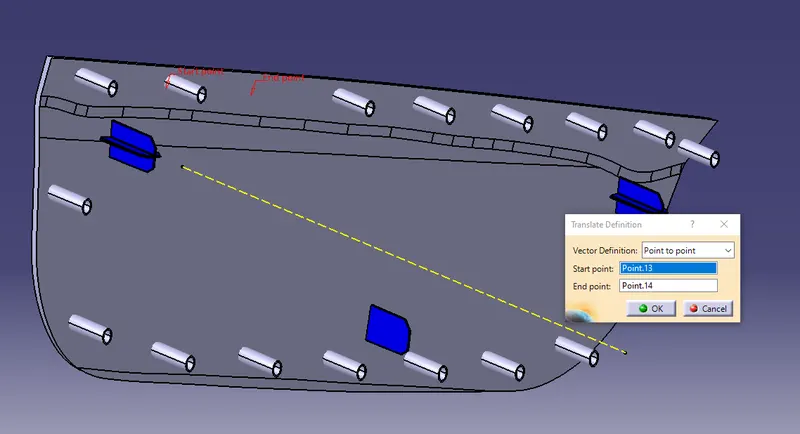
Locator pin -
2-way locator
First, create a sketch of the 2-way locator.
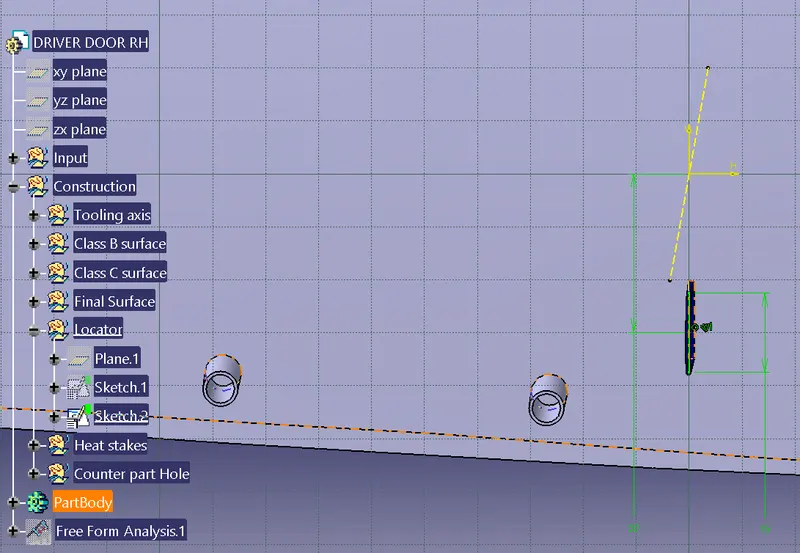
Then pad the sketch with the pad tool and give a 0.5-degree draft value concerning the tooling axis.
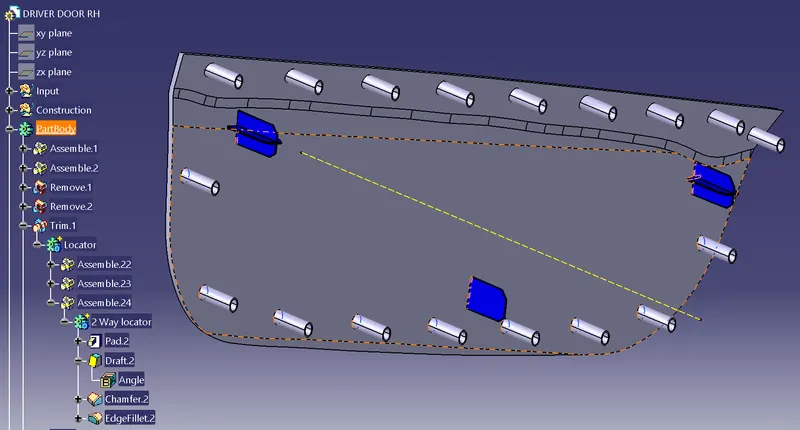
Finally, give the Chamfer and fillet value of the 2-way locator.
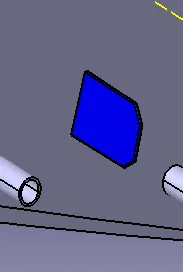
4-way locator
First, create a sketch of the 4-way locator.
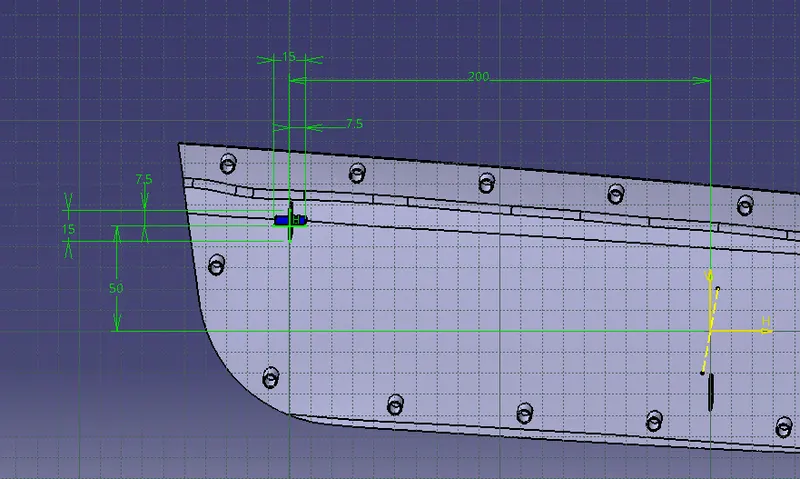
Then pad the sketch with the pad tool and give a 0.5-degree draft value concerning the tooling axis.
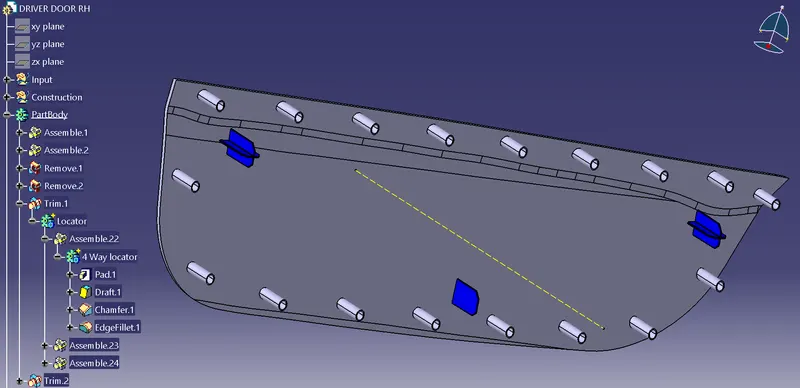
Finally, give the Chamfer and fillet value of the 2-way locator.
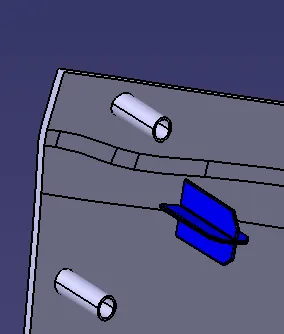
Counterpart hole-
Now create the counterpart hole for the heat stoke and locator pin
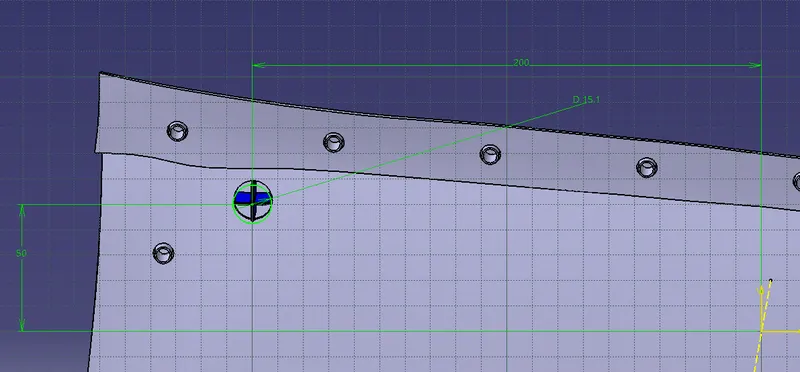
Then pocket the circle and use the boolean operation to remove the surface and create a hole.
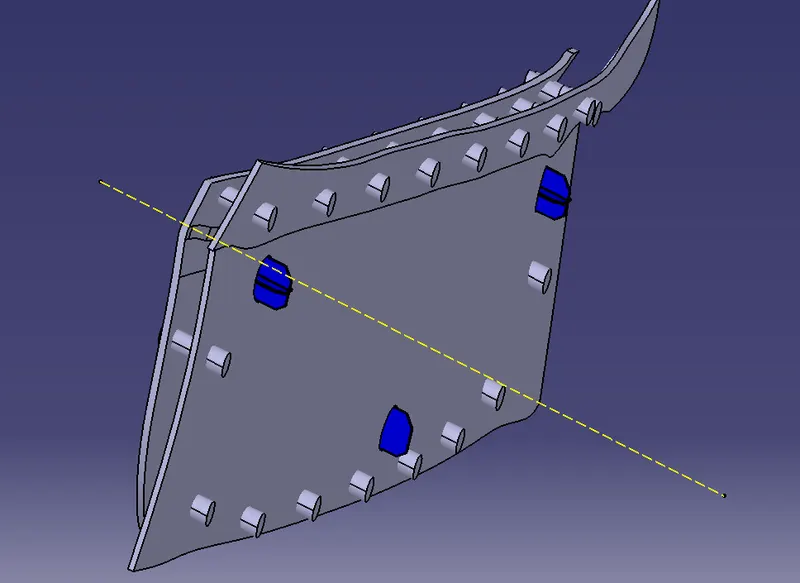
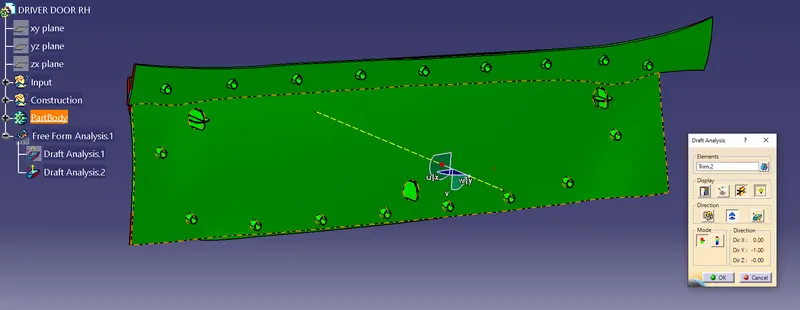
Billow is the image of the final product of the door applique.
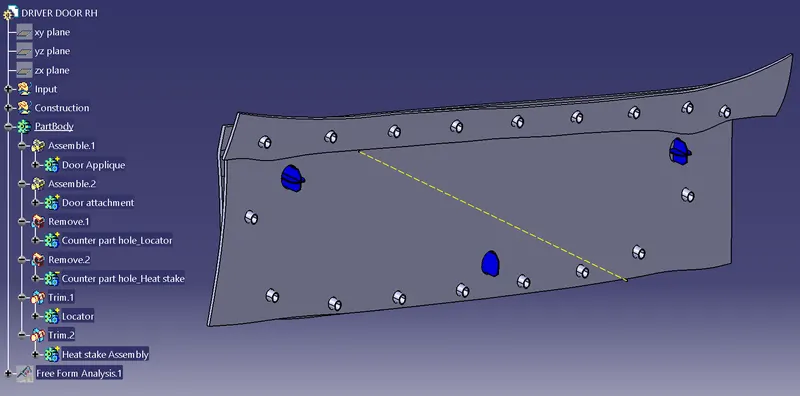
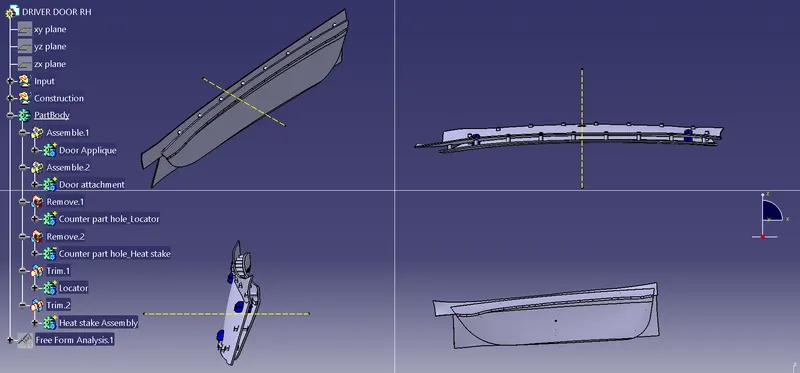
DRAFT ANALYSIS:-
To check the draft analysis put the compass in the tooling axis and then see that the door applique will pass the draft analysis test. the draft analysis test is conducted on the body so that after manufacturing the door applique can come out of the die easily.