Week 9 - Project 1 - Door Applique Design with Engineering Features
Door Applique Design with Engineering Features
The main aim is to create Door Applique solid boady and create Locators and Heatstakes.
Heat Staking:
Heat Stakes are created on the door applique to join the Applique with other door attachments via heat staking process.
Heat staking also known as thermoplastic staking is the process of joining two dissimilar materials together. In heat staking we use local heating and cooling to raise the temperature of plastic components and allow plastic reforming to be carried out. This reforming can be used in a wide variety of applications.
Benefits of this technique include; no vibration damage, no particulates, the ability to stake metalized coated applications and the capability to stake in difficult to access or restricted areas.
Applications for heat staking included:
- Polymer to Polymer to other materials
- Flat head tip welding
- Sealing holes
- Embedding parts
- Polymer to mesh
- Breathable membrane
- Rim Swaging
- Bonding
- Polymer to polymer welding
- Polymer to polymer
Locators:
Two Type of locators are used in Door Applique, 4 way and 2 way Locators.
Locators are placed on the platic panels to arrest the degrees of freedom. A 3-2-1 Locating Principle is used here. Accurate locating of not just one part, but each and every part that is loaded into the fixture is crucial. Any variation in part location on the fixture adds to the dimensional tolerance that must be assigned to the finished parts. Translation and rotational motion along the x,y,z axes are restricted to obtain perfect fixture of body.
Design Approach:
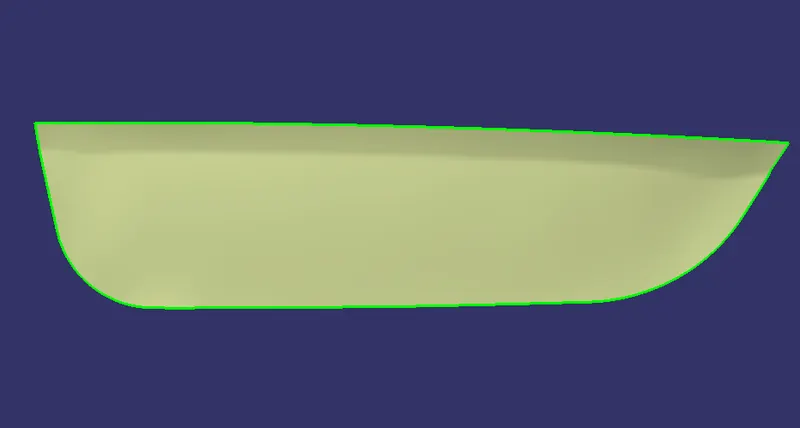
Part Body for Door Applique is to be created, for that class A, B and C surfaces are created. The above image shows the class a surface of door applique which is generally the aesthetic surface.
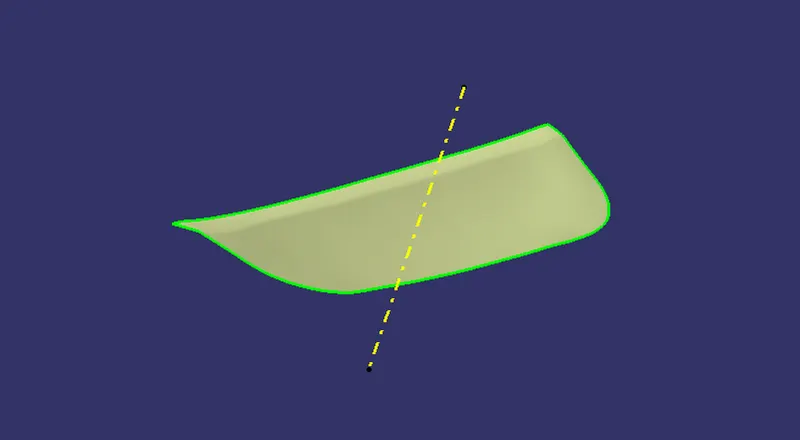
A tooling axis is created from the centre of the class a using the line command.
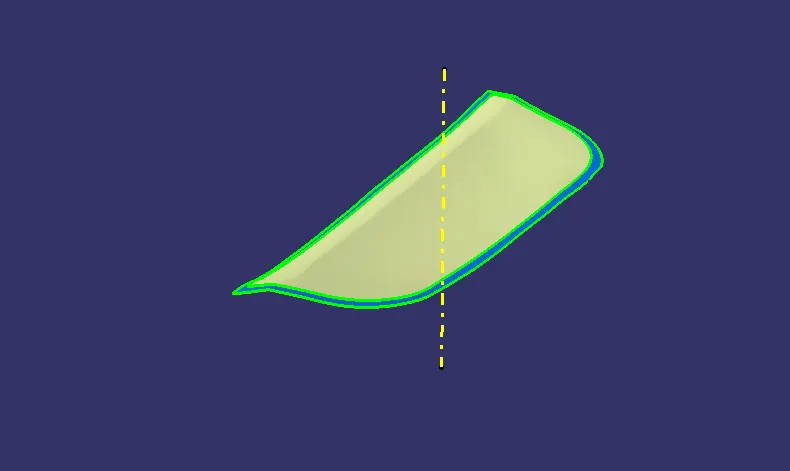
Class B surface is created with offsetting 2.5mm from the class a, the surace highlighted in light blue is the class B surface, all the constructional features are assembled in this section.
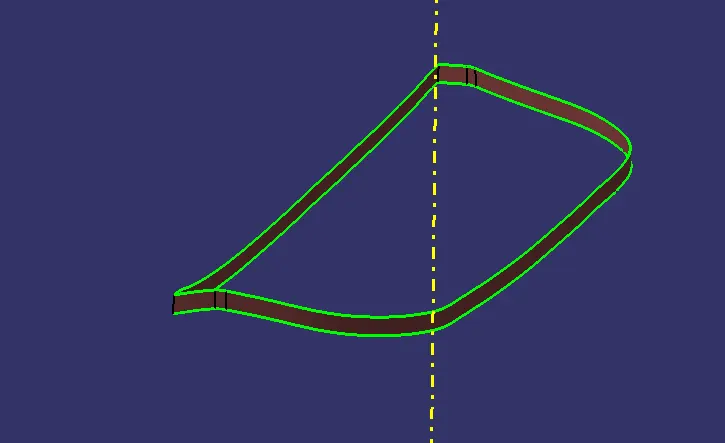
The boundary from class a is swept with a draft angle of 3 deg withrespect to the tooling axis
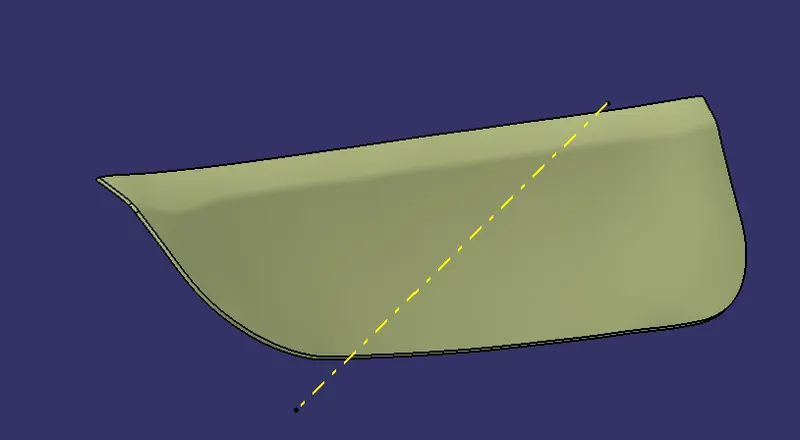
The 3 surfaces are trimmed with each other to obtain final trim, after this the surface is then closed in part design to obtain the door applique part body
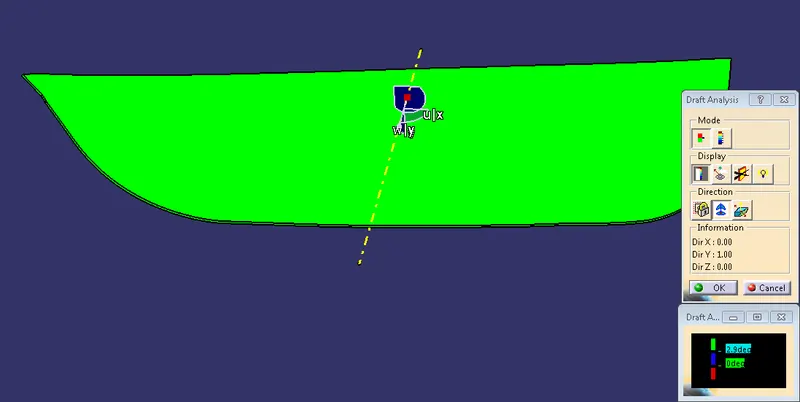
Draft Analysis of the Door Applique shows that the part body has a draft of 3 deg with repsect to the tooling axis. By selecting the compass option and place them on tooling axis and select the part body to obtain the draft analysis via colour code. The above image shows part highlighted in green with 3 deg draft.
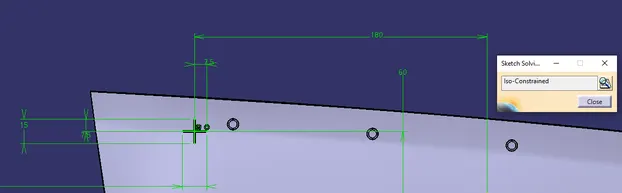
A sketch is created for the 4 way locator and after creating the sketch they are paded with part body
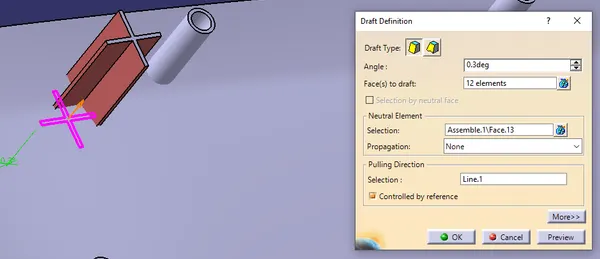
After Pading the locator a 0.3 deg draft is provided with the tooling axis
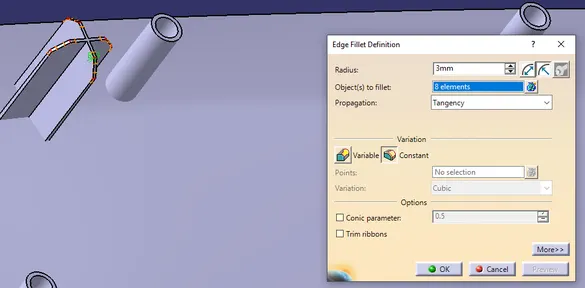
A 3mmx45 deg chamfer is given and edge fillet is provided on the locator, Once the 4 way is created another copy is created and they are translated to the other end of applique.
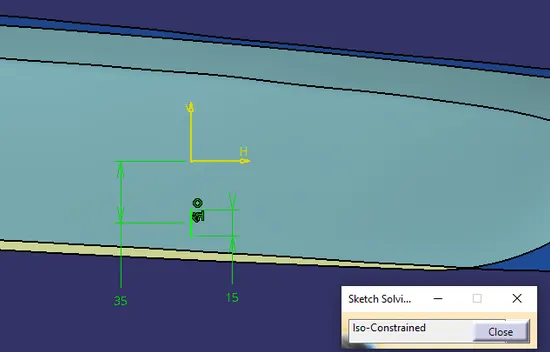
Similarly a sketch is created for the 2 way locator
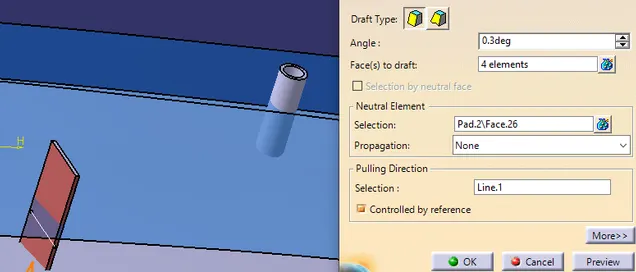
Once the sketch is paded a 0.3 deg draft is given to the locator
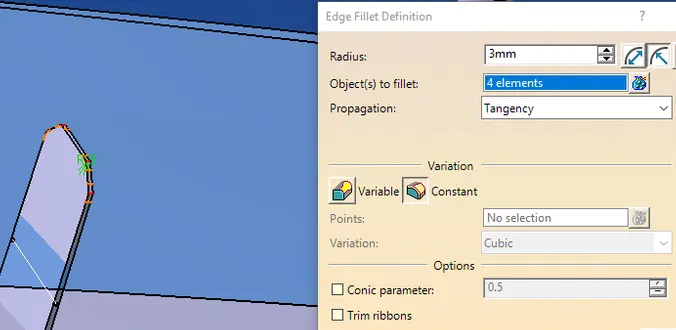
chamfer and Edge fillet values are provided, Once the locators are created they are union trimmed with the applique body.
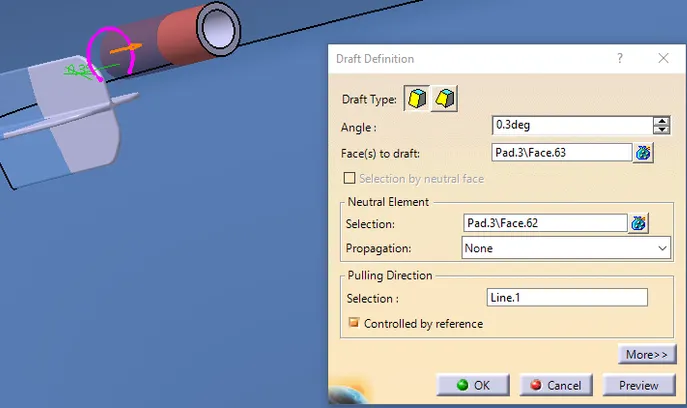
Similarly a sketch is created for heat stakes that is used to assemble applique with door panel, once the sketch is paded draft values are provided
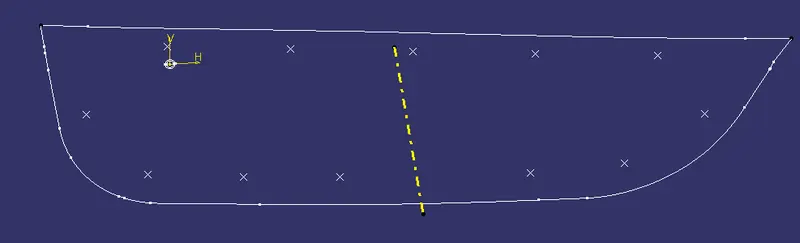
Multiple heat stakes are created from the point references and the above mentioned steps are followed
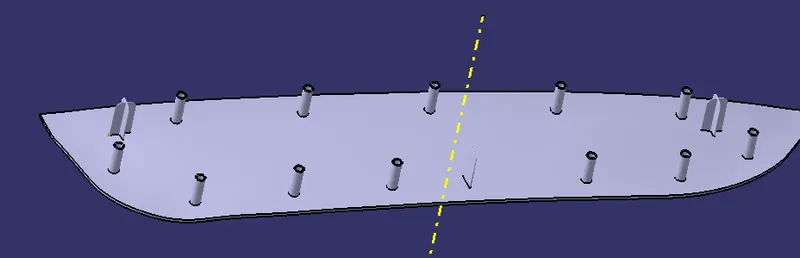
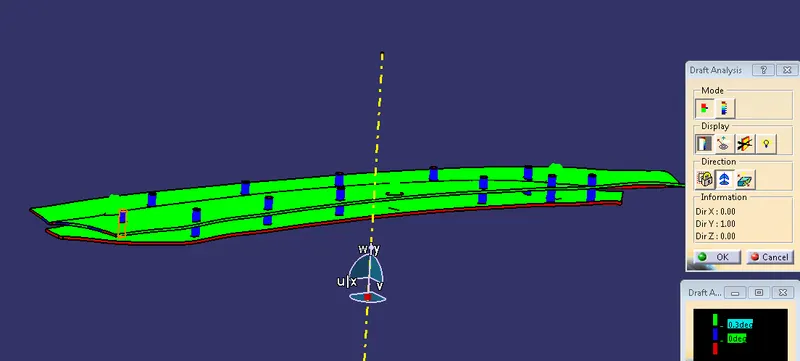
Once locators and heat stakes are created, they can be subjected to draft analysis.
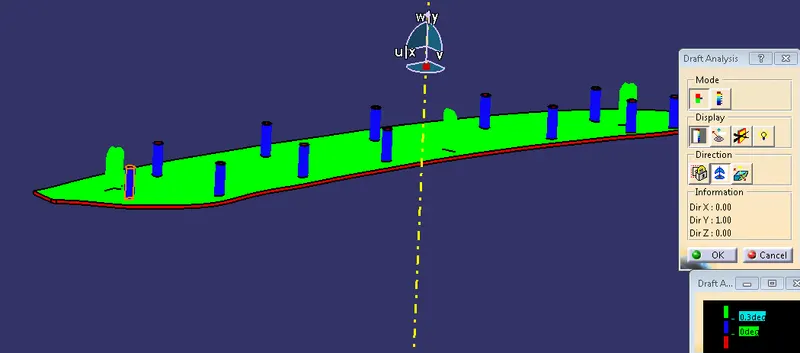
Locators and heat stakes draft values are obtained via colour code, 0.3 draft value is the input.
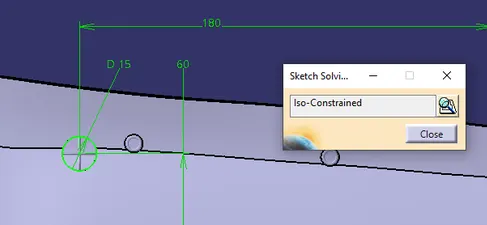
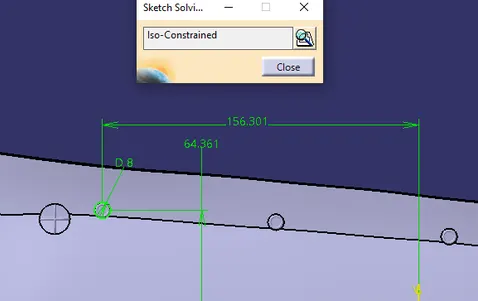
Next step is to create clearance holes for heat stakes and locators, the permissible clearance value is 0.1 to 0.2mm
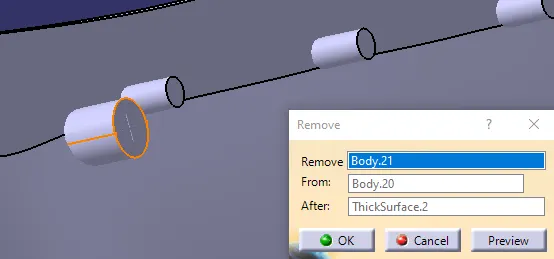
The sketch is paded
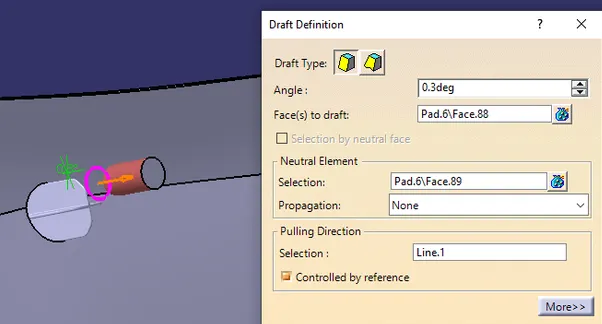
Draft value is provided to the pad and then they are trimmed with the door panel and the same steps are repeated.
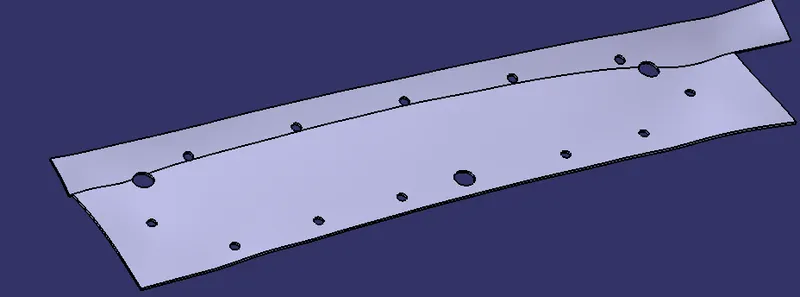
Once the above steps are done draft analysis is done on the entire assembly.
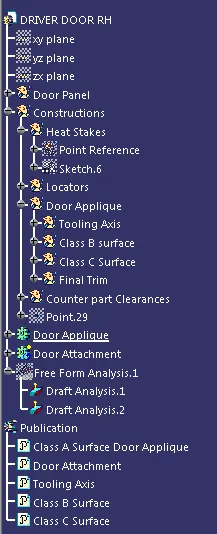
Tree Structure