Parametric study on Gate valve.
AIM: To perform a parametric study on a gate valve model
OBJECTIVE:
- Calculate the flow coefficient and flow factor for each opening and plot the graph.
- Obtain the mass flow rate at the outlet.
THEORY:
Mass flow rate: It is the mass of a substance which passes per unit of time.
`ω=ρ*Q`
ω = Mass flow rate (kg/s)
ρ = density of the fluid (kg/m3)
Q = Flow rate (m3/s)
Flow coefficient: It is a relative measure of the efficiency allowing fluid flow of a device. It describes the relationship between the pressure drop across an orifice valve or other assembly and the corresponding flow rate.
`C_v=Q√((SG)/(ΔP))`
Cv = Flow coefficient
Q = Flow rate (gallons per minute)
SG = Specific gravity of the fluid (water = 1)
ΔP = Pressure drop across the valve (psi)
Flow factor: It is the flow coefficient in metric units.
`K_v=Q√((SG)/(ΔP))`
Kv = Flow factor
Q = Flow rate (m3/hour)
SG = Specific gravity of the fluid (water = 1)
ΔP = Pressure drop across the valve (bar)
`K_v=0.865*C_v`
PROCEDURE:
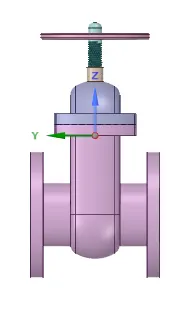
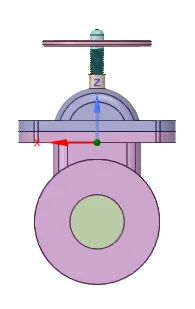
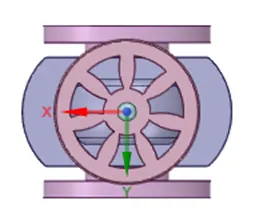
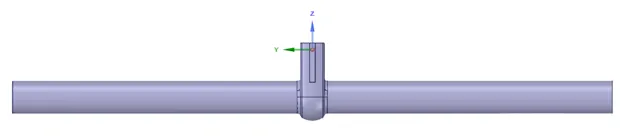
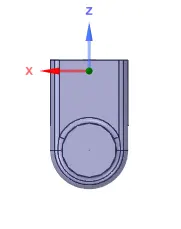
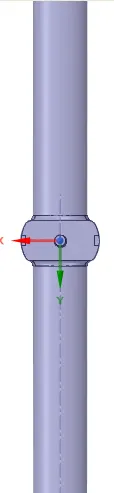
Geometry: The gate valve .STEP file was imported into SpaceClaim and parametrized by varying the lift of gate disc from 10% to 80%. Then, the volume of the gate valve model was extracted using the volume extract tool.
Mesh:


Setup and Solution:
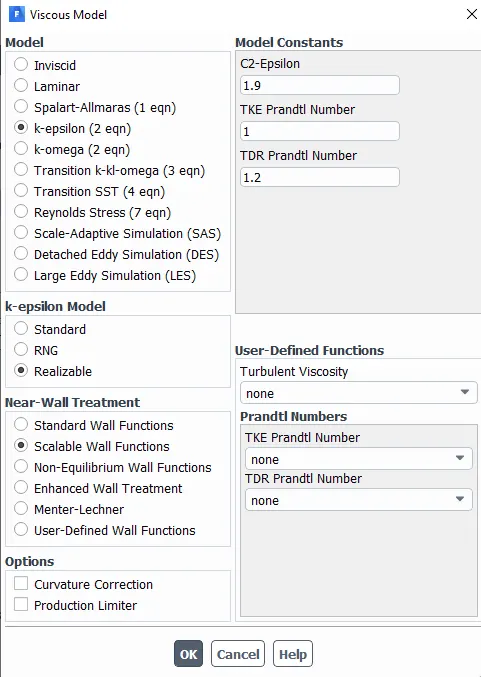
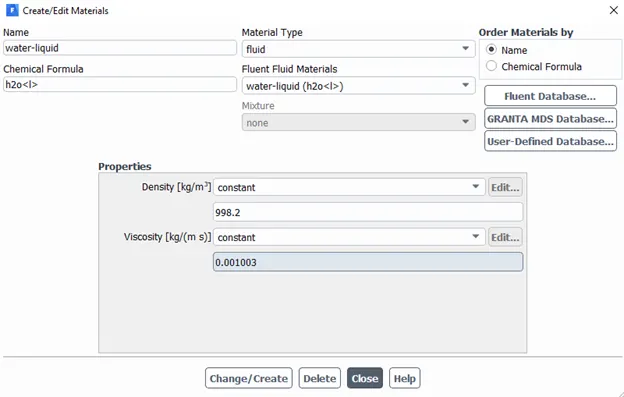
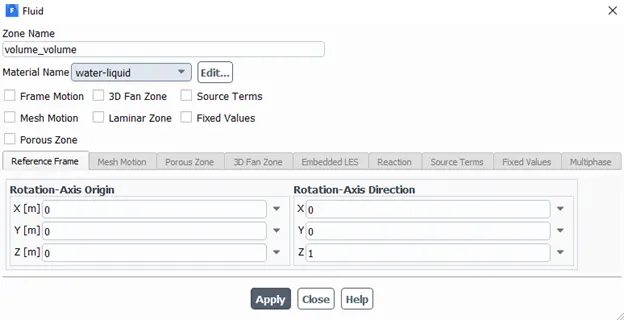
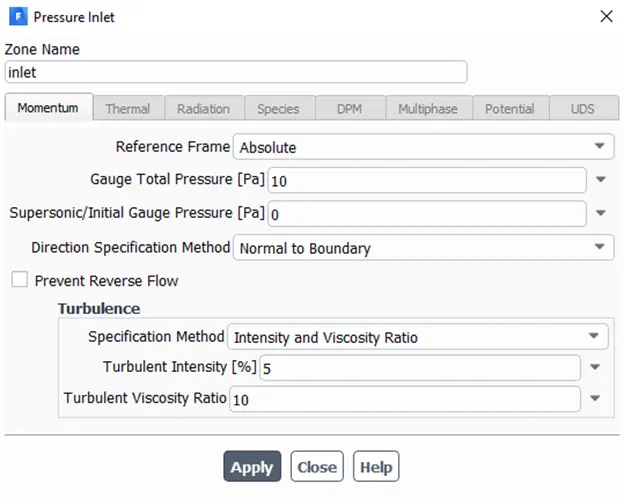
Case 1:
Gate disc lift = 20 mm
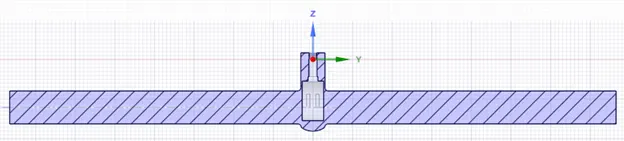
Case 2:
Gate disc lift = 40 mm
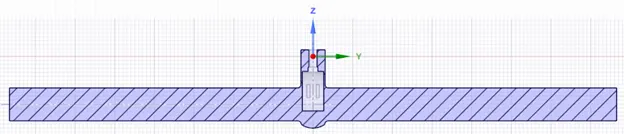
Case 3:
Gate disc lift = 60 mm
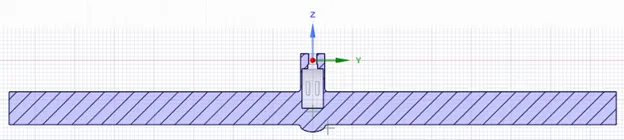
Case 4:
Gate disc lift = 80 mm
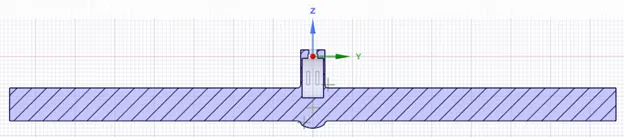
RESULTS:
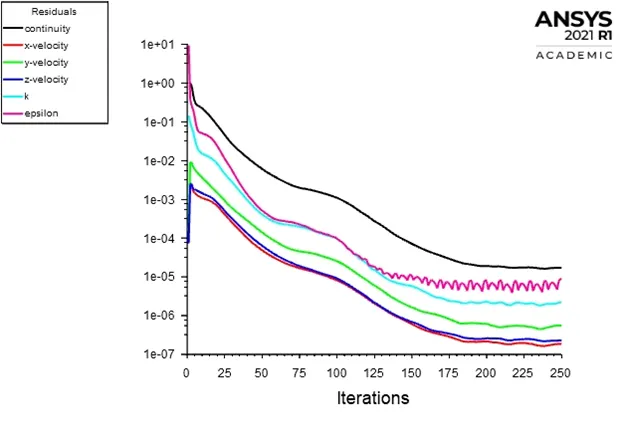
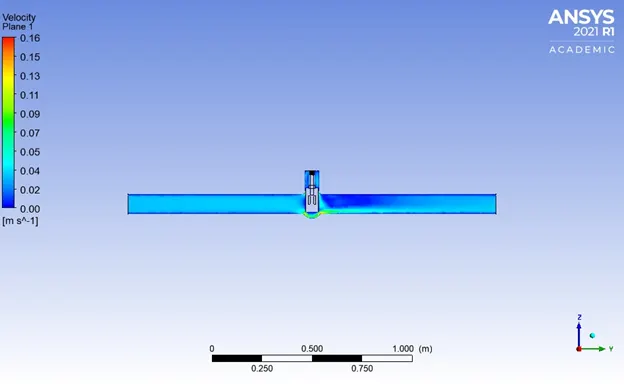
Case 1:
Residuals
Mass flow rate

Velocity contour
Animation: click here
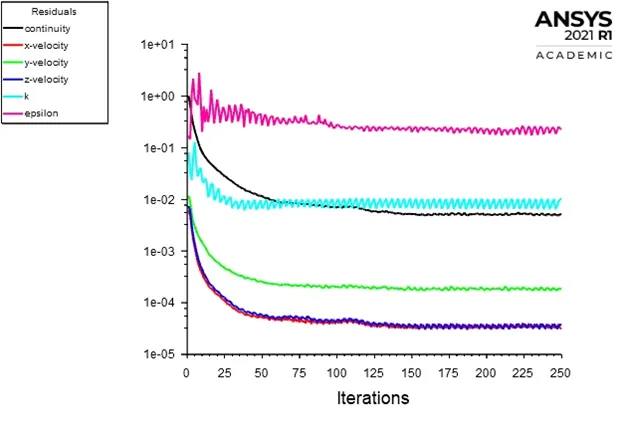
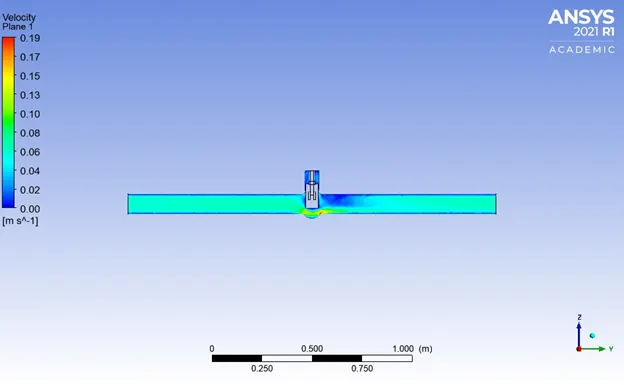
Case 2:
Residuals
Mass flow rate

Velocity contour
Animation: click here
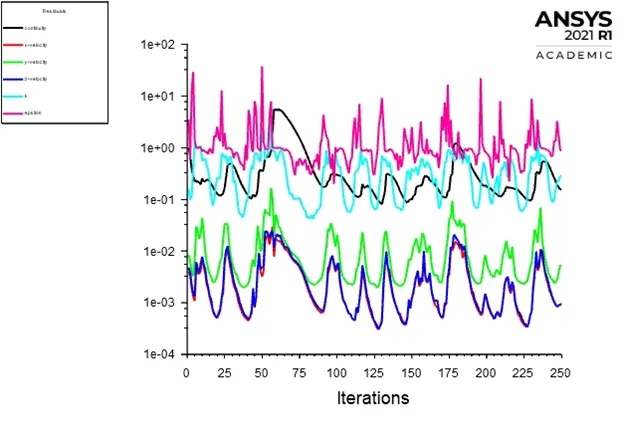
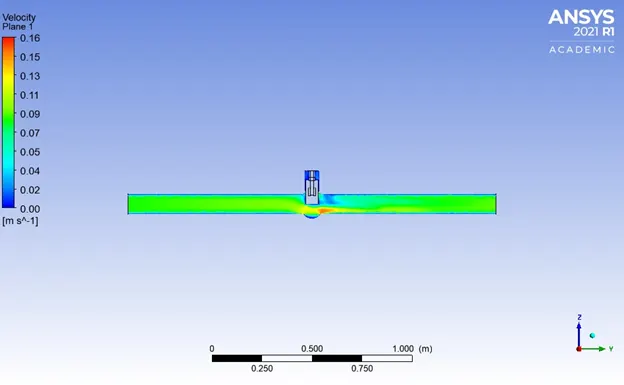
Case 3:
Residuals
Mass flow rate

Velocity contour
Animation: click here
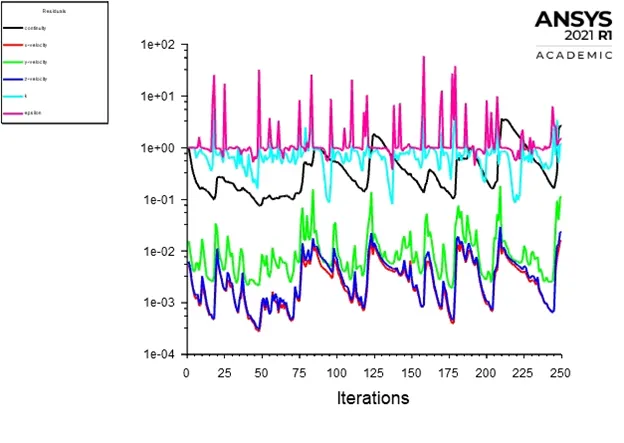
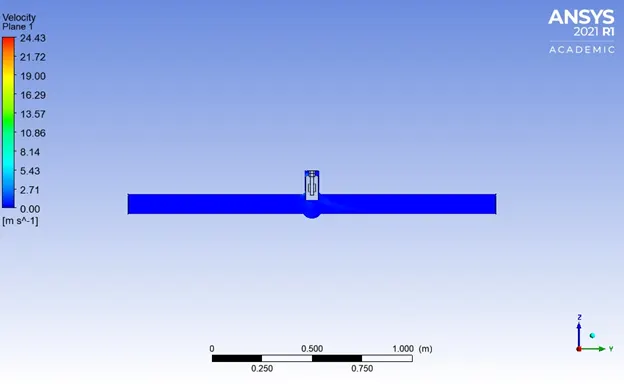
Case 4:
Residuals
Mass flow rate

Velocity contour
Animation: click here
OBSERVATIONS:
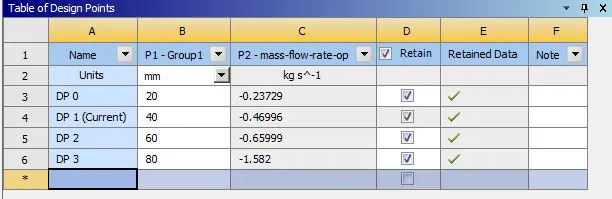
The negative value in the mass flow rate refers that the fluid is flowing out of the fluid domain.
|
Lift (mm) |
ω = Mass flow rate (kg/s) |
Q = Flow rate (gallon/min) |
ΔP = Pressure drop (psi) |
Cv = Flow coefficient |
|
20 |
0.23729 |
3.7611 |
0.00145 |
98.77 |
|
40 |
0.46996 |
7.4623 |
0.00145 |
195.96 |
|
60 |
0.65999 |
10.4799 |
0.00145 |
275.22 |
|
80 |
1.5829 |
25.1346 |
0.00145 |
660.06 |
|
Lift (mm) |
ω = Mass flow rate (kg/s) |
Q = Flow rate (m3/hr) |
ΔP = Pressure drop (bar) |
Kv = Flow factor |
|
20 |
0.23729 |
0.8558 |
0.0001 |
85.58 |
|
40 |
0.46996 |
1.6949 |
0.0001 |
169.49 |
|
60 |
0.65999 |
2.3802 |
0.0001 |
238.02 |
|
80 |
1.5829 |
5.7087 |
0.0001 |
570.87 |
CONCLUSION:
- The mass flow rate increases with increase in lift parameter.
- The flow coefficient and the flow factor increases with increase in the lift parameter.