Flow over a Cylinder.
AIM: Simulate the flow over a cylinder and explain the phenomenon of Karman vortex street.
Part I:
- Simulate the flow with steady and unsteady case and calculate the Strouhal number for Re=100.
Part II:
- Calculate the coefficient drag and lift over a cylinder by setting the Reynolds number to 10, 100, 1000, 10000 & 100000.
- Discuss the effect of Reynolds number on the coefficient of drag.
THEORY:
Von Kármán vortex street is a repeating pattern of swirling vortices, caused by a process known as vortex shedding, which is responsible for the unsteady separation of flow of a fluid around bodies.
A vortex street will form only at a certain range of flow velocities, determined by the Reynolds number (Re). The Reynolds number for a flow is a measure of the ratio of inertial to viscous forces in the flow of a fluid around a body.
Re= Reynolds number
ρ= density of fluid (kg/m3)
u= initial velocity of the fluid (m/s)
L= characteristic linear dimension (m)
μ= dynamic viscosity of fluid (Pa.s or Ns/m2 or kg/ms)
ν= kinematic viscosity of fluid (m2/s)
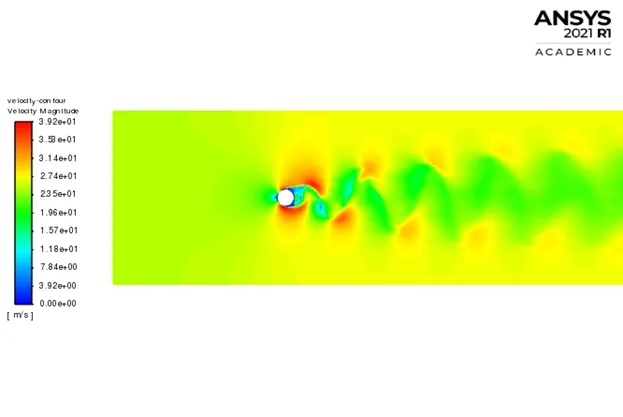
Vortex shedding is an oscillating flow that takes place when a fluid flows past a bluff body at certain velocities. In this flow, vortices are created at the back of the body and detach periodically from either side of the body forming a Von Kármán vortex street.
The frequency at which vortex shedding takes place for an infinite cylinder is related to the Strouhal number (St).{displaystyle mathrm {St} ={frac {fD}{V}}}
St= Strouhal number
f= vortex shedding frequency (s-1)
L= characteristic linear dimension of cylinder (m)
U= flow velocity (m/s)
PRE-PROCESSING:
- GEOMETRY:
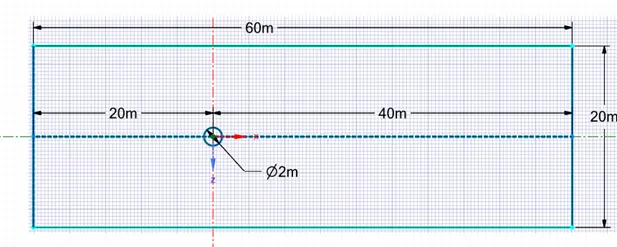
In SpaceClaim, we construct our geometry with the following dimensions.
- MESHING:
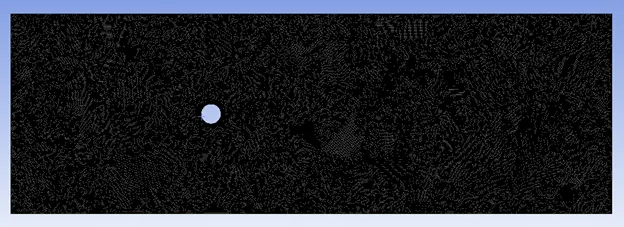
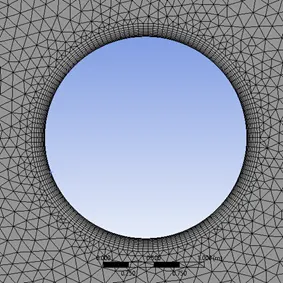
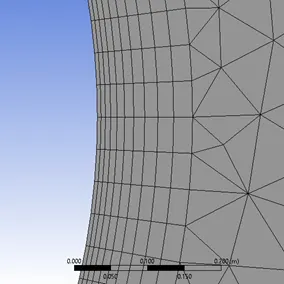
In Mesher, we mesh the geometry with the following data;
Element size = 0.125 m
Total number of elements = 161510
Method = Triangles
Edge sizing type = Number of divisions = 144
Inflation option = First layer thickness = 0.005 m
Inflation layers = 10
Growth rate = 1.2
- SETUP AND SOLUTION:
Part 1:
Reynolds number (Re)= 100
Density (ρ) = 1 kg/m3
Kinematic viscosity (μ) = 0.05 kg/ms
Linear dimension (L) = 2 m
Initial velocity = u
`100=(1*u*2)/0.05
`u=(100*0.05)/2=2.5 m/s`
Solution method:
- Pressure-Velocity Coupling
Scheme = SIMPLE
- Spatial Discretization
Gradient = Least Squares Cell Based
Pressure = Second Order
Momentum = Second Order Upwind
Energy = Second Order Upwind
Steady-State
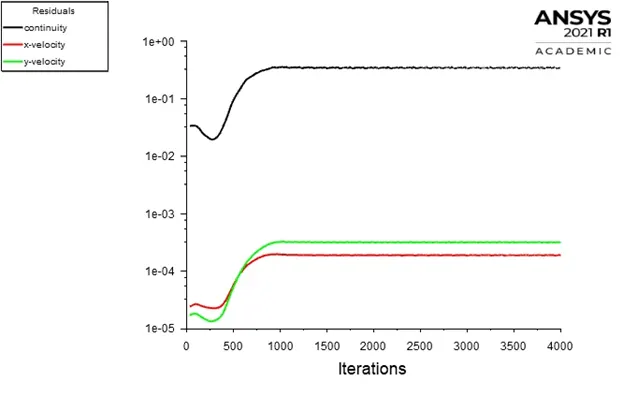
Residuals
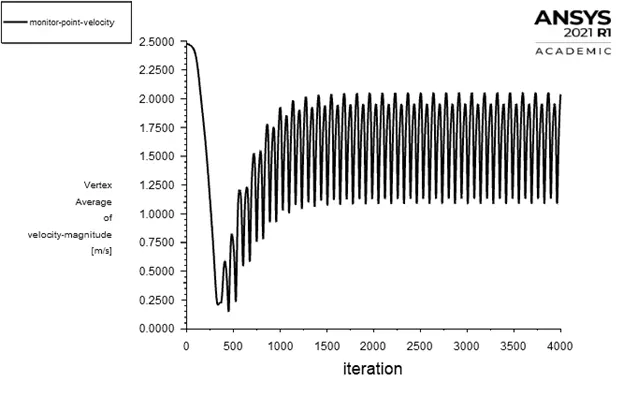
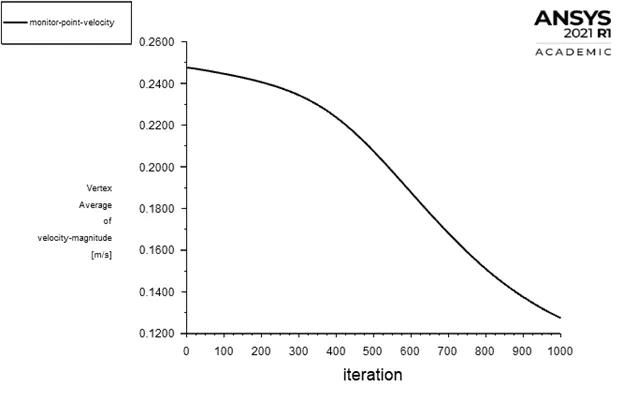
Monitor point velocity
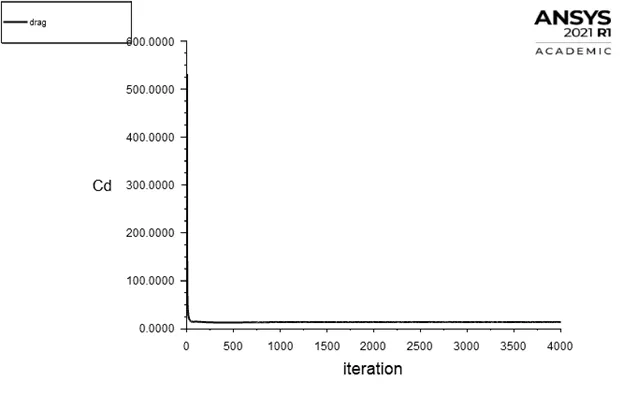
Plot for coefficient of drag
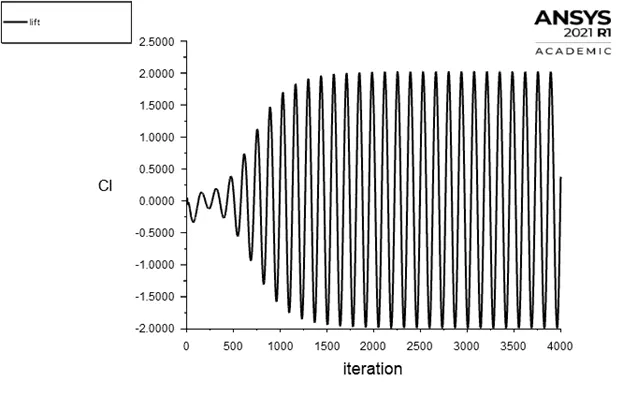
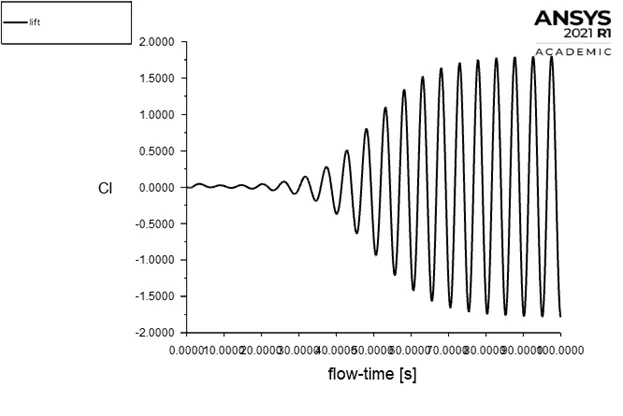
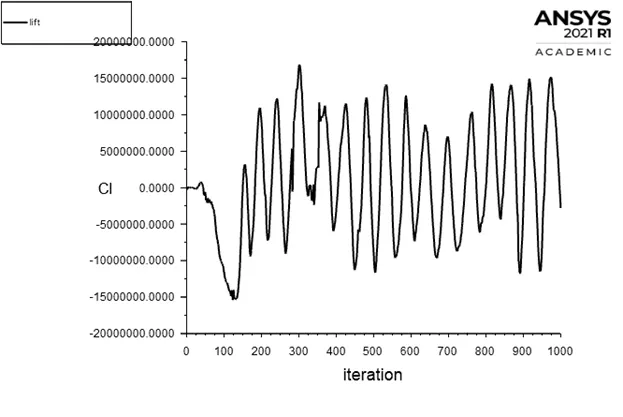
Plot for coefficient of lift
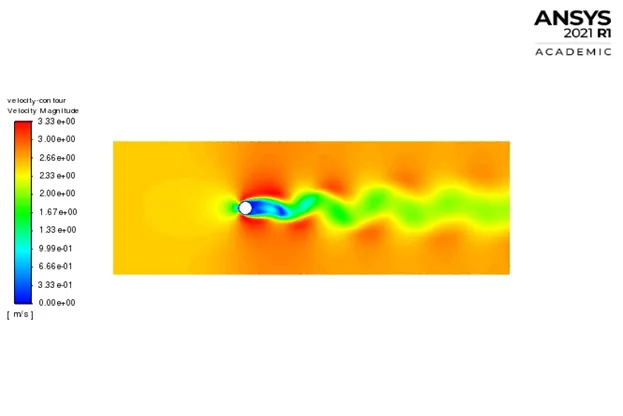
Velocity contour
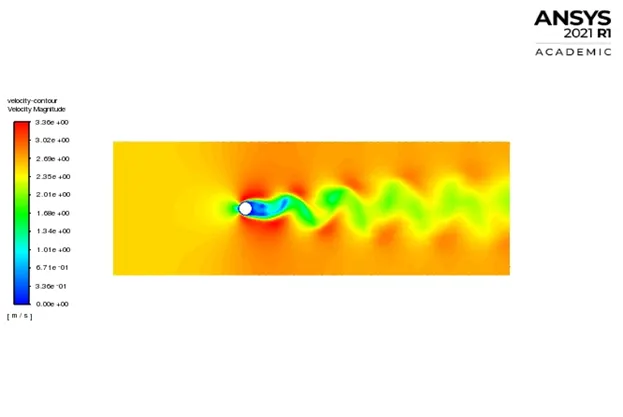
Transient State
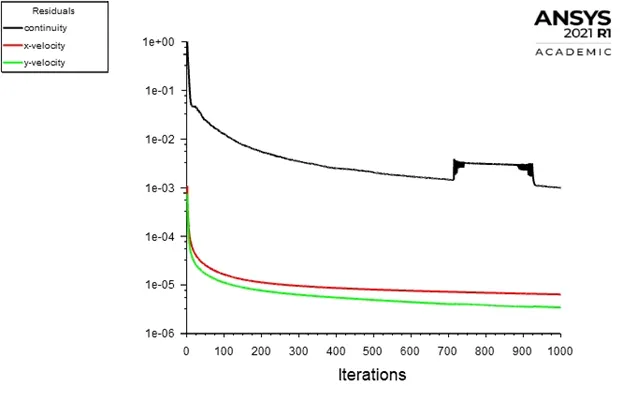
Residuals
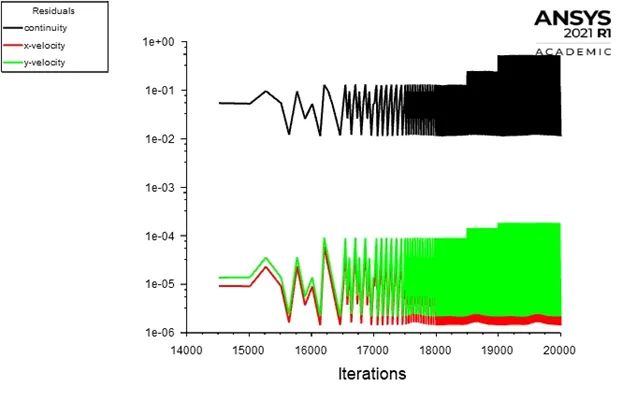
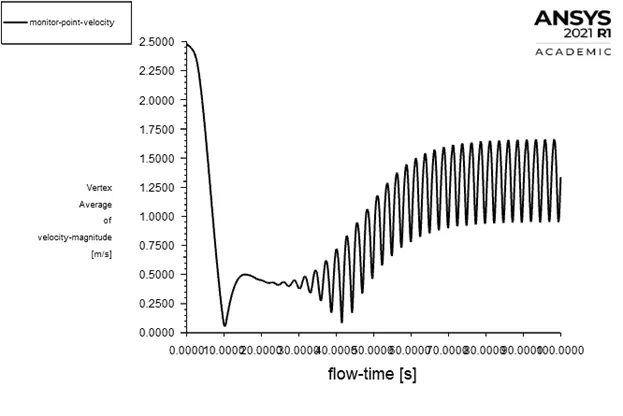
Monitor point velocity
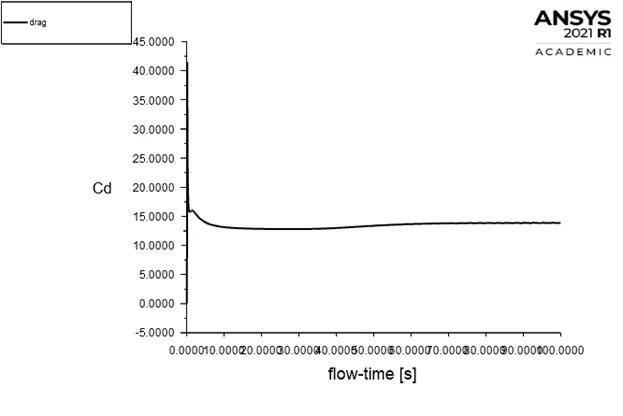
Plot for coefficient of drag
Plot for coefficient of lift
Velocity contour
Strouhal number calculation:
f = 0.198 Hz
L = 2 m
V = 2.5 m/s
`St=fL/V`
`St=(0.198*2)/2.5`
`St=0.1584`
Part 2:
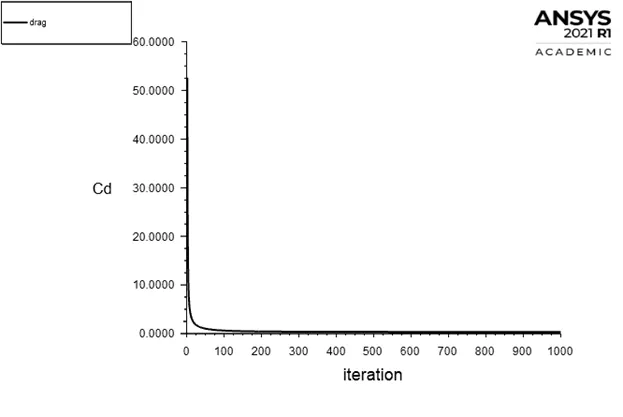
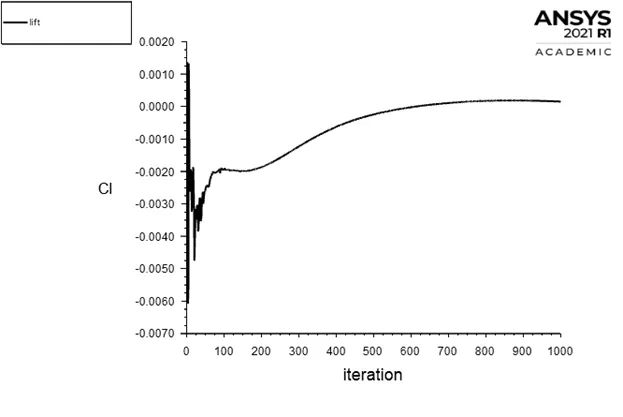
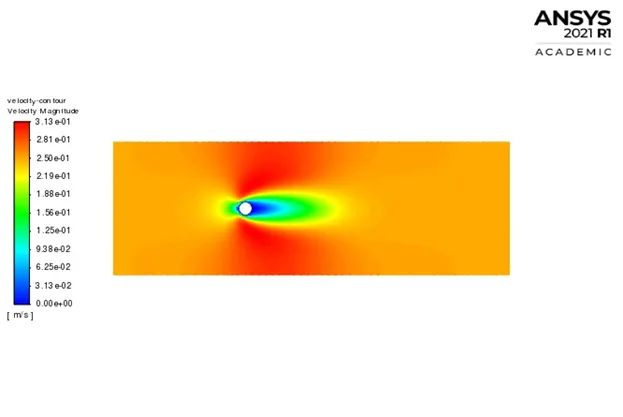
Reynolds number = 10
Viscosity = 0.05 kg/ms
Flow velocity = 0.25 m/s
Residuals
Monitor point velocity
Plot for coefficient of drag
Plot for coefficient of lift
Velocity contour
Reynolds number = 100
Viscosity = 0.05 kg/ms
Flow velocity = 2.5 m/s
Residuals
Monitor point velocity
Plot for coefficient of drag
Plot for coefficient of lift
Velocity contour
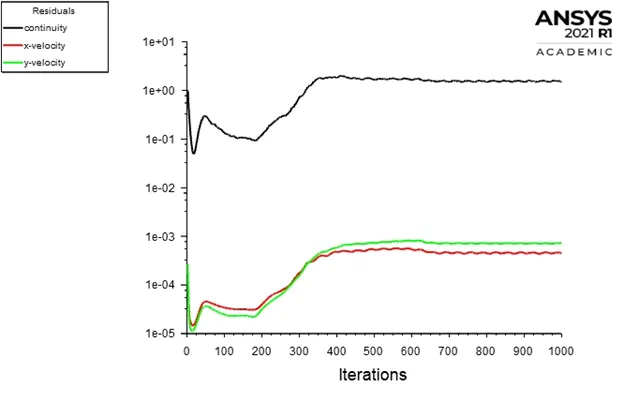
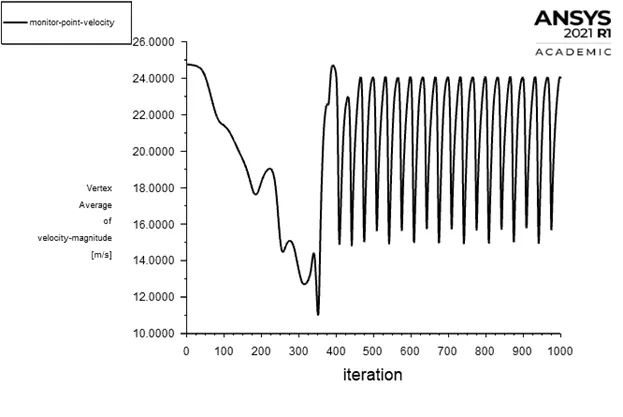
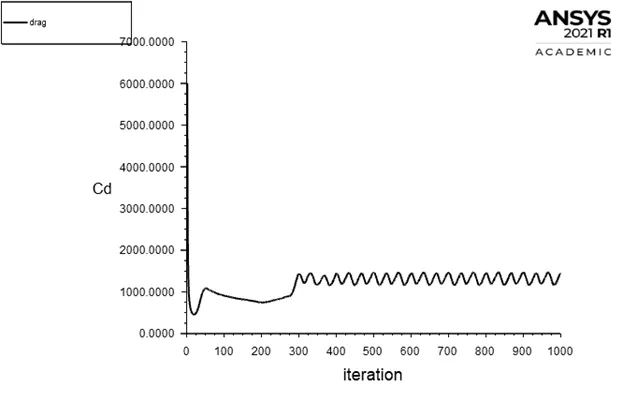
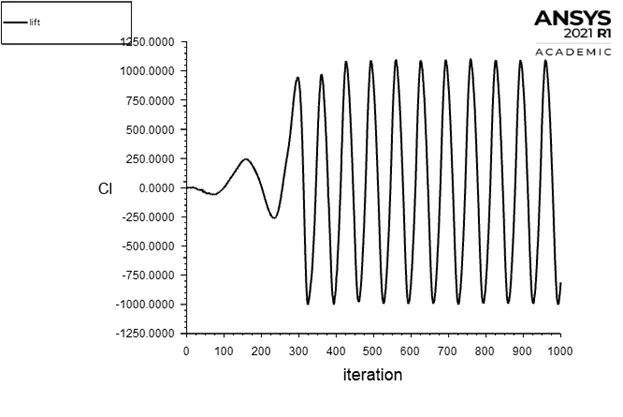
Reynolds number = 1000
Viscosity = 0.05 kg/ms
Flow velocity = 25 m/s
Residuals
Monitor point velocity
Plot for coefficient of drag
Plot for coefficient of lift
Velocity contour
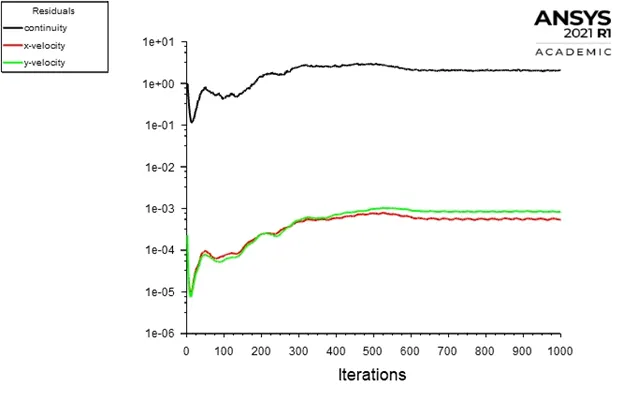
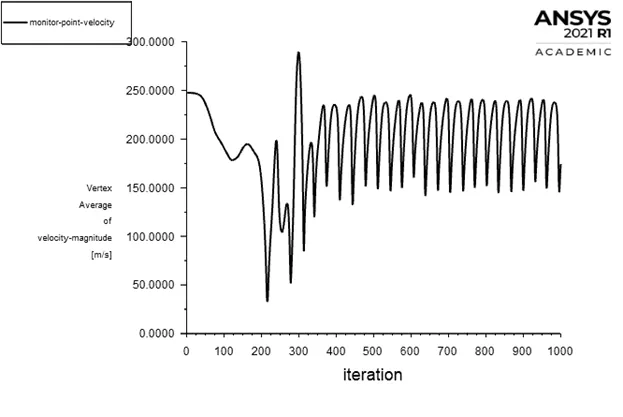
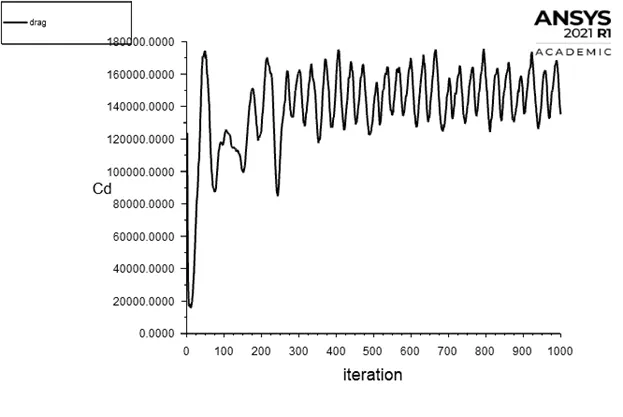
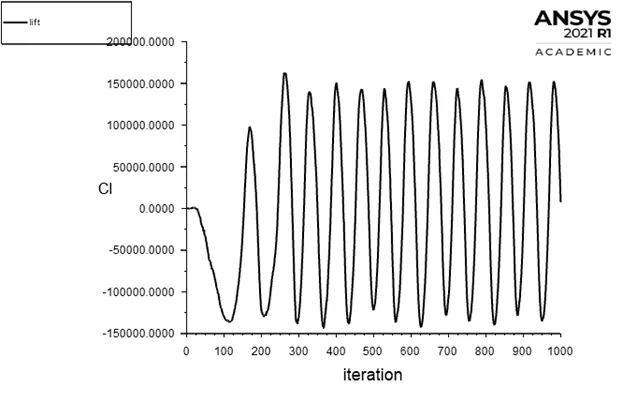
Reynolds number = 10000
Viscosity = 0.05 kg/ms
Flow velocity = 250 m/s
Residuals
Monitor point velocity
Plot for coefficient of drag
Plot for coefficient of lift
Velocity contour
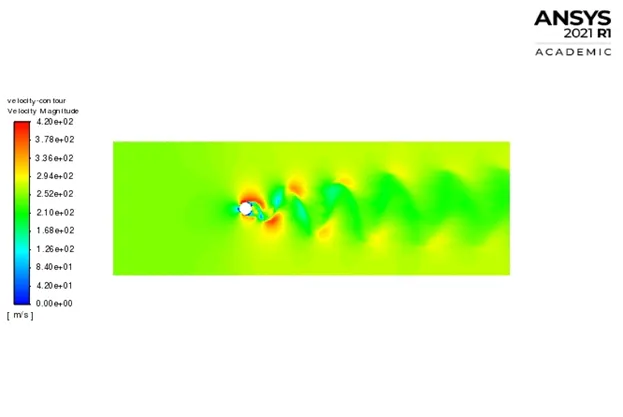
Reynolds number = 100000
Viscosity = 0.05 kg/ms
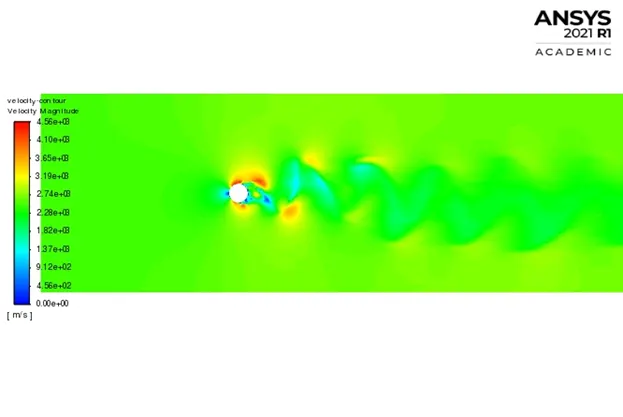
Flow velocity = 2500 m/s
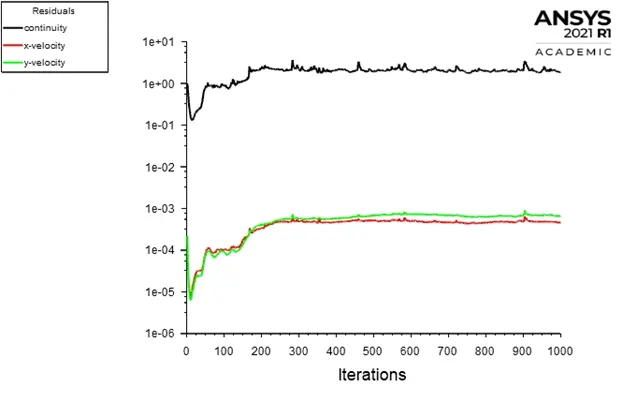
Residuals
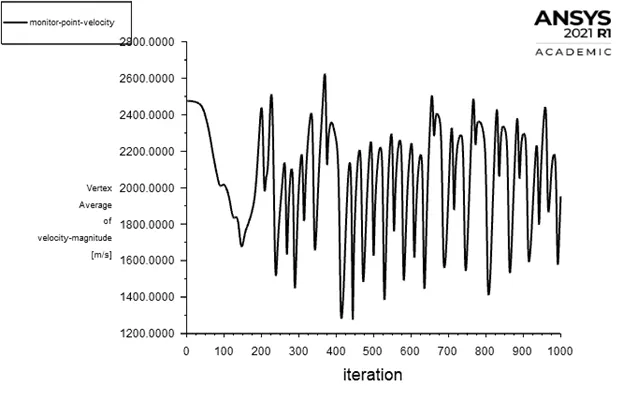
Monitor point velocity
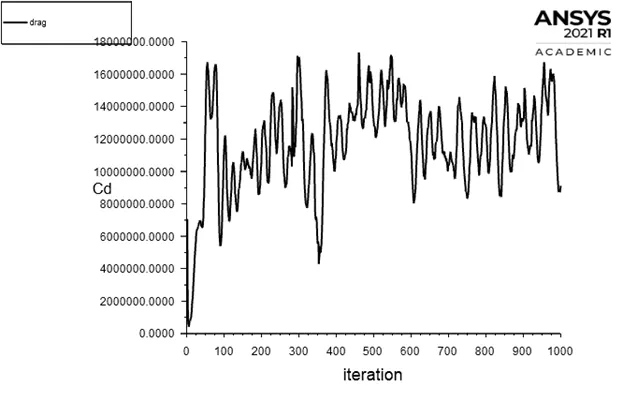
Plot for coefficient of drag
Plot for coefficient of lift
Velocity contour
Comparison of Reynolds number on the coefficient of drag
|
Reynolds Number |
Coefficient of drag |
|
10 |
0.1954 |
|
100 |
10.3548 |
|
1000 |
1334.4204 |
|
10000 |
133181.79 |
|
100000 |
22983406 |
From the above tabulated data, we can conclude that as Reynolds number increases coefficient of drag also increases.