Week 9 - Parametric study on Gate valve.
A gate valve controls the media's flow by lifting the gate (open) and lowering the gate (closed). A gate valve's distinct feature is the straight-through unobstructed passageway, which induces minimal pressure loss over the valve. The unobstructed bore of a gate valve also allows for a pig's passage in cleaning pipe procedures, unlike butterfly valves. Gate valves are available in many options, including various sizes, materials, temperature and pressure ratings, and gate and bonnet designs.
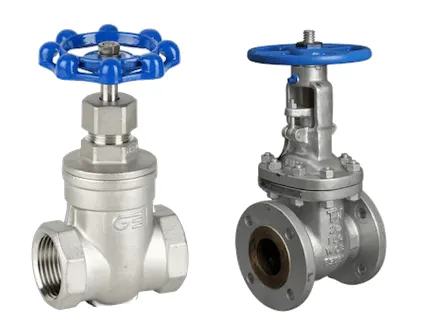
Functioning principle:
A gate valve's main components are body, seat, gate, stem, bonnet, and actuator . The primary operation mechanism is straightforward. Turning the handwheel rotates the stem, which moves the gate up or down via the threads. They require more than one 360° turn to fully open/close the valve. Lifting the gate from the path of the flow, the valve opens. Lowering the gate to its closed position seals the bore resulting in a full closure of the valve.
For a gate valve, the relationship between the gate's vertical travel and the flow rate is nonlinear, with the highest changes occurring near shutoff. When used to regulate flow, the relatively high velocity of the flow at partial opening results in gate and seat wear, which along with possible vibrations of the gate, shortens the valve's service life.
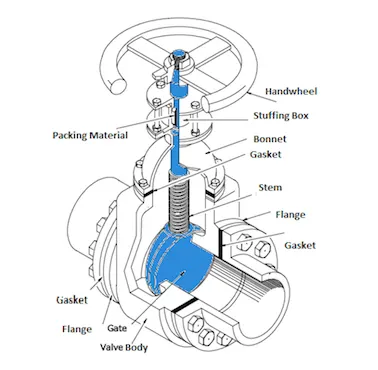
For solving the given problem on ansys and to analyse mass flow rate and to paramterize the opening of the valve and to further find out the pressure difference following procedure is employed-
1. Spaceclain: The model of the gate valve in the spacecliam is imported as
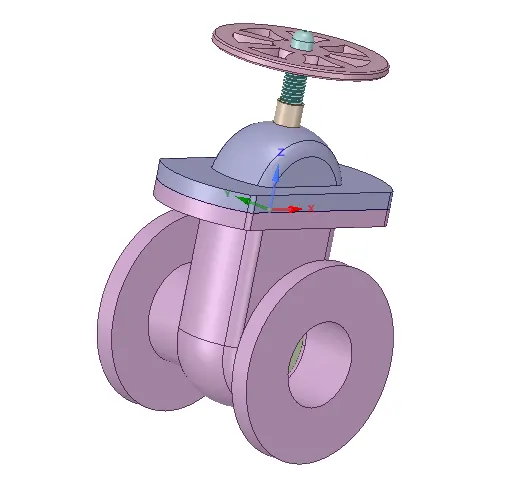
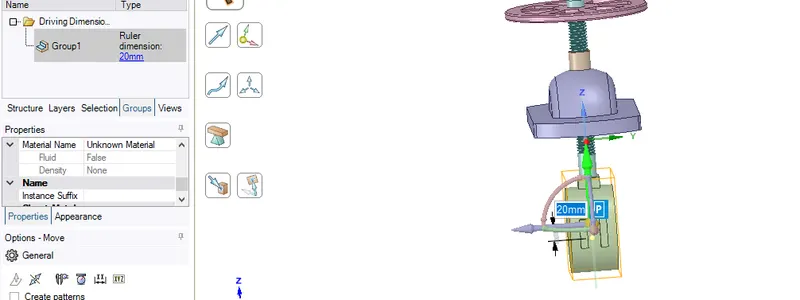
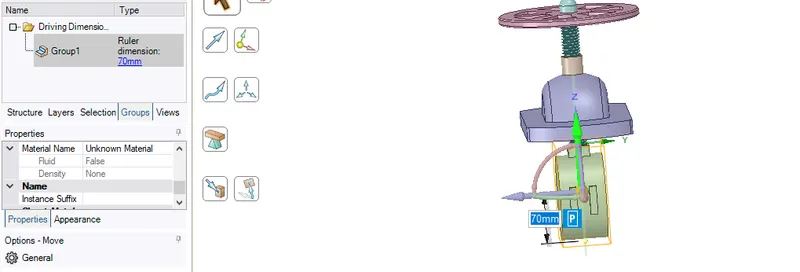
The disc lift is put into group such that it can be parametrize and the different orientations can be seen as:
For 10 mm:
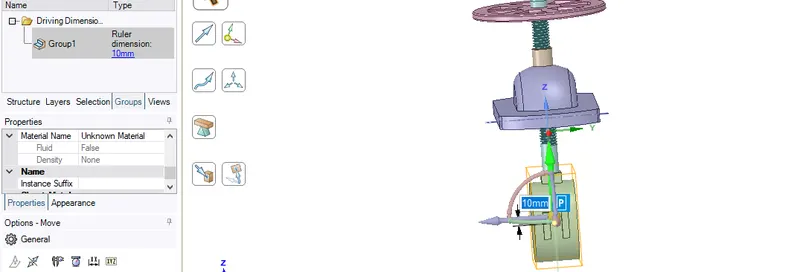
For 20mm:
And this increment is done upto 70 mm:
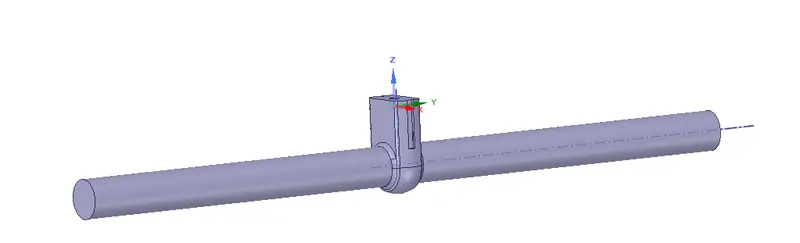
The Volume extract is prepared and the representation is given as below:
2. Meshing:
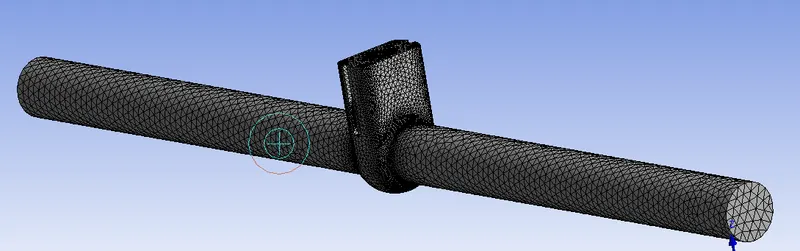
For meshing the global size is kept at 50 mm so that the computation time is not much consumed:
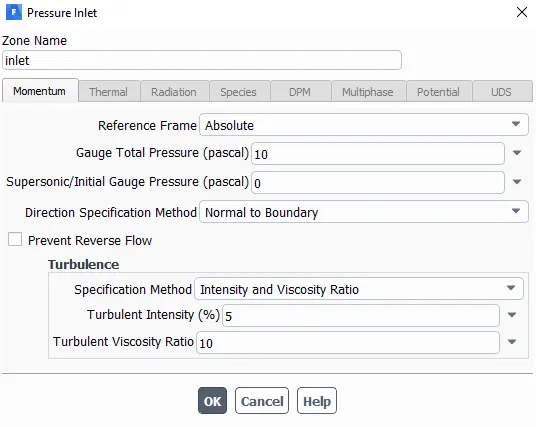
3. Setup: Initially gravity is taken into account and the whole valve is considered to be filled with water and the inlet face is taken as a pressure inlet and the presure of 10 pascal (Total Pressure), which in real life can be obderved.
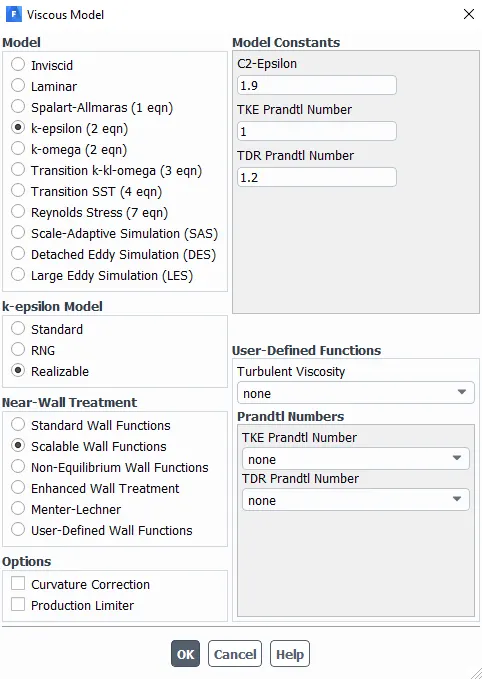
The K-epsilon turbulence model s selected for the analysis.
Standard Initialisation is taken and it is solved for mass flow rate and the outlet pressure.
The parametric window can now be edited for the number of diplacement in the valve and the output is as below:
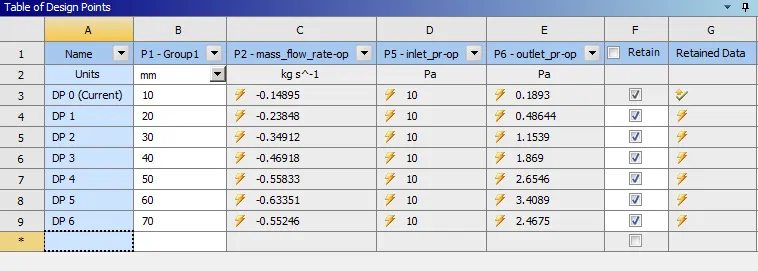
The Individual outputs are given as:
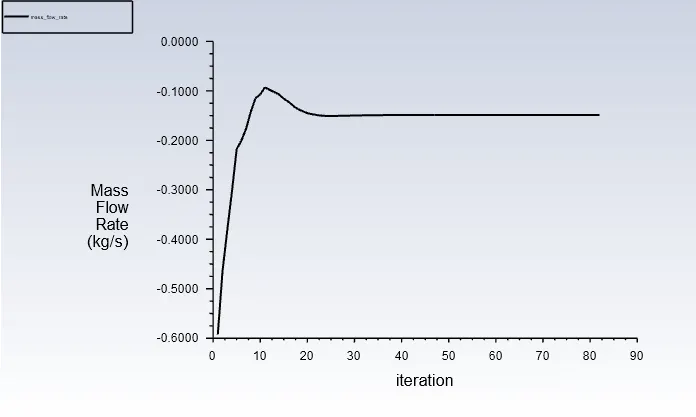
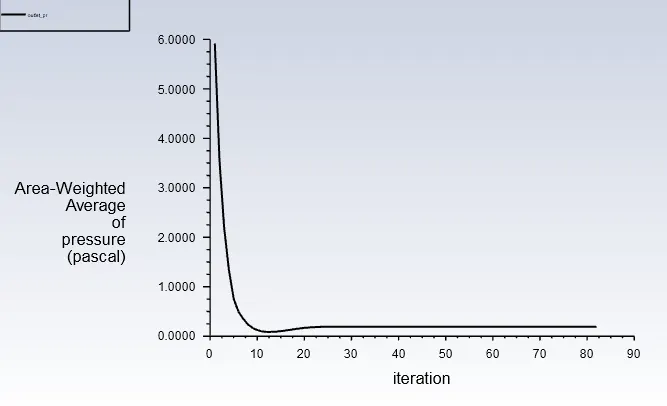
For 10mm Displacement:
Residual PLot:
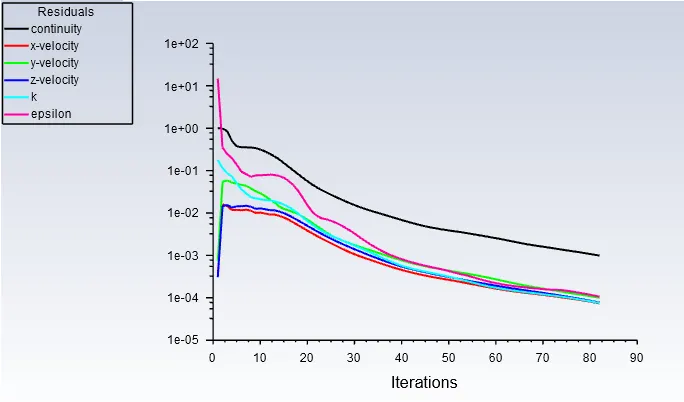
Mass Flow rate at outlet:
Outlet pressure:
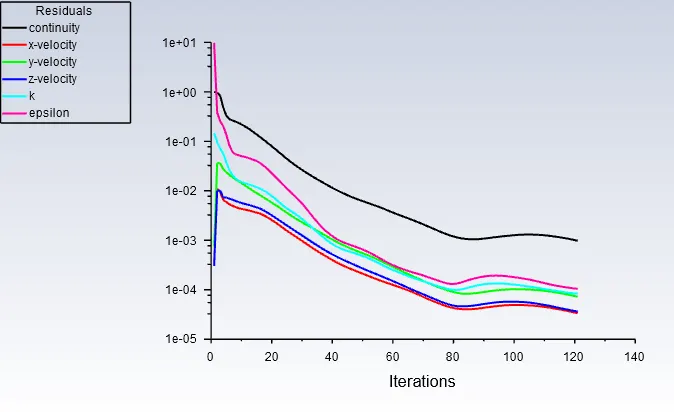
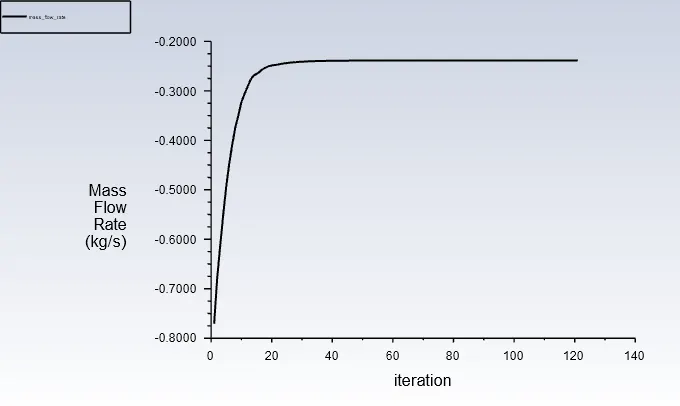
For 20mm Displacement:
Residual PLot:
Mass Flow rate at outlet:
Outlet pressure:
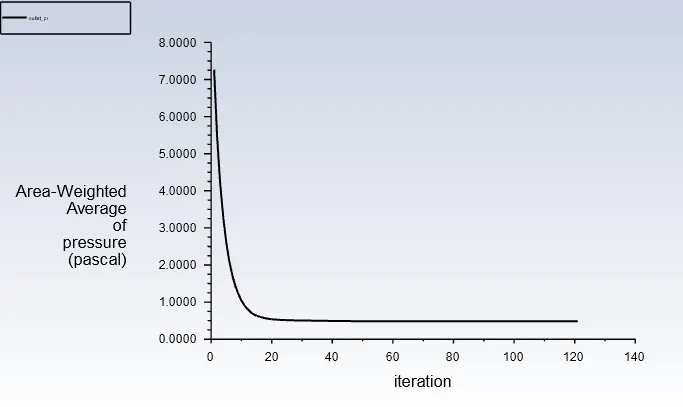
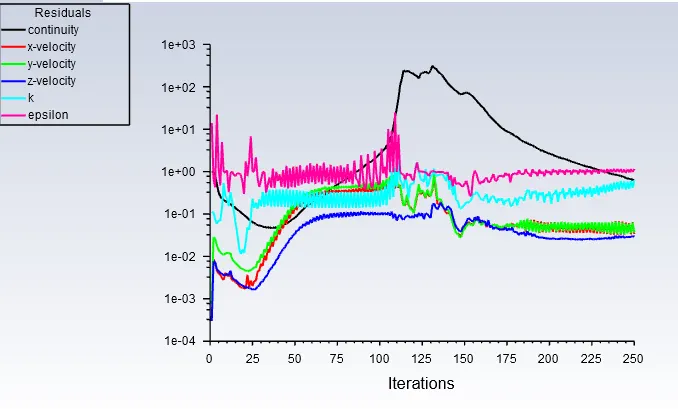
For 30mm Displacement:
Residual PLot:
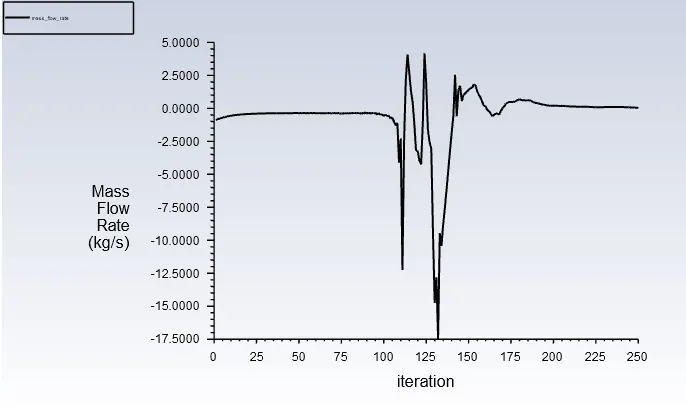
Mass Flow rate at outlet:
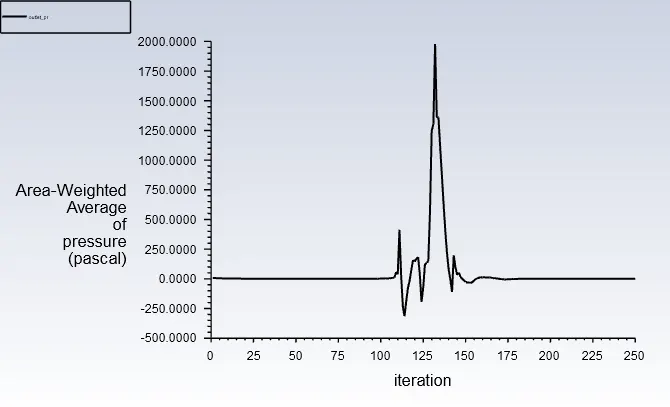
Outlet pressure:
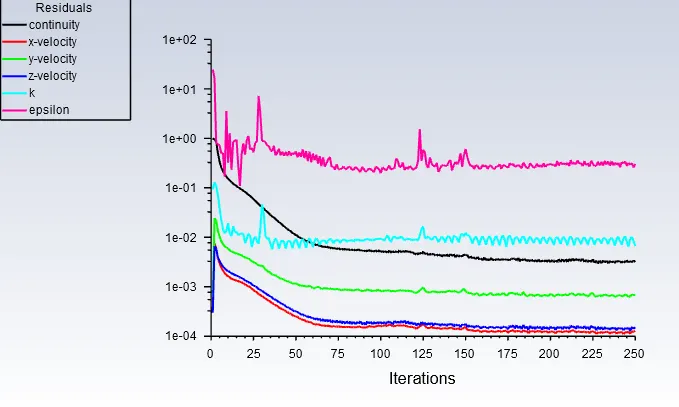
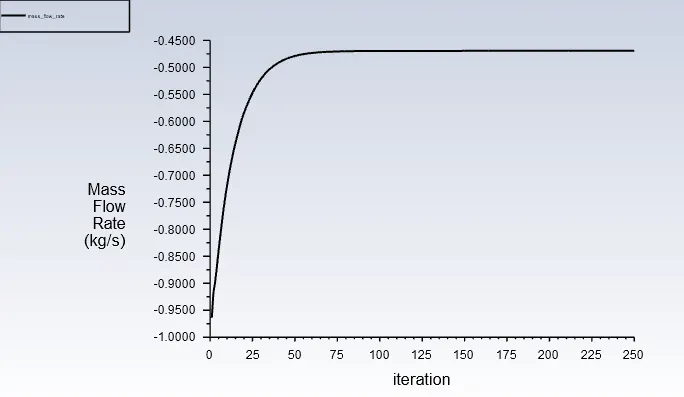
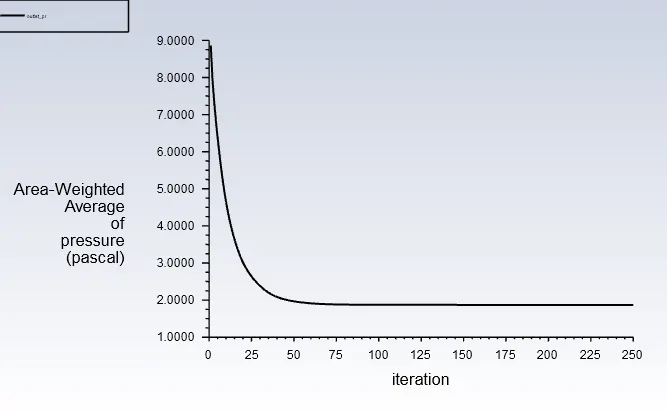
For 40mm Displacement:
Residual PLot:
Mass Flow rate at outlet:
Outlet pressure:
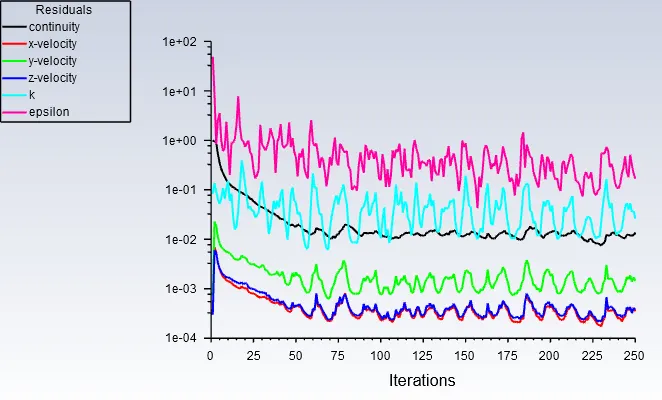
For 50mm Displacement:
Residual PLot:
Mass Flow rate at outlet:
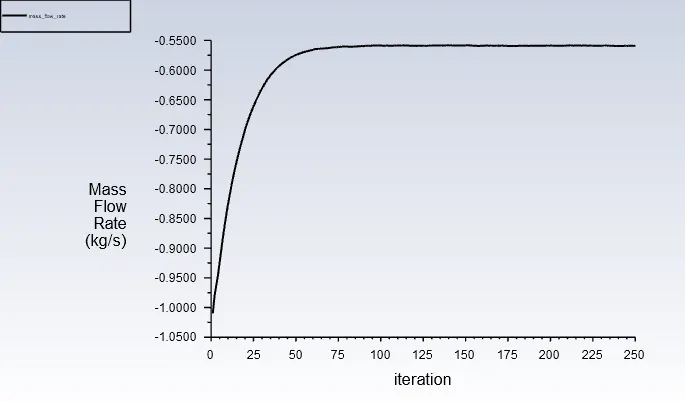
Outlet pressure:
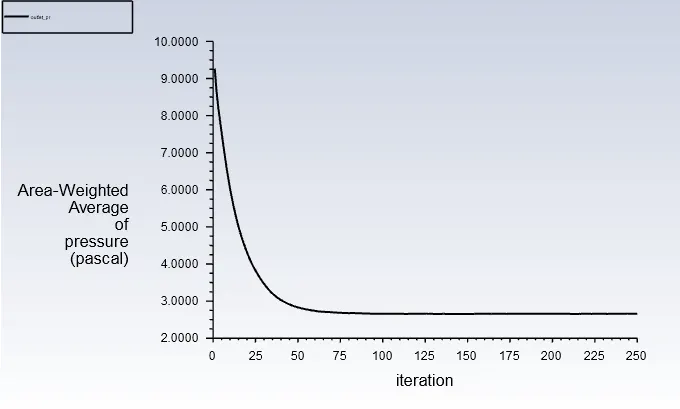
For 60mm Displacement:
Residual PLot:
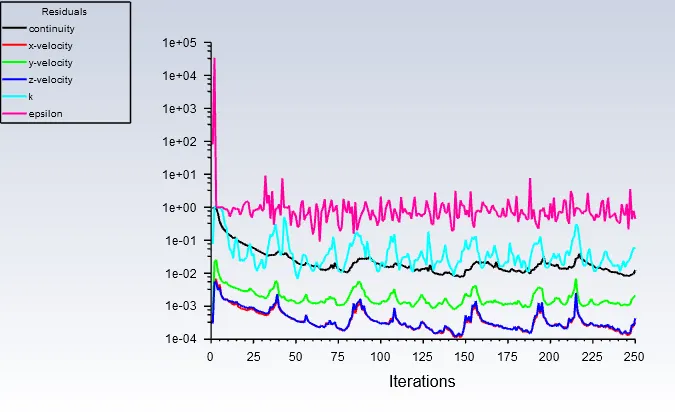
Mass Flow rate at outlet:
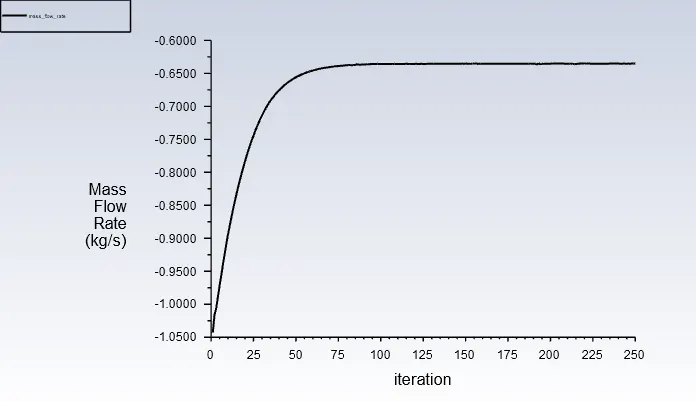
Outlet pressure:
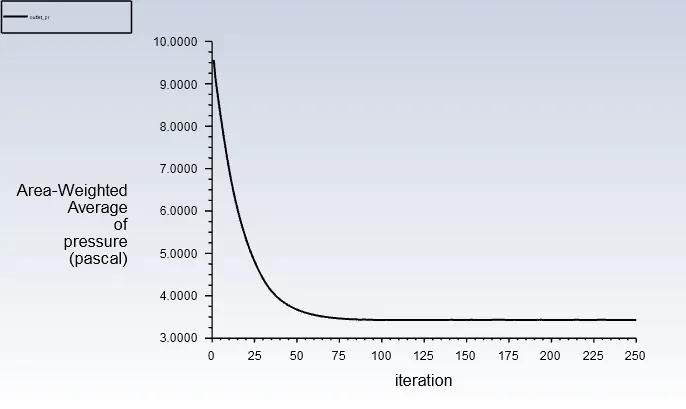
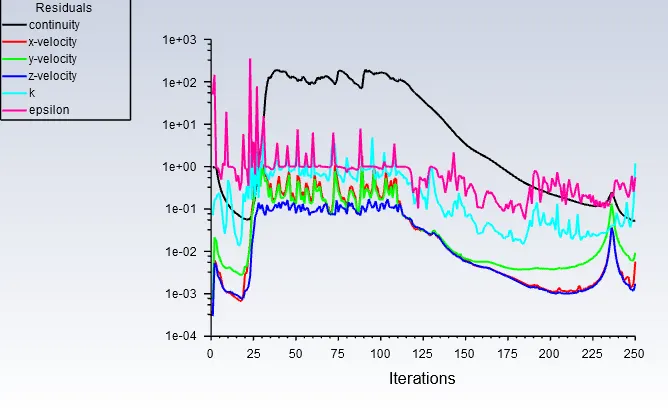
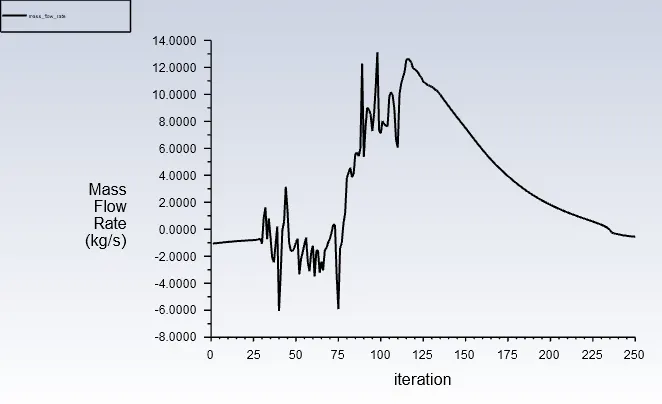
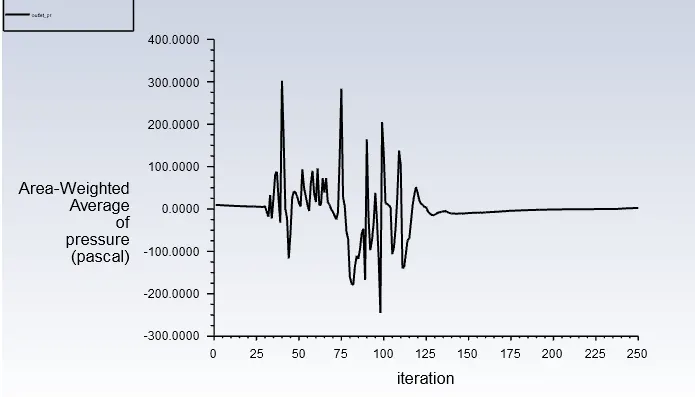
For 70mm Displacement:
Residual PLot:
Mass Flow rate at outlet:
Outlet pressure:
Flow Coefficient: The flow coefficient of a device is a relative measure of its efficiency at allowing fluid flow. It describes the relationship between the pressure drop across an orifice valve or other assembly and the corresponding flow rate.
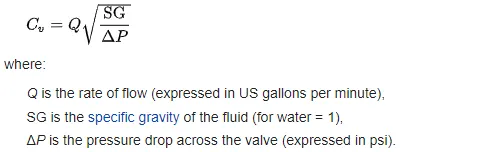
Flow Factor is calculated as:
`K_v = 0.865 * C_v`
Obsrvation Table:
| Displacement |
Mass FLow Rate (gal/min) |
Inlet Pressure | Outlet Pressure | Pressure Difference | `C_v` | `K_v` |
| 10 mm | 3.193608064 | 10 | 0.1893 | 9.8107 | 7.532548 | 0.041136 |
| 20 mm | 5.113081952 | 10 | 0.4864405 | 9.8107 | 0.077319 | 0.066880 |
| 30 mm | 7.485194976 | 10 | 1.1538542 | 8.8461 | 0.117381 | 0.101535 |
| 40 mm | 10.05911736 | 10 | 1.8689907 | 8.1310 | 0.164536 | 0.142322 |
| 50 mm | 11.97057247 | 10 | 2.6546369 | 7.3453 | 0.206007 | 0.178196 |
| 60mm | 13.58255500 | 10 | 3.4089395 | 6.5910 | 0.246762 | 0.213441 |
| 70 mm | 11.84480522 | 10 | 2.467452 | 7.5325 | 0.201294 | 0.174119 |
Conclusion:
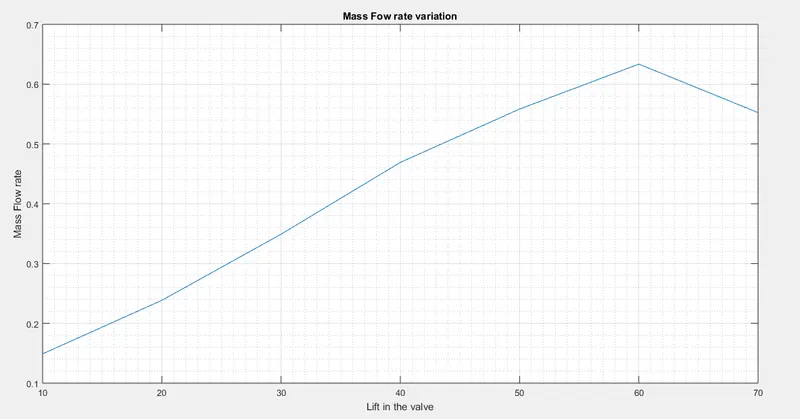
1. The value of mass flow rate increases as the valve opening is increased.
2. Making valve opening parametrize reduces time in compution.
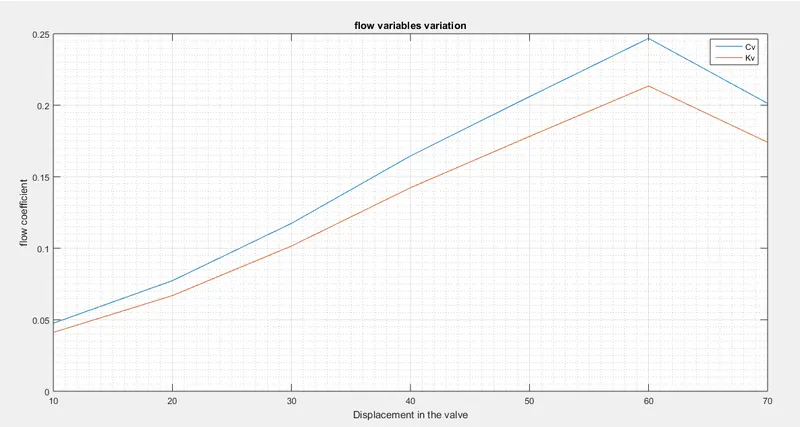
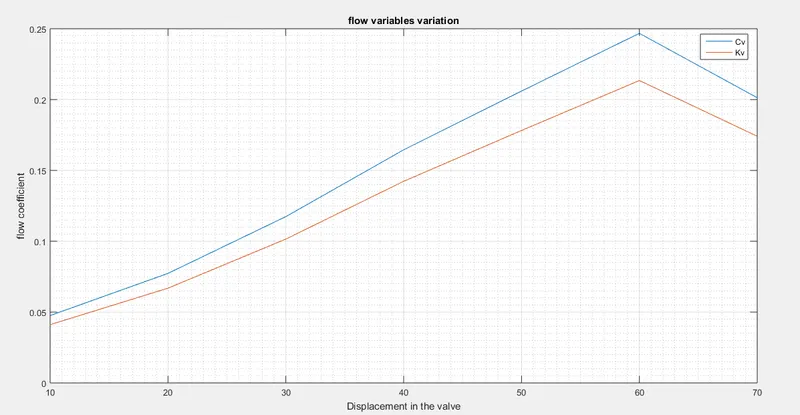
3. The Value of Cv is always greater than Kv.