Material Modeling from Raw Data LSDYNA
AIM
Using the diagram of the true stress-strain curve given for graphite iron casting, create a material model for the dogbone specimen and validate the material model by performing a tensile test on a dogbone specimen.
PROCEDURE
- Data Extraction from the curve image
- Data clean up - curve fitting
- Unit conversion
- defining stress/strain curve for material model
- tensile test
- Results
DATA EXTRACTION:
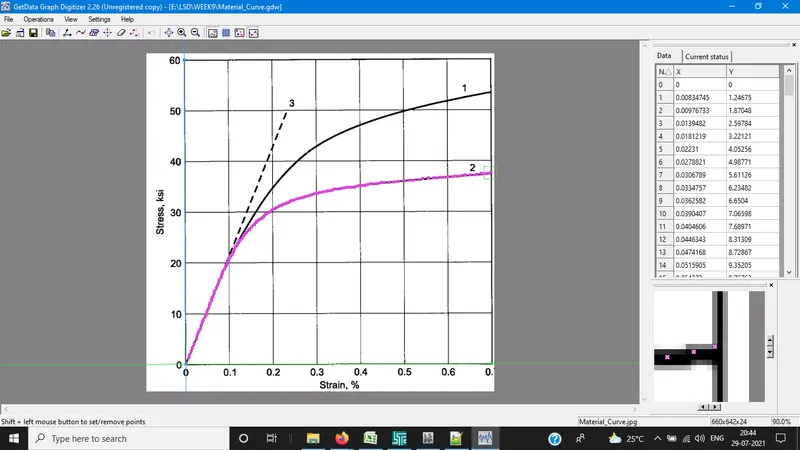
Material test data is collected as
1.Force Vs Displacement
2. Engg.stress and strain
3.RAW data
Here, we got an image representing a True stress/strain curve with 3 different strain rate. From the graph,we can see the material shows elasto-plasto behaviour with the elastic and plastic region. Although many material models exist for elasto-plastic region, one of the most robust models is MAT_024. This material model is the standard and is the recommended starting point for elastic-plastic simulation of metals and general plastics since it can also handle viscoelastic behaviour.
From above graph curve 2 is considered as data points for our material modelling.Using the GETDATA software the data points are extracted.
UNIT CONVERSION(kg/mm/ms):
0.2% offset yield strength : 0.144100 Gpa
Effective stress = True stress
Effective Plastic strain = True strain - true stress /E
Young's modulus is given for the material as 20.9E+06 psi i.e. 144Gpa
Defining curve:
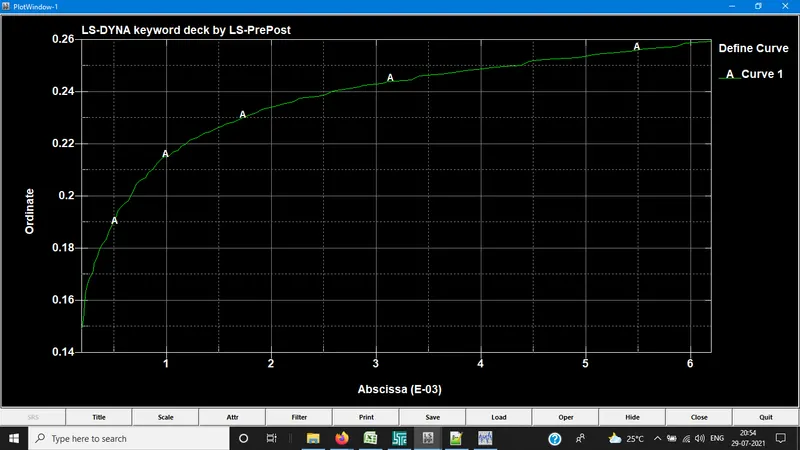
Material Model:
we will use graphite iron casting properties for MAT card
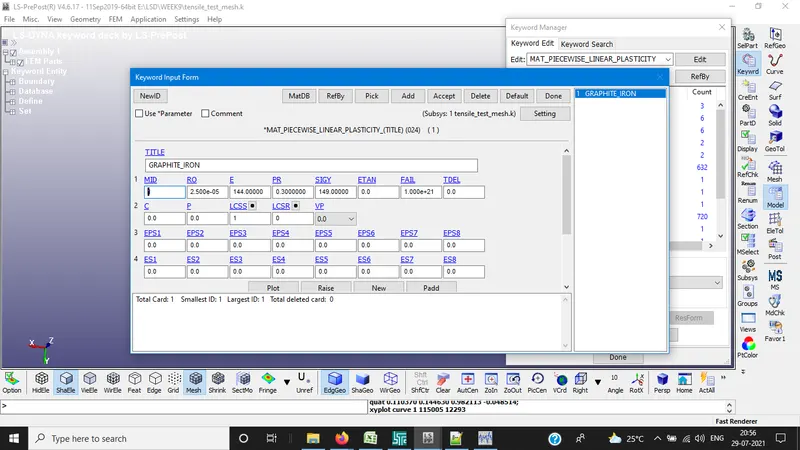
TENSILE _TEST
Boundary Condition:
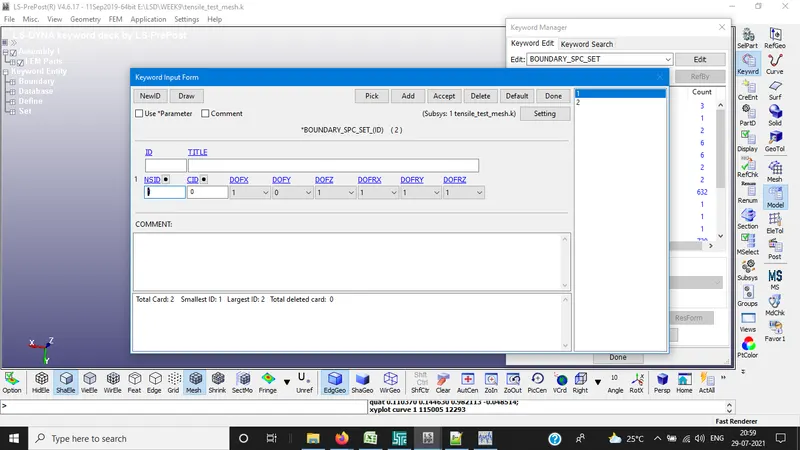
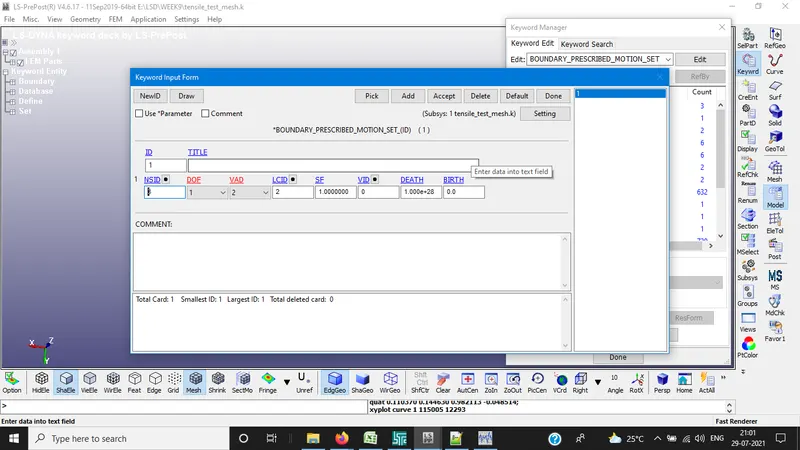
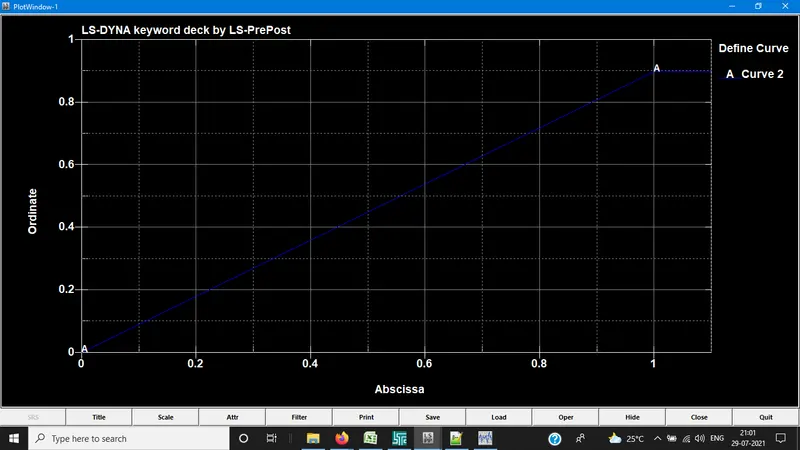
since we are performing a tensile test where one end is fixed and displacement is added to the other end.
BOUNDARY_SPC_SET
1.To fix end of the specimen as test procedure we will constraint all the degree of freedom except Y direction for edge node
BOUNDARY_PRECRIBED_MOTION_SET:
DISPLACEMENT CURVE
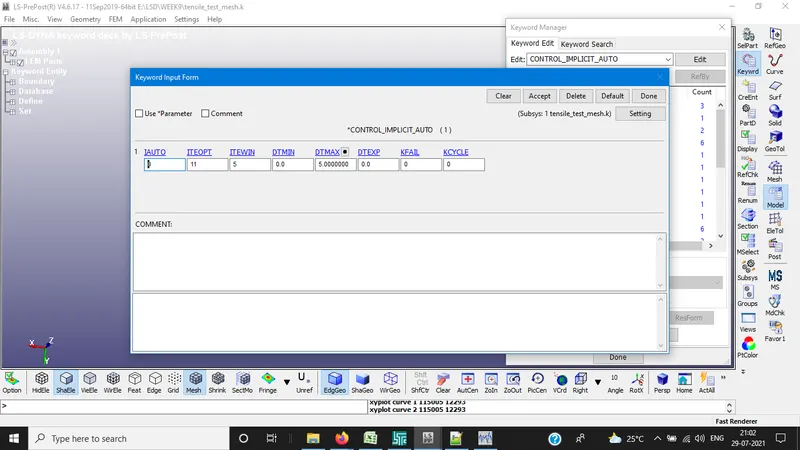
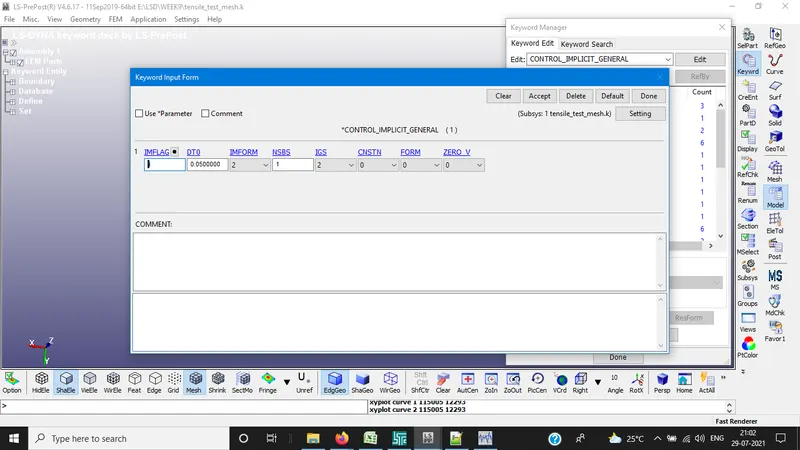
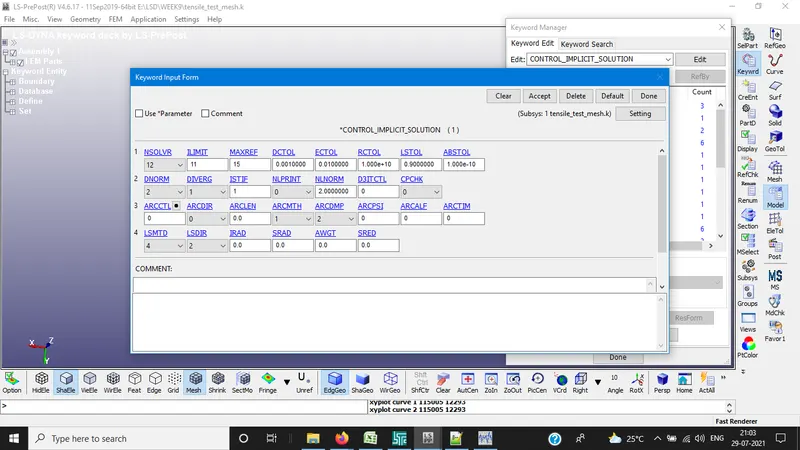
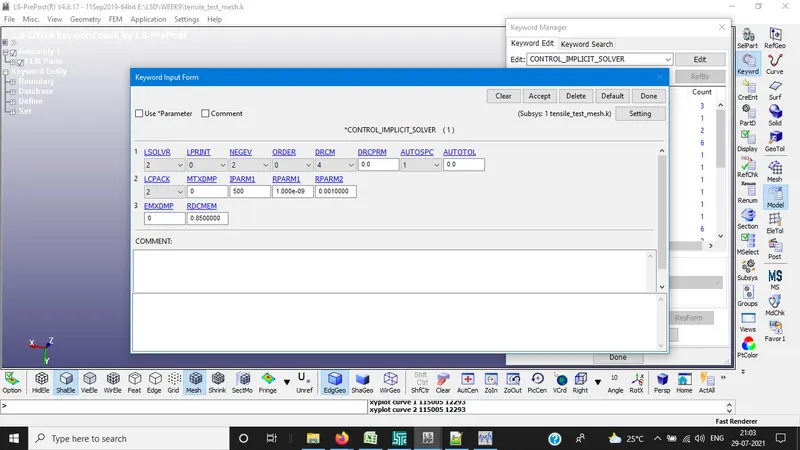
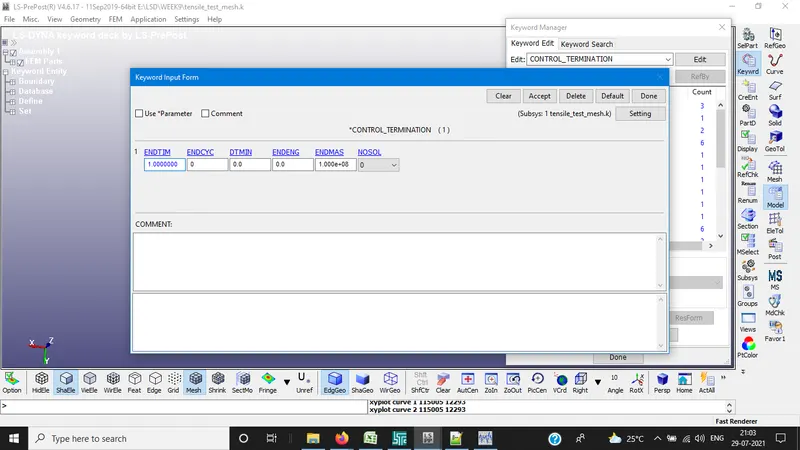
CONTROL CARDS:
RESULTS:
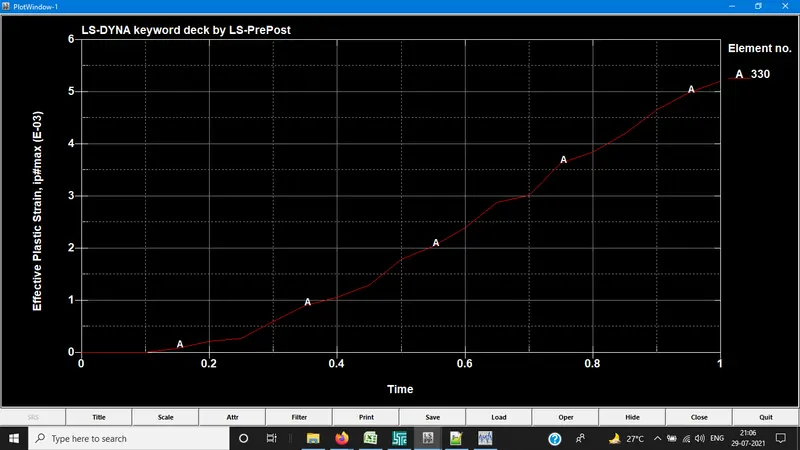
EFFECTIVE PLASTIC STRAIN FOR ELEMENT 330
STRESS - STRAIN CURVE:
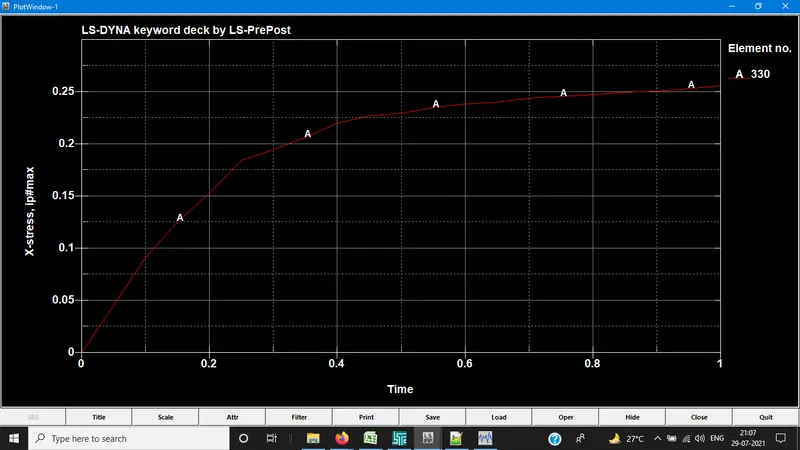
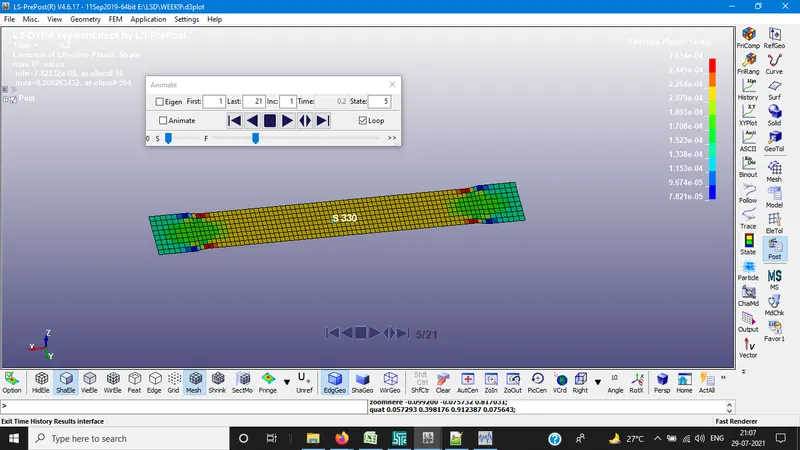
Material defined stress-strain data and simulated stress-strain data are compared. It can be seen that the elastic part is linear. The linear elastic part is calculated directly through the given young's modulus and the yielding starts after the first defined yield point in the hardening curve.
CONCLUSION:
- The stress-strain data extracted from the image is validated with the MAT_024 material model.
- The stress - strain behaviour after yielding is considered by a hardening curve which is given as an input through MAT card
- The MAT_024 material model captures the actual stress-strain behaviour in a similar manner and almost matched the defined stress-strain curve in material model.