Week 9 - Challenge 3 - Bumper
BUMPER DESIGN
9/10/2023
Shanil kumar K S
TABLE OF CONTENTS
1.Introduction
2.methodology
3.Analysis and Validation
4.Specifications
5.conclution
1. INTRODUCTION
This report presents the results of the draft analysis conducted on the Bumper Plastic component. The purpose of this analysis is to ensure that the component meets the required draft angles and is suitable for manufacturing. Additionally, this report discusses the creation of the tooling axis using the Direct Offset method.
2.METHODOLOGY
The draft analysis was performed using CATIA software. The model was examined for draft angles to ensure that it adheres to the specified design requirements.
3.FINDINGS
Tooling axis creation
the tooling axis is choosed by selecting the plane which will allow for easy removal of the part without causing any damage.
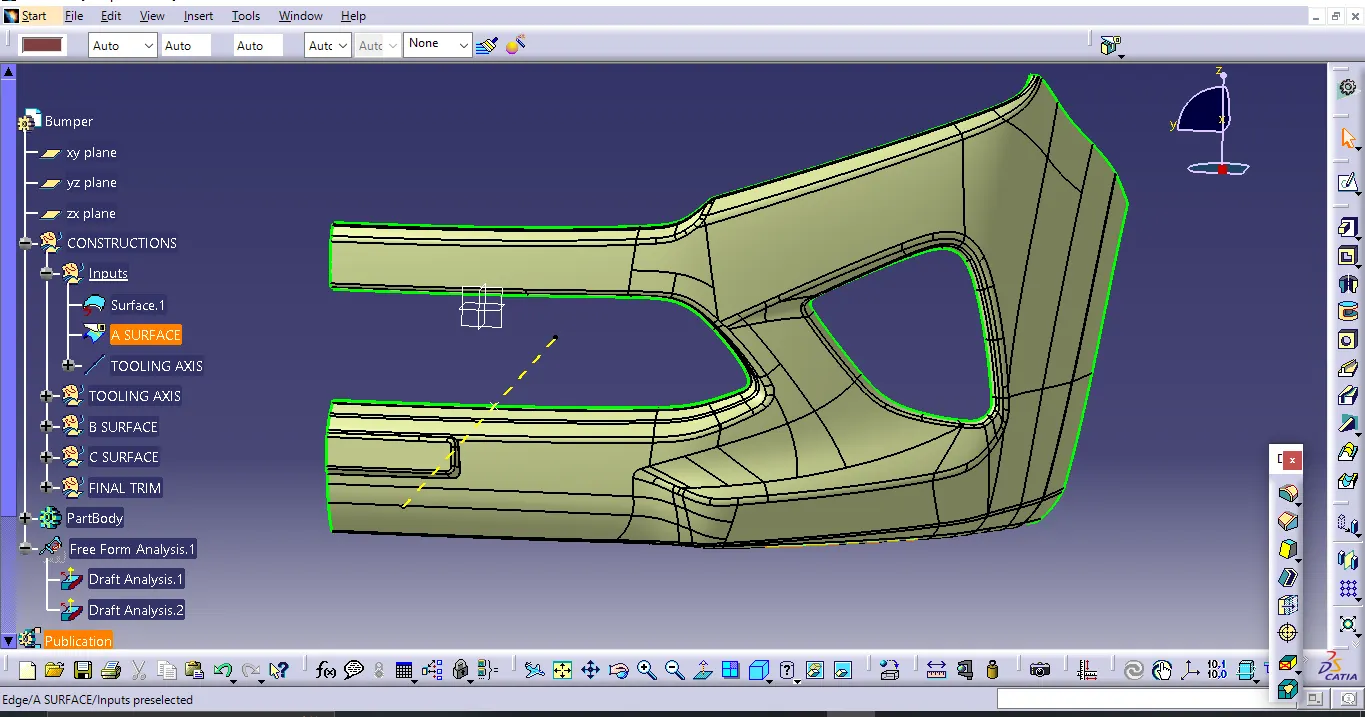
The draft analysis revealed the following key findings:
The draft angles throughout the Bumper Plastic component were carefully reviewed. It was observed that the draft angles consistently met the specified requirements of 3 degree. This ensures that the component can be easily removed from the mold during manufacturing.
- Draft analysis on the surface
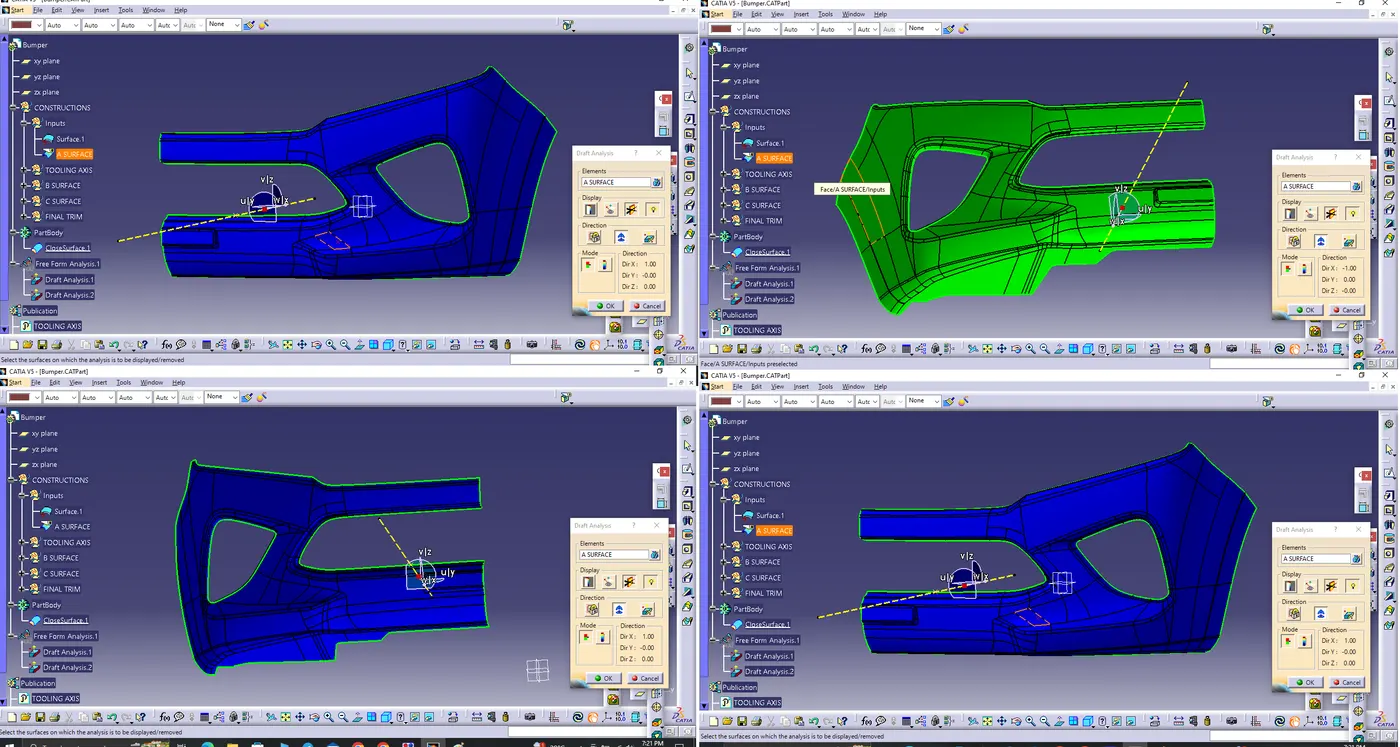
- Draft anlysis on the part body
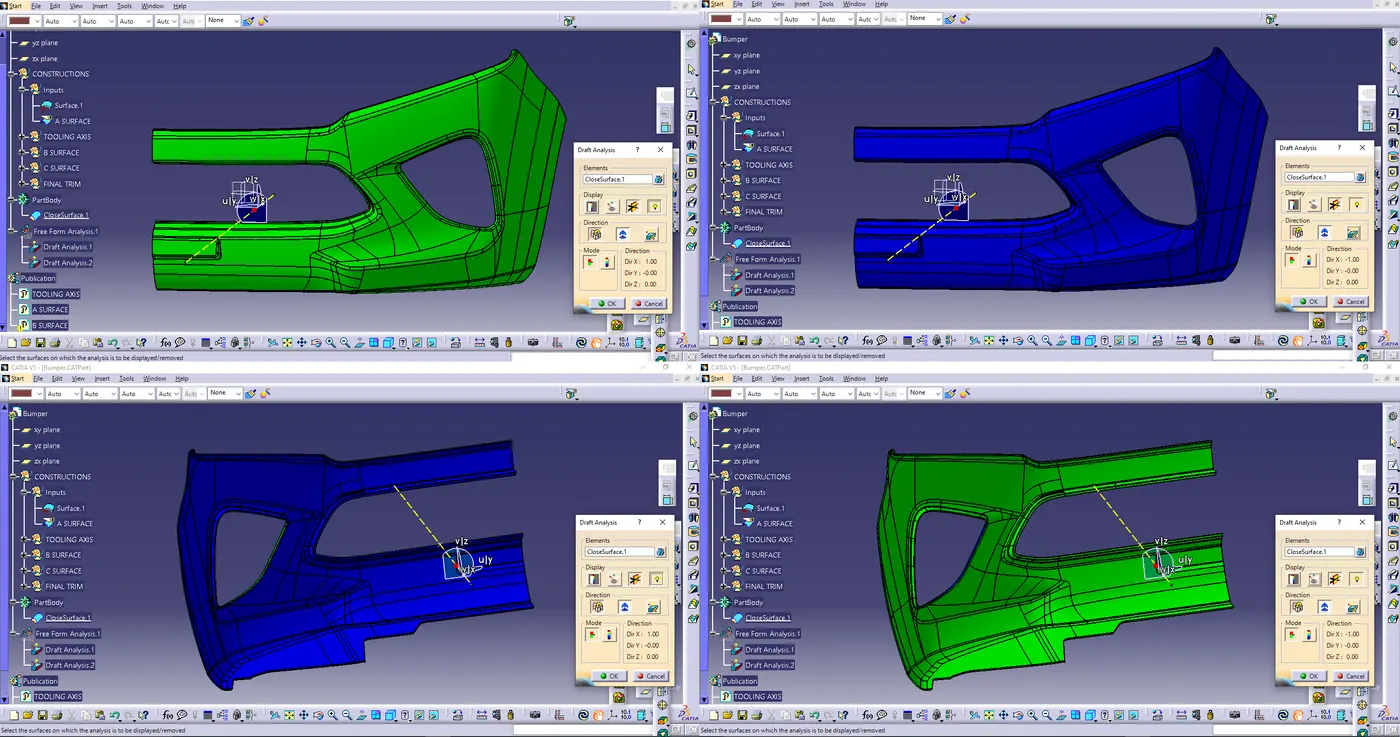
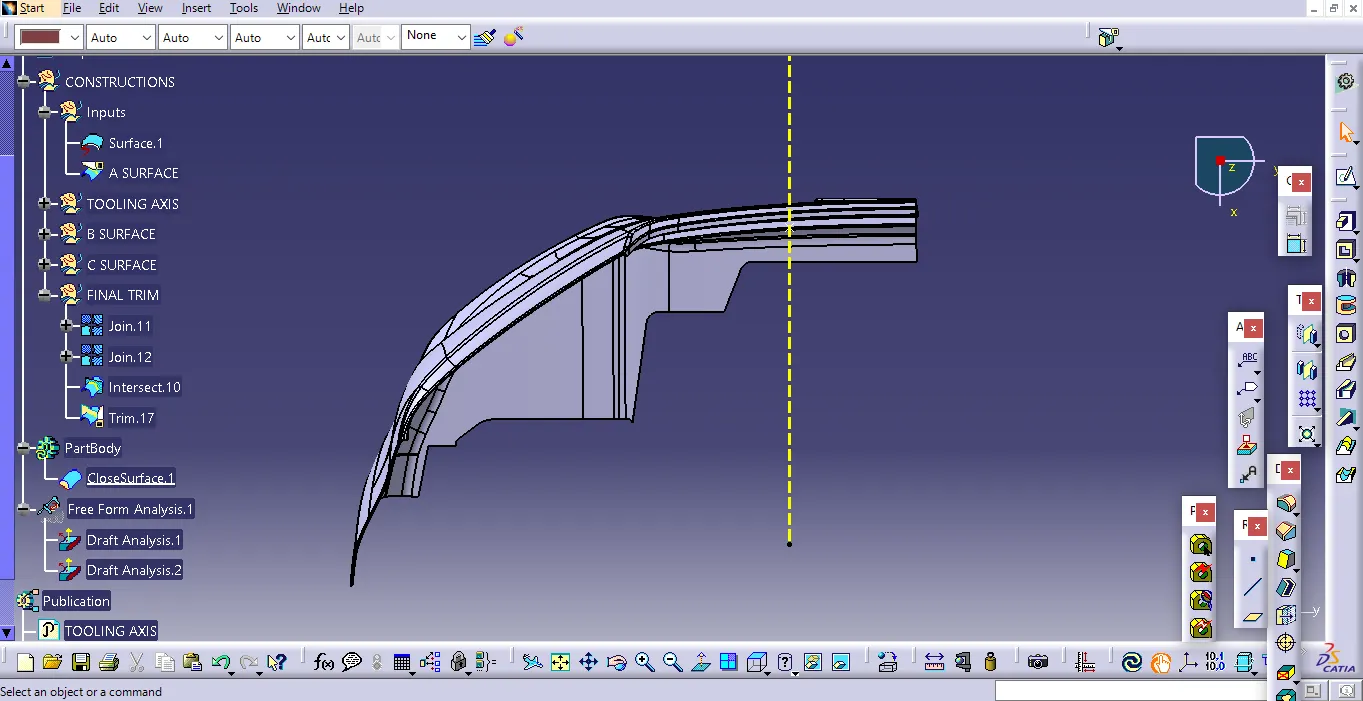
- Screenshots of the solid model with the proper color code of the draft angle in various orientations (Isometric, Front, Side, and Top View)
- ISOMETRIC VIEW
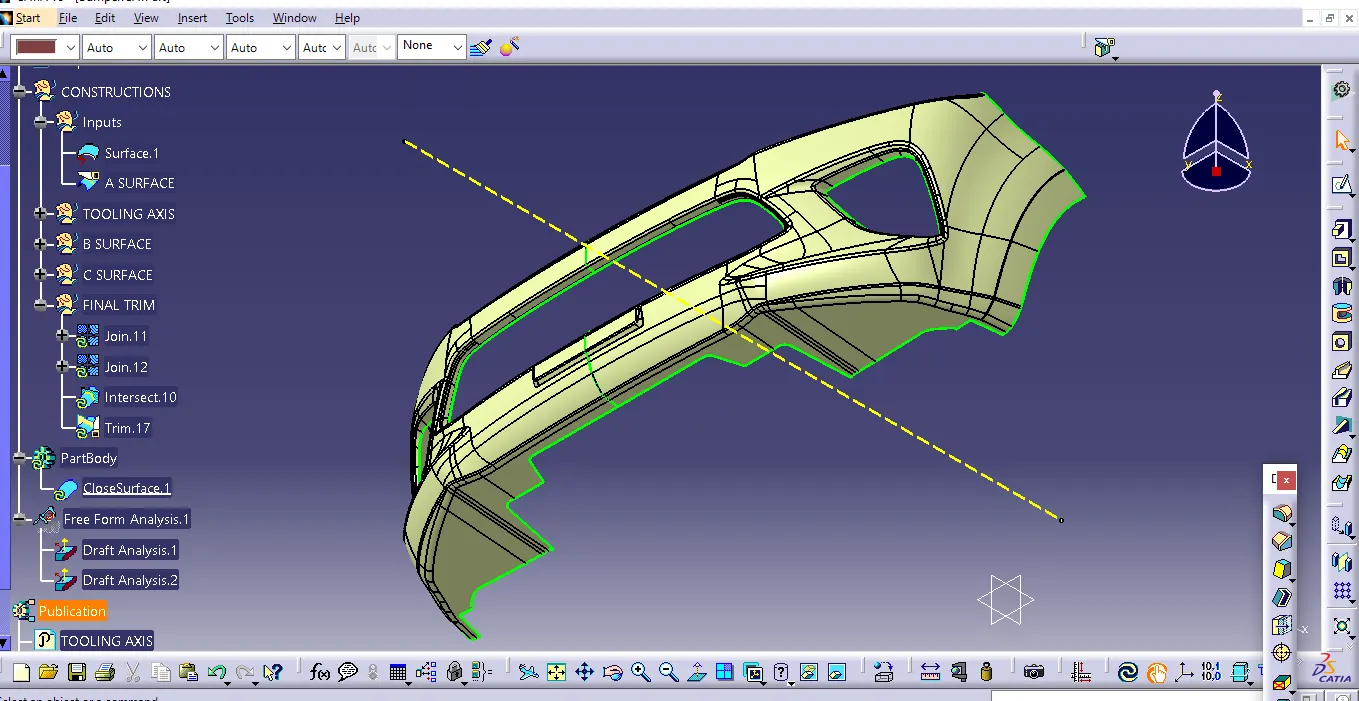
- FRONT VIEW
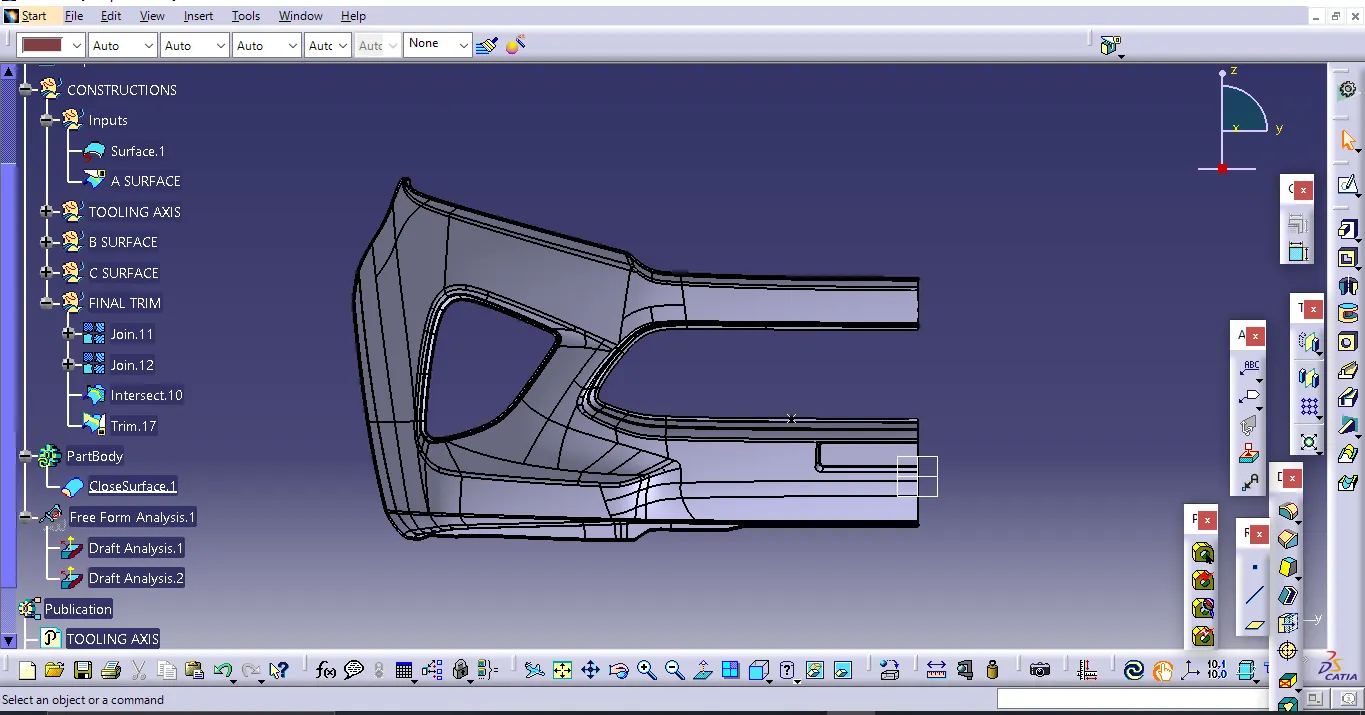
- SIDE VIEW
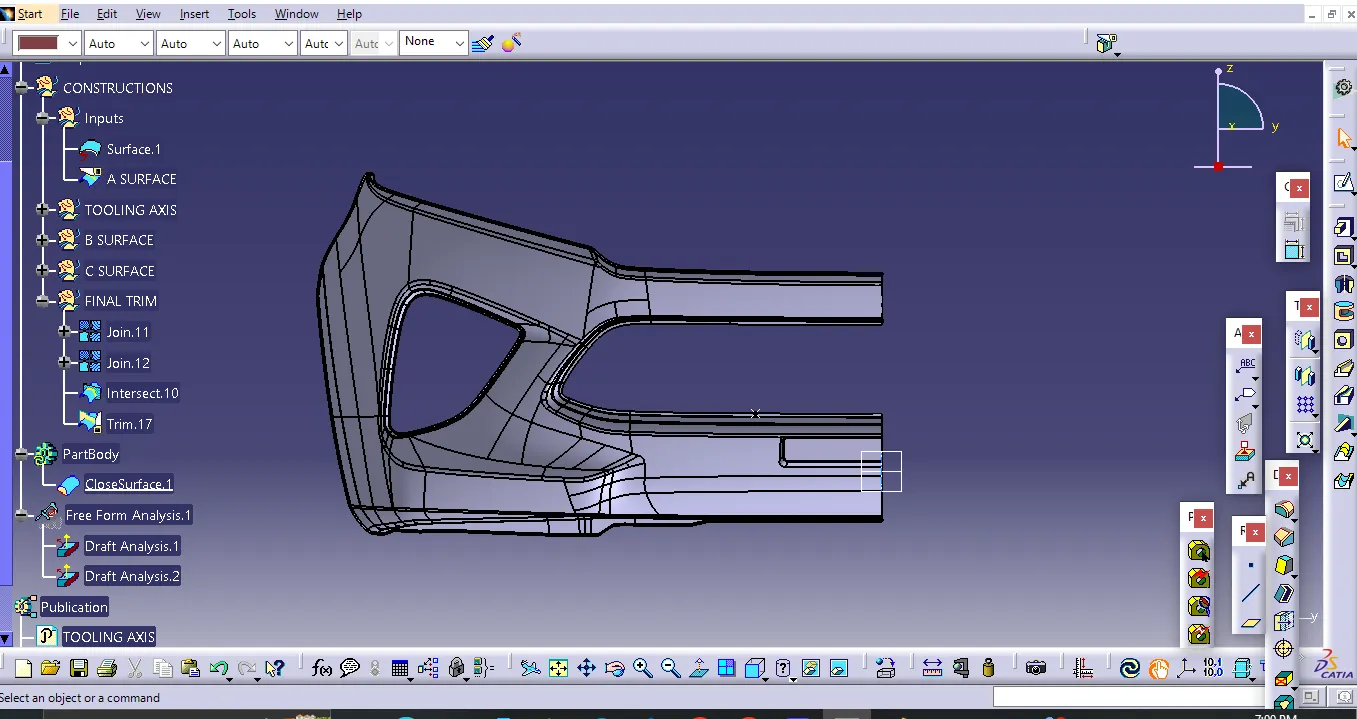
- TOP VIEW
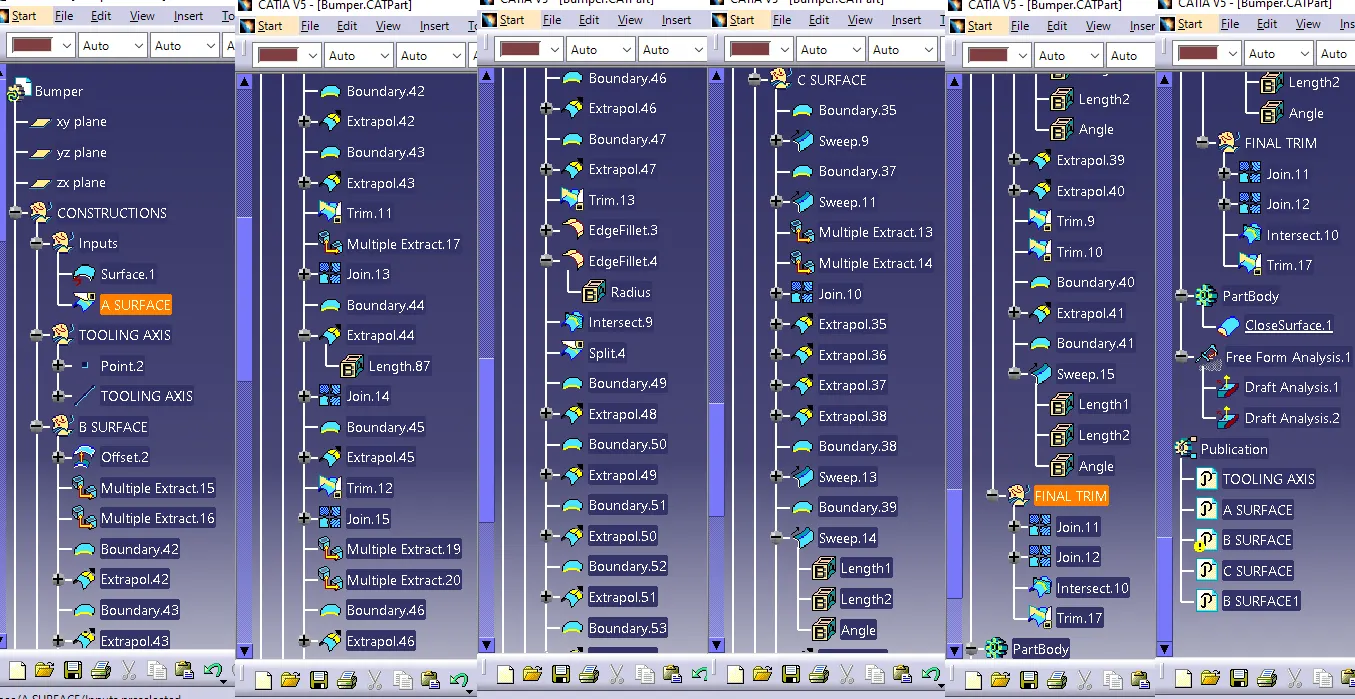
- Expanded Specification Tree (after completion of all steps):
4.SPECIFICATIONS
the parts are drawed with the following specifications
length = mm
angle = degree
time = seconds
5.CONCLUTION
The draft analysis results demonstrate that the Bumper Plastic component meets the required draft angles, ensuring ease of manufacturing. The Class-A surfaces exhibit smooth transitions, enhancing the visual appeal of the product. The tooling axis was successfully created using direct Offset method, providing flexibility in the manufacturing process. In conclusion, the design is well-prepared for production, meeting quality and manufacturing requirements.