Week 9 Challenge
Complete the energy management strategy model with battery, UC and fuel cell for the positive power and distribute the power demand among these components. Set simulation stop time to 598 sec.
The output of the model should be the power request from UC, fuel cell and battery.
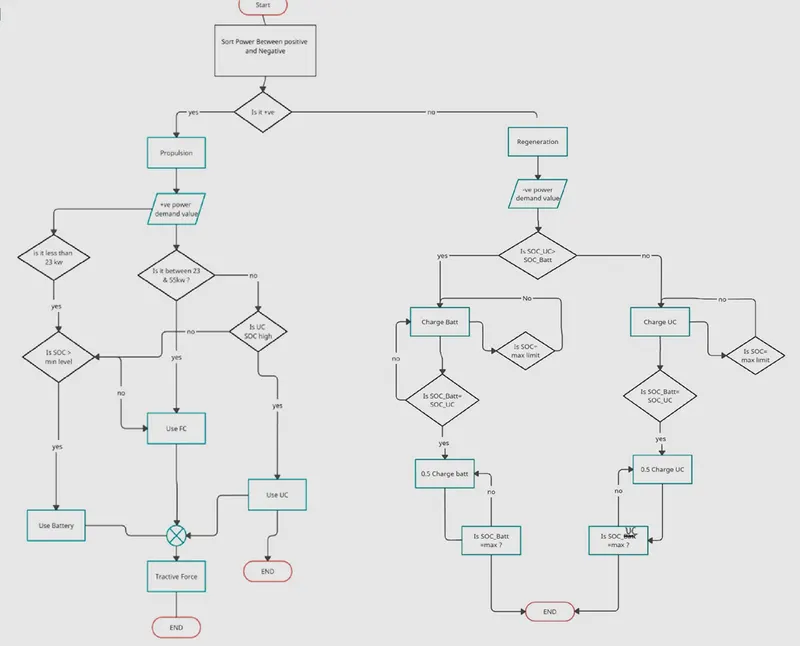
The above Flow Chart shows the flow of Energy Management System (EMS) and it shows how the 3 energy sources are distributing the power that is been required by the vehicle , by which the vehicle will always run on the maximum possible efficiency.
We will discuss the flow chart in detail :-
First it will check weather the power requirement is positive or the negative after separating it will come to know that if the power demand is positive than the vehicle is in demand of the power to propel the vehicle and if the power request is negative its in the condition of regeneration.
We will have first look on the positive power demand :-
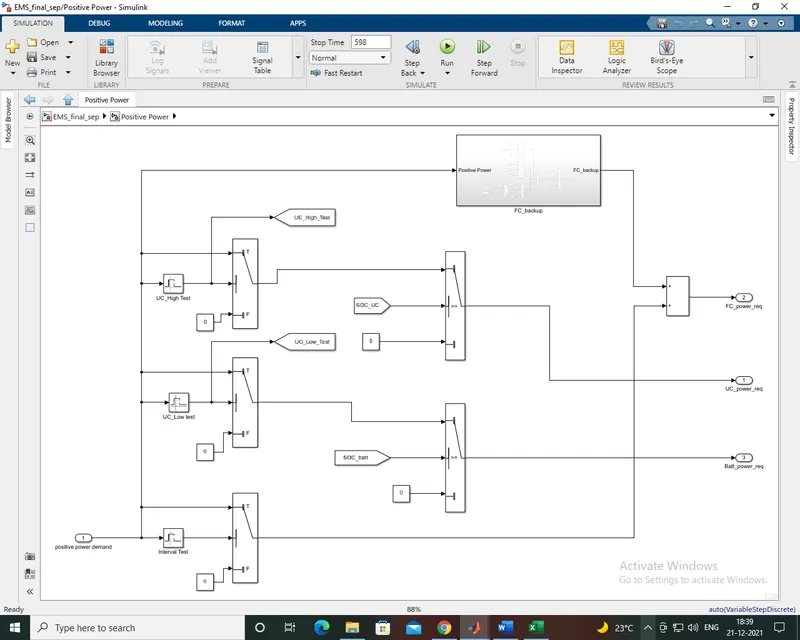
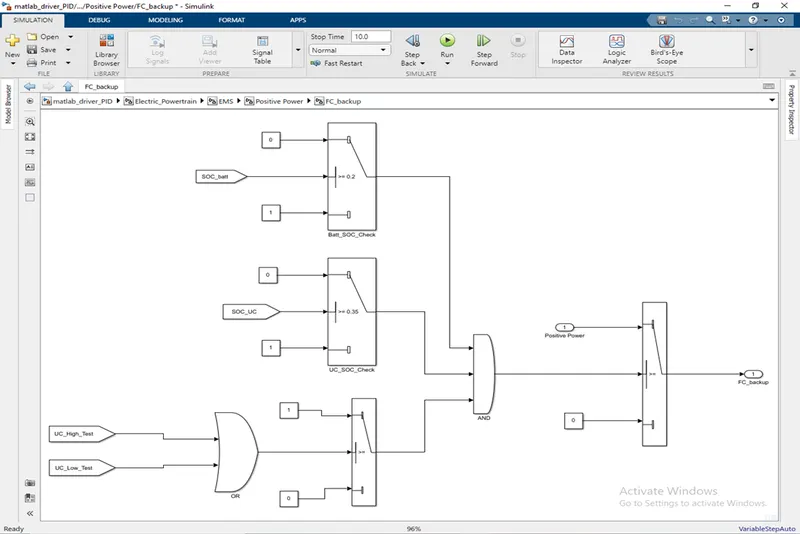
We will first be checking the power demand from the vehicle if its in between 23Kw and 55Kw than the Fuel cell (FC) will be used to supply the power and if its less than 23Kw than the power will be supplied by the battery but before the battery is supplying the power to the vehicle it has to check the SOC of the battery if its high than the min SOC level than only the battery will supply the power or else it will not supply the power. And when the SOC of battery is less at that time the power request will be shifted to the FC even if it is required to work in low efficiency region. When the power requirement is higher than 55Kw than the UC should supply the power but before this we will check for the SOC of UC here if its higher than minimum SOC level of UC than an than only the UC will supply the power or lese not and then it will shift towards the battery power and in this way there will be the positive power supply flkow.
We will be now showing toward the negative power demand of vehicle :-
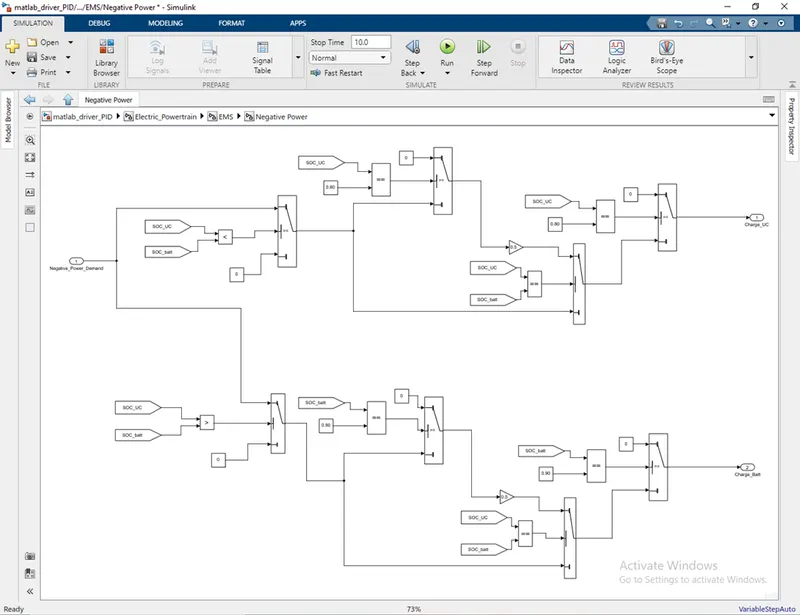
When it have checked for the negative power req. from the vehicle than the next step is that it will check weather the SOC of UC is higher than the SOC of battery if its yes than it will pass the negative power to the battery and at that time it will check the SOC of battery is it below the max SOC of battery and if yes it will charge the battery and when its greater than the max SOC of battery than it will stop charging the battery.
And if SOC of UC is less than SOC of battery than it will charge the UC but even at this this it will be checking the SOC of UC is less than max SOC limit of UC and if yes it will keep on charging the UC still its not equal to the max SOC of the UC.
After this again in battery , if the SOC of battery and SOC of UC are equal to each other than it will be charging at half the current of the total current that is been supplied , the same applies to the UC , if the SOC of UC is equal to SOC of battery than the UC will be charged at half the rate of total current supplied.
In this way there will be the Energy Flow Management between all the 3 power storage systems.
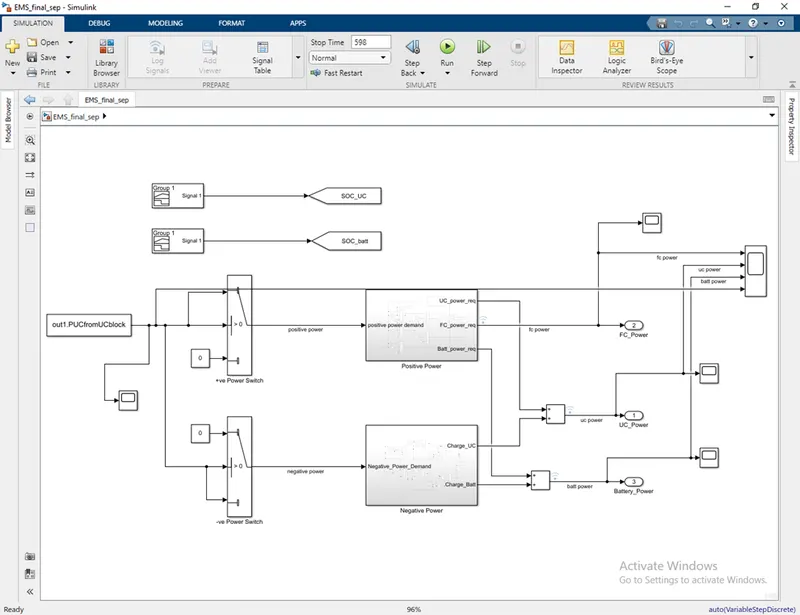
The Simulink model which is been developed for this is as shown below:-
Separation of Power requirement between positive and negative :-
Positive Power Subsystem :-
FC Backup Calculation :-
Negative Power subsystem :-
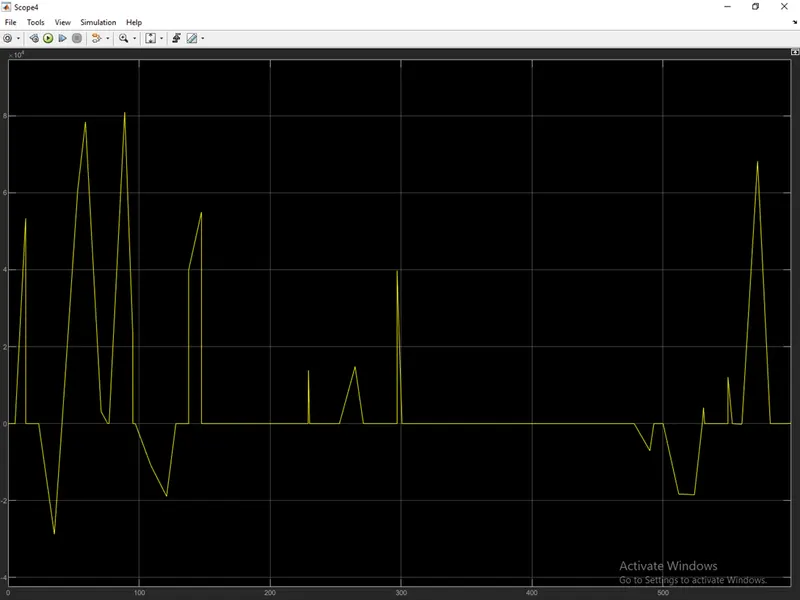
The power demand from the vehicle profile is as follows :-
The result for the power supplied by the three power source is as follows :-
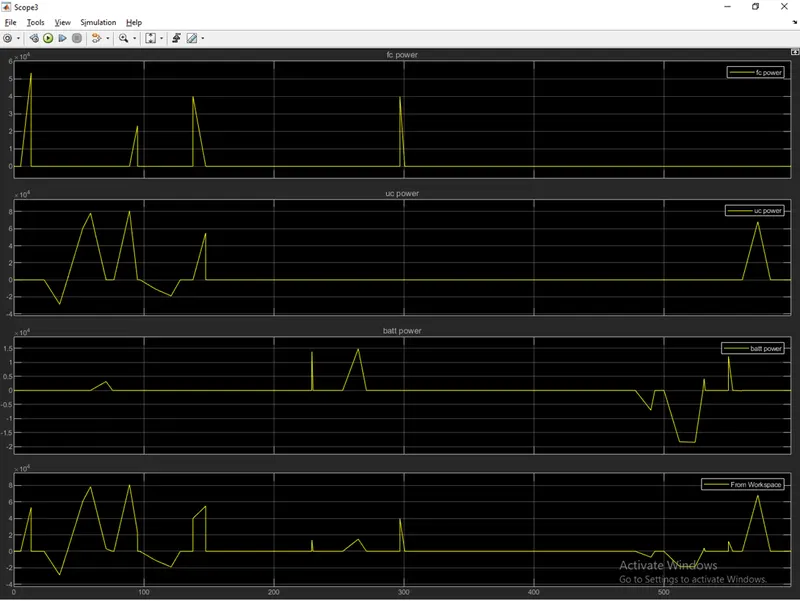
From the above scope we can see that the EMS is able to supply the proper power from the 3 power sources as per set conditions in the logic, the scope shows the graph of FC power , UC power , battery power and the actual power request , we can see that whenever the power demand has went above the 55Kw at that time the UC is providing the power and when its between 23kw and 55kw at that time FC is suppling power and at lower power demand i.e below 23kw at that time battery is supplying the power.
Note :- I have attached the Matlab file pls go through it.