Week 9 - Attachment Feature Creation - Challenge 2
DOOR TRIM WITH DOG HOUSE
Generally, the part component that we design must be toolable or manufacturable. As we know that some exterior and most interior parts of automotives are made up of plastics. In that approximately 80% of them could be manufactured by Injection molding. It has two halves- Core half and Cavity half, In which one is movable and the other one is fixed. Every faces of the part component must clear the main tooling axis direction in order to be manufacturable, there are some exception in which sidecores are used addtionally.
There are three ways to find the tooling axis direction-
1. X,Y,Z axis method
2. Normal to surface method
3. Bisecting method
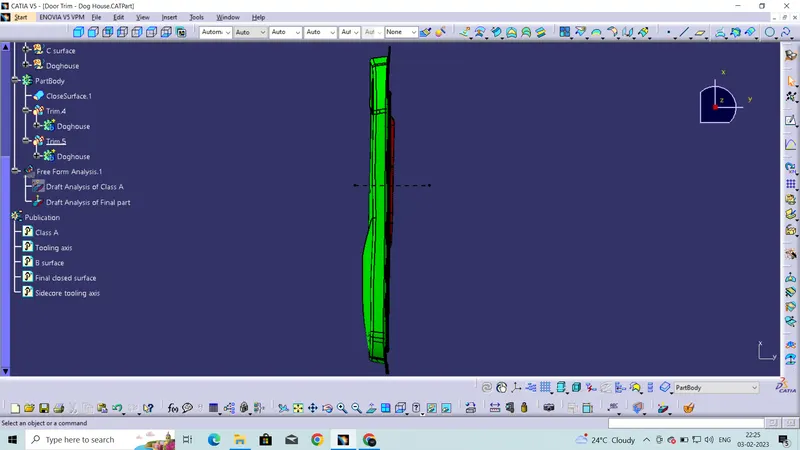
I have found the tooling axis direction of door trim by X,Y,Z axis method
Tooling axis direction of Door trim:
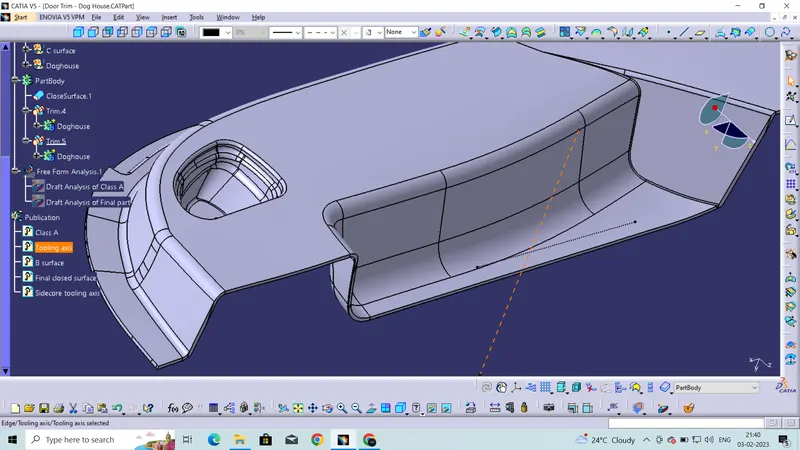
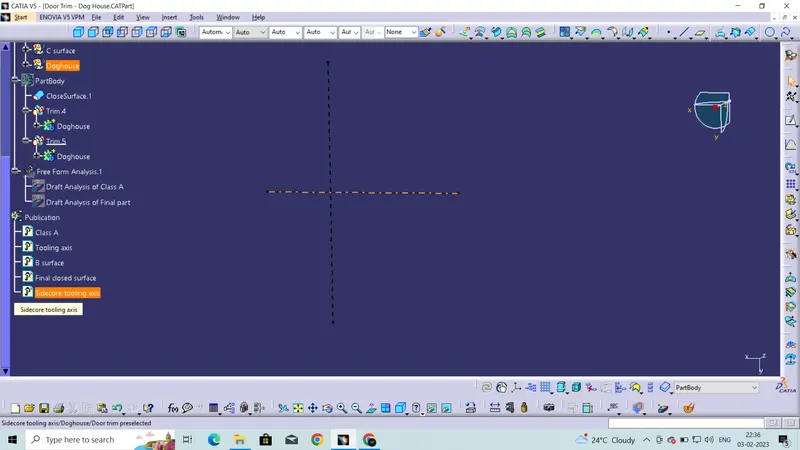
Sidecore axis direction-
Draft analysis-
Draft analysis is the technique that is used to analyze whether the part component that is designed in the catia part workbench is manufacturable based on the draft conditions applied.
Design rules
Nominal draft value of component- 3 degree
Thickness of dog house- More or less equal to the wall thickness of part component
The intersection of the dog house and B surface must be with minimum thickness to avoid sinkmarks, process to cut the intersection thickness is called Coring.
Draft value of dog house ( Outer surface )- 1.5 degree
Draft value of dog house ( Inner surface )- 0.5 degree
Draft analysis of Dog house ( Outer surface ) with respect to main tooling axis direction-
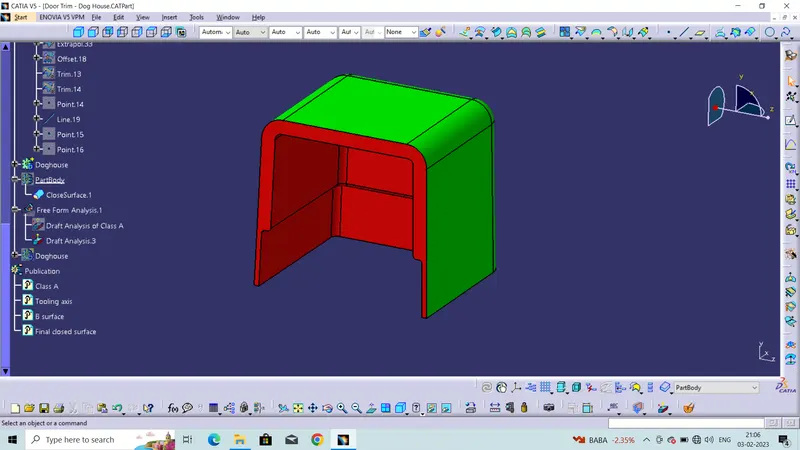
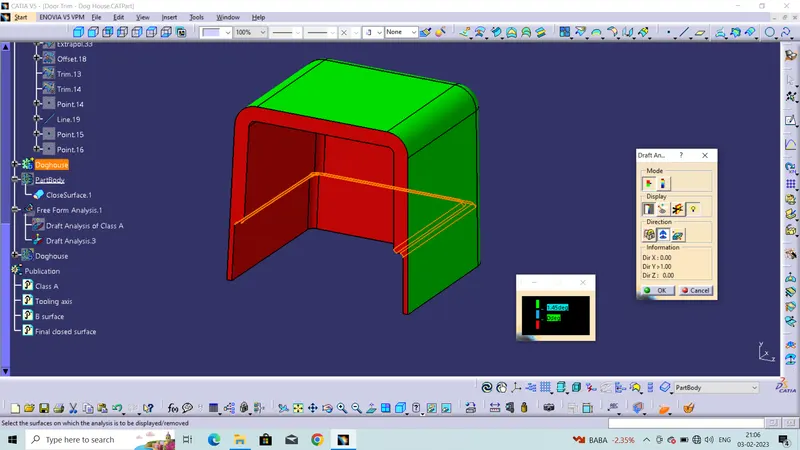
Draft analysis of Dog house ( Inner surface ) with respect to sidecore axis direction-
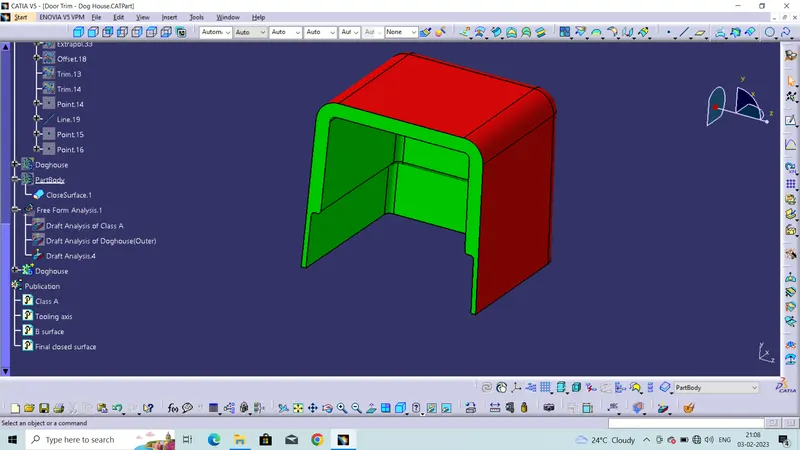
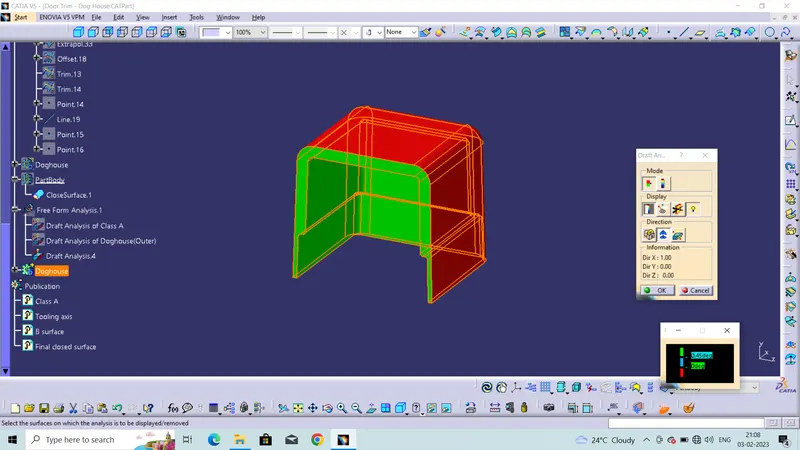
Draft analysis of Class A surface-
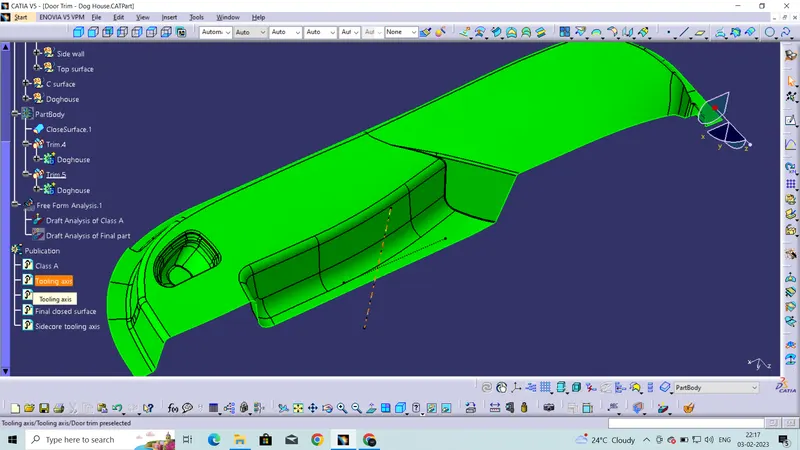
Draft analysis of Part component-
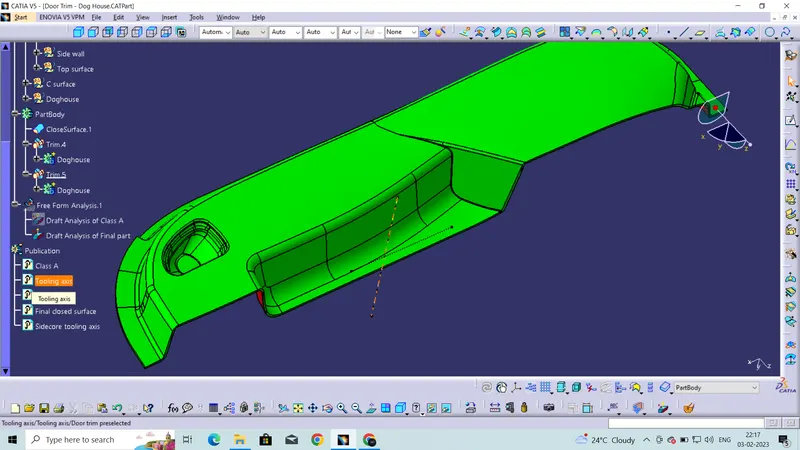
The sidecore axis direction will always be normal to the main tooling axis direction
Final part component in various orientations-
Isometric view
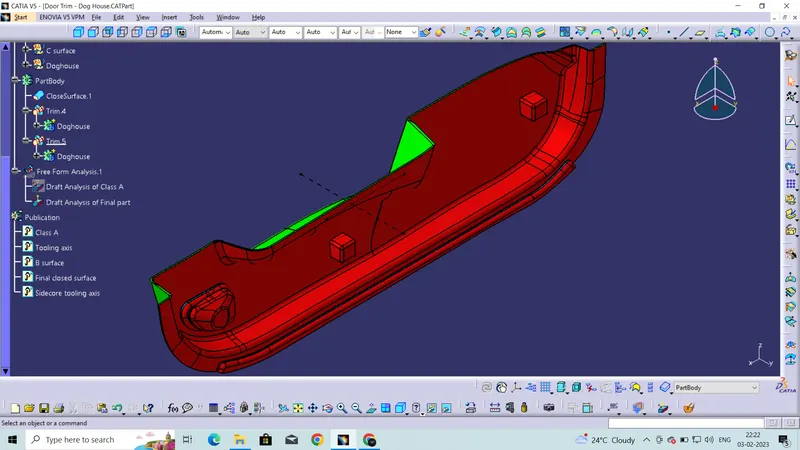
Front view
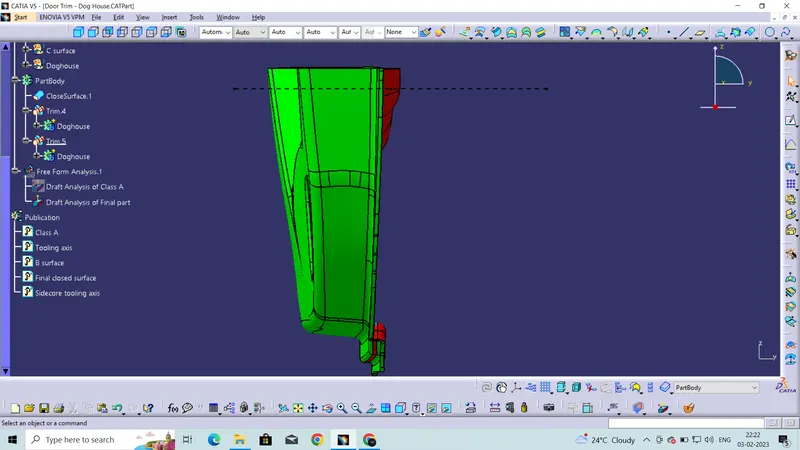
Back view
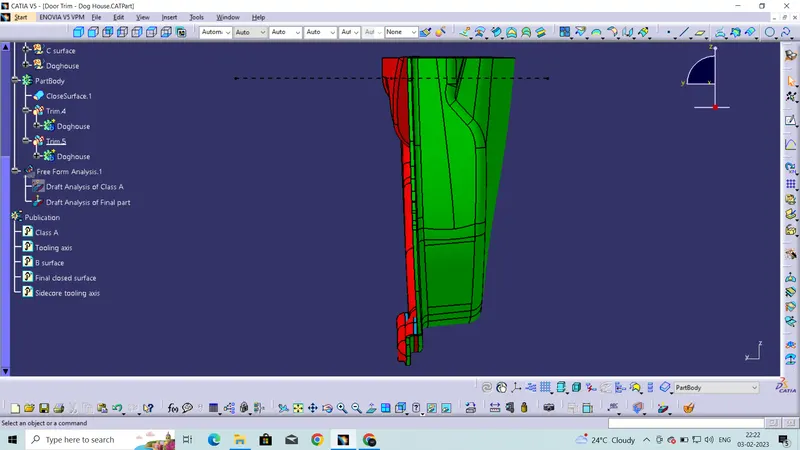
Left view
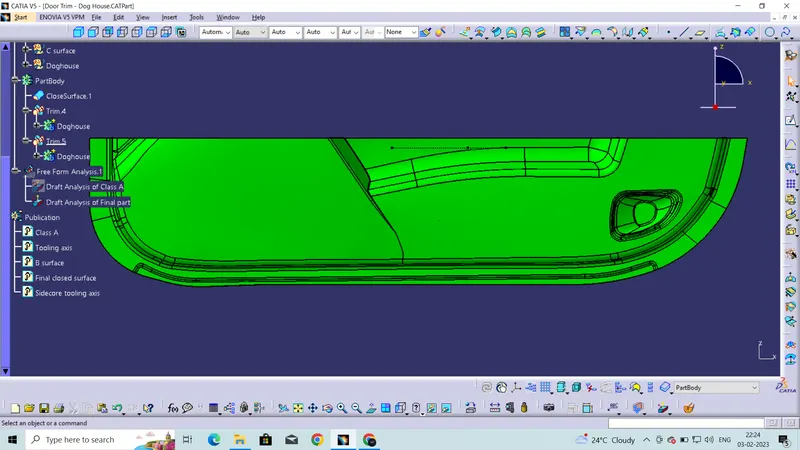
Right view
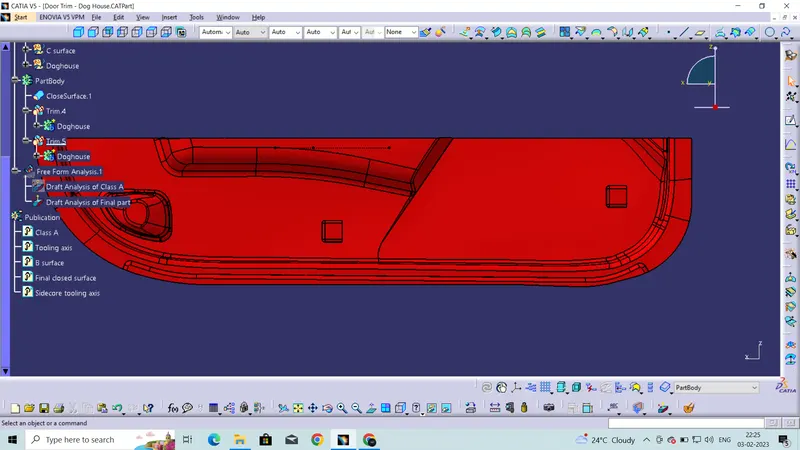
Top view
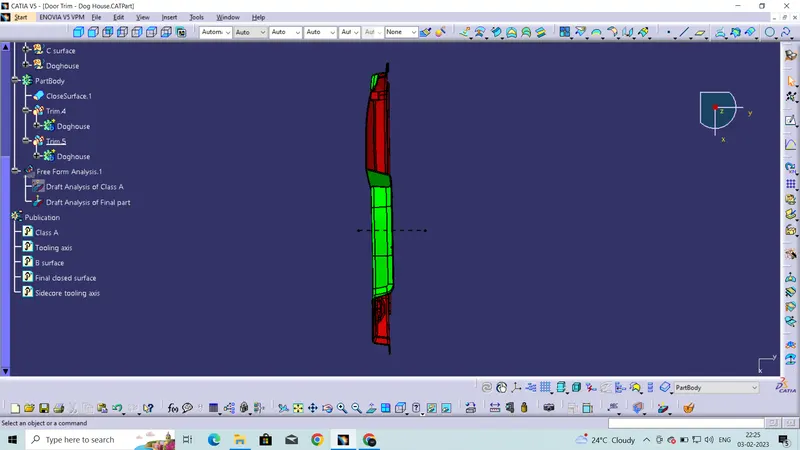
Bottom view