Week 8 - Universal Joint
#8 Week Assignment-Introduction to Ansys Workbench
Aim: To perform Transient Structural Analysis on a double universal joint with a spring.
Objectives:
- Case setup and execution for 3 different materials.
- Obtain outputs for prescribed parameters(Eq.Stress & Total deformation).
- Compare the results of the 3 cases.
- Conclude on the case observation.
Setup:
- Open the Ansys Workbench.
- Insert the Transient Strucural window.
- Import the geometry.
- Open the Mechanical Module.
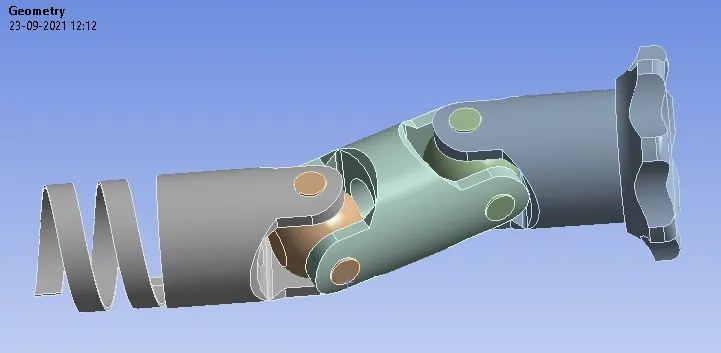
Joints under Conections:
- Create a joint load of body to ground type and select the fixed in type of joint and select the face of the spring to make it fixed for the simulation.
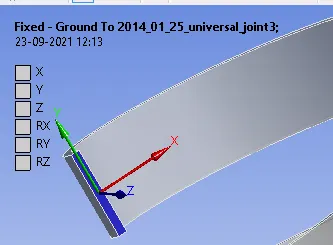
- Create a, Joint-revolute and Type:Body-Ground, select the face of the component as following,
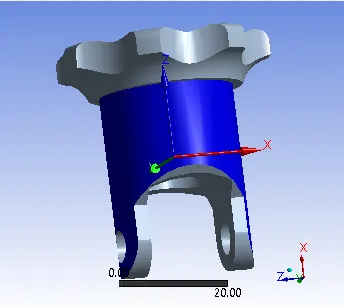
- Create another revolute joint body to ground and select the face of the component as below.
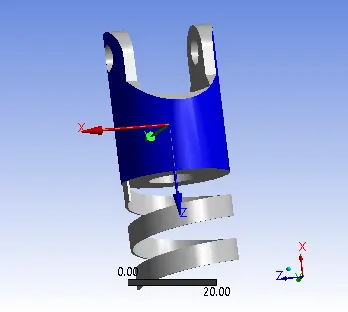
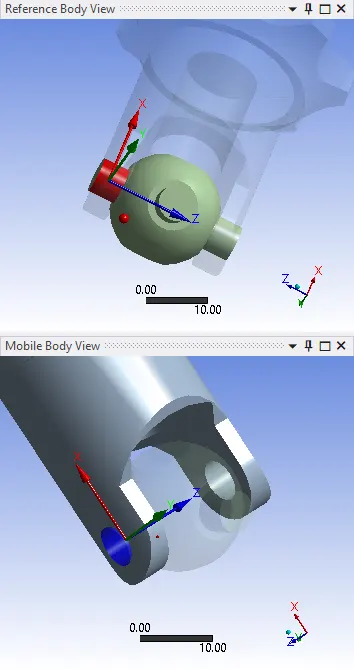
- Create multiple body-body revolute joints and select the mobile and reference faces as following.
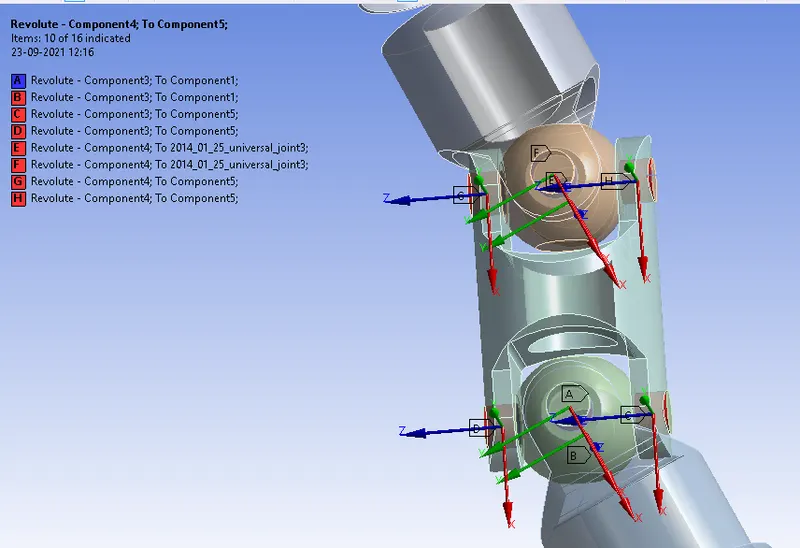
- After creating the multiple revolute body to body joints select all the joints by clicking shift and check the axis.
Meshing:
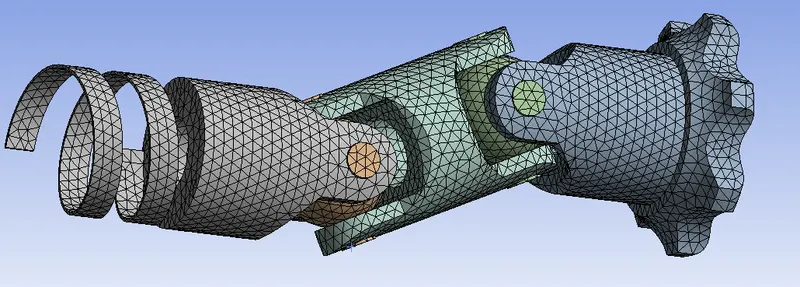
- The mesh has to be refined based on the version, try for a mesh that gives best result that means reducing the element size to get a finer mesh.
Analysis Settings:
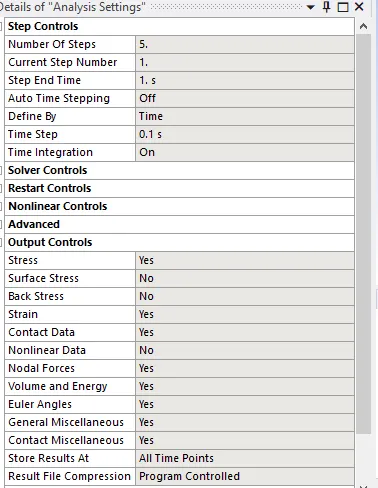
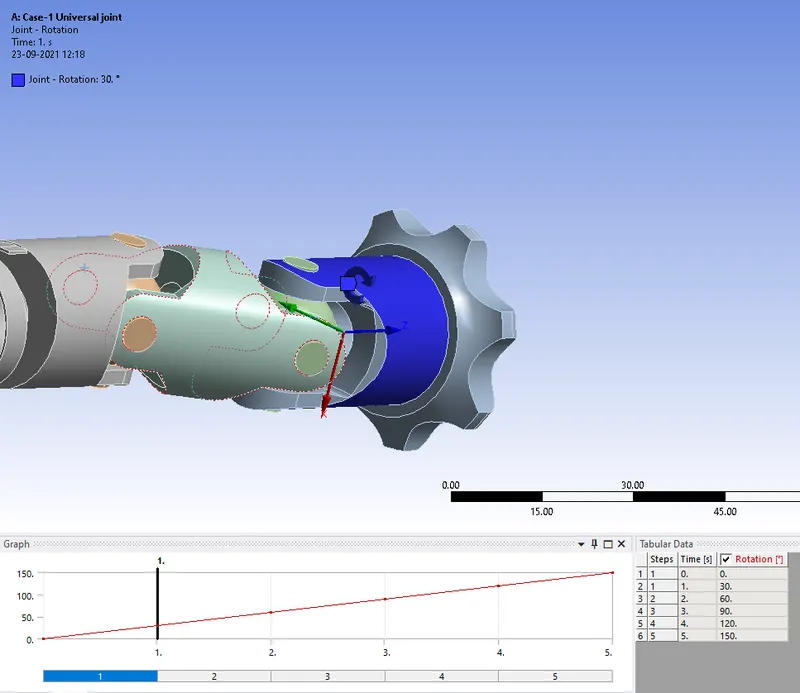
The analysis has to be run on a total of 5 steps, change the criteria as below,
- Create a joint of rotation as below and select the revolute joint thats specified below select the type as rotation and insert the tabular data in the magnitude of rotation as shown.
 .
.
- Insert the required outputs in the solution section and click on solve.
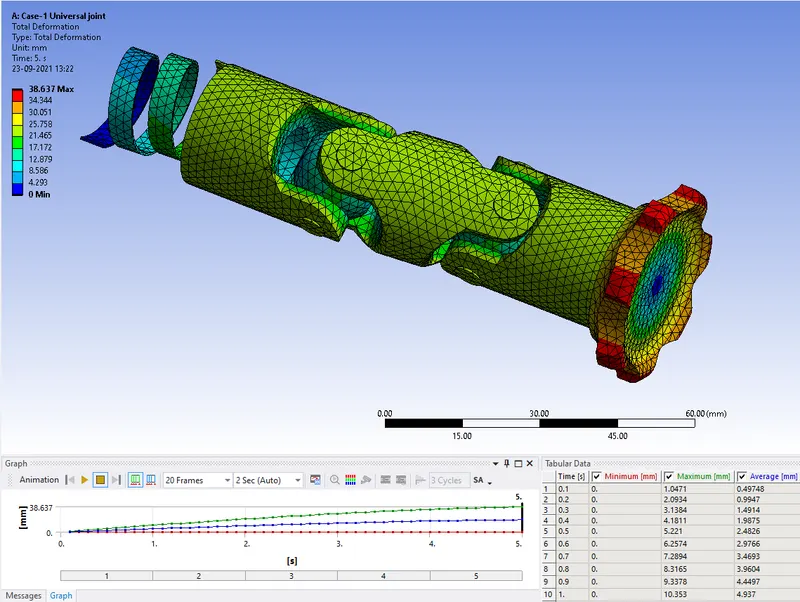
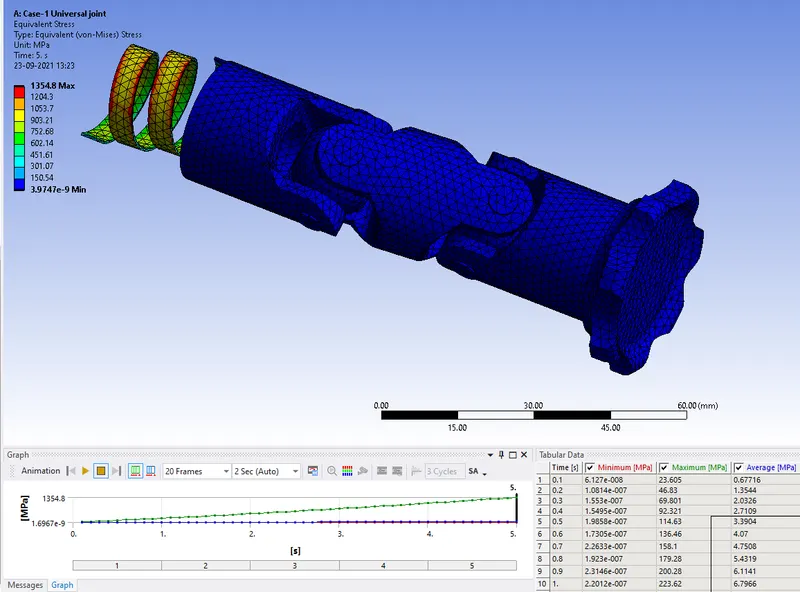
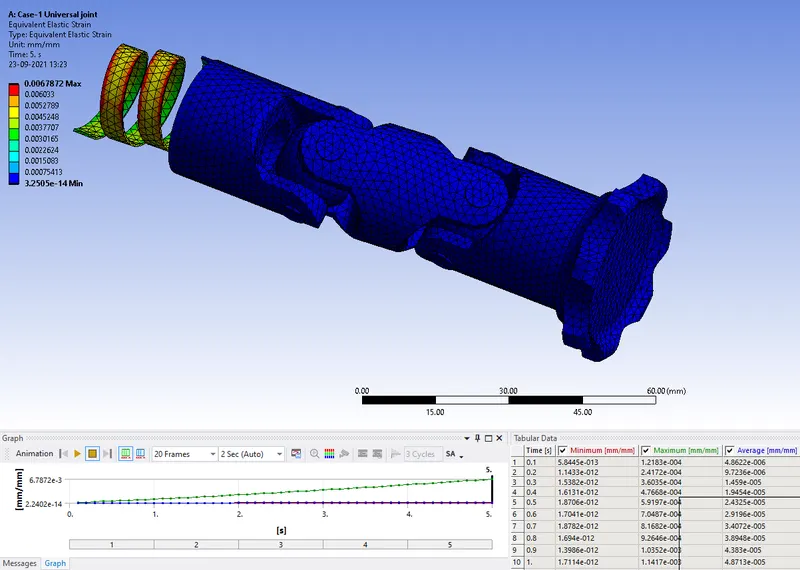
CASE-1(Material for spring -Structural Steel):
Total deformation:
Equivalent Stress:
Equivalent Strain:
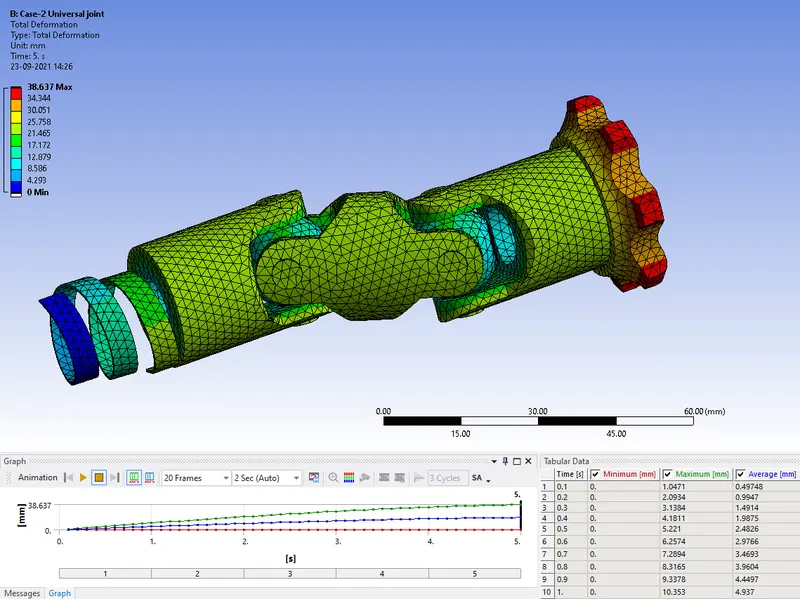
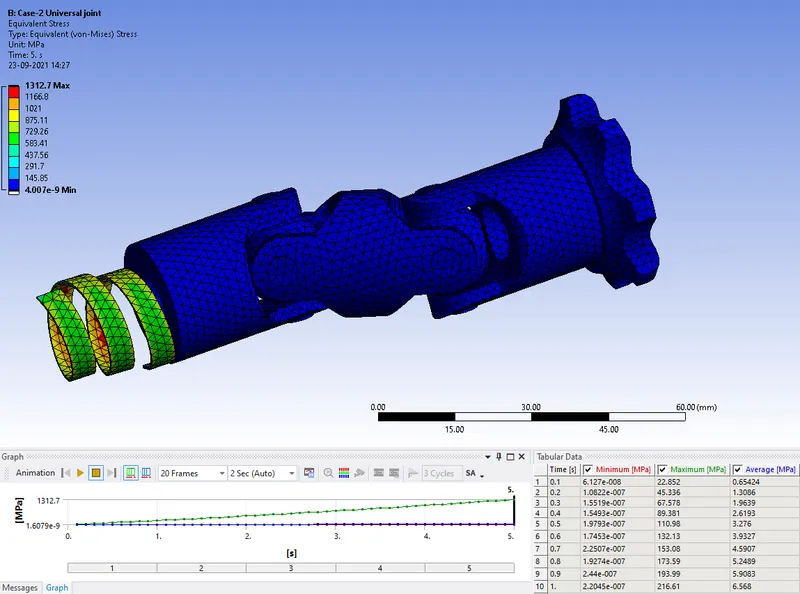
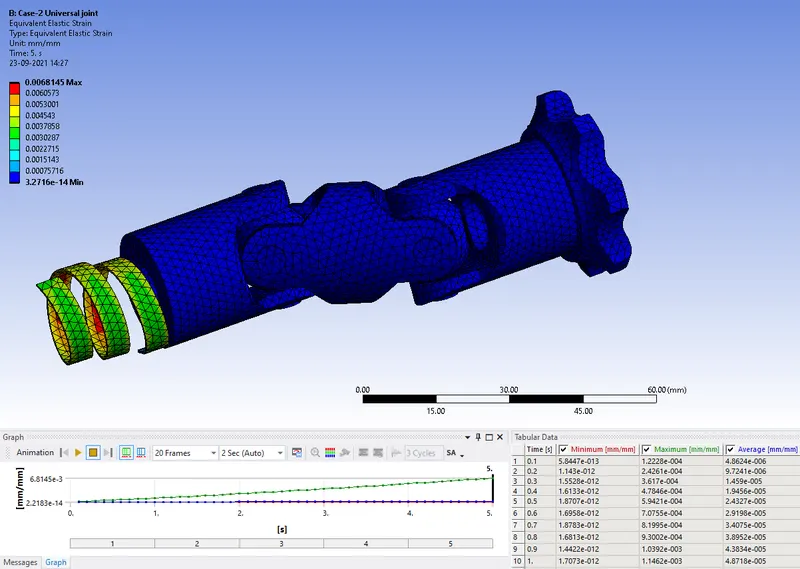
CASE-2(Material for spring -Stainless Steel):
Total deformation:
Equivalent Stress:
Equivalent Strain:
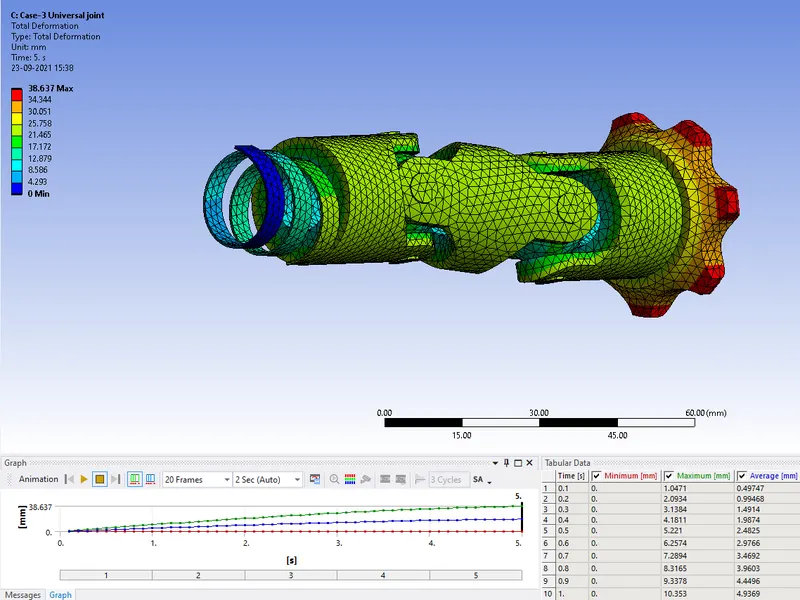
CASE-3(Material for spring -Titanium Alloy):
Total deformation:
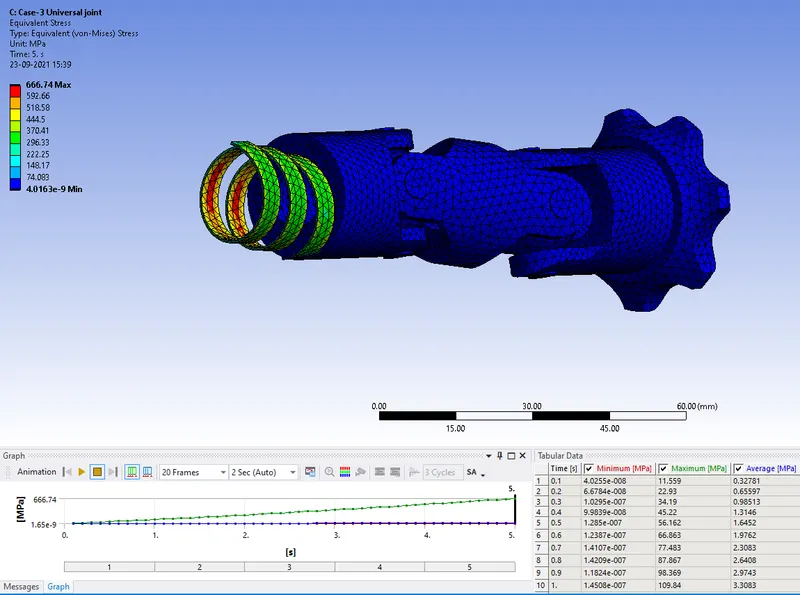
Equivalent Stress:
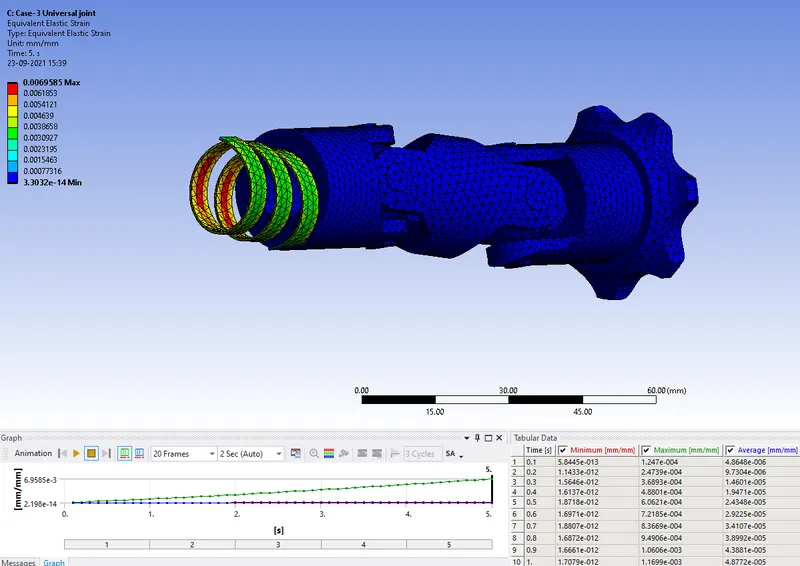
Equivalent Strain:
Comparison:
| Max. Values are Noted | Total Deformation(mm) | Equivalent Stress (MPa) |
| Case-1 structural steel | 38.63 | 1354.8 |
| Case-2 Stainless Steel | 38.63 | 1312.7 |
| Case-3 Titanium Alloy | 38.63 | 666.74 |
Conclusion:
The above simulation concludes for the given 3 materials the stress value changes for titanium alloy, there's significant drop of stress in the case-3(Titamium alloy). For the remaining 2 cases the total deformation value stays uniform.