Week 8 - Universal Joint
OBJECTIVE:
The aim of the challenge is to perform a transient structural analysis on a double universal joint with a spring using three different
materials: Structural Steel, Stainless Steel and Titanium alloy. The three materials must be used on the joint with the springs alone.And we need
to obtain the Equivalent stress and total deformation for all the three cases and compare them.
PROCEDURE AND EXECUTION:
1.Open the ANSYS workbench in the system.
2.After opening the workbench,double click on the Transient structural and rename it as Universal_Joint.
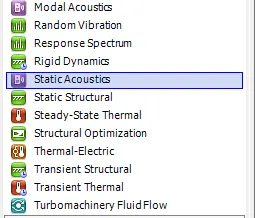
3.A table is displayed on the workbench,In it double click on the engineering data to edit for adding the material Structural steel,Stainless steel
and Titanium alloy materials.
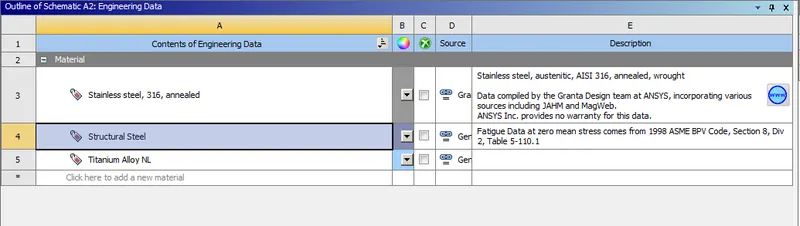
4.After assigning the data,close the engineering data and perform right click on the geomentry.
5.Import the given geomentry as given above and click on update on the model.
6. To check the given geomentry right click on it and it will open into the space claim to view the geomentry.
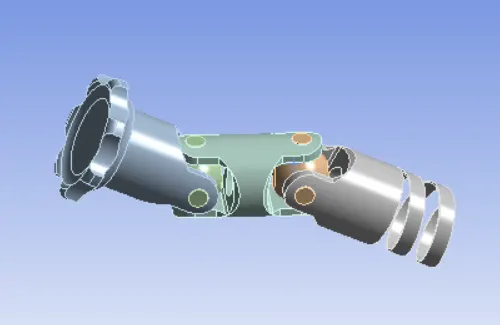
7.After checking the given geomentry close the space claim and open the model by double click on it or it can be opened by right click on the
model and select edit option to start the mechanical module to open.
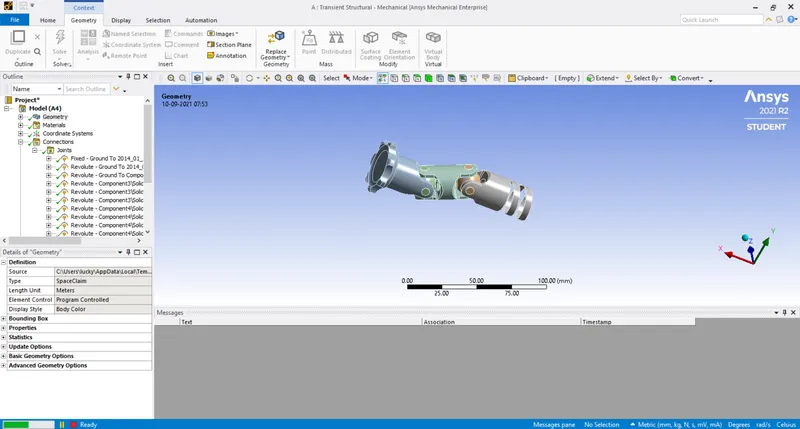
8.After opening the mechanical module,on the left side we can see a tree filter which contains all the components of the geomentry.
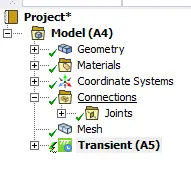
9.In the geomentry,it consists of five components and rename them as based on the components given.
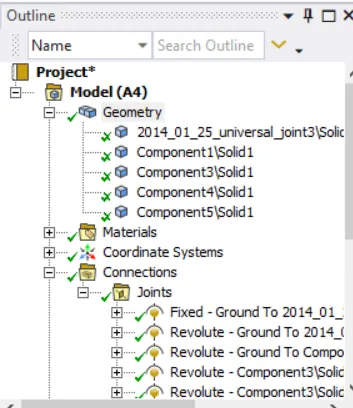
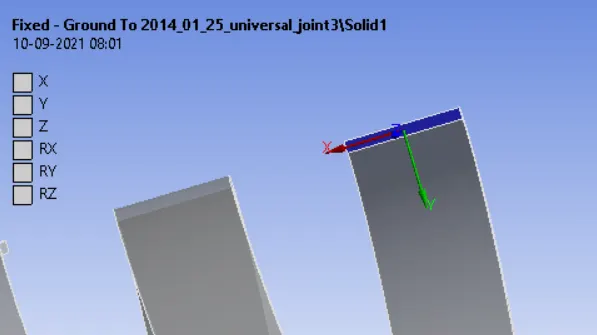
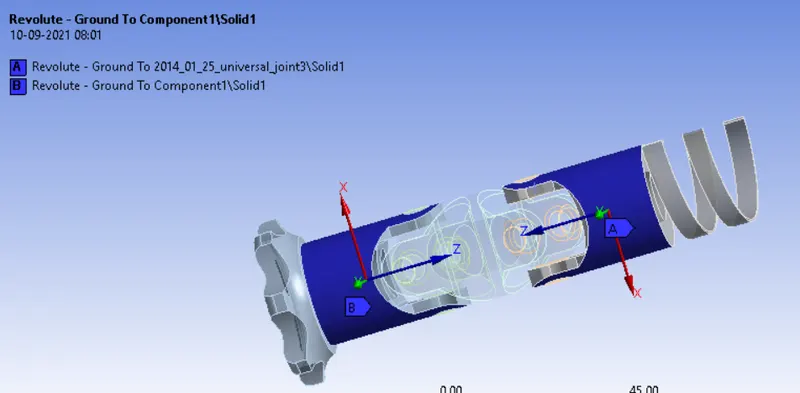
10.In the connections click on contacts and delete the default contact and create one fixed joint,two revolute joints and eight revolutional joints for
bearings as given shown fig below.
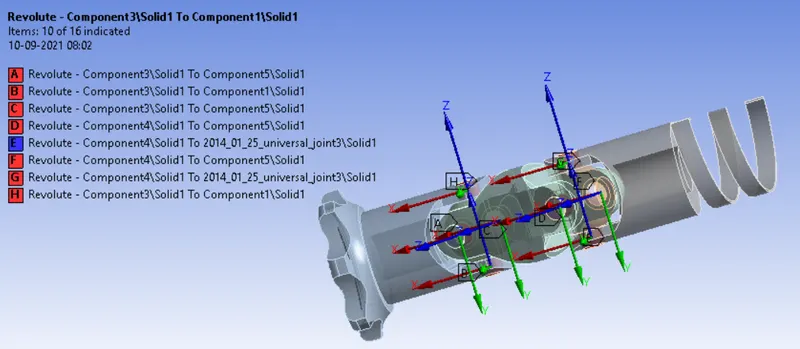
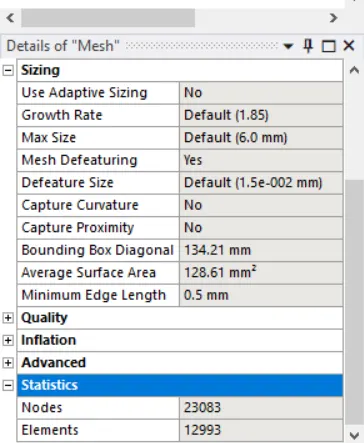
11.Now go to the mesh and change the element size to 3mm which does not exceeds the 31k elements.The generated mesh has the following
number of nodes and elements.
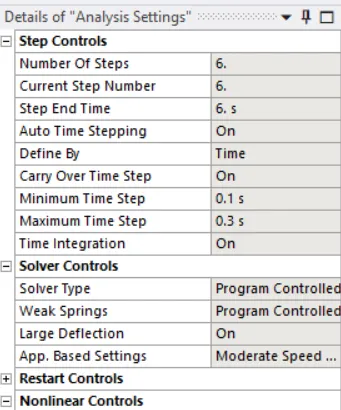
12.In analysis setting,we run the analysis by 6 number of steps as shown in below.
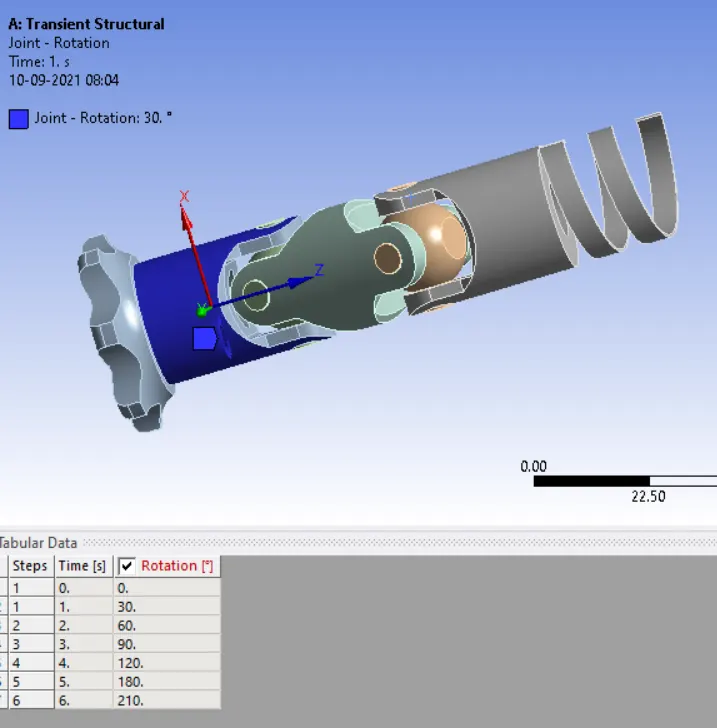
13.Now create a revolute joint by using a revolute joint from the analysis settings as shown in the fig.
14.Now we can ready to run the analysis by right clicking on the solution to solve or by using the F5 key.
RESULT:
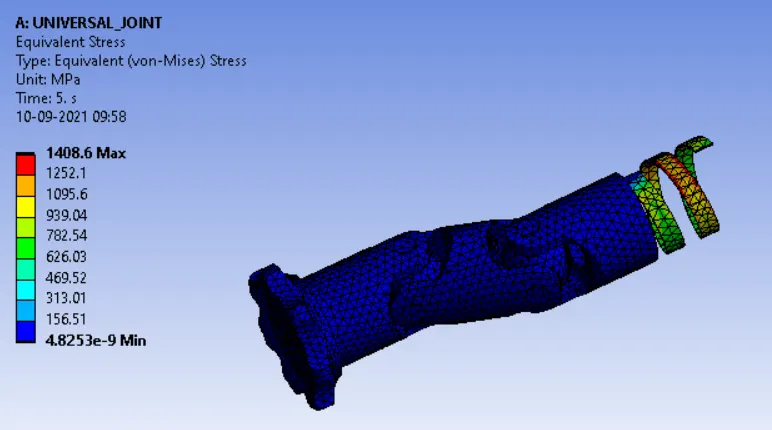
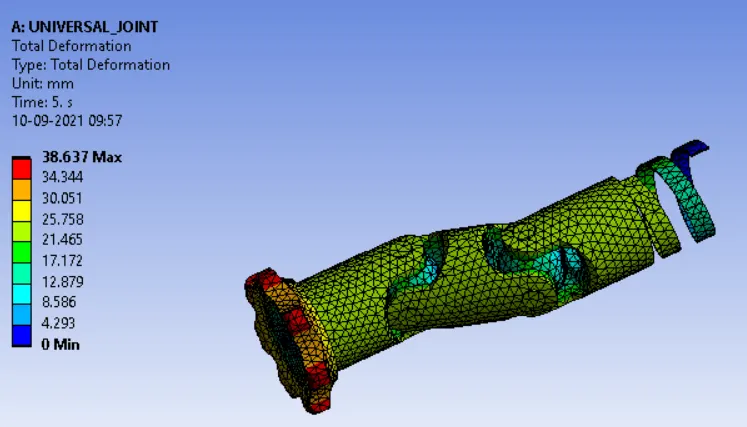
CASE 1
Equivalent Stress
Total Deformation
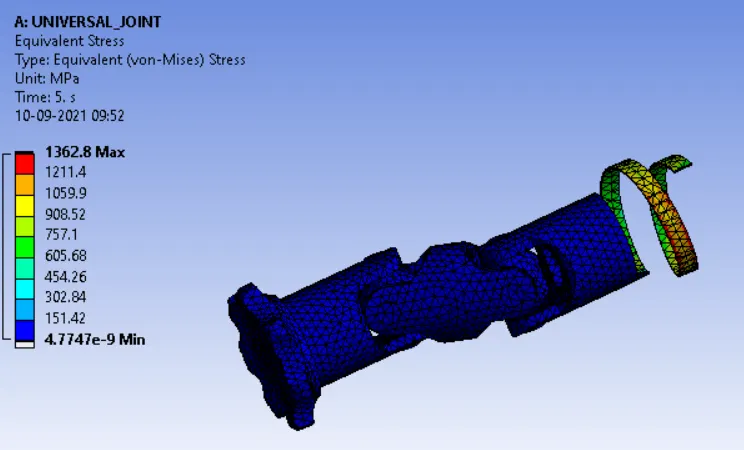
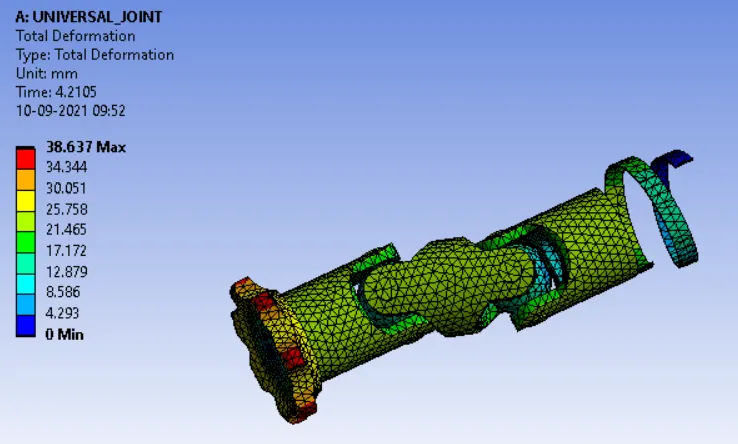
CASE 2
Equivalent Stress
Total Deformation
CASE 3
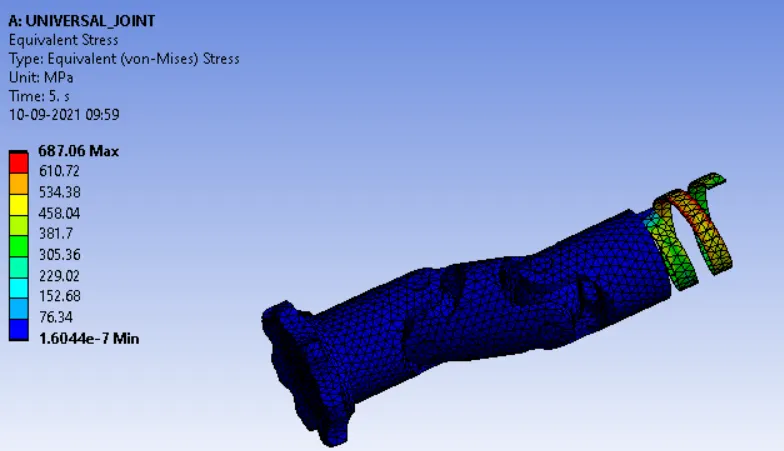
Equivalent Stress
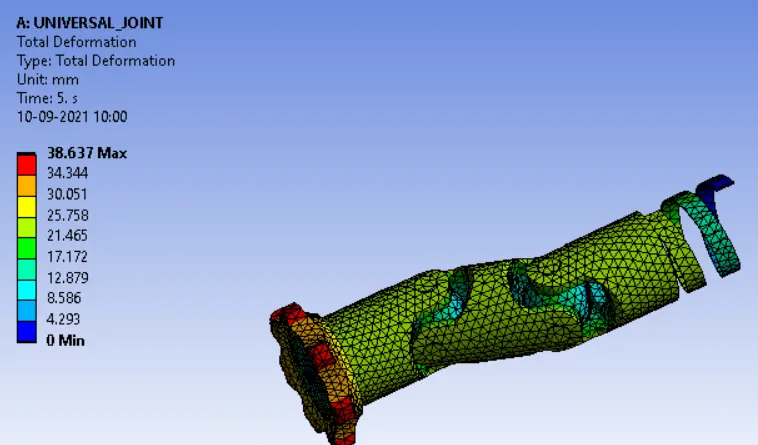
Total Deformation
COMPARISON OF RESULTS:
| CASE NO | Equivalent Stress | Total Deformation |
| CASE 1 |
MAX:1408.6 MIN:4.8253E-9 |
MAX:38.637 MIN:0 |
| CASE 2 |
MAX:1362.8 MIN:4.7747E-9 |
MAX:38.637 MIN:0 |
| CASE 3 |
MAX:687.06 MIN:1.6044E-7 |
MAX:38.637 MIN:0 |
RESULTS:
From the simulation results we can say that the Max. Total Deformation of all the Cases i.e., for all the three materials remains the same.
By comparing the values of Max. Equivalent Stress for the three cases, we can see that for the Cases 1 and 2 i.e., the materials Structural Steel
and Stainless Steel there is high stress on the spring when compared to Case 3 i.e., the material Titanium Alloy.