Week 8 - Universal Joint
AIM: The main aim of this week challenge is to perform a transient structural analysis of universal joint. The analysis is performed for three cases with different material of structural steel,stainless steel and titanium alloy. From all the three cases compare the results of the stress,strain and deformation plots with a detailed explanation for the plots.
PROCEDURE:
CASE 1:
step 1: Open the ansys workbench module and select the transient structural analysis.
step 2: Now open the engineering data and add Stainless Steel and Titanium alloy which can all be found in the General Materials section.
step 3: Right click the geomentry tab and select import geomentry --> browse --> select the file --> open.
step 4: Now open the geomentry in mechanical modeller.
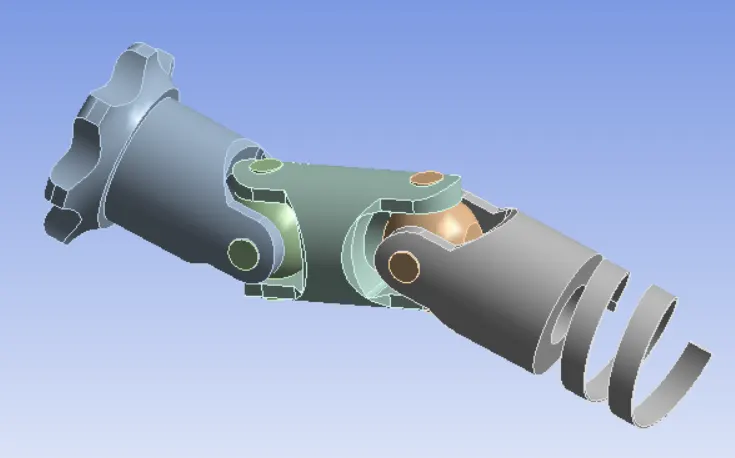
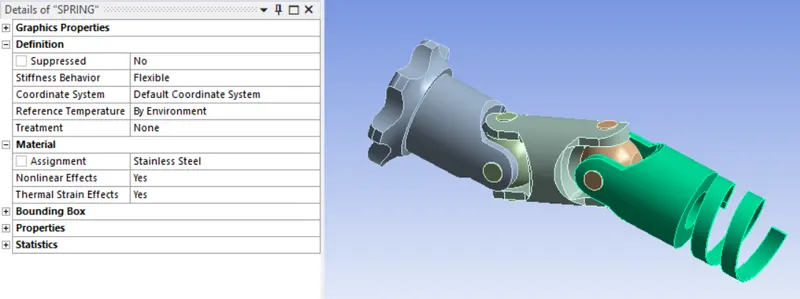
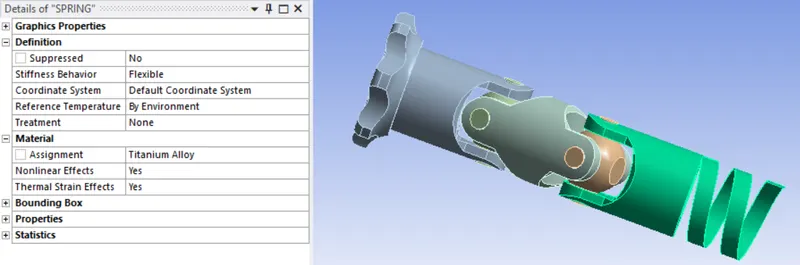
step 5: Now assign the material for the gear,spring and universal joint
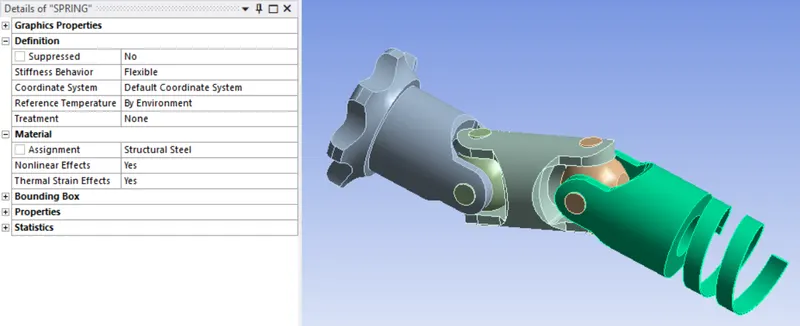
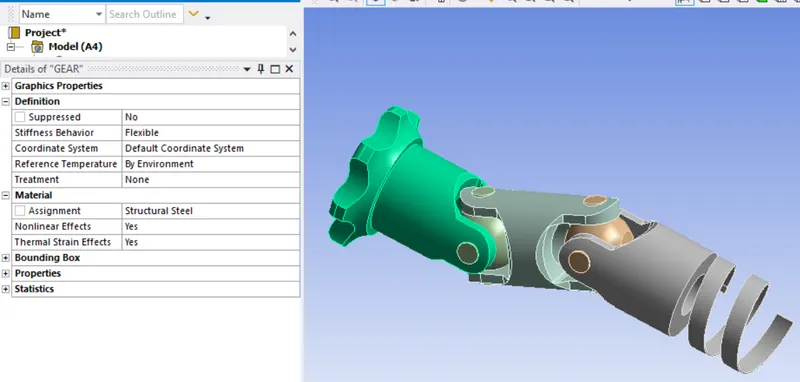
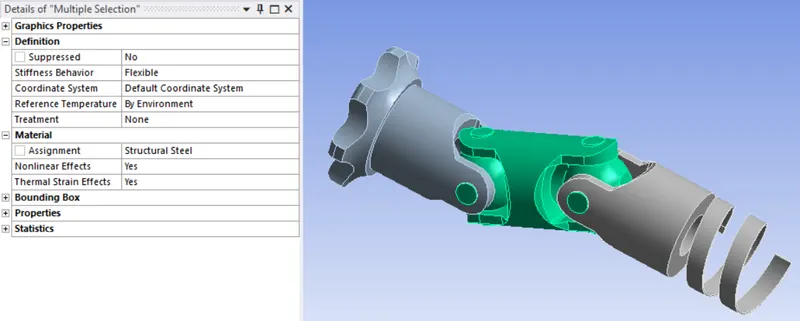
step 6: Now delete all the contacts that are existing.
step 7: Now create the necessary joints between the components to get the desired motion.
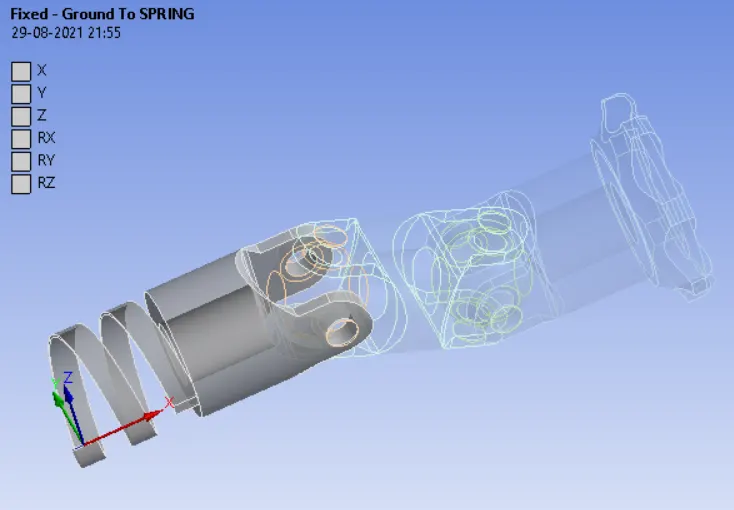
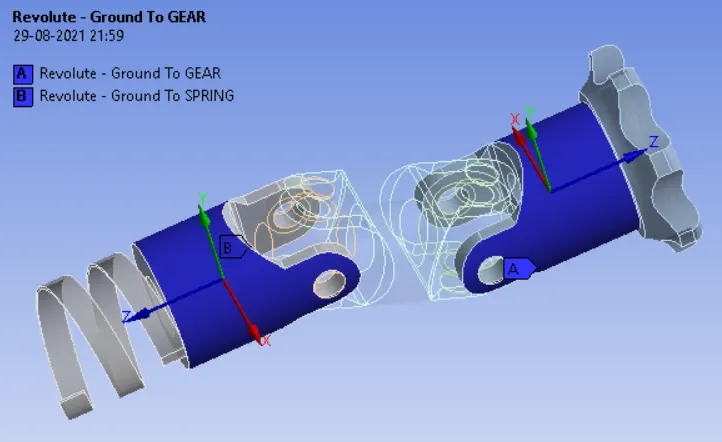
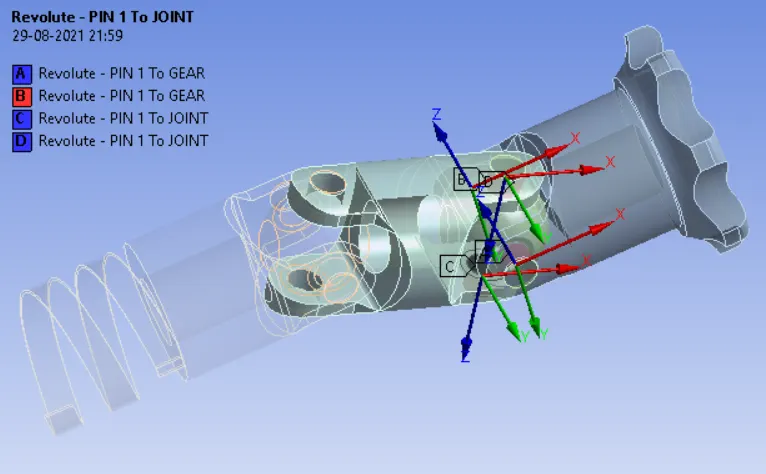
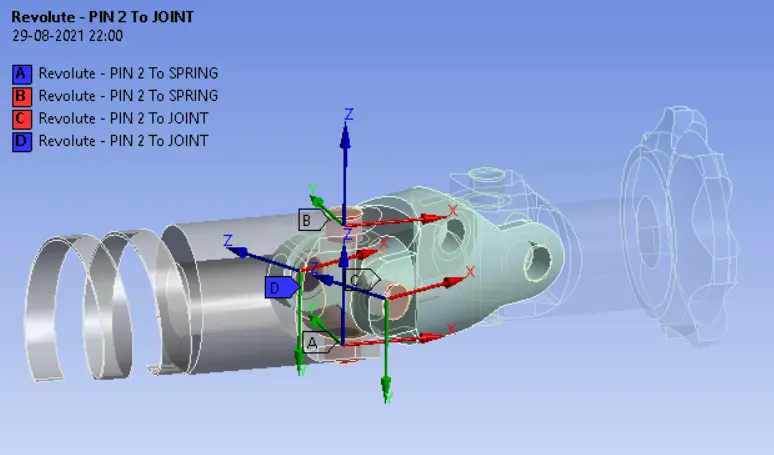
step 8: Now create a mesh sizing of 4mm and mesh the model.
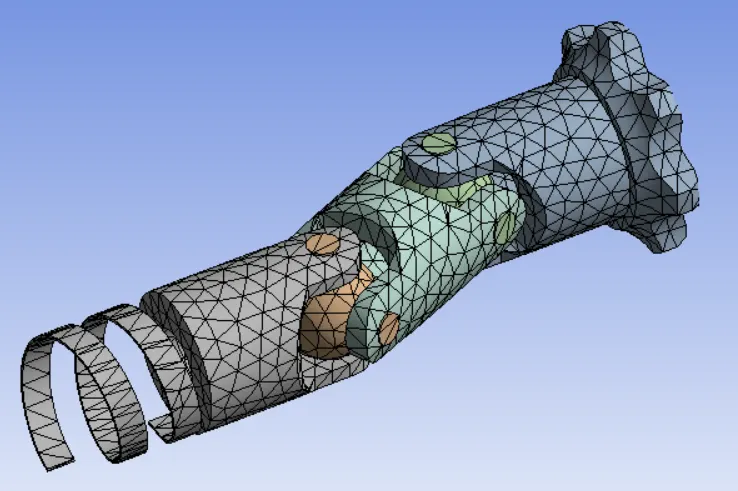
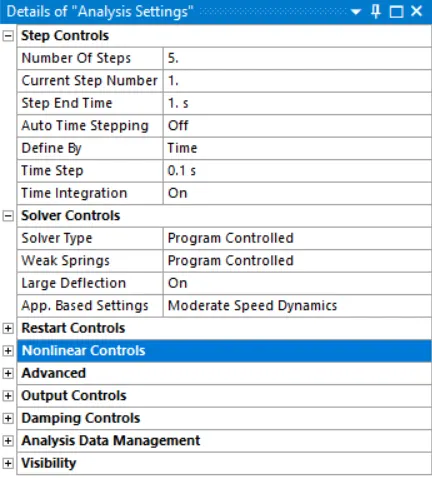
step 9: Now cange the analysis settings.
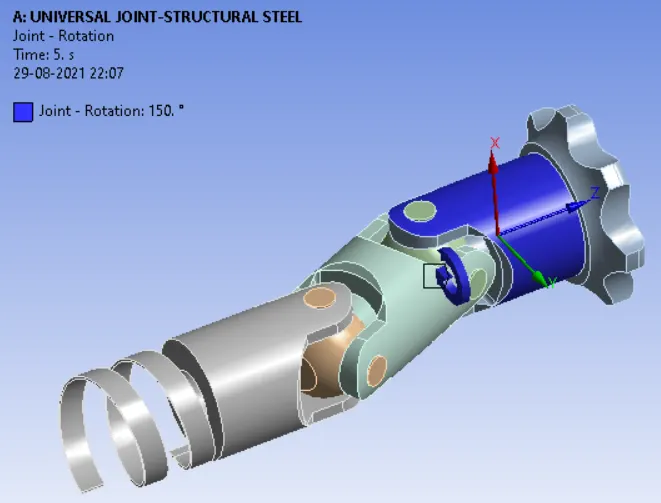
step 10: Now assign the joint load in order to rotate the component.
step 11: Now run the simulation.
step 12: Now include the total deformation,Equivalent stress and strain in output files.
step 13: Now change the model as per the question and run the simulation
Step 14: Compare the result plot and give a detailed explanation.
CASE 2:
step 1: Open the ansys workbench module and select the transient structural analysis.
step 2: Now open the engineering data and add Stainless Steel and Titanium alloy which can all be found in the General Materials section.
step 3: Right click the geomentry tab and select import geomentry --> browse --> select the file --> open.
step 4: Now open the geomentry in mechanical modeller.
step 5: Now assign the material for the gear,spring and universal joint
step 6: Now delete all the contacts that are existing.
step 7: Now create the necessary joints between the components to get the desired motion.
step 8: Now create a mesh sizing of 4mm and mesh the model.
step 9: Now cange the analysis settings.
step 10: Now assign the joint load in order to rotate the component.
step 11: Now run the simulation.
step 12: Now include the total deformation,Equivalent stress and strain in output files.
step 13: Now change the model as per the question and run the simulation
Step 14: Compare the result plot and give a detailed explanation.
CASE 3:
step 1: Open the ansys workbench module and select the transient structural analysis.
step 2: Now open the engineering data and add Stainless Steel and Titanium alloy which can all be found in the General Materials section.
step 3: Right click the geomentry tab and select import geomentry --> browse --> select the file --> open.
step 4: Now open the geomentry in mechanical modeller.
step 5: Now assign the material for the gear,spring and universal joint
step 6: Now delete all the contacts that are existing.
step 7: Now create the necessary joints between the components to get the desired motion.
step 8: Now create a mesh sizing of 4mm and mesh the model.
step 9: Now cange the analysis settings.
step 10: Now assign the joint load in order to rotate the component.
step 11: Now run the simulation.
step 12: Now include the total deformation,Equivalent stress and strain in output files.
step 13: Now change the model as per the question and run the simulation
Step 14: Compare the result plot and give a detailed explanation.
OUTPUT REQUEST:
CASE 1:
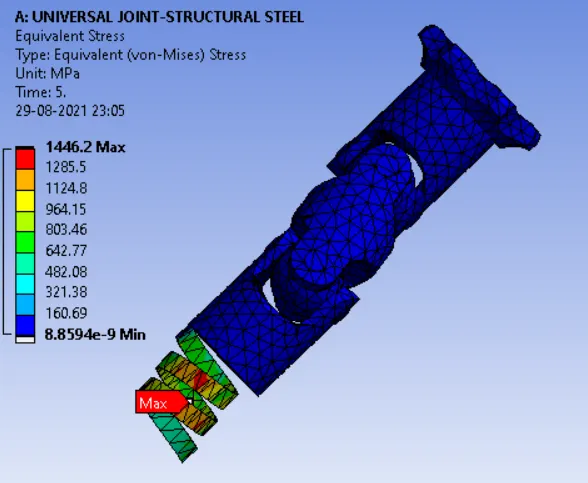
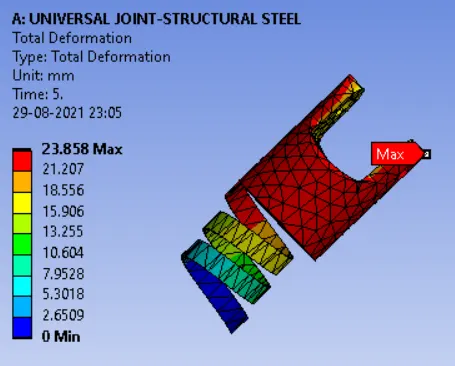
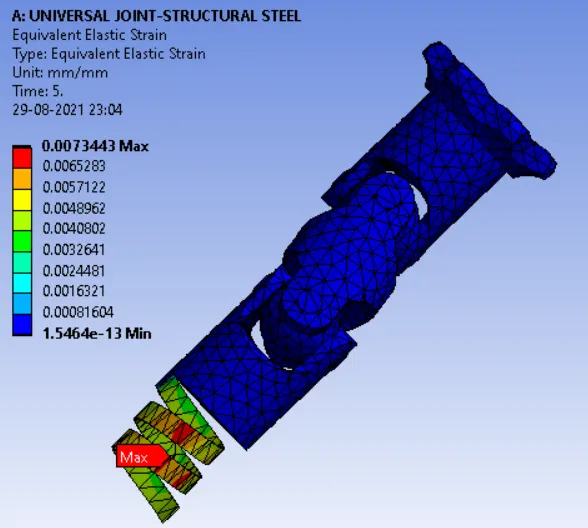
CASE 2:
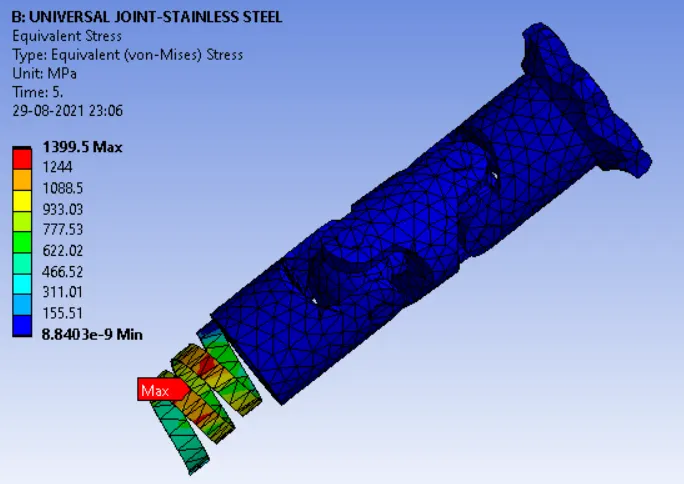
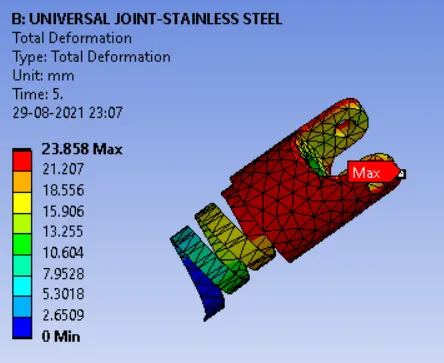
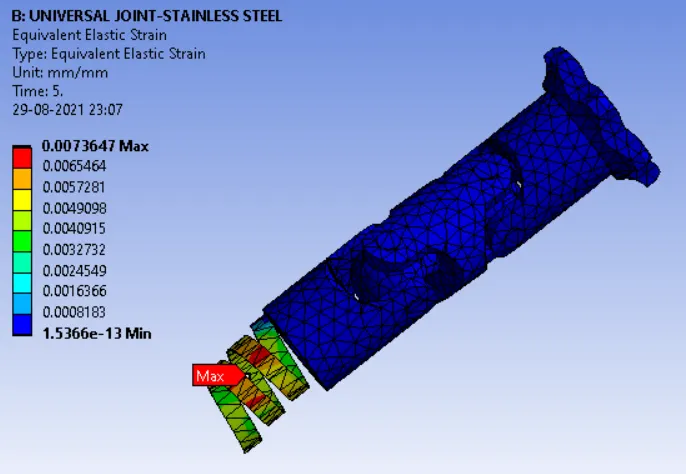
CASE 3:
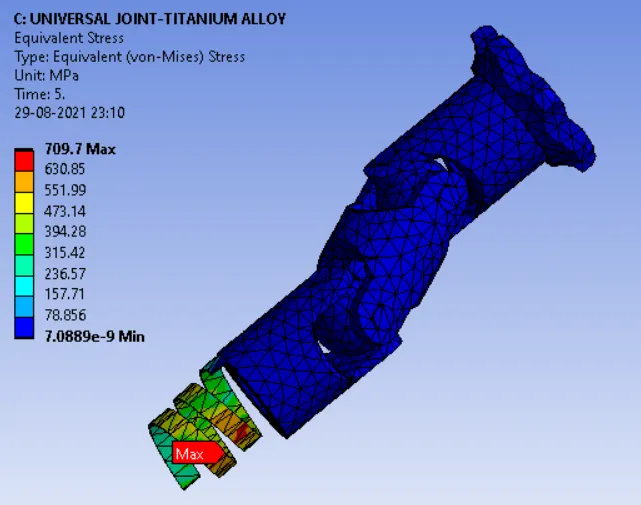
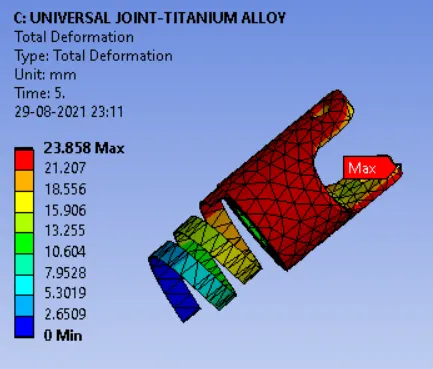
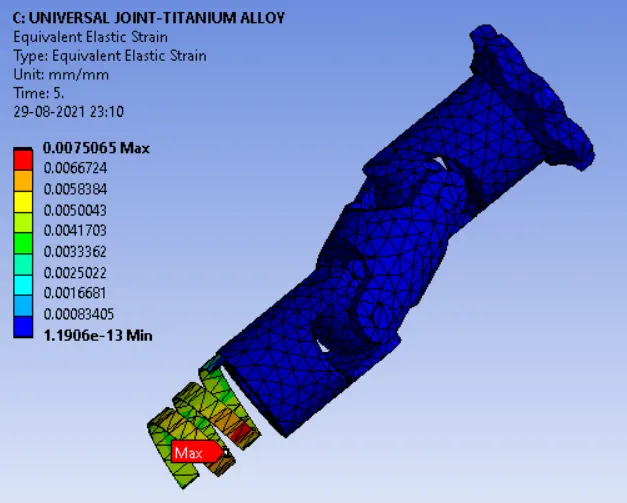
CONCLUSION:
| EQUIVALENT STRESS | TOTAL DEFORMATION | ELASTIC STRAIN | ||||
| MIN | MAX | MIN | MAX | MIN | MAX | |
| CASE 1 | 8.80E-09 | 1446.2 | 0 | 23.85 | 1.50E-13 | 0.007344 |
| CASE 2 | 8.84E-09 | 1399.5 | 0 | 23.85 | 1.53E-13 | 0.007364 |
| CASE 3 | 7.09E-09 | 709.7 | 0 | 23.85 | 1.19E-13 | 0.007506 |
Based on the above result we can infer that the equivalent stress is greater in structural steel than other two material. This is because the structural steel has high young's modulus when compared to other two material and hence has high stress.But the titanium alloy has low stress when compared to other two material since it has lowest young's modulus.
The total deformation for all the three cases is same because it is given equal amount of rotation for all the three cases.