Week 8 - Universal Joint
AIM:
Perform a Transient Structurl analysis on a double univeral joint with a spring using Ansys Workbench.
OBJECTIVE:
Perform a transient structural analysis on a double universal joint with a spring using three different materials: Structural Steel, Stainless Steel and Titanium alloy.The three materials must be used on the joint with the springs alone. With a refined mesh get the Equivalent stress and total deformation for all the three cases and compare them.
GIVEN MODEL:
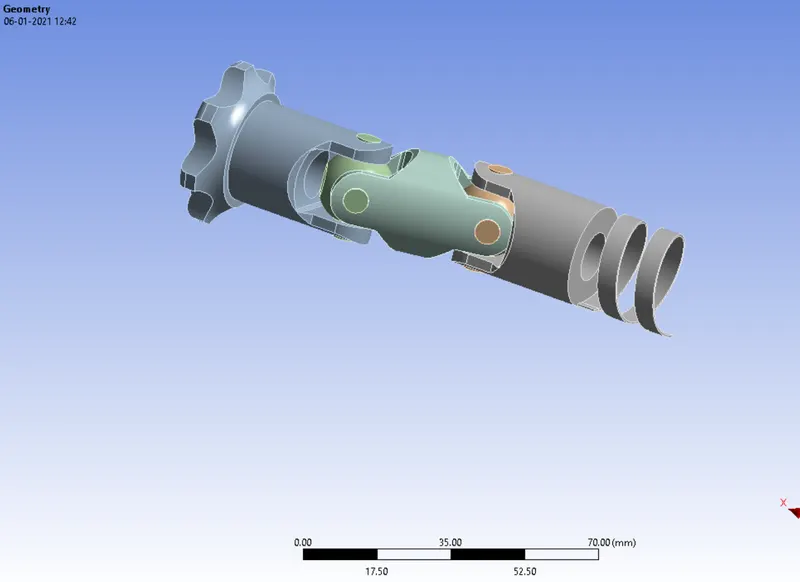
PROCEDURE:
i).MATERIALS:
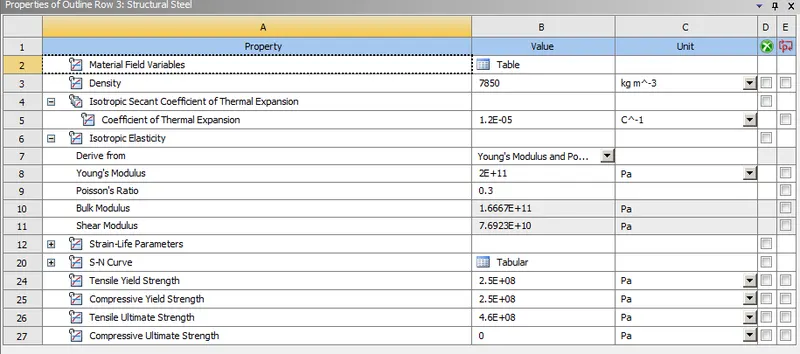
1.Structurl Steel.
Assign the material as structural steel for both the cases by, Selecting the Engineering data >> Edit >> Engineering data sources >> General Materials >> Structural steel.
*Properties of the structural steel is shown in below.
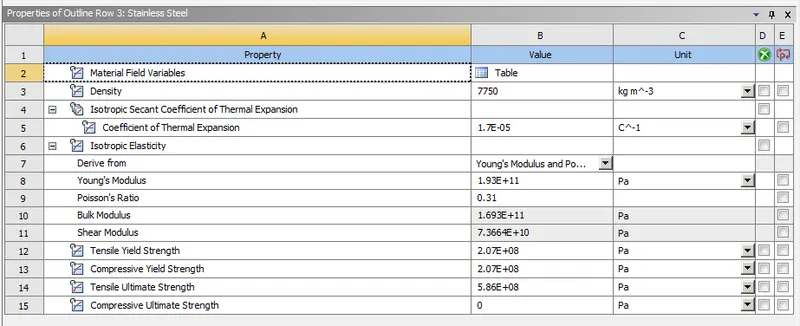
2.Stainless Steel.
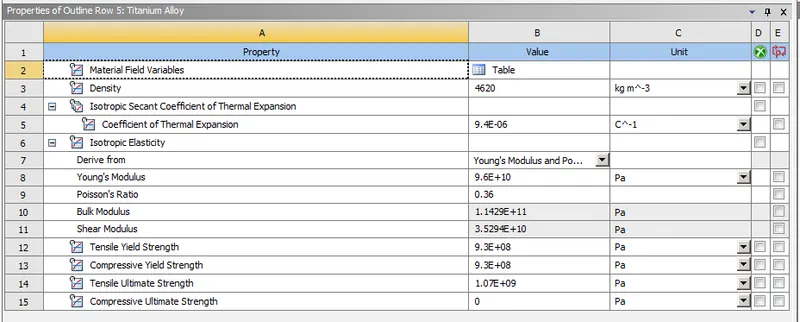
3.Titanium Alloy.
*After Assigning the materials close the engineering data and open new space claim to make the required designs.
*Once geometry is imported from the space claim then open the model and eidt the geometry in Mechanical moduler.
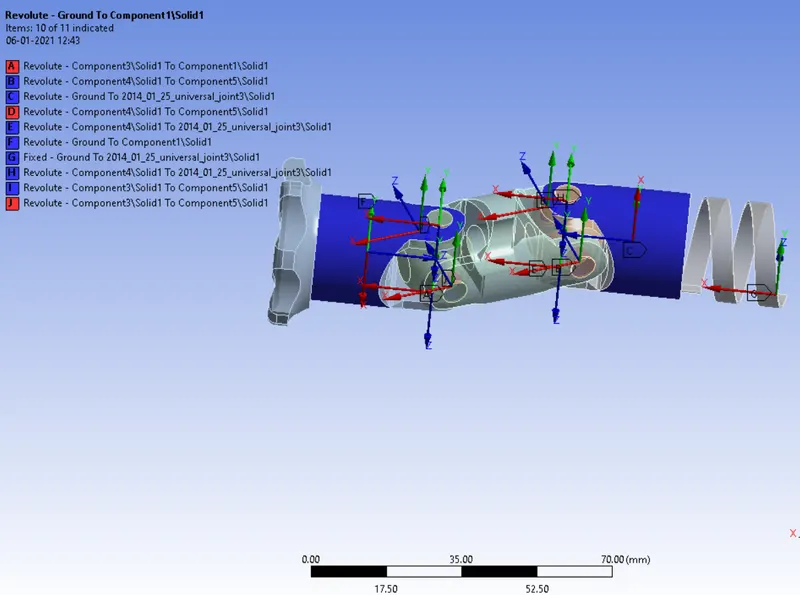
ii). JOINTS:
*Delete all Ansys pre-determined contacts and create the revolute joints and one fixed joint in the model.
iii). MESH:
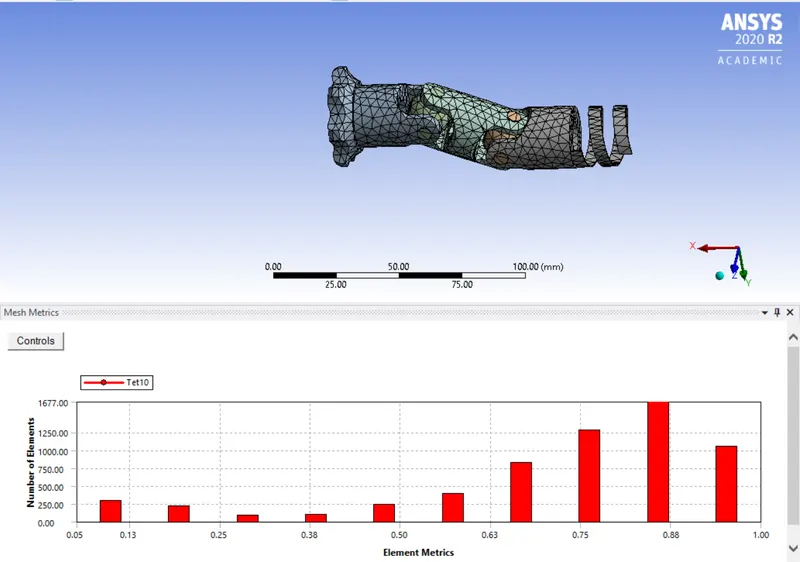
*Generate the mesh on the model and make sure number of nodes and elements should not cross the academic version limint.
iv). MESH-PARAMETERS:
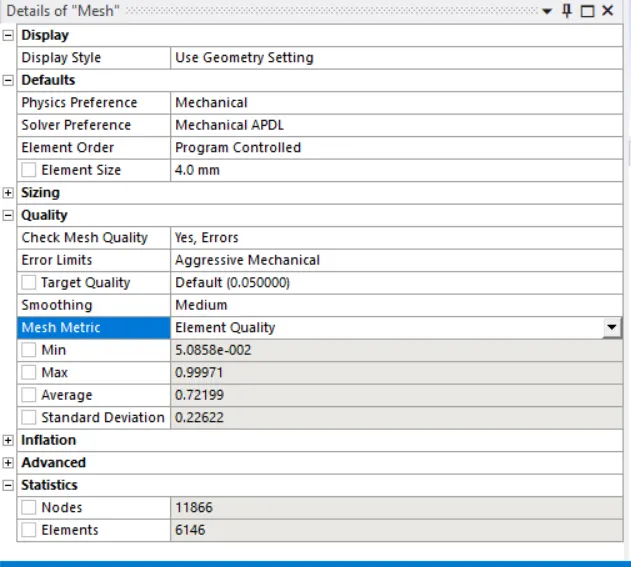
*After Creating the revolute joints and fixed support then assign the joint loads.
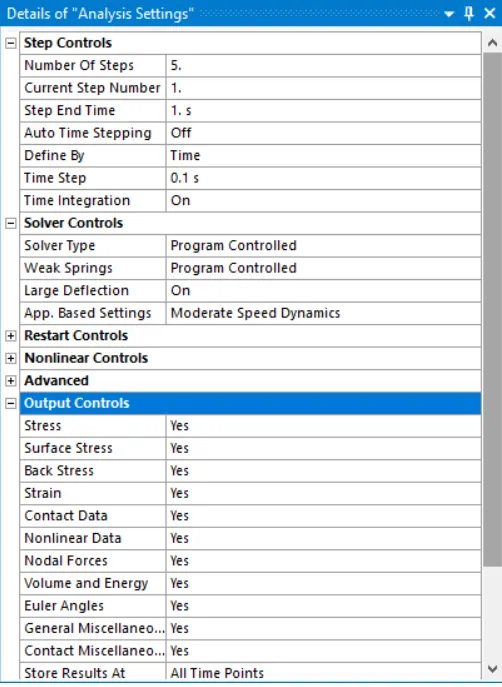
*After that Give all analysis setting in steps of time.
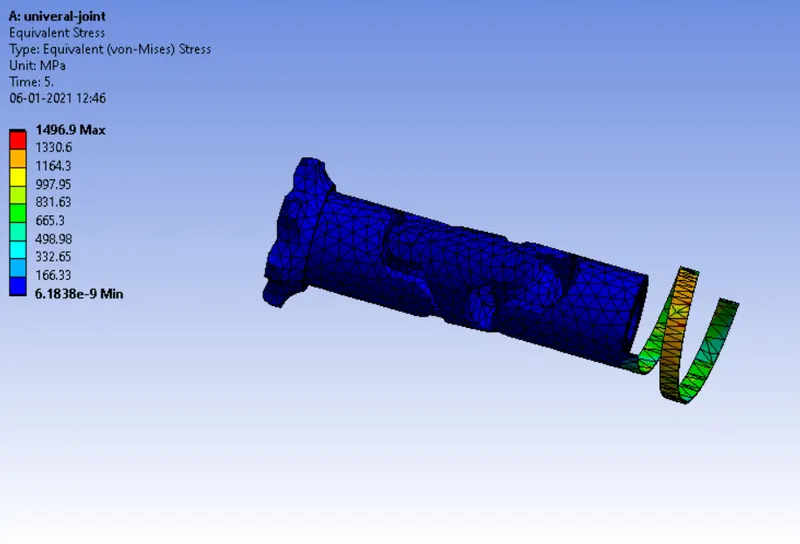
CASE-1
*Material used on the joint with the springs alone and other joints are Structural steel.
EQUIVALENT VON-MISES STRESS:
MAX:1496.9 (Mpa) and MIN: 6.1838E-9(Mpa)
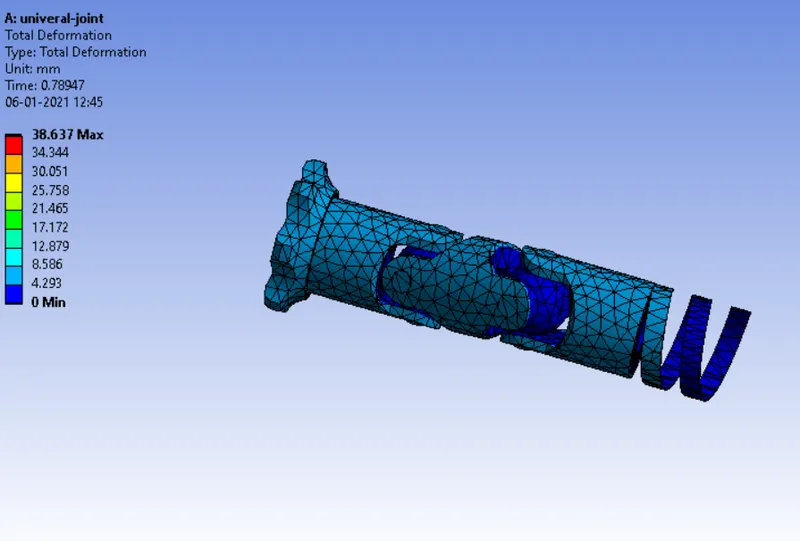
TOTAL DEFORMATION:
MAX:38.637 (mm) and MIN: 0 (mm)
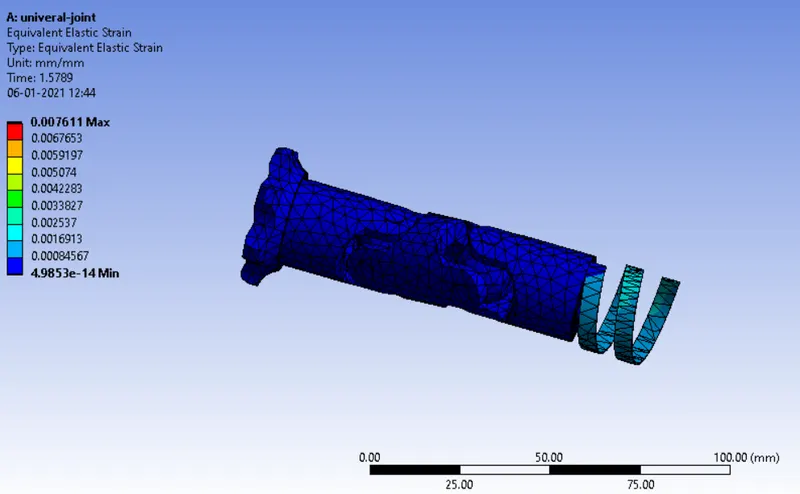
EQUIVALENT ELASTIC STRAIN:
MAX:0.007611 and MIN: 4.9853E-14
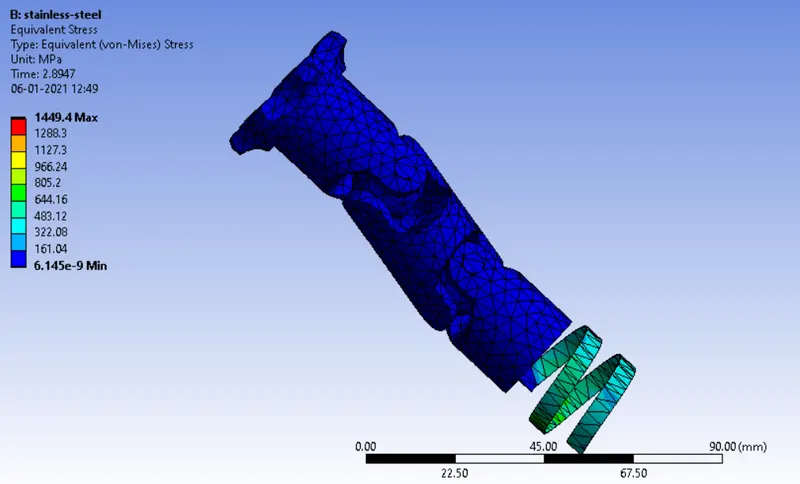
CASE-2
*Material used on the joint with the springs alone is Stainless steel and other joints are Structural steel.
EQUIVALENT VON-MISES STRESS:
MAX:1449.4 (Mpa) and MIN: 6.145E-9 (Mpa)
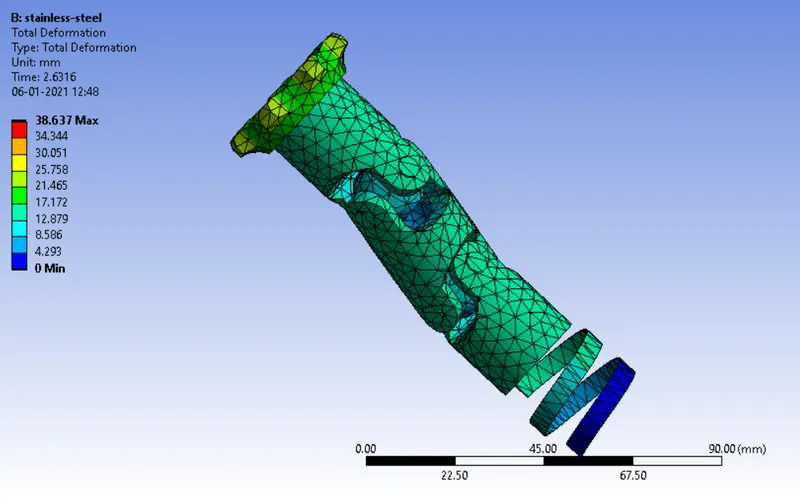
TOTAL DEFORMATION:
MAX:38.637 (mm) and MIN: 0 (mm).
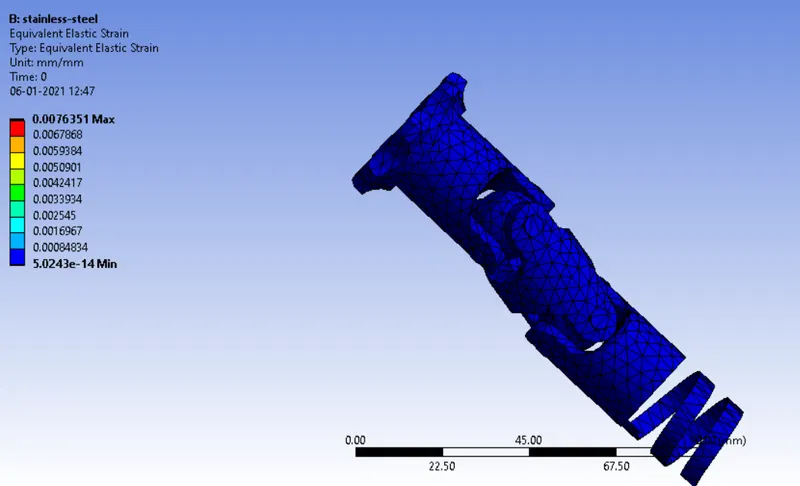
EQUIVALENT ELASTIC STRAIN:
MAX: 0.0076351 and MIN: 5.0243E-14
CASE-3
*Material used on the joint with the springs alone is Titanium Alloy and other joints are Structural steel.
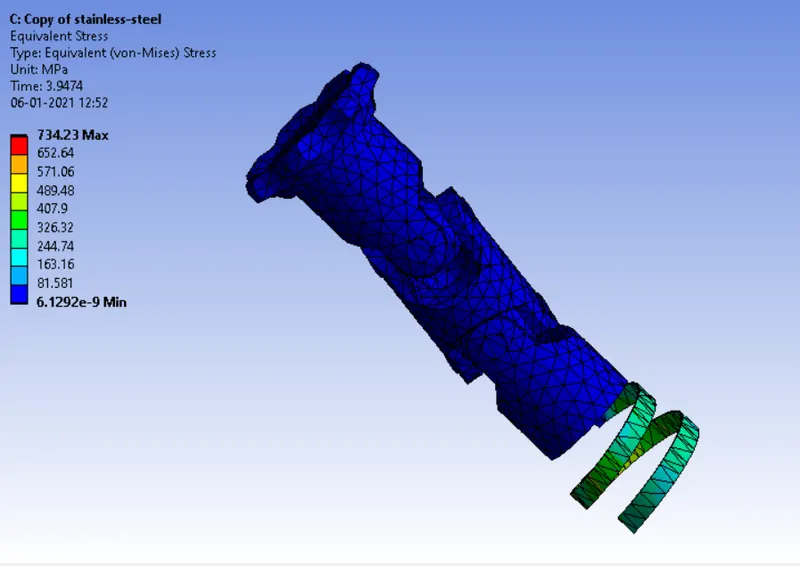
EQUIVALENT VON-MISES STRESS:
MAX: 734.23 (Mpa) and MIN: 6.1292E-9 (Mpa)
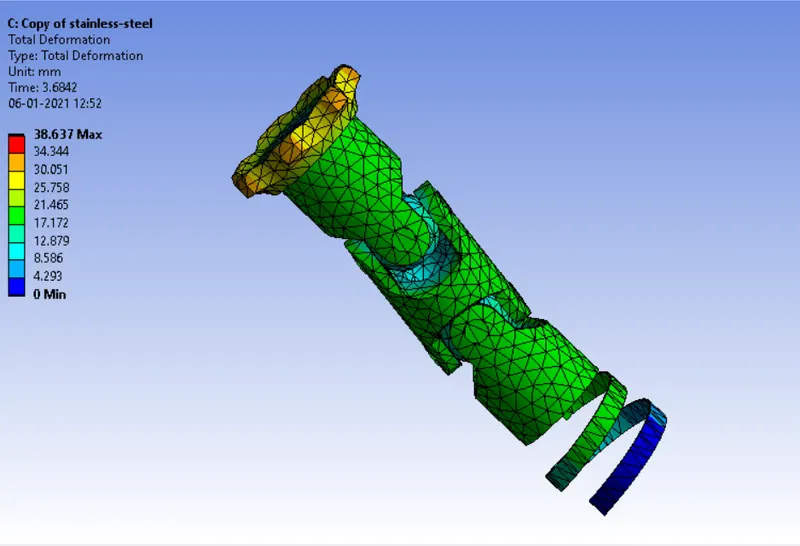
TOTAL DEFORMATION:
MAX:38.637 (mm) and MIN: 0 (mm).
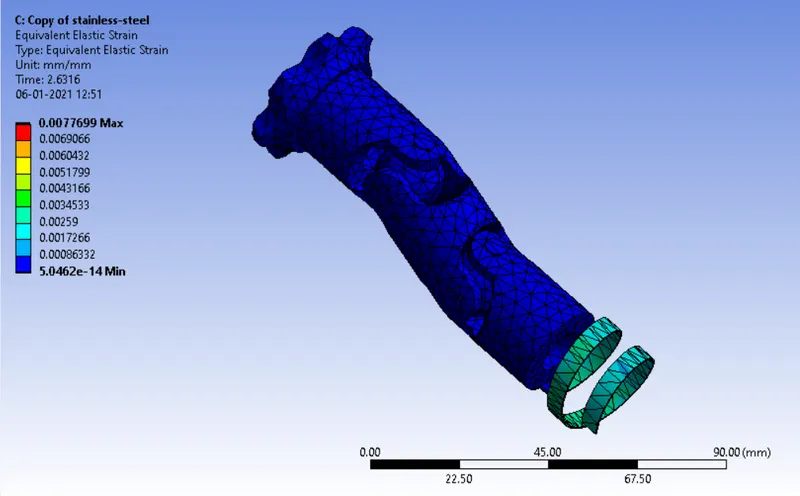
EQUIVALENT ELASTIC STRAIN:
MAX: 0.0077699 and MIN: 5.0462E-14
COMPARE THE RESULTS:
| CASE | MATERIAL |
EQUIVALENT VON-MISES STRESS (MAX) |
EQUIVALENT VON-MISES STRESS (MIN) |
TOTAL DEFORMATION (MAX) |
TOTAL DEFORMATION (MIN) |
EQUIVALENT ELASTIC STRAIN (MAX) |
EQUIVALENT ELASTIC STRAIN (MIN) |
| 1. | Structural Steel | 1496.9 | 6.1838E-9 | 38.637 | 0 | 0.007611 | 4.9853E-14 |
| 2. | Stainless Steel | 1449.4 | 6.145E-9 | 38.637 | 0 | 0.0076351 | 5.0243E-14 |
| 3. | Titanium Alloy | 734.23 | 6.1292E-9 | 38.637 | 0 | 0.0077699 | 5.0462E-14 |
CONCLUSION:
*stress generated In Structurl Steel is higher than other two material because it has highet young, modulus among them. We all know that Stress is directly proportional to youngs modulus.
*Total Deformation is same in all three cases because we applied same joint load in three cases.
*Maximum Strain occured in Titanium alloy material and Minimum Strain occured in Structural steel material.