Week 8 - Universal Joint
Objective:
To perform a transient structural analysis on a double universal joint with a spring using three different materials: Structural Steel, Stainless Steel and Titanium alloy.
Step 1: Engineering Data:
- For this analysis we will be using Structural steel, Stainless steel and Titanium alloy as material which can be selected from engineering data under the general material section. It is also added as default material to the drop down list inside material assignment inside the Model.
Step 2: Geometry:
- Right click on geometry and Import the Universal joint cad file.
- Rename the Static Structural tab as Universal Joint.
- Update the Static Structural tab and proceed to model.
Step 3: Model:
- Open Model and under geometry assign name to geometries.
Step 4: Connections and Setup:
- Delete all existing contacts.
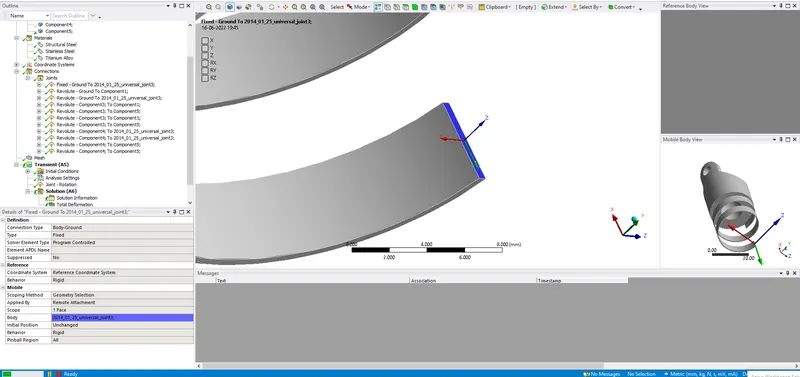
- Insert one fixed Ground to Body Joint for the geometry with spring material end as shown. This is done to simulate the stress on spring.
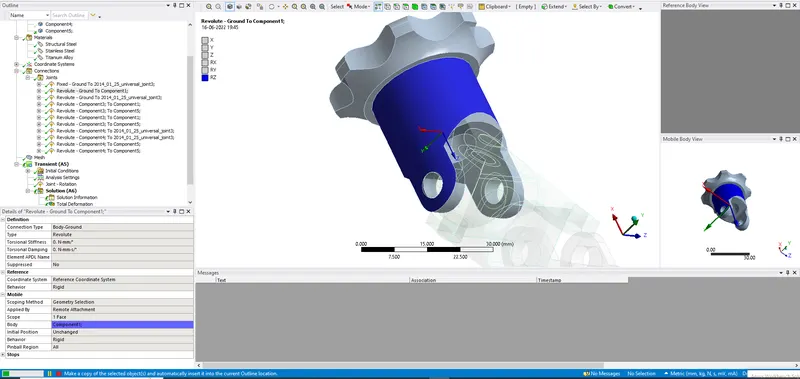
- Insert one Revolute Ground to Body Joint for the geometry with knob.
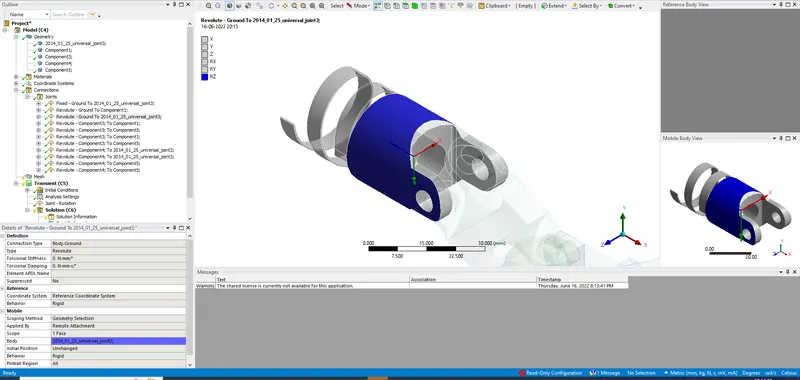
- Insert one Revolute Ground to Body Joint for the geometry with spring material attached as shown.
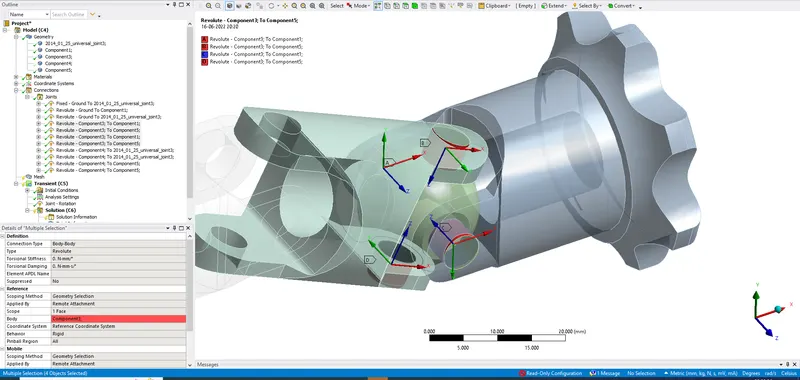
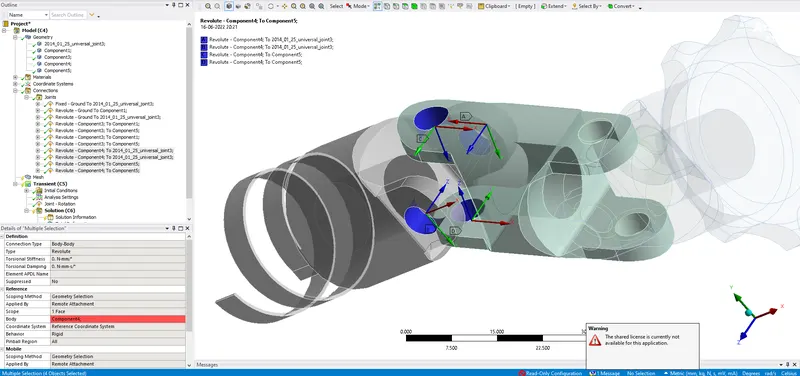
- Now insert 8 Body to Body joint of Revolute type and define the reference surfaces as those associated with ball and mobile surfaces as those associated with surrounding components(surface in hole of component) as shown below. Check for the axis of z-direction.
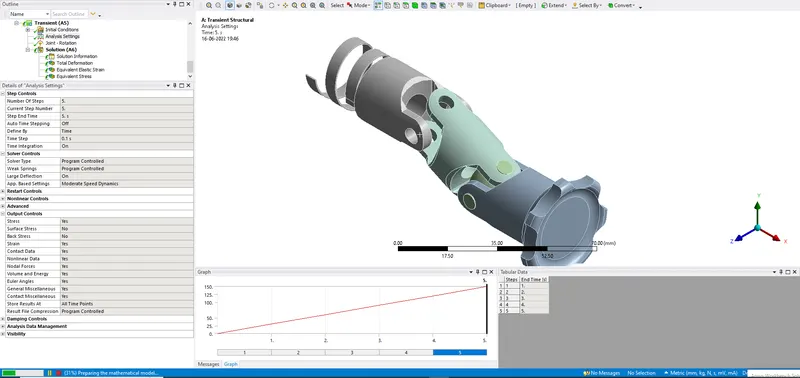
- In analysis settings put no of steps as 5, turn off auto time stepping and define time step as 0.1 sec.
- Select yes for all output controls.
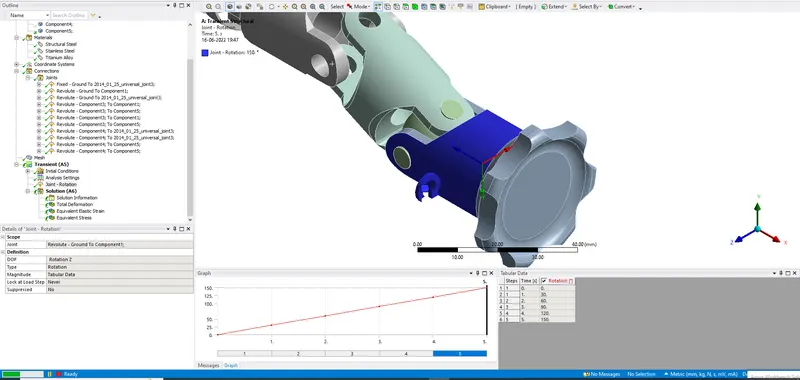
- Insert Joint:- Select Revolute- ground to Component 1 as Joint type and define magnitude data as 30,60,90,120,150 deg.
Step 5: Mesh
- The default mesh is coarse. Assign default element size as 2mm
Step 6: Solution
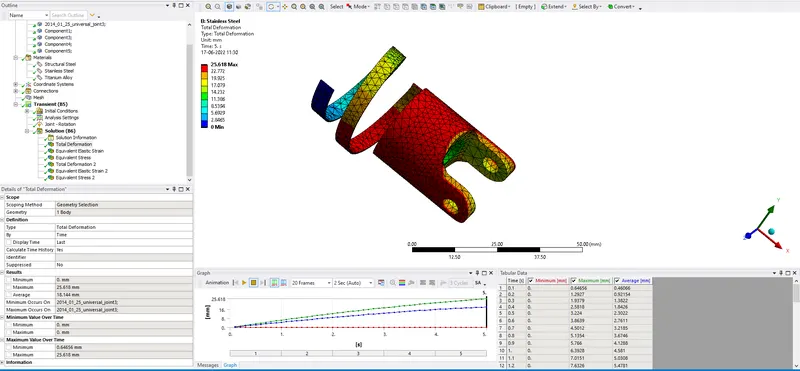
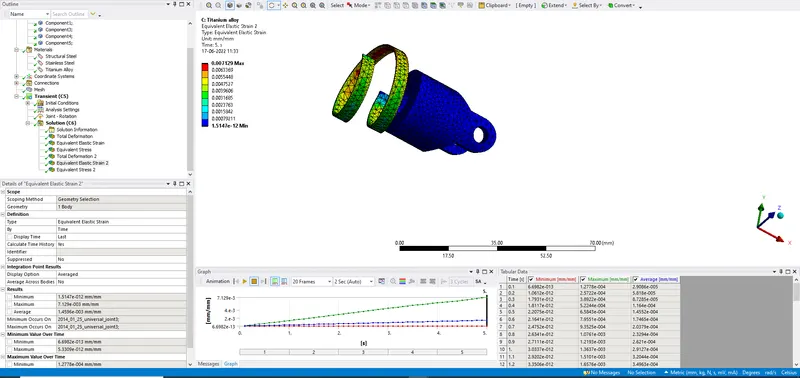
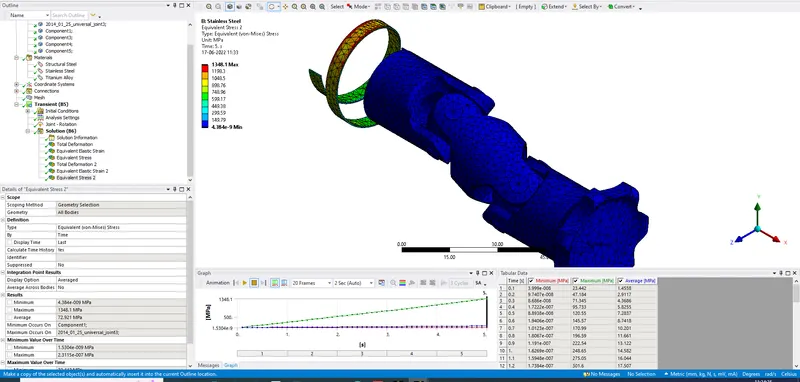
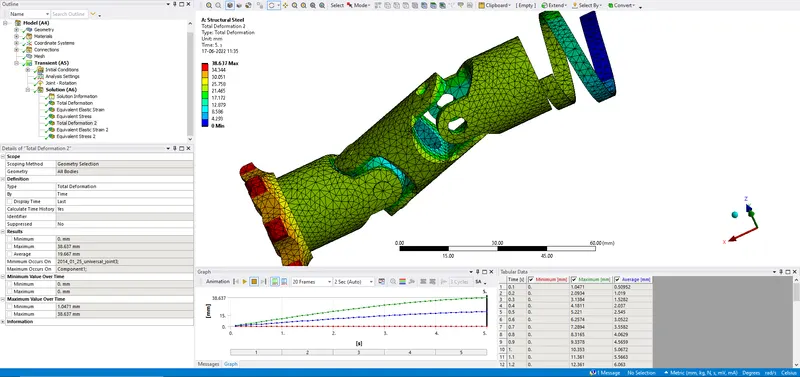
- Insert results for Equivalent Strain distribution, Equivalent Stress distribution, Total Deformation for each geometry in focus to observe the values and data.
Results and Comparison:
| Values | Case 1 Structural Steel | Case 2 Stainless Steel | Case 3 Titanium Alloy |
| Equivalent stress (Mpa) | 1391.6 | 1348.1 | 684.17 |
| Total deformation(mm) | 38.637 | 38.637 | 38.637 |
| Total deformation(mm) for Spring body | 25.619 | 25.619 | 25.619 |
Conclusion:
We can conclude that stresses produced in structural steel and Stainless Steel are much higher compared to Titanium alloy. Also, the two former materials have crossed the Ultimate tesile strenght limits and seem to undergo breaking phenomenon. The stresses produced in Titanium alloy are well within Tensile yeild strenght limits.
**The zip files are larger than 200MB and are attached to Google drive links on word file below.