Week 8 - Simulation of a backward facing step in OpenFOAM
Simulation of a backward facing step in OpenFOAM
In this challenge, you are going to simulate an incompressible-laminar-viscous flow through the backward facing step geometry. You should perform a transient simulation. The solver can be chosen based on the described physics of the flow. You need to explain the entire simulation procedure (how you set up the case). You should also provide explanations to every change you make inside the reference case files obtained from OpenFOAM tutorials. You can choose the inlet velocity shuch that the flow is laminar.
After that, you will perform 2 case studies as described below and compare the results.
Case 1 - Simulate the flow without using any grading factor (i.e., GF = 1)
Case 2 - Simulate the flow with grading factor of 0.2. The cells should be finer near the walls (includig the step wall).
You can use the following mesh parameters but you can feel free to modify these values.
Mesh specification
- Number of cells along the x direction (longer dimension) = 200
- Number of cells along the longer y direction = 20
NOTE: To run incompressible-laminar flow , icoFoam solver is used, you can find this solver inside incompressible folder of tutorials.
Geometry-
Boundary length and boundary condition are defined in below image
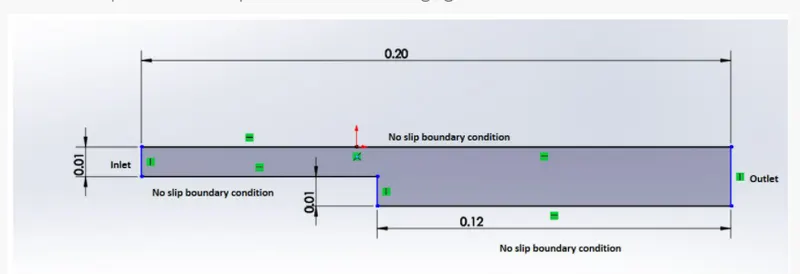
Steps involved
- open openFoam terminal
- open tutorial and and copy cavity folder inside icoFoam solver. IcoFoam solver is inside incompressible folder
- After copying cavity folder to Foam_run folder, go inside system foldder and edit blockmeshdict. Edit velocity and blocks to create geometry
- Run blockMesh command and then paraFoam command to view created geometry inside paraview
- similary edit controldict folder to give time conditions
- after editiong blockMesh dict and controldict run blockMesh command and then run icoFoam solver command
- Simulation will start to run and then run paraFoam command to see mesha nd velocity and pressure changesin paraview.
Simulation start procedure after opening openFoam terminal
>> cd tut >> ls >> cd incompressible >> ls >> cd icoFoam
>> ls >> cp -r cavity/ $FOAM_RUN/ channel_test >> cd $FOAM_RUN
>> cd chaneel_test >> cd system >> gedit blockMesh
blockMeshdict - This dict contains information about vertices , blocks and boundaries. Vertices are udes to create points which are further joined to create geomtery, so edit vertices entries to create requiredg geometry and then edit block entries to create faces. Run blockMesh command after this and then paraFoam command to check formation of geomtery in paraview. Edit boundary entries, define or give name to each faces
/*--------------------------------*- C++ -*----------------------------------*\
  =========                 |
  \\      /  F ield         | OpenFOAM: The Open Source CFD Toolbox
   \\    /   O peration     | Website:  https://openfoam.org
    \\  /    A nd           | Version:  9
     \\/     M anipulation  |
\*---------------------------------------------------------------------------*/
FoamFile
{
    format      ascii;
    class       dictionary;
    object      blockMeshDict;
}
// * * * * * * * * * * * * * * * * * * * * * * * * * * * * * * * * * * * * * //

convertToMeters 1;

vertices
(
   //vertices from points 0 to 10
    (0 0 0)
    (0.08 0 0)
    (0.08 0.005 0)
    (0 0.005 0)
    (0.08 0.01 0)
    (0 0.01 0)
    (0.2 0.01 0)
    (0.2 0.005 0)
    (0.2 0 0)
    (0.2 -0.01 0)
    (0.08 -0.01 0)

    //vertices from points 11 to 21
    (0 0 0.1)
    (0.08 0 0.1)
    (0.08 0.005 0.1)
    (0 0.005 0.1)
    (0.08 0.01 0.1)
    (0 0.01 0.1)
    (0.2 0.01 0.1)
    (0.2 0.005 0.1)
    (0.2 0 0.1)
    (0.2 -0.01 0.1)
    (0.08 -0.01 0.1)
);

blocks
(
    //block 1
    hex (0 1 2 3 11 12 13 14) (80 5 1) simpleGrading (1 1 1)
    //block 2
    hex ( 3 2 4 5 14 13 15 16) (80 5 1) simpleGrading (1 1 1)
    //block 3
    hex (2 7 6 4 13 18 17 15) (120 5 1) simpleGrading (1 1 1)
    //block 4
    hex (1 8 7 2 12 19 18 13) (120 5 1) simpleGrading (1 1 1)
    //block 5
    hex ( 10 9 8 1 21 20 19 12) (120 10 1) simpleGrading (1 1 1)
);

edges
(
);
boundary
(
  outlet
  {
    type patch;
    faces
  (
    (6 17 18 7)
    (8 7 18 19)
    (9 8 19 20)
  );
 }

  inlet
  {
    type patch;
    faces
   (
    (11 14 3 0)
    (14 16 5 3)
   );
  }

  top
  {
    type wall;
    faces
   (
    (15 4 5 16)
    (15 17 6 4)
   );
  }

  bottom
  {
    type wall;
    faces
   (
    (11 0 1 12)
    (21 10 9 20)
   );
  }

   sidestep
  {
   type wall;
   faces
   (
    (21 12 1 10)
   );
  }


   frontface
  {
   type empty;
   faces
   (
     (13 15 16 14)
     (12 13 14 11)
     (20 19 12 21)
     (19 18 13 12)
     (18 17 15 13)
   );
   }

   backface
   {
    type empty;
    faces
    (
      (0 3 2 1)
      (3 5 4 2)
      (2 4 6 7)
      (1 2 7 8)
      (10 1 8 9)
     );
     }
);


mergePatchPairs
(
);

// ************************************************************************* //
controldict- This dict contains information about time, like start and end time and time step. edit all those values as per your choice. here start time is 0 and end time is 5s with time step dt of 0.001
/*--------------------------------*- C++ -*----------------------------------*\
  =========                 |
  \\      /  F ield         | OpenFOAM: The Open Source CFD Toolbox
   \\    /   O peration     | Website:  https://openfoam.org
    \\  /    A nd           | Version:  9
     \\/     M anipulation  |
\*---------------------------------------------------------------------------*/
FoamFile
{
    format      ascii;
    class       dictionary;
    location    "system";
    object      controlDict;
}
// * * * * * * * * * * * * * * * * * * * * * * * * * * * * * * * * * * * * * //

application     icoFoam;

startFrom       startTime;

startTime       0;

stopAt          endTime;

endTime         5;

deltaT          0.001;

writeControl    timeStep;

writeInterval   20;

purgeWrite      0;

writeFormat     ascii;

writePrecision  6;

writeCompression off;

timeFormat      general;

timePrecision   6;

runTimeModifiable true;


// ************************************************************************* //
Transport properties - change value of viscosity to 0.0001, so that we get reynolds number for laminar flow. Re = (density.u.viscosity)/ L
/*--------------------------------*- C++ -*----------------------------------*\
  =========                 |
  \\      /  F ield         | OpenFOAM: The Open Source CFD Toolbox
   \\    /   O peration     | Website:  https://openfoam.org
    \\  /    A nd           | Version:  9
     \\/     M anipulation  |
\*---------------------------------------------------------------------------*/
FoamFile
{
    format      ascii;
    class       dictionary;
    location    "constant";
    object      transportProperties;
}
// * * * * * * * * * * * * * * * * * * * * * * * * * * * * * * * * * * * * * //

nu              [0 2 -1 0 0 0 0] 1e-5;


// ************************************************************************* //
Pressure - This dict is found inside 0 folder, define pressure conditions at all boundaries, for inlet and outlet we are using neumann boundary condition. In neumann boundary condition either velocity or pressure is defined for inlet or outlet.
/*--------------------------------*- C++ -*----------------------------------*\
  =========                 |
  \\      /  F ield         | OpenFOAM: The Open Source CFD Toolbox
   \\    /   O peration     | Website:  https://openfoam.org
    \\  /    A nd           | Version:  9
     \\/     M anipulation  |
\*---------------------------------------------------------------------------*/
FoamFile
{
    format      ascii;
    class       volScalarField;
    object      p;
}
// * * * * * * * * * * * * * * * * * * * * * * * * * * * * * * * * * * * * * //

dimensions      [0 2 -2 0 0 0 0];

internalField   uniform 0;

boundaryField
{
    inlet
    {
        type            zeroGradient;
    }

    top
    {
        type            zeroGradient;
    }

    bottom
    {
        type            zeroGradient;
    }

    sidestep
    {
        type            zeroGradient;
    }


    frontface
    {
        type            empty;
    }

    backface
    {
        type            empty;
    }

    outlet
    {
      type            fixedValue;
      value           uniform 0;
    }
}
Velocity - Define velocity parameters for all boundaries. top and bottom are no slip, inlet and outlet are neumann boundary condition and front and back faces are empty. Empty condition means they dont capture velocity and pressure changes this is is used when we want 2D simulation on 3dD geometry.
/*--------------------------------*- C++ -*----------------------------------*\
  =========                 |
  \\      /  F ield         | OpenFOAM: The Open Source CFD Toolbox
   \\    /   O peration     | Website:  https://openfoam.org
    \\  /    A nd           | Version:  9
     \\/     M anipulation  |
\*---------------------------------------------------------------------------*/
FoamFile
{
    format      ascii;
    class       volVectorField;
    object      U;
}
// * * * * * * * * * * * * * * * * * * * * * * * * * * * * * * * * * * * * * //

dimensions      [0 1 -1 0 0 0 0];

internalField   uniform (0.1 0 0);

boundaryField
{
    inlet
    {
        type            fixedValue;
        value           uniform (0.2 0 0);
    }

    top
    {
        type            noSlip;
    }

    bottom
    {
        type            noSlip;
    }

    sidestep
    {
        type            noSlip;
    }

    frontface
    {
        type            empty;
    }

    backface
    {
        type            empty;
    }

    outlet
    {
        type            zeroGradient;
    }
}

// ************************************************************************* //
MESH without grading-
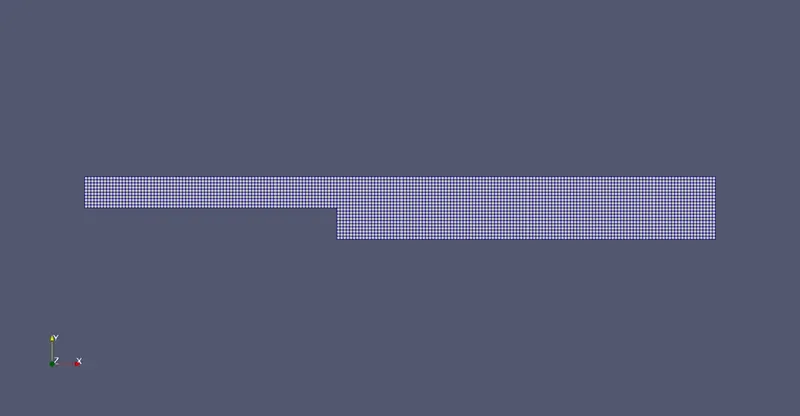
Velocity contour link
https://drive.google.com/file/d/1u9TPit2tOdWfxTFL5uTNH-Q-OAHfmKQa/view?usp=sharing
pressure contour link
https://drive.google.com/file/d/1u9TPit2tOdWfxTFL5uTNH-Q-OAHfmKQa/view?usp=sharing
Simulation with grading 0.2
In this simulation only grading values in block entries of blockMeshdict needs to be changed acording to grading on faces we want. In this case we want denser mesh at side step.
/*--------------------------------*- C++ -*----------------------------------*\
  =========                 |
  \\      /  F ield         | OpenFOAM: The Open Source CFD Toolbox
   \\    /   O peration     | Website:  https://openfoam.org
    \\  /    A nd           | Version:  9
     \\/     M anipulation  |
\*---------------------------------------------------------------------------*/
FoamFile
{
    format      ascii;
    class       dictionary;
    object      blockMeshDict;
}
// * * * * * * * * * * * * * * * * * * * * * * * * * * * * * * * * * * * * * //

convertToMeters 1;

vertices
(
   //vertices from points 0 to 10
    (0 0 0)
    (0.08 0 0)
    (0.08 0.005 0)
    (0 0.005 0)
    (0.08 0.01 0)
    (0 0.01 0)
    (0.2 0.01 0)
    (0.2 0.005 0)
    (0.2 0 0)
    (0.2 -0.01 0)
    (0.08 -0.01 0)

    //vertices from points 11 to 21
    (0 0 0.1)
    (0.08 0 0.1)
    (0.08 0.005 0.1)
    (0 0.005 0.1)
    (0.08 0.01 0.1)
    (0 0.01 0.1)
    (0.2 0.01 0.1)
    (0.2 0.005 0.1)
    (0.2 0 0.1)
    (0.2 -0.01 0.1)
    (0.08 -0.01 0.1)
);

blocks
(
    //block 1
    hex (0 1 2 3 11 12 13 14) (80 5 1) simpleGrading (0.2 3 1)
    //block 2
    hex ( 3 2 4 5 14 13 15 16) (80 5 1) simpleGrading (0.2 0.2 1)
    //block 3
    hex (2 7 6 4 13 18 17 15) (120 5 1) simpleGrading (3 0.2 1)
    //block 4
    hex (1 8 7 2 12 19 18 13) (120 5 1) simpleGrading (3 3 1)
    //block 5
    hex ( 10 9 8 1 21 20 19 12) (120 10 1) simpleGrading (3 1 1)
);

edges
(
);
boundary
(
  outlet
  {
    type patch;
    faces
  (
    (6 17 18 7)
    (8 7 18 19)
    (9 8 19 20)
  );
 }

  inlet
  {
    type patch;
    faces
   (
    (11 14 3 0)
    (14 16 5 3)
   );
  }

  top
  {
    type wall;
    faces
   (
    (15 4 5 16)
    (15 17 6 4)
   );
  }

  bottom
  {
    type wall;
    faces
   (
    (11 0 1 12)
    (21 10 9 20)
   );
  }

   sidestep
  {
   type wall;
   faces
   (
    (21 12 1 10)
   );
  }


   frontface
  {
   type empty;
   faces
   (
     (13 15 16 14)
     (12 13 14 11)
     (20 19 12 21)
     (19 18 13 12)
     (18 17 15 13)
   );
   }

   backface
   {
    type empty;
    faces
    (
      (0 3 2 1)
      (3 5 4 2)
      (2 4 6 7)
      (1 2 7 8)
      (10 1 8 9)
     );
     }
);


mergePatchPairs
(
);
MESH with grading
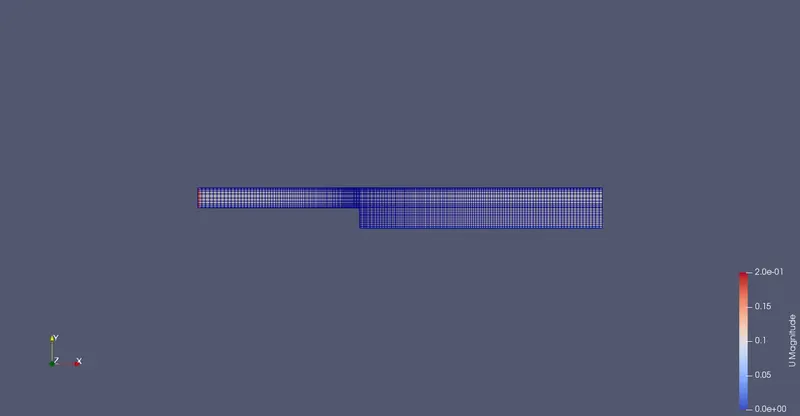
Velocity contour link
https://drive.google.com/file/d/1t0nGiXACLS691EJdfmqhU8zpQJL5byh-/view?usp=sharing
pressure contour link
https://drive.google.com/file/d/1Keh89gOdTMJW-_zf2D6tYOA5WhG3gpaK/view?usp=sharing
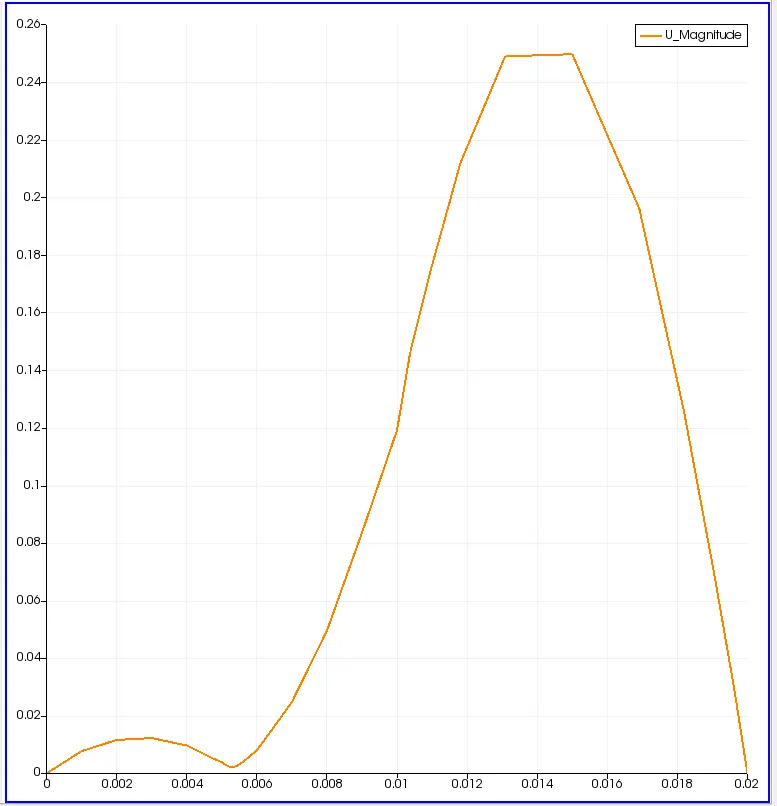
Velocity plot for case 1 (no grading)
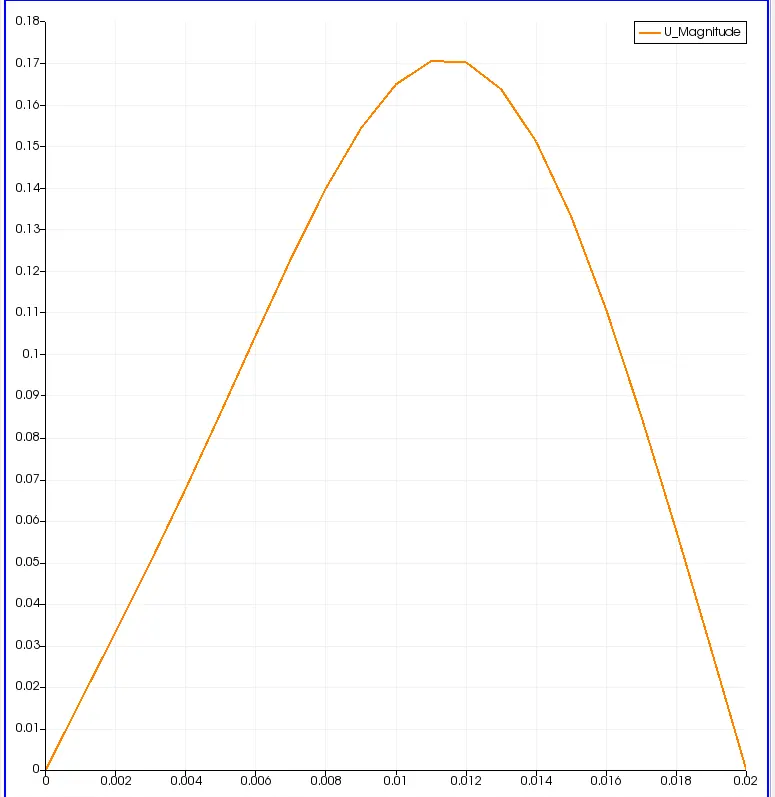
Velocity plot for case 2 (grading 0.2)
CONCLUSION-
- learnt about simple command used in ubuntu
- learnt about commnads and features of openFoam
- how to choose solver for particular problem
- how to run simulation in openFoam terminal, editing of blockMeshdict and controldict.
- defining boundary conditions and how to use paraview.