Week 8 - Simulating Cyclone separator with Discrete Phase Modelling
Aim: Simulating a Discrete phase modeling for cyclone separator.
Introduction to Cyclone separator
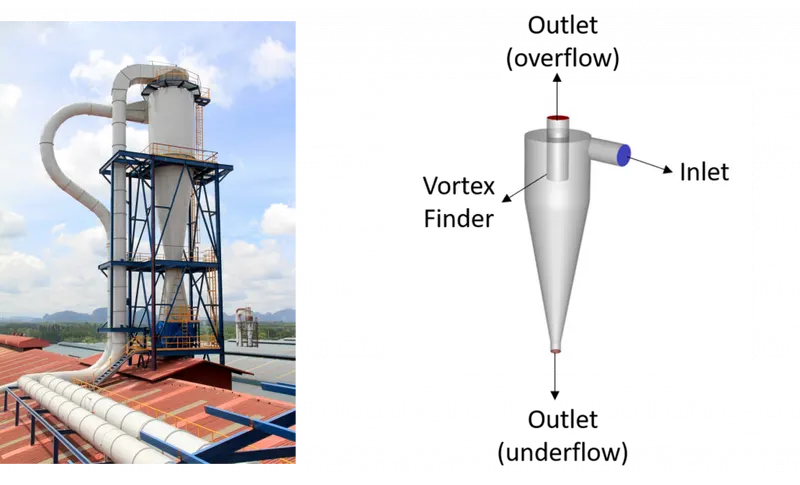
A cyclone separator is a device which is used to separate particles contained a fluid (air or gas). This devices are mostly used in separating the particles from flue gasses and separating the air from the particles so as to minimmize the pollution. The particles are collected in the tray (Trap BC uses in the case we study further).
 |
The separation efiiciency can be affected by:
1. Size of the particle,
2. Velocity at the inlet,
3. Smoothness of the wall, etc
In the current study an attempt is made to simulate the cases for varying size and varying velocity of the particle.
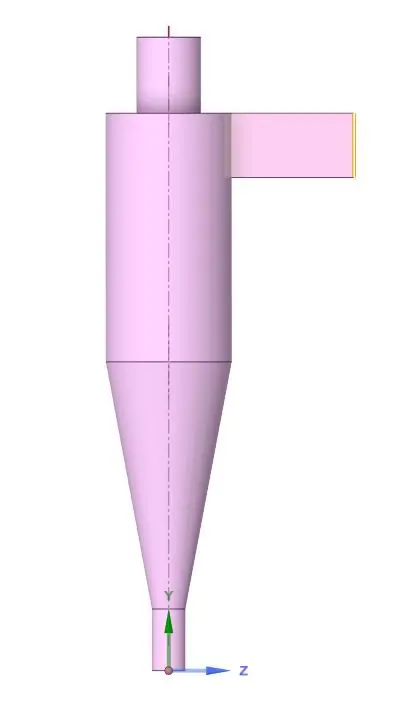
The Cyclone separtor geometry used is:
 |
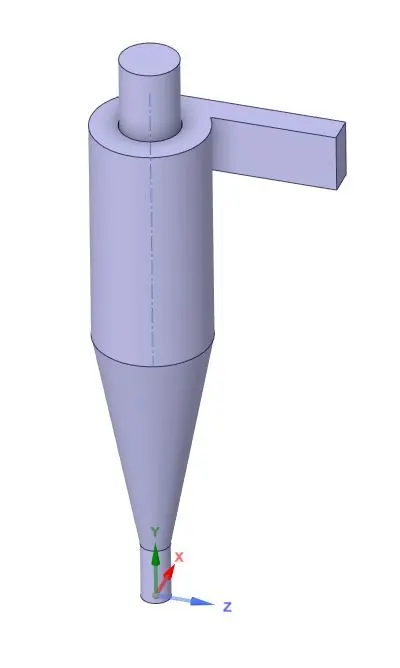
The fluid volume:
|
Analytical methods to calculate the Separation efiiciency:
There are 4 methods to calculate separation efficiencies given by:
1. Iozia and Leith model
2. Li and Wang model
3. Koch and Licth model
4. Lapple model
Each of these models have some variation in their assumptions which we will go through one-by-one.
1. Iozia and Leith model:
It assumes that the vortex that carries the particles are affected by 2 forces, Centrifugal force Z and Flow resistance W. The Separation efiiciency or Collection efficiency is given by,
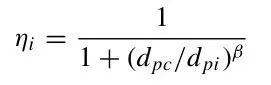
Where, `beta` is given by 
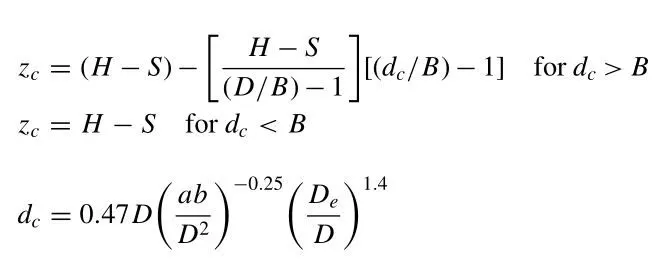
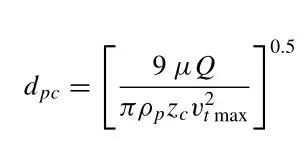
Furthermore, the expressions for core length, core diameter and particle diameter are
 |
 |
2. Li and Wang model:
This model is based on 2 assumptions,
a)The radial particle velocity and the radial concentration profile are not constant for uncollated particles within the cyclone.
b) Boundary conditions with the consideration of turbulent diffusion coefficient and particle bounce re-entrainment on the cyclone wall are:
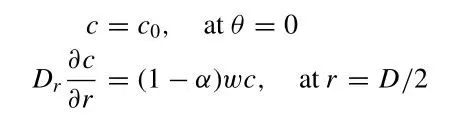
The concentration distribution in a cyclone is given as:
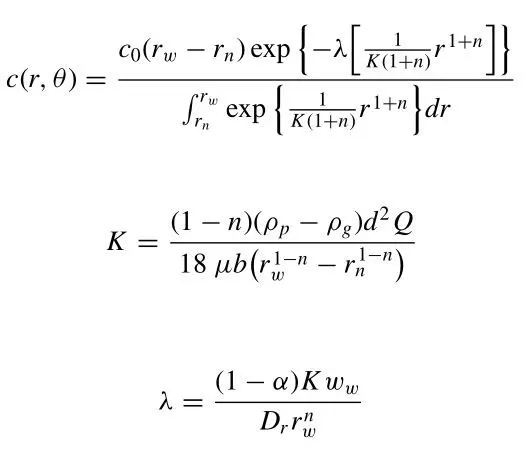
The final efficiency becomes:
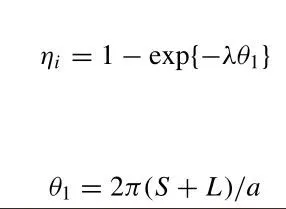
3. Koch and Licht model:
The tangential velocity is equal to the tangential velocity of the gas flow and The tangential velocity is related to the radius of cyclone by: `uR^n` = Constant
The balanced equation yiels the efficiency:
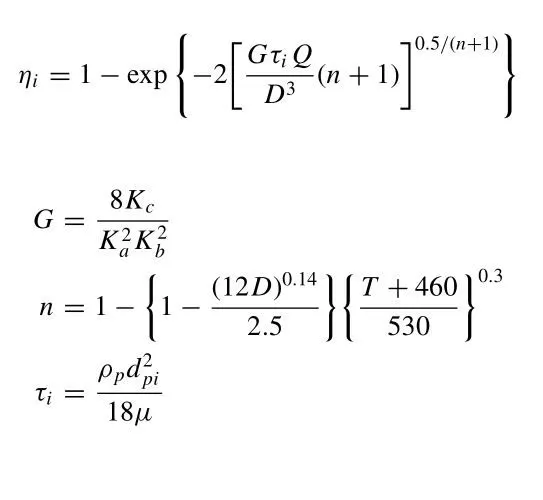
4. Lappel Model:
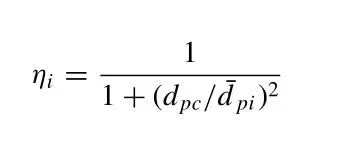
The particle entering the cyclone is evenly distributed across the inlet opening. The particle that travel from inlet half width to the wall in the cyclone is collected with 50% efficiency. The semi empirical relationship developed is,
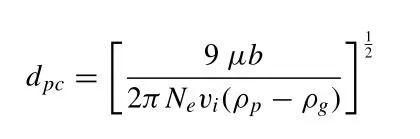
Where the efficiency is,
Introduction to CFD for Cyclone sepatator
The application of CFD in cyclone separator helps in simlating situation that are encounterd in day-to-day requirement of a separator. There are essentially 4 ways to calcylate the Separator efficiency. But for the scope of the CFD, Discrete phase modeling is used which gives control over the discrete phase parameters. The setup of model and the discrete phase are as given below in FLUENT.
|
Model selection (Viscous and Discrete phase)
|
|
Injection:
|
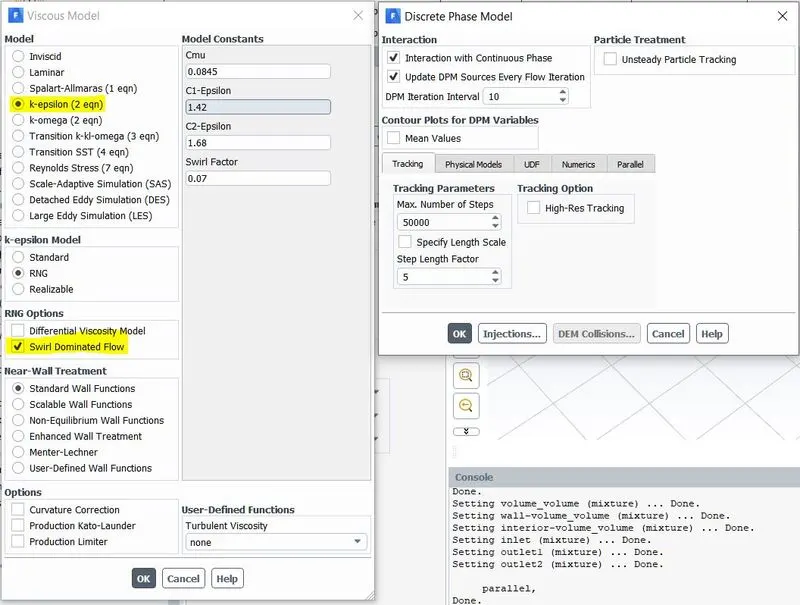
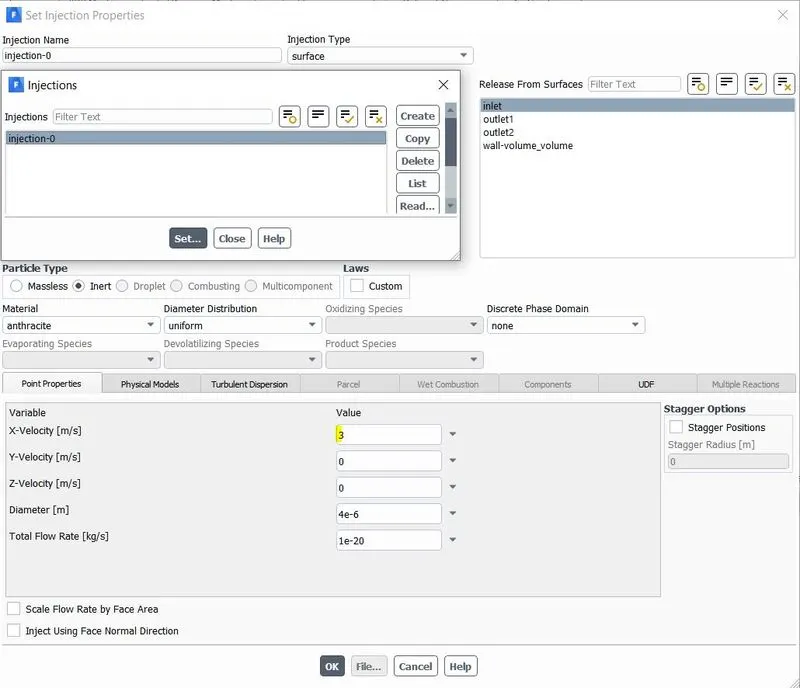
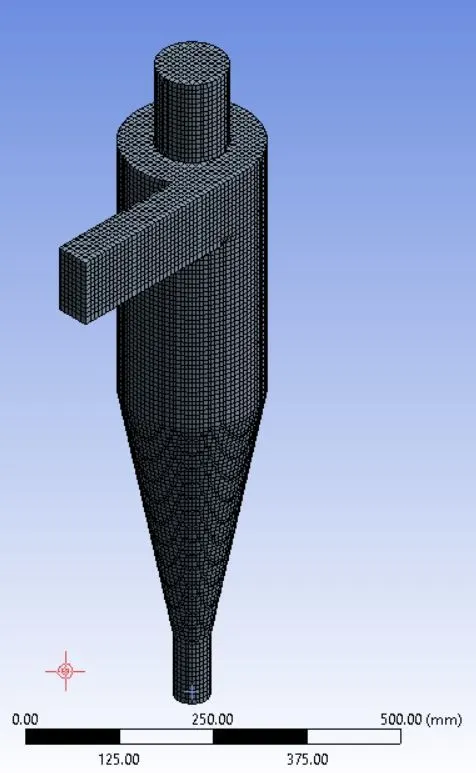
Although, before performing an analysis there is a need to create a mesh for the simulation. This can be done by extracting the fluid volume and then meshing it in the Meshing.
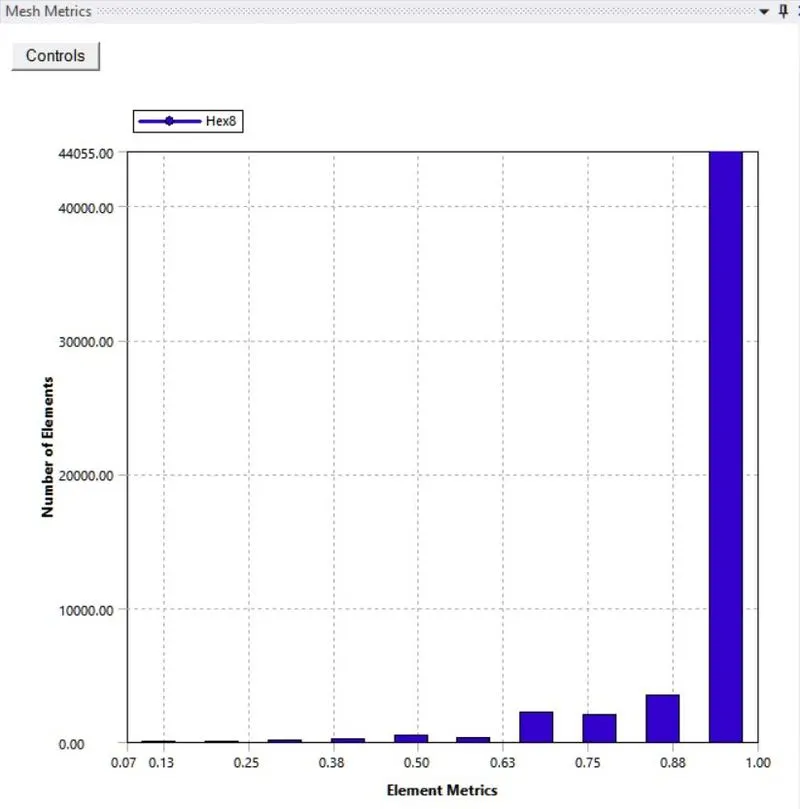
The cartaseian mesh gives a good result and is even throughout. The element quality obtained is also high.
 |
 |
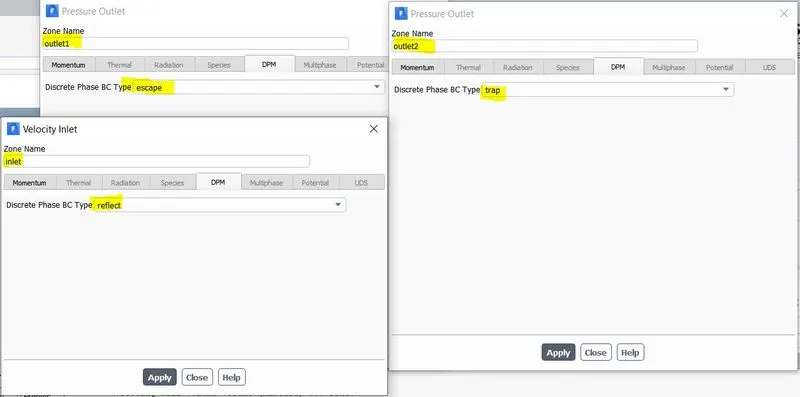
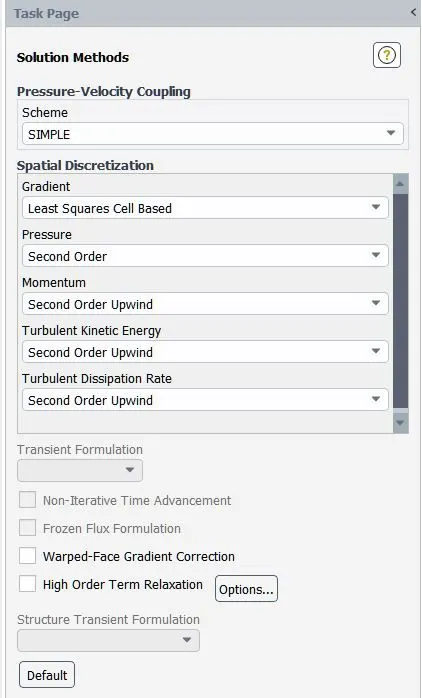
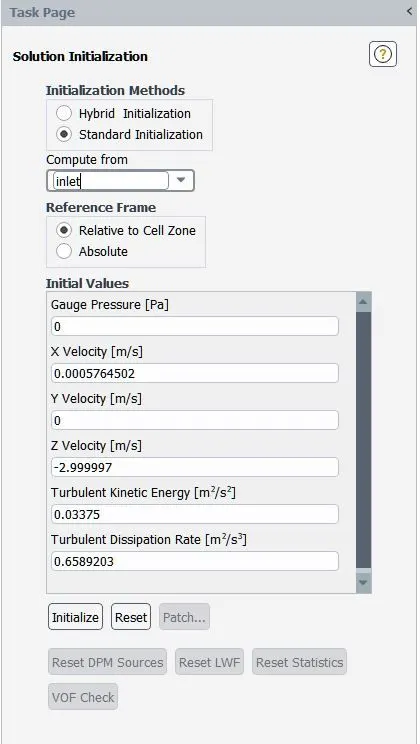
The setup if the simulation is fairly simple as it involves the Boundary condition, solver selection and Initialization. Which are given below.
|
Boundary Condition for DPM:
|
|
Solver:
|
|
Standard initialization
|
Result:
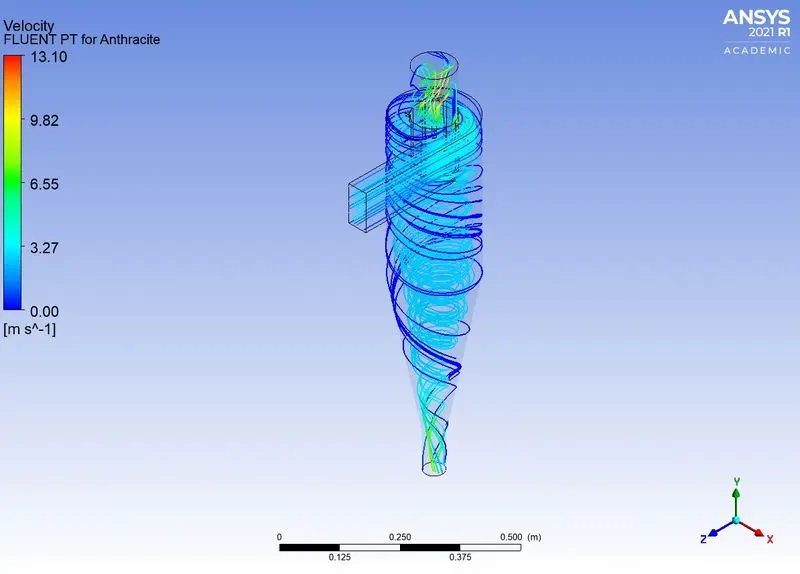
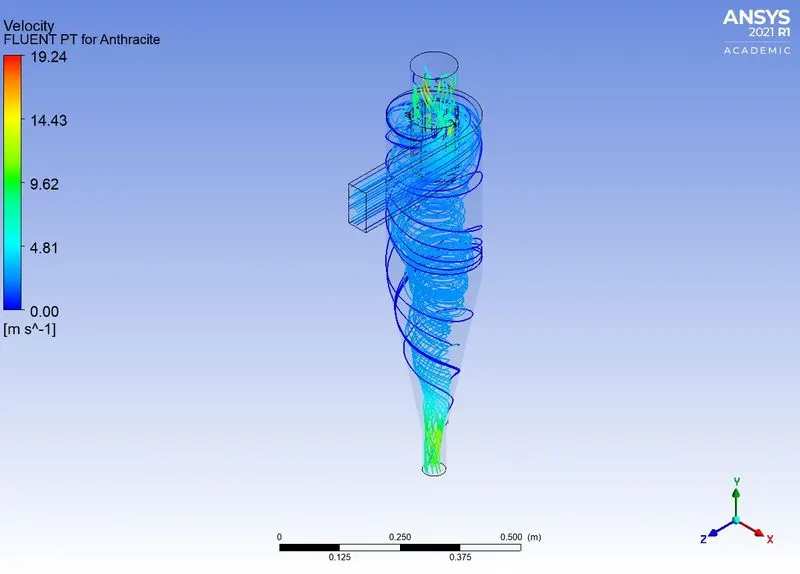
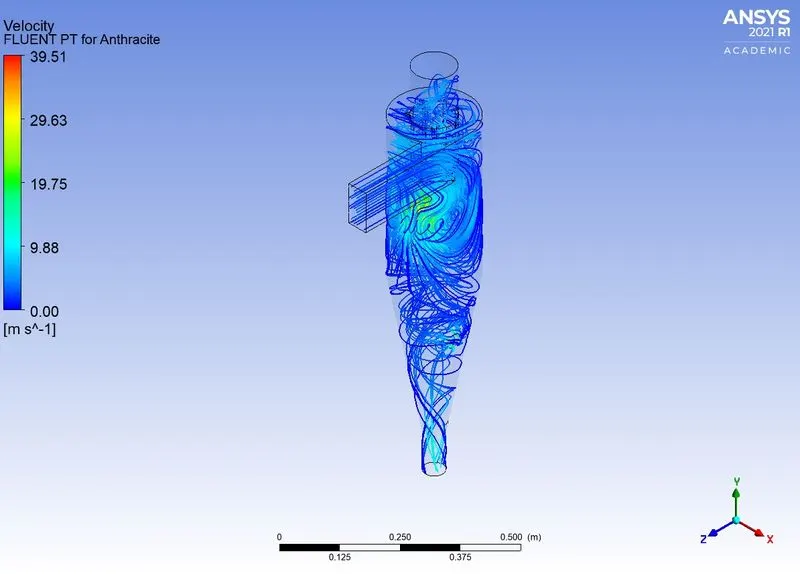
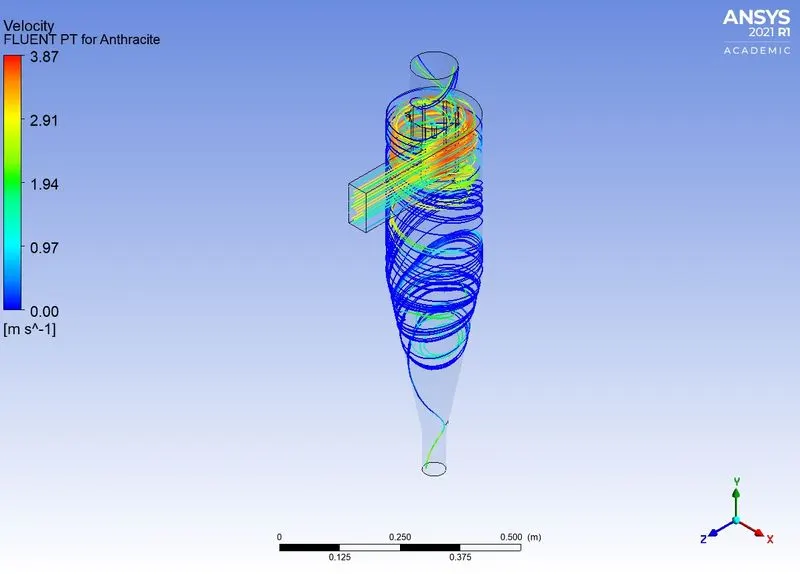
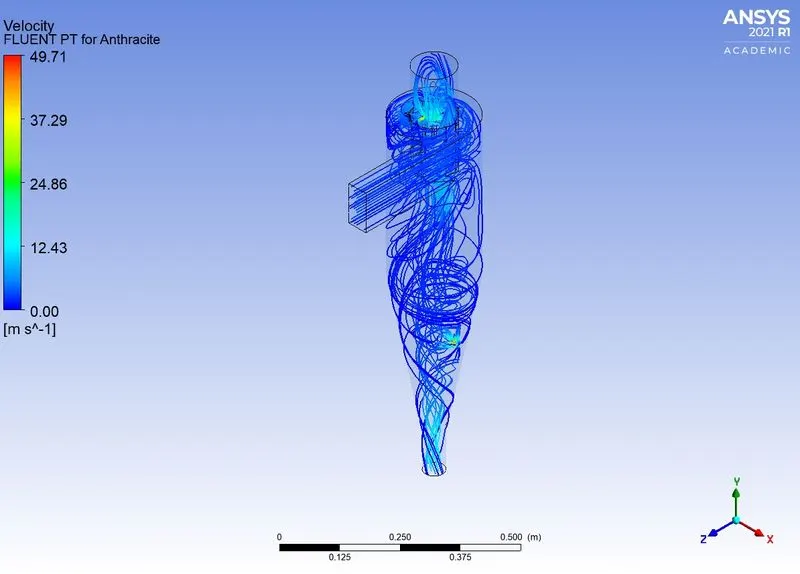
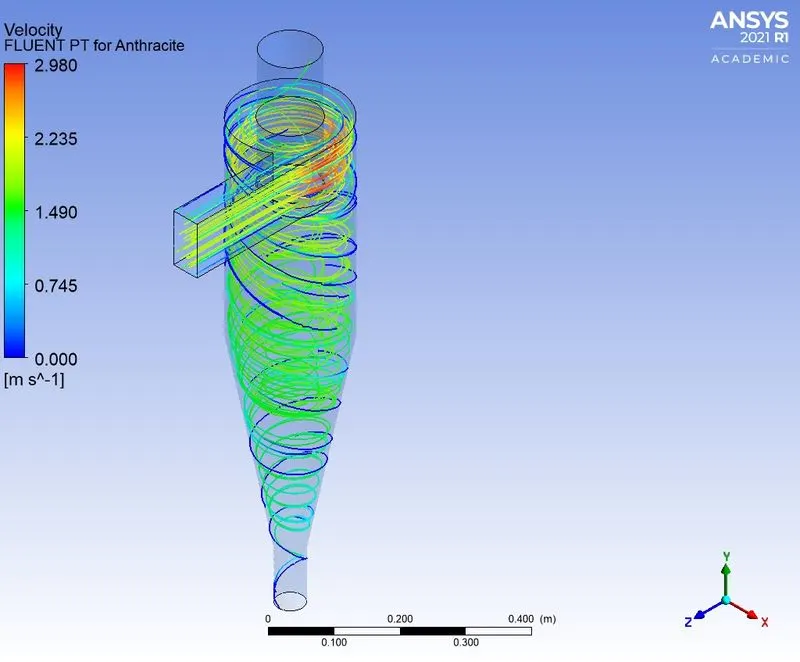
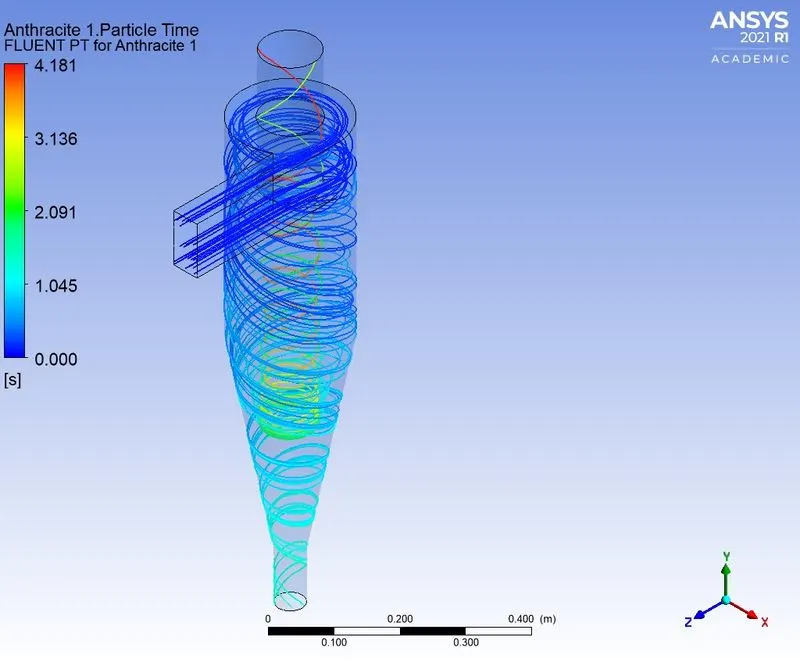
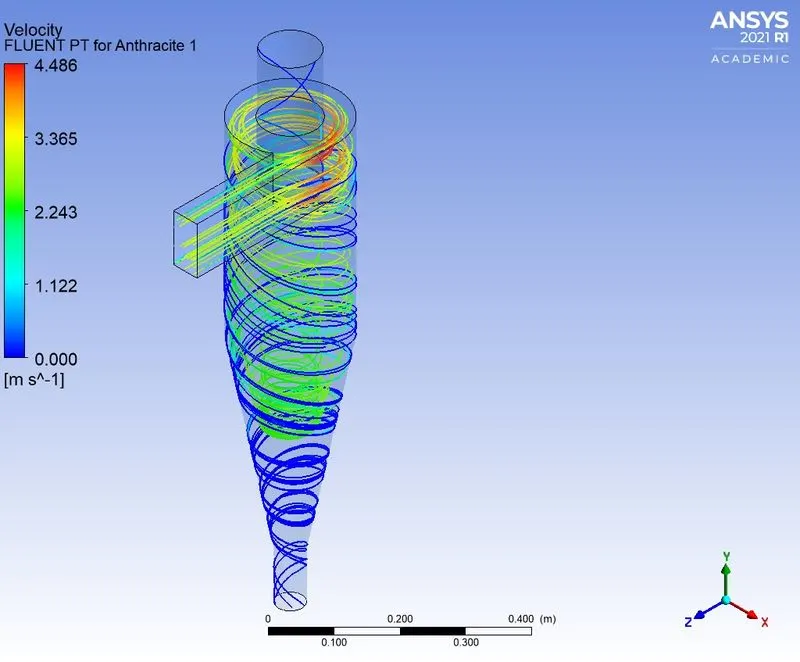
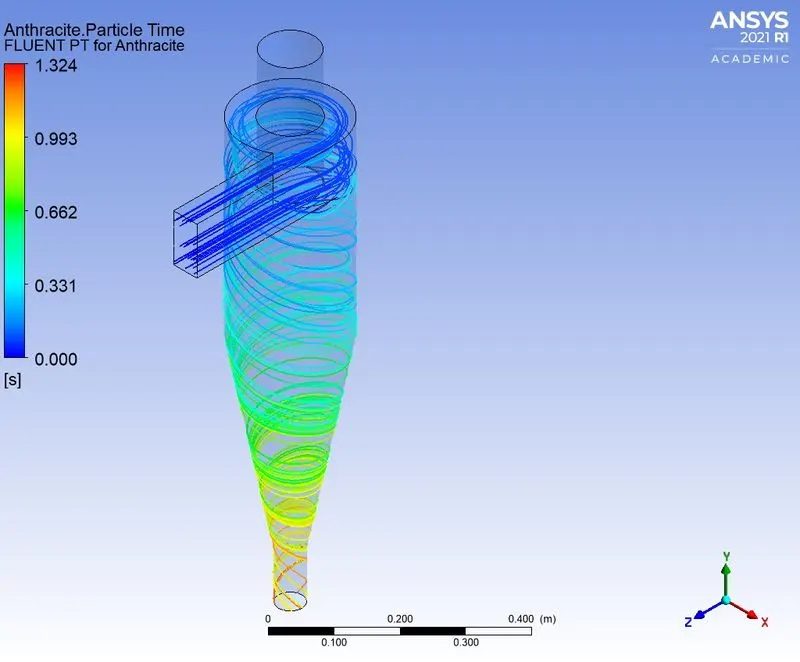
Case 1) Velocity is constant and size is varying:
| Size of the Particle (Diameter `mu m`) | Particle time | Velocity |
| 1 | 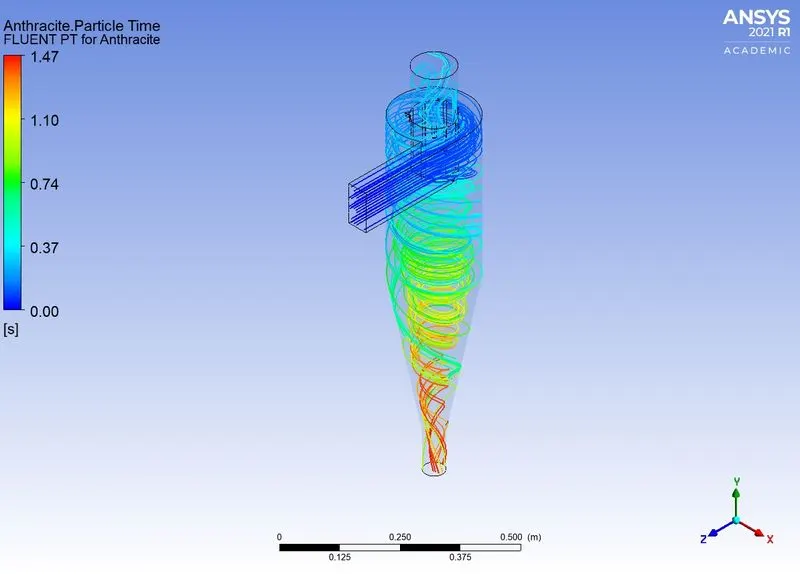 |
 |
| 2 | 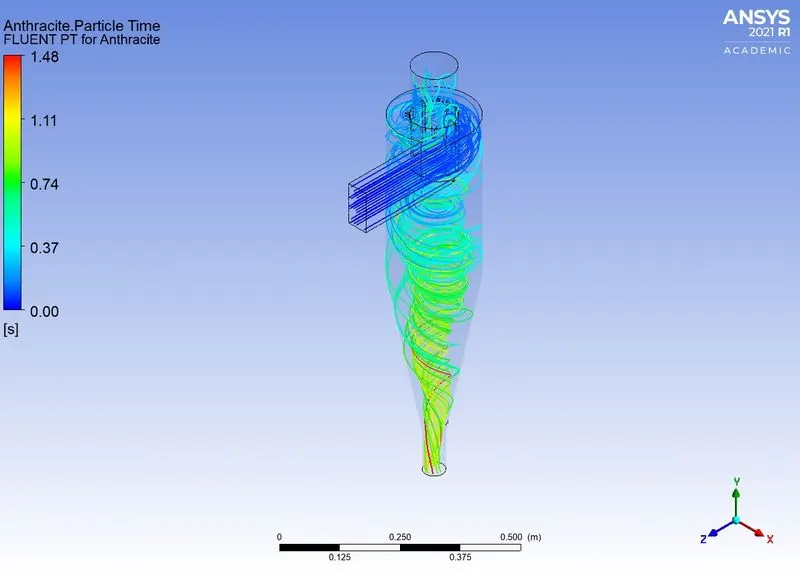 |
 |
| 3 | 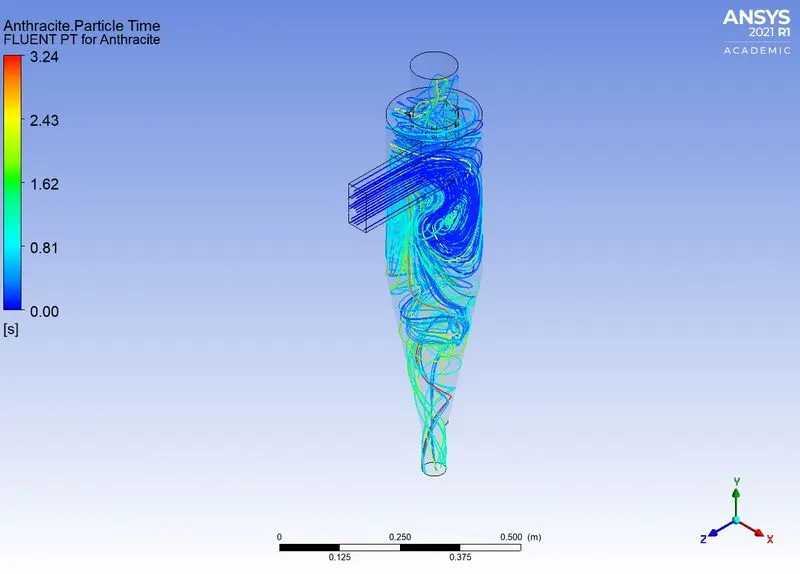 |
 |
| 4 | 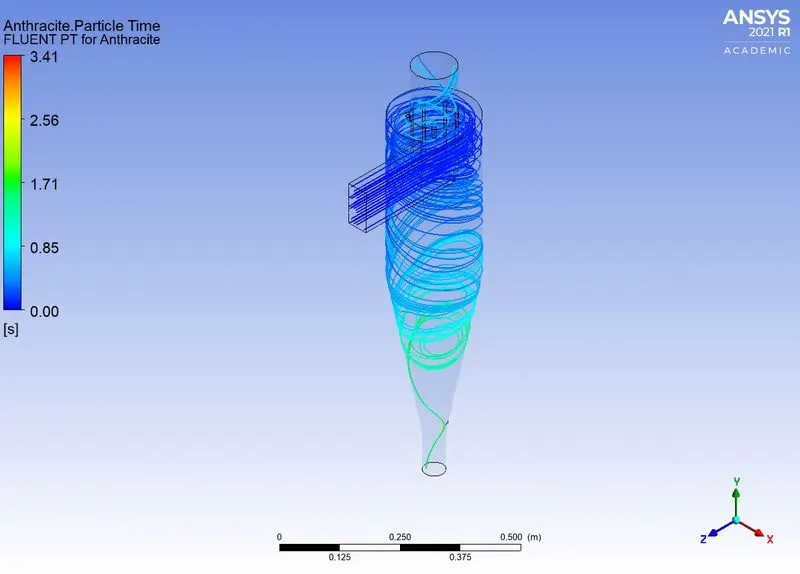 |
 |
| 5 | 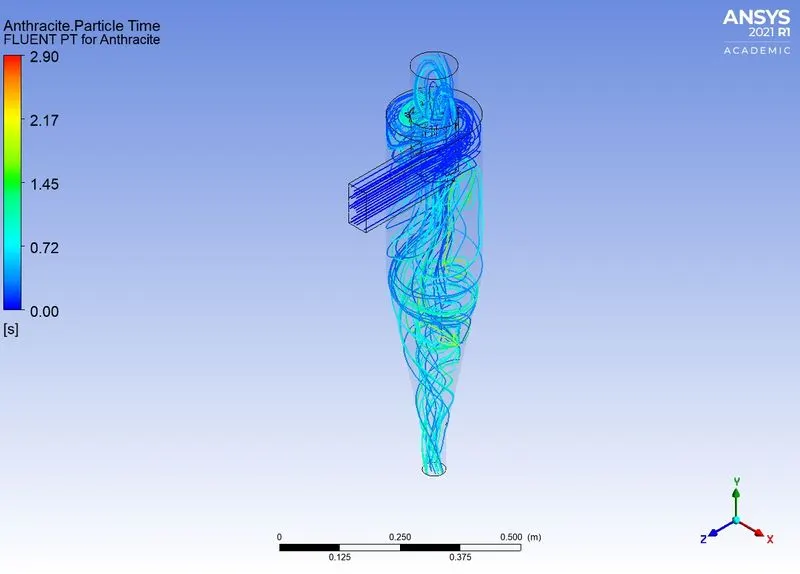 |
 |
Case 2) Size is constant, Velocity is varying.
|
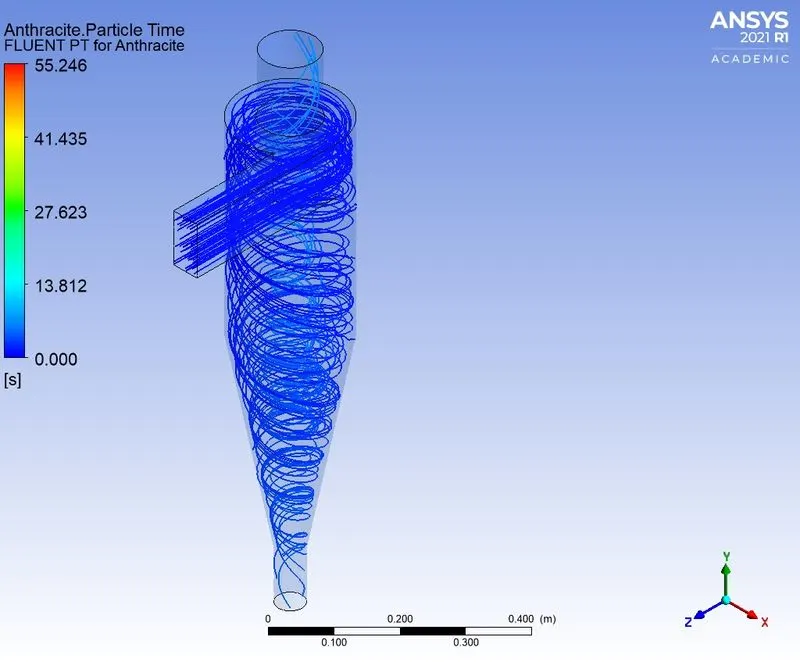
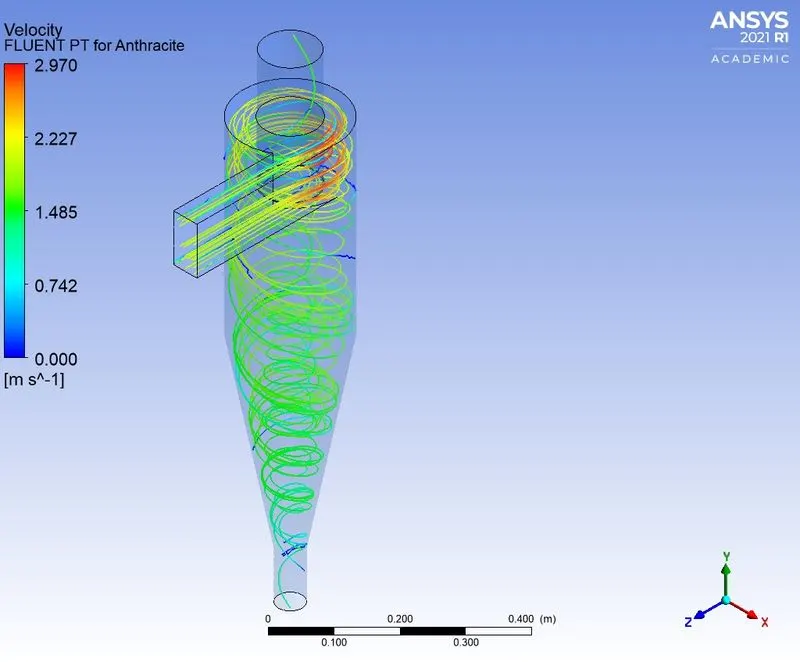
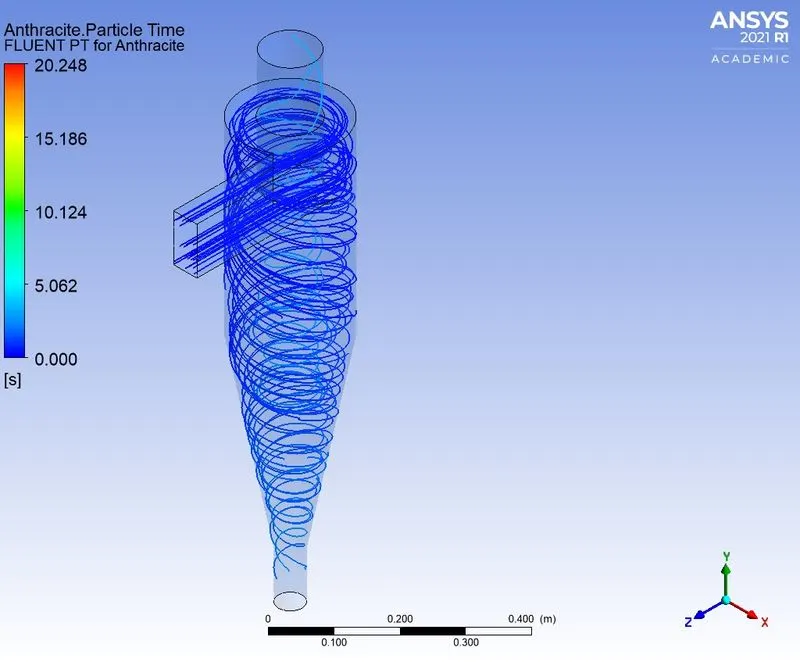
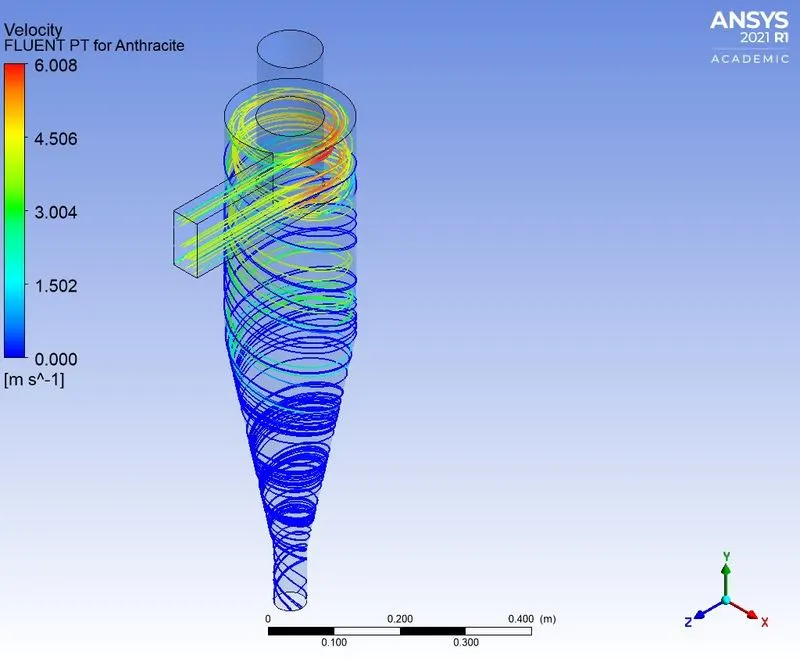
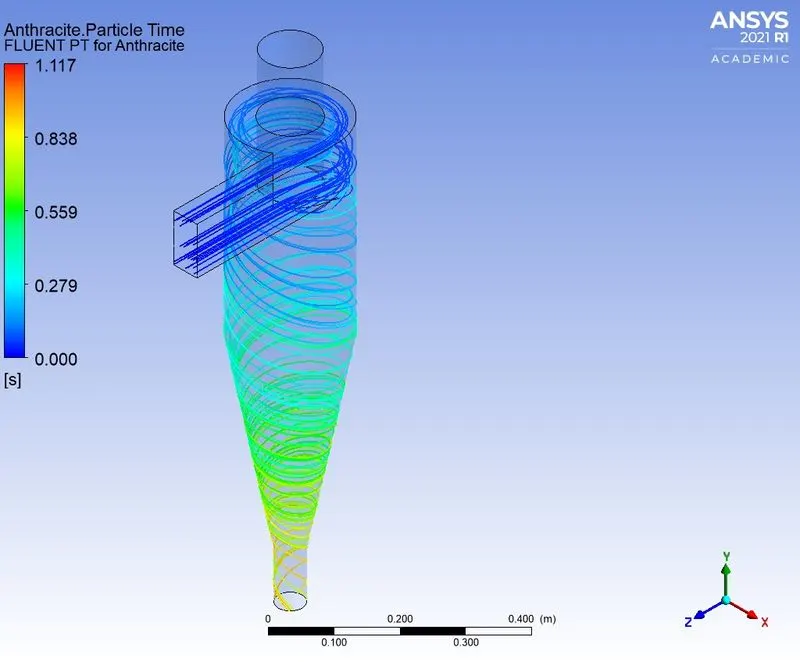
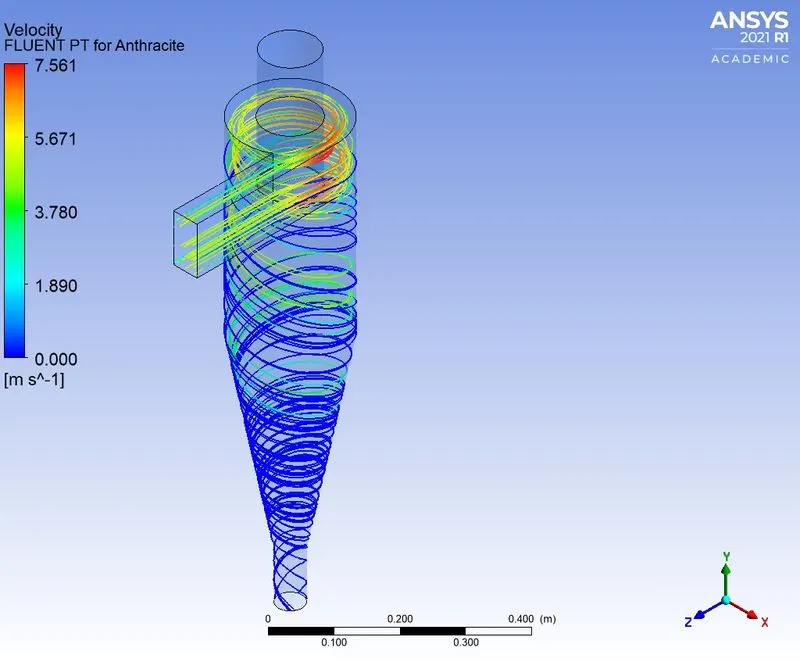
Simulation result:
Observations:
Case 1) Separation efficiency:
For varying size (Velocity 3 m/s)
|
Size |
Tracked |
Escaped |
trapped |
incomplete |
Efficiency |
|
1 |
91 |
12 |
40 |
39 |
43.95% |
|
2 |
91 |
4 |
61 |
26 |
67.03% |
|
3 |
91 |
- |
89 |
2 |
97.80% |
|
4 |
91 |
32 |
22 |
37 |
24.17% |
|
5 |
91 |
13 |
72 |
6 |
79.12% |
Case 1) The separations seems to have arbitaray reslult for the separation efficiency, this could be potentially because of the timestes in discrete phave or because of the size of the particle itself.
Case 2) Separation efficiency and Pressure drop:
For varying velocity (Size 5 micro meter)
|
Velocity m/s |
tracked |
escaped |
Trapped |
incomplete |
Efficiency |
Pressure drop (Inlet - outlet) |
|
1 |
408 |
39 |
29 |
340 |
7.18% |
1.3613979 |
|
2 |
408 |
21 |
16 |
371 |
3.921% |
6.5185982 |
|
3 |
408 |
33 |
284 |
91 |
69.60% |
14.978654 |
|
4 |
408 |
13 |
395 |
- |
96.81% |
27.272432 |
|
5 |
408 |
1 |
407 |
- |
99.75% |
43.71533 |
The Case 2 present with pressure it is evident that the pressure drop increses as the velocity of the dicrete phase increases. Simultaneously, the separation efiiciency of the cyclone separator also increase.
In conclusion, the simulation conducted to understand the effects of varying the size of the particle to varying the velocity of the flow show us the result and the efficiency attained by the separator under given Boundary conditions. This gives a fairly good understanding of the solver and discrete phase modeling in FLUENT.