Week 8 - Simulating Cyclone separator with Discrete Phase Modelling
Aim --> To perform analysis on cyclone separator and calculate the separation efficiency and pressure drop.
Introduction
This project is about cyclone seperators. Cyclonic separation is a method of removing particulates from an air, gas or liquid stream, without the use of filters, through vortex separation. Inertial forces (rotational and gravity) are used to seperate mixtures of solid and liquid. The devices that use this type of seperation methods are called cyclone seperator. These devices can seperate solid particles in liquids, liquid droplets from gases and also solid particulates from gas stream. Lighter particles have less inertia and are more influenced by helical vortex and travel upward while heavier particles fall downwards. Most cyclones are built to control and remove particulate matter that is larger than 10 micrometers in diameter. However, there do exist high efficiency cyclones that are designed to be effective on particles as small as 2.5 micrometers. As well, these separators are not effective on extremely large particulate matter. For particulates around 200 micrometers in size, gravity settling chambers or momentum separators are a better option.
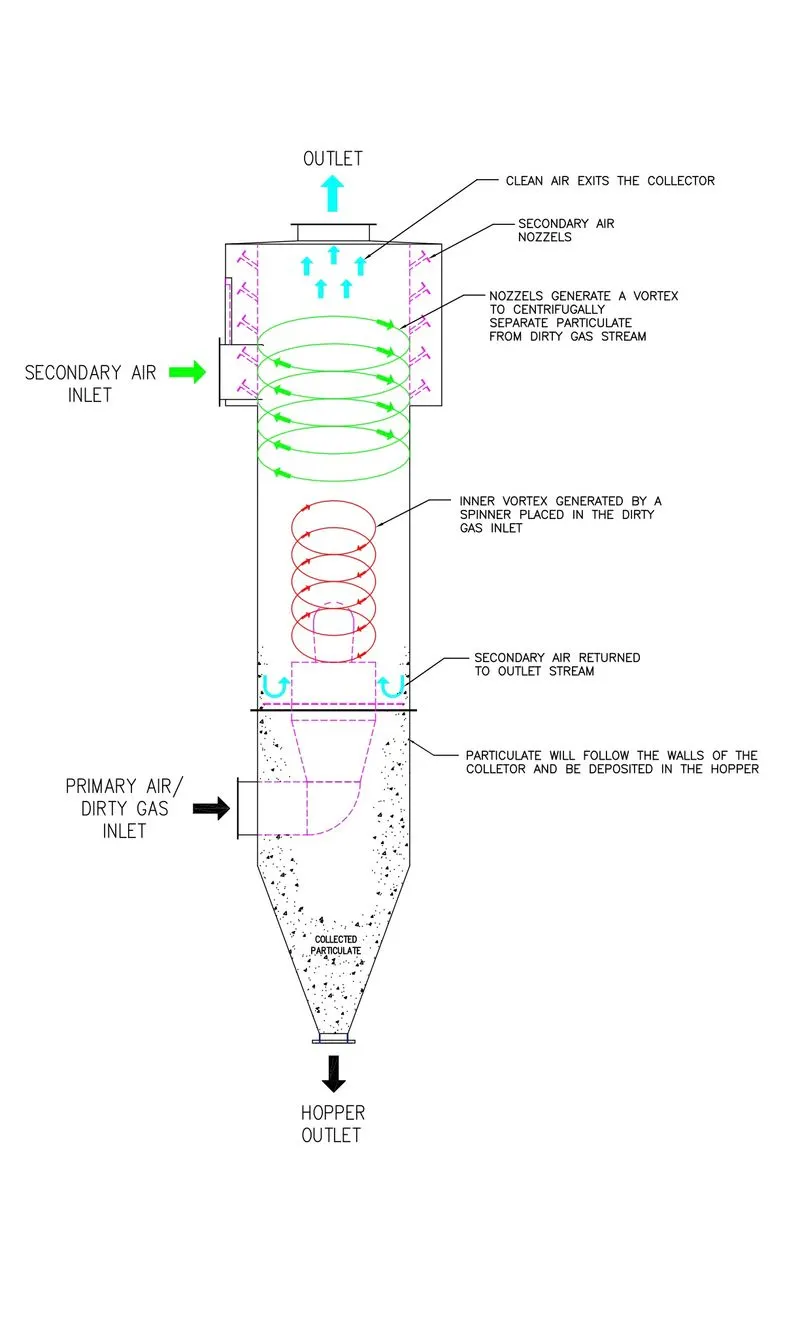
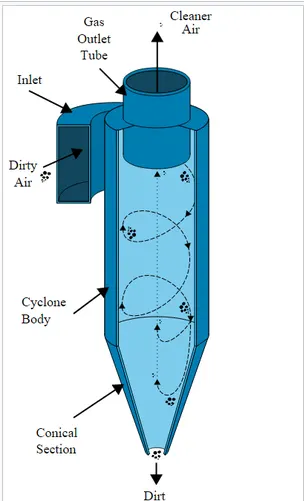
Following are the models for evaluating the cyclonic efficiency of cyclone seperator devices -->
1. Iozia and Leith Model
--> Iozia and Leith logistic model is a modified version of Barth Model, which is developed based on force balance. The model assumes that a particle carried by the vortex endures the influence of two forces: a centrifugal force, Z and a flow resistance, W. The collection efficiency ηi of particle diameter dpi can be calculated from the following equation. 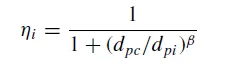
--> β is an expression for slope parameter derived based on thestatistical analysis of experimental data of a cyclone with D = 0.25 m given as and dpc is the 50% cut size given by Barth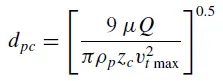
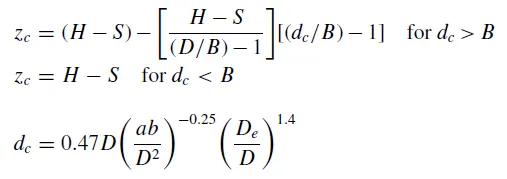
--> where core length, zc, and core diameter, dc, are given as
2. Li and Wang Model
--> The Li and Wang [3] model includes particle bounce or reentrainment and turbulent diffusion at the cyclone wall. A twodimensional analytical expression of particle distribution in the cyclone is obtained. Li and Wang model was developed based on the following assumptions:
- The radial particle velocity and the radial concentration profile are not constant for uncollected particles within the cyclone.
- Boundary conditions with the consideration of turbulent diffusion coefficient and particle bounce reentrainment on the cyclone wall are:
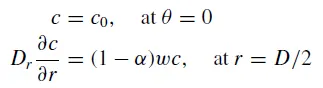
- The tangential velocity is related to the radius of cyclone by: uR^n = constant. The concentration distribution in a cyclone is given as:
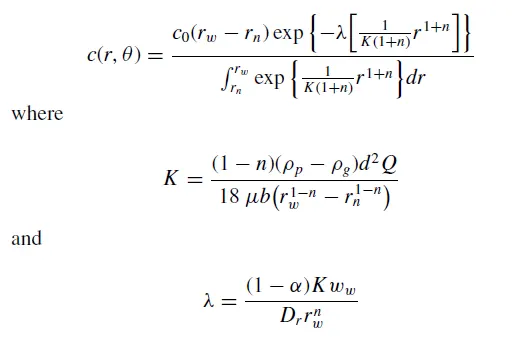
- The resultant expression of the collection efficiency for particle of any size is given as
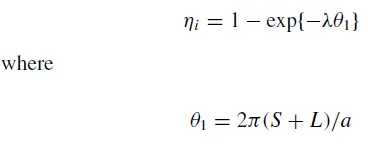
3. Koch and Licht Model
--> Koch and Licht [2] collection theory recognized the inherently turbulent nature of cyclones and the distribution of gas residence times within the cyclone. Koch and Licht described particle motion in the entry and collection regions with the additional following assumptions:
- The tangential velocity of a particle is equal to the tangential velocity of the gas flow, i.e. there is no slip in the tangential direction between the particle and the gas.
- The tangential velocity is related to the radius of cyclone by: uRn = constant.
Aforce balance and an equation on the particles collection yields the grade efficiency ηi 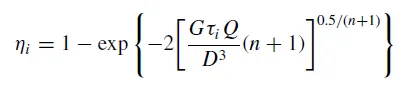
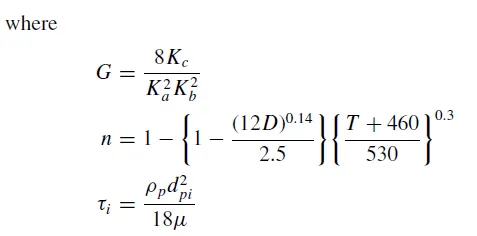
G is a factor related to the configuration of the cyclone, n is related to the vortex and τ is the relaxation term.
4. Lapple Model
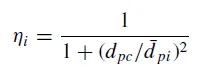
--> Lapple [1] modelwas developed based on force balance without considering the flow resistance. Lapple assumed that a particle entering the cyclone is evenly distributed across the inlet opening. The particle that travels from inlet half width to the wall in the cyclone is collected with 50% efficiency. The semi empirical relationship developed by Lapple [1] to calculate a 50% cut diameter, dpc is
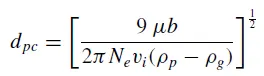 where Ne is the number of revolutions
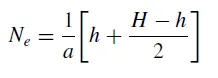 The efficiency of collection of any size of particle is given by
 ...
...
Mesh
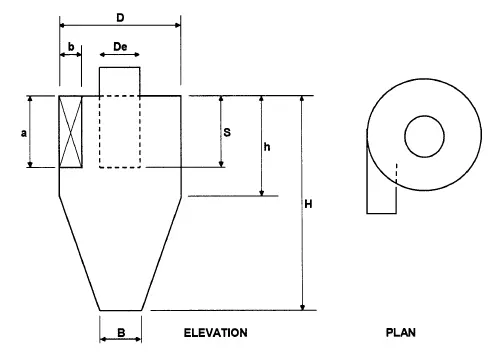
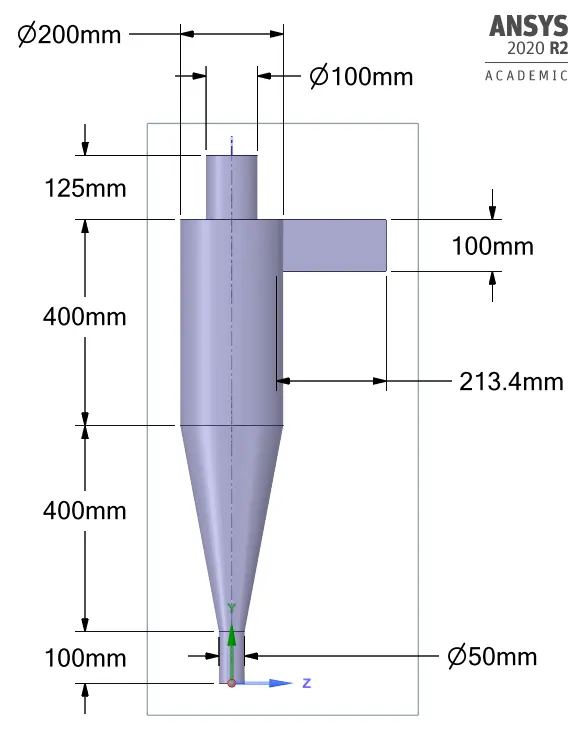
model with Dimensions
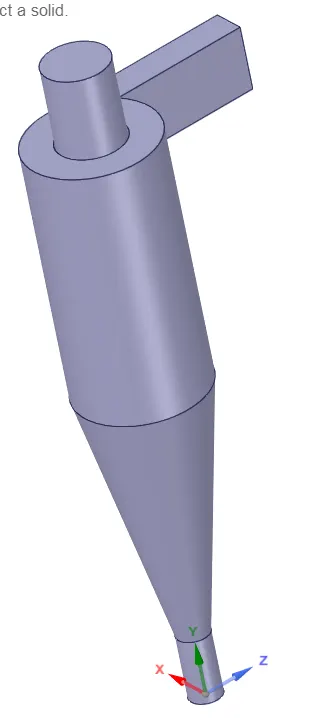
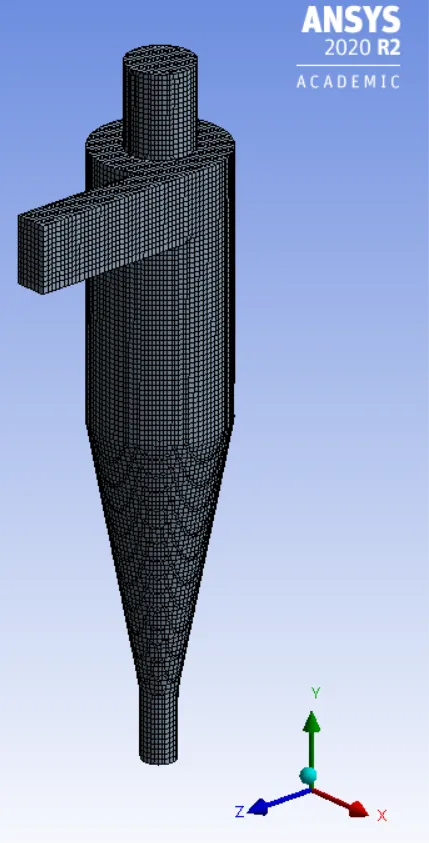
Mesh --> Body fitted cartesian Mesh with mesh size 10 mm.(structural Mesh)
Element quality

Skewness

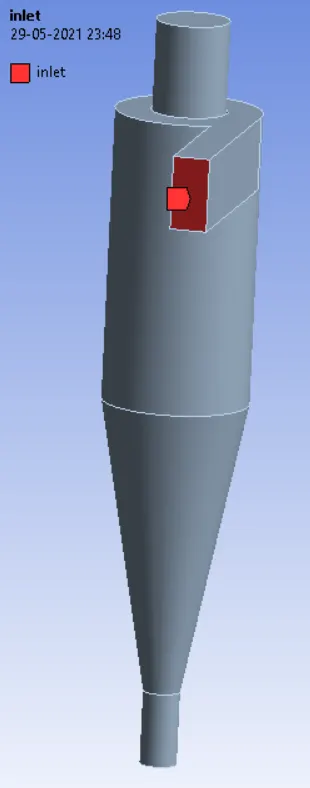
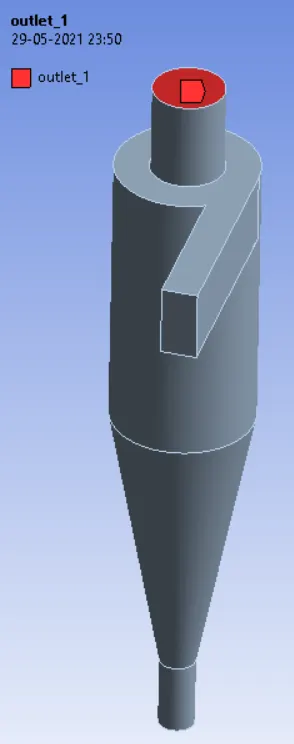
Named Selections
Inlet Outlet-1 Outlet-2
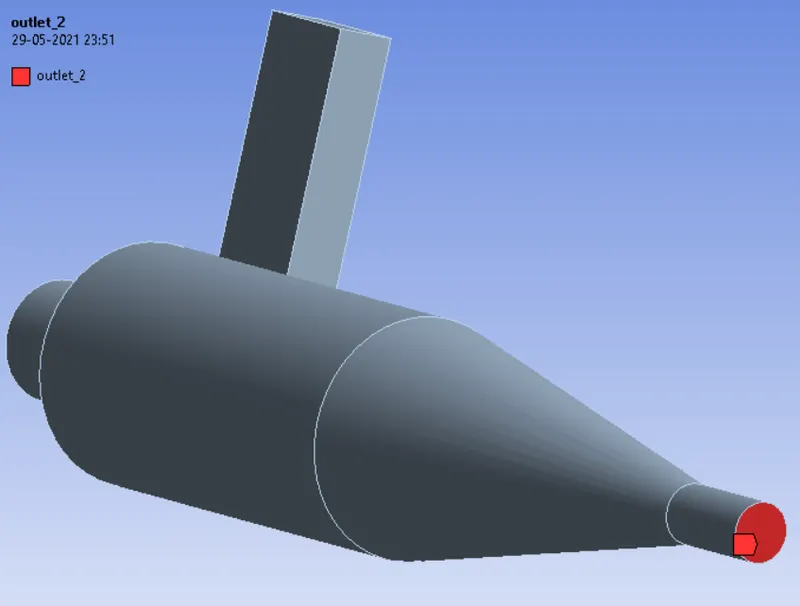
Case-Setup
Initail setup and Viscous model
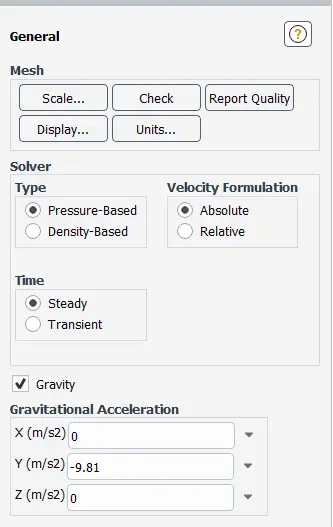
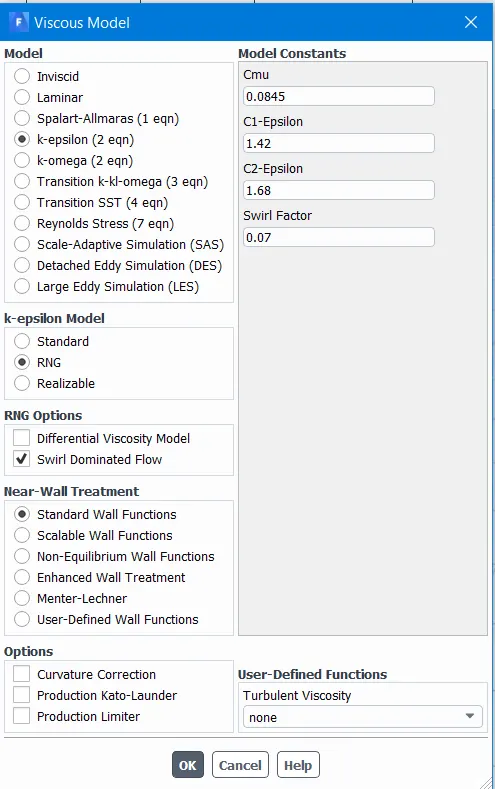 .
.
To simulate the solid particles in the gas stream we turn on the Discrete Phase model (DPM). The solid particles interact with fluid medium and the DPM is iterated every 10 iterations of the solutions. Every particle is tracked for a max. of 50000 iterations before discarding it from solution. Solid particles are antracite injected from inlet at different velocities and at different diameter sizes.
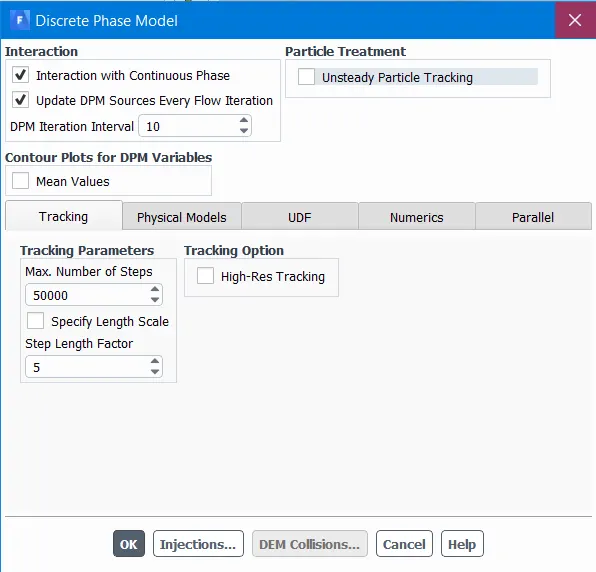
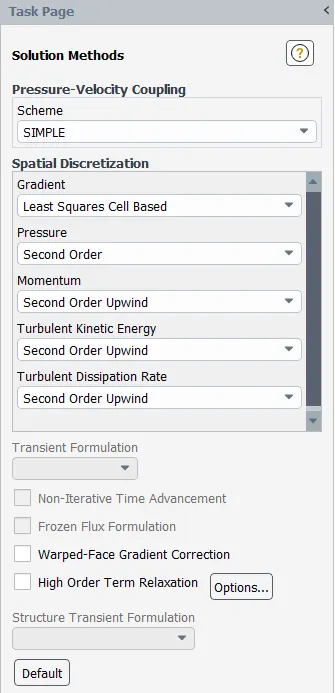
Boundary Conditions:-
Inlet and wall:- Reflect
Outlet(Top):- Escape
Outlet(Bottom/dustbin) - Trap
Results
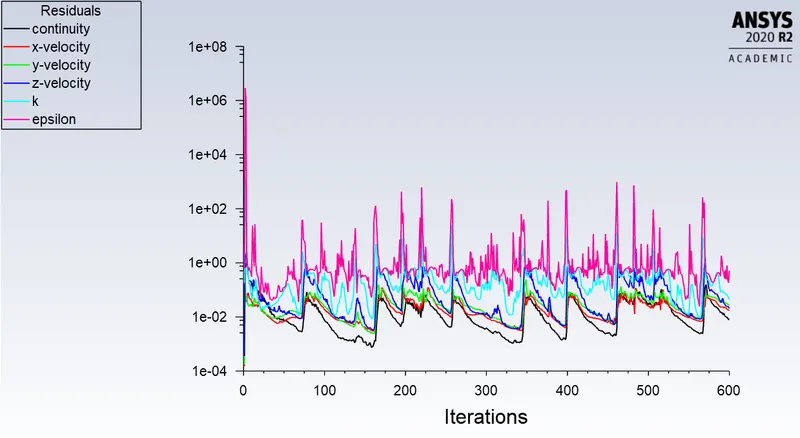
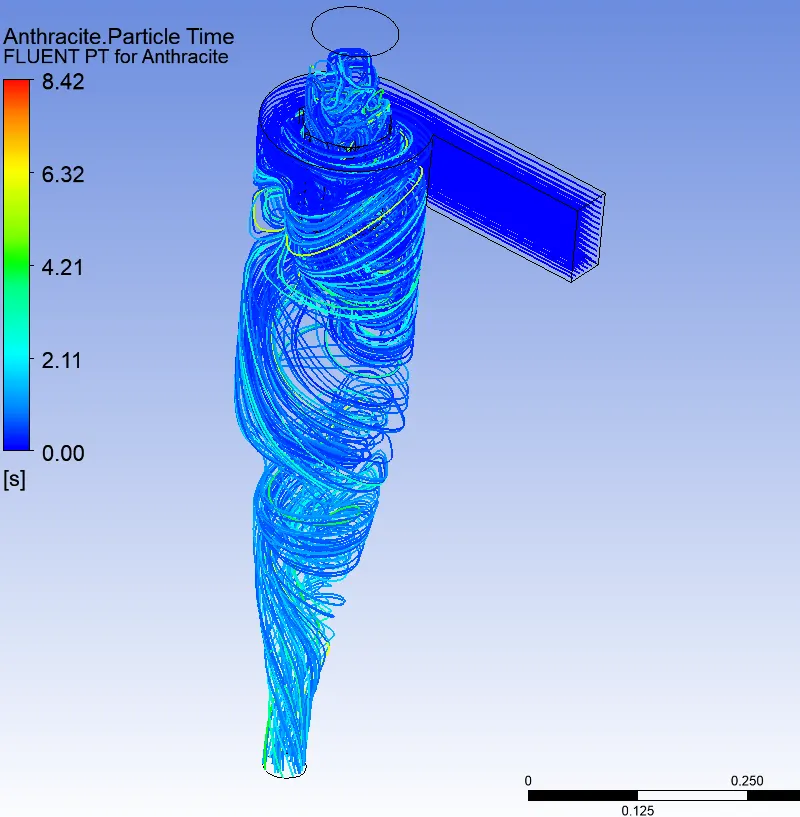
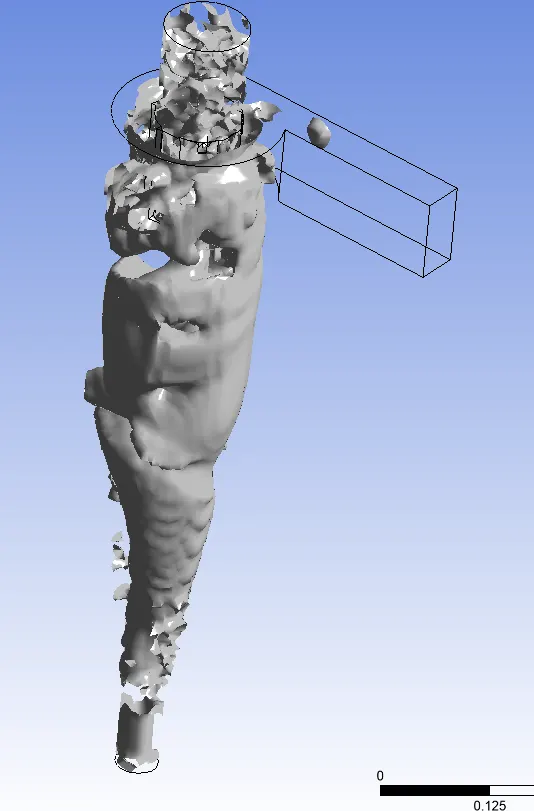
Case 1
Particle diameter = 5 micro meter
particle velocity = 3 m/s
Residual plot
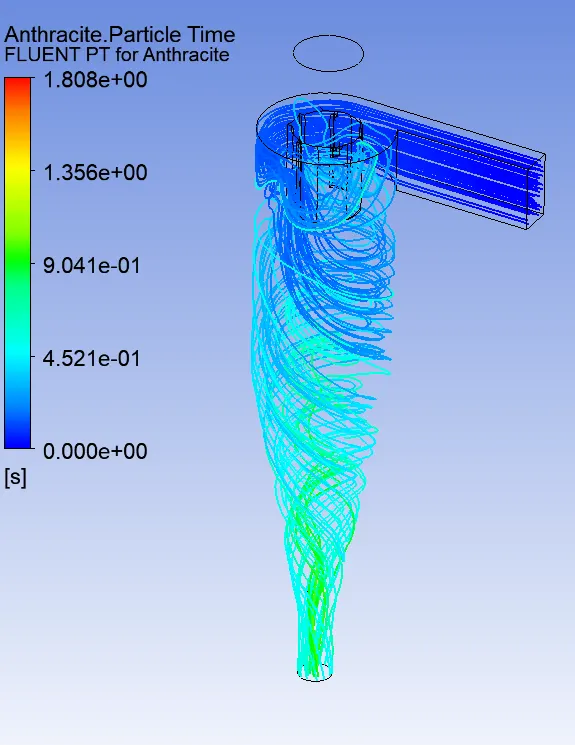
Particle Tracking
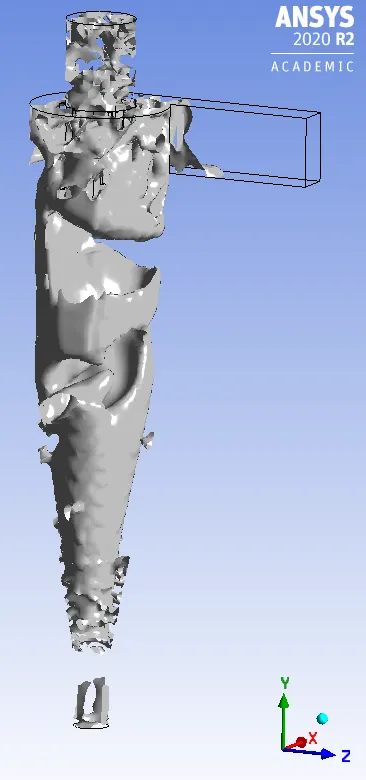
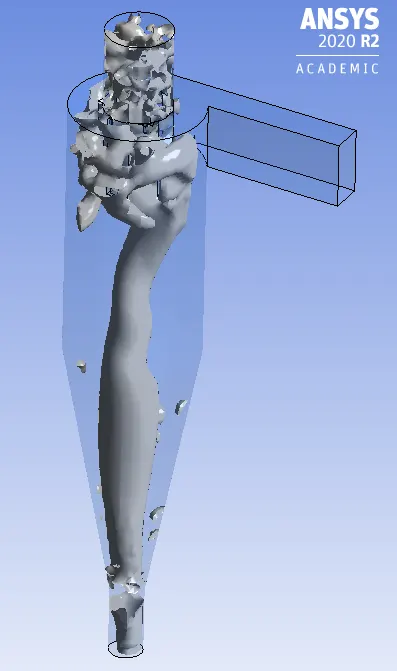
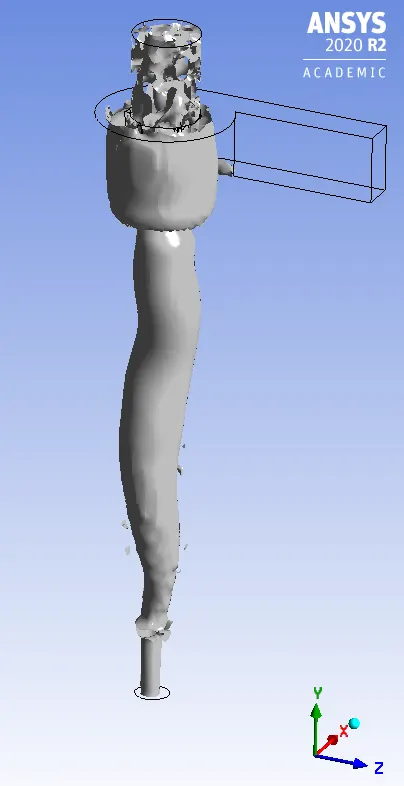
Vortex core
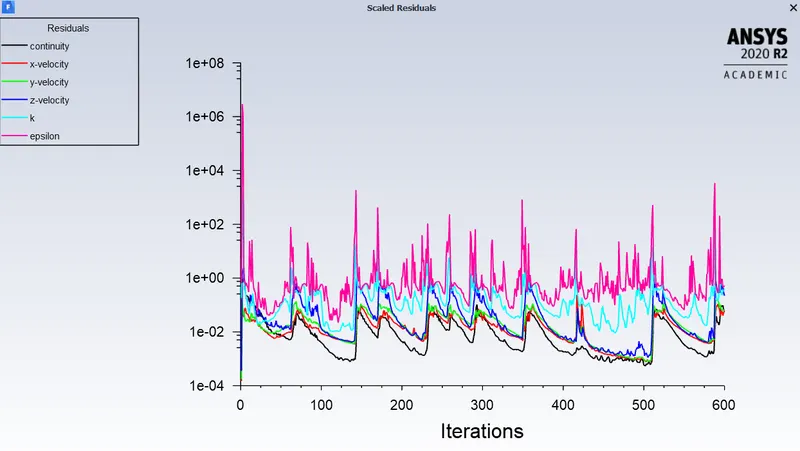
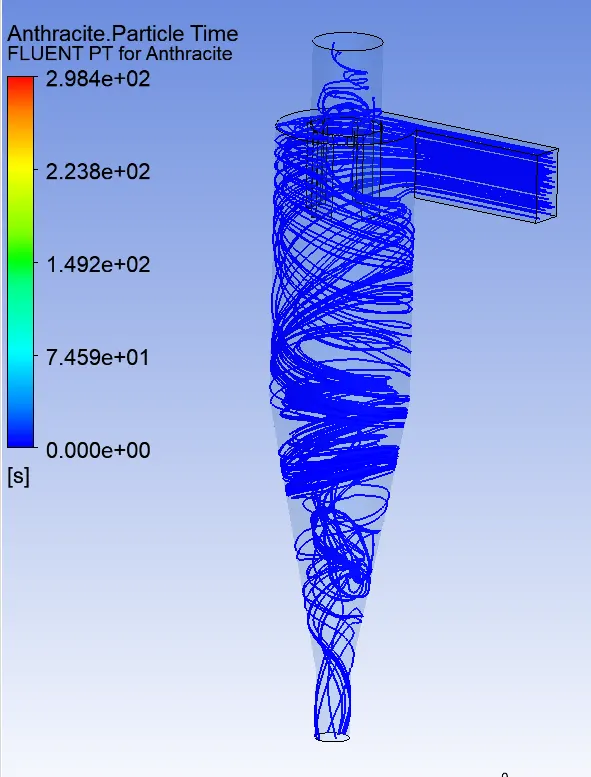
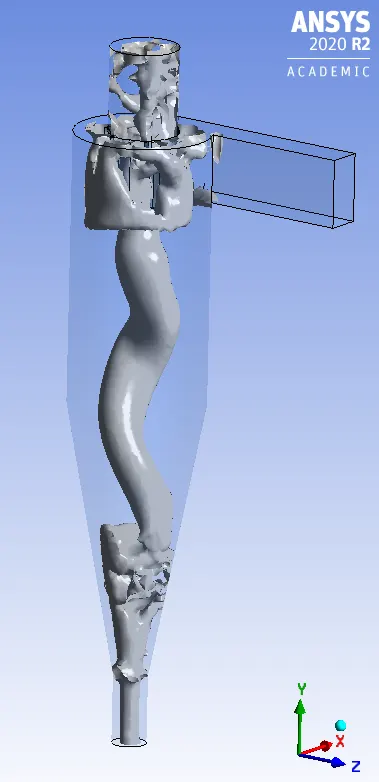
Case 2
Particle diameter = 3 micro meter
particle velocity = 3 m/s
Residual plot

Particle Tracking
Vortex core
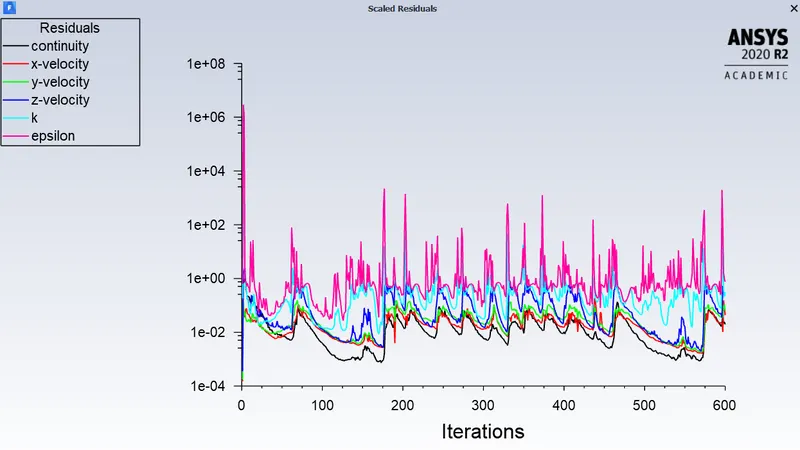
Case 3
Particle diameter = 1 micro meter
particle velocity = 3 m/s
Residual plot

Particle Tracking
Vortex core
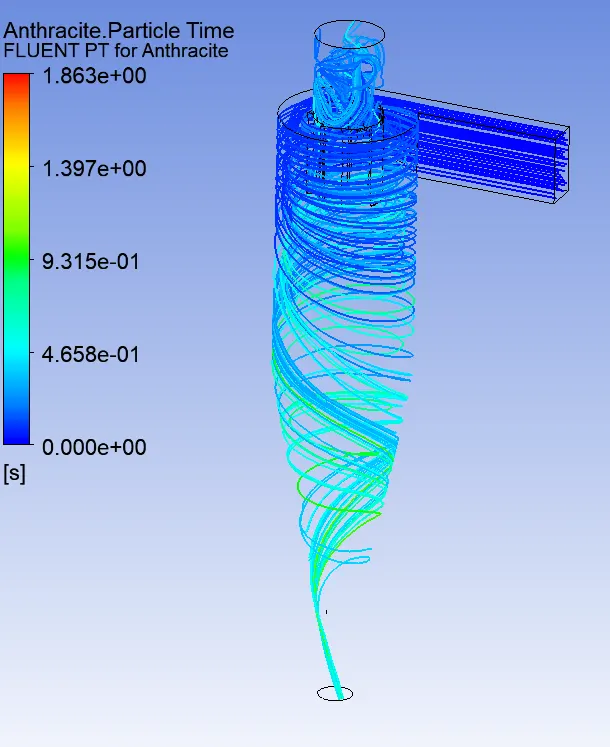
Case 4
Particle diameter = 5 micro meter
particle velocity = 5 m/s
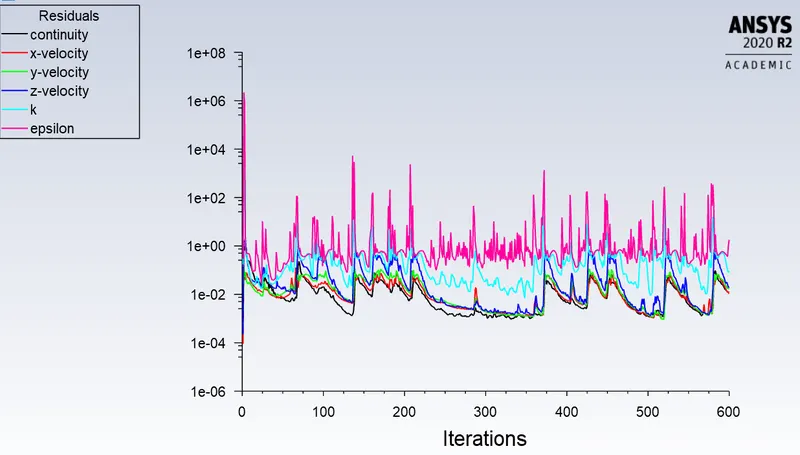
Residual plot

Particle Tracking
Vortex core
Case 5
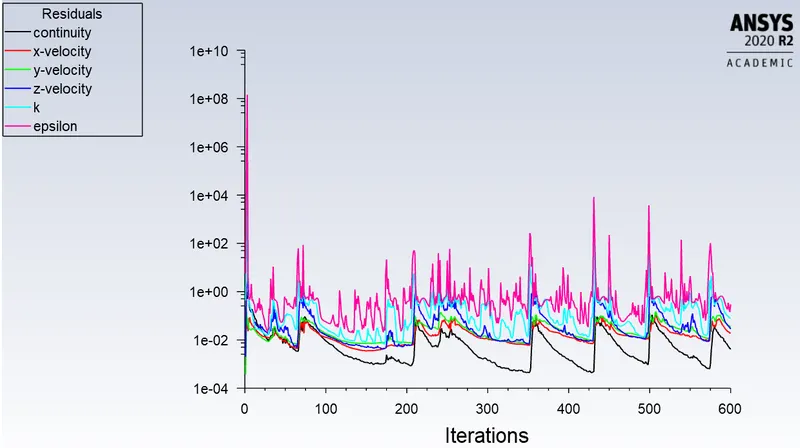
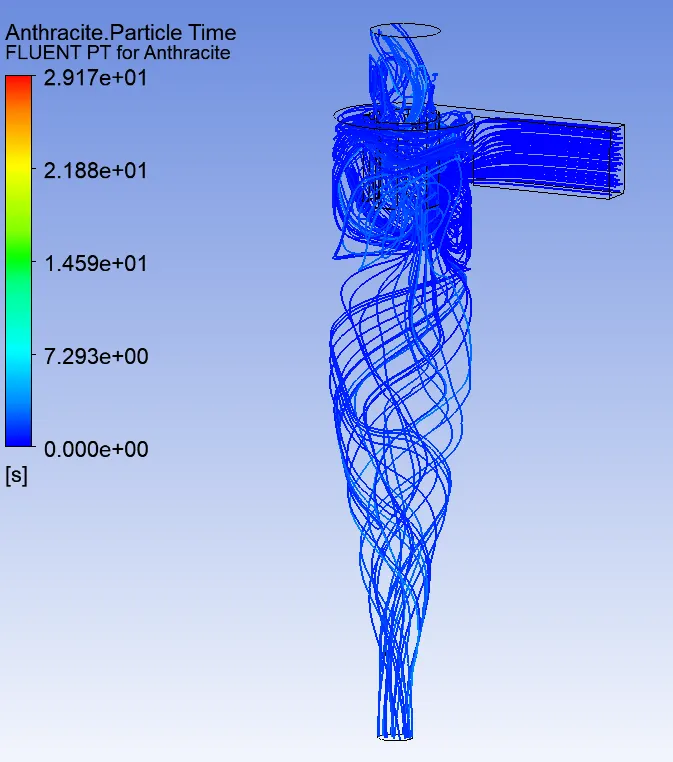
Particle diameter = 5 micro meter
particle velocity = 1 m/s
Residual plot

Particle Tracking
Vortex core