Week 8- Moving zones approach in Fluent
Moving zones approach in Fluent
Aim: To study Moving zones approach in Fluent.
Objectives:
- To understand the approaches by which we would model moving zones.
- To understanf which approach would we use to model unsteady phenomena.
- To simulate rotary motion for the geometry given and plot the velocity profile of the fluid motion.
Theory:
There are two types of motion encountered in fluid flow:
- rectilinear
- rotary
There are two approaches to model rotary motion:
- Moving reference frame appraoch
- Moving mesh appraoch
Moving reference frame appraoch:
- A steady-state approach used in industrial computational fluid dynamics to model challenges with rotating components is the Moving Reference Frame (MRF) approach.
- It is thought to need less computer power while efficient enough for most industrial situations.
- When a moving reference frame is activated, the equations of motion are modified to incorporate the additional acceleration terms i.e., Coriolis and centripetal acceleration terms which occur due to the transformation from the stationary to the moving reference frame. By solving these equations in a steady-state manner, the flow around the moving parts can be modeled.
Moving reference frame types available in ANSYS FLUENT are :
- Single Reference Frame model (SRF)
- Multiple Reference Frame model (MRF) (uses mixing plane approach)
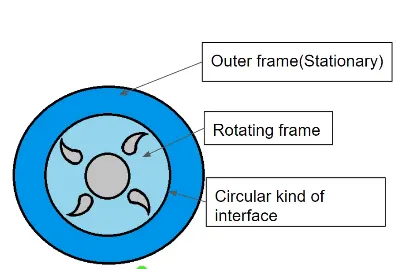
- The Navier stokes equation is the stationary frame and the moving frame is solved separately.
- Data is transferred from one frame to another through interface .
Area avg:
`phi=1/Aintphi dA`
Mass avg:
`phi_m=1/m^.int rho V phi dA`
Mixed out approach:
Following euations are solved:(no avg)
continuity
X momentum
Y momentum
Z momentum
Energy
Moving mesh appraoch:
- Moving mesh approach is used to model unsteady flows.
- Generally flows with vortex induced and for the flows for interaction of vortex with the bodies, moving mesh approach is used.
- In moving mesh methods, physical PDEs and a mesh equation derived from equidistribution of an error metrics (so-called the monitor function) are simultaneously solved and meshes are dynamically concentrated on steep regions
To model unsteady phenomena:
Moving Mesh Approach is used for Unsteady Phenomenon.
Procedure:
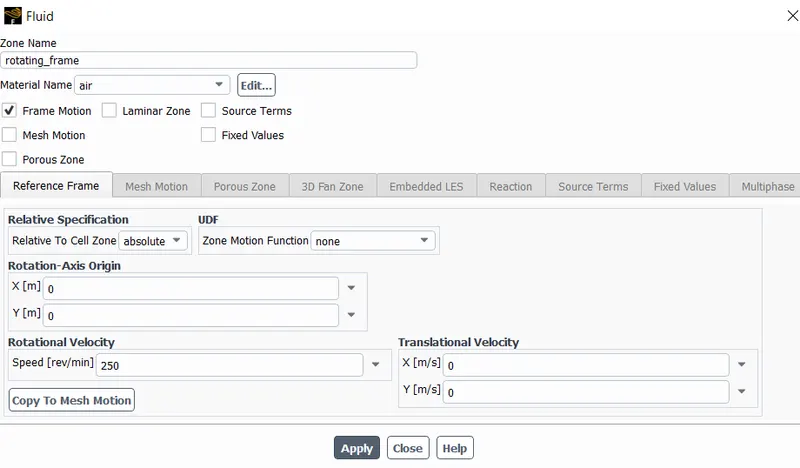
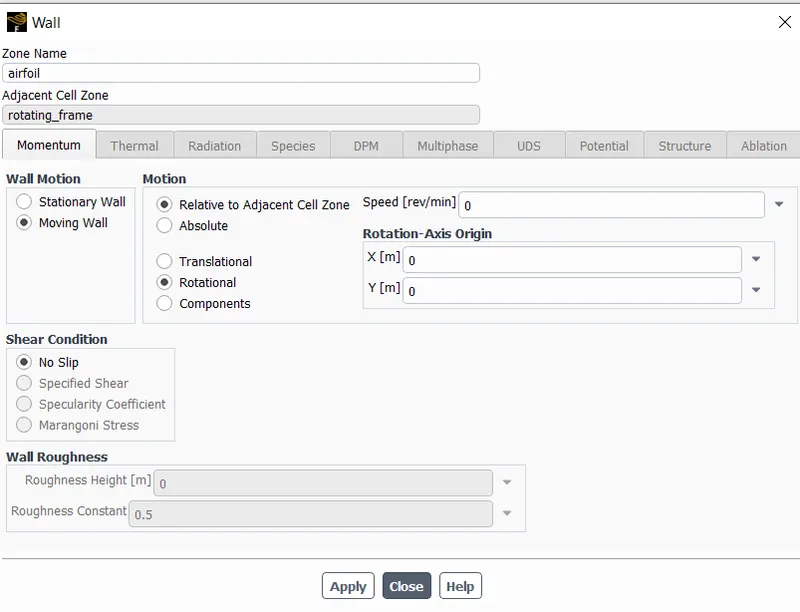
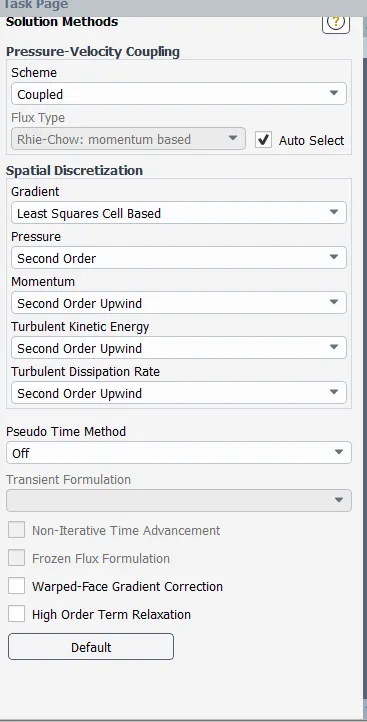
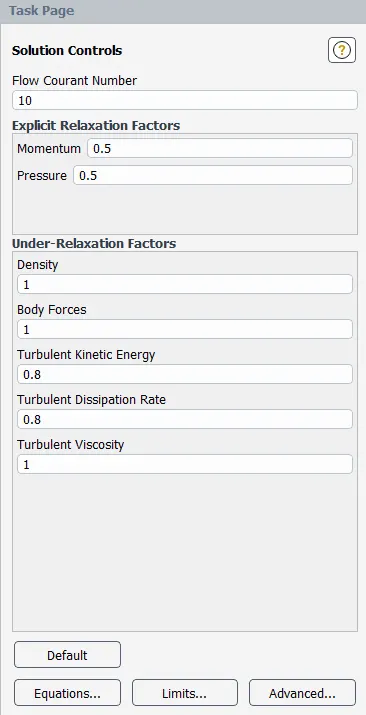
- Import the given model in fluent set up
- set up:
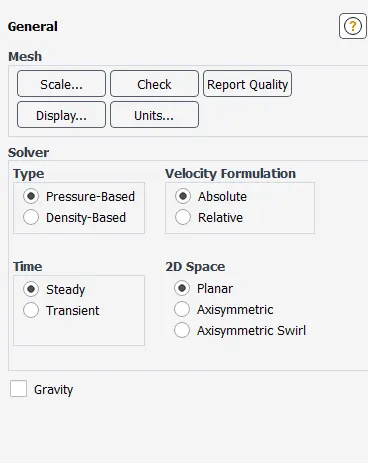
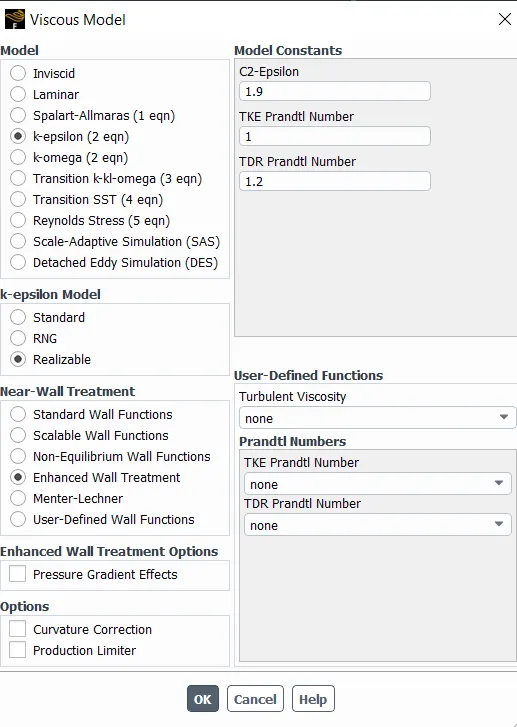
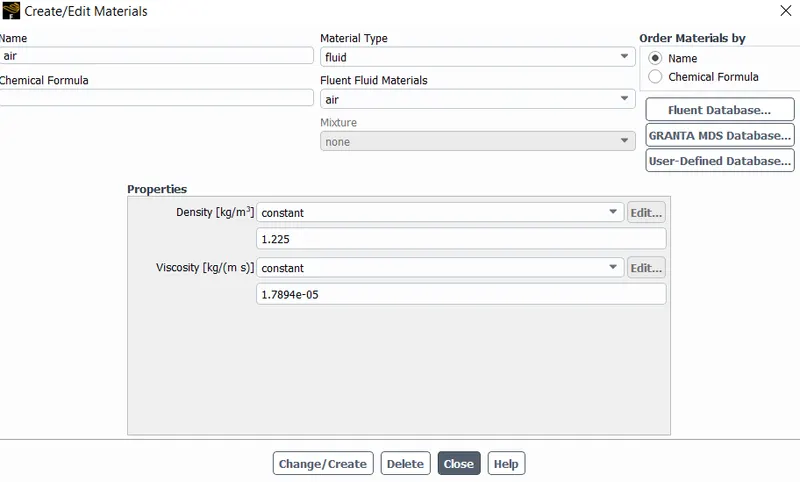
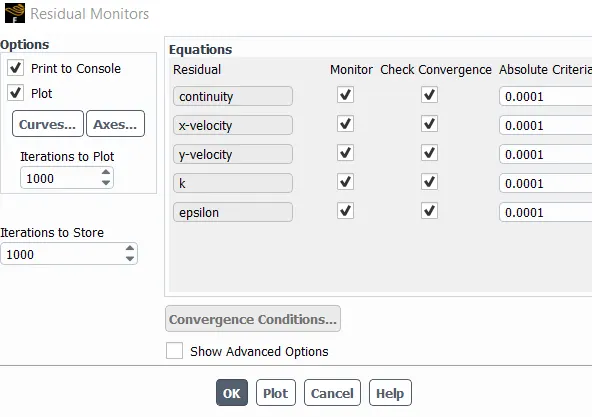
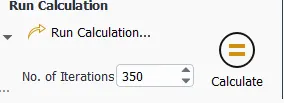
Solution:
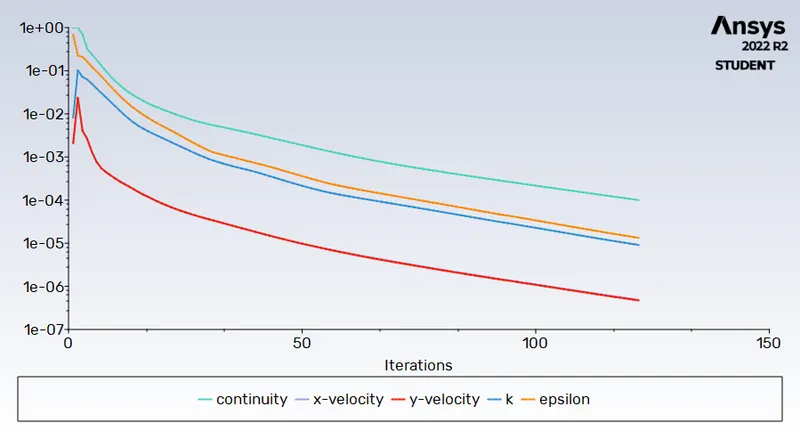
Scaled residuals:
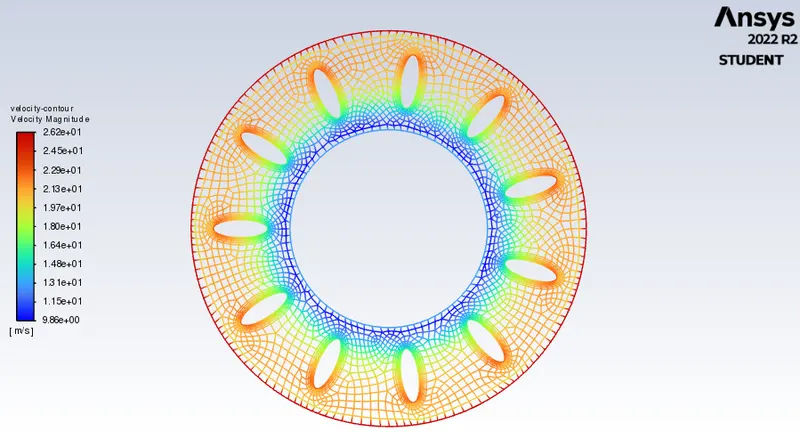
velocity contour:
velocity vector:
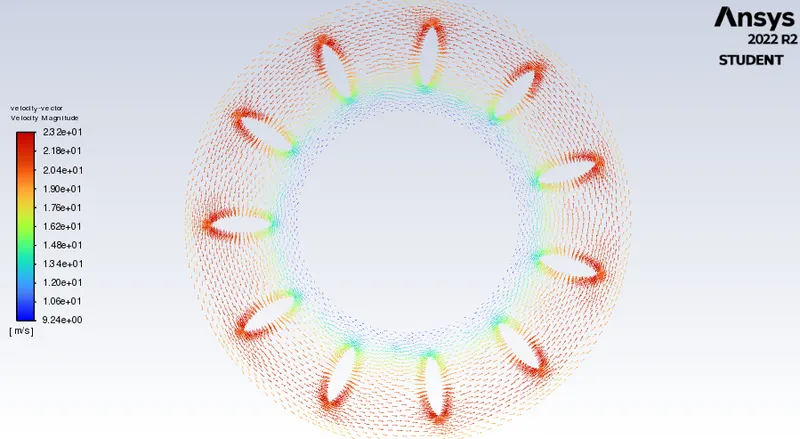
Result:Velocity is lower in the inner frame and it increases toward outerframe.
Conclusion:Moving zone approach studied successfully.