Week - 8 Mass Scaling
MASS SCALING IN LS-DYNA
Aim: To use the mass scaling techniques in explicit and implicit to reduce the run time of the simulation and compare the runtime.
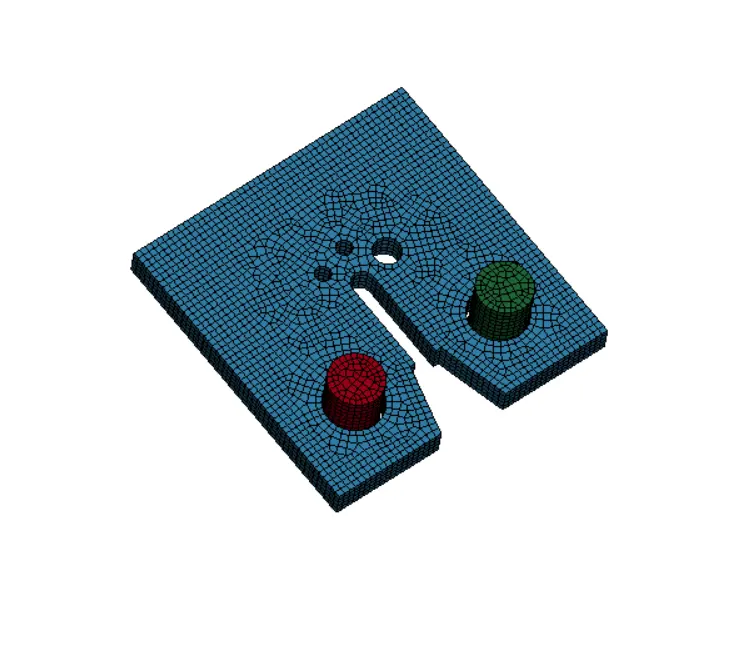
Given Model:
Procedure:
1. Run the simulation without mass scaling.
- In this case, the default values of tssfac = 0.9 and dt = -3.500e-05. dt is less than 0, which indicates that mass is added to the element to increase the time step for faster simulation.
- Now run the simulation and check for the estimated clock time.
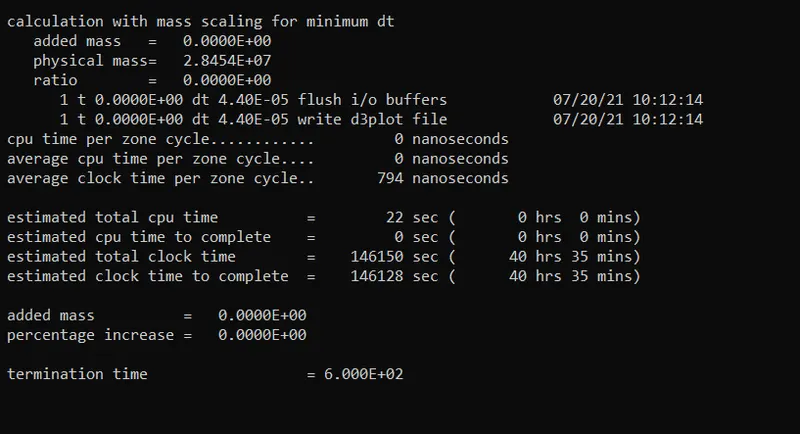
- For this case the model is estimated to run for 40hrs and 35 mins.
2. Run the simulation with mass scaling.
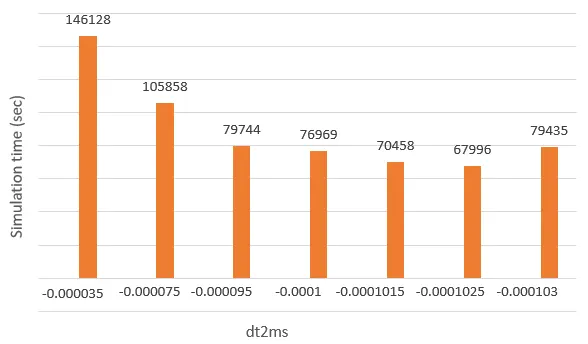
- Now the value of dt changed gradually until the until the percentage increase in mass is around is 8%.
- Now the tssfac will remain same and dt is changed to -7.5e-05 and run the analysis and check for added mass and estimated clock time.
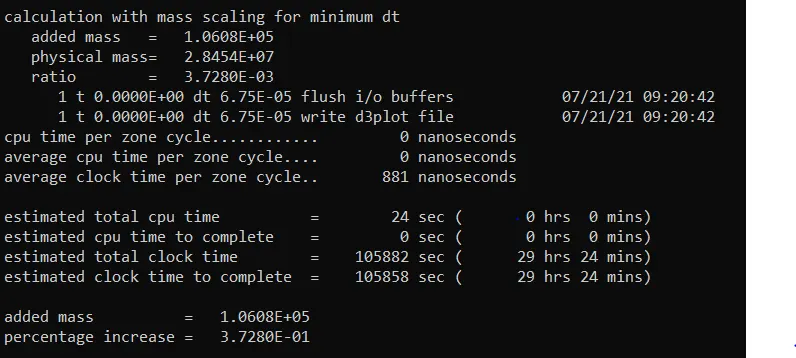
- The simulation is estimated to run for 29hrs and percentage add in mass is around 0.3%. So we can further try to increase the dt.
- Now we run the simulation with dt value of -9.5e-5 and run the analysis and check for added mass and estimated clock time.
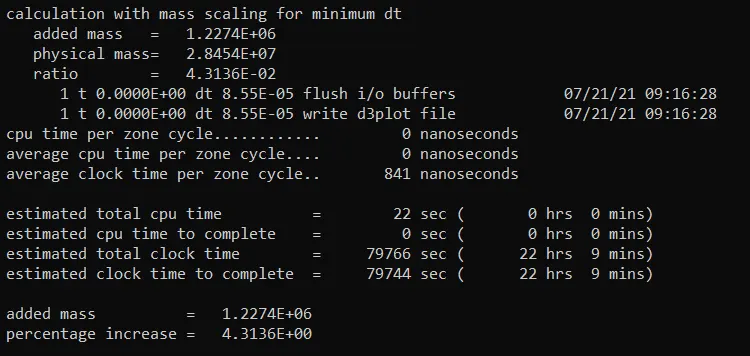
- Simulation is estimated to run for 22hrs and percentage add in mass is around 4%. So we can further try to increase the dt.
- Now change the dt value to -1e-4 and run the simulation.
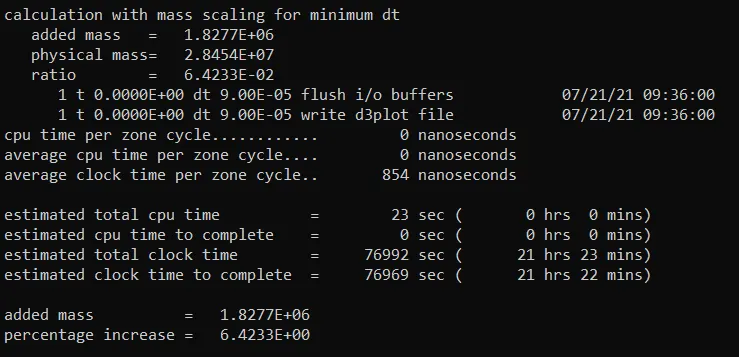
- Simulation is estimated to run for 21hrs and percentage add in mass is around 6.4%. So we can further try to increase the dt.
- Now change the dt value to -1.015e-4 and run the simulation.
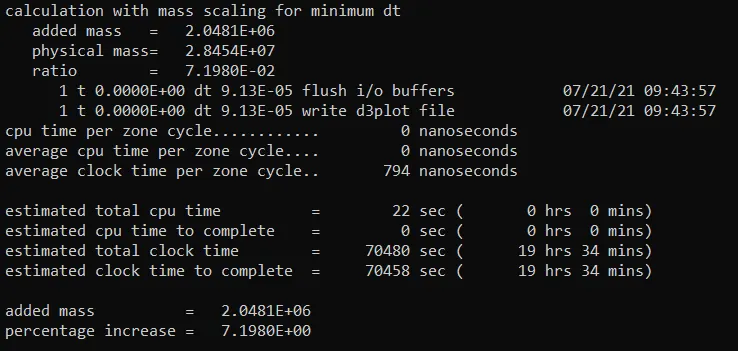
- Simulation is estimated to run for 19hrs and percentage add in mass is around 7%. So we can further try to increase the dt.
- Now change the dt value to -1.025e-4 and run the simulation.
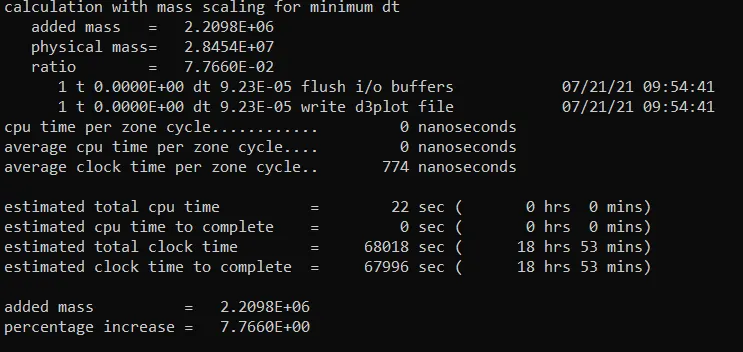
- Simulation is estimated to run for 19hrs and percentage add in mass is around 7%. So we can further try to increase the dt.
- Now change the dt value to -1.03e-4 and run the simulation.
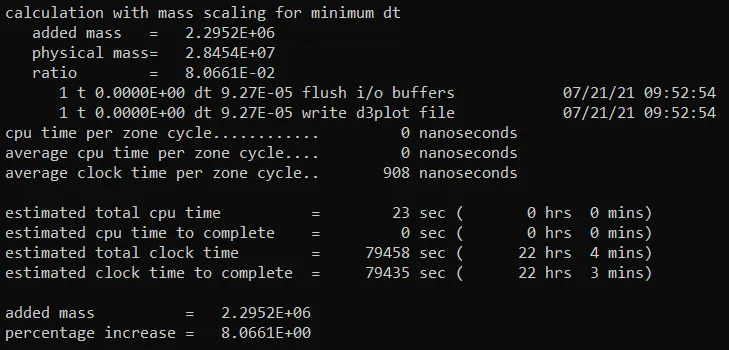
- Simulation is estimated to run for 22hrs and percentage add in mass is around 8%. Percentage add in mass has reached to max.
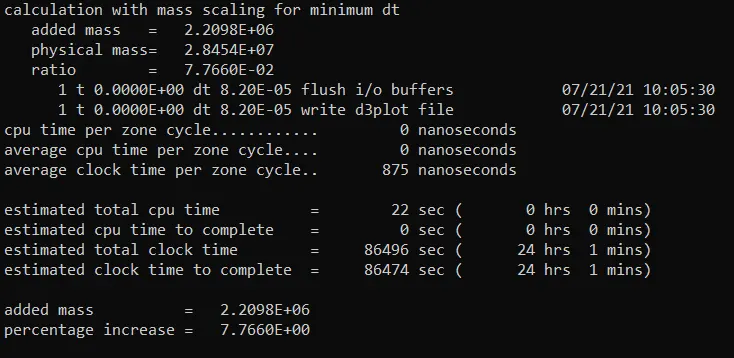
- Now we try to change the scaling factor (Tssfac) with dt value of -1.025e-4 to avoid the instability.
Tssfac = 0.8 and dt = -1.025e-4
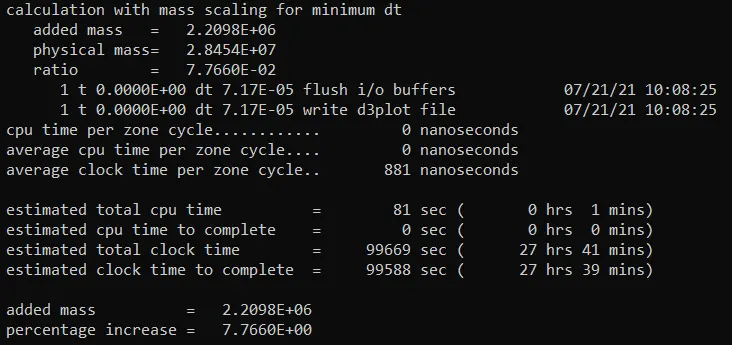
Tssfac = 0.7 and dt = -1.025e-4
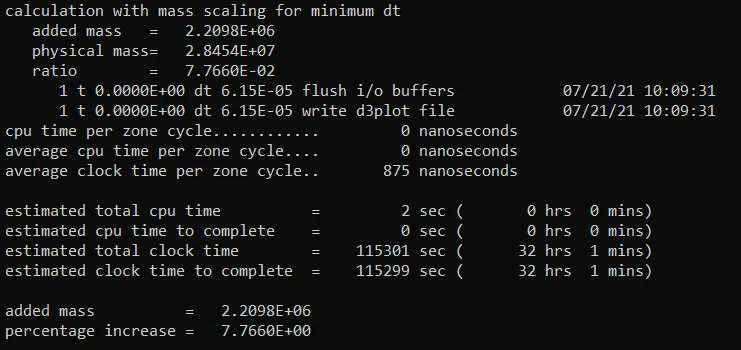
Tssfac = 0.6 and dt = -1.025e-4
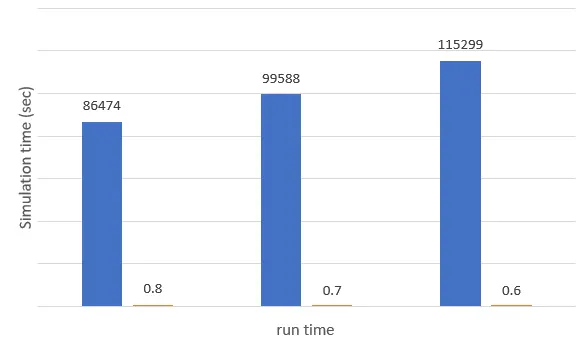
Implicit simulation.
- The same file with dt = -3.5e-5 is run in implicit by adding implicit_auto, implicit_general and implicit solver cards are added.
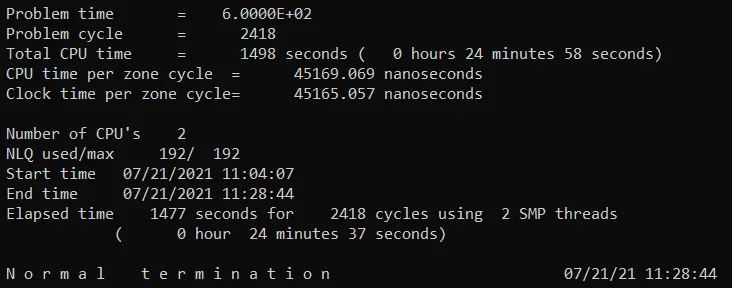
- The implicit analysis automatically adjust the dt and the total time taken to complete the simulation is 24minutes.
Conclusion: The technique of mass scaling is carried out in the above simulation in explicit and implict analysis.
https://drive.google.com/file/d/18gOb5EtRKCMoonWPYmq8wlpw7YEoE--P/view?usp=sharing