Week 8 - Challenge 5 - Core & Cavity Design
AIM: To create the core and cavity of the switch bezel design.
Creation of Tool Direction
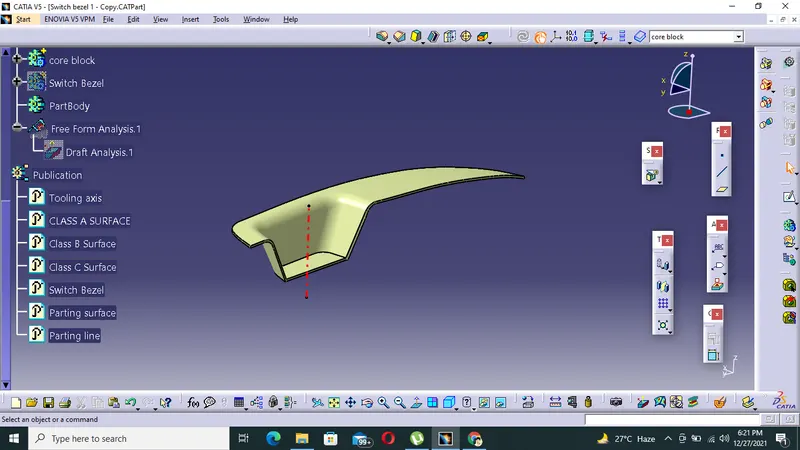
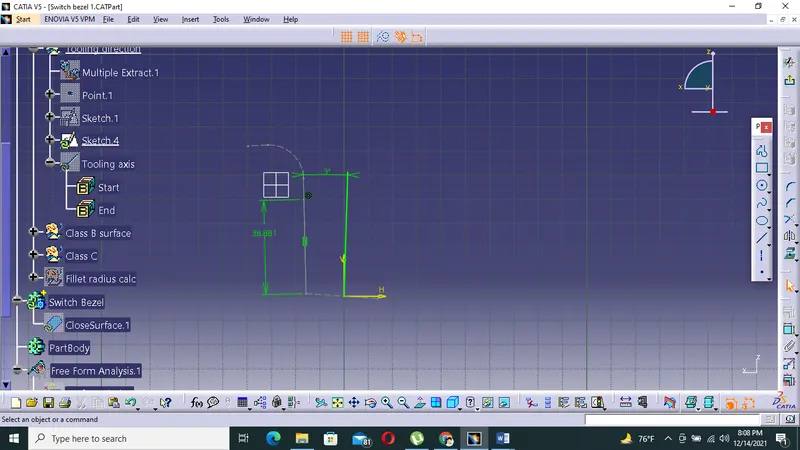
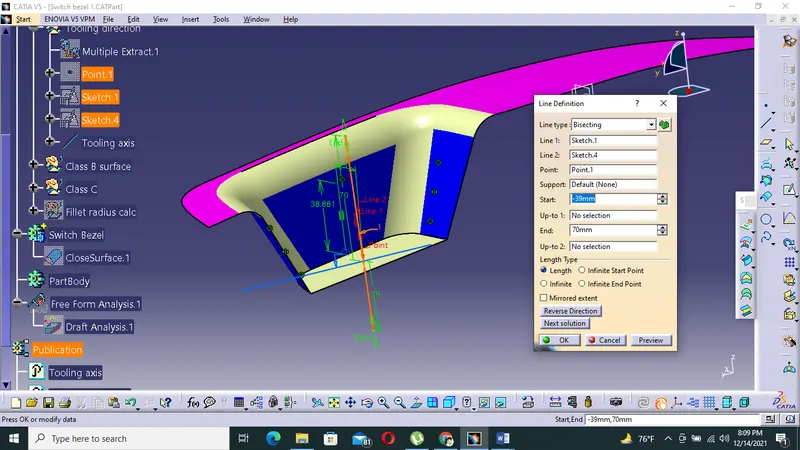
Tooling axis defines the mold or core and cavity direction,we should create the tooling axis in such a way so that it should cover most of features,holes and geometry.we will check the suitable direction of the tooling axis through the visual inspection along x,y,z axis.
We are going to intersect the class A body with YZ plane so that we can use the line of intersection to create tooling axis with bisecting method.
Procedure for Draft analysis
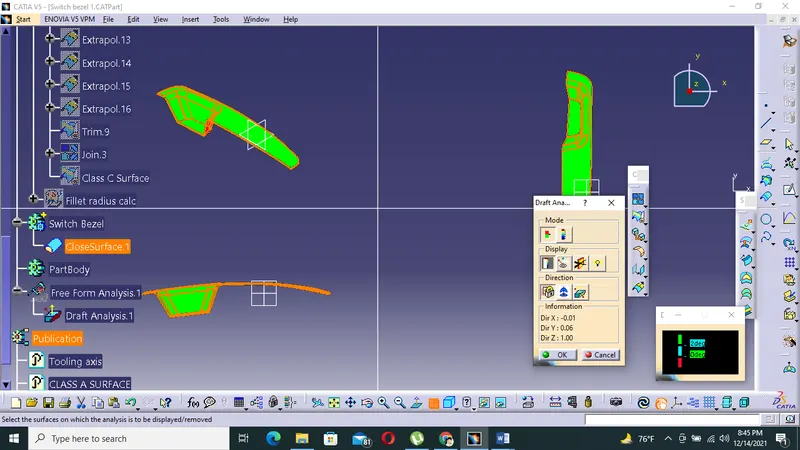
- By changing the view mode to custom view parameters-material mode then feature draft analysis is enabled
- Then the compass was activated and placed with the tooling axis by dragging the red pointer and then locking it
- The nominal value will be 3 degree draft angle and checked for component's draft angle
- The green coloue area show it statisfies the 3 degree draft angle.If not statisfied,then by using running point tool the area is measured and then altered to get a successful draft for the created tool direction.
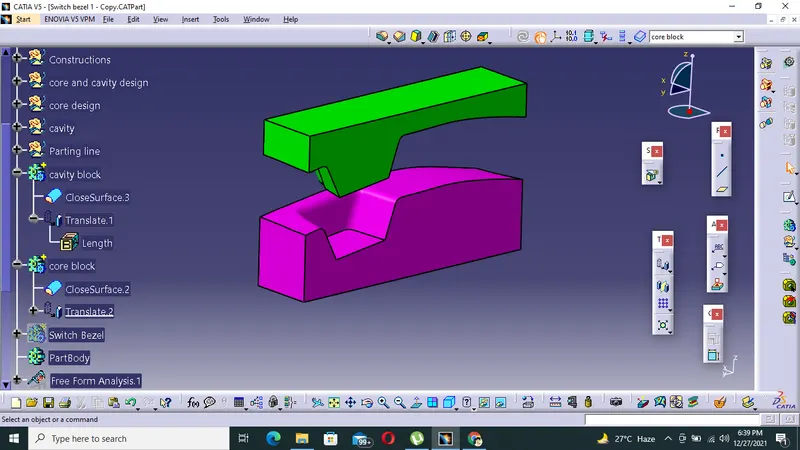
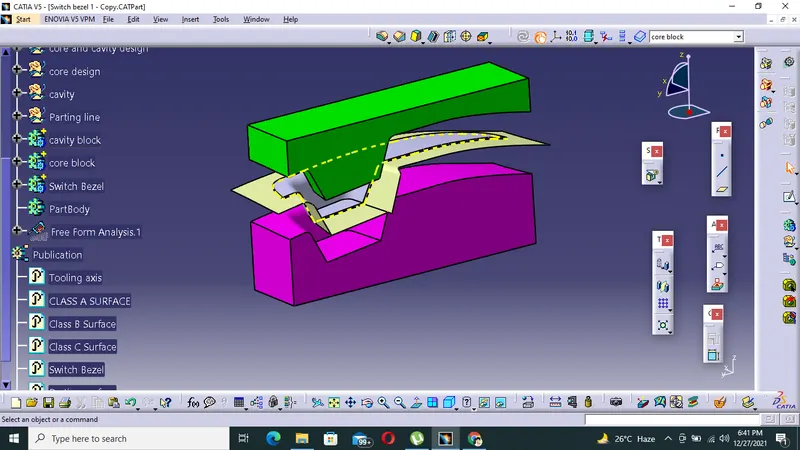
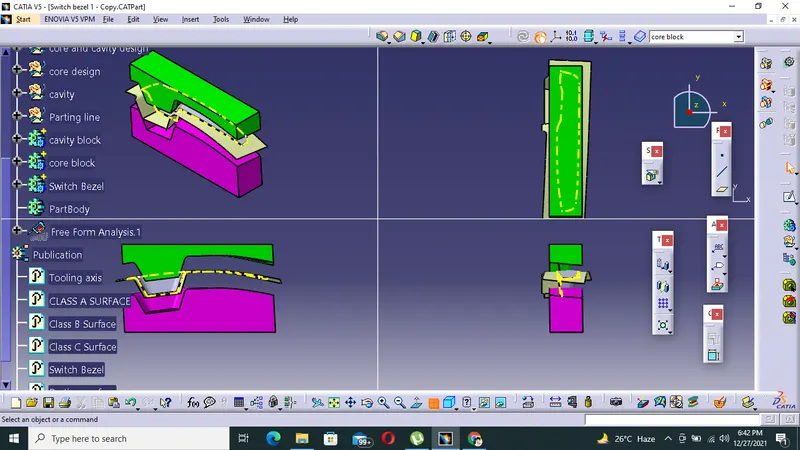
core and cavity of the switch bezel:
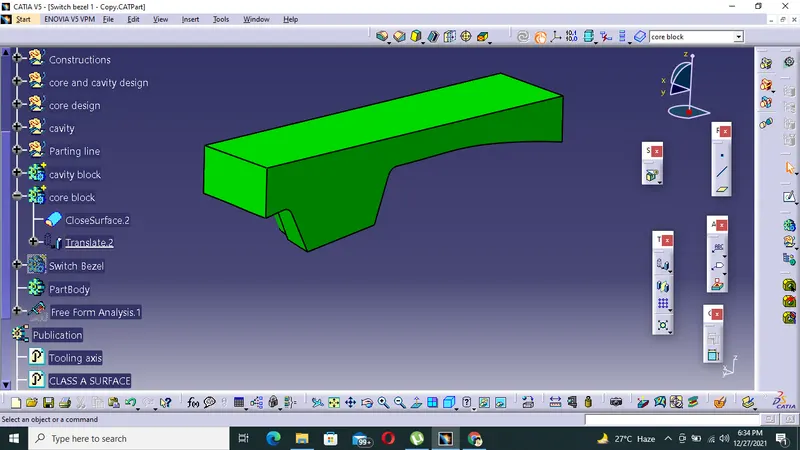
The core is the male part which forms the internal shape of molding.
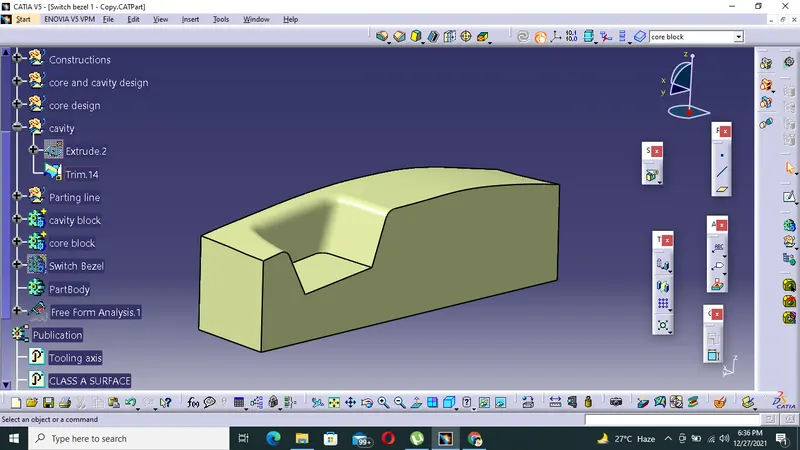
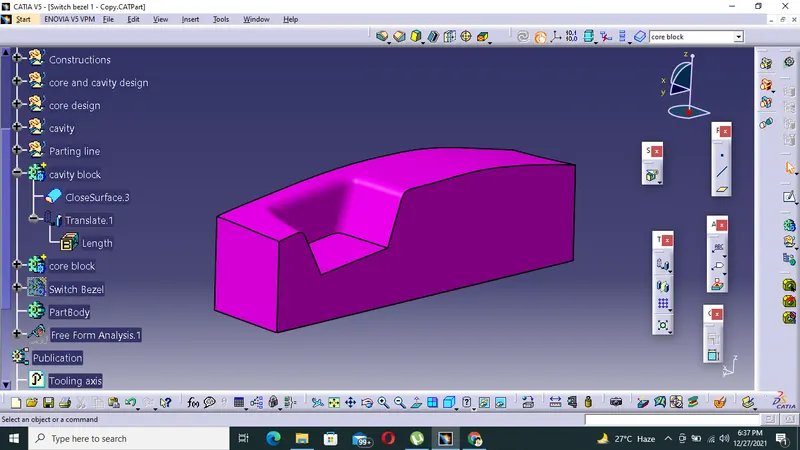
The cavity is the female part which forms external shape of molding.
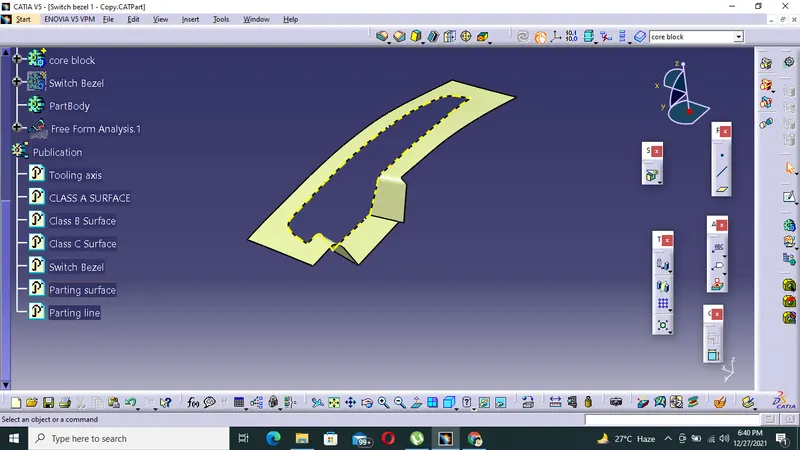
Parting surface:
The parting surface of a mould are those surfaces of both mould plates adjacent to the impressions which butt together to form a seal and prevent the loss of plastic material from the impression.The parting surface is generally flat, but sometimes it is necessary to use curved surface and stepped surface for the purpose of convenient demoulding.
Parting line:
It is a line that splits the mold into two parts – the core and the cavity. The concept of a parting surface is similar. A parting surface is a surface that separates the mold block into two parts – the core and the cavity.The parting line is where the two halves of the mold meet around the parameter of the part. All parting lines need to seal properly when the mold is clamped in a molding machine.The parting line of a die cast component represents where the two different sides of the mold come together. This line often (but not always) marks the border between the inside and outside of the part. The location of the parting line indicates which side of the die is the cover and which is considered the ejector.
Parting surface design principles
Parting surface design directly affects the product quality, ease of construction and operation of the injection mold, the mold design is one of the key factors to success.
Design parting surface should follow the following principles:
- Design the injection mold structure as simple as possible. Avoid or reduce side parting as much as possible to reduce the complexity of mold making.
- Ease of de-molding. As far as possible, for instance, the plastic parts should stay in fixed halve of the injection mold and ejected by ejection system, avoid side de-molding action.
- Ensure the dimensional accuracy of the molded parts. Try to make the parts with similar dimensional accuracy requirements in the same module to reduce manufacturing and assembly errors.
- Ensure appearance requirement of the molded parts. Flash or mismatch occurs usually on parting surface, so the parting surface should not be designed on any high quality requirement surfaces.
- Ensure adequate venting. If possible, parting surface should be place at the end of the mold flow. This is going to be a good advantage of filling and venting.
core design:
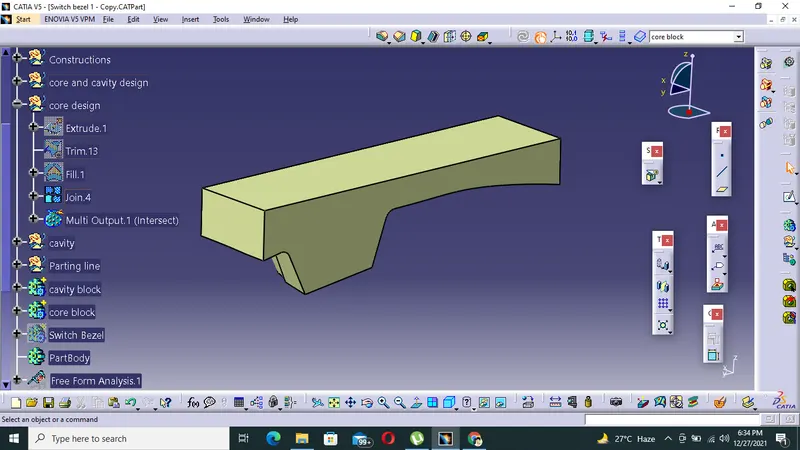
Part body of core block:
cavity design:
Part body of cavity block
core and cavity:
Parting surface and parting line:
Final output:
conclusion:
The core and cavity of the switch bezel has been created as per design rules.