Week 8 - Challenge 5 - Core & Cavity Design
AIM: to design the core and cavity of the switch panel bezel
PARTING SURFACE :
A parting surface is a surface that separates the mold block into two parts – the core and the cavity.
Parting surface has various types, and the common ones are horizontal parting surface, step parting surface, oblique parting surface, and special parting surface. The parting surface is generally flat, but sometimes it is necessary to use a curved surface and stepped surface for the purpose of convenient demoulding.
PRINCIPLES FOR CREATING PARTING SURFACE
1. Meeting the requirements of demolding
2. Convenient for demolding
3. The shape of the parting surface
4. Ensure product appearance and quality
5. Convenient for exhaust
6. Meet the requirements of clamping force
7. Determination of position
8. Mold parts are easy to process
9. Considering the lateral mold opening distance
10. R parting surface
CORE DESIGNING
- EXTRAPOLATE CLASS A SURFACE FOR ABOUT 17 MM
- TRIM CLASS A WITH CLASS C SURFACE TO GET INSIDE PORTION
- TRIM THE CLASS B SURFACE WITH THE ABOVE TRIMMED SURFACE AND THAT WILL BE OUR PARTING SURFACE
- EXTRUDE THE SKETCH ALONG THE TOOLING DIRECTION AND TRIM IT
- CORE PART IS CREATED NOW GO TO PART TAB AND CLICK ON CLOSED SURFACE TO CREATE A NEW PARTBODY FOR CORE
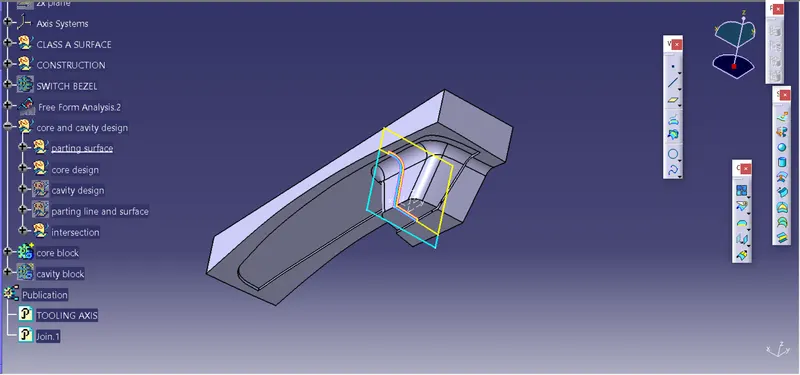
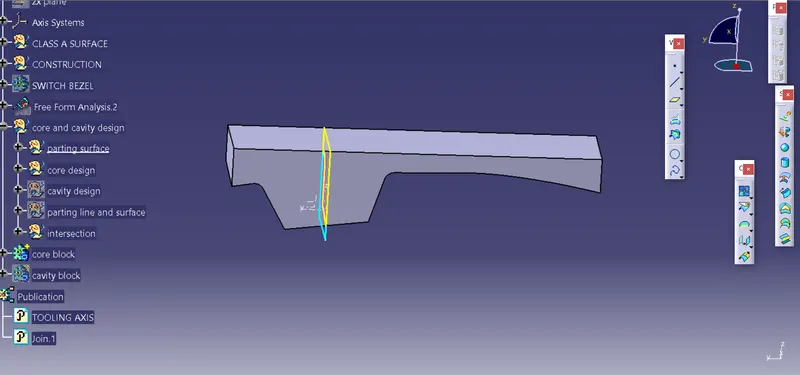
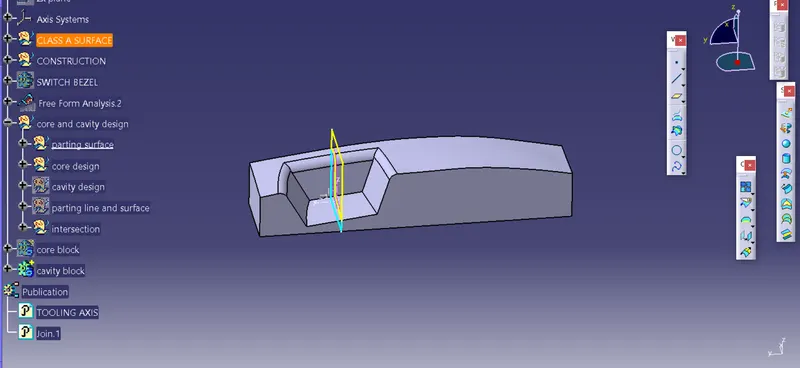
CAVITY DESIGN:
REPEAT THE ABOVE STEPS FOR THE CAVITY ALSO AND THEN MAKE A CLOSED SURFACE TO MAKE CAVITY PART BODY
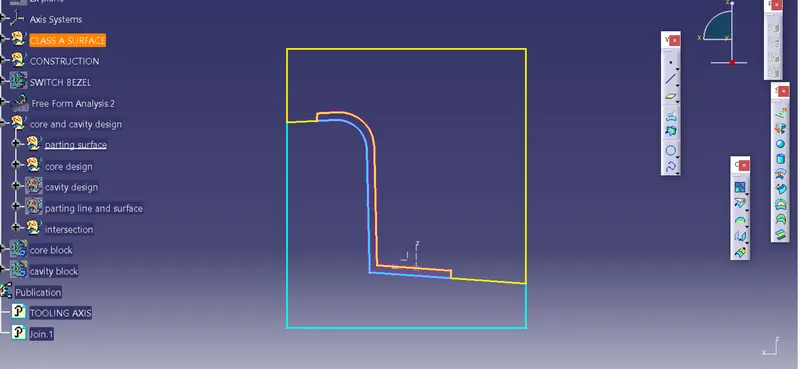
PARTING BODY INTERSECTION
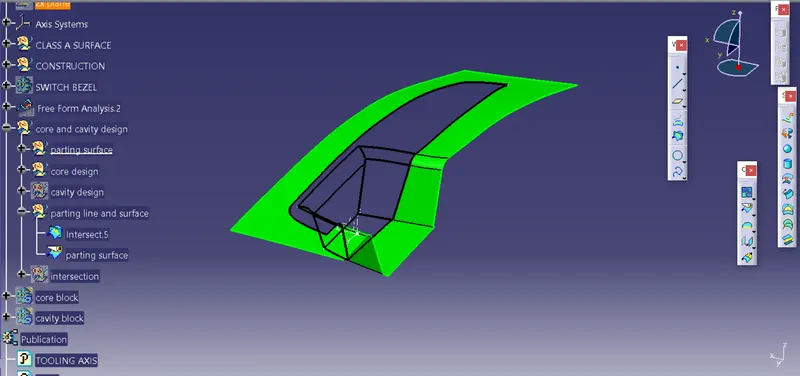
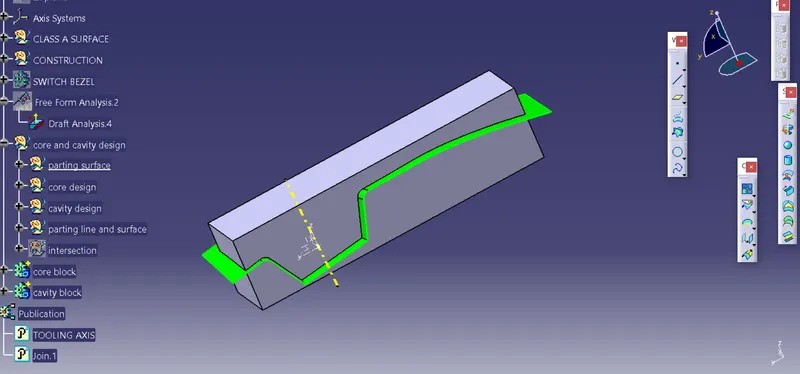
PARTING LINE AND SURFACE
BLACKLINE REPRESENTS THE PARTING LINE AND THE GREEN SURFACE REPRESENT THE PARTING SURFACE
 \
\
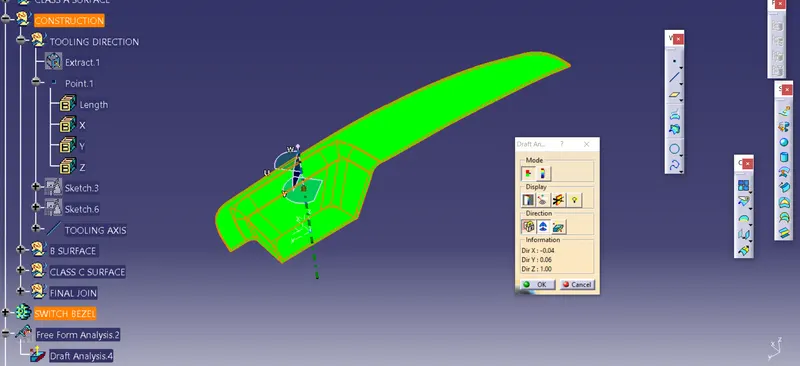
DRAFT ANALYSIS
FINAL
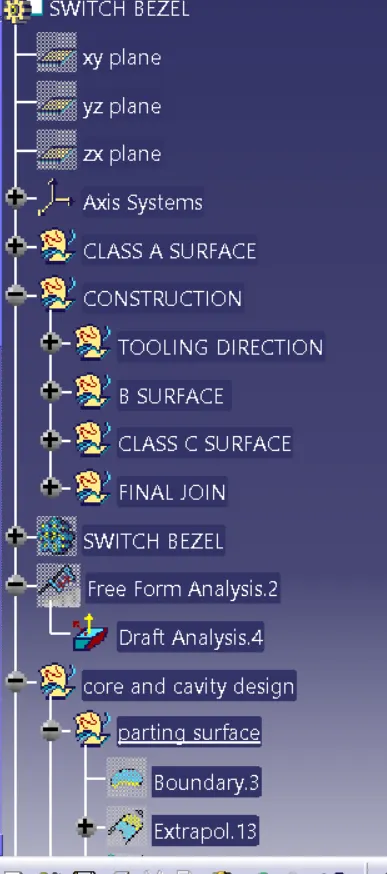
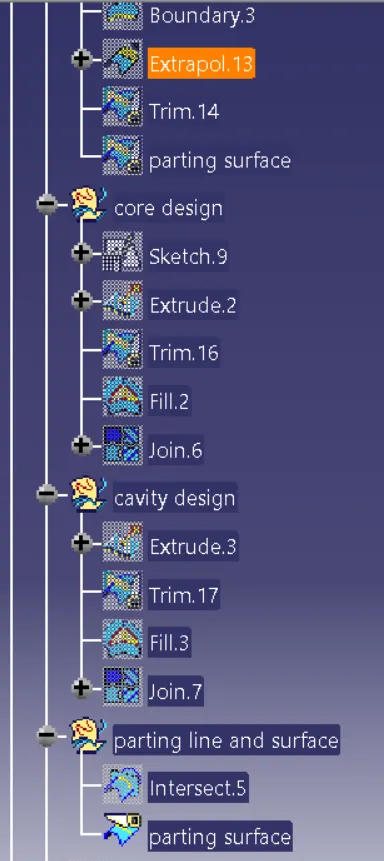
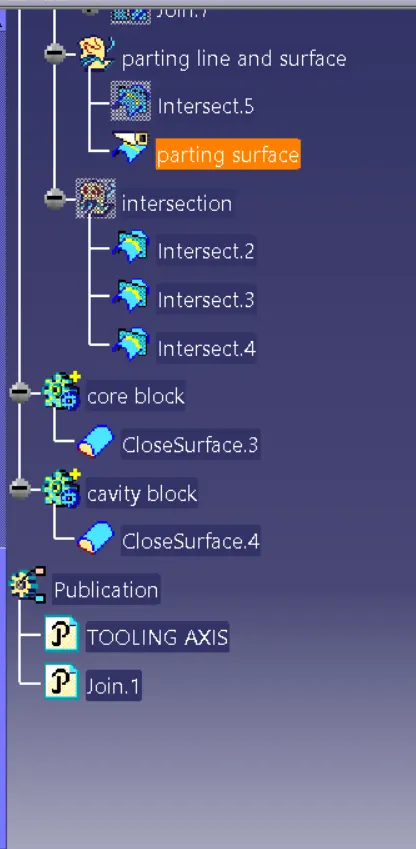
FEATURE TREE