Week 8 - Challenge 3 - Coin Holder Design
COIN HOLDER
Aim / Objective :
To design a coin holder Plastic component through the given Class-A surface by creating a tooling axis and draft analysis of the given surface.
Introduction :
Class A Surface : An aesthetic and outermost surface which is made by the plastic designer and is given as an input to the plastic modeler to workon it .
Class B Surface : A surface below a certain thickness from the Classa surface is known as Class B surface .It is also known as engineering surface .
Class C Surface : The surface that joins the Class A surface and Class B surfaceis known as Class C surface .
Methodology :
In this design we will focus on the following steps
- Tooling Axis
- Draft Analysis
- Class B Surface
- Class C Surface
- Making a solid model from Class A surface
Following tools were used to reach the final Solid Model :
- Extract
- Un - trim
- Trim
- Offset
- Extrapolate
- Boundary
- Edge Fillet
- Sweep
- Join
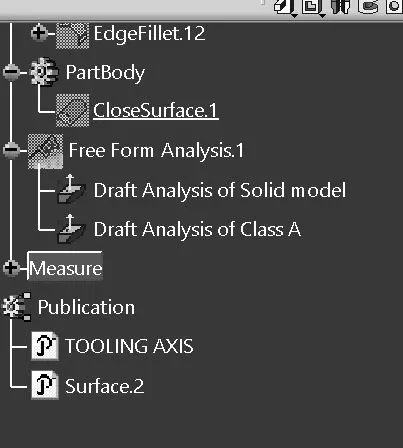
- Close Surface ( Part Design )
FOR TOOLING AXIS :
- Tooling axis can be classified into two methods
- Direct method
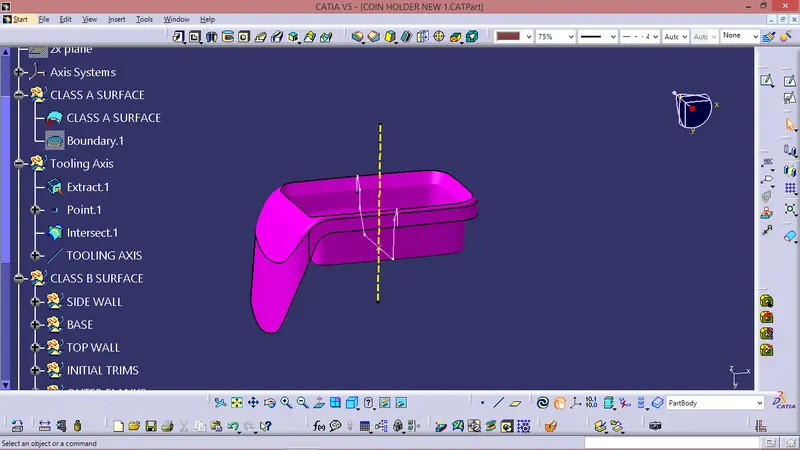
- For this model, to use a line at mid-point of the base of the coin holder
- Due to perpendicular walls of the class A surface
2. Bisecting method
- Identify on which plane we have to do more operations and create the plane or axis on the component area define it on the dummy tooling axis direction.
- Intersect the class A surface with that plane then we will get a intersection sketch. Look for the profile (inclined line) which will create a problem and extract it then extending it by using line command.
- Then create a bisecting lines with reference to the lines we have extended and this will be our main tooling axis.
- In this case we have created tooling axis along with Y direction with reference to the base surface.
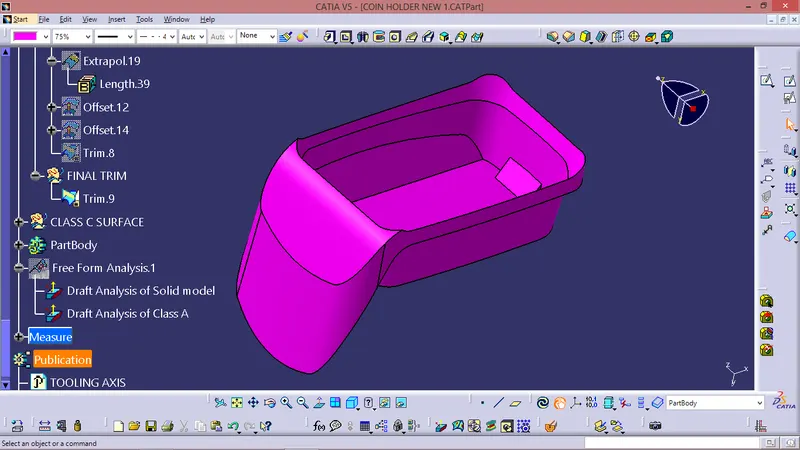
FOR CLASS B SURFACE :
- SIDE WALLS:
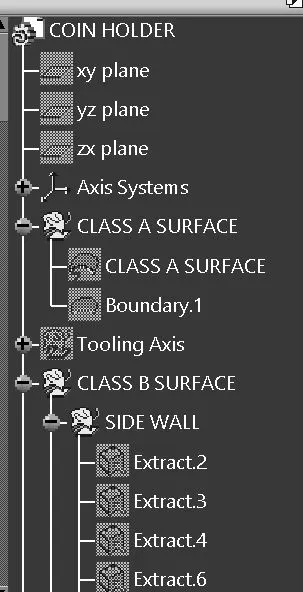
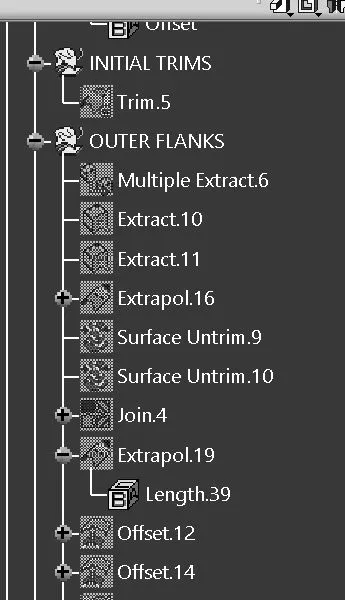
- To create a side wall by extract the class A side faces
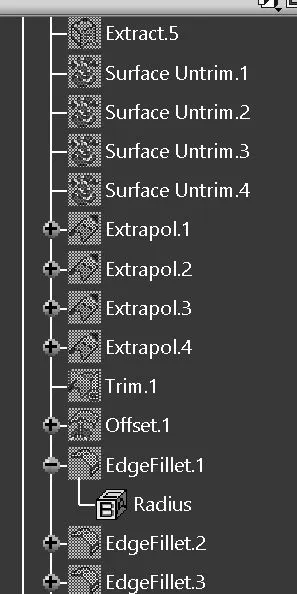
- To untrim the extracted side walls
- To extrapolate them for make sure to pass through all together for merge
- To trim the unwanted faces from walls by trim
- To offset the walls up to 2.5 mm
2. BASE :
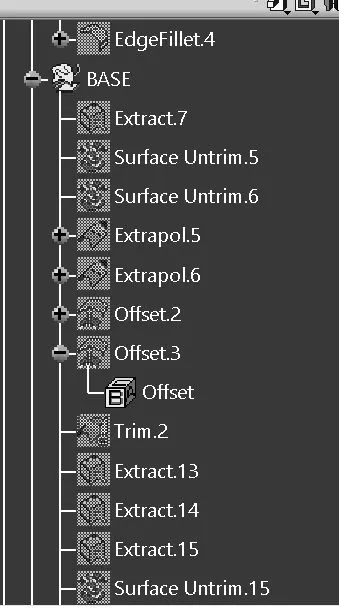
- To create a base by extract the base from class A
- To untrim and extrapolate the base for final trim to create a B-surface
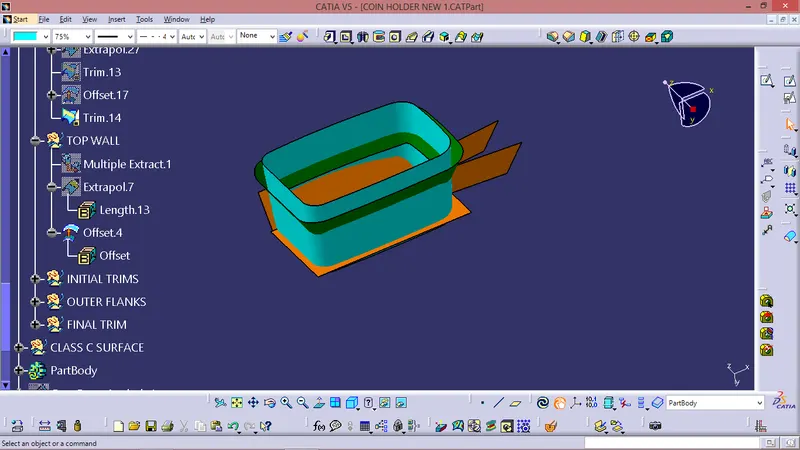
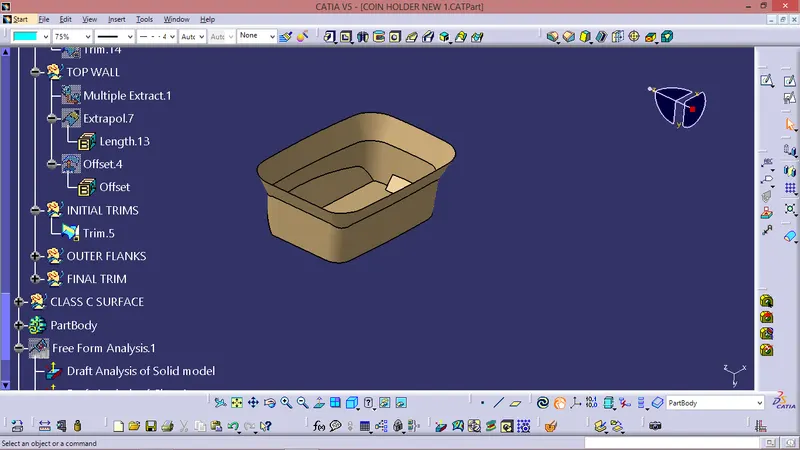
3. TOP WALLS:
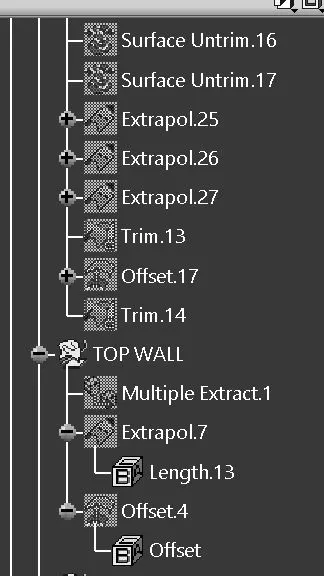
- To create a top wall by Mutiple extract the class A side faces
- To extrapolate them for up to requirement
- To offset the walls up to 2.5 mm
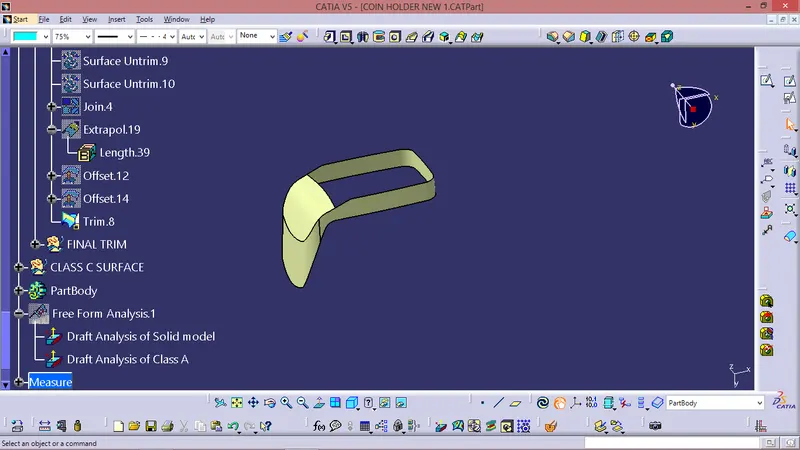
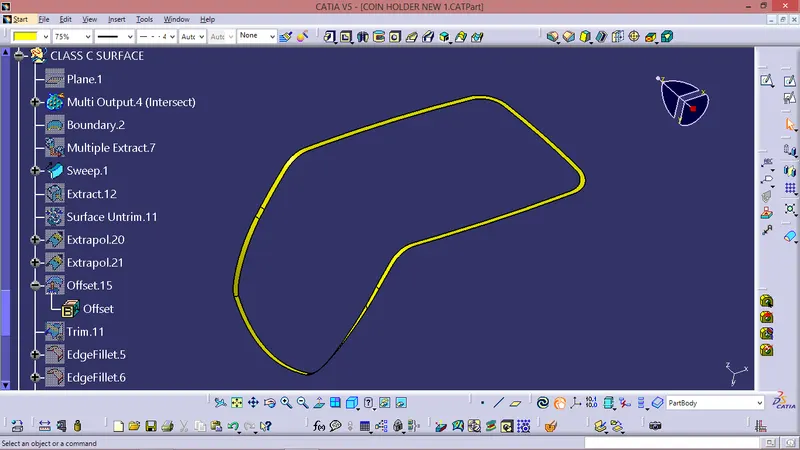
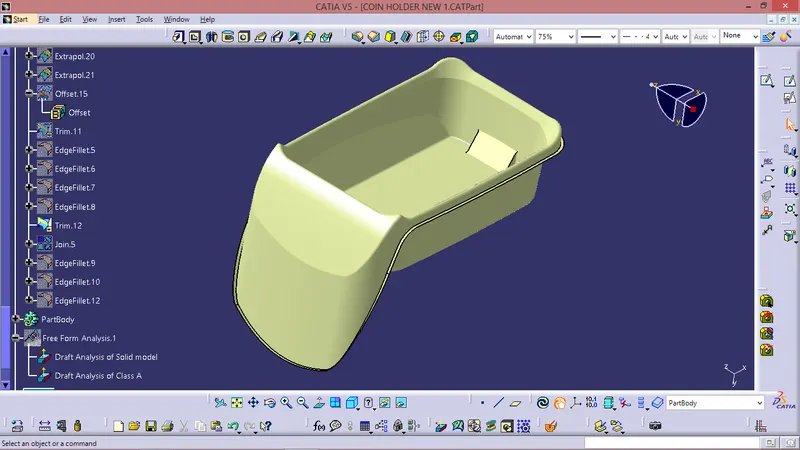
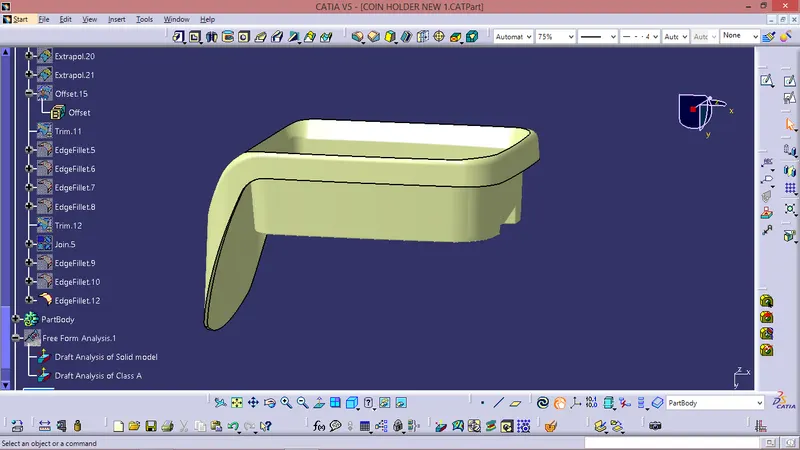
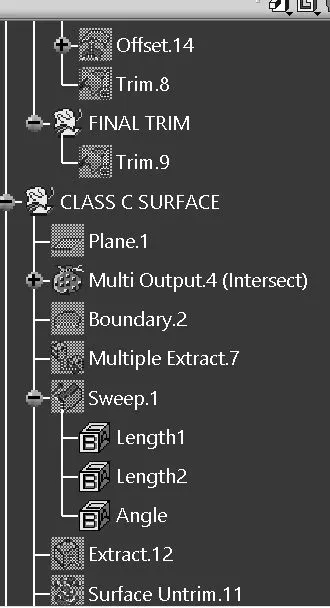
FOR CLASS C SURFACE :
- To use multiple extract tool on the class A surface
- The extract boundaries can be sweep at 90 degrees to the reference boundaries up to required length
- Trim the sweep with Class B surface in outside direction.
- Finally trim the the trimmed Sweep and Class B product with Class A surface to get closed Class C surface .
DRAFT ANALYSIS :
Class A surface draft analysis:
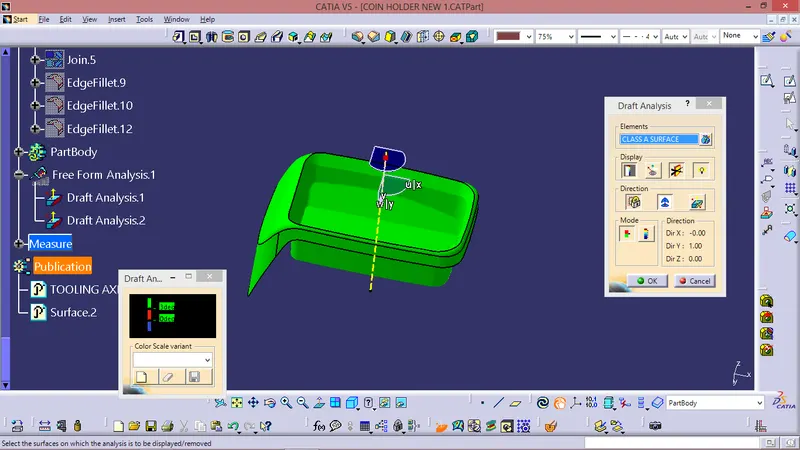
The above image shows the draft analysis in which green color surfaces shows that they are having an angle of more than 3 degrees but the surface in red color shows it is less than 3 degree. These are the results of the draft analysis which are very crucial for determining the feasibility of the product
Solid component draft analysis:
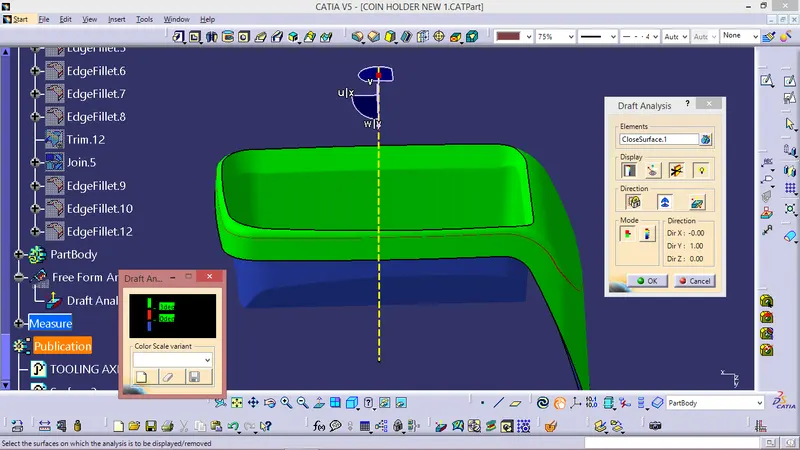
The draft analysis command enables you to detect if the part you drafted will be easily removed. This type of analysis is performed based on colour range identifying zones on the analysed element where the deviation from the draft direction at any point, corresponds to specified values. After draft analysis done we can observe that the green colour shows that the drafted walls of the switch bezel are above 3 degrees which is a permissible criteria to manufacture in injection moulding.
SOLID MOULD :
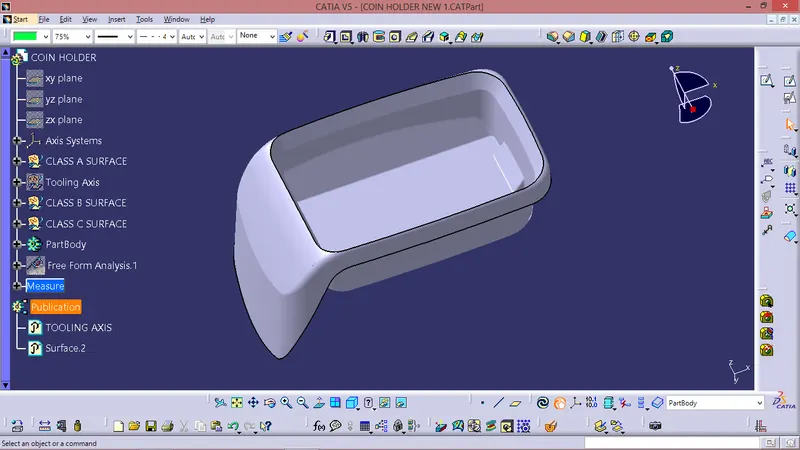
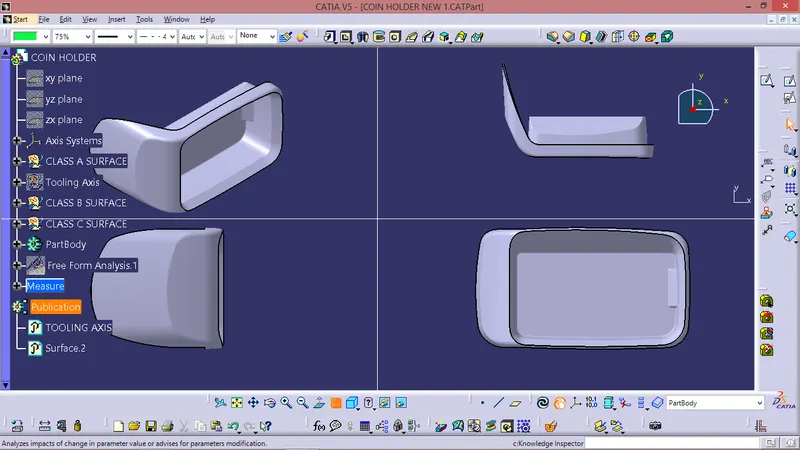
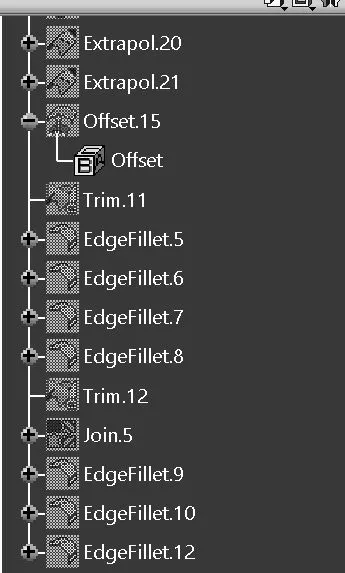
TREE STRUCTURE :
CONCLUSION :
- Class A, Class B and Class C surfaces are created following standards of automotive industry using Catia V5 software
- Draft analysis was performed on the COIN HOLDER and it was observed that draft was under permissible limit for the manufacturing of the component using injection moulding process.