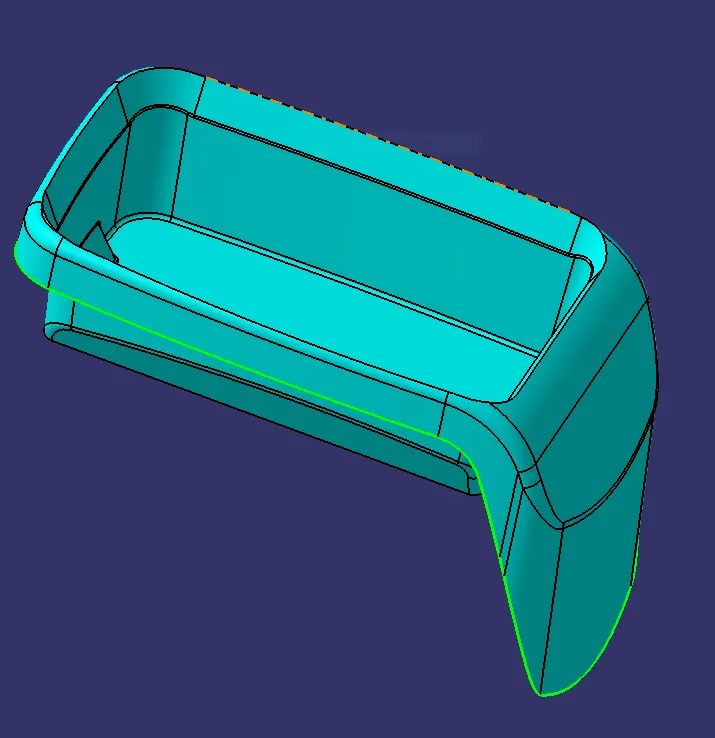
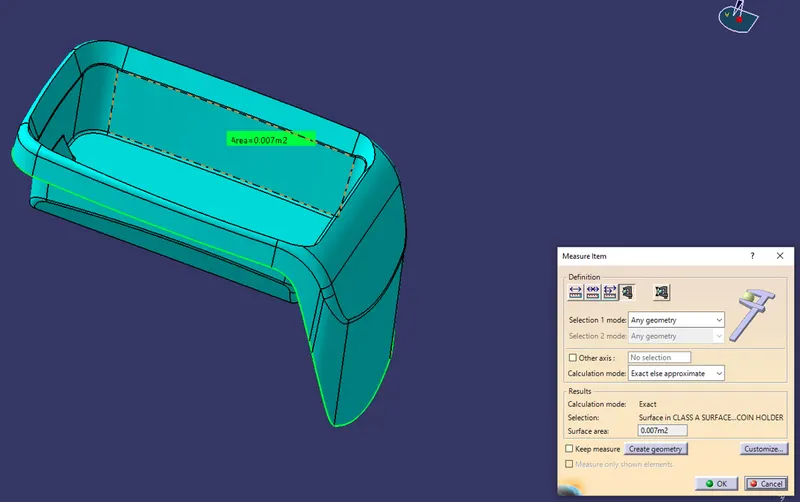
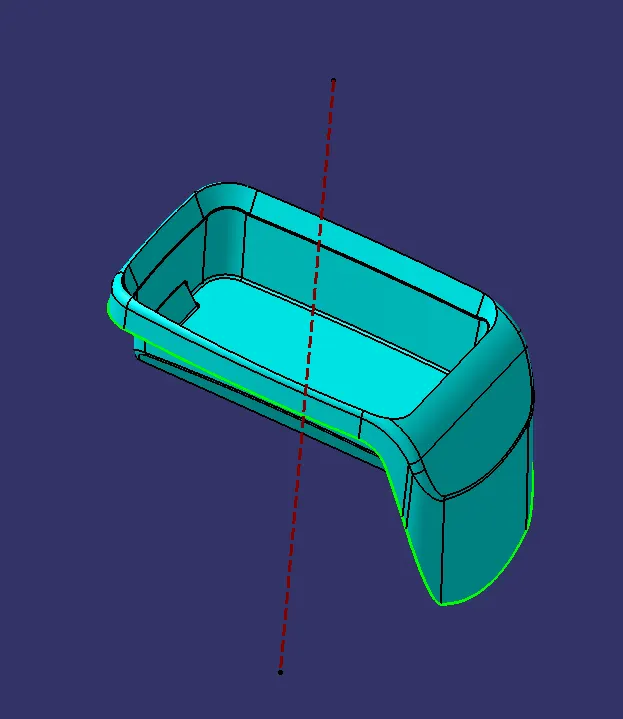
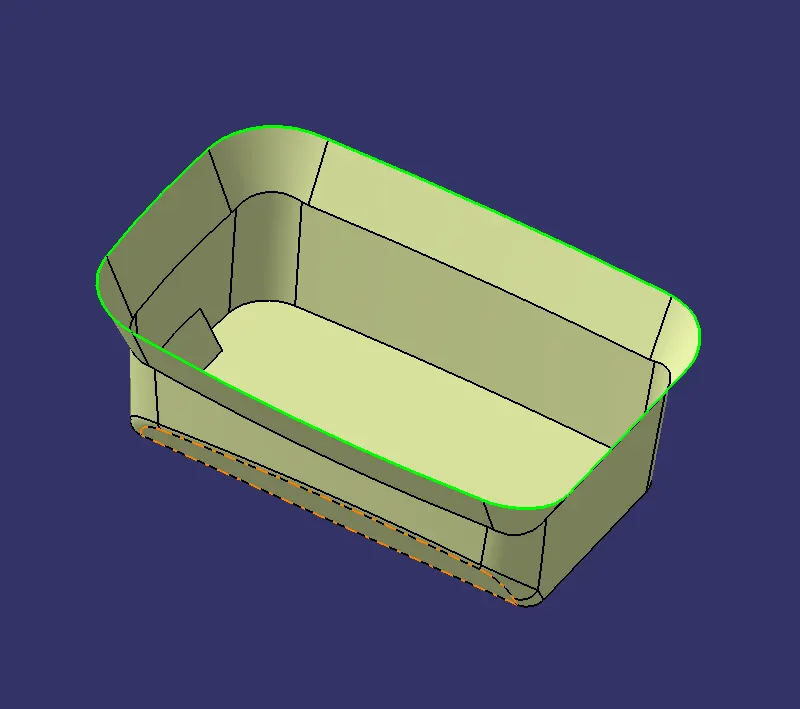
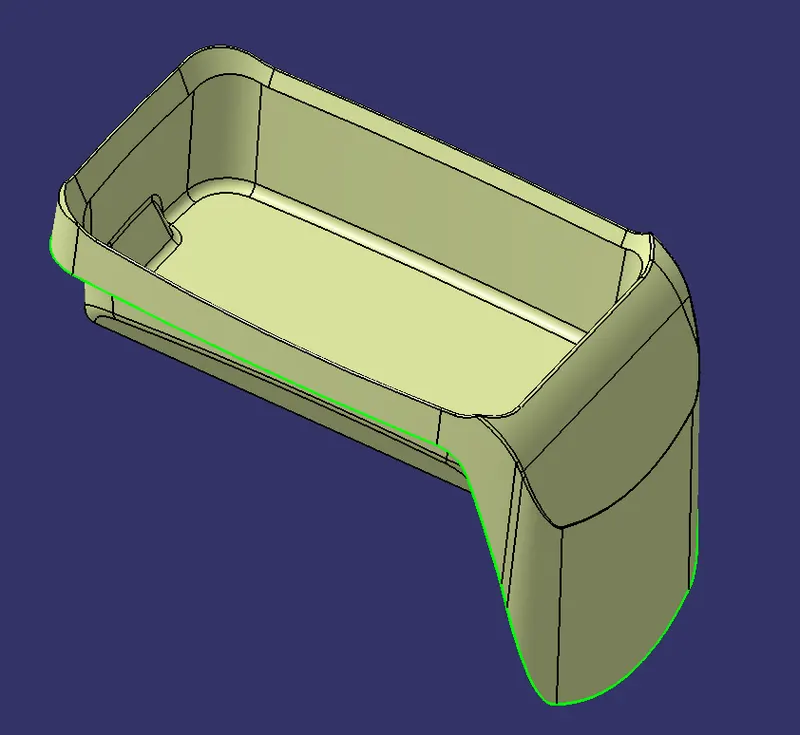
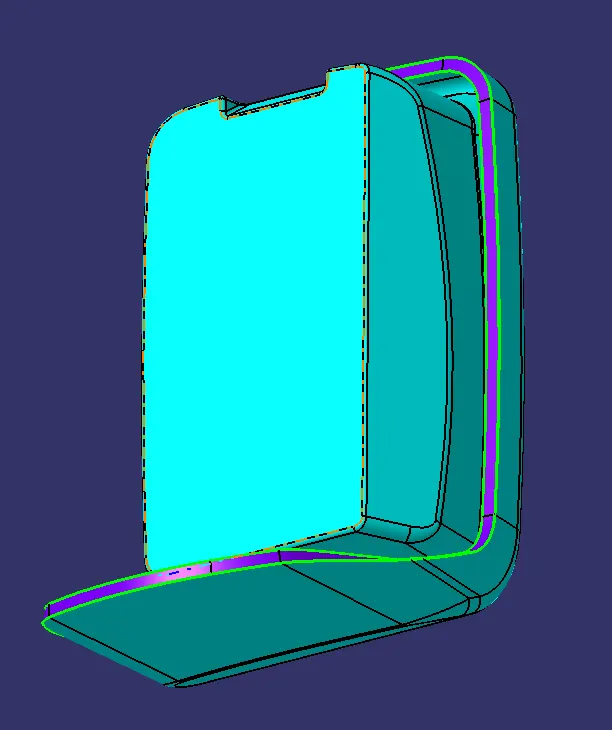
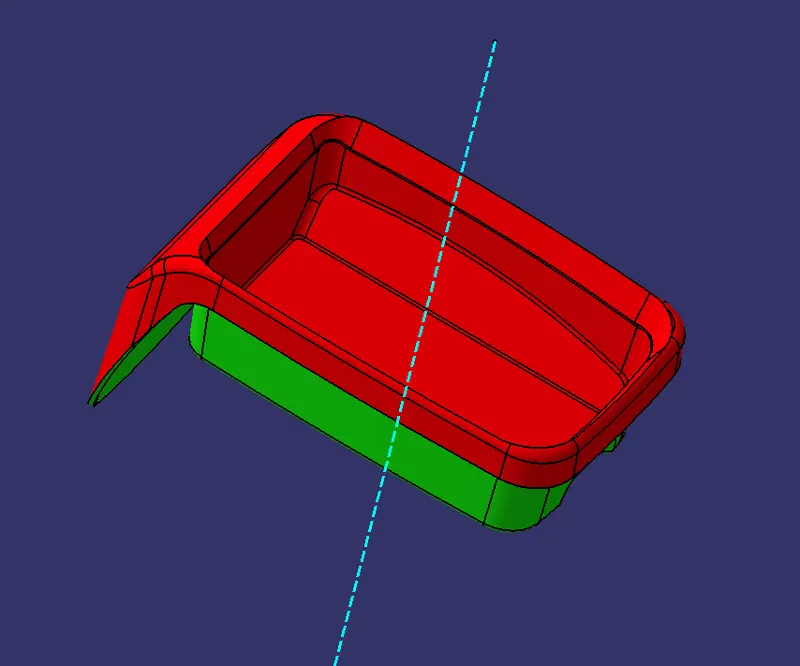
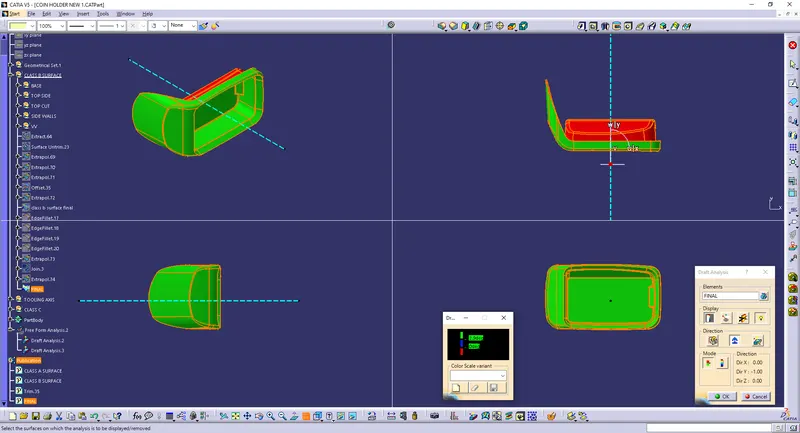
Week 8 - Challenge 3 - Coin Holder Design
MATERIAL TO BE USED FOR COIN HOLDER:
ABS Acrylonitrile Butadiene Styrene
ABS plastic is considered very strong structurally. This makes it an ideal choice for various applications that need strong and stiff plastic that is resistant to external strength impacts. It is highly used in applications like protective housings, camera housings, stiff packagings, etc which need to be structurally sturdy.
Physical properties of ABS plastic:
Following are the key physical properties of ABS plastic:
- High impact resistance
- High rigidity
- Heat and chemical resistance
- High electrical insulating properties
- Abrasion and stain resistance
- Structural/Dimensional stability
- Good surface brightness
- Weldability/Moldability
Mechanical properties of ABS plastic:
- Tensile strength: 46 MPa (6600 PSI)
- Flexural Strength:74 MPa (10800 PSI)
- Specific gravity: 1.06
- Shrink rate: 0.5-0.7%
- Elongation at break- 10-50%
- Elongation at yield- 1.7-6%
- Hardness Shore D: 100
- Toughness (Notched Izod Impact at Room Temperature): 200 – 215 J/m
- Toughness at Low Temperature (Notched Izod Impact at Low Temperature):20 – 160 J/m
- Heat deflection temperature: 98 °C (208 °F) at 0.46 MPa (66 PSI)
Benefits of ABS plastic
Coming down to the benefits of ABS plastic in comparison to other available plastic resins.
So why is ABS one of the most commonly used plastics, especially when it comes to products manufactured by injection molding technology?
As mentioned earlier in the article, the chemical, physical, mechanical and electrical properties of ABS plastic give it some unique characteristics. It’s relatively low melting point and low gas transition temperature makes it an easy to use material for plastic injection molding.
ABS can be easily liquefied and molded into complex shapes through injection molding techniques.
Its 100% recyclability makes it possible to be melted again and again and reshaped without any chemical degradation or burning.
ABS is considered a very “safe to handle” plastic since it cools down and hardens quickly. Further, it is relatively easy to manipulate, paint and decorate which makes it a preferred choice for products that depend on a high-quality finish.
Its strong impact resistance, heat resistance, and shock absorbance make it a preferred choice for applications that require structure, form, and sturdiness.
The lightweight and scratch-resistant characters make it a good choice for automotive applications. Since the need here is to substitute metals with an excellent finish lightweight plastic material, ABS works as a wonderful alternative.
Finally, its reasonably low production costs make it a very economical solution and choice amongst various other thermoplastic options available in the market.