Week 8 - Challenge 1 - Draft Analysis on a Fan Cover
Objective:
To check and analysing the draft angle of class A surface and determining tooling axis.
Draft Analysis:
In molding process the molded parts have to eject from the die so there is some issues while removing the molded parts it may get sticky with the die or while removing chances to get damage, so what we need to setup is the draft angle this draft angle helps the molded parts to eject from the die easily, for the plastic components the general draft angle should be in minimum 3deg. and if it is sheet metal component 7 deg. should be the draft angle, This draft is get analysed and ensuring the part is with proper draft angles.
Tooling Axis creation:
The tooling axis is basically the direction that the mold pulls apart. The mold is built in two separate pieces, basically. It has a Cavity side and a Core side. The Core pulls apart from the Cavity along Tooling Direction which is tooling axis.
So, when we add in your ribs, maybe some pockets, walls, whatever that may be bosses, the walls are going to be drafted based off of the Tooling Direction. It's to make sure that the Core can pull apart from the cavity, nice and clean.
Steps to find the tooling axis and determining drafting analysis.
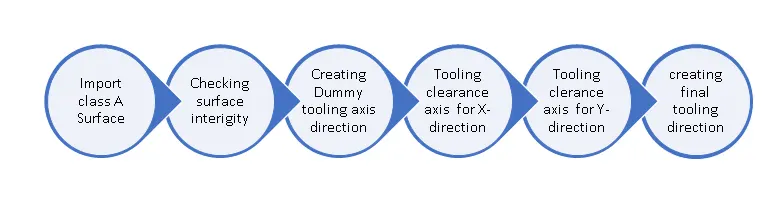
1.First step is to import the given fan cover class A surface in Catia software.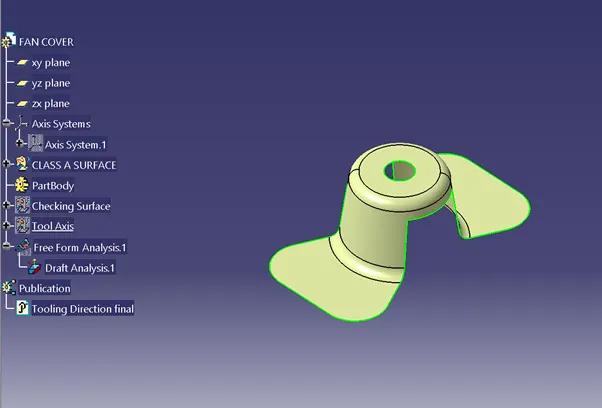
2.After importing the model to check the boundaries, check for any gap is there between the given class A surface or not.
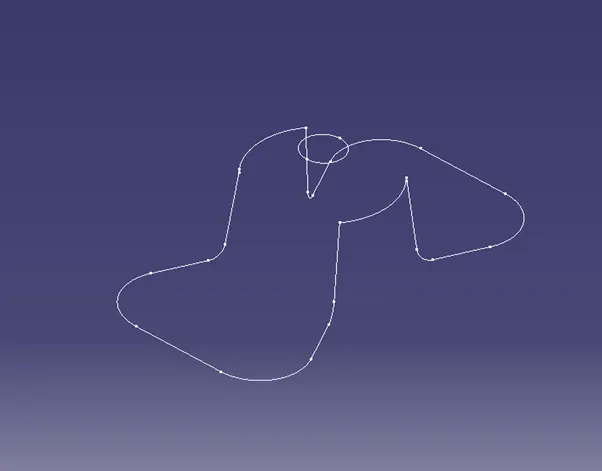
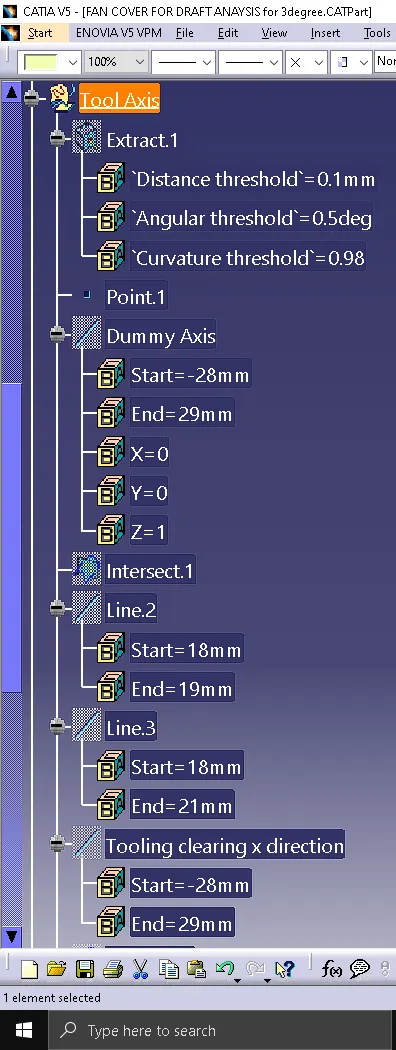
- In order to create a tooling axis, first identify the best possible direction for ease of injection molding manufacturing and create the dummy tooling axis in the Z-direction. Mean tooling direction achieved by X & Y axis thus, to create the tooling axis in X-direction, first insert the point at the centre of the hole on the class A surface.
Extract the circle profile and define centre point and apply axis system.
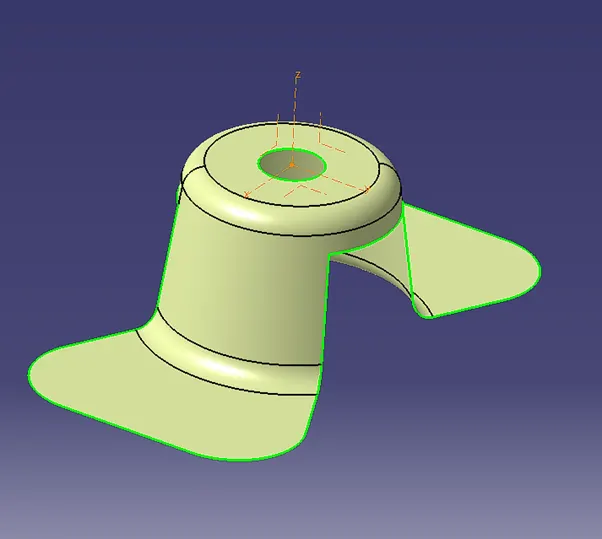
- Intersecting the surface along x direction to obtain surface profile
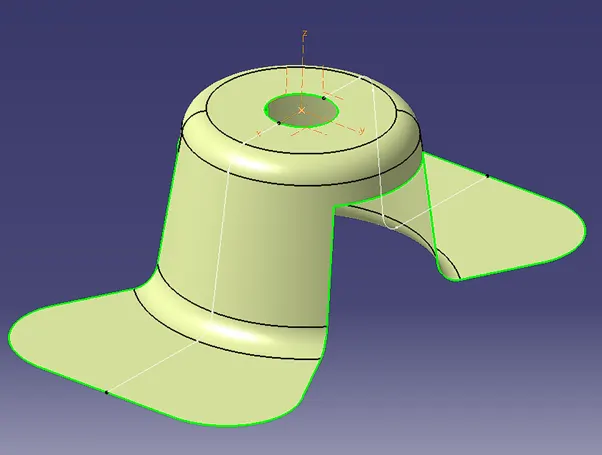
- Creating L1,L2 line definition along the taper surface on either side of centre dummy axis. Using Line L1 and L2 Bisecting line is derived which is termed as tooling clear x direction axis.
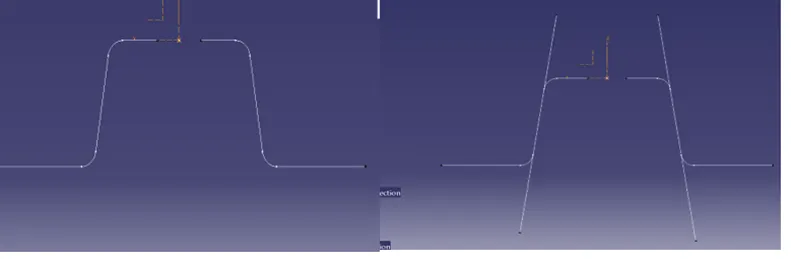
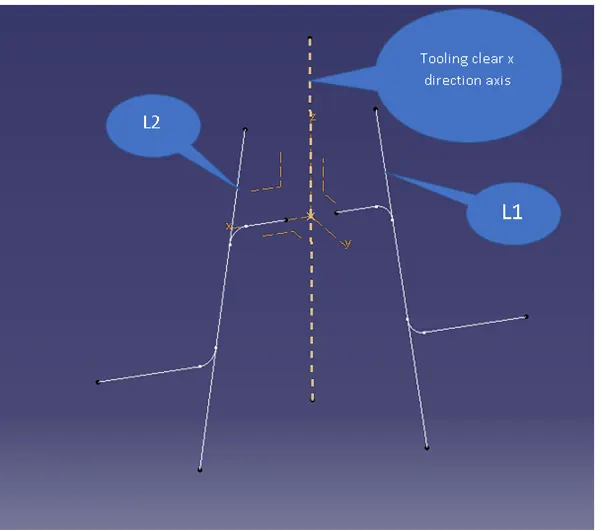
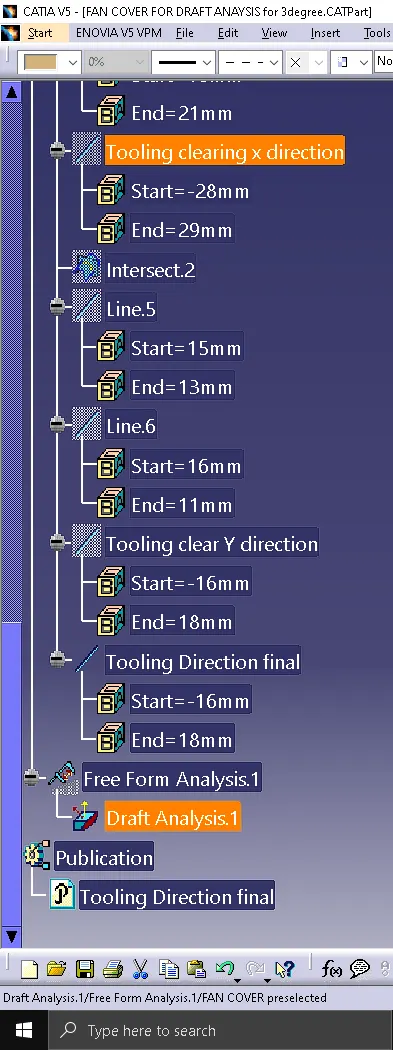
- similarly, L3,L4 line is bisected to derive for tooling clear y direction axis.
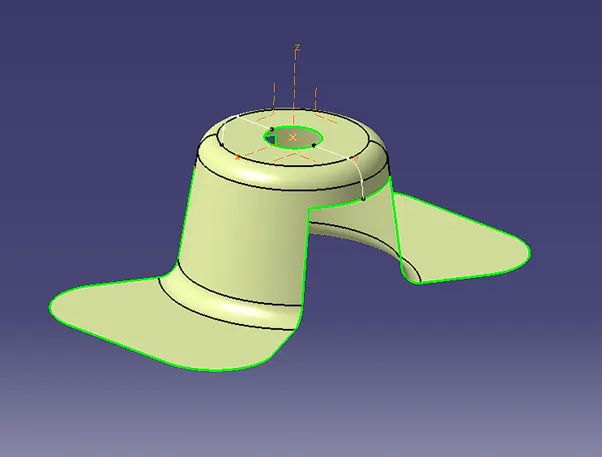
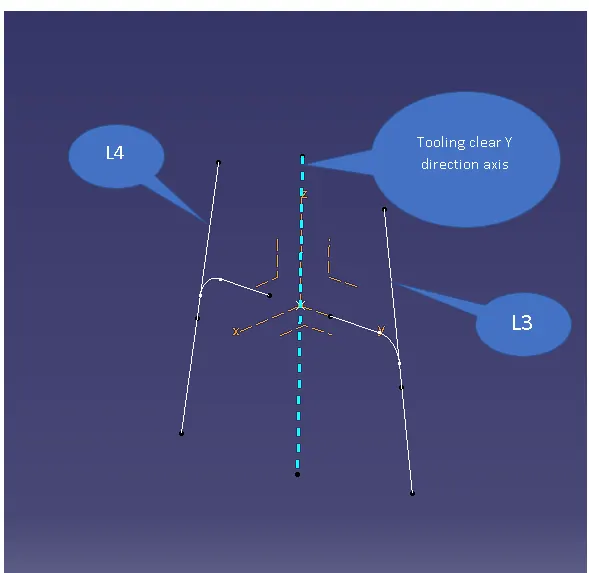
- Taking mean of X and Y clear tooling axis by bisecting feature of line final tooling axis is derived .
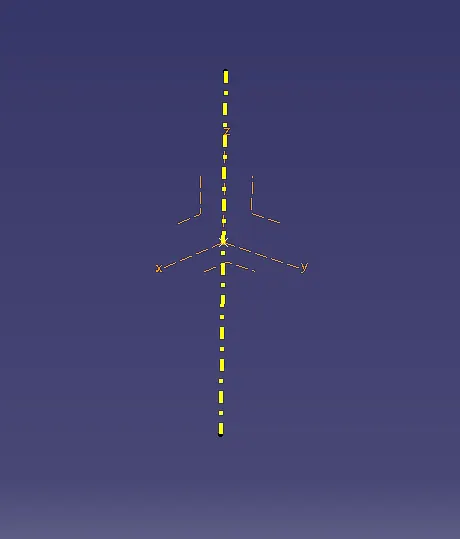
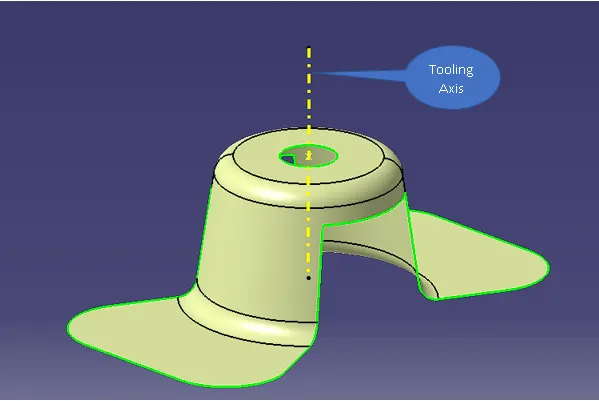
Analysing draft angle:
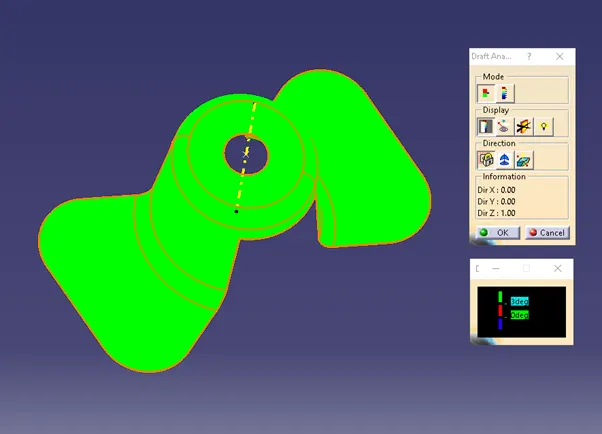
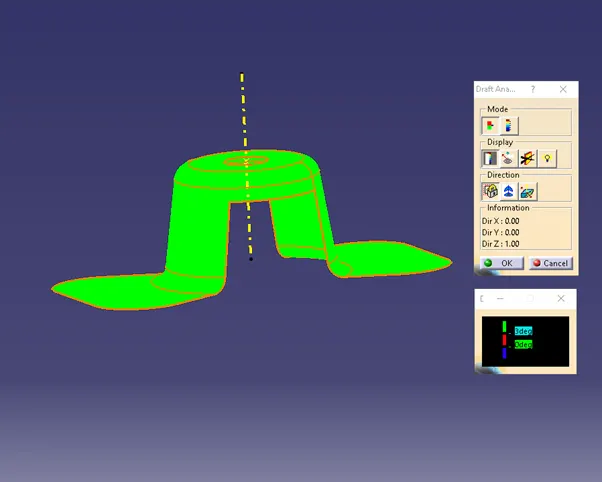
Set the customized view parameter to material and select feature draft analysis.
Align the compass to the tooling direction, from the option.
Lock the draft direction and Select the surface to check for draft.
Set the draft value in colour scale tab and compare the colour significance of draft analysis for respective value.
All green surface indicate that surface clear the minimum draft parameter of 3mm.
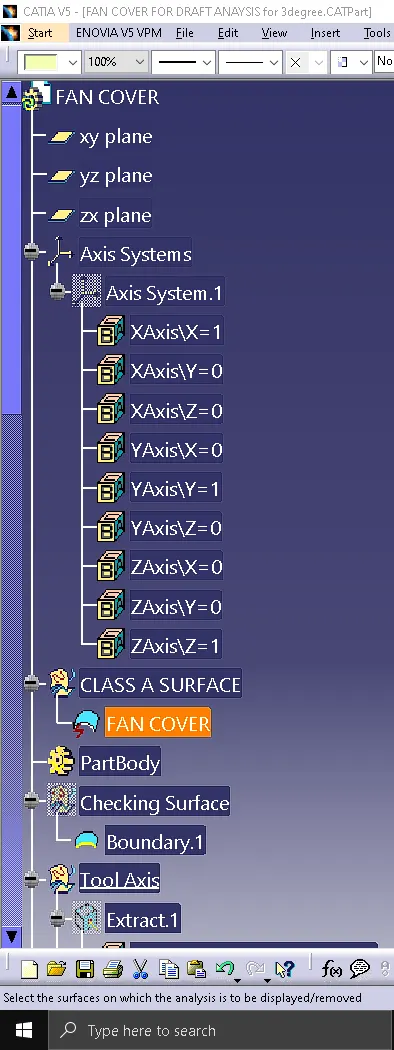
Feature Tree
Conclusion:
Hence tooling direction determined and draft analysis is performed.