Week 7-Long Piston With Cam
1. Objective
We will have to perform a transient analysis on a piston and cam mechanism model that has been provided. Also, we will need to run the analysis with Frictionless contact, frictional with 0.1 and 0.2. Then we need to evaluate Equivalent stress, Directional deformation and Equivalent elastic strain and compare all the three cases with an inference.
2. Case setup and execution
Case 1:
Import geometry and check for any abnormalities using SpaceClaim
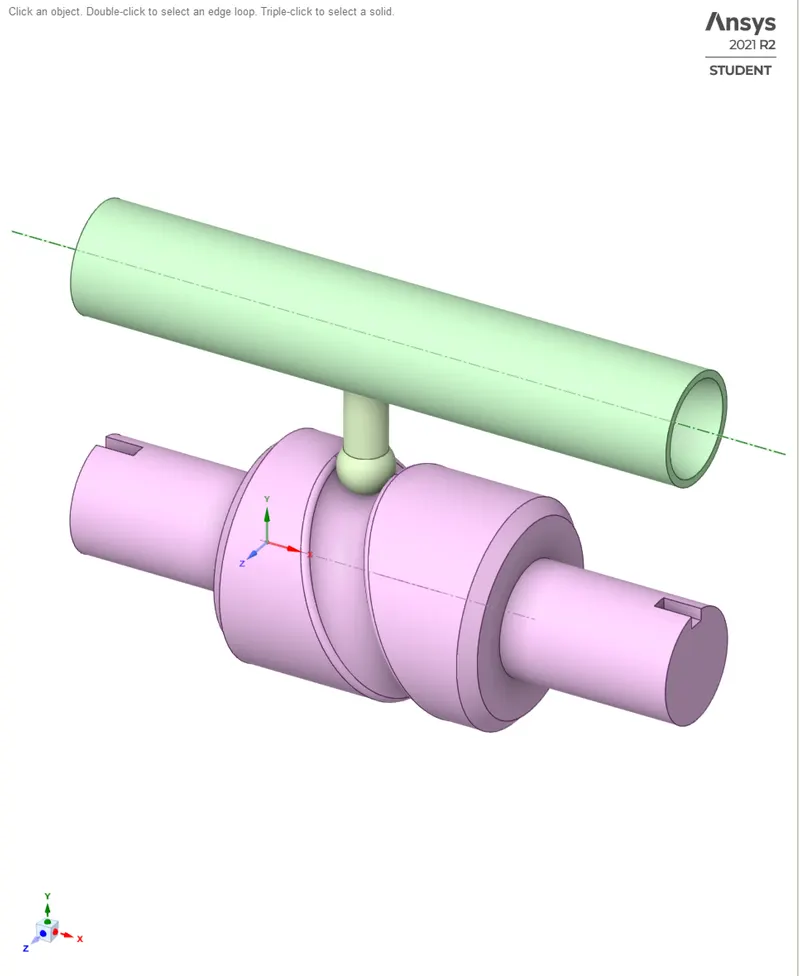
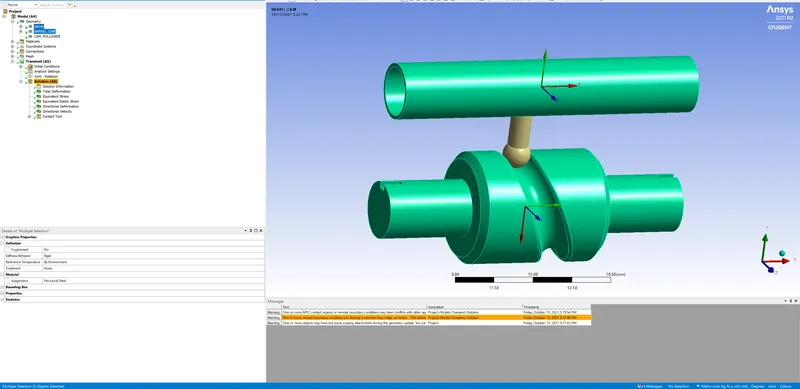
Rename the parts in geometry as a barrel, cam follower and barrel cam
Change the stiffness behavior of barrel and cam follower to be rigid.
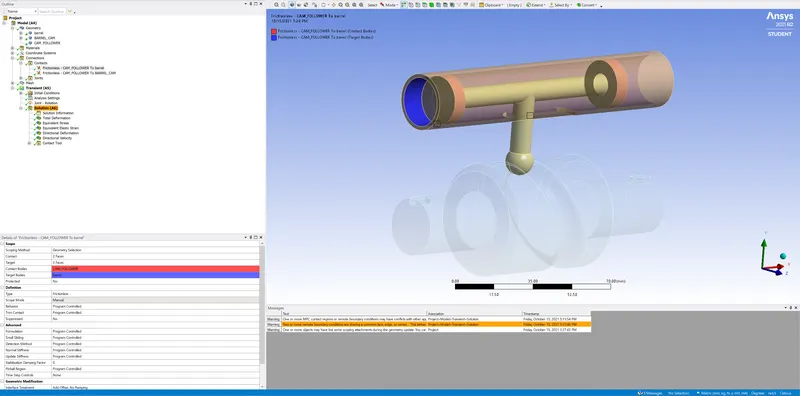
Insert a frictionless contact between barrel and cam follower
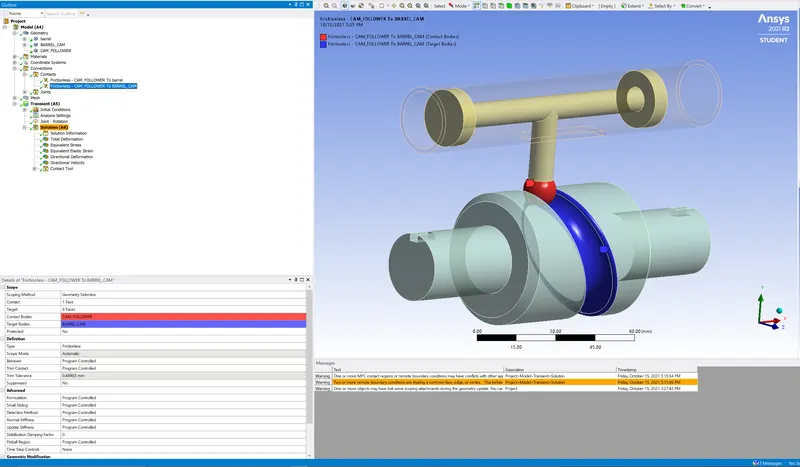
Insert frictional contact between barrel cam and cam follower
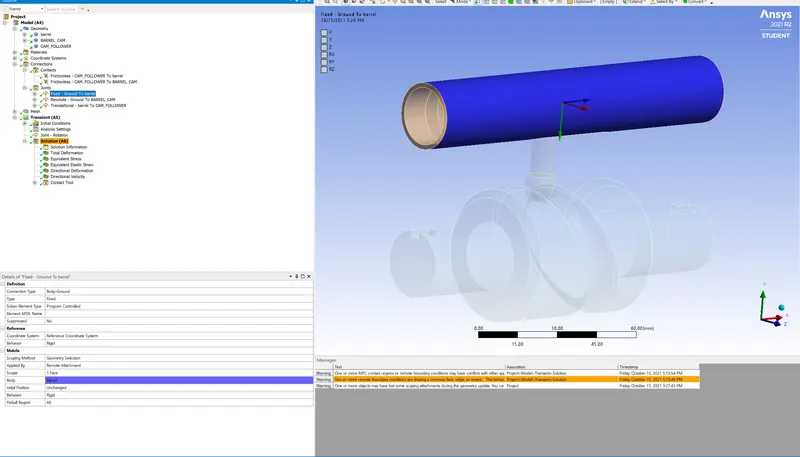
Fix top face of the barrel
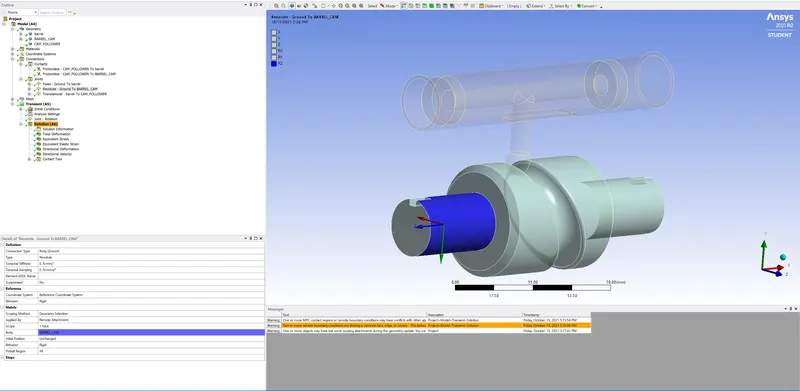
Insert a revolute joint to the barrel cam rotating in Z-direction
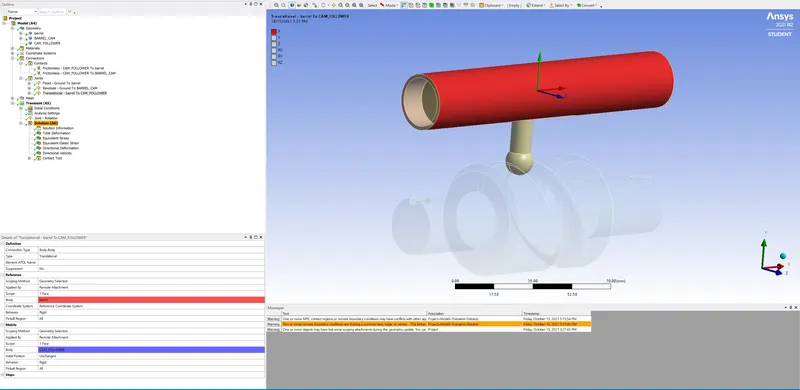
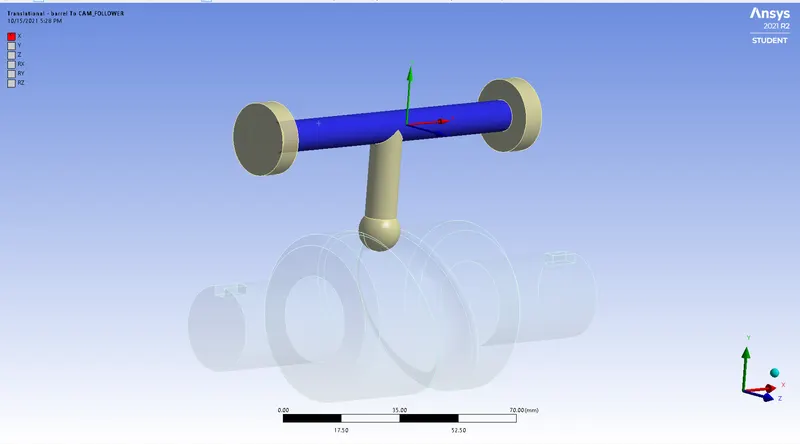
Insert a translational joint between the cam follower and barrel
Insert a face sizing with a mesh size of 3mm and without any adaptive sizing
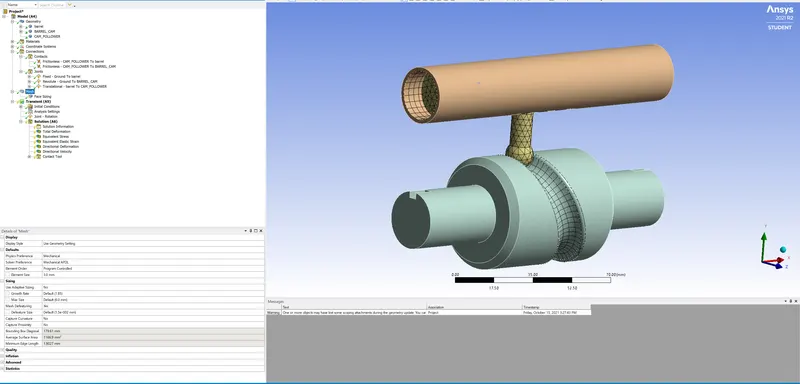
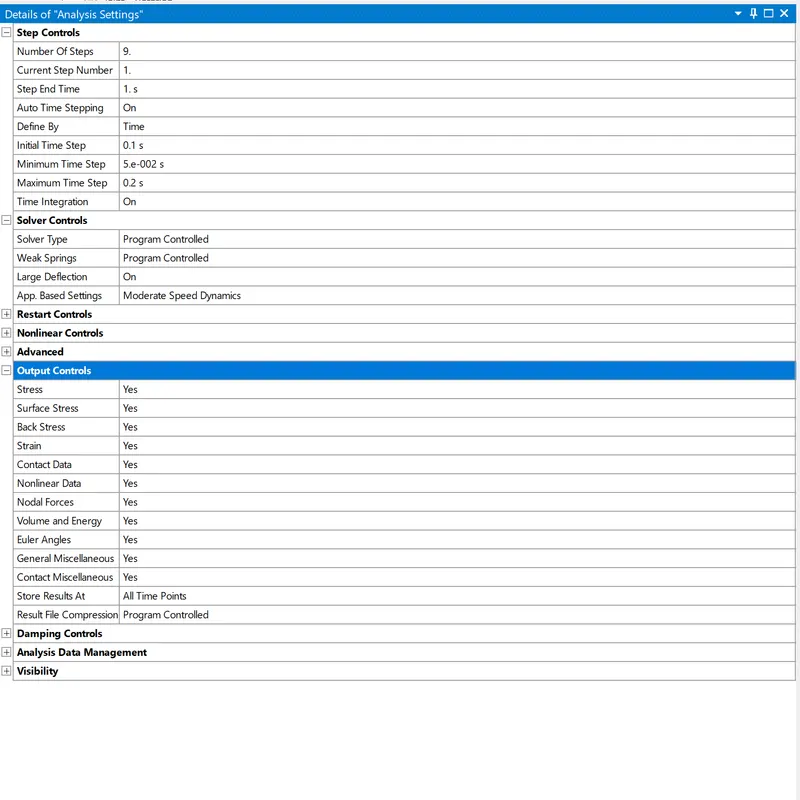
Change analysis settings for the first step with the initial time step of 0.1s, a minimum time step of 5e-2s and a maximum time step of 0.2s.
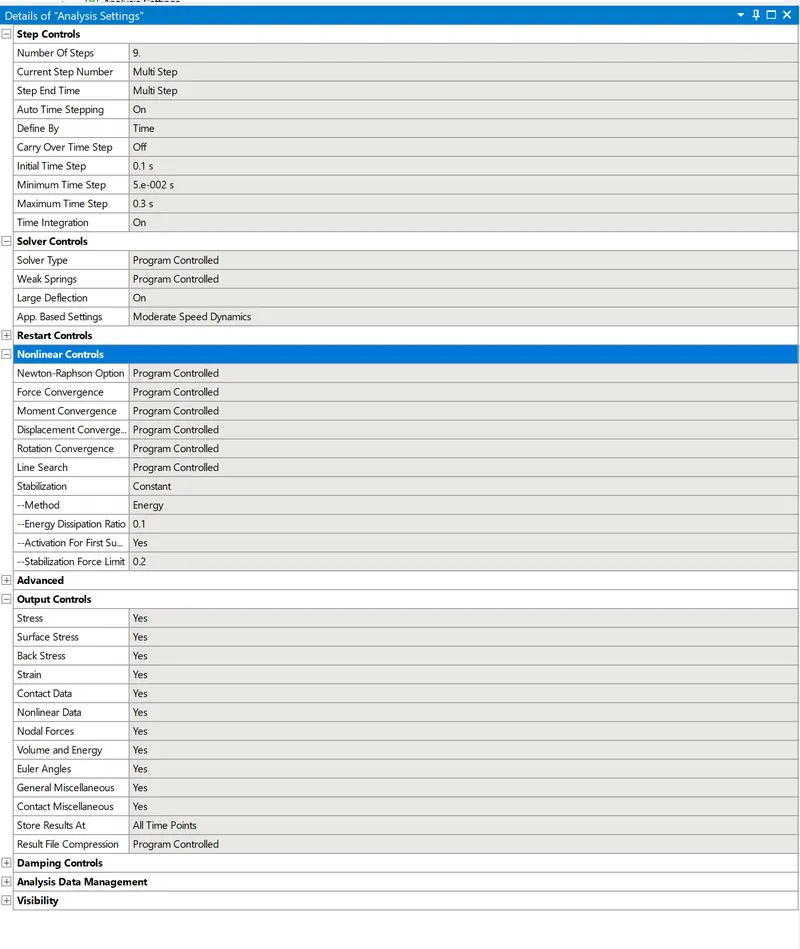
Change analysis settings for steps 2 to 9 with initial time step of 0.1s, minimum time step of 5e-2s and maximum time step of 0.3s with constant stabilization, energy dissipation ratio of 0.1 with activation turned on for every step.
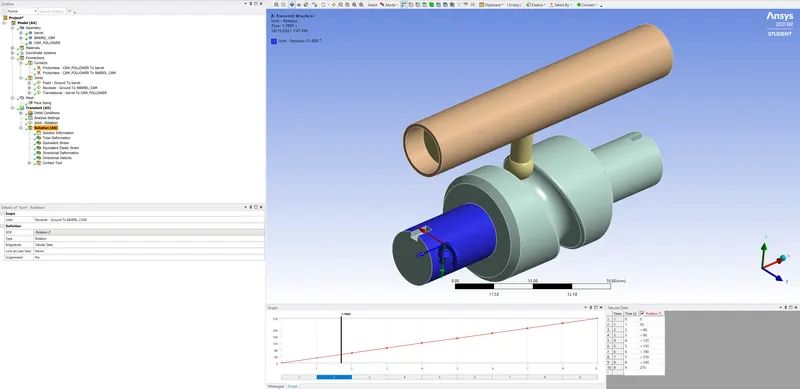
Provide revolute joint in the form of rotation in Z direction. Input magnitude of rotation in the form of table values.
Case 2: Change coefficient of friction to 0.1 and make contacts frictional, rest steps are same as above
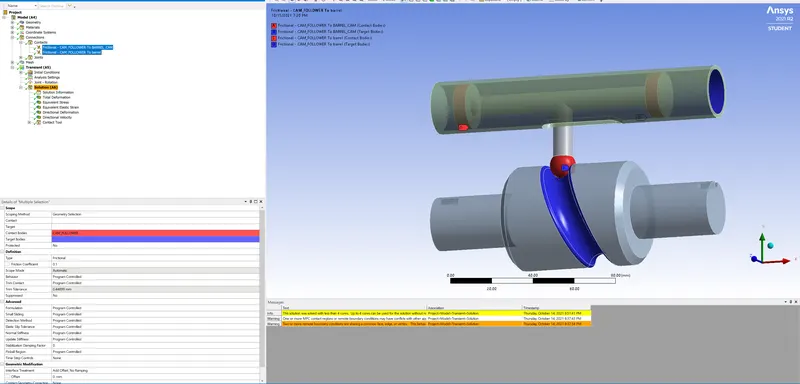
Case 3: Change coefficient of friction to 0.2 and make contacts frictional, rest steps are same as above
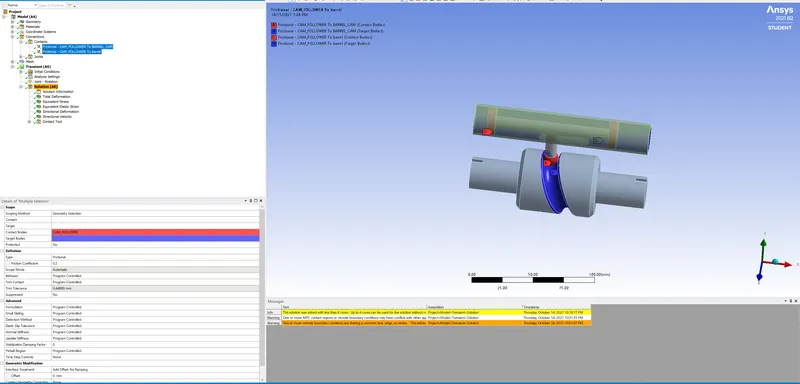
3. Results for case 1
Equivalent stress
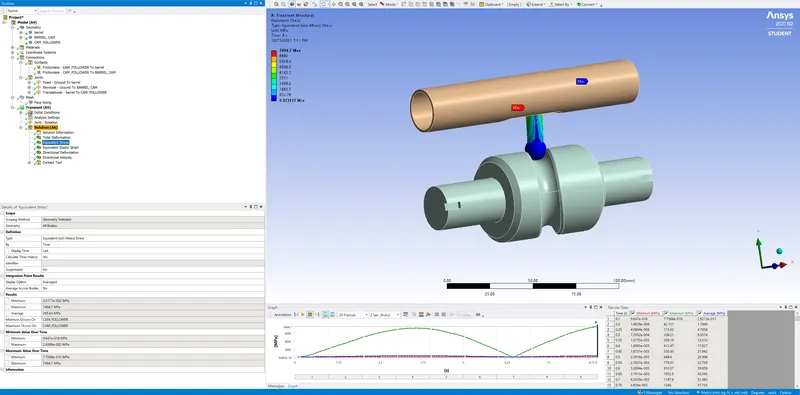
Directional deformation
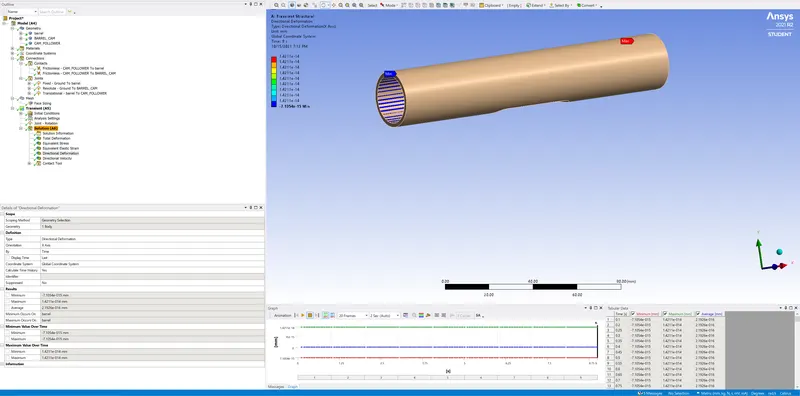
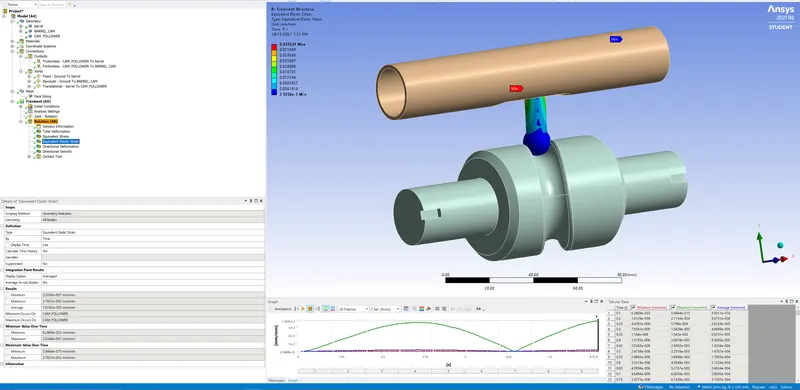
Equivalent elastic strain
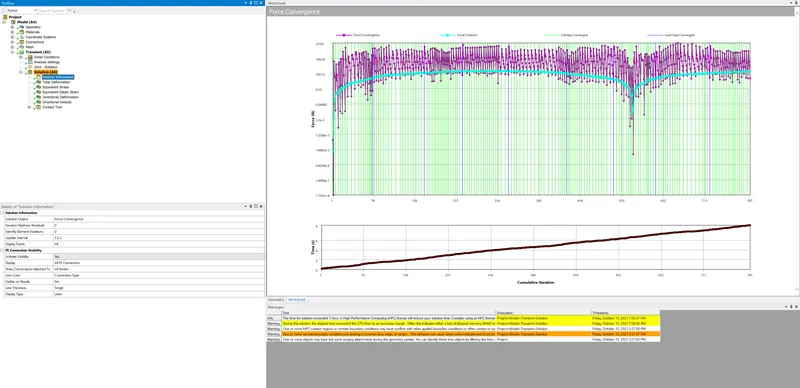
Force convergence
4. Results for case 2
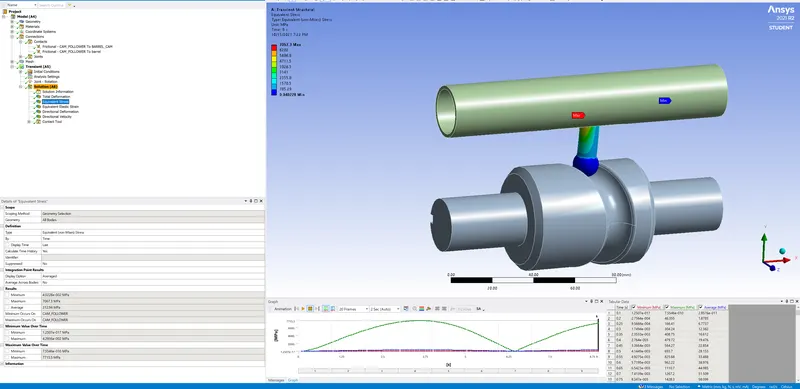
Equivalent stress
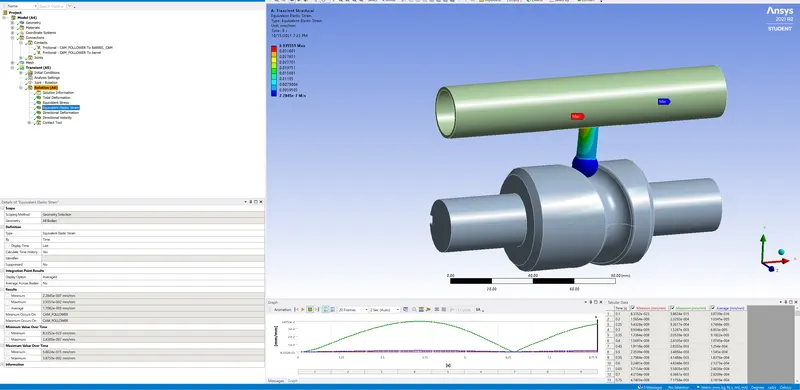
Equivalent elastic strain
Directional deformation
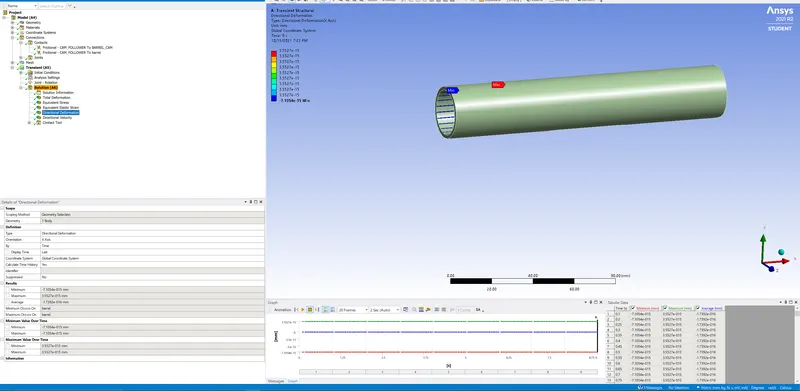
Force convergence
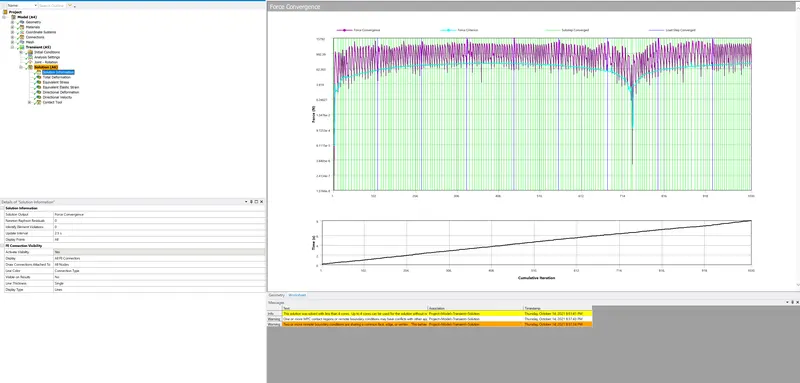
5. Results for case 3
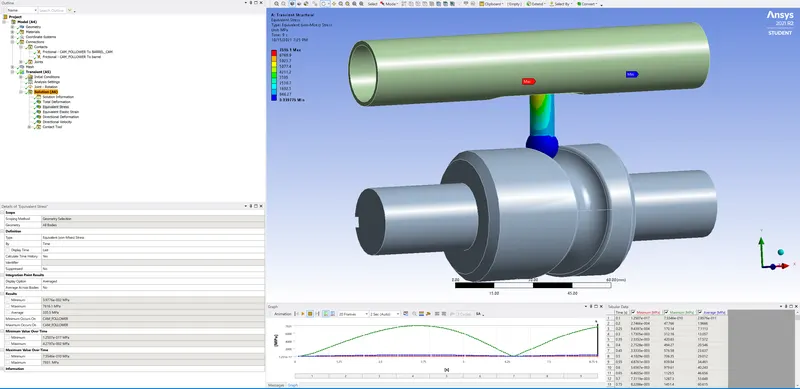
Equivalent stress
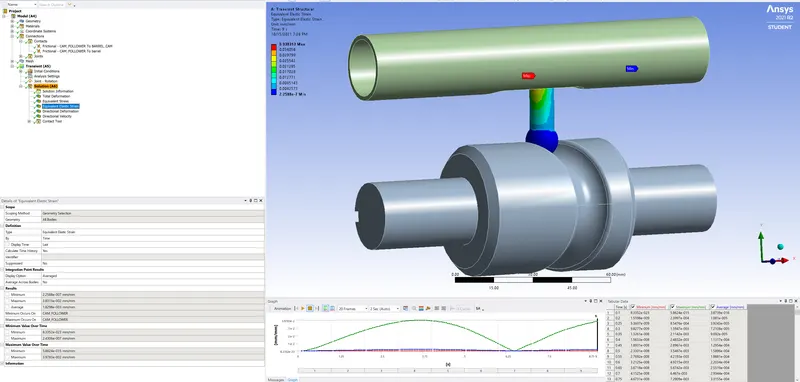
Equivalent elastic strain
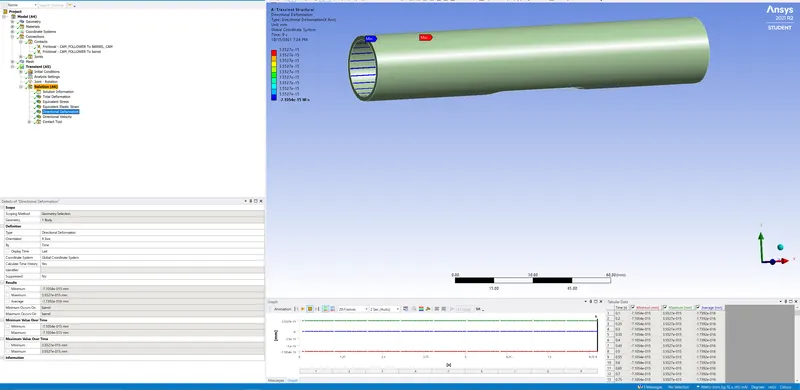
Directional deformation
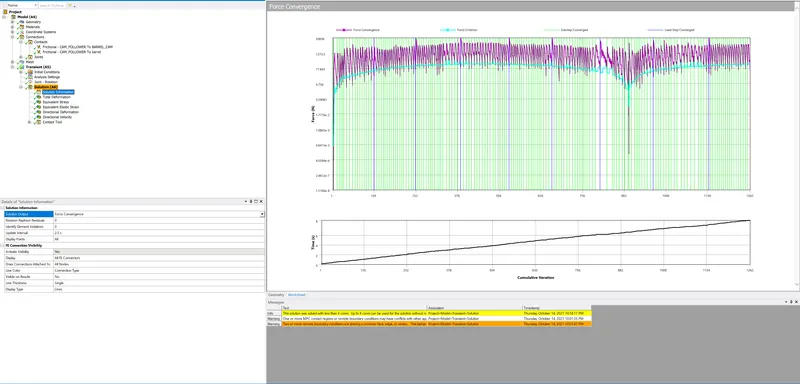
Force convergence
6. Results, Conclusion and Report presentation
Case 1
| Equivalent stress | 7494.7 MPa |
| Directional Deformation | 3.7631e-2 |
| Equivalent elastic strain | 1.4211e-14mm |
Animation link:
https://drive.google.com/drive/folders/1alTQwEY5aIs3ZksApenyPB4M1Md6DwEA?usp=sharing
Case 2
| Equivalent stress | 7067.3 MPa |
| Directional Deformation | 3.5551e-2 |
| Equivalent elastic strain | 3.5527e-15mm |
Animation link:
https://drive.google.com/drive/folders/1ndqnY5U7e-Ne9j3pM2CrIBbdrBM-d3s5?usp=sharing
Case 3
| Equivalent stress | 7616.1 MPa |
| Directional Deformation | 3.8313e-2 |
| Equivalent elastic strain | 3.5527e-15mm |
Animation link:
https://drive.google.com/drive/folders/1SZNgO6ADUpIbyZZJl5Teh8KcB_dkqru_?usp=sharing
As frictional coefficient increases from 0 to 0.2, Equivalent stress increases from 7494.7 MPa to 7616.1 MPa. However, equivalent elastic strain decreases from 1.4211e-14mm to 3.5527e-15mm. Also directional deformation is higher in case 3 compared to other 2 cases.
7. Simulation files
Files are attached