Week 3 Sheet metal Bending challenge
1. Objective
In this challenge, sheet metal bending is to be performed for 3 different materials like Aluminum alloy 1199, copper alloy NL and Magnesium alloy NL and equivalent stress, equivalent elastic strain and total deformation in Y-direction is to be calculated. Also by changing friction coefficient to 0.19 we need to run analysis and compare those results. Moreover mesh refinement needs to be done.
2. Case setup and Execution
Material properties of Aluminum alloy 1199, Copper alloy NL and Magnesium alloy NL are added in Engineering data sources. CAD model is imported for geometry
3. Results of case 1
3.1 Aluminum alloy 1199
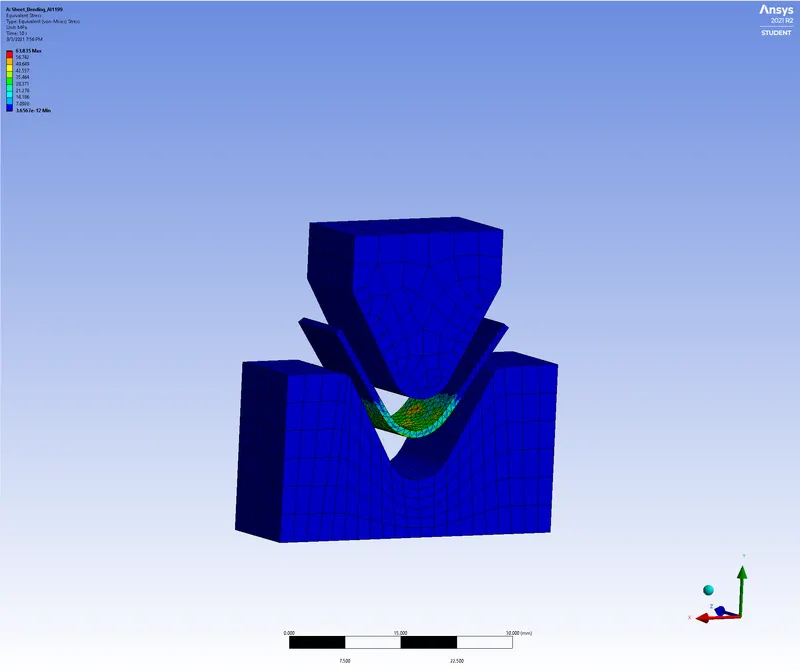
Fig 1 Equivalent stress
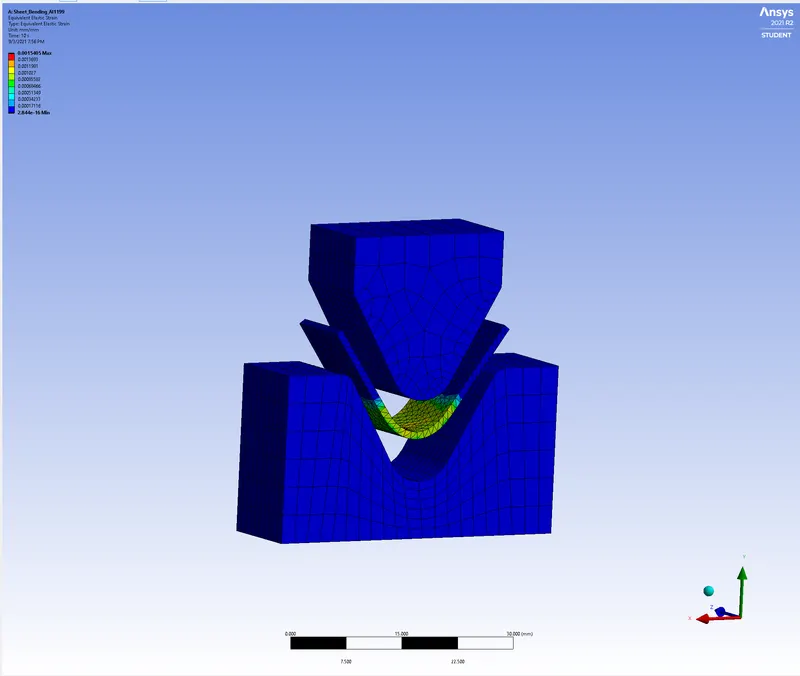
Fig 2 Equivalent elastic strain
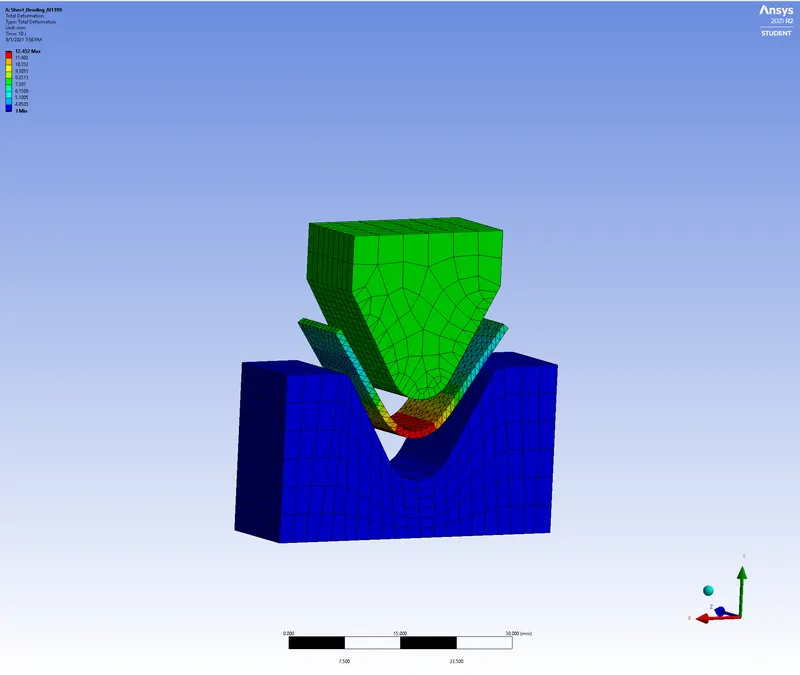
Fig 3 Total deformation in Y direction
3.2 Copper alloy NL
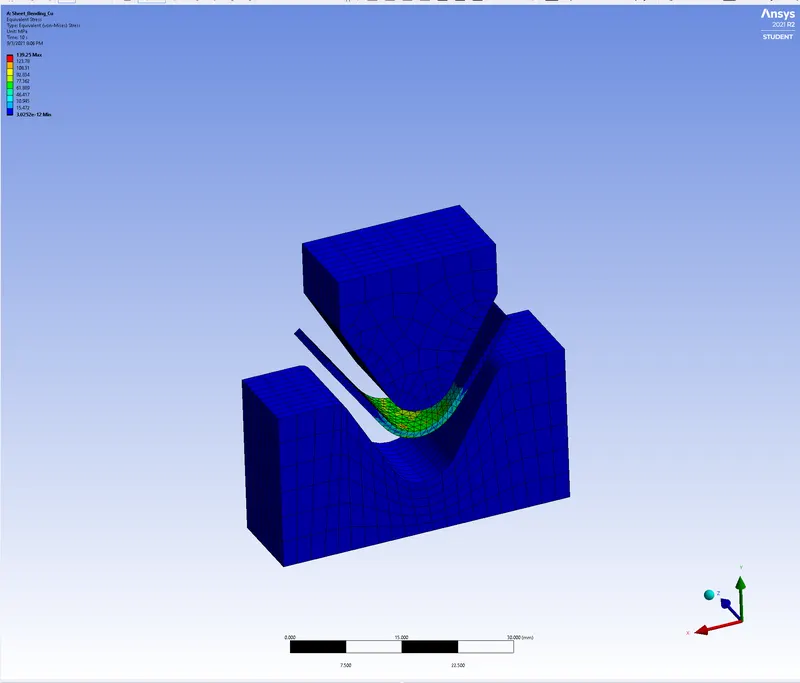
Fig 4 Equivalent stress
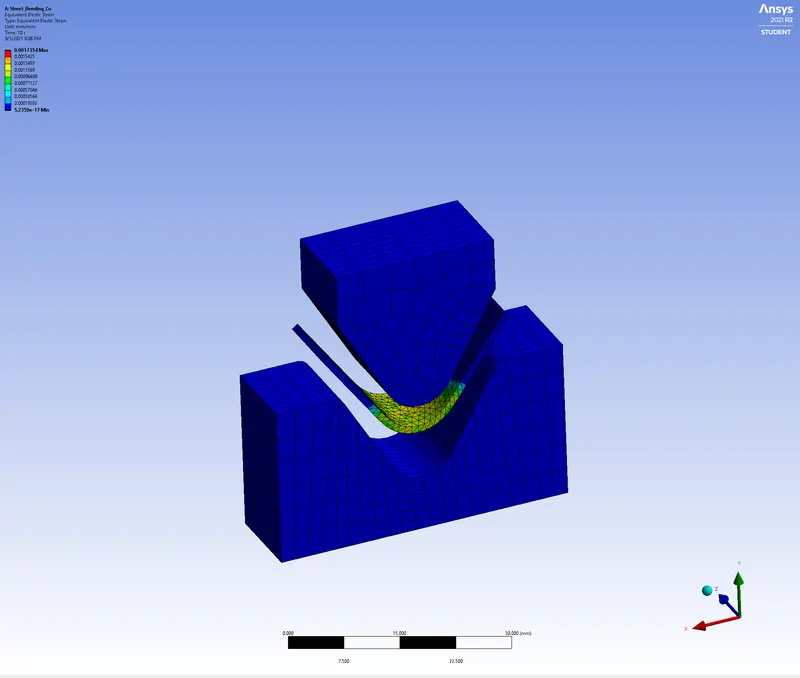
Fig 5 Equivalent elastic strain
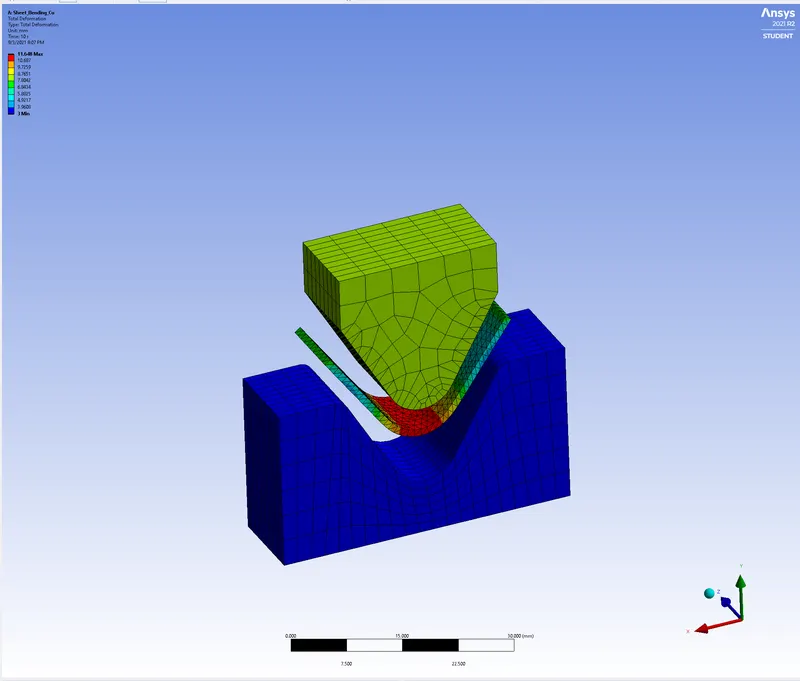
Fig 6 Total deformation in Y direction
3.3 Magnesium alloy NL
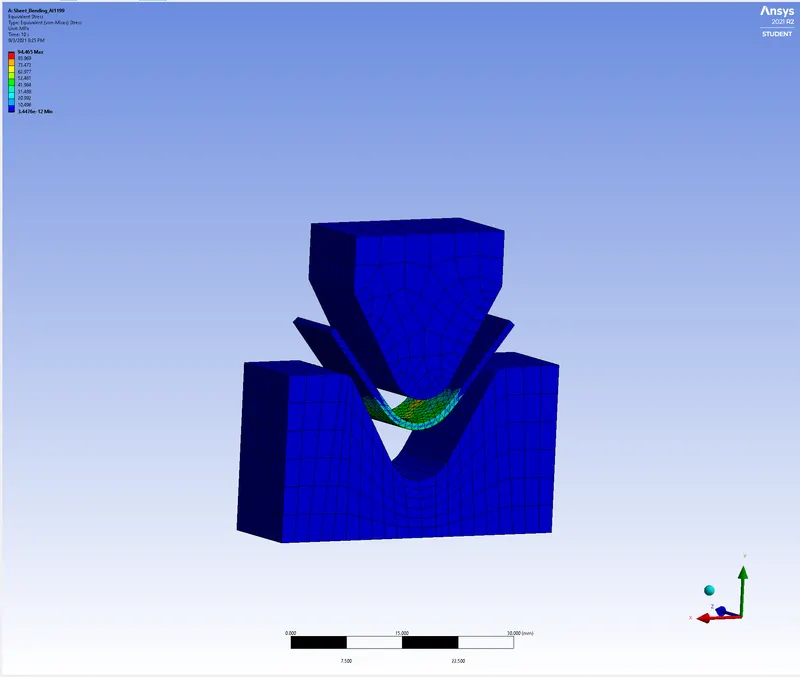
Fig 7 Equivalent stress
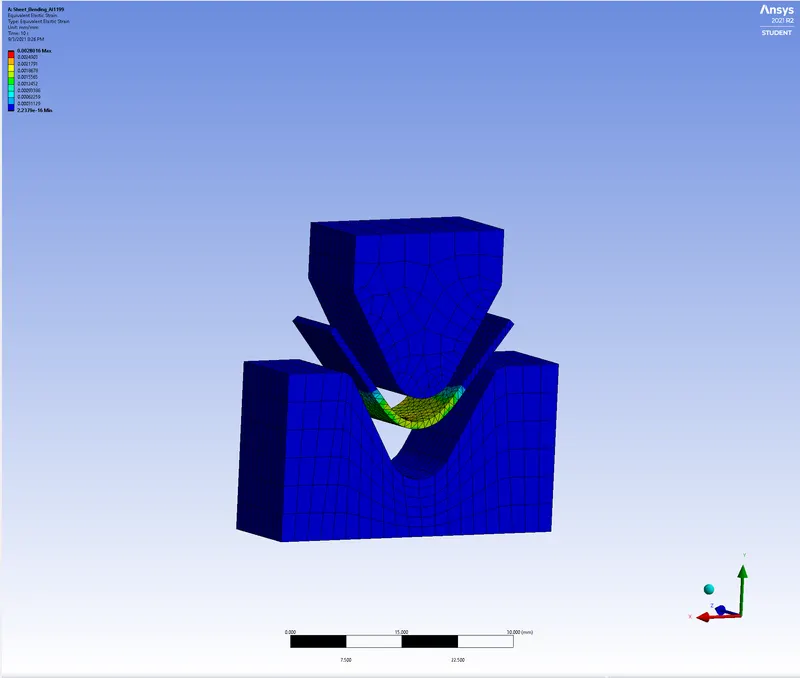
Fig 8 Equivalent elastic strain
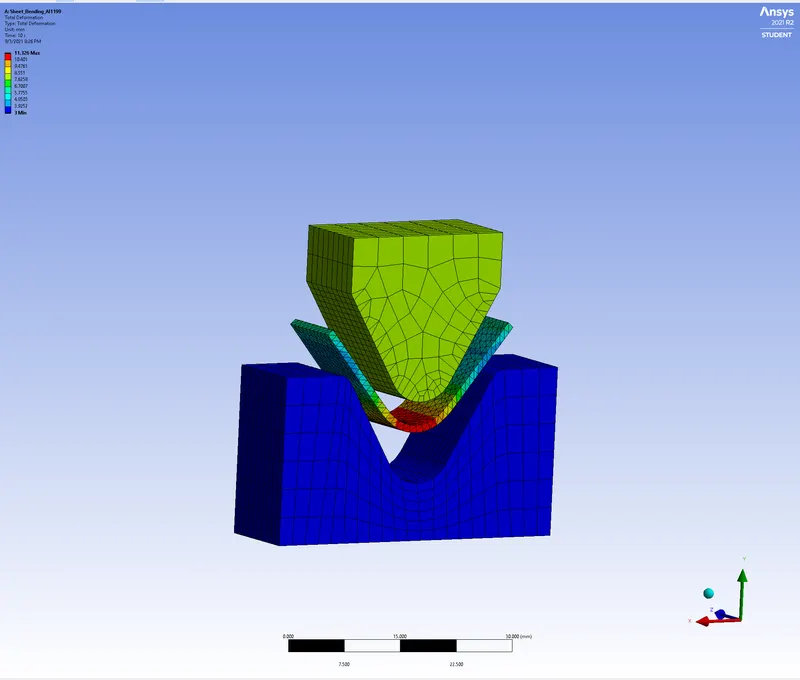
Fig 9 Total deformation in Y direction
4. Results of case 2
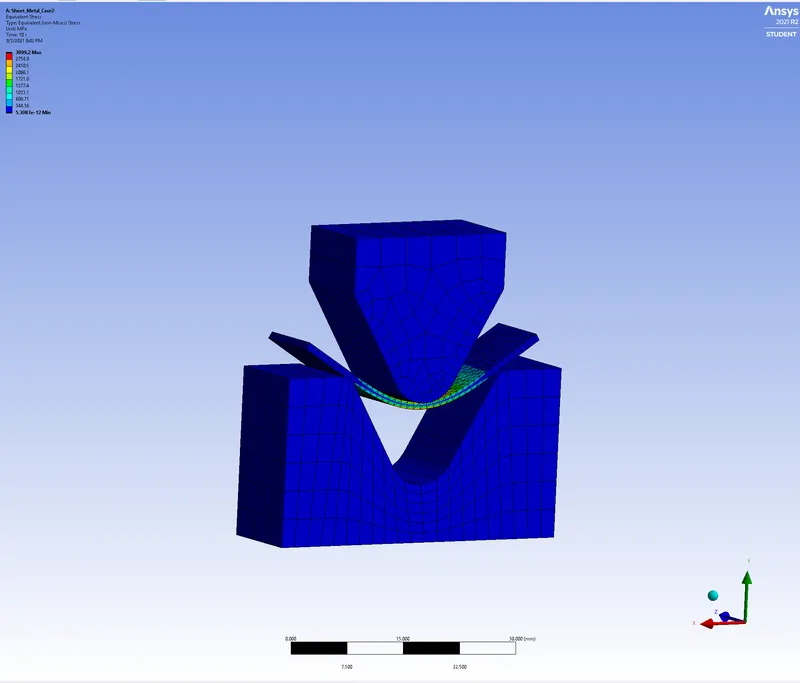
Fig 10 Equivalent stress
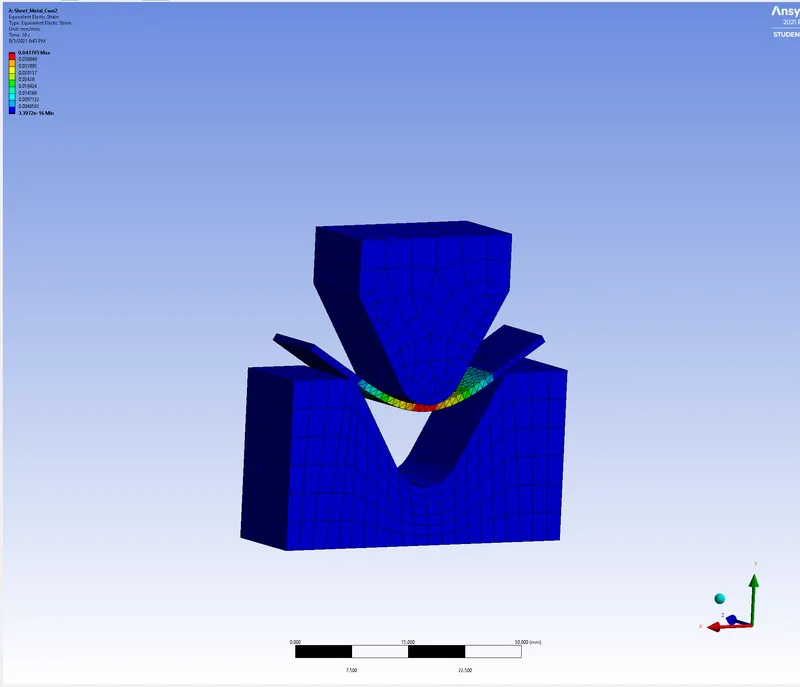
Fig 11 Equivalent elastic strain
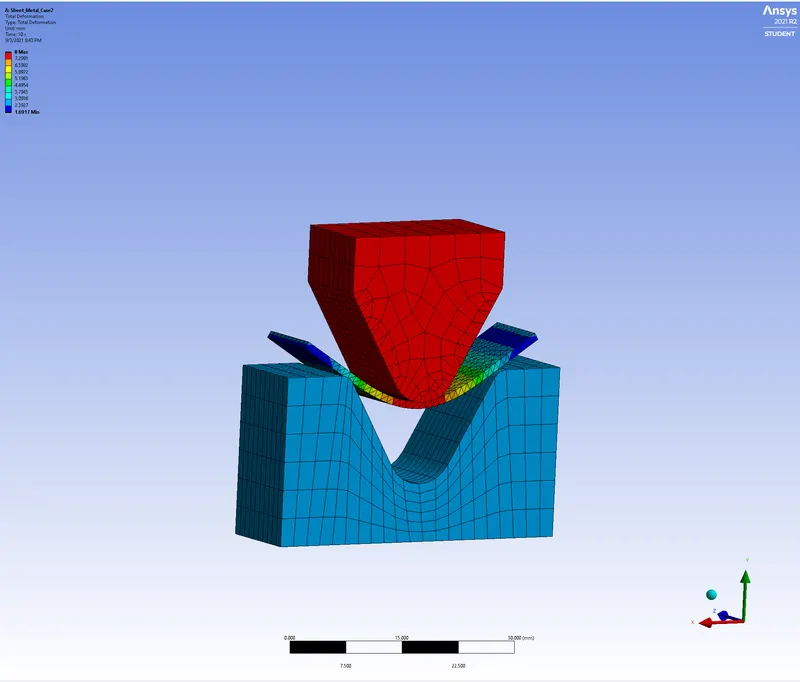
Fig 12 Total deformation
5. Results of case 3
Mesh size 0.4mm
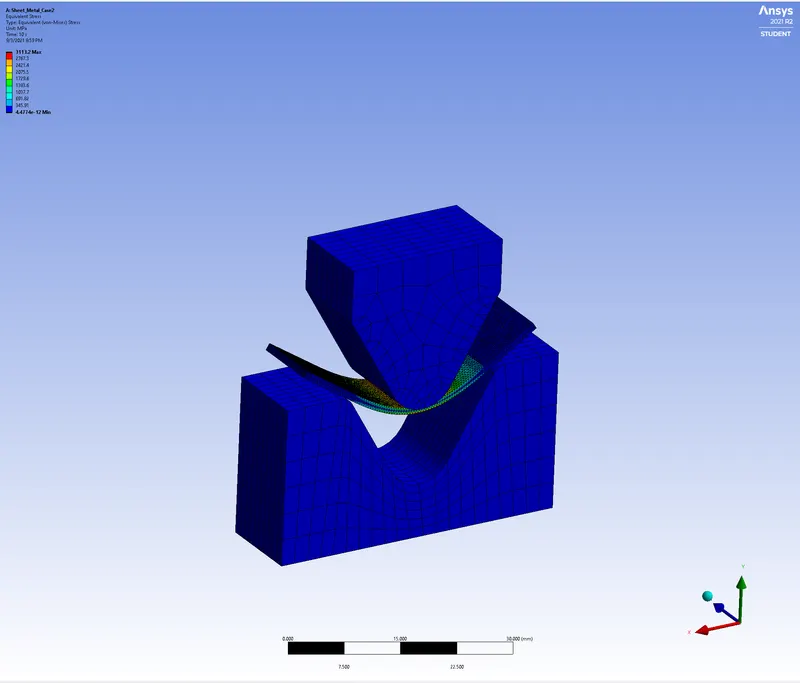
Fig 13 Equivalent stress
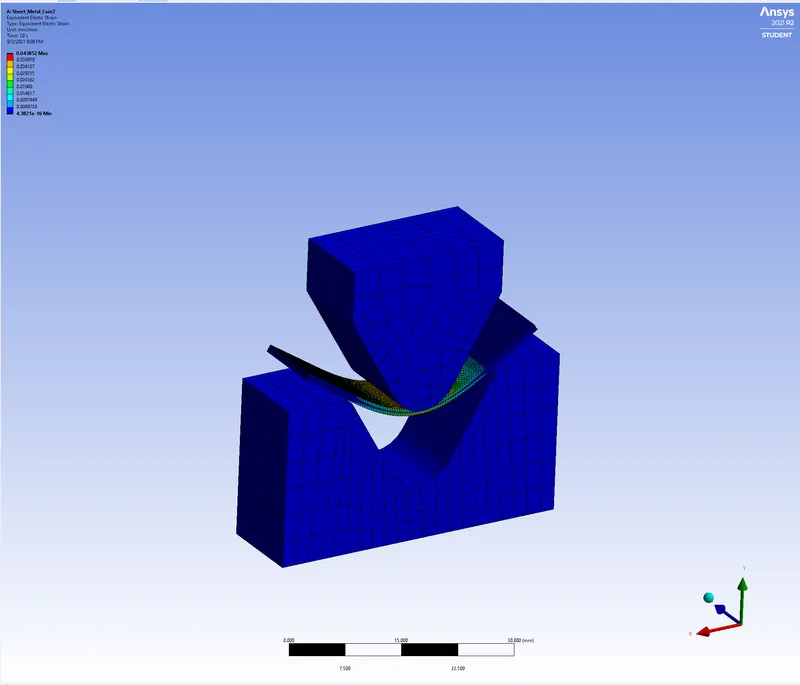
Fig 14 Equivalent elastic strain
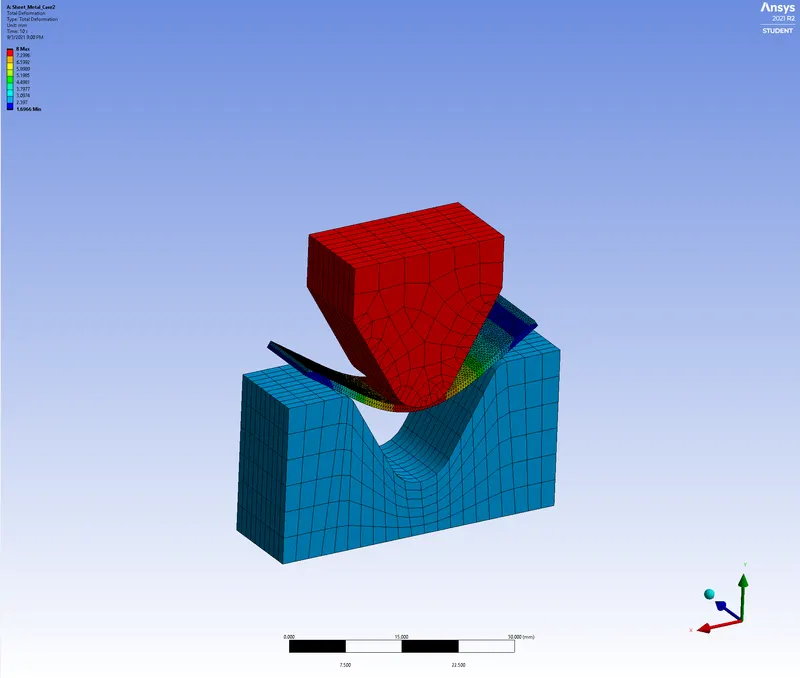
Fig 15 Total deformation
Mesh size 0.45mm
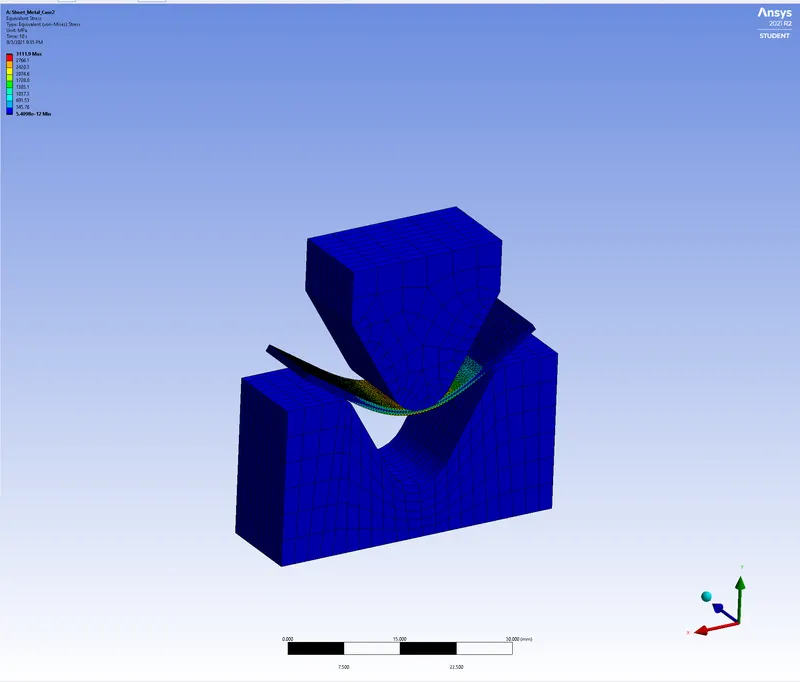
Fig 16 Equivalent stress
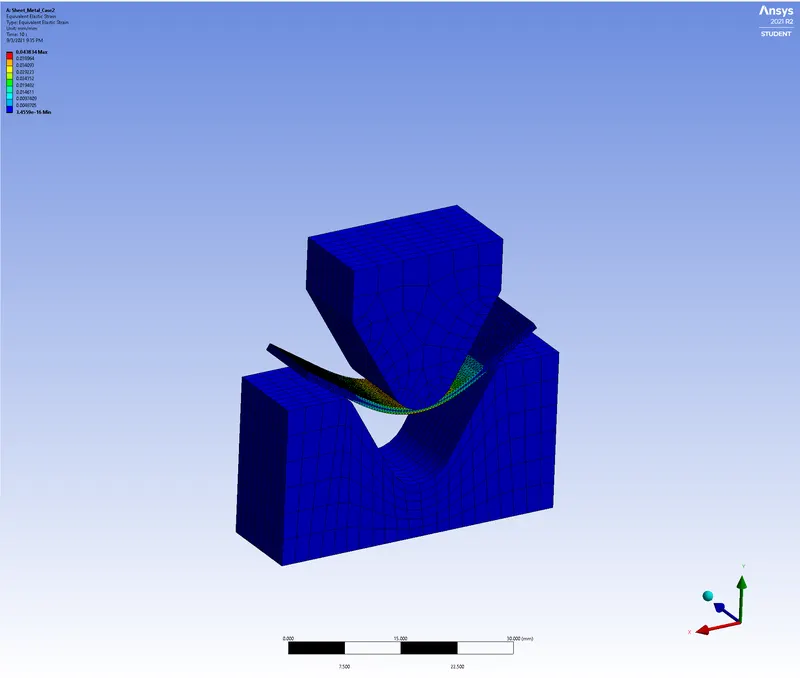
Fig 17 Equivalent elastic strain
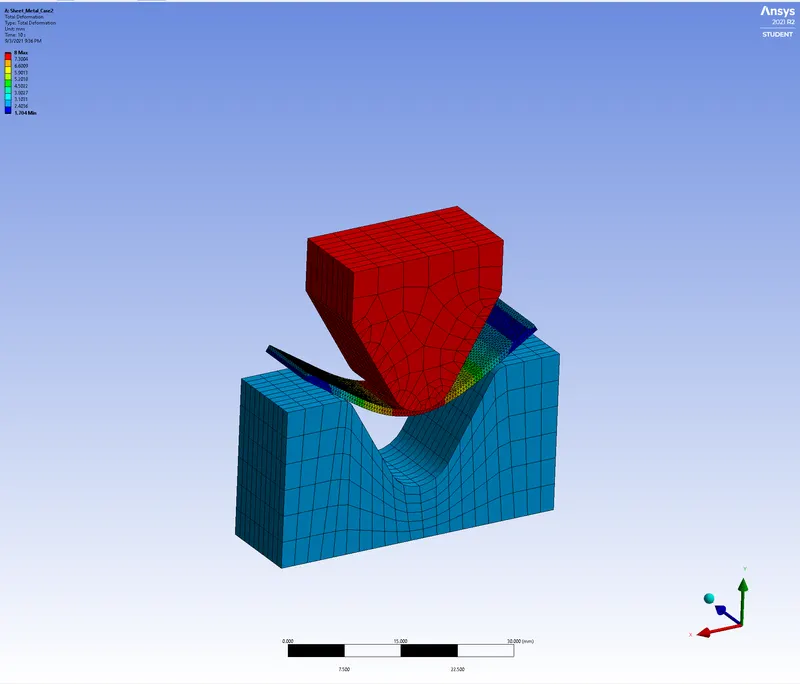
Fig 18 Total deformation
6. Results, Conclusion and Report presentation
Case 1
Al1199
| Equivalent stress | 63.835 MPa |
| Equivalent elastic strain | 0.0015405 |
| Total deformation | 12.452 mm |
Cu alloy NL
| Equivalent stress | 139.25 MPa |
| Equivalent elastic strain | 0.0017354 |
| Total deformation | 11.648 mm |
Mg alloy NL
| Equivalent stress | 94.465 MPa |
| Equivalent elastic strain | 0.0028016 |
| Total deformation | 11.326 mm |
Conclusion: As seen from the above table values, Total deformation is maximum for Al1199 alloy and least for Mg alloy NL. Equivalent elastic strain is highest for Mg alloy NL followed by Cu and Al1199. However, Equivalent stress is highest for Cu alloy NL compared to Al1199 and Mg alloy NL.
Case 2
When the friction coefficient is 0.1 as in case 1 (2nd col) and 0.19 (3rd col), equivalent stress, strain and total deformation values are comparatively lesser
| Equivalent stress | 63.835 MPa | 60.874 MPa |
| Equivalent elastic strain | 0.0015405 | 0.0015612 |
| Total deformation | 12.452 mm | 12.3778 mm |
Case 3
when mesh size is 0.4 mm,
| Equivalent stress | 3113.2 MPa |
| Equivalent elastic strain | 0.043852 |
| Total deformation | 8 mm |
when mesh size is 0.45 mm,
| Equivalent stress | 3111.9 MPa |
| Equivalent elastic strain | 0.043834 |
| Total deformation | 8 mm |
As seen from the above 2 results, equivalent stress, strain and total deformation values are almost same.
7. Simulation files
Files are attached