Week 7-Long Piston With Cam
Objective:
To perform a transient analysis on a piston and cam mechanism model that has been provided to us and we need to run the analysis with Frictionless contact, Frictional with 0.1 and 0.2 as the frictional contact for a total of 3 cases and we have to find out the Equivalent Stress, Directional Deformation and Equivalent Elastic Strain and compare them for all the three cases.
Setup & Procedure:
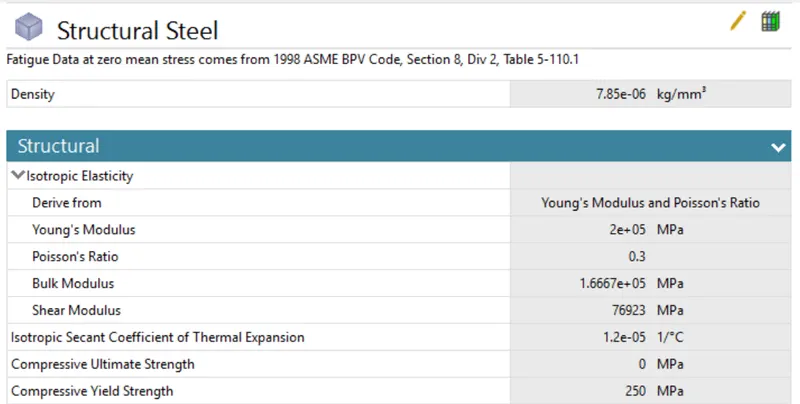
- From the engineering data source we have selected structural steel as a material to assign to the geometry.
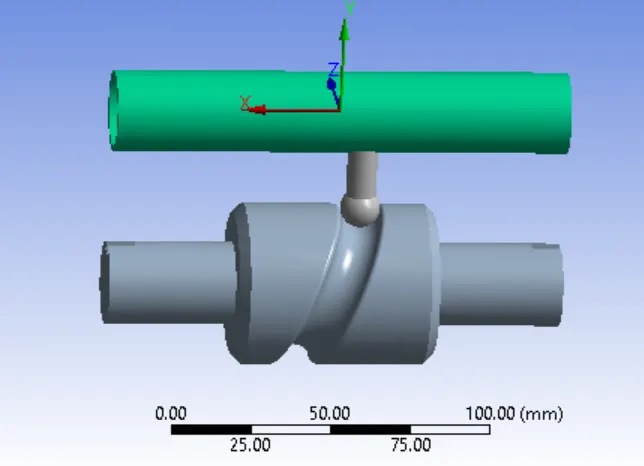
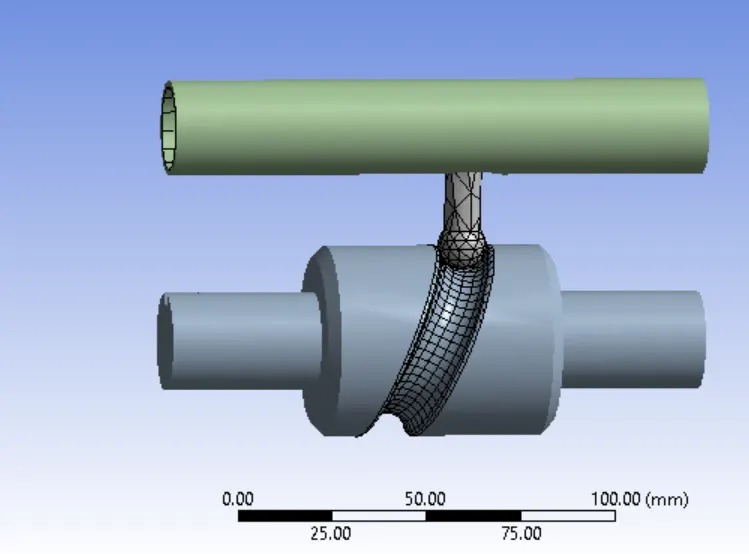
- The geometry of the long piston and cam has been imported as shown below.
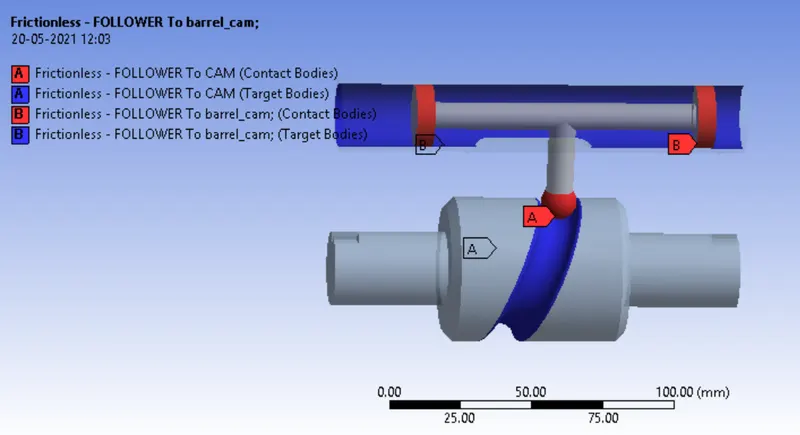
- In the connection module we have assigned two frictionless contact for case 1 as shown below whereas we have assigned we have assigned a frictional contact between the contact pair with coefficient of friction as 0.1 in case 2 and 0.2 in case 3.
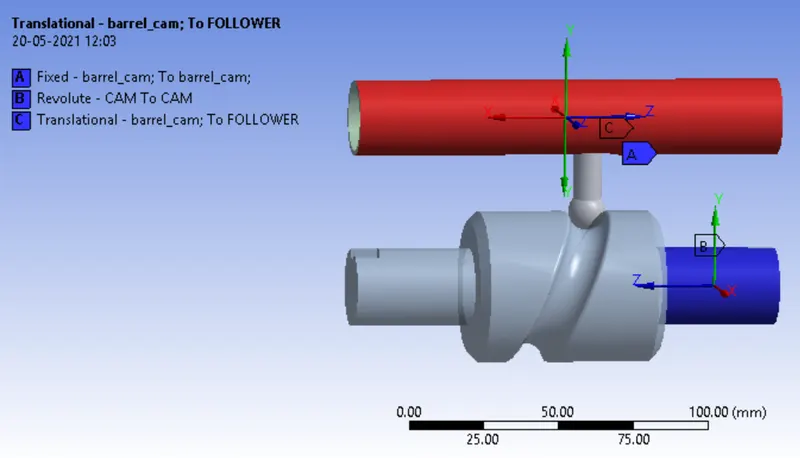
- Within the connection we have assigned three joints - fixed joint to the barrel cam, translational joint to the follower and revolute joint to the cam.
- In the mesh section we have applied face sizing with element size of 3 mm in the critical area as shown below. the total number of nodes and elements are as shown below.
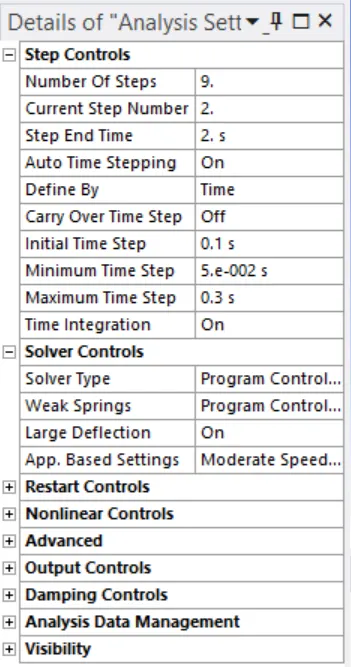
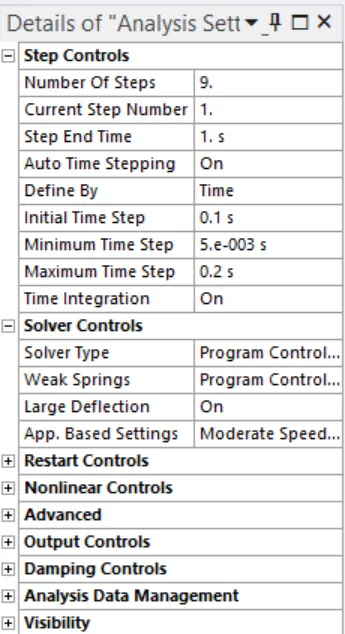
- In the analysis setting we have assigned 9 steps and the other details are shown below. However we have done some changes in the time step for case 3 as shown below.
- Analysis setting of case 3
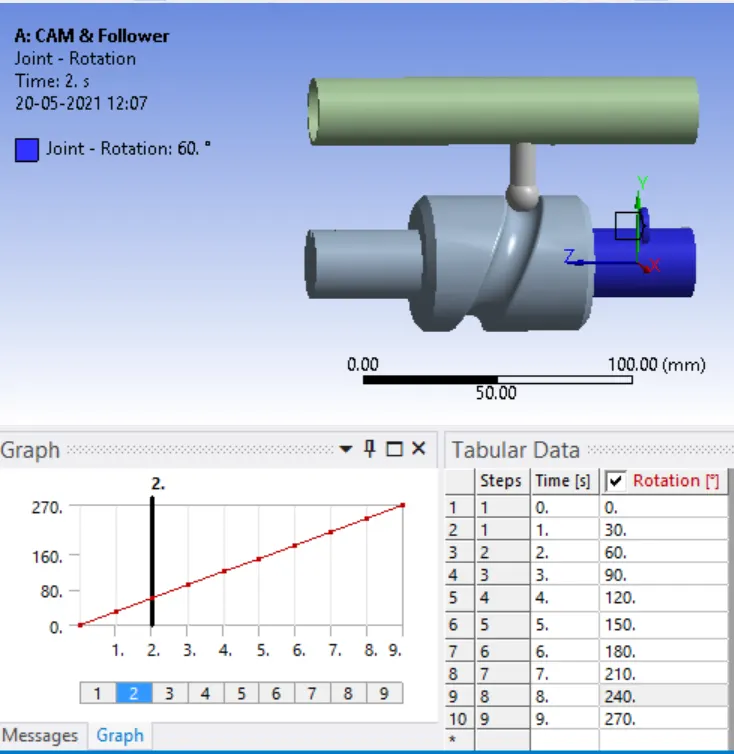
- The joint load has been applied to the cam as shown below.
Results:
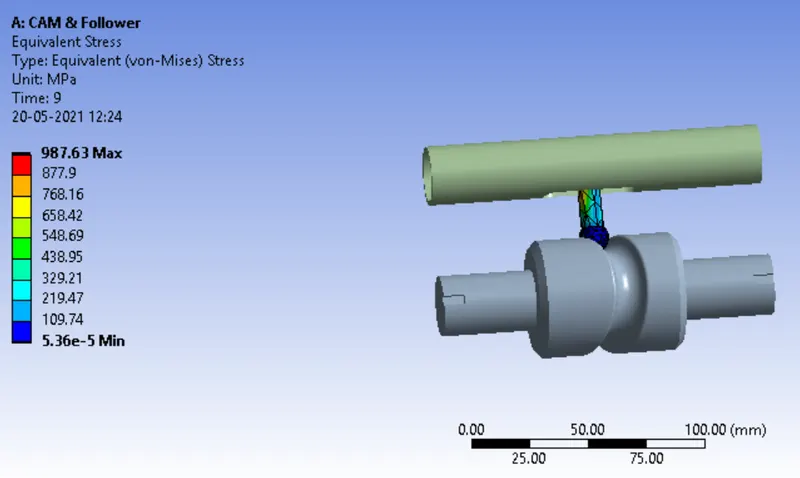
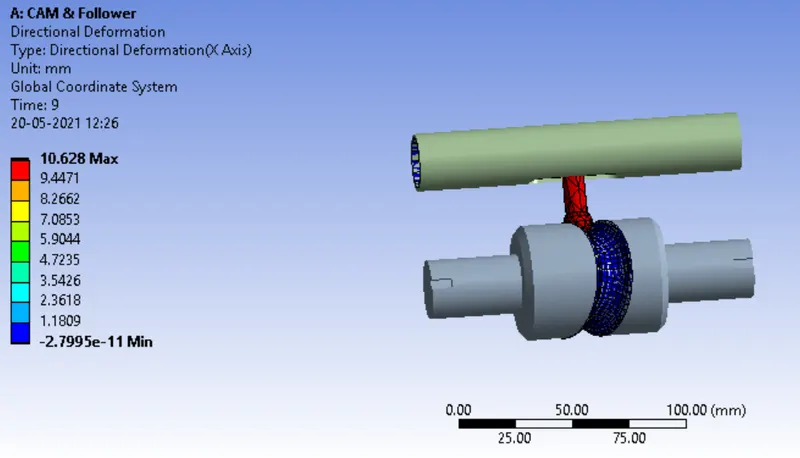
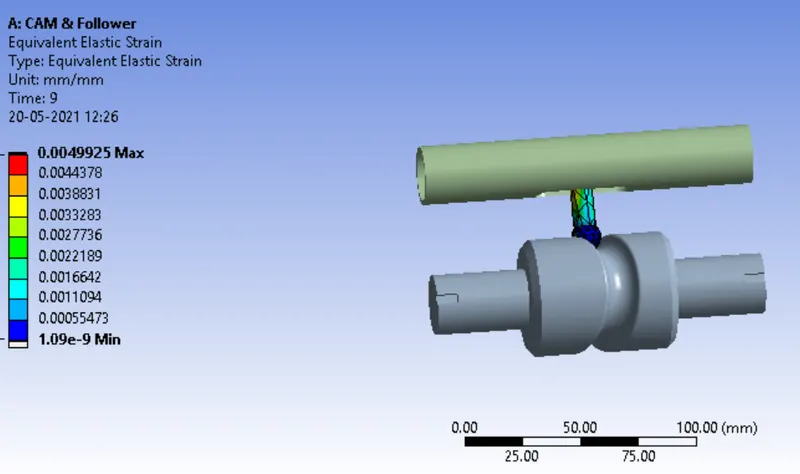
Case 1 (frictionless contacts)
Equivalent Stress
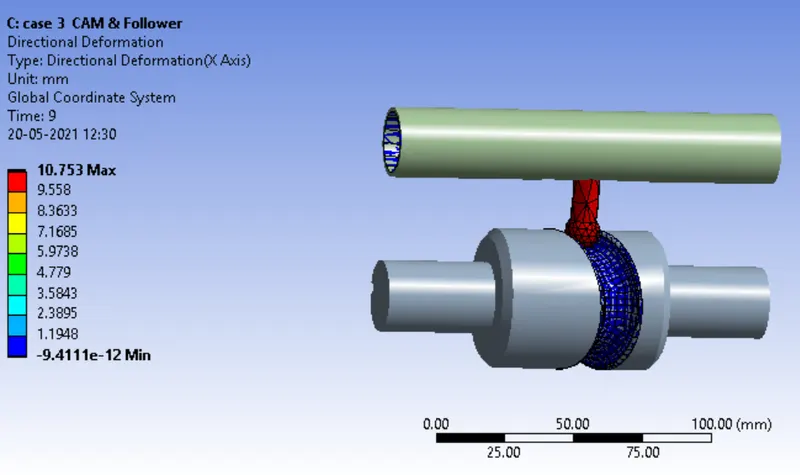
Directional Deformation
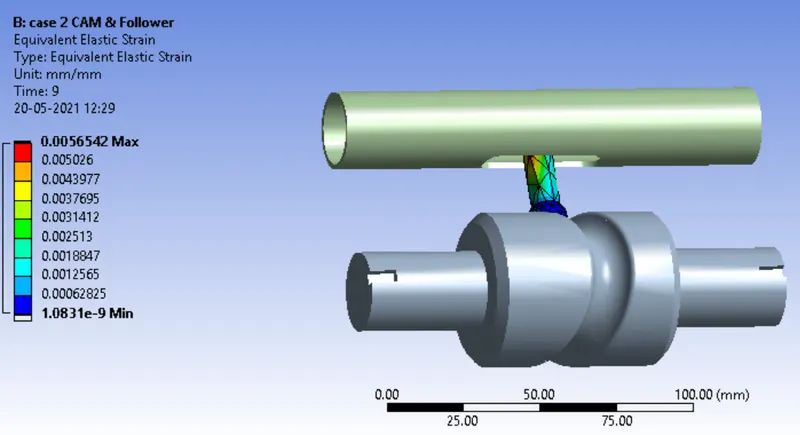
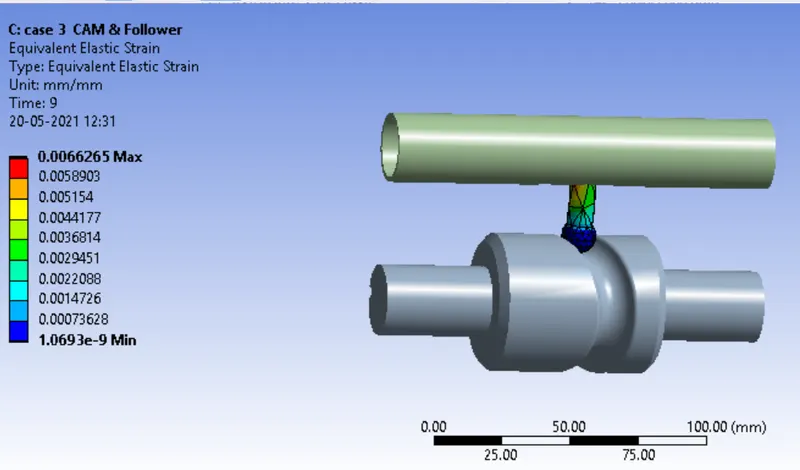
Equivalent Elastic Strain
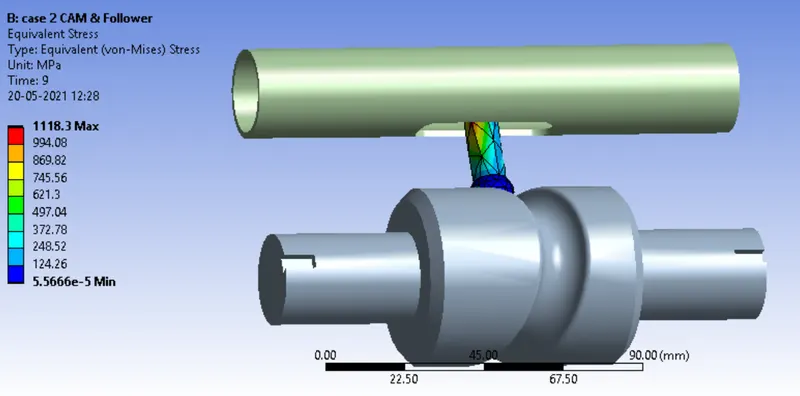
Case 2 ( frictional contact 0.1)
Equivalent Stress
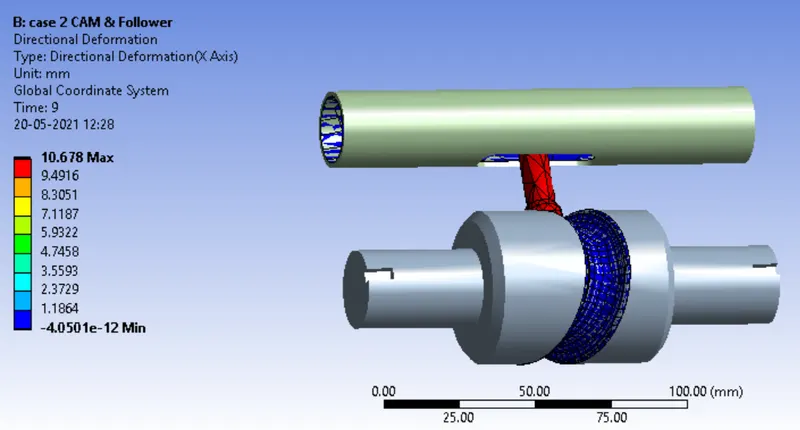
Directional Deformation
Equivalent Elastic Strain
Case 3 (frictional contacts 0.2)
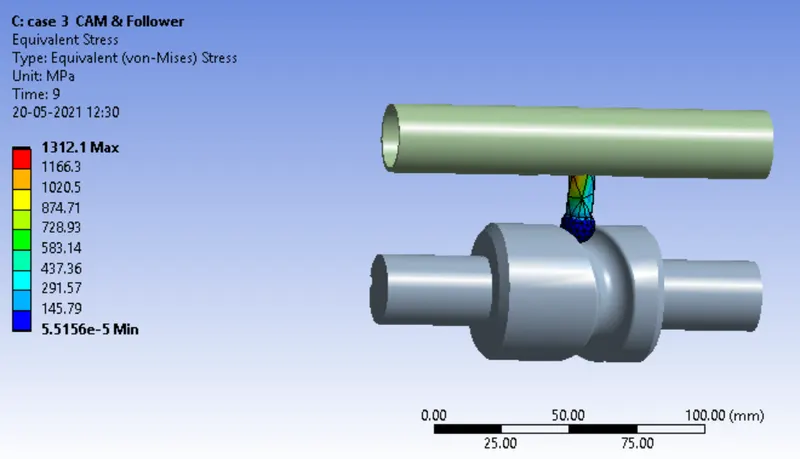
Equivalent Stress
Directional Deformation
Equivalent Elastic Strain
Discussion & Conclusion:
| Equivalent Stress | Directional Deformation | Equivalent Elastic Strain | |
| CASE 1 | 987.63 MPa | 10.675 mm | 0.00499 mm/mm |
| CASE 2 | 1118.3 MPa | 10.678 mm | 0.00565 mm/mm |
| CASE 3 | 1312.1 MPa | 10.753 mm | 0.00662 mm/mm |
- From the above table we can see that the equivalent stress has increased when we have moved from frictionless to frictional contact. The maximum can be seen in case 3 where we have assigned frictional contact with coefficient of friction as 0.2.
- The directional deformation is maximum in case 3 and so does the elastic strain.
- Thus with increase in frictional coefficient the frictional force increases and as the result the deformations, stress and strain increases.