Week 7-Long Piston With Cam
AIM:
Perform a Transient Structural Analysis on a Piston- and Cam Mechanism Model ,Using ANSYS WORKBENCH.
OBJECTIVE:
perform a transient analysis on a piston and cam mechanism model. Run the analysis with Frictionless contact, Frictional with 0.1 and 0.2 as the frictional contact for a total of 3 cases. Find out the Equivalent Stress, Directional Deformation and Equivalent Elastic Strain and compare them for all the three cases.
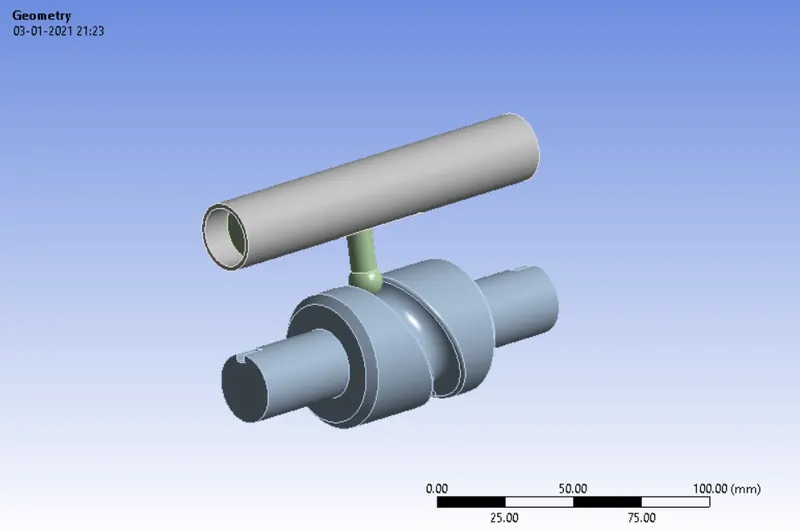
GIVEN MODEL:
*Given model used to translate the rotational motion into translation motion using Cam and Piston.
PROCEDURE:
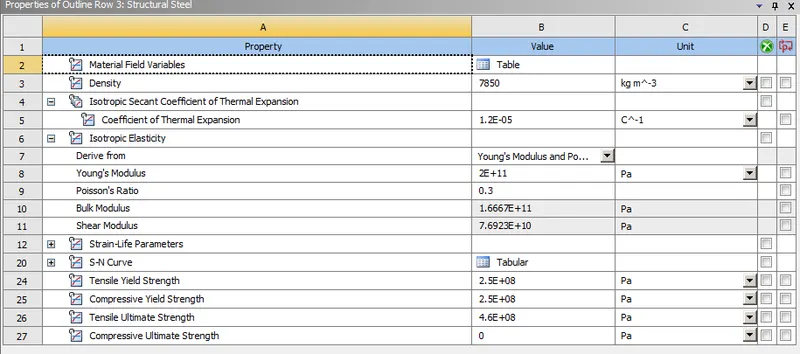
Assign the material as structural steel for both the cases by, Selecting the Engineering data >> Edit >> Engineering data sources >> General Materials >> Structural steel.
*Properties of the structural steel is shown in below.
*After Assigning the material close the engineering data and open new space claim to make the required designs.
*Once geometry is imported from the space claim then open the model and eidt the geometry in Mechanical moduler.
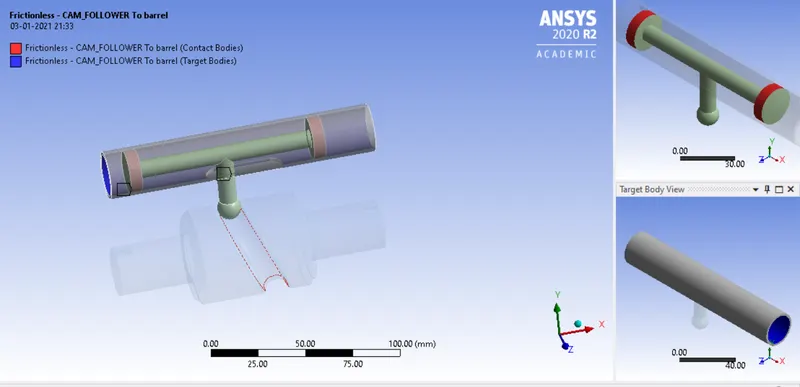
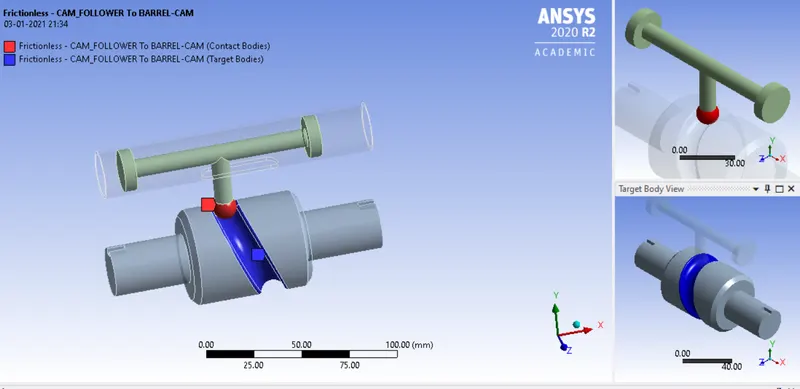
*Assign the Contacts and targets according to the design model with contact type is Frictionless.
*Contact between barrel and cam-follower
*Contact between barrel-cam and cam-follower
*Create one revolute joint for one Fixed Support and then assign joint loads.
*Generate the mesh on the parts with default size but the faces at contact is meshedd with 3 mm size.
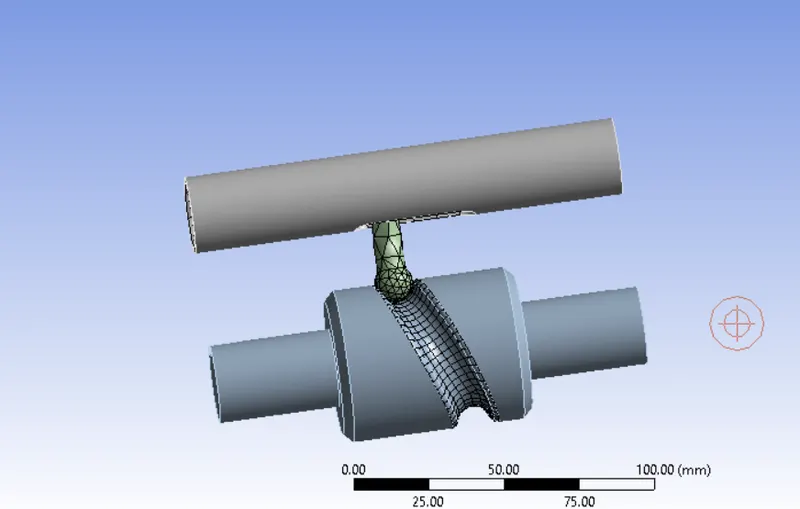
*Mesh is not formed in few parts because those are assigned as rigid behaviour in geometry since those all are acting as a point mass load at centre of mass
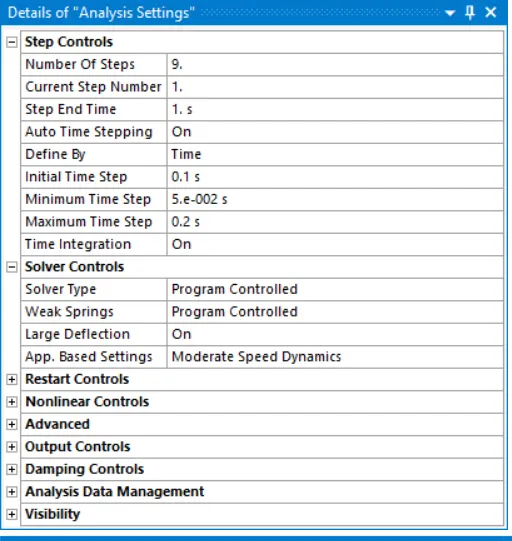
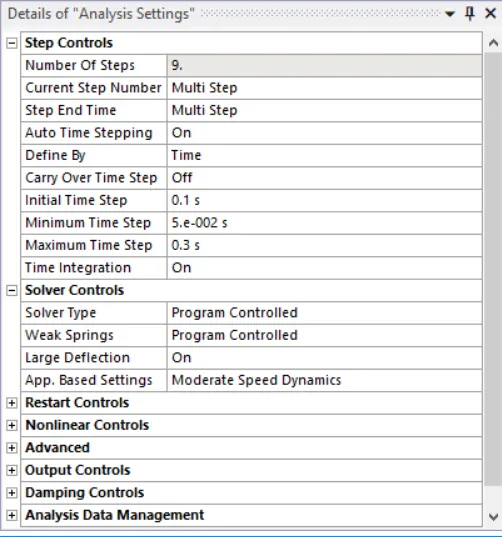
*After that Give all analysis setting in steps of time.
Analysis settings for step-1 Analysis settings for step-2 to 9
CASE-1
FRICTIONLESS:
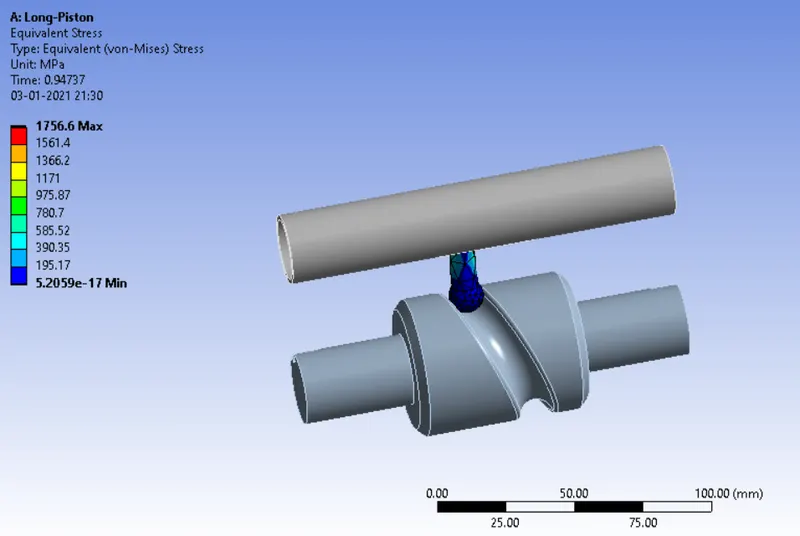
EQUIVALENT (VON - MISES) STRESS (Mpa) :
MAX: 1756.6 and MIN: 5.2059E-17
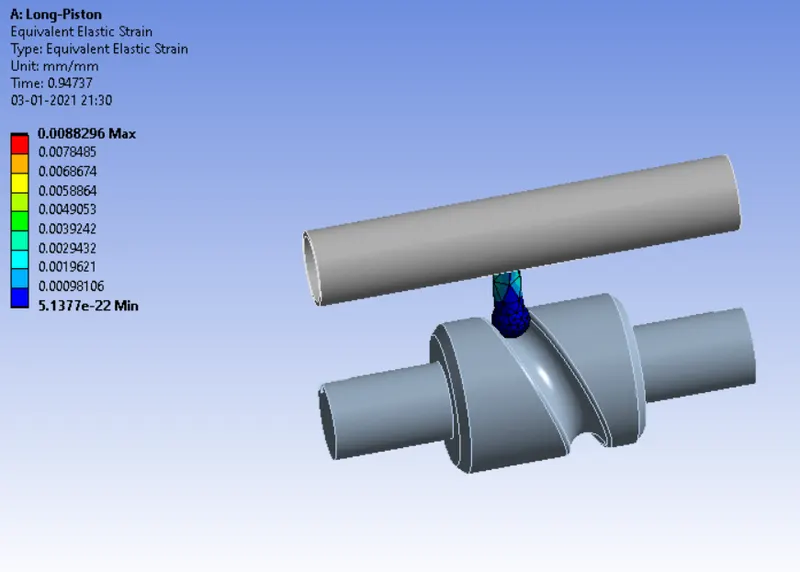
EQUIVALENT ELASTIC STRAIN:
MAX:0.008829 and MIN: 5.1377E-22
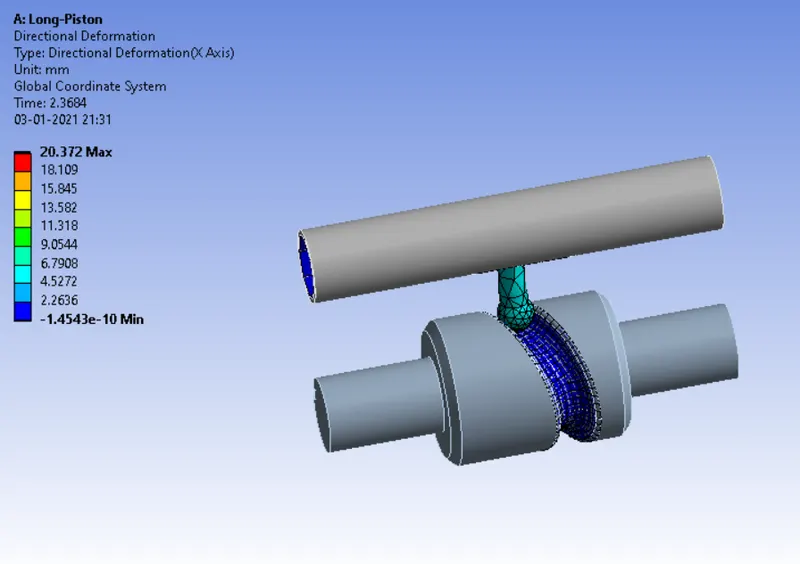
DIRECTIONAL DEFORMATION:
MAX:20.372 and MIN:-1.4543E-10
CASE-2
FRICTIONAL CO-EFFICIENT (0.1):
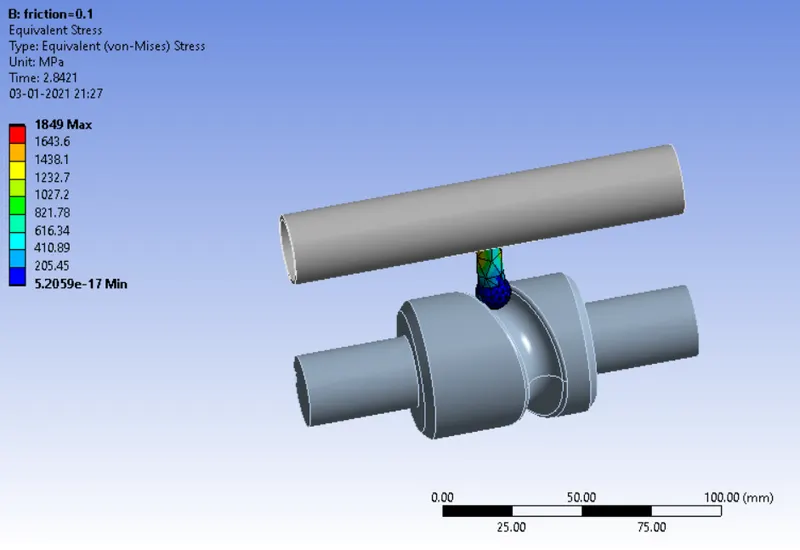
EQUIVALENT (VON - MISES) STRESS:
MAX:1849 and MIN:5.2059E-17
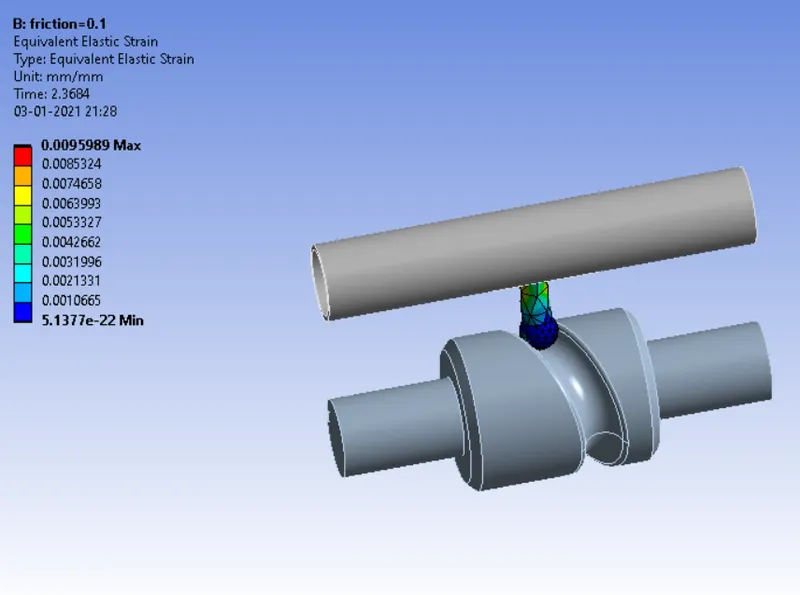
EQUIVALENT ELASTIC STRAIN:
MAX:0.009598 and MIN:5.1377E-22
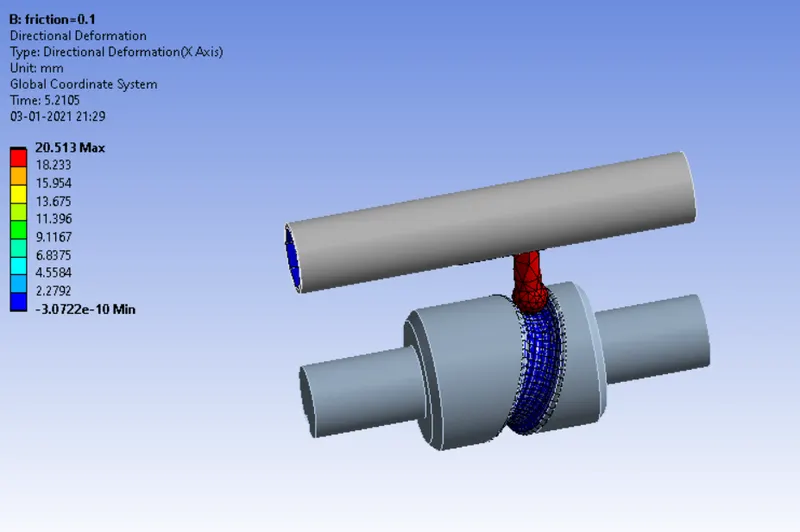
DIRECTIONAL DEFORMATION:
MAX:20.513 and MIN: -3.0722E-10
CASE-3
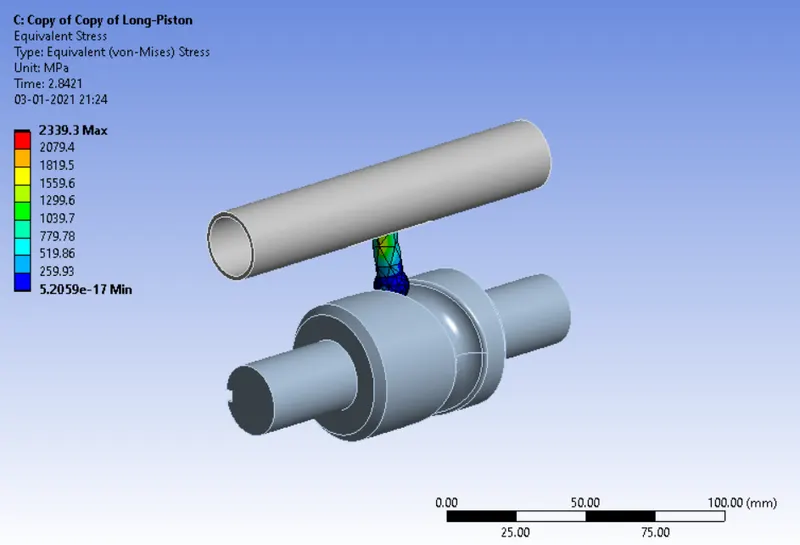
FRICTIONAL CO-EFFICIENT (0.2):
EQUIVALENT (VON - MISES) STRESS:
MAX:2339.3 and MIN: 5.2059E-17
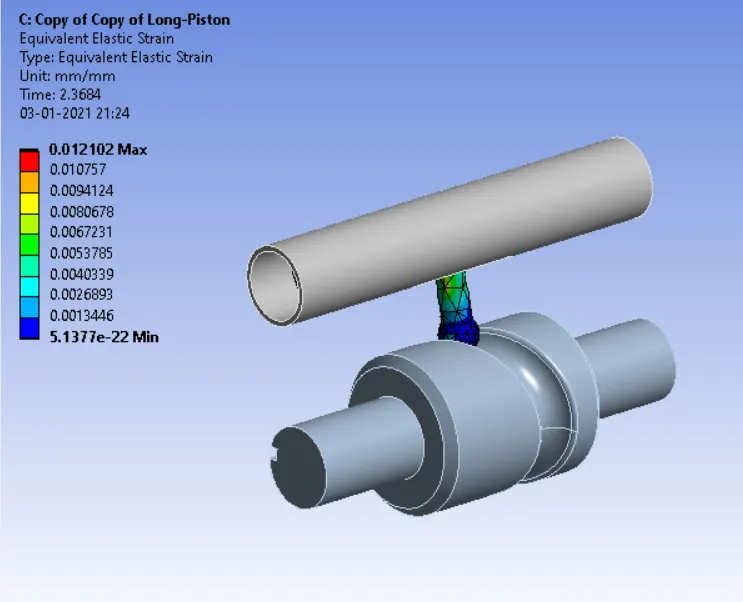
EQUIVALENT ELASTIC STRAIN:
MAX: 0.012102 and MIN: 5.1377E-22
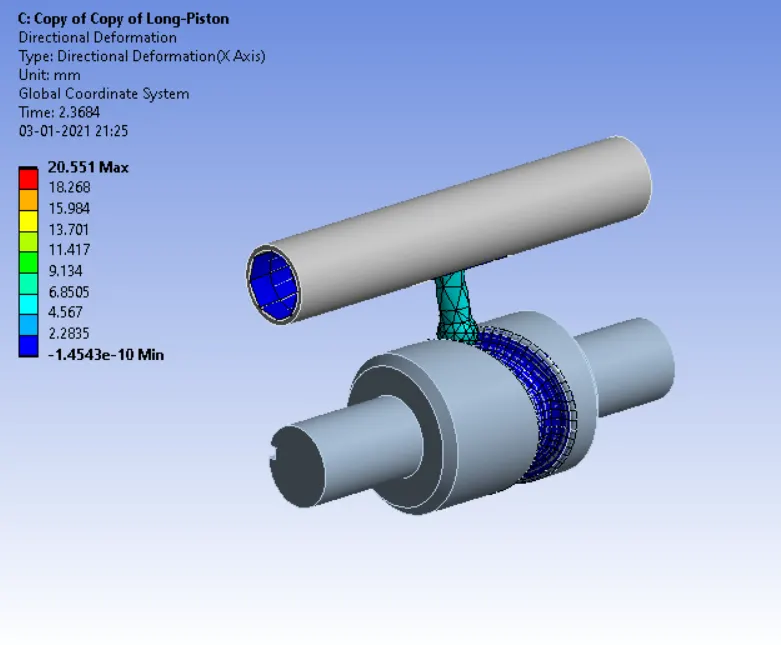
DIRECTIONAL DEFORMATION:
MAX:20.551 and MIN:-1.4543E-10
COMPARING THE RESULTS:
| CASE | FRICTIONAL CO-EFFICIENT |
EQUIVALENT (VON - MISES) STRESS (MAX) |
EQUIVALENT (VON - MISES) STRESS (MIN) |
EQUIVALENT ELASTIC STRAIN (MAX) |
EQUIVALENT ELASTIC STRAIN (MIN) |
DIRECTIONAL DEFORMATION (MAX) |
DIRECTIONAL DEFORMATION (MIN) |
| 1. | FRICTIONLESS | 1756.6 | 5.2059E-17 | 0.008829 | 5.1377E-22 | 20.372 | -1.4543E-10 |
| 2. | 0.1 | 1849 | 5.2059E-17 | 0.009598 | 5.1377E-22 | 20.513 | -1.454E-10 |
| 3. | 0.2 | 2339.3 | 5.2059E-17 | 0.012102 | 5.1377E-22 | 20.551 | -1.4543E-10 |
CONCLUSION:
*Directional deformation is almost constant in all three cases it's not much effected by changing the frictional co-efficients.
*We All know that by increasing Frictional co-efficient between contacts it required more force for motion. Force is directly proportional to stress so, by increasing the Force then stress is also increse that we can observed in above table.
*Stress increases then automatically strain increases i.e( By increasing frictional co-efficient strain is also increase )